

EV-Ready Homes in Atlanta: What First-Time Buyers Need to Know
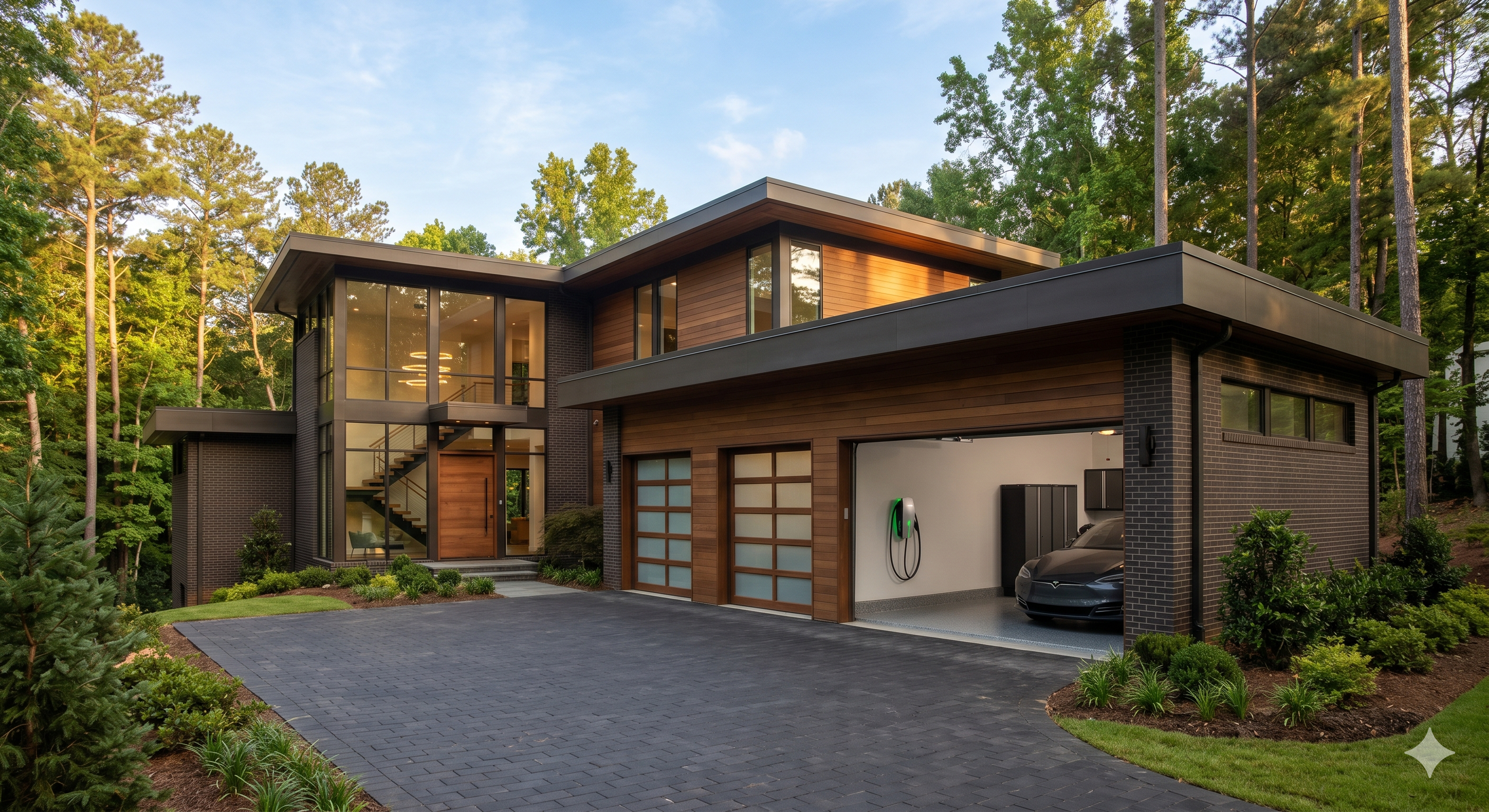
If you drive an electric vehicle or you're planning to buy one in the next few years, the house you choose right now matters more than you might think. A home that's already wired for Level 2 charging can save you anywhere from $500 to $6,000 compared to retrofitting one that isn't. And starting January 1, 2026, every new single-family and two-family home built inside the City of Atlanta limits has to be "EVSE Ready" by law — a change most first-time buyers don't know is already in effect.
I work with buyers across Metro Atlanta, from intown neighborhoods like Edgewood and Kirkwood to the suburbs of Cobb, North Fulton, Gwinnett, and Henry County. I'm seeing more first-time buyers ask about EV charging than I did even two years ago, and almost none of them come in knowing what questions to ask.
Nearly a decade in this market has shown me that the homes buyers fall in love with are rarely the homes that are ready for an EV. A 1940s bungalow in Kirkwood has a different electrical story than a 2020 townhome in Summerhill, and both of those are different from a new-construction house in Alpharetta. The charger on the wall is the easy part. Everything behind that wall is where the cost lives.
Here's what you need to know.
What "EV-Ready" Actually Means in 2026
The term "EV-ready" gets thrown around by builders, listing agents, and utility companies to mean different things. In 2026, there's finally a standard vocabulary, and if you're touring homes or reading listings, these three terms matter:
EVSE Capable. The home has the electrical panel capacity and a conduit run to a parking area, but no wire pulled and no outlet installed. It's the lowest tier. A future owner still has to pay an electrician to pull wire, install a breaker, and mount the outlet or charger. Think of it as plumbing for a bathroom that doesn't have a sink yet.
EVSE Ready. The home has the panel capacity, the conduit, the wire pulled, the breaker installed, and a NEMA 14-50 outlet or hardwired termination point in place. All you have to do is plug in or mount a Level 2 charger. This is the tier most buyers actually want.
EVSE Installed. Everything above plus a physical Level 2 charger mounted and working. You can plug in your car the day you move in.
The City of Atlanta's 2025 EV Readiness Ordinance (25-O-1011) took effect January 1, 2026. Under that ordinance, every new single-family and two-family home built inside city limits has to deliver at least one EVSE Ready parking space. New commercial and multifamily buildings in the city have to go further: at least 20 percent of parking spaces must be EVSE Installed, and another 20 percent must be EVSE Capable.
That ordinance only covers the City of Atlanta. A new-construction house in Alpharetta, Johns Creek, Marietta, or Roswell isn't required to follow it. You can absolutely find EV-ready new construction in the suburbs, but it's the builder's choice, not a requirement. Always verify in writing before you close.
Why This Matters for First-Time Buyers Specifically
First-time buyers tend to buy at the lower end of whatever neighborhood they're shopping in. That usually means older housing stock, smaller electrical panels, and tighter budgets for improvements after closing. It's the exact profile that gets hit hardest by a retrofit bill.
Here's a real scenario I've seen more than once: a buyer gets under contract on a 1970s ranch in a suburb like Smyrna, Marietta, or Decatur. The house is in budget. They love the yard. They're planning to buy a Tesla or a Rivian within a year. Then they call an electrician after closing and find out the home has a 100-amp panel with no capacity for a Level 2 circuit. Now they're looking at a $1,500 to $5,000 panel upgrade before they can even talk about running wire to the garage.
The fix for that is simple: ask the right questions before you close, not after.
I tell first-time buyers to treat EV readiness the same way they treat HVAC age, roof age, and water heater condition. It's an electrical system question that affects long-term cost of ownership, and it needs to be part of the inspection conversation.
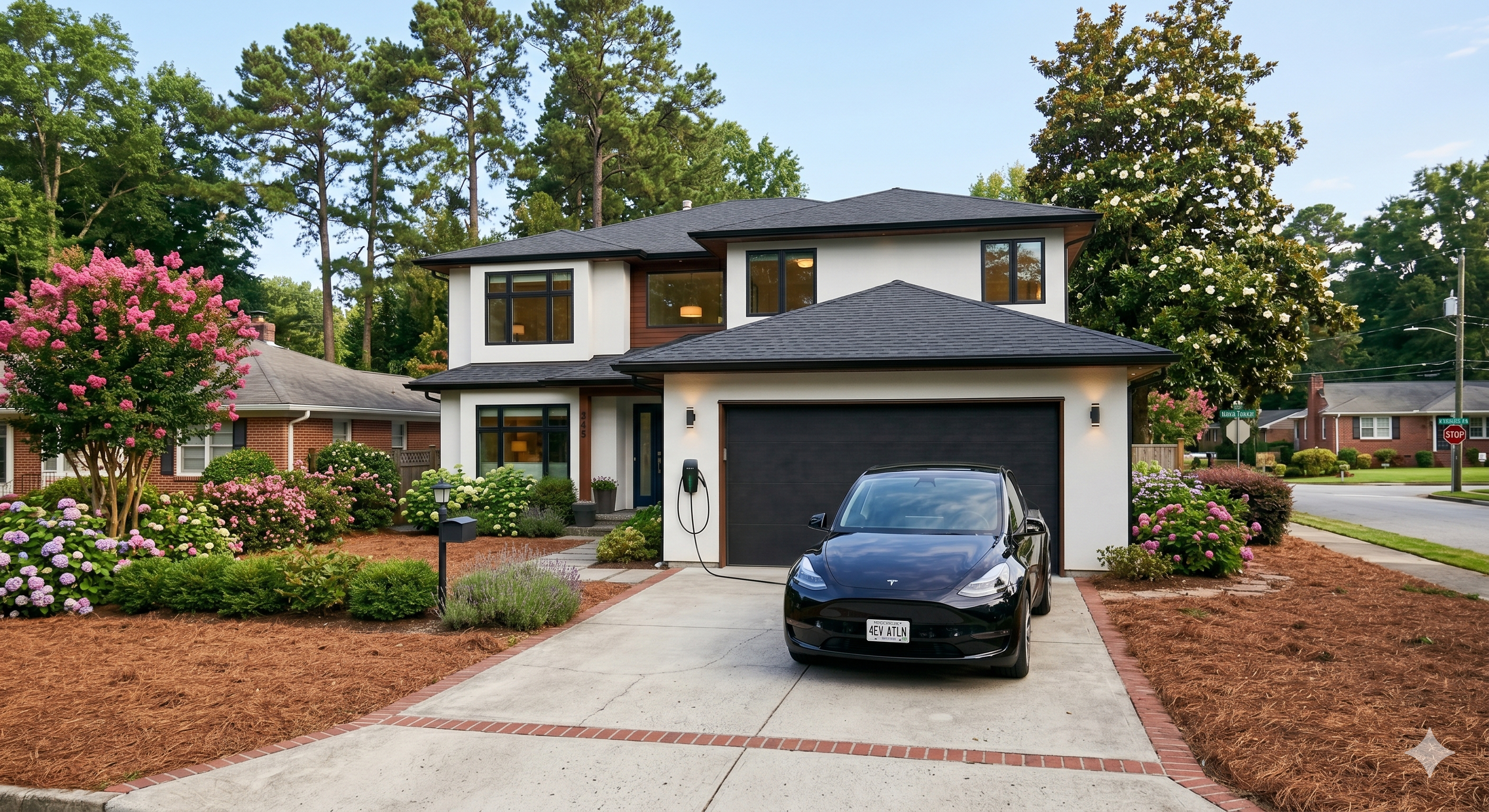
The Real Cost of Installing a Level 2 Charger in Atlanta
Installation costs in Metro Atlanta run a wide range because every house is different. Based on current 2026 pricing:
Simple installs (panel has capacity, garage is close to the panel, no obstacles): $500 to $1,500 for electrical work. Add $300 to $700 for the charger itself. Total out the door, $800 to $2,200.
Moderate installs (panel has capacity but garage is 30 to 80 feet from the panel, or wire has to run through finished walls or a crawlspace): $1,500 to $3,000 for electrical work. Same charger cost. Total, $1,800 to $3,700.
Complex installs (panel needs a service upgrade, or the home is older and needs a full heavy-up from 100 to 200 amps): $3,000 to $8,000 total, sometimes more.
The charger hardware itself has gotten cheaper. A quality 40 or 48-amp Level 2 charger from brands like ChargePoint, Wallbox, Emporia, or Grizzl-E runs $300 to $700. You do not need to spend more than that for a residential setup.
Where the cost really lives is in three places: panel capacity, distance from the panel to the parking area, and whether the install is indoor or outdoor. An outdoor install adds $200 to $1,000 because of weatherproofing and enclosure requirements.
Get at least two quotes from licensed electricians before committing. Atlanta has a healthy market of EV-specialized electricians, and pricing varies meaningfully between them.
Rebates and Tax Credits That Actually Apply in 2026
Georgia isn't a state with a big EV purchase rebate. What it does have is a real stack of utility rebates for home charger installation. If you're buying in Metro Atlanta, one of these will almost certainly apply to you:
Georgia Power residential rebate. Up to $250 back on a qualifying Level 2 charger installation at a single-family home. You have to be a Georgia Power customer, use a licensed electrician, and submit the rebate form with your paid installation invoice within 60 days. Georgia Power serves most of the City of Atlanta, parts of Decatur, Sandy Springs, and big portions of the metro.
Cobb EMC. $250 rebate on an Energy Star-certified Level 2 charger with connected features. Applies to residential customers. If you claim the rebate, you're enrolled automatically in their EV charging program.
Jackson EMC. $250 rebate toward a residential Level 2 charger. Serves parts of Gwinnett, Barrow, Jackson, Hall, and other north metro counties. Budget-capped, so apply early in the year.
Walton EMC. Offers the "Plug-in EV" rate, which lets you charge during off-peak hours at a significantly reduced kWh rate. Serves parts of Gwinnett, Walton, Newton, and surrounding counties.
GreyStone Power. $250 rebate on a Level 2 charger for residential customers. Serves parts of Douglas, Paulding, Carroll, Cobb, and Fulton counties.
Sawnee EMC. $200 rebate per charger. Serves parts of Forsyth, Cherokee, Dawson, Lumpkin, Hall, and Gwinnett counties.
Coweta-Fayette EMC. $100 toward a Level 2 charger.
Carroll EMC, Tri-County EMC. $250 rebates, similar terms to the larger utilities.
On top of any utility rebate, there's the federal Alternative Fuel Vehicle Refueling Property Credit (Section 30C). This gives you 30 percent of the total cost of your charger and installation back as a federal tax credit, up to $1,000 for residential installations. Two important caveats: the credit is currently scheduled to expire on June 30, 2026, and it only applies to installations in qualifying census tracts. A lot of Metro Atlanta is eligible, but not all of it. Your tax preparer can check your specific address against the IRS map.
Between the utility rebate and the federal tax credit, a buyer with a $2,000 installation can realistically net that down to $550 to $750 out of pocket. The math is meaningful.
Before You Make an Offer: Questions to Ask

If EV charging is important to you, treat it as a standard diligence item, not an afterthought. When you're touring homes, here's what I want you checking or asking the listing agent:
Panel size. Look at the main breaker in the electrical panel. Is it 100 amps, 150 amps, or 200 amps? A modern Level 2 charger typically draws a 40 or 50-amp dedicated circuit. A 100-amp panel may not have the headroom for that after accounting for HVAC, water heater, range, and dryer loads.
Panel age. An electrical panel more than 30 years old is a flag regardless of EV plans. Certain older panel brands (Federal Pacific, Zinsco) have safety concerns that will show up in inspection anyway. If you're already budgeting for a panel replacement, that's the moment to size up for an EV circuit.
Distance from panel to parking. Walk it. Count the feet. Every 10 feet of wire adds meaningfully to the install cost. A panel in the basement directly below an attached garage is the easiest install in the world. A panel in the kitchen with a detached garage 60 feet across the backyard is a different job entirely.
Existing 240V outlets. Some older homes have a 240V outlet in the garage from a legacy workshop, welder, or air compressor. That can sometimes be repurposed or upgraded for a Level 2 charger. Ask.
HOA restrictions. If you're buying a condo, townhome, or a home in a planned community, check the HOA covenants. Georgia has some protections for EV charging in common-interest communities, but the rules around where you can install and what the charger can look like are still negotiated at the HOA level. If parking is deeded but the wiring has to pass through common area, that's a conversation you want to have before you close.
Listing disclosure. If the listing mentions the home is "EV-ready," ask specifically which of the three tiers it meets. Ask for documentation: invoices, permits, or a letter from the electrician who did the work. A lot of listing agents use "EV-ready" loosely. Verify what it actually means.
Neighborhood Considerations: Intown vs. Suburbs
EV charging at home looks different depending on where you're buying in Metro Atlanta, and first-time buyers should factor that into the neighborhood decision.
Intown Atlanta neighborhoods (Kirkwood, Edgewood, East Atlanta, Grant Park, Reynoldstown, West End, Old Fourth Ward, Candler Park): housing stock is largely pre-1950s with plenty of homes from the 1910s and 1920s. Electrical service has usually been updated at some point, but panel sizes vary widely. A lot of intown bungalows have detached garages or no garage at all, which changes the install calculation. Street parking means you're charging in a driveway, a carport, or not at all.
Inner suburbs (Decatur, Brookhaven, Smyrna, East Cobb): mixed housing stock, 1940s to 1990s, with more consistent 150 to 200-amp service and attached garages. Usually the easiest and most affordable Level 2 install profile of any market segment in Metro Atlanta.
Outer suburbs (Alpharetta, Milton, Johns Creek, Roswell, Buford, Loganville, Fayetteville): predominantly post-2000 housing with 200-amp service standard, attached two and three-car garages, and plenty of panel capacity. New construction after 2022 increasingly comes pre-wired for at least one EVSE Ready space, even where it's not legally required. If EV readiness is a top priority, this is where the easiest wins are.
Townhomes and condos anywhere: the single biggest friction point for first-time EV buyers. Dedicated parking may or may not include dedicated electrical access. In many newer Atlanta townhome communities (Summerhill, Westside, Old Fourth Ward developments), garages are deeded but panels may be shared or located in common areas. Ask specifically: is there a dedicated electrical panel for my unit, and can I install a Level 2 charger in my deeded garage or parking space without HOA approval?
Public Charging in Metro Atlanta: A Reality Check
Home charging still handles about 80 percent of EV charging needs for most drivers, which is why having it at home matters. But Metro Atlanta's public charging network has improved enough that I want first-time buyers to understand the backup picture honestly.
As of 2026, Georgia has over 2,400 public charging stations across the state, and the Atlanta-Sandy Springs-Roswell metro area alone accounts for roughly 4,900 charging stations on public tracking networks like PlugShare. Atlanta proper leads Georgia with 763 stations by federal AFDC count.
DC fast chargers are concentrated along I-75, I-20, I-85, and I-285, with Electrify America, EVgo, ChargePoint, Tesla Supercharger, and BP Pulse all operating stations in the metro. Inside the Perimeter, Level 2 charging at grocery stores, shopping centers, and municipal parking decks has grown steadily. Outside the Perimeter, coverage is thinner but growing. Grant-funded Level 2 ports are rolling out across the 20-county Atlanta Regional Commission area, and federal NEVI program chargers are filling in highway gaps.
The honest picture: if you live inside the Perimeter and you have some form of home charging, range anxiety is largely a non-issue for daily life. If you live in exurban Metro Atlanta with a long commute and no home charging, you're going to find it more stressful than it needs to be. Factor that into where you buy.
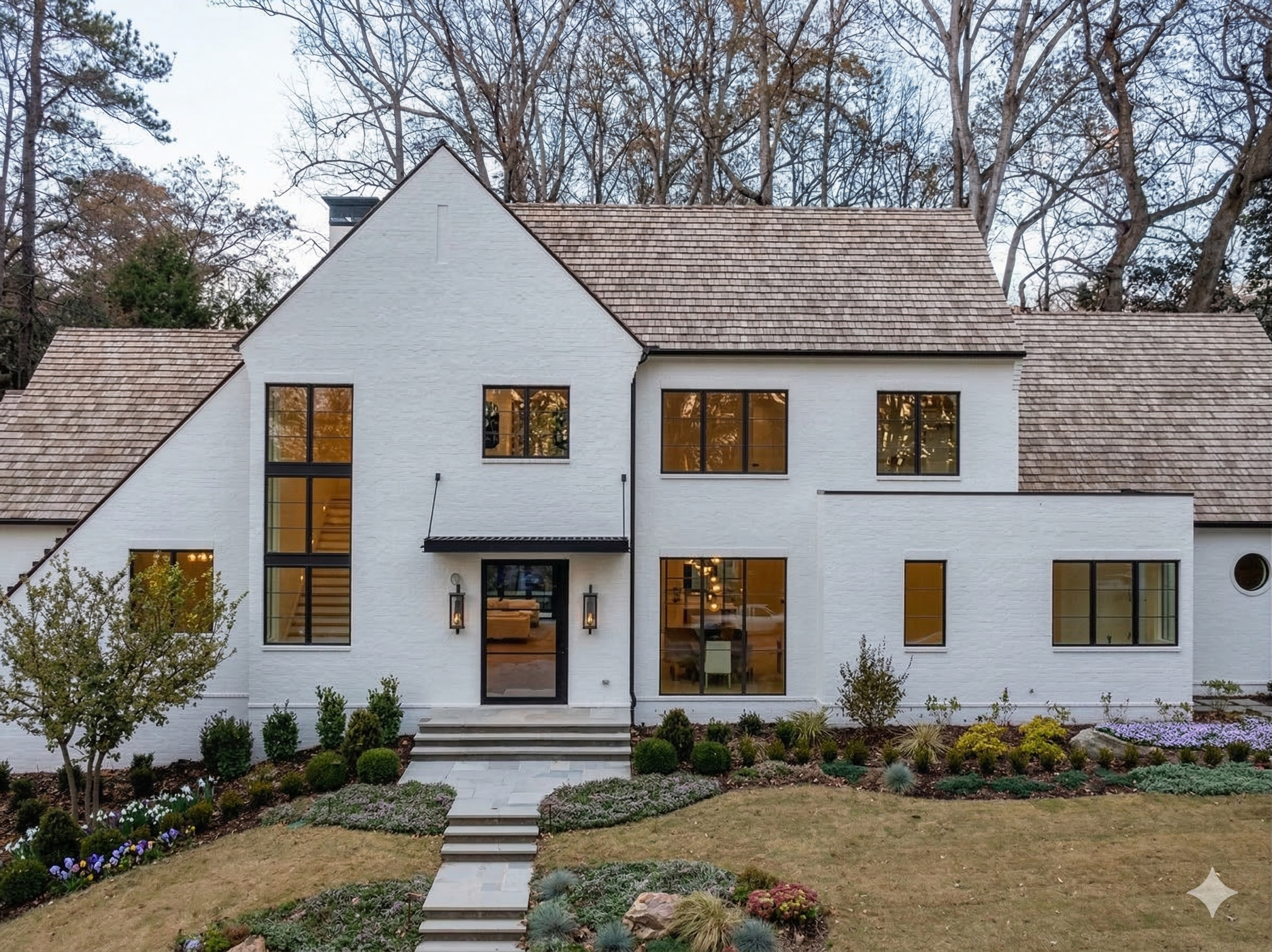
Resale Value and EV Readiness
Here's what I'm seeing in the market right now. EV readiness isn't yet a line item that moves appraised value meaningfully. Buyers notice it, and it can break ties on competing offers, but I don't see appraisers adding $5,000 to a comp because the home has a Level 2 charger.
That's likely to change over the next five years. EV adoption is accelerating, and buyers who drive EVs actively filter for home charging when they search. A home with a documented, permitted Level 2 install is going to have a broader buyer pool than an identical home without one. It's not the dominant factor in resale, but it's a real factor, and it will grow.
For a first-time buyer who plans to own the home five to ten years, installing a Level 2 charger early in ownership is a solid move: you get the rebates, you get the federal tax credit before it expires, you get the use, and you build a documented upgrade that shows up in the listing when you sell.
Condos and Townhomes: The HOA Question
If you're a first-time buyer looking at condos or townhomes — which, at Metro Atlanta's current median price points, a lot of first-time buyers are — the EV conversation is more complicated.
Georgia doesn't have a strong "right to charge" law that forces HOAs to accommodate EV installations, the way California and a few other states do. What that means in practice is you're operating under the HOA's covenants and architectural review process.
Before you make an offer on any condo or townhome, get the HOA documents and read two things: the section on modifications to common elements and the section on exclusive-use parking. Specifically:
Does the HOA allow installation of Level 2 chargers in deeded garages or assigned parking?
What's the architectural review process for electrical modifications?
If the panel serving your unit is in a common area, what's the policy on running a new circuit?
Who pays for the charger's electricity usage, and is there a metering method in place?
Better-run Atlanta condo and townhome communities are increasingly writing EV-friendly language into their covenants. Older communities often haven't addressed it at all, which can mean either an easy yes from the board or a bureaucratic no. If the community has ever had an owner install a charger, that's useful precedent. Ask the listing agent or the HOA directly.
If You're Buying New Construction
New construction gives you the best leverage to get EV readiness built in properly, because you're negotiating before drywall goes up. Adding EVSE Ready to a new build during construction costs the builder a few hundred dollars. Adding it after closing costs you thousands.
If you're under contract on new construction anywhere in Metro Atlanta, ask your builder:
Is the home being built to EVSE Capable, EVSE Ready, or EVSE Installed? Get the answer in the contract.
What's the panel size (typically 200-amp is standard in new construction in 2026)?
Where is the dedicated conduit or wire run terminating — driveway, garage wall, or outside the garage?
What NEMA outlet type is being installed (14-50 is standard for Level 2)?
Is the breaker installed and labeled?
For homes inside Atlanta city limits, EVSE Ready is now required by ordinance. For homes anywhere else in Metro Atlanta, it's negotiable. Most builders will add it for a reasonable change order if asked early. Almost no builder will bring it up unprompted.
Common Mistakes First-Time EV Buyers Make
A few patterns I see over and over:
Buying the house first, then realizing it can't support EV charging. Reverse that order. If you know you want an EV within the next two years, screen homes during your search with that in mind.
Assuming a NEMA 14-50 outlet means the home is EV-ready. Sometimes it does, sometimes it doesn't. That outlet might be wired to a 30-amp breaker for a dryer, not a 50-amp dedicated circuit for EV charging. Look at the breaker, not just the outlet.
Underestimating the panel upgrade cost. A 100 to 200-amp service upgrade in Metro Atlanta runs $2,000 to $5,000 and often requires a permit, an inspection, and a brief service shut-off from the utility. It's not a weekend project.
Missing the federal tax credit deadline. The Alternative Fuel Vehicle Refueling Property Credit expires June 30, 2026, unless Congress renews it. If you're closing in the first half of 2026 and plan to install a charger, get it installed and invoiced before that date.
Ignoring the HOA rules. In any deed-restricted community, the HOA covenants govern. I've seen buyers install a charger without approval and then get forced to remove it. Spend the 30 minutes reading the covenants before the install.
Oversizing the charger. Most EV owners genuinely don't need a 48-amp charger. A 32-amp charger adds 25 to 30 miles of range per hour of charging, which is enough to fully recharge a typical EV overnight. A smaller charger often avoids the need for a panel upgrade and costs less to install.
Who This Matters Most For
EV readiness in your home purchase matters most if:
You currently drive an EV or plan to buy one within three years
You work from home or have a short commute and want the convenience of home charging
You're buying in Metro Atlanta proper (roughly ITP, Intown Atlanta) where public Level 2 charging is common but DC fast charging away from highways is inconsistent
You're looking at a new-construction home where adding EV readiness during the build is cheap
You plan to hold the home five or more years and care about resale appeal
It matters less if:
You drive a gas or hybrid vehicle with no plans to switch
You have reliable workplace charging you'll use daily
You're buying an investment property and not living in it
You're in a rental scenario where upgrades don't return to you
For most first-time buyers in Metro Atlanta, some form of EV-readiness conversation belongs in the home search. It doesn't have to be the deciding factor, but it should be on the list.

Frequently Asked Questions
What does EV-ready mean when I see it in a Metro Atlanta home listing?
It depends on the listing agent and the home. In 2026, the technically correct meaning is "EVSE Ready" — a dedicated 240V circuit with conduit, wire, breaker, and outlet in place for a Level 2 charger, even if no charger is physically installed. In practice, agents use "EV-ready" loosely. Always ask specifically: is the panel capable, is the wiring run and breaker installed, or is a physical charger mounted? Request documentation.
How much does it cost to install a Level 2 charger at a home in Atlanta?
The total range is $500 to $6,000 depending on the home. A simple install — 200-amp panel with capacity, short wire run to an attached garage, no panel upgrade needed — runs $500 to $1,500 for electrical labor plus $300 to $700 for the charger itself. A more complex install with a long wire run or a panel upgrade can reach $3,000 to $6,000 or more. Most Metro Atlanta homes built after 2000 fall in the $800 to $2,200 all-in range.
Is the City of Atlanta EV Readiness Ordinance actually in effect for new homes?
Yes. Ordinance 25-O-1011 took effect January 1, 2026. Every new single-family and two-family home built inside the City of Atlanta limits must have at least one EVSE Ready parking space at certificate of occupancy. New commercial and multifamily developments must include at least 20 percent EVSE Installed spaces and 20 percent EVSE Capable spaces. The ordinance does not apply outside city limits, so a new-construction home in Sandy Springs, Decatur (City of Decatur), Alpharetta, Johns Creek, or Roswell is not covered.
What rebates can I actually get for a home EV charger in Metro Atlanta?
Georgia Power residential customers can get up to $250 back on a qualifying Level 2 charger install. Most Metro Atlanta EMCs (Cobb, Jackson, Walton, GreyStone, Sawnee, Coweta-Fayette, Carroll, Tri-County) offer $100 to $250 rebates for their members. On top of that, the federal Alternative Fuel Vehicle Refueling Property Credit gives you 30 percent of your total charger and installation cost back as a tax credit, up to $1,000 for residential — but only in eligible census tracts and only through June 30, 2026 at current writing. Stack them where possible.
Do I need a 200-amp panel to install a Level 2 charger?
Not necessarily, but it makes the install much easier and cheaper. A Level 2 charger on a 40 or 50-amp circuit draws significant power. On a 100-amp panel, an electrician has to run a load calculation (NEC 220.82) to confirm the panel has enough headroom after existing HVAC, water heater, range, and dryer loads. Many 100-amp homes do have enough capacity for a 32-amp charger (which still adds 25+ miles of range per hour). Some don't. The math is home-specific and requires an electrician's assessment.
Can I install a Level 2 charger at a condo or townhome in Atlanta?
Sometimes, depending on the HOA covenants and how the parking and electrical service are structured. Georgia does not have a strong state-level "right to charge" law, so the HOA governs. Before making an offer on a condo or townhome, read the HOA documents on modifications to common elements and exclusive-use parking. Ask specifically whether other owners have installed Level 2 chargers, and if so, what the process was.
Should I wait to buy a house until I've bought my EV?
No. Buy the EV on the EV's timeline and the house on the house's timeline — just factor EV compatibility into your home search the same way you'd factor in HVAC age or roof condition. If the home you love isn't ready for EV charging, know what the retrofit cost looks like before you close so you can negotiate or plan accordingly.
Are there HOA rules in Atlanta that prevent installing EV chargers?
Yes, some HOA covenants do restrict or prohibit charger installation, particularly in older condo and townhome communities that haven't updated their rules for EVs. Most better-managed communities now allow it with an architectural review process. A handful of older communities still have outright prohibitions or vague language that lets the board say no case by case. Always read the covenants before you make an offer on a community-restricted property.
What's the difference between Level 1 and Level 2 charging?
Level 1 uses a standard 120V household outlet and adds 3 to 5 miles of range per hour of charging. Level 2 uses a 240V dedicated circuit (the same voltage as your electric dryer or range) and adds 20 to 40 miles of range per hour depending on the charger amperage. A typical EV fully recharges overnight on Level 2. Level 1 is viable for plug-in hybrids and for EV drivers with very short commutes, but most dedicated EV owners will want Level 2 at home.
Do EV chargers significantly increase my home's electricity bill?
Not dramatically for most households. Georgia Power customers paying roughly $0.12 to $0.14 per kWh at standard rates will spend about $30 to $60 per month to charge a daily-driver EV at home, comparable to what you'd otherwise spend on gas. Signing up for Georgia Power's Plug-in EV rate or Cobb EMC's similar time-of-use program can cut that further if you charge overnight, which most home chargers do automatically.
If I buy a home without any EV wiring, how long does it take to get it installed?
Usually two to four weeks from the day you call an electrician. That includes the load assessment, the permit pull (required in most Metro Atlanta jurisdictions), the install itself (typically a one-day job), and the inspection. If a panel upgrade is needed, add another one to two weeks and a brief utility service shut-off.
What should I look for in an Atlanta electrician for an EV install?
A licensed Georgia master electrician who has done Level 2 EV charger installations specifically — not a general residential electrician doing their first one. Ask for references, ask to see permit records from recent jobs, and confirm they'll pull the permit (some won't, which is a red flag). Many Atlanta electricians now specialize in EV charger installs and will be certified by the charger manufacturers (ChargePoint, Wallbox, Tesla) for warranty-preserving installation.
Is it better to hardwire a Level 2 charger or use a plug-in model?
For daily use at a permanent residence, hardwired is usually the better long-term choice. It's more durable, reduces wear on the outlet, handles higher amperage more safely, and simplifies weatherproofing for outdoor installs. Plug-in models on a NEMA 14-50 outlet are a good choice if you want to be able to move the charger or replace it easily. Both are code-compliant when installed correctly.
Let's Talk
Whether you're a first-time buyer about to make an offer or you're two years out and just starting to understand the market, the EV conversation is worth having early. I work with buyers across Metro Atlanta — from first-time buyers to relocators to luxury clients — and I know which neighborhoods, which builders, and which home types make the EV transition easiest.
Visit kristenjohnsonrealestate.com or reach out directly at info@kristenjohnsonrealestate.com or (404) 790-0080. Come as you are, come on home.
Looking for more Metro Atlanta buyer education? I've written guides on how much house you can afford in Atlanta, first-time home buyer mistakes to avoid in Atlanta, FHA vs. conventional loans in Atlanta, and the best Atlanta neighborhoods for remote workers. Browse the full guide series at kristenjohnsonrealestate.com.