

Living in Kirkwood, Atlanta: The Small Town in the Big City
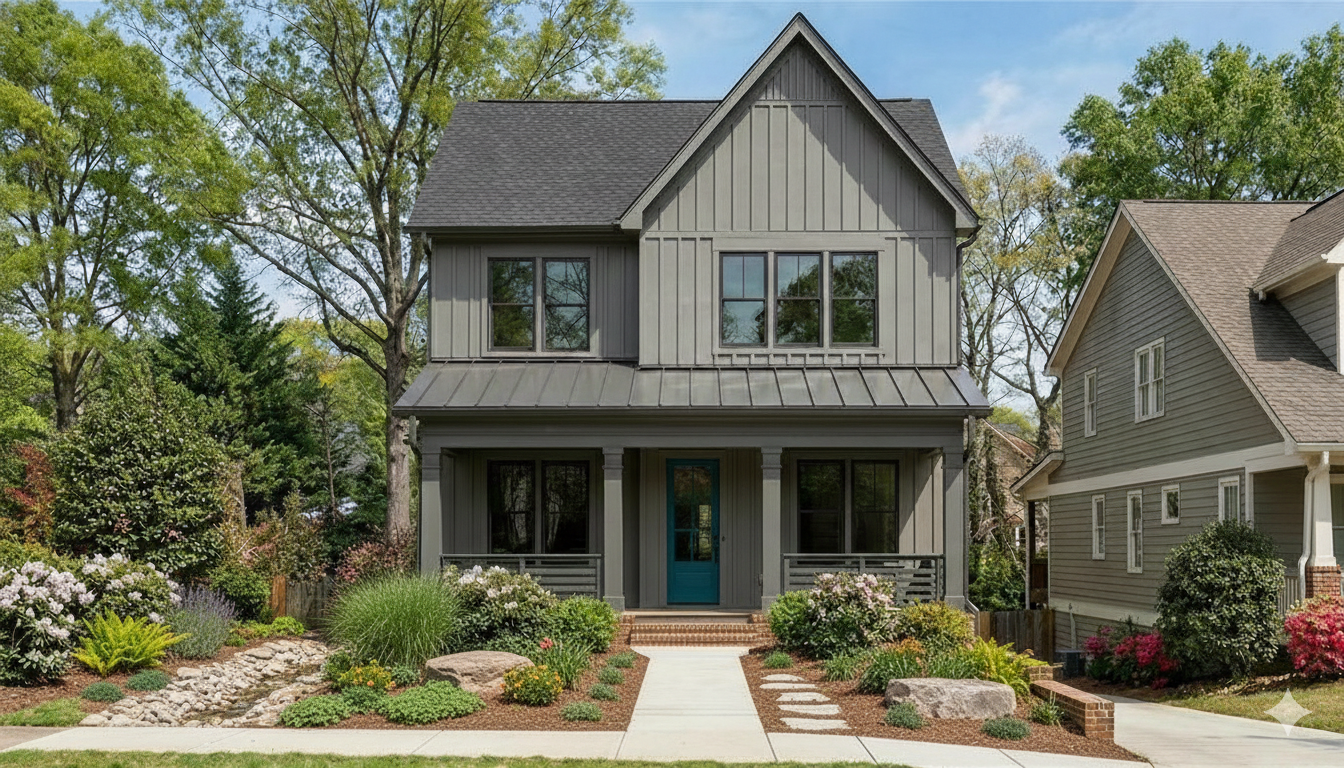
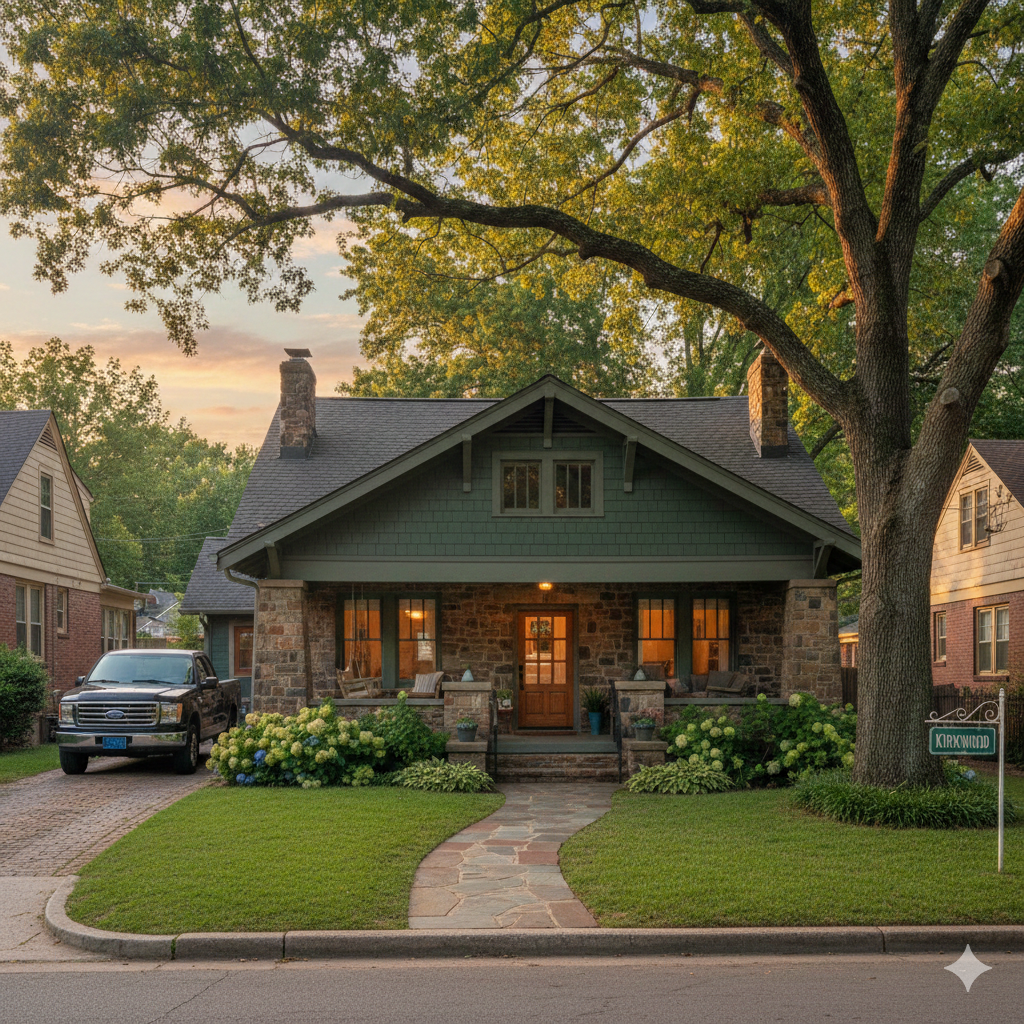
I've been selling homes in Metro Atlanta for nearly a decade, and Kirkwood is one of those neighborhoods that consistently surprises buyers who think they already know it. They come expecting a quieter version of EAV or a hipper version of Grant Park, and what they find instead is something genuinely its own thing — a neighborhood with a post office, a library, a fire station, a police precinct, and a business district all within walking distance of brightly painted Craftsman bungalows. Residents have a name for it: the small town in the big city.
That's not marketing language. That's just what Kirkwood actually is.
Founded in 1899 and listed on the National Register of Historic Places since 2009, Kirkwood is one of Atlanta's original streetcar suburbs — and you can still feel that DNA in the walkable street grid, the tree canopy, the front porches, and the neighborhood institutions that have survived every market cycle and demographic shift the city has thrown at it. What you also feel now is momentum. Pullman Yards has transformed a dormant 27-acre industrial complex into one of the city's most talked-about entertainment destinations. The Eastside Trolley Trail is open, connecting Kirkwood to the BeltLine's Eastside Trail through Edgewood and Reynoldstown. And buyers who bought here five years ago have watched their equity climb while the neighborhood around them keeps getting better.
Median prices are sitting around $620,000–$650,000 depending on the data source you pull, 30 days on market, and homes in strong condition are still moving. If you're comparing that to Inman Park or Candler Park at $700,000–$900,000+, Kirkwood starts to look like a relative deal — particularly when you factor in Pullman Yards, the trail access, and a Hosea Williams Drive commercial corridor that has more local character per block than almost anywhere else in intown Atlanta.
Here's what you need to know.
Kirkwood by the Numbers
Before I walk you through the neighborhood, let's talk about where the market actually stands. I always tell buyers: verify any pricing data independently and ask your agent to pull current comps, because Kirkwood's numbers have ranged across sources and conditions vary widely street by street.
What the data shows as of late 2025 / early 2026:
Median sale price: approximately $620,000–$650,000 (Redfin and Homes.com 12-month trailing data; Zillow's December 2025 figure lands closer to $555,000, which may reflect a different boundary definition)
Days on market: 26–30 days average; hot homes in strong condition go pending in around 22 days
Price per square foot: approximately $323
YoY price trend: slight softening of 1–5% depending on the source — consistent with the broader Atlanta intown market correction that began in 2023
Homes sold: 39 in July 2025, down from 44 the prior year
Active inventory: approximately 54 listings as of mid-September 2025
Price range in market: $380,000–$1.2M+ depending on size, condition, and whether you're buying original or renovated
What the range actually means:
At the low end ($380K–$500K), you're typically looking at smaller bungalows, condos at Pullman Flats, or homes that need meaningful work — think unrenovated kitchens, deferred maintenance, or a foundation situation. At $500K–$700K, you're in the core Craftsman bungalow market: 2–3 bedrooms, updated or partially updated, livable as-is but potentially with room to personalize. Above $700K, you're getting into fully renovated historic homes, larger square footage (2,500+ sq ft), or new construction that has landed in Kirkwood in pockets near the Pullman Yards development. Above $900K, you're in the Kirkwood luxury tier — and yes, it exists.
Average household income in Kirkwood is approximately $140,500, and 64% of residents own their homes. That's a meaningful ownership rate for an intown neighborhood and tells you something about who's committed here long-term.
The Housing Stock: What You're Actually Buying
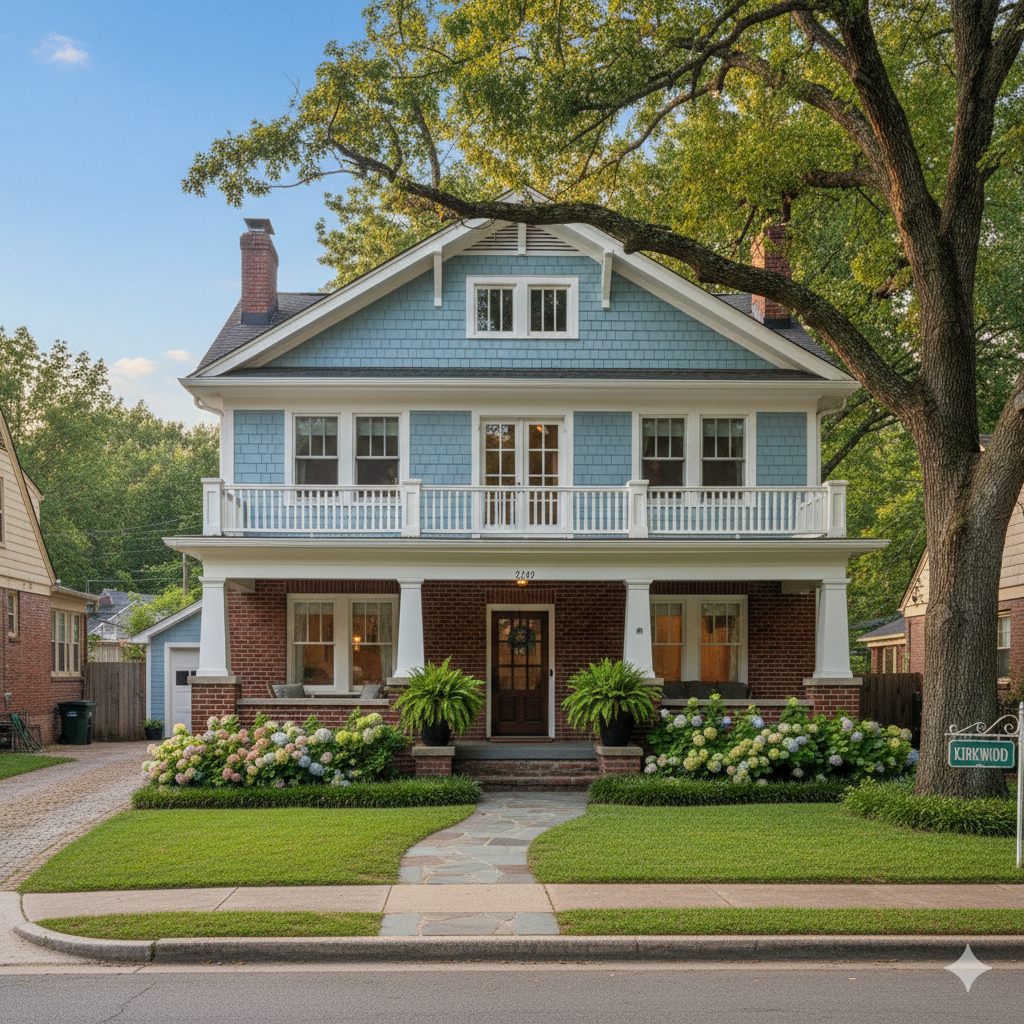
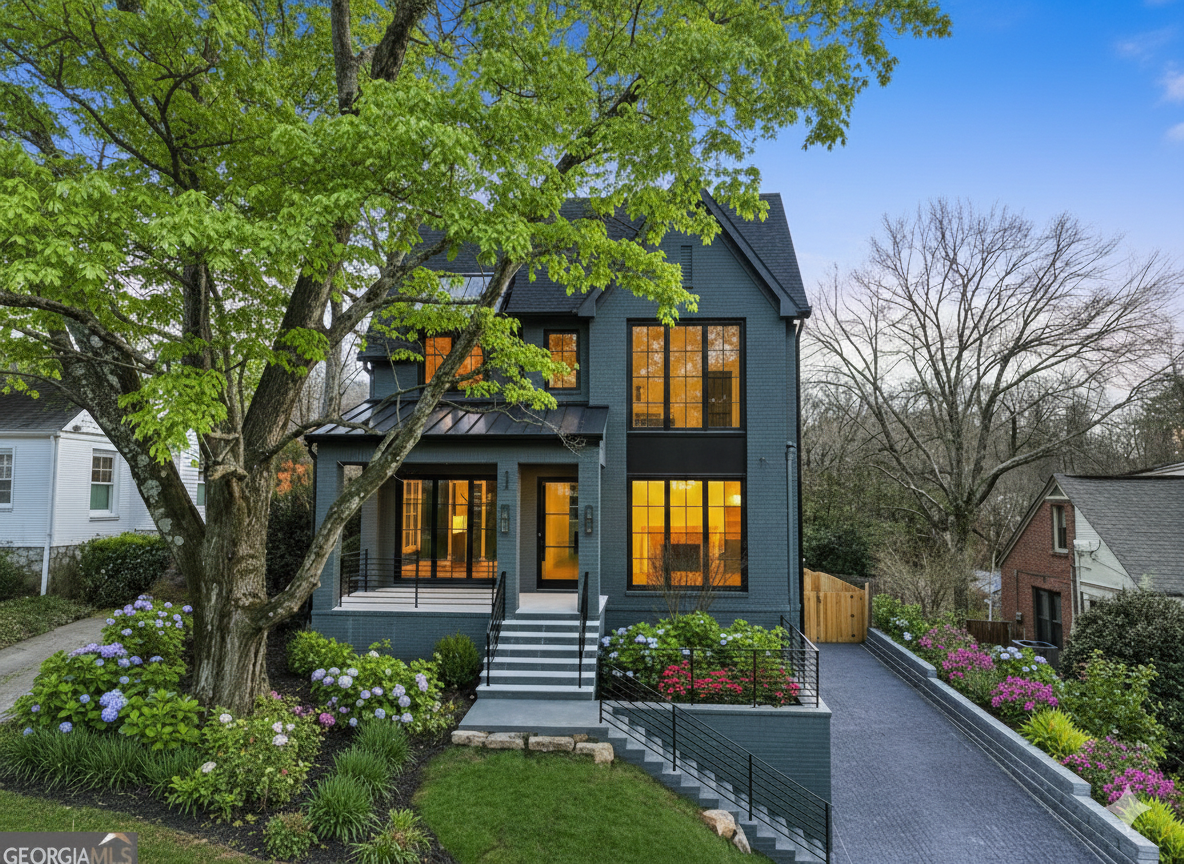
Kirkwood's streetscape is dominated by early 20th-century architecture — Craftsman bungalows, Victorian cottages, American Foursquare, and Colonial Revival homes — most of them built between the 1890s and 1930s when Kirkwood was its own independent city with its own mayor and water system. That history shows up in the housing stock in ways that are both charming and practical: deep front porches, large lots relative to the home size, mature tree canopy, and a level of architectural detail you simply don't get in a 2005 subdivision.
What buyers need to understand about historic homes:
Age means character, but it also means due diligence. Homes in the Kirkwood Historic District — which covers 1,788 contributing buildings — may have restrictions on exterior modifications. Before you fall in love with a renovation project, verify what the historic district does and doesn't allow. Your inspector needs to be someone who knows old houses: knob-and-tube wiring, original galvanized plumbing, pier-and-beam foundations, and aging HVAC systems are realities in this neighborhood, not outliers.
The renovation spread is significant. A smaller bungalow that hasn't been touched since 2005 and a fully gut-renovated version of the same floor plan on the same street can be $150,000–$200,000 apart in price. That gap can represent either opportunity or risk depending on your situation. If you're a buyer who wants move-in ready, Kirkwood has options — but you'll pay for them. If you're comfortable with a project and have a contractor relationship, the unrenovated inventory can pencil well.
New construction and townhomes have entered the Kirkwood market in pockets, particularly near Pullman Yards. The Broadstone Pullman apartments brought 354 units of multifamily housing to the district in 2022, and a 44-unit townhome development on Rogers Street near Pullman Yards is currently in the planning pipeline as of early 2025. Pullman Flats offers studio and smaller condos for buyers who want a lower price point and walkability to Hosea Williams Drive.
Property types you'll find:
Craftsman bungalows and Victorian cottages (dominant)
American Foursquare and Colonial Revival
New construction townhomes (emerging)
Condos and lofts (primarily near Pullman Yards corridor)
Duplexes (investor activity is relatively low — roughly 3% of loan originations)
Downtown Kirkwood: Hosea Williams Drive
Every neighborhood has a main street. Kirkwood's is Hosea L. Williams Drive, and it punches above its weight. This is not a chain-heavy commercial strip — it's a genuine neighborhood business district with a post office, a branch library, a fire station, a wine shop, a butcher, a coffee shop, a yoga studio, a dog boarding facility, and a handful of restaurants and bars that have built loyal followings over years.
A few anchors worth knowing:
Le Petit Marché — French-inspired brunch and lunch spot that draws a weekend wait. One of the most consistently loved spots in the neighborhood. Expect a line on Saturdays.
Taproom Coffee — The neighborhood coffee shop on Hosea Williams. Craft beer on tap, $4 pint Mondays, open until 10pm on weeknights. Becomes the kind of place you go twice a week without thinking about it.
Kirkyard Public House — Pub fare, solid craft beer selection, good patio. The kind of neighborhood bar that ages well.
The Pullman — Gastropub with a nice tap list, also on Hosea Williams. A go-to for casual weeknight dinners.
Elmyriachi — Mexican with a big patio overlooking downtown Kirkwood. Pitchers, burritos, margaritas.
Urban Pie — Pizza delivery and dine-in in a cozy space. A neighborhood staple.
Evergreen Butcher and Baker — Fresh sourdough, challah, rye, and quality meat from a husband-and-wife team. One of the more interesting additions to the commercial corridor in recent years.
Dom Beijos — Wine boutique a few doors from Evergreen. The kind of shop that makes a neighborhood feel complete.
Poor Hendrix — Gastropub at the far end of Hosea Williams where Kirkwood meets East Lake, with a small-plates menu and patio. Opens at 5pm.
Near the neighborhood's edge on Memorial Drive, The Argonaut has become a go-to for elevated oysters, raw bar, and cocktails — a more recent addition that signals where the neighborhood's dining scene is heading.
La Calavera — Former Decatur Mexican bakery that relocated to Memorial Drive and pivoted to sourdough-crust pizza using locally sourced ingredients. Worth the trip.
The commercial district on Hosea Williams also benefits from a dedicated bicycle lane installed as part of a $1.5M streetscape project completed in 2003 — wider decorative sidewalks, protected crosswalks, historic lighting, brick pavers, and bike racks. It's a walkable, bikeable main street in a way that a lot of Atlanta neighborhoods aspire to but haven't quite achieved.
Pullman Yards: The Neighborhood Anchor
No Kirkwood conversation is complete without Pullman Yards, the 27-acre former industrial complex that has become one of Atlanta's most talked-about entertainment districts since its redevelopment began under Atomic Entertainment in 2017.
Originally built in 1904 as a sugar and fertilizer processing plant, then purchased by the Pullman Passenger Rail Company in 1926 to manufacture and repair sleeper cars, the property sat largely dormant for years — a graffiti-covered urban ruin that served as a film location for productions including The Hunger Games, Fast and Furious, Baby Driver, and Bad Boys 3. The site carries a specific piece of labor history: the Pullman Company was one of the largest employers of Black men during segregation, and its workers formed the Brotherhood of Sleeping Car Porters and Maids — the first Black labor union affiliated with the American Federation of Labor, founded by civil rights activist A. Philip Randolph.
That history now coexists with the current identity of the property as an entertainment hub: rotating immersive exhibits, outdoor pickleball courts that double as a roller-skating and DJ venue on weekends, AlcoHall (a drinks and events concept), Fishmonger (the second location of the celebrated seafood and raw bar restaurant), Brick and Mortar, Emory's Science Gallery, Chef's Market (food, arts, and local vendors), the Transfer Table concert and events space, and major festivals including SweetWater 420 Fest.
What's coming: Phase two construction started in August 2025 and is expected to wrap by summer 2026. The project adds a 400-space parking garage (designed to be below street level and largely invisible from the main entrance) and approximately 40,000 square feet of convention space — a $15M investment on top of the $45M already put into phase one. Phase three, which includes multifamily residential, has a start date still to be determined.
The honest conversation buyers need to hear: Pullman Yards is an asset for the neighborhood in terms of property values, national profile, and activity. It is also a source of genuine tension for residents who live nearby. Traffic, noise, and public safety concerns during large events have been ongoing issues, and the Kirkwood Neighbors Organization has been vocal about the lack of communication from both the city and Atomic Entertainment on neighborhood impacts. If you're buying within a few blocks of Pullman Yards, do your own reconnaissance: go on a festival weekend, talk to neighbors on those streets, and decide whether the tradeoff works for your lifestyle. This is a real consideration, not a throwaway caveat.
The Eastside Trolley Trail and Getting Around
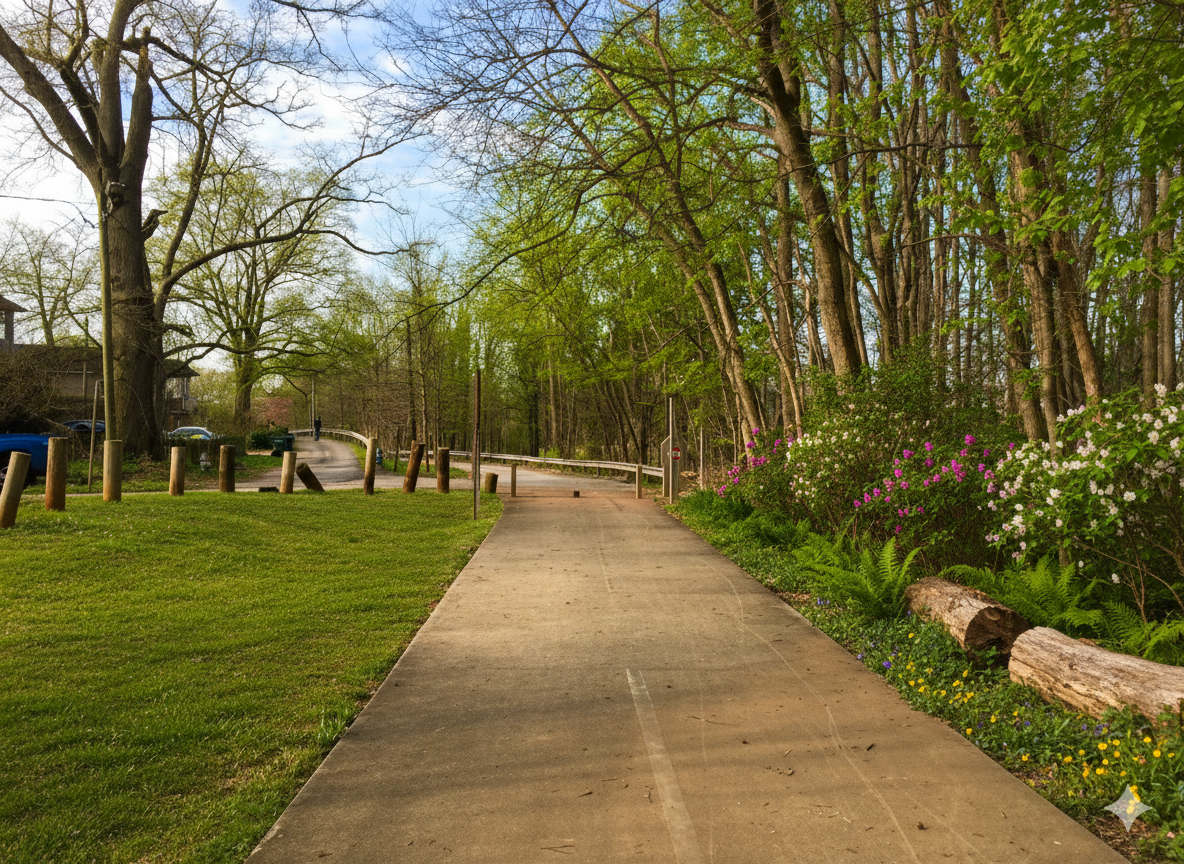
Let me be precise about this, because it matters: Kirkwood is not on the BeltLine. What Kirkwood has is trail-connected access to the BeltLine via the Eastside Trolley Trail, a nearly 2-mile multiuse path that connects downtown Kirkwood on Hosea Williams Drive through Edgewood and Reynoldstown, where it links to the BeltLine's Eastside Trail near Arkwright Place.
The Trolley Trail was completed in 2023 and has been described as 30 years in the making — an extension of PATH Foundation trail segments originally installed before Atlanta's 1996 Centennial Olympic Games. The trail runs along Hosea Williams Drive and Woodbine Avenue, passes through Coan Park and Gilliam Park, and continues west through Edgewood to the BeltLine connection in Reynoldstown. A further extension is planned along Flat Shoals Avenue to create a more direct link to the BeltLine's Eastside Trail, bundled with the Amani Trail project in Edgewood.
In practice, this means you can walk or bike from downtown Kirkwood to Ponce City Market, Piedmont Park, Midtown, and back — it just takes longer than it would from Reynoldstown or Inman Park. For buyers who want BeltLine frontage, Kirkwood is not the answer. For buyers who want trail access with a quieter neighborhood character and a lower price point than the neighborhoods directly on the Eastside Trail, Kirkwood is worth a close look.
Car: Kirkwood sits just off I-20, with easy access to both I-75/I-85 and downtown. Drive time to downtown Atlanta is approximately 10–15 minutes without traffic. Airport is about 15–20 minutes, which puts Kirkwood in a similar position to Grant Park on that front.
MARTA: The closest heavy rail station is Edgewood-Candler Park Station on the Blue/Green Line, about a mile from the heart of Kirkwood. Several MARTA bus routes serve the neighborhood. You can get to downtown Atlanta by rail, but daily MARTA commuting from Kirkwood requires either a bike, a car to the station, or a bus connection. It's doable but not seamless.
Walk Score: Approximately 56 — "somewhat walkable." Hosea Williams Drive and the immediate surrounding blocks are genuinely walkable for daily needs. The residential side streets are less so, and a car remains practical for most errands beyond the immediate commercial district.
Bike: The dedicated bike lane on Hosea Williams and the Trolley Trail make Kirkwood one of the better cycling neighborhoods on the eastside.
Kirkwood's Parks and Green Space
Kirkwood has five public parks and is working to establish the Eastside Greenway, a series of linear parks and green space intended to traverse the neighborhood.
Bessie Branham Park — The neighborhood's primary community park, with basketball courts, tennis courts, a recreation center, gym, computer center, and a community playground that residents funded and built themselves. Home to the annual Kirkwood Spring Fling festival.
Coan Park — Where the Trolley Trail meets the neighborhood. Outdoor fitness equipment on the trail corridor.
Gilliam Park — Historic green space on the western edge of the neighborhood, named for a family connected to the original Clay farmstead that predates Kirkwood's founding.
The Kirkwood Spring Fling — held each spring at Bessie Branham Park — is one of those neighborhood events that tells you everything about the community character: live music, artist market, food, beer, children's area, and proceeds committed to local improvement projects. The Kirkwood Wine Stroll, hosted by the Kirkwood Business Owners Association each fall, sends attendees to sample wines at local businesses up and down Hosea Williams Drive.
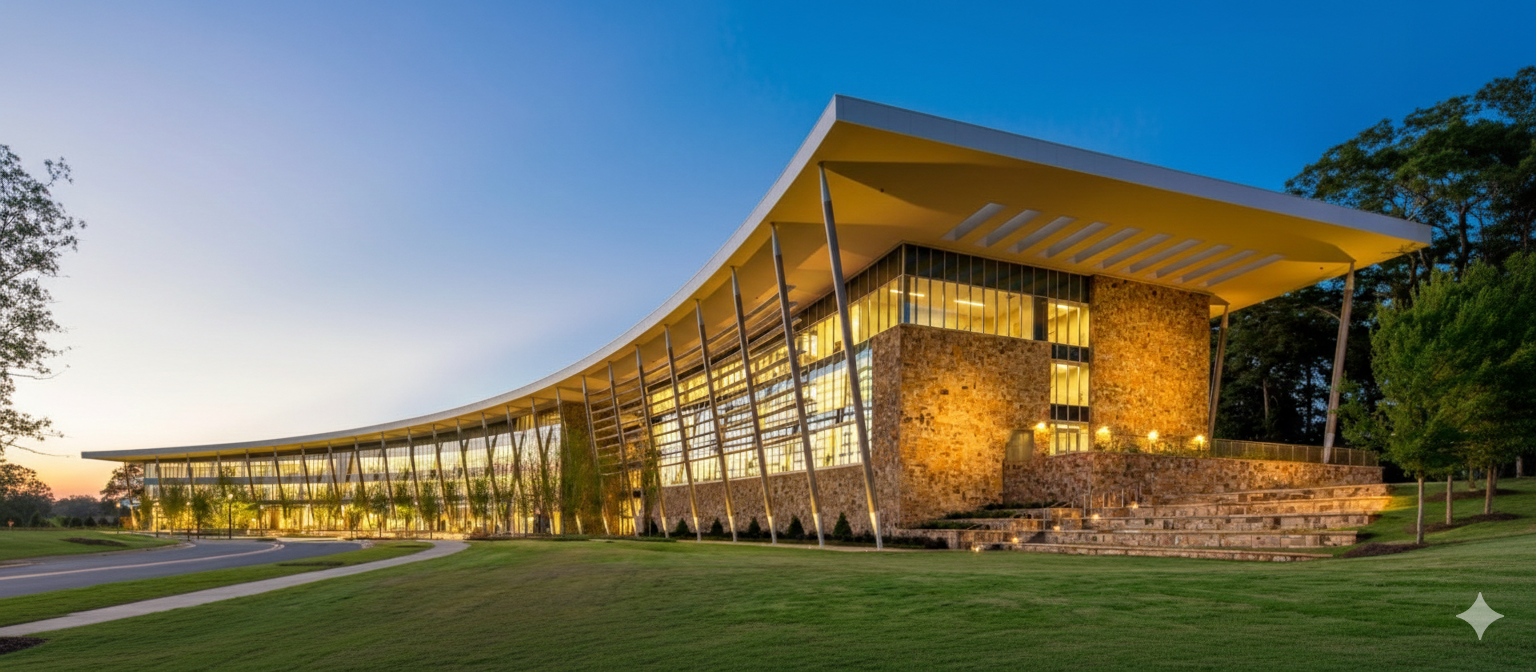
Charles R. Drew Charter School
Schools in Kirkwood
Atlanta Public Schools serve Kirkwood. Here's the factual picture on the schools in the primary attendance zone, with the data to help you research further. As always, I'd encourage you to visit schools directly, speak with current families, and do your own evaluation — test scores tell part of the story, not all of it.
Fred A. Toomer Elementary School (PreK–5)
Enrollment: 501 students
Student-teacher ratio: 13:1
Niche grade: C+
GreatSchools rating: 5/10
Community feedback consistently highlights strong staff relationships and a genuine family atmosphere; the school has a walkable location that makes it a daily part of the neighborhood for many Kirkwood families
Charles R. Drew Charter School (PreK–12, application-based)
Not the neighborhood school, but accessible to Kirkwood families through the APS charter application process
Enrollment: 959 students (elementary); full PreK–12 campus
Student-teacher ratio: 11:1
Niche grade: A-
US News Best Elementary Schools recognition
Named 243rd best public elementary school in Georgia
Science-focused curriculum, strong college counseling, dual enrollment and internship pathways at the high school level
Worth researching if you're considering Kirkwood with school-age children — it's a meaningful differentiator in this ZIP code
Martin Luther King Jr. Middle School
Serves 6th–8th grade for most Kirkwood students
Part of Atlanta Public Schools
Maynard Holbrook Jackson High School
Niche grade: B-
Offers IB Diploma Programme and IB Career Programme
1,549 students
Also worth knowing: the Atlanta College and Career Academy at Jackson offers pathways in carpentry, dental science, and graphic design
Research directive: Visit Georgia's Governor's Office of Student Achievement (gosa.georgia.gov) for current test scores, and verify enrollment eligibility by contacting APS directly — boundaries can shift. Do not rely on any real estate website, including this one, to confirm which school serves a specific address.
Who Buys in Kirkwood
After nearly a decade of helping buyers across Metro Atlanta, I've noticed some consistent patterns in who lands in Kirkwood — and who doesn't.
Kirkwood tends to work well for:
Buyers who want genuine intown character without the intown premium of Inman Park, Virginia-Highland, or Candler Park
Families willing to research APS options carefully and who value neighborhood walkability and community engagement over school ratings alone
Creative professionals, people in the film industry, and buyers who are drawn to a neighborhood with visible personality — the painted bungalows, the art, the local business district
Dog owners (seriously — the dog park culture here is real, and the Trolley Trail is a daily fixture for pet-owning residents)
Buyers who want trail access without paying BeltLine-frontage prices
Buyers who appreciate Pullman Yards as a backyard amenity and understand the occasional tradeoffs that come with it
Investors looking at long-term appreciation in an established intown neighborhood — though rental yields will require careful analysis given price points
Kirkwood is probably not your neighborhood if:
You need a short walk or roll to the BeltLine itself — Reynoldstown, Inman Park, or Old Fourth Ward will serve you better
You want a quiet residential pocket with no event-driven foot traffic or parking pressure — streets near Pullman Yards have real tradeoffs on festival weekends
Your priority is standout test scores at the neighborhood school without navigating the charter school application process
You're expecting MARTA heavy rail within easy walking distance — the Edgewood-Candler Park station is bikeable but not walkable for most buyers
How Kirkwood Compares to Nearby Neighborhoods
Buyers shopping the eastside intown market are usually looking at some combination of Kirkwood, East Atlanta Village, Grant Park, Reynoldstown, and Candler Park. Here's the honest comparison:
Kirkwood vs. East Atlanta Village: EAV is louder, edgier, and more nightlife-forward. The commercial strip on Flat Shoals and Glenwood is dominated by bars, live music venues, and independent food concepts that run later. Kirkwood is quieter, more family-oriented, and has a more established neighborhood infrastructure. EAV's median is closer to $573K; Kirkwood runs $620K–$650K. EAV is the better fit for buyers who want to be in the scene; Kirkwood is better for buyers who want to be near it.
Kirkwood vs. Grant Park: Both are historic neighborhoods with strong community identity. Grant Park has Zoo Atlanta, Oakland Cemetery, and a 131-acre park — plus the BeltLine Southside Trail arriving in early 2026, which is expected to push appreciation. Grant Park medians run $510K–$615K, which makes it slightly more affordable than Kirkwood. Both neighborhoods have similar transit situations (no convenient MARTA rail) and similar drive times downtown. The buyer who wants a larger park and more developed southern BeltLine story may lean Grant Park; the buyer who wants Pullman Yards and a stronger commercial main street may lean Kirkwood.
Kirkwood vs. Reynoldstown: Reynoldstown has direct BeltLine Eastside Trail access and sits closer to the core of where BeltLine development is concentrated. That proximity comes at a price — medians in Reynoldstown have run higher, and the neighborhood has a more industrial character with new development pressing in from multiple directions. Kirkwood has more established residential character and more of a local business district feel. Buyers who want to maximize BeltLine proximity lean Reynoldstown; buyers who want a more settled neighborhood with a main street and community infrastructure lean Kirkwood.
Kirkwood vs. Candler Park: Candler Park medians have historically been higher — often in the $600K–$800K+ range for comparable homes. Candler Park is immediately adjacent to the Eastside Trail and the Lake Claire greenspace. If Candler Park is priced out of your range, Kirkwood is frequently the next conversation. You're buying neighborhood character at a slight discount.
The Investment Angle
Kirkwood isn't traditionally positioned as an investor-first neighborhood — owner-occupants dominate, and the Section 8 housing rate of approximately 20% reflects longstanding housing variety that predates the current gentrification wave. Investor activity as a share of loan originations runs around 3%, which is low.
That said, the long-term appreciation story here is real. Forecasters cited Kirkwood as one of the pockets of the Atlanta market expected to see 6%+ appreciation in 2025 — above the 2–4% metro average — driven by the Trolley Trail completion, continued Pullman Yards investment, and proximity to neighborhoods that have already appreciated significantly.
For buy-and-hold investors: single-family rental demand in Kirkwood is supported by the neighborhood's intown position and proximity to employment centers. Median rent for a 3-bedroom is approximately $3,500/month as of mid-2025. At current purchase prices, cash flow will be tight on conventional financing — this is an appreciation play more than a cash flow play.
For house hackers or duplex buyers: options are limited but exist. Check the market carefully and run numbers with current interest rates.
Practical Details
ZIP code: 30317
County: DeKalb County
City: City of Atlanta (annexed 1922)
Average household income: $140,500
Bachelor's degree or higher: 60.9% of adult residents
Homeownership rate: 64.2%
Population: approximately 14,800 (up 7.7% over five years)
Remote workers: 29.1% work from home — notably high, which matters for how the neighborhood functions during the week
Flooding: 12% of properties have some risk of severe flooding over 30 years — not alarming, but worth checking the specific address if you're buying near lower-lying areas
Grocery: Kroger in Edgewood is the closest major grocery store, about a 5-minute drive. Evergreen Butcher and Baker and specialty shops on Hosea Williams cover a lot of the day-to-day.
Hospitals: Grady Memorial Hospital is approximately 5 miles via I-20.
Ready to Look at Kirkwood?
With nearly 10 years and over $50 million in sales across Metro Atlanta, I know Kirkwood's market the way I know most intown eastside neighborhoods — from the inside out. I've helped buyers navigate the unrenovated versus renovated decision, the charter school application process, and the block-by-block differences that don't show up on Zillow.
If you're considering Kirkwood — or trying to decide between Kirkwood, Grant Park, EAV, or Reynoldstown — let's talk through your priorities and get specific.
📞 [Your phone number] 📧 [Your email] 🌐 kristenjohnsonrealestate.com
Come as you are, come on home.
Related Neighborhood Guides:
Frequently Asked Questions About Kirkwood, Atlanta
Is Kirkwood on the BeltLine? Kirkwood is not directly on the BeltLine, but it has trail access via the Eastside Trolley Trail — a nearly 2-mile multiuse path that connects downtown Kirkwood through Edgewood and Reynoldstown to the BeltLine's Eastside Trail. You can walk or bike to Ponce City Market and Midtown, but you should expect the trip to take longer than it would from Reynoldstown or Inman Park.
What are home prices in Kirkwood? As of late 2025 and early 2026, median home prices in Kirkwood range from approximately $620,000–$650,000 depending on the data source, with active listings ranging from around $380,000 to over $1.2 million. Prices vary significantly based on condition, renovation level, and proximity to key amenities. Always ask your agent to pull current comparable sales.
What school district is Kirkwood in? Kirkwood is served by Atlanta Public Schools. The neighborhood elementary school is Fred A. Toomer Elementary (PreK–5). Charles R. Drew Charter School is an application-based option accessible to Kirkwood families. Middle school is Martin Luther King Jr. Middle School; high school is Maynard Holbrook Jackson High School. Contact APS directly to verify enrollment eligibility for a specific address.
Is Kirkwood a safe neighborhood? Kirkwood has a crime score comparable to the average U.S. neighborhood. Like any intown Atlanta neighborhood, safety conditions vary by block and time of day. I'd encourage buyers to research current crime data at the address level, visit at different times of day and week, and talk to current residents — particularly near Pullman Yards, where large events create periodic crowd and traffic situations.
What is Pullman Yards? Pullman Yards is a 27-acre former industrial complex on the Kirkwood/Edgewood border that has been redeveloped into an entertainment district. It hosts rotating immersive exhibits, concerts, festivals (including SweetWater 420 Fest), restaurants (Fishmonger, Brick and Mortar), AlcoHall, Emory's Science Gallery, and outdoor events. A second phase adding a 400-space parking garage and 40,000 sq ft of convention space is under construction with completion expected summer 2026.
How far is Kirkwood from downtown Atlanta? Kirkwood is approximately 4–5 miles east of downtown Atlanta, with a typical drive time of 10–15 minutes without traffic via I-20. The closest MARTA heavy rail is Edgewood-Candler Park Station, about a mile from the Hosea Williams Drive commercial corridor.