

Should You Get a Pre-Listing Inspection Before Selling Your Atlanta Home?

If you're getting ready to sell a home in Metro Atlanta, you've probably heard about pre-listing inspections, and you're wondering whether spending $400 to $700 before you have an offer is worth it. The honest answer is: it depends on the house, the price point, and what you're prepared to do with the report once you have it.
I work with sellers across Metro Atlanta, from intown bungalows in Edgewood and Kirkwood to suburban homes in East Cobb, Alpharetta, Smyrna, and Henry County. Pre-listing inspections come up in nearly every listing conversation now, and the answer isn't the same for every seller. A 1920s craftsman with original electrical is a different conversation than a five-year-old build in a North Fulton subdivision. A seller who plans to address findings is in a different position than one who will not.
Nearly a decade of selling homes in this market has shown me where pre-listing inspections actually move the needle and where they end up creating disclosure obligations sellers wish they didn't have. There's no universal answer, but there is a clear framework for deciding.
Here's what you need to know.
What a Pre-Listing Inspection Actually Is
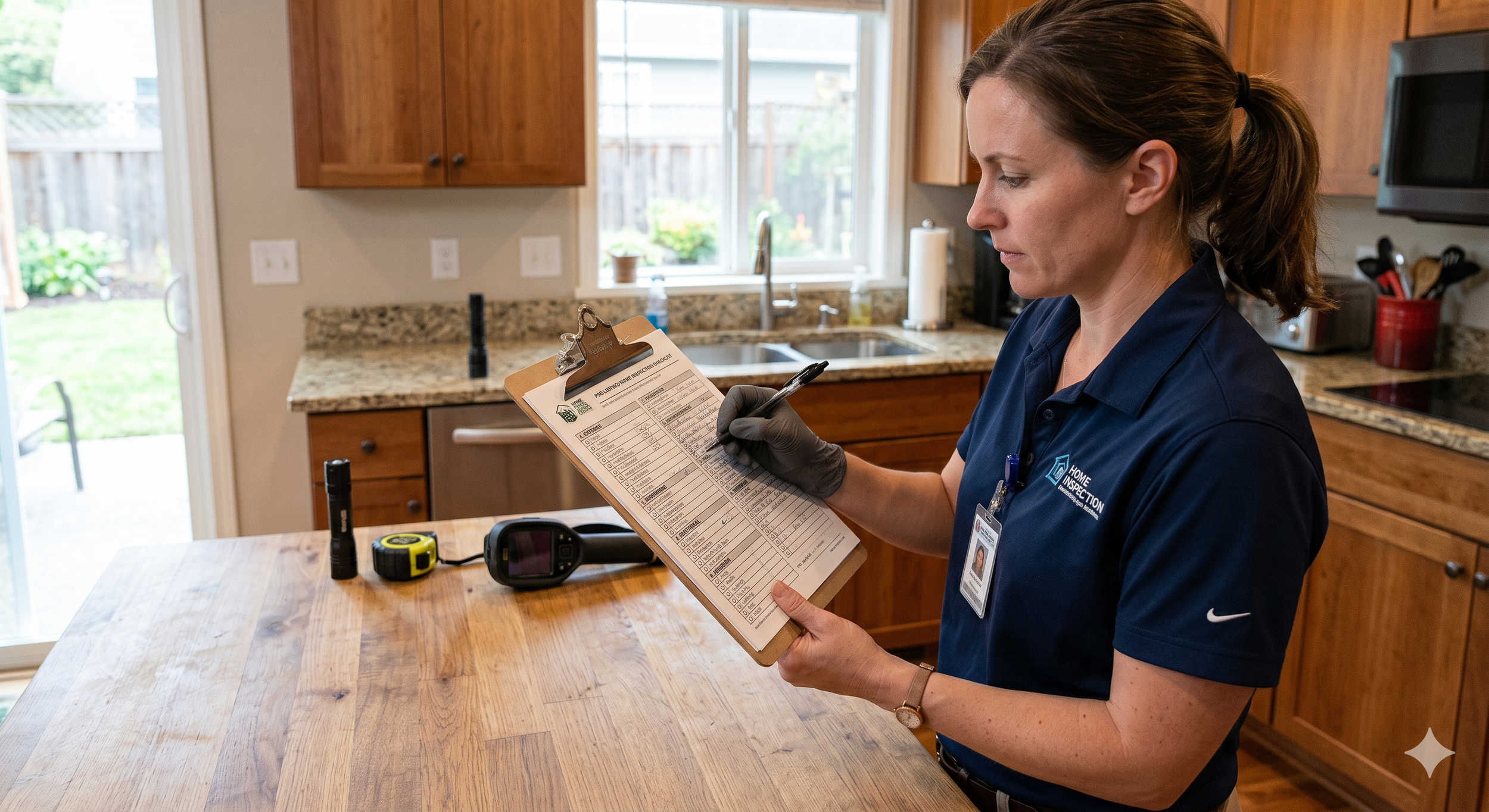
A pre-listing inspection is a full home inspection performed before your house goes on the market, paid for by you, the seller. It's the same scope a buyer's inspector would run after going under contract: structure, foundation, roof, electrical, plumbing, HVAC, water heater, appliances, attic, crawlspace, and visible interior and exterior conditions.
The difference is who orders it and when. The buyer's inspection happens during due diligence after contract acceptance, typically with a tight 7 to 14-day window and an emotionally invested buyer on the other side of every finding. A pre-listing inspection happens on your timeline, in your home, with no contract pressure and no buyer reading the report over your shoulder.
That timing difference is the whole point. It's not a different inspection. It's the same inspection, taken earlier, when you still have options.
What It Costs in Atlanta
Pre-listing inspection pricing in Metro Atlanta tracks closely with what buyers pay. Standard inspections range from roughly $300 to $700, with most sellers landing between $400 and $600 depending on square footage and home age. A few specifics from local inspection companies:
Standard residential inspections in Atlanta typically run $300 to $600, with many buyers and sellers paying around $425 to $500.
Smaller homes (under 2,000 square feet) and newer builds tend to fall on the lower end.
Larger homes (3,000+ square feet) and homes built before 1980 typically run $500 to $700.
Add-ons price separately: radon testing adds $120 to $180, termite or wood-destroying organism inspections run $75 to $150, sewer scope inspections run $200 to $400, and mold or moisture testing adds $150 to $400 depending on scope.
For a typical 2,000 to 2,500 square foot Atlanta home, budget $450 to $600 for a thorough pre-listing inspection. For an older intown home with a basement or crawlspace, plan for $550 to $750. Add a sewer scope if you're selling anything older than 1990 with a finished basement or any history of plumbing issues. The cast iron and clay sewer lines under a lot of intown Atlanta neighborhoods are a real pre-closing surprise that you do not want a buyer's inspector finding first.
This is not the place to chase the cheapest quote. The value of a pre-listing inspection depends entirely on the inspector finding what a buyer's inspector will find. A bargain inspection that misses things is worse than no inspection at all because it lulls you into false confidence. Look for inspectors certified by InterNACHI or ASHI, with strong reviews specific to pre-listing work, and ask whether they handle re-inspections after repairs.
The Georgia Legal Reality You Need to Understand First
This is the single most important section of this post, so read it carefully. Georgia is a caveat emptor state, which means "buyer beware." Sellers are not required to actively investigate or hunt down defects in their own homes. But the moment a seller becomes aware of a material defect, the legal duty to disclose attaches.
Material defects, broadly defined, are conditions that would significantly affect the value, safety, or usability of the property and are not reasonably discoverable by a buyer through ordinary inspection. Foundation problems, active roof leaks, electrical hazards, mold, water intrusion, septic failures, structural movement, undisclosed permit issues. Once you know about a material defect, you have to disclose it. Most Georgia transactions use the Georgia Association of Realtors Seller's Property Disclosure Statement (Form F301), which asks specific yes/no questions about your knowledge of property conditions.
Here's the part that catches sellers off guard: a pre-listing inspection report becomes part of what you know. If your inspector identifies a material defect, you cannot un-know it. You cannot bury the report and pretend you never had one. Once you have that information, it's part of your disclosure obligation regardless of whether the buyer's inspector would have caught it independently.
That's not a reason to skip the inspection. It is a reason to think carefully before ordering one if you are not prepared to either repair the issues or disclose and price accordingly. Sellers who order an inspection, get bad news, and then try to hide the report from buyers are creating exactly the kind of legal exposure that produces post-closing lawsuits. Around 77 percent of real estate lawsuits trace back to disclosure issues. The path of least legal risk is full transparency. The path of most legal risk is selective memory.
The flip side is also true. If you order a pre-listing inspection and the report comes back clean, that report is one of the most powerful marketing assets you can hand a buyer. We'll get to that.
The Three Real Reasons Sellers Choose to Inspect Before Listing
There are three legitimate strategic reasons to order a pre-listing inspection in the current Atlanta market, and they all come down to control.
You discover issues on your timeline, not the buyer's. When a buyer's inspector finds a $4,000 HVAC issue during due diligence, you have somewhere between 24 hours and a few days to respond. You're negotiating under deadline pressure, against a buyer whose anxiety just spiked, with the alternative being a deal that falls apart and a property that has to go back on market with a "previous due diligence terminated" stigma. When your own inspector finds the same issue six weeks before listing, you can get three quotes, choose your contractor, and have it fixed for full retail price instead of the inflated credit a buyer will demand.
You eliminate the surprise re-negotiation. The most common deal-killer in Atlanta real estate is the post-inspection price reduction. Buyers find something unexpected, panic, and either walk or demand a credit that exceeds the actual repair cost two or three times over because the surprise itself is what triggered the response. Pre-listing inspections remove the surprise. Buyers can review your inspection report before they write the offer, which means the price reflects what they already know, and there's much less room for the "wait, what about this?" moment that derails a closing.
You signal credibility to a sophisticated buyer pool. Atlanta's buyer base is increasingly relocation-driven, with corporate transplants from New York, California, and Northern Virginia who are used to seeing pre-listing inspections in their home markets. A clean pre-listing inspection report attached to the listing tells those buyers you're a transparent, motivated seller who isn't hiding anything. In a market where inventory has loosened and buyers have more leverage than they did in 2021 or 2022, transparency is no longer optional. It's a competitive advantage.
When a Pre-Listing Inspection Makes the Most Sense
I recommend pre-listing inspections most strongly for these specific scenarios.
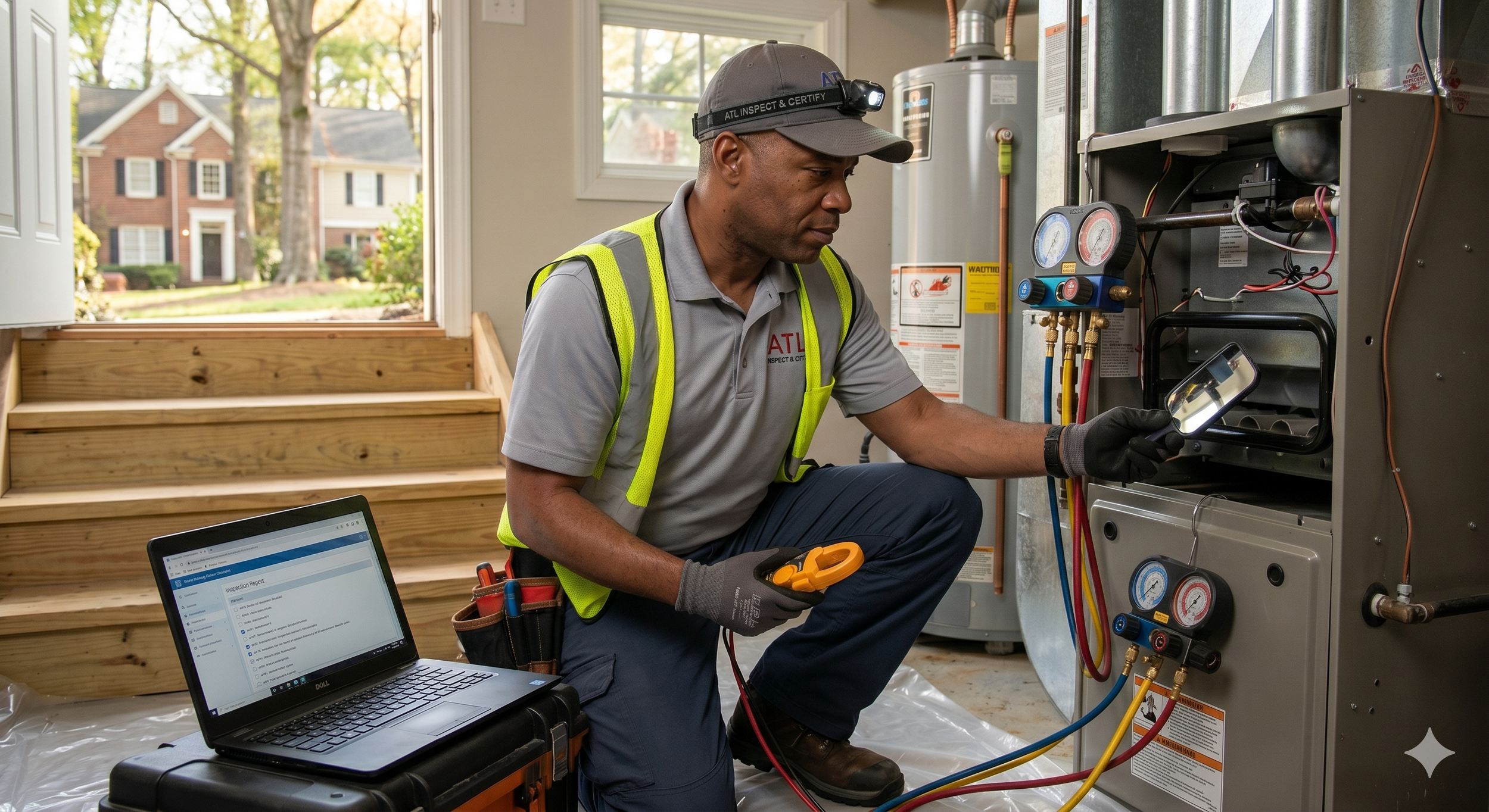
Older homes, especially pre-1980 intown builds. If you're selling a craftsman bungalow, a mid-century ranch, or any home with knob-and-tube wiring history, original galvanized plumbing, cast iron sewer lines, or an HVAC system more than 12 years old, a pre-listing inspection is almost always worth the cost. The systems in these homes will draw buyer scrutiny, and you want to know what you're dealing with before a buyer's inspector turns it into a list of demands.
Homes you've owned for 15+ years. The longer you've lived in a house, the easier it is to stop seeing things. The slow drip under the master bathroom vanity, the soft spot in the deck, the basement window that hasn't sealed right since 2017. Buyers and their inspectors notice everything you've stopped noticing. A pre-listing inspection forces a fresh set of professional eyes onto the property and surfaces what you've gotten used to.
Homes priced over $750,000. Higher-priced buyers expect more, scrutinize more, and have more leverage in negotiation. The cost of an inspection at this price point is a rounding error against the deal value, and the protection it offers against a six-figure repair credit demand is meaningful. For luxury Atlanta listings in Buckhead, Tuxedo Park, Ansley Park, or the higher tiers of North Fulton, pre-listing inspection is becoming closer to standard than optional.
Estate sales and inherited properties. If you didn't live in the house, you don't know its actual condition. The Georgia disclosure form lets you note limited knowledge in these cases, but limited knowledge is not a shield against material defects you discover after listing. A pre-listing inspection in an estate sale converts uncertainty into documented condition, which protects you and gives buyers something to evaluate against.
Sellers who want to compete with new construction. If you're selling a 1990s or early 2000s home in a market where buyers are also looking at new builds in places like West Midtown, Adair Park new construction, or Gwinnett's newer developments, a pre-listing inspection report functions as a credibility document. It tells buyers you're not asking them to take a leap of faith on a 25-year-old home.
When a Pre-Listing Inspection Doesn't Make Sense
Not every situation calls for one. There are scenarios where I steer sellers away from pre-listing inspections entirely.
Newer homes, under 8 years old, with no known issues. If your house is under builder warranty or close to it, with no signs of distress and no major systems near end of life, the inspection rarely produces actionable information. Buyers will inspect and find very little. You're spending $500 to confirm what the recent build date already implies.
Sellers who will not act on findings. If you cannot afford repairs, will not address findings, and are not prepared to disclose them with appropriate price adjustments, a pre-listing inspection creates more problem than it solves. You'll have a report full of items you now legally have to disclose, with no path to fix them and no plan to price for them. This is the worst possible outcome.
Truly as-is sales, especially distressed properties. If you're selling a tear-down, a flip candidate, or a property where the buyer pool is exclusively investors, a pre-listing inspection adds little value. Investor buyers run their own analysis and price for full renovation regardless of inspection results. Investing $500 in a report that confirms what's already priced into the listing is a poor use of money.
Sellers in extreme time pressure. If you have to be on market in 10 days because of a job relocation closing date or a divorce timeline, the inspection-then-repair cycle adds two to four weeks you don't have. In those situations, pricing aggressively to account for unknown buyer-inspection findings is often the better strategic move than trying to compress a pre-listing inspection into the timeline.
What to Do With the Report Once You Have It
A pre-listing inspection report is a strategic document. How you use it matters more than what's in it. Here's the framework I walk sellers through.
Sort findings into four buckets.
The first bucket is safety hazards and active failures. These get fixed before listing, period. Active roof leaks, electrical panel issues (Federal Pacific, Zinsco, aluminum branch wiring), GFCI outlet deficiencies in kitchens and bathrooms, missing or non-functional smoke and CO detectors, water heaters past their useful life, HVAC systems that won't maintain temperature, water intrusion or active mold. Buyers will not negotiate these. Their lender may not let them close on them. Fix them.
The second bucket is high-impact, moderate-cost repairs that will absolutely surface in the buyer's inspection. Roof patches that should be a section replacement, sewer line root intrusion, foundation crack monitoring, deck or stair safety issues, significant moisture in crawlspace, dishwashers and disposals that don't work. These are the items that drive post-inspection negotiation. Fixing them on your timeline at retail prices is almost always cheaper than crediting them at buyer-demanded amounts.
The third bucket is cosmetic and minor maintenance items. Caulking, paint touch-ups, loose hardware, slow drains, dirty filters. Fix what you can while you're at it, but these don't drive buyer behavior either way.
The fourth bucket is items that are simply features of the home's age or systems near end-of-life that aren't actively failing. A 14-year-old HVAC system that still works, a roof at 18 years that isn't leaking, original windows in a 1950s ranch. Disclose these honestly. Don't replace them speculatively. Buyers know what a 60-year-old house looks like.
Get repair documentation. When you fix something from the report, save the invoice and the contractor's name. When the buyer's inspector flags the same area, you can hand over a paid invoice from a licensed contractor showing what was done and when. This converts a finding into a non-issue.
Decide whether to share the report proactively. This is a strategic call. There are two schools of thought.
The transparency school attaches the inspection report to the listing or makes it available in a shared folder for prospective buyers. The argument: you've done the work, the report is now an asset, buyers self-select with full information, and your offers come in cleaner with less negotiation runway. This works best when the report is largely clean, you've documented repairs, and you want to compete on transparency.
The reactive school keeps the report in your file and only shares it if asked or if it becomes relevant during negotiation. The argument: most buyers will run their own inspection anyway, sharing the report sets up direct comparisons that the buyer's inspector may exploit, and it limits your flexibility on minor findings. This works best when the report has nuanced findings that benefit from agent context, or when you're in a market where buyers expect to drive their own due diligence.
Either approach is defensible. What is not defensible is hiding a report that contains material defects from your disclosure form. Whichever path you choose, the disclosure obligation runs through it.

How Pre-Listing Inspections Affect Your Atlanta Listing Strategy
A clean or proactively-addressed pre-listing inspection changes how a listing presents to the market. Here's what that looks like in practice.
Pricing. A documented inspection report supports the asking price. When you can show buyers that systems are in working order, repairs are documented, and there are no material surprises, the price holds up against comparison shopping. Without that, buyers anchor to the lowest comp and adjust downward for "what we don't know yet."
Days on market. Atlanta listings that go under contract quickly tend to be priced right and well-presented. Pre-listing inspections support both. A house with documented condition tends to attract offers faster because the buyer's risk perception is lower. They write with more confidence because they have less unknown.
Negotiation runway. Without a pre-listing inspection, buyers negotiate twice: once at offer, then again after their inspection. With a pre-listing inspection, the back-end negotiation shrinks dramatically because the surprise is gone. You may give up some leverage at the front by acknowledging known issues, but you preserve far more on the back by removing the post-inspection panic moment.
Multiple offer scenarios. In a multiple offer situation, buyers competing on price tend to also compete on terms. A buyer reading a pre-listing inspection report can write a stronger offer (shorter due diligence period, higher earnest money, pre-emptive waiver of inspection-based terminations) because they're not bidding into the unknown. This pulls average offer terms toward the seller.
The Atlanta Market Context Right Now
The Metro Atlanta market in 2026 is different from the market we had in 2021 and 2022. Inventory has loosened, days on market have increased in many submarkets, and buyers have negotiation leverage they didn't have when offers were running 30 over asking with inspection contingencies waived. Pre-listing inspections were a luxury when buyers were waiving everything. They're closer to a tactical necessity now.
This is especially true in three specific Atlanta market segments.
Intown neighborhoods with high inventory. Areas like Old Fourth Ward, East Atlanta, Reynoldstown, and parts of Kirkwood have seen inventory build through 2025 and into 2026. Buyers in these neighborhoods are taking their time, comparing carefully, and exercising due diligence. A clean pre-listing inspection report differentiates a listing in a competitive submarket.
Suburban homes between $500K and $850K. This is the price band with the most active relocation buyer activity in places like Smyrna, Marietta, Roswell, Brookhaven, and the closer-in Gwinnett markets. Relocation buyers expect transparency, are doing parallel comparisons across multiple homes, and have agents and inspectors looking for reasons to move them off the listing they're considering. Pre-listing inspections close that gap.
Older homes in rapidly appreciating areas. West End, Adair Park, Oakland City, Summerhill, and similar Westside and Southside neighborhoods have seen significant appreciation, but the housing stock skews old. Buyers paying $450K to $700K for a renovated 1920s home want documentation. A pre-listing inspection that confirms the renovation work was done correctly is a differentiator.
Comparing Your Options as a Seller
Sellers in Atlanta have three approaches to inspection strategy. Here's the honest comparison.
Option A: Full pre-listing inspection, repairs completed before listing. You spend $500 to $700 on the inspection plus whatever repairs cost. Your listing presents as a fully-vetted property. Negotiation runway shrinks. Buyer confidence is high. Best for older homes, higher price points, and sellers who want maximum transparency.
Option B: Pre-listing inspection, disclose findings without repairing. You spend $500 to $700 on the inspection and price the listing to reflect known condition. You disclose the report content but skip the repair cost. This works in higher-priced markets where buyers expect to do their own renovations, or in as-is sales where pricing already reflects condition. The risk: any material defect in the report has to be disclosed regardless of whether you adjusted price.
Option C: No pre-listing inspection, standard buyer due diligence. You save the inspection cost but accept full negotiation exposure during the due diligence period. This works for newer homes with no known issues, very tight timelines, or true tear-down properties. The risk: post-inspection negotiation can cost two to five times the inspection price if the buyer finds something material.
For most Metro Atlanta sellers in the current market, Option A produces the best outcome. Option B is a close second for specific situations. Option C is the right call for fewer sellers than you might think.
What I Tell My Sellers
Every seller conversation I have includes this question now, and the answer depends on the house. Here's the framework I use.
If the home is older than 15 years, has any system near end of life, or sits at a price point above $700,000, I usually recommend a pre-listing inspection. The cost is a fraction of what one bad post-inspection negotiation will run.
If the seller has lived in the home a long time and has any uncertainty about condition, I recommend an inspection. Long-term ownership creates blind spots, and surfacing them on your terms is always better than letting a buyer's inspector surface them on theirs.
If the home is newer, the seller has documented maintenance, and there are no known issues, I'm honest that the inspection may not produce much actionable information. In those cases, I'd rather see the seller invest the inspection cost in pre-listing prep, photography, and staging.
What I don't recommend is ordering an inspection without a plan for what you'll do with the report. Going in blind, getting bad news, and then hoping nobody asks is the worst possible position to be in. The inspection is only as valuable as your willingness to act on it.
If you're getting ready to sell in Metro Atlanta and you're trying to decide whether a pre-listing inspection makes sense for your specific property, this is exactly the kind of conversation I have with sellers all the time. The answer isn't universal, but the framework for getting to the right answer for your house is.

Frequently Asked Questions
How much does a pre-listing inspection cost in Atlanta?
Standard pre-listing inspections in Metro Atlanta range from $300 to $700, with most sellers paying $400 to $600. Cost varies by square footage, home age, and add-ons. A typical 2,000 to 2,500 square foot home runs $450 to $600. Older intown homes with crawlspaces or basements typically cost $550 to $750. Add-ons like radon testing ($120 to $180), termite inspection ($75 to $150), and sewer scope ($200 to $400) price separately.
Are you legally required to disclose pre-listing inspection findings in Georgia?
If the inspection identifies a material defect, yes. Georgia is a caveat emptor state, but sellers have a clear legal duty to disclose known material defects that buyers cannot reasonably discover through their own inspection. A pre-listing inspection report becomes part of your knowledge of the property, and any material defects in it must be disclosed on the Georgia Association of Realtors Seller's Property Disclosure Statement (Form F301). You cannot order an inspection, get bad news, and pretend you don't know.
Will a pre-listing inspection make my home sell faster?
In many cases, yes. Atlanta listings with pre-listing inspections tend to attract more confident offers, see less negotiation friction during due diligence, and close more reliably. The biggest impact is on negotiation: the post-inspection re-negotiation that derails many Atlanta closings shrinks dramatically when buyers already have inspection information when they write their offer. Whether it actually compresses days on market depends on price and presentation, but it consistently shortens the path from offer to close.
What happens if the pre-listing inspection finds something major?
You have three choices, and the right one depends on the issue and your budget. You can repair it, document the work, and disclose what was done. You can disclose it, leave it as-is, and price the home to reflect the condition. Or, if the issue is severe enough, you can reconsider whether selling now makes sense versus addressing the issue first. What you cannot do is hide the finding. Once you know, you have to disclose. The inspection takes the choice of "did I know?" off the table.
Does a pre-listing inspection replace the buyer's inspection?
No. Buyers will almost always order their own inspection regardless of what you provide, and that's appropriate. A pre-listing inspection gives you and the buyer a baseline understanding of property condition. The buyer's inspection confirms it (or finds something new). Buyers paying $500K to $1M+ are not going to skip their own inspection because you provided yours, nor should they. The pre-listing inspection's value is what it does for you on the seller side, not whether it replaces buyer due diligence.
Should I get a pre-listing inspection on a newer home?
Usually not. Homes under 8 years old, with no known issues and no systems near end of life, rarely benefit from pre-listing inspections. Buyers will inspect and find very little. Spending $500 to confirm what the recent build date already implies isn't a strong return on investment. Save the money for staging, photography, or pre-listing repairs you already know about.
Is a pre-listing inspection worth it on an as-is sale?
It depends on the buyer pool. If you're selling to investors or to a tear-down market where pricing already reflects gut renovation, the inspection adds little. If you're selling as-is to retail buyers who plan to live in the home and renovate over time, the inspection helps you price accurately and removes some buyer hesitation. Selling as-is in Georgia does not eliminate your duty to disclose known material defects, so the legal disclosure question is the same either way.
Can I just disclose what I know without an inspection?
Yes. Georgia does not require sellers to investigate their own homes. You can complete the F301 disclosure statement based on your actual knowledge and let the buyer run their own inspection. This is the most common approach in Atlanta. The pre-listing inspection question is about whether you want to upgrade your knowledge before listing, not whether you're legally required to.
How far in advance of listing should I order the inspection?
Three to six weeks before list date is the sweet spot. That gives you time to schedule the inspection, receive the report, get repair quotes, complete repairs, and document everything before the property goes live. If you compress that timeline to 10 days or less, you lose the benefit because you don't have time to act on findings. If you order it more than two months out, conditions can change before listing.
Does a pre-listing inspection help with appraisal or just buyer negotiation?
Primarily buyer negotiation. Appraisers don't typically review home inspection reports, and inspection findings don't directly affect appraised value. The appraisal looks at comparable sales, condition relative to market, and physical characteristics. That said, repairs documented from a pre-listing inspection can support appraisal in cases where condition is part of the value question. The main value of pre-listing inspections is in the buyer-side dynamics, not the lender side.
What if my buyer's inspector finds something my pre-listing inspector missed?
It happens. Two inspectors will not produce identical reports, and any inspection has limitations. If a buyer's inspector finds something material that wasn't in your pre-listing report, you handle it the same way you would without a pre-listing inspection: negotiate, address, or credit. The pre-listing inspection isn't a guarantee of future findings. It's a snapshot of condition at one point in time, run by one professional. Most of the time, the two reports overlap heavily on major findings.
Should luxury sellers always get pre-listing inspections?
In the $1M+ Atlanta market, pre-listing inspections are closer to standard than optional. Luxury buyers are more sophisticated, often working with relocation programs or buyer's agents who expect documentation. The cost is negligible against the deal value, and the protection against a six-figure repair credit demand is significant. For homes in Buckhead, Tuxedo Park, Ansley Park, and similar luxury submarkets, I almost always recommend pre-listing inspections.
How do pre-listing inspections affect older intown Atlanta homes specifically?
They matter more here than in many other markets. Atlanta's intown housing stock includes a lot of pre-1940 craftsman bungalows, mid-century homes, and pre-1980 ranches with original systems. These homes draw heavy buyer scrutiny on electrical, plumbing, HVAC, and structural questions. A pre-listing inspection on an older intown home converts uncertainty into documentation, which is one of the most valuable things you can do at this price point and age range.
I work with sellers throughout Metro Atlanta, from intown neighborhoods to North Fulton, Cobb, Gwinnett, Henry, and the southside. Pre-listing inspection strategy is part of every seller consultation because the right answer depends on your specific home, your timeline, and your goals. If you're getting ready to sell and want to talk through whether an inspection makes sense for your property, let's connect.
Visit kristenjohnsonrealestate.com or reach out directly. Come as you are, come on home.
Looking for more Metro Atlanta seller guidance? I've covered related topics including What Should I Fix Before Listing My Home in Atlanta and Negotiating in the 2026 Atlanta Market. Browse the full guide series at kristenjohnsonrealestate.com.