

Atlanta Property Tax Assessment 2026: How to Appeal in Fulton County Before July 31
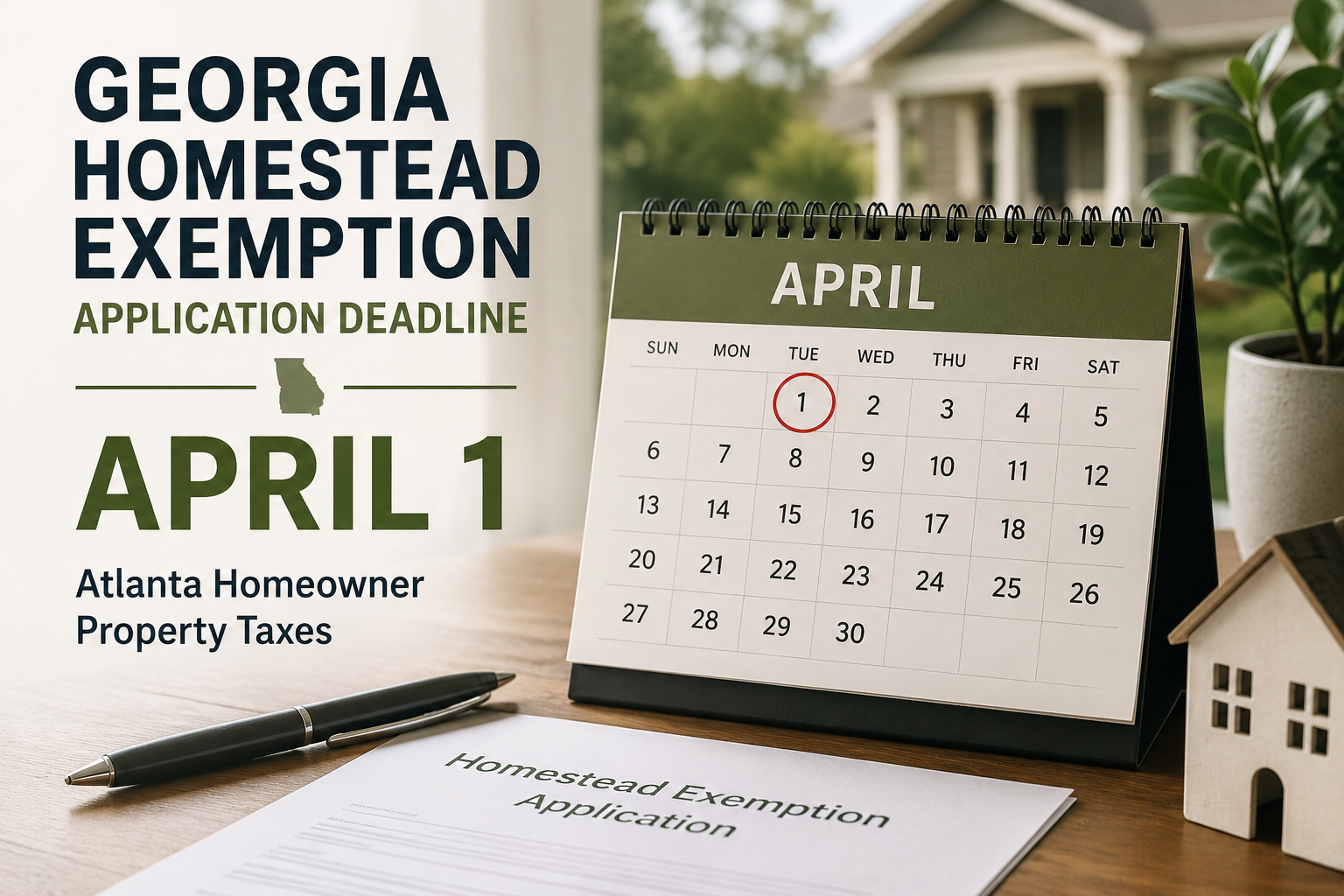
If you received a 2026 property tax assessment notice from Fulton County, you have until July 31, 2026 to file an appeal — 45 days from when the county mailed notices in mid-June. File Georgia Form PT-311A with the Fulton County Board of Assessors online at fultonassessor.org, by mail, or in person at any of the five county locations. If your appeal succeeds, Georgia law locks in that lower assessed value for three years.
Fulton County published 2026 property assessments on June 19th. If yours arrived and the number felt wrong, you're not imagining it — and you don't have to accept it.
Here's how the appeal process works, what evidence actually moves the needle, and how I help my clients use comparable sales data to build a credible case.
What Your Assessment Notice Actually Means
The county's Annual Notice of Assessment tells you the value Fulton County has assigned to your property for 2026. That number is their estimate of your home's fair market value — what they believe it would sell for in an arms-length transaction.
Georgia taxes property at 40% of that fair market value. So if Fulton County estimates your home is worth $500,000, your assessed value is $200,000, and your tax bill is calculated against that $200,000 figure (after any applicable exemptions).
The key distinction: the county is estimating value using mass appraisal software, not a certified appraiser walking through your home. They work from sales data and square footage, and they get it wrong regularly — especially in a market like Metro Atlanta where values vary block-by-block, where a renovated 1920s bungalow can sit next to an unrenovated one, and where 2025's sold prices don't always reflect what's happening on the ground in 2026.
The notice is not a final verdict. It's an opening position.
How to Decide If Your Assessment Is Worth Appealing
You don't need a law degree or a property tax specialist to figure out whether to appeal. You need two things: your assessment notice and recent comparable sales.
Step 1: Note the county's estimated fair market value. This is printed on your notice — not the assessed value, but the estimated FMV before the 40% calculation. That's the number you're disputing.
Step 2: Compare it to what similar homes have actually sold for. Pull recent closed sales (ideally within the past 6 months) of comparable homes in your neighborhood — similar square footage, similar lot size, similar age and condition. If those homes sold for less than what Fulton County claims your home is worth, you have grounds to appeal.
Step 3: Check for factual errors. The county's records might show the wrong square footage, the wrong number of bedrooms or bathrooms, or improvements that were never completed. Any material error in the county's property details weakens their valuation — and strengthens your appeal.
If the comps support a lower value, or if there are errors in the county's data, appeal. The process is free and takes less than an hour to initiate.
This is exactly where I can help. I have access to the same MLS sales data appraisers use, and I can pull a quick comparable sales analysis for your specific street or neighborhood. If the numbers support an appeal, I'll tell you. If they don't, I'll tell you that too.

How to File Before the July 31 Deadline
The deadline is strict. Fulton County prints the filing deadline on your individual notice — check the date printed on yours. Most 2026 notices show July 31, 2026 as the last day to file, but your specific notice controls. If you miss the window, you wait until next year.
Here's how to file:
Option 1 — Online (fastest): Go to fultonassessor.org and use the online appeal portal. You'll need your parcel ID (printed on your notice) and your appeal method selection.
Option 2 — By mail: Complete Georgia Form PT-311A (downloadable at dor.georgia.gov) and mail it to the Fulton County Board of Assessors. If mailing, it must be postmarked by the deadline on your notice, not received — but don't cut it close.
Option 3 — In person: Deliver your completed PT-311A to any of the five Fulton County Board of Assessors office locations.
When you file, you'll choose one of three appeal methods:
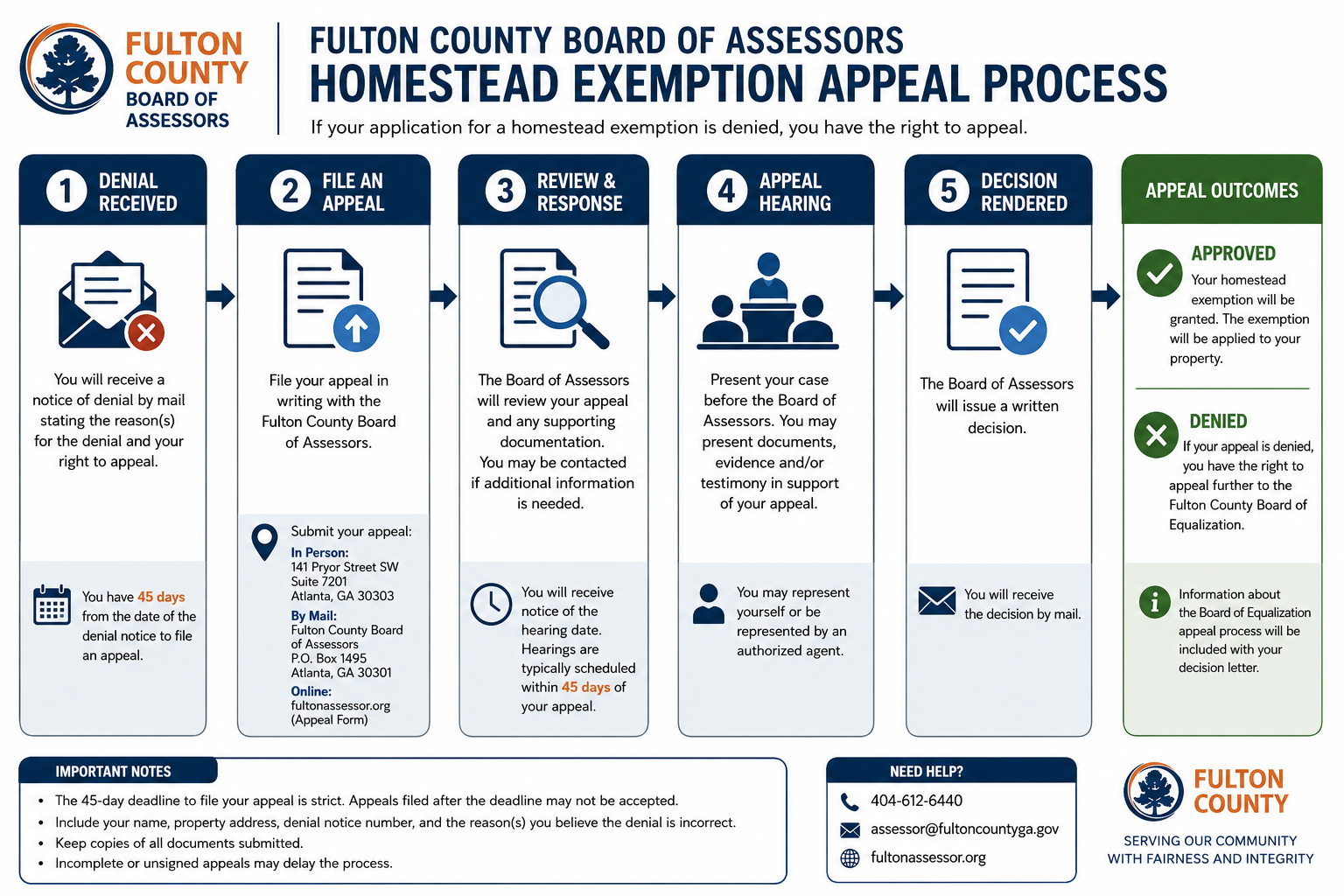
Board of Equalization (BOE): The most common path for residential homeowners. You present your case to a panel of three local citizens. This is a relatively informal process where you walk in with your comparable sales, explain your case, and the panel decides. Success rate varies, but having strong comps makes a real difference.
Hearing Officer: Used more often for commercial property and higher-value residential. A neutral hearing officer reviews the evidence and makes a binding decision.
Nonbinding Arbitration: Both sides present evidence and receive a nonbinding recommendation. Less commonly used for residential appeals.
Most Atlanta homeowners choosing to appeal on their own will select the Board of Equalization.
What Happens at a Board of Equalization Hearing
The BOE process is less intimidating than most people expect. You're presenting to a three-person panel of local residents — not lawyers or judges — and the standard is straightforward: did the county's estimate of fair market value accurately reflect what similar homes were selling for?
Bring to your hearing:
Printed copies of your comparable sales (3–5 recent closed sales of similar homes in your neighborhood)
Photos if the condition of your home is materially different from what the county's records show
Documentation of any errors in the county's property data (square footage, lot size, room counts)
Your assessment notice
The county assessor's office will also present their case. You respond. The panel deliberates and issues a determination, typically within a few days of the hearing date.
If the panel agrees with you and reduces your assessed value, Georgia law locks in that lower value for three years — you don't have to fight this battle again next year or the year after that.
If the panel sides with the county, your original assessment stands. You can appeal further to Superior Court, though that step typically involves legal representation and is reserved for higher-value properties where the stakes justify the cost.
The Relationship Between This and Your Homestead Exemption
If you filed a homestead exemption — the application that reduces your taxable value for your primary residence — that exemption remains in place regardless of this appeal. The exemption reduces your assessed value by a fixed amount each year; the appeal targets the county's underlying estimate of your home's fair market value before the exemption is applied.
These are two separate mechanisms that work together. Having an exemption does not prevent you from appealing, and winning an appeal doesn't affect your exemption.
What About Other Counties?
Cobb County: Notices typically go out in late May to early June. If yours was mailed in late May, your 45-day window may be closing in mid-July. Check the date on your notice immediately.
DeKalb County: DeKalb mails notices earlier — often in May — with deadlines typically running through late May or early June. The 2026 appeal window for DeKalb has likely already closed.
Gwinnett County: Gwinnett issued 2026 notices in April, with a deadline of June 29, 2026. That window has passed.
Henry, Fayette, Douglas, and surrounding counties: Each follows the same 45-day rule from their specific mailing date. Check your individual notice.
How Real Estate Comp Data Supports Your Appeal
When a client calls me about their assessment, the first thing I do is pull recent sales in their immediate area from the MLS — the same data a licensed appraiser would use. I'm looking at homes that closed within the last 6 to 9 months, within a reasonable distance, with similar square footage, lot size, and condition.
If the comparable sales show values materially below what Fulton County has assigned, we have a case. I can organize those comps clearly so you can walk into a BOE hearing and make a straightforward argument.
This isn't something I charge for. If you're a homeowner I've worked with, or if you're thinking about selling and want to understand what your assessment means for your pricing strategy, reach out. Understanding how the county values your home is part of understanding what it's actually worth on the open market — and those two numbers don't always agree.
Frequently Asked Questions
What is the Fulton County property tax appeal deadline in 2026?
The deadline is July 31, 2026 for most Fulton County homeowners, based on the county's June 19 assessment mailing. Your individual notice may show a different date — go by the date printed on your notice. File online at fultonassessor.org, by mail, or in person.
Do I need a lawyer or a tax agent to appeal?
No. Residential homeowners commonly file their own appeals successfully. You need a completed PT-311A form, your appeal method selection, and evidence — typically comparable sales, photos, or documentation of errors in the county's records.
What is the difference between assessed value and fair market value in Georgia?
In Georgia, property taxes are calculated on 40% of your home's estimated fair market value. If the county's estimated FMV is $500,000, your assessed value is $200,000, and your taxes are calculated against that $200,000 figure before any exemptions.
What comparable sales should I use as evidence?
Use recent closed sales within the last 6 to 9 months of homes in your immediate neighborhood with similar square footage, lot size, age, and condition. Your real estate agent can pull this data directly from the MLS.
What happens if I miss the July 31 deadline?
You forfeit your right to appeal for the 2026 tax year. You can still apply for applicable exemptions if you haven't already, but you cannot contest the assessment itself until the 2027 cycle.
If I win my appeal, how long does the lower value last?
Under Georgia law, a successful Board of Equalization appeal locks in your property's assessed value for three years.
Can I appeal even if I already have a homestead exemption?
Yes. The homestead exemption and a value appeal are completely separate processes. You can use both simultaneously.
Does appealing my property tax assessment affect my ability to sell my home?
No. A lower county-assessed value does not negatively affect a listing price or a sale. Lower property taxes make a home less expensive to own — which buyers factor into affordability.
The window to act is open until July 31. If you want help pulling comp data for your appeal, or if you want to talk through what your 2026 assessment means for your home's market value and a potential sale, I'm here.
Schedule a consultation at kristenjohnsonrealestate.com/schedule
Kristen Johnson is a real estate agent and team lead with Kristen Johnson Real Estate at Compass Metro Atlanta. A native Atlantan who grew up in East Point and lives in Edgewood, she has guided clients through more than $50M in sales across the city and suburbs, drawing on a background as a labor doula that shapes her calm, clear, client-first approach. Connect with Kristen at kristenjohnsonrealestate.com.
This post is for informational purposes. Property tax law, deadlines, and procedures are subject to change. Verify your specific notice deadline and consult the Fulton County Board of Assessors or a licensed property tax consultant for advice specific to your situation. This does not constitute legal or tax advice.