

If You Love Grant Park But Can't Afford It, Try These 4 Nearby Alternatives
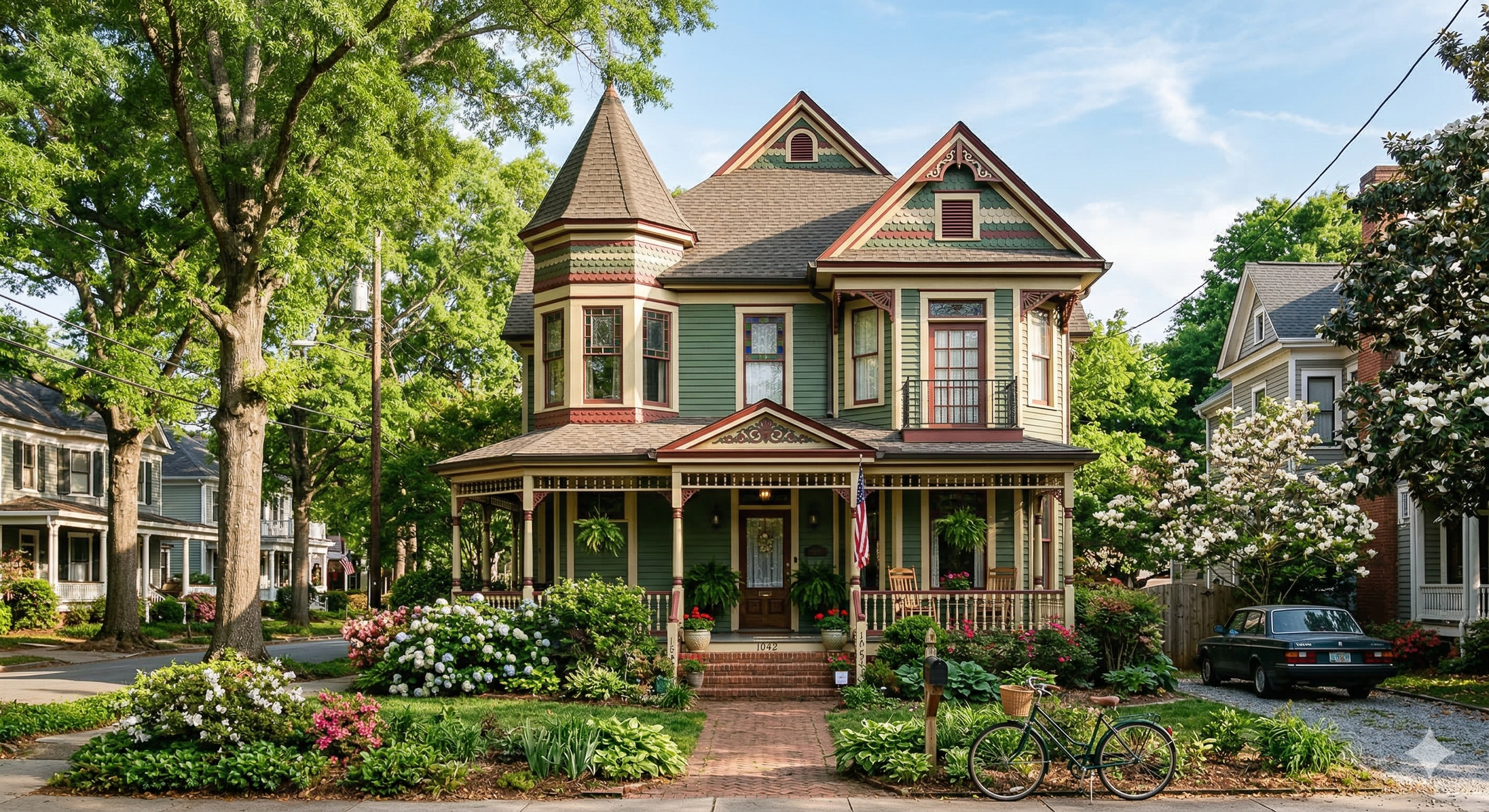
I live in Edgewood and work buyers across intown Atlanta, so I sit with people every week who fall hard for Grant Park and then flinch at the price. If that is you, the four closest matches are right next door in southeast Atlanta: Ormewood Park, Summerhill, Peoplestown, and Chosewood Park. All four sit on or beside the BeltLine's Southside Trail, which opened as a continuous, paved route in June 2026. All four give you a version of what makes Grant Park feel like Grant Park, for less money and usually with less competition.
Grant Park's median sale price runs roughly $575,000 to $640,000 in 2026 depending on the data source and home type, and a renovated detached house near the park can run from the low $600,000s past $1.2 million. The neighborhoods below start lower, in some cases by $150,000 or more. That gap is the whole point of this post.
Here is what you need to know.
What You Actually Love About Grant Park (And Why It Costs What It Costs)
Before you swap neighborhoods, it helps to name what you are actually buying when you buy Grant Park, because that tells you which alternative fits.
Grant Park is built around its 131-acre namesake park, the oldest in the city, with Zoo Atlanta inside it and the Grant Park Farmers Market running on Sundays. The housing stock is the draw for a lot of buyers: late-1800s Victorians, Queen Annes, and Craftsman bungalows, much of it inside a federally recognized historic district, which means exterior changes are regulated and teardowns are restricted. You get Ria's Bluebird and Six Feet Under on Memorial, Grant Central Pizza, Grant Park Coffeehouse, and the food and beer at The Beacon, the nine-acre redeveloped industrial site anchored by Elsewhere Brewing and Buteco. The Southeast BeltLine Trail runs along the neighborhood's eastern edge, and King Memorial MARTA puts you on the train. Downtown is about three miles away.
That combination of a marquee park, protected historic architecture, a walkable food scene, and trail access is what drives the premium. When buyers tell me they "want Grant Park," they usually mean some subset of those things, not all of them. The four neighborhoods below each deliver a different slice. Match the slice you care about most, and you can keep most of what you love and spend a good bit less.
A quick note on the numbers throughout this post: neighborhood medians in southeast Atlanta swing hard month to month because so few homes sell in any given month and the mix shifts between bungalows, new townhomes, and teardowns. Treat the ranges here as a starting frame, not a quote. I pull live comps before any offer, and I am happy to run current numbers for any of these for you.
The Five Neighborhoods at a Glance
| Neighborhood | Typical 2026 Price | Days on Market | BeltLine Southside Trail | Best For |
|---|---|---|---|---|
| Grant Park (the anchor) | ~$575K–$640K median; detached often $600K–$1.2M+ | ~45–80 | Open along the eastern edge | The buyer who wants the full package and can stretch for it |
| Ormewood Park | ~$590K–$610K median; entry from ~$450K | ~28–52 | Open; ramps at Ormewood Ave | Same vintage and feel as Grant Park, more yard, less bidding |
| Summerhill | ~$500K–$575K median | ~40–90 | A few blocks north of the trail | New construction and walk-to-stadium energy closest to downtown |
| Peoplestown | ~$410K–$450K resale; new builds in the $500s | ~50–58 | Open along the southern edge at D.H. Stanton Park | The lowest entry point with direct trail access |
| Chosewood Park | ~$380K–$450K | ~70–77 | Open along the northern border | New construction and the most room left on the price curve |
A few terms in that table, defined plainly. Days on market (DOM) is how long the typical home sits before it goes under contract. A higher number usually means less competition and more room to negotiate, which in these neighborhoods often works in a buyer's favor right now. Price per square foot, which I reference below, is the sale price divided by the home's finished square footage, and it is the cleanest way to compare a small bungalow against a big new townhome.
Ormewood Park: The Closest Thing to Grant Park
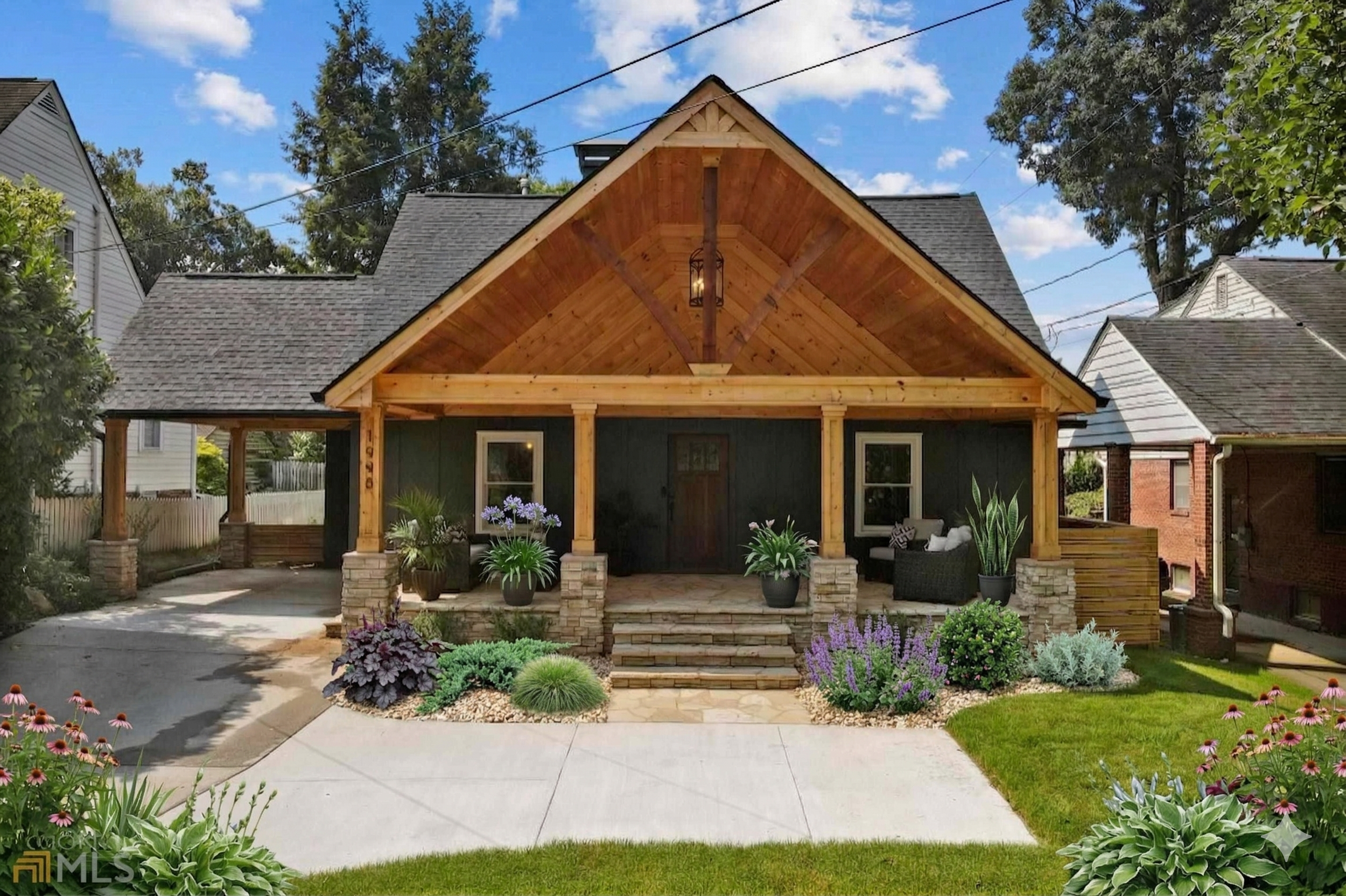
If you want Grant Park's exact look and feel, Ormewood Park is the answer. It sits directly south of Grant Park, the housing stock is the same era, mostly 1920s and 1930s Craftsman bungalows and Victorian cottages on flat, sidewalk-lined streets like Wabash and Glenwood, and the BeltLine's Southeast Trail runs along its northern edge with ramps at Ormewood Avenue. You are a short walk or roll from both East Atlanta Village to the southeast and Grant Park's Memorial Drive strip to the northwest.
Here is the honest part. On the median, Ormewood Park is not dramatically cheaper than Grant Park. Both sit in the high $500,000s to low $600,000s in 2026, and the all-home-types median has bounced around $590,000 to $610,000 this year. So why is it on this list? Because block for block, same vintage and same square footage, Ormewood houses consistently trade 15 to 25 percent below their Grant Park twins, and the entry point is lower, with renovated and partially updated homes turning up in the $450,000s and $500,000s where Grant Park rarely does anymore. You also tend to get a little more yard and noticeably less bidding pressure, with homes selling in roughly 28 to 52 days. Recent price per square foot has run around $315.
What you give up: Ormewood has no marquee park of its own on the scale of Grant Park, though Boulevard Crossing Park sits on its southern side and is slated for a redevelopment that includes a skate park and event lawn. For day-to-day, you lean on Glenwood Avenue spots and East Atlanta Village, places like Republic Social House, plus everything in Grant Park a few minutes north. For a lot of buyers, that tradeoff is easy: nearly the same house, a few blocks south, for measurably less.
Ormewood is the pick when the architecture and the immediate feel of Grant Park are what you love, and you do not want to compromise on either.
Summerhill: New Construction, Closest to Downtown
Summerhill is the move when proximity to downtown and the energy of new development matter more to you than vintage architecture. It sits just south of the connector and just north of Peoplestown, about two miles from downtown, anchored by Center Parc Stadium, the former Turner Field, now home to Georgia State football and baseball. Over the last several years the Georgia Avenue corridor has filled in with a genuinely good run of food and drink: Halfway Crooks Beer, Wood's Chapel BBQ, Little Tart Bakeshop, Big Softie, Junior's Pizza, and the Press & Grind coffee bar, with a Publix anchoring the everyday errands.
The housing is a mix. You will find restored historic homes alongside a heavy dose of newer townhomes and infill single-family construction, including boutique communities like Ten5 Summerhill. That mix keeps the price band wide. The trailing median has run roughly $500,000 to $575,000 in 2026, with detached houses spanning from the high $300,000s to $850,000 and new townhomes commonly in the $500,000s and low $600,000s. Homes here can sit a while, with days on market stretching from the low 40s to past 90 on some listings, which means a patient buyer often has negotiating room and seller incentives, including rate buydowns, on the table.
What you give up versus Grant Park: there is no large historic park, and the housing leans newer, so if you specifically want a century-old bungalow with original detail, this is not the densest place to find one. What you gain is the shortest commute of the four, a walkable stadium-and-Georgia-Avenue scene, and new-construction options with warranties and modern systems.
Summerhill works for the buyer who values being closest to the core, wants newer construction or a townhome, and is comfortable in a neighborhood still actively filling in. I have a full breakdown in my Summerhill neighborhood guide if you want to go deeper.
Peoplestown: The Value Play With Trail Access
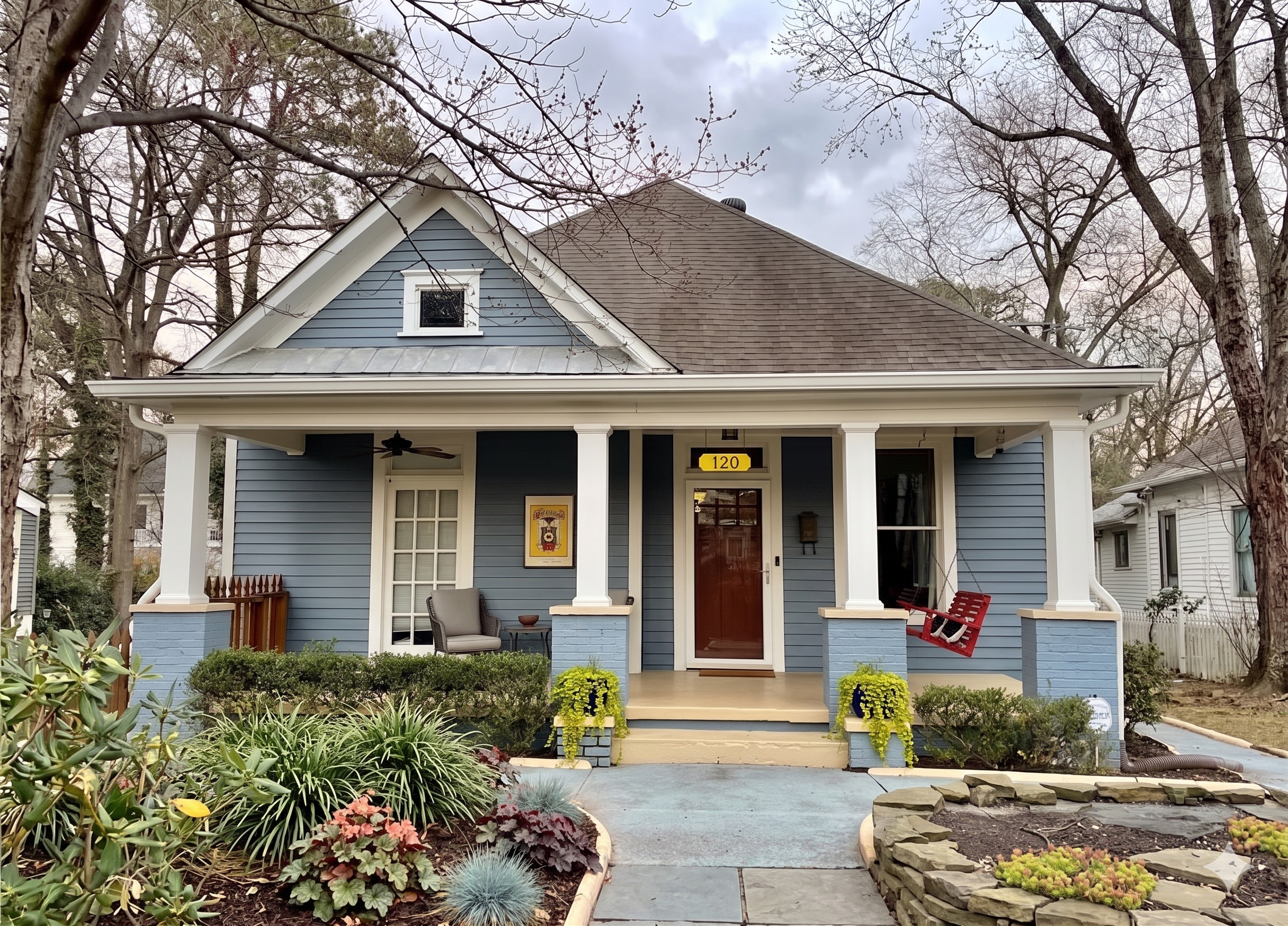
Peoplestown is where the price gap with Grant Park gets real. Resale medians have run roughly $410,000 to $450,000 in 2026, which is often $150,000 to $200,000 below Grant Park, and you are not trading away trail access to get there. The BeltLine's Southside Trail runs along the neighborhood's southern edge by D.H. Stanton Park, a park with a splash pad and playground, and that stretch opened as continuous paved trail in 2026. You are two blocks from the BeltLine in much of the neighborhood and walking distance to The Beacon.
The housing is mostly modest bungalows on shaded, sidewalked streets, with a growing layer of new construction and infill, including subdivisions like Row 900 and BeltLine-fronting duplexes and townhomes that push into the $500,000s and low $600,000s. Days on market run in the 50s. Two developments worth knowing: Terminal South, a redeveloped retail and dining destination on the neighborhood's edge, and the MARTA Rapid A-line, a bus rapid transit line with new stations rolling out, which will improve the connection north toward Five Points and downtown.
The honest framing: Peoplestown is smaller and earlier in its arc than Grant Park, with active redevelopment and a mix of renovated, original, and teardown-and-rebuild properties block to block. That is exactly why the entry price is lower, and it is why I walk buyers through specific streets here rather than the neighborhood as a whole. The value is real, but condition and exact location matter more than they do in a settled neighborhood.
Peoplestown is the pick when the priority is the lowest entry price that still buys you direct BeltLine access and walkability, and you are comfortable being early.
Chosewood Park: The Most Room Left on the Price Curve
Chosewood Park is the furthest along the affordability curve and the heaviest on new construction. It sits south of Peoplestown and Grant Park, about four miles from downtown, with the BeltLine's Southside Trail running along its northern border. Prices have run roughly $380,000 to $450,000 in 2026, with new-construction townhomes starting in the high $300,000s and recent price per square foot around $243 to $253, the lowest of the four. Several builders are active here, including communities like Zephyr, Three Points, and Skylar, and at least one development recently cut prices, which is a buyer's opening.
The neighborhood is named for its own 15-acre Chosewood Park, a Certified Wildlife Habitat with trails, a playground, and ball fields, and Boulevard Crossing Park is nearby and slated for redevelopment. For food and drink, you have Hudson & Alphonse, Side Saddle Wine Bar, and Red's Beer Garden, with the larger Sawtell mixed-use development planned across McDonough Boulevard. The housing is a mix of original Craftsman homes and a lot of contemporary townhomes and lofts, including skyline-view buildings like Hill Street Lofts.
What to know going in: Chosewood Park is the newest-feeling of the four, still actively building out, and parts of it sit near the McDonough Boulevard corridor and the former federal penitentiary site, so the character changes noticeably street to street. That is the tradeoff for the lowest price per square foot and the most new inventory.
Chosewood Park is the pick when you want new construction, the most square footage for the money, and you are betting on a neighborhood in the earlier, faster-appreciating part of its growth. My Chosewood Park neighborhood guide covers it in full.
How to Choose Between Them
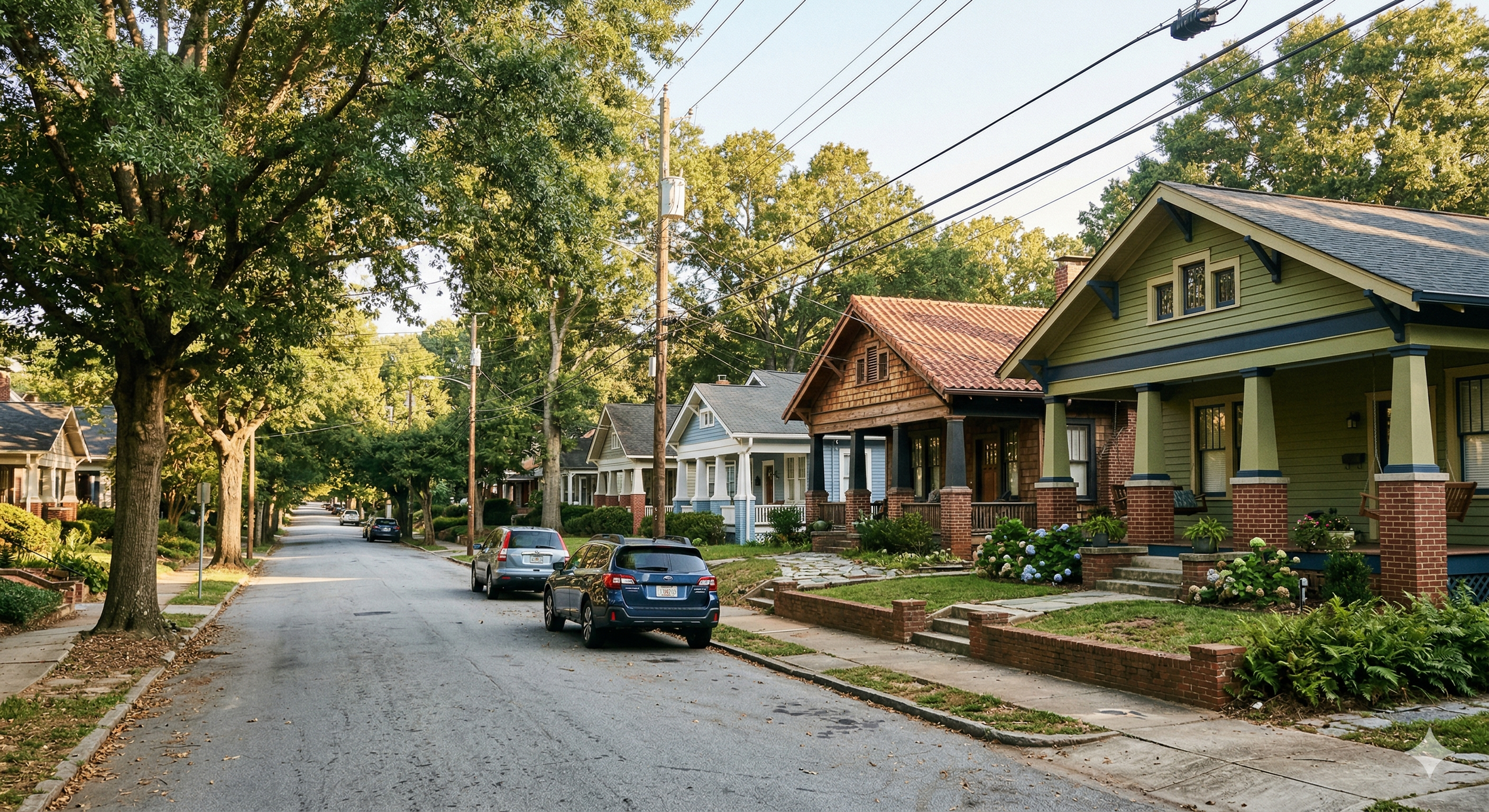
Four neighborhoods is a lot to weigh, so here is how I help buyers narrow it fast.
Choose Ormewood Park if Grant Park's exact architecture and immediate feel are non-negotiable and you can spend in the high $500,000s, but you want a measurable discount on a comparable house plus more yard and less competition.
Choose Summerhill if your top priority is the shortest commute to downtown, you want or do not mind newer construction, and a walkable stadium-and-Georgia-Avenue scene appeals to you more than a historic park.
Choose Peoplestown if you want the lowest price that still buys direct BeltLine access and walkability, and you are comfortable being early in a neighborhood that is actively redeveloping.
Choose Chosewood Park if you want new construction and the most space for your money, you like buying lower on the curve, and you are comfortable in a neighborhood that is still building out.
The thread connecting all four is the BeltLine's Southside Trail. For years these neighborhoods were cheaper than Grant Park partly because they sat on an unpaved, disconnected stretch of the BeltLine. That stretch is now open and continuous, linking the Eastside and Westside trails into nearly 17 miles of paved mainline path. The pricing in these neighborhoods is still catching up to that change, which is exactly why I am pointing buyers here now rather than in two years.
Schools
All five neighborhoods are in Atlanta Public Schools, and most fall within the Maynard Jackson High School cluster, commonly feeding from Parkside Elementary and Martin Luther King Jr. Middle School. Maynard Jackson High now sits directly on the BeltLine, one of a small number of Atlanta public high schools that do. Parts of these neighborhoods feed other zones, so attendance is not uniform across a single neighborhood.
There are also several charter and magnet options families in these areas apply to, including Grant Park Neighborhood Charter School (a K-8 charter), Wesley International Academy, Atlanta Neighborhood Charter School, and Charles R. Drew Charter School. Charter admission is by application and is not tied to your home's attendance zone.
School zones and charter eligibility change, and they vary by the exact street address, not the neighborhood name. Research and visit schools to determine fit for your family. Always verify zoning by specific property address.
Frequently Asked Questions
What is the cheapest neighborhood near Grant Park? Among the four covered here, Chosewood Park and Peoplestown have the lowest entry points in 2026, with homes and new townhomes commonly in the high $300,000s to around $450,000. Chosewood Park has the lowest price per square foot of the group.
Is Ormewood Park cheaper than Grant Park? On the median, the two are close, both in the high $500,000s to low $600,000s. But block for block, the same vintage and size of home tends to trade 15 to 25 percent below its Grant Park equivalent in Ormewood Park, and the entry point is lower, with updated homes appearing in the $450,000s and $500,000s.
Which of these neighborhoods has the most room to appreciate? That is impossible to promise, but the neighborhoods earliest in their growth and lowest on the price curve, Peoplestown and Chosewood Park, have historically been where the percentage gains show up as redevelopment and the BeltLine fill in. Earlier also means more variability block to block, which is the tradeoff for the upside.
Are all four neighborhoods on the BeltLine? Effectively, yes. Ormewood Park, Peoplestown, and Chosewood Park each have the Southside Trail running along an edge, and Summerhill sits a few blocks north of it. The Southside Trail opened as a continuous paved route in 2026, connecting the Eastside and Westside trails.
How far are these neighborhoods from downtown Atlanta? Summerhill is closest at roughly two miles. Peoplestown and Ormewood Park are in the three-mile range, and Chosewood Park is about four miles south of downtown. All four offer quick highway access via I-20, I-75/85, or the Downtown Connector.
Which one is best if I want new construction? Chosewood Park has the most new-construction inventory and active builder communities, followed by Summerhill. Peoplestown has a growing supply of infill and BeltLine-fronting new builds. Ormewood Park has some new construction but leans toward existing historic homes.
Which one feels the most like Grant Park? Ormewood Park, by a wide margin. It shares Grant Park's era of architecture, its street pattern, and much of its immediate feel, and it sits directly south of it.
Do these neighborhoods have the same restaurants and walkability as Grant Park? Not identical, but close and improving. Summerhill's Georgia Avenue corridor is the strongest walkable food scene of the four right now. Ormewood leans on East Atlanta Village and Glenwood Avenue. Peoplestown and Chosewood Park have a smaller but growing set of spots and lean on nearby Grant Park, Summerhill, and The Beacon.
Is now a good time to buy in southeast Atlanta? Inventory has loosened and many of these neighborhoods are seeing longer days on market and seller incentives, which favors buyers. With the Southside Trail now fully open, the long-term case for these neighborhoods is stronger than the current pricing reflects. The right answer still depends on your budget, timeline, and the specific home, which is what I help you work through.
Should I buy a renovated home or a fixer-upper in these neighborhoods? It depends on your appetite and your numbers. A fixer-upper in Peoplestown or Chosewood Park can be a strong value, but renovation budgets on older intown homes are real, often $30,000 to $75,000 or more, so the sticker price is not the true cost. I help buyers run that math before they fall for a listing.
Let's Find Your Southeast Atlanta Home
You do not have to give up on the intown life you want just because Grant Park's price moved out of reach. The four neighborhoods around it offer real versions of the same thing, at a range of price points, and I know them block by block, which is the part that actually matters when you are choosing between them.
Visit kristenjohnsonrealestate.com or reach out directly, and let's match you to the right one. Come as you are, come on home.
Looking for more intown and southeast Atlanta guides? I've covered the Grant Park market, Summerhill, Chosewood Park, and East Atlanta, and you can see the rest of this affordability series in my Inman Park and Old Fourth Ward entries. Browse the full guide series at kristenjohnsonrealestate.com.