

If You Love Inman Park, Try Reynoldstown, Edgewood, or Kirkwood: Intown Atlanta Alternatives & Home Prices 2026
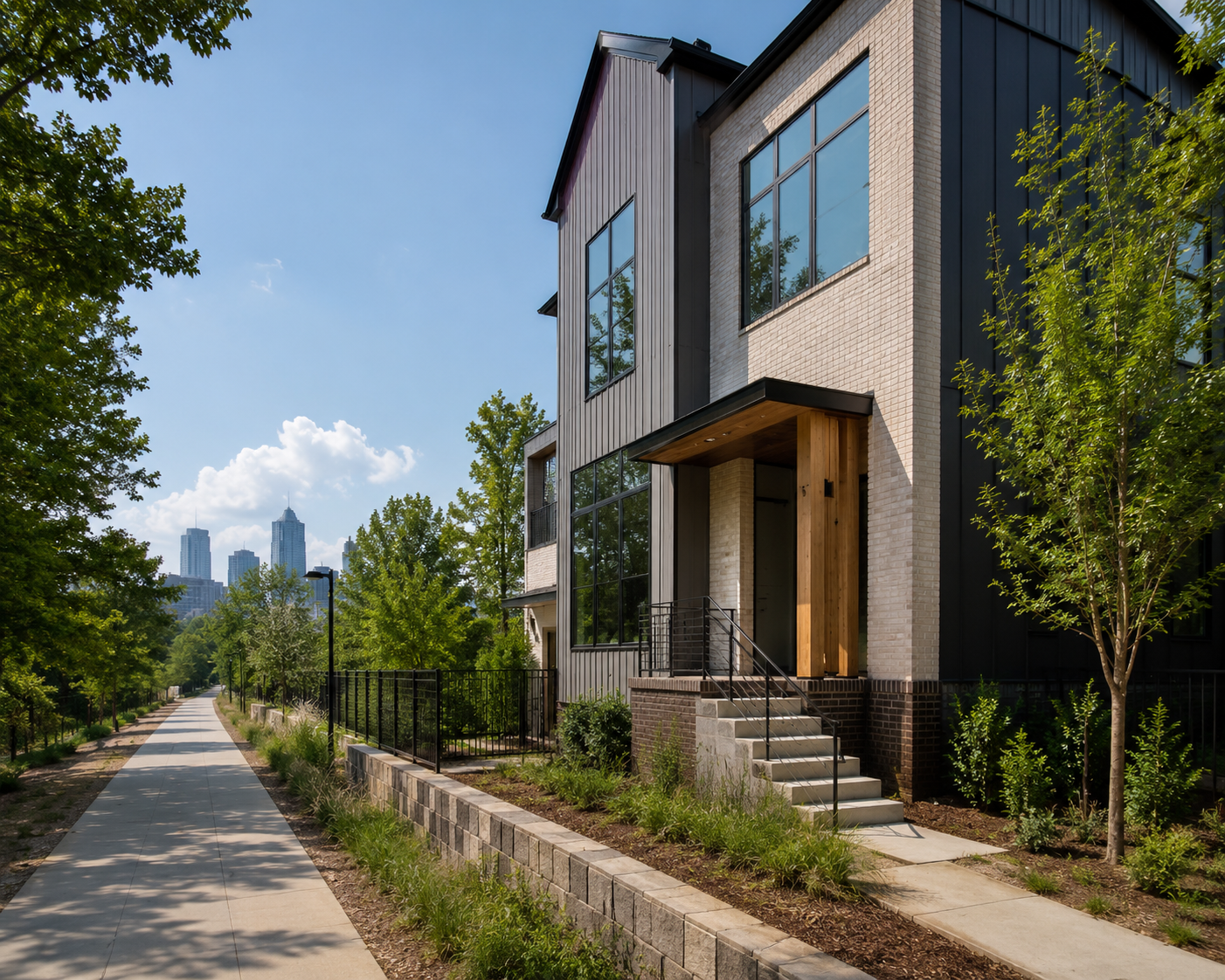
If you love Inman Park but the prices keep pushing your search back to square one, the three neighborhoods to tour next are Reynoldstown, Edgewood, and Kirkwood. All three sit on Atlanta's east side, all three share Inman Park's intown character, historic homes, walkable streets, and BeltLine proximity, and all three cost less. Depending on where you land, that's anywhere from roughly $75,000 to more than $200,000 less than Inman Park's median.
Here's the honest version of what's happening. Inman Park is Atlanta's original streetcar suburb, platted in the 1880s, and its grand Queen Anne and Victorian homes, Springvale Park, Krog Street Market, and direct frontage on the BeltLine Eastside Trail have made it one of the most desirable addresses intown. Demand has priced it accordingly. The median sale price sits around $725,000 as of early 2026, and the range runs from condos in the $400s to restored mansions well past $2 million. For a lot of buyers, the lifestyle is the goal and the address is just the version of it they happened to find first.
That's the part worth slowing down on. What buyers actually want when they say "Inman Park" is rarely the specific census tract. It's the combination: a walkable east-side neighborhood, real historic housing stock, the BeltLine within reach, restaurants and coffee you can get to on foot, and a short trip to the rest of intown. Reynoldstown, Edgewood, and Kirkwood each deliver a large share of that combination for less money, and each does it with a different tradeoff.
I work with buyers across the east side of intown Atlanta, and I live in Edgewood, so these are not neighborhoods I know from a listing map. I know which blocks back up to the trail, where the renovated stock thins out, and what each of these places gives up to come in under Inman Park's number.
Here's what you need to know.
What are you actually paying for in Inman Park?
Before you can replace something, you have to be honest about what it does. Inman Park's premium comes from four things stacked on top of each other.
The architecture is the first. Inman Park was Atlanta's first planned suburb, and its signature homes are large, ornate Victorians on deep lots, the kind that are genuinely hard to reproduce. Restored examples carry seven-figure prices because there are only so many of them.
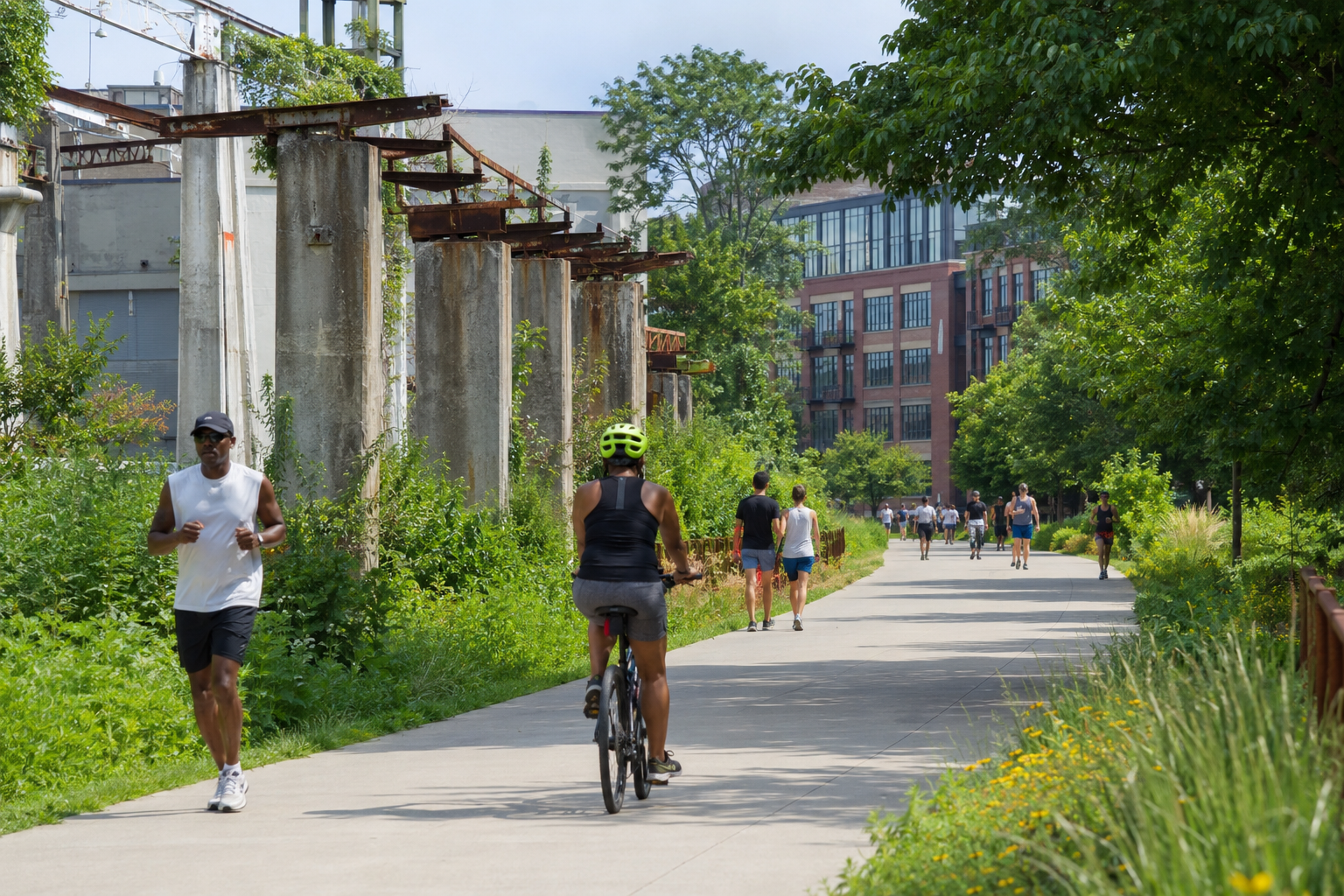
The BeltLine is the second. The Eastside Trail runs along the neighborhood's edge, connecting it to Ponce City Market, Piedmont Park, and Krog Street Market on foot or by bike. Direct trail frontage has been one of the strongest price drivers intown for a decade.
Walkable retail is the third. Krog Street Market, the restaurants along Highland and Edgewood Avenue, and the spillover from neighboring Little Five Points mean a car-optional daily life for a lot of residents.
Location is the fourth. Inman Park is roughly two miles from downtown, shares the Inman Park/Reynoldstown MARTA rail station, and sits in the middle of the east side's densest cluster of intown neighborhoods.
When you understand the stack, you can see where to find most of it for less. The three neighborhoods below each cover the location, the walkability, and a meaningful slice of the architecture and BeltLine access. What they don't have is the full Victorian-mansion inventory or the established Inman Park price floor. That gap is your savings.
How much can you save by buying near Inman Park instead of in it?
Here is the comparison that matters most, using early-2026 figures. Treat these as a snapshot, not a guarantee. These are small, low-volume neighborhoods where a handful of sales can swing a monthly median, so verify current numbers with me before you build a budget around them.
| Neighborhood | Median price (early 2026) | vs. Inman Park (~$725K) | Typical range | BeltLine Eastside access |
|---|---|---|---|---|
| Inman Park | ~$725,000 | Baseline | $400K (condos) to $2M+ | Directly on the trail |
| Reynoldstown | ~$640K to $675K | Save ~$50K to $85K | $450K to $1M+ | Directly on the trail |
| Kirkwood | ~$575K to $625K | Save ~$100K to $150K | $400K to $1.3M | Short hop via Trolley Line Trail |
| Edgewood | ~$520,000 | Save ~$200K | $400K to $750K | Short hop via MARTA + Trolley Line Trail |
The pattern is straightforward. Reynoldstown is the smallest step down in price because it gives up the least. Edgewood is the largest step down because it sits a little further from the marquee trail frontage and carries more of its value in everyday livability than in prestige. Kirkwood lands in the middle on price and offers the widest spread of any of the three, which matters if your budget has a hard ceiling or real room to stretch.
Reynoldstown: the closest thing to Inman Park, one stop down the trail
If you want the Inman Park experience with the fewest compromises, Reynoldstown is the answer. It shares the Inman Park/Reynoldstown MARTA station, the Eastside Trail runs straight through it, and you can walk from much of the neighborhood to Krog Street Market, Ponce City Market is a short ride up the trail, and the neighborhood's own corridor along Wylie Street and around Madison Yards has filled in with restaurants and coffee.
Reynoldstown has a history worth knowing, because it shapes what you're buying. The neighborhood was established around 1870 by Black railroad workers and freed families, and it grew up around the rail yards that still define its eastern edge. That origin is why the older housing stock is a mix of shotgun houses, cottages, and modest bungalows on a tight street grid rather than the grand Victorians of Inman Park next door. Over the last fifteen years, that compact stock has been heavily renovated and infilled with modern new construction, much of it three to four stories with rooftop decks built to take advantage of the skyline and the trail.
What you give up versus Inman Park is the architectural grandeur and some of the established quiet. Reynoldstown is denser, newer in feel on many blocks, and still actively building. What you keep is almost everything else: direct trail access, MARTA, walkable food and coffee, and the same two-mile distance to downtown.
What do homes cost in Reynoldstown right now?
Reynoldstown is a small market, which makes its numbers jumpy. Trailing twelve-month medians from multiple data sources cluster in the $640,000 to $675,000 range as of early 2026, with new construction listing closer to $694,000 and individual monthly medians swinging well above and below depending on how many homes closed. Price per square foot runs near $389 on recent listings, and the neighborhood carries a Walk Score around 77.
In practice, here's how the tiers break down. Under $500,000 you're looking at condos, lofts in converted industrial buildings, smaller original cottages, or shotgun homes that may still need work. From $500,000 to $700,000 is the core of the market: renovated bungalows and cottages, and some of the smaller new-construction homes. Above $700,000 you're into larger new-construction single-family homes with finished basements, rooftop terraces, and the kind of designer finishes that compete directly with renovated Inman Park product at a lower number.
If your heart is set on Inman Park and your budget is roughly $650,000 to $700,000, Reynoldstown is where I'd start. You're often buying the same lifestyle one block off the same trail.
Kirkwood: small-town intown with the widest price range
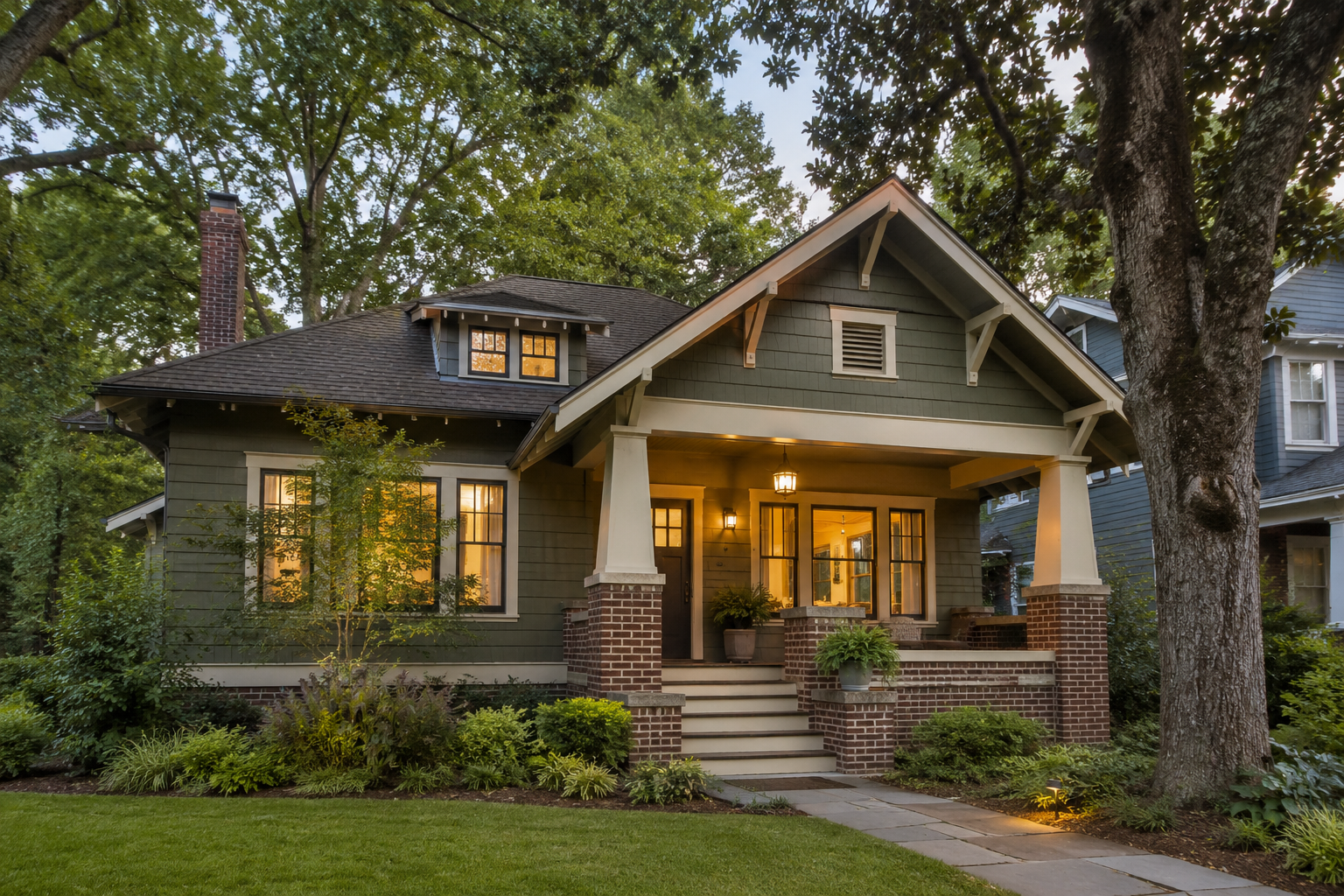
Kirkwood is the move for buyers who want neighborhood feel over density and who want options at both ends of the budget. It's on the National Register of Historic Places, which is rare for an Atlanta neighborhood, and its streetscapes of brightly painted Craftsman bungalows, American Foursquares, Cape Cods, and Colonial Revivals are among the most distinctive intown. This is the neighborhood on this list whose housing stock most closely echoes the historic-bungalow side of Inman Park, even if it can't match the Victorian mansions.
The daily-life anchors are real. Taproom Coffee & Beer, Evergreen Butcher and Baker, and the redeveloped Pullman Yards entertainment complex on Rogers Street give Kirkwood a walkable core, and Bessie Branham Park and the Kirkwood Dog Park give it green space. Annual events like the Kirkwood Wine Stroll and Spring Fling draw people from across the city. Two MARTA stations sit at the edges, East Lake on the Blue Line to the south and Edgewood/Candler Park to the north, and the Trolley Line Trail links Kirkwood toward Edgewood and the broader BeltLine network.
The honest tradeoff is BeltLine access. Kirkwood is not on the Eastside Trail the way Reynoldstown and Inman Park are. You reach the trail network by connector and a short trip rather than by walking out your front door onto it. If direct trail frontage is the single thing you love most about Inman Park, weigh that carefully here.
What do homes cost in Kirkwood right now?
Kirkwood's median sits in the $575,000 to $625,000 range as of early 2026, and the spread is the widest of the three alternatives. Entry-level bungalows that need work start around $400,000, and the top of the market reaches roughly $1.3 million for large renovated or new-construction homes. That range is the whole point: Kirkwood can work for a first purchase under $450,000 and for a move-up buyer who wants a finished four-bedroom without leaving the east side.
Forecasters have projected some of the stronger appreciation in Metro Atlanta for Kirkwood in recent years, which tracks with the historic designation, the active neighborhood organizations, and the low turnover. People who move into Kirkwood tend to stay, and that keeps demand steady and inventory tight.
Edgewood: the most affordable way onto the east side, and where I live
Edgewood is where you get the most distance below Inman Park's number, and it's the neighborhood I know best, because I've lived here since 2016. The pitch is simple: historic bungalows, one of the shortest commutes to downtown of any intown neighborhood at about three miles, the Edgewood/Candler Park MARTA station, and a walkable retail base, all at a median well under Inman Park's.
The everyday infrastructure is stronger than people expect. The Edgewood Retail District puts a Kroger, a Target, and local dining within walking distance of most of the neighborhood, which is unusual intown. Around the redeveloped MARTA station you've got Bona Fide Deluxe and Vin ATL, and El Tesoro anchors the local Mexican food following in the heart of the neighborhood. Coan Park and Walker Park provide green space, and the Trolley Line Trail connects Edgewood to Kirkwood for walking and biking.
Edgewood's tradeoff is the one to be most clear-eyed about. It is not on the Eastside Trail, and its housing stock, while historic and full of character, does not carry the architectural prestige of Inman Park. What it offers instead is the easiest landing spot intown: real MARTA access, walkable groceries, a short trip everywhere, and a price that leaves room in your budget. Out-of-town agents and automated valuation tools routinely confuse Edgewood with neighboring zip codes, and the price dynamics here genuinely shift block by block, so this is a neighborhood where local knowledge changes what you pay.
What do homes cost in Edgewood right now?
Edgewood's median runs around $520,000 as of early 2026, with a typical range from roughly $400,000 to $750,000 depending on condition and proximity to the BeltLine and Memorial Drive corridors. Updated homes near MARTA and trail access move quickly. Homes that need work, or that sit further from the walkable core, take longer and leave more room to negotiate.
If your Inman Park budget was stretched to its limit, Edgewood is where that same money buys you breathing space, either in the form of a larger or more finished home, or simply a lower monthly payment for a comparable one.
Which of these three is the best Inman Park alternative for you?
The right pick comes down to which part of the Inman Park stack you care about most.
Choose Reynoldstown if direct BeltLine Eastside Trail access is non-negotiable and you want the smallest possible compromise. You'll pay the most of the three, but you're buying the same trail, the same MARTA station, and the same closeness to downtown, just with newer and denser housing instead of Victorians.
Choose Kirkwood if you want historic-bungalow character and neighborhood feel over density, and if you want the flexibility of a wide price range. It's the strongest architectural echo of old Inman Park, with a genuine walkable core of its own, as long as you're comfortable reaching the main trail by connector rather than by front door.
Choose Edgewood if maximizing your dollar is the priority and you value everyday convenience, MARTA, and a short commute over prestige and trail frontage. It's the largest step down in price and the easiest place on this list to land intown without overextending.
There's a fourth option worth naming for the budget-conscious: if you're willing to go a bit further south and east, East Atlanta and Candler Park round out the east-side picture, the first for more space and a lower entry point, the second for an even closer neighbor to Inman Park that often runs higher, not lower, on price.
How do these neighborhoods really compare on the BeltLine?
This is the question buyers get wrong most often, because "near the BeltLine" gets used loosely. Here's the accurate version.
Reynoldstown has the Eastside Trail running directly through it, the same paved, active trail that defines Inman Park's edge. This is true, walk-out-your-door access.
Kirkwood and Edgewood connect to the network through the Trolley Line Trail and short trips by foot, bike, or car, rather than fronting the main Eastside Trail. That access is real and usable, but it is a connection, not frontage. If you tour a Kirkwood or Edgewood home and the listing says "BeltLine access," ask specifically what that means for that exact address, because the answer changes block to block.
The reason this matters for your money is that direct trail frontage commands a measurable premium. Part of why Reynoldstown costs more than Edgewood is precisely that frontage. So when you choose your alternative, you're also choosing how much you value being on the trail versus near it, and pricing yourself accordingly.
A quick, honest note on schools
School zoning intown shifts by address and changes over time, and Atlanta Public Schools assignments for these neighborhoods are not interchangeable. Reynoldstown, Edgewood, and Kirkwood each fall into their own attendance zones, and some intown buyers also weigh magnet and charter options. Pull current data on enrollment, ratings, and programs from objective sources, research and visit schools to determine fit for your household, and always verify zoning by the specific property address before you make an offer. I can confirm the current zone for any home you're considering.
FAQ
What's the cheapest neighborhood that feels like Inman Park? Edgewood is the most affordable of the close-in east-side alternatives, with a median around $520,000 in early 2026 versus roughly $725,000 in Inman Park. You give up direct Eastside Trail frontage and the Victorian architecture, but you keep MARTA access, walkable retail, historic bungalows, and a three-mile commute to downtown.
Is Reynoldstown cheaper than Inman Park? Yes, though it's the smallest discount of the three alternatives. Reynoldstown's trailing-twelve-month median runs around $640,000 to $675,000 in early 2026, compared with about $725,000 in Inman Park. You're buying the same trail, the same MARTA station, and the same proximity to downtown, with newer and denser housing instead of historic mansions. Because it's a low-volume market, monthly medians swing a lot, so confirm current numbers before budgeting.
Which of these neighborhoods is actually on the BeltLine? Reynoldstown is directly on the Eastside Trail, the same trail that runs along Inman Park. Kirkwood and Edgewood connect to the network through the Trolley Line Trail and short trips rather than fronting the main trail. If you tour a home advertised with BeltLine access in Kirkwood or Edgewood, ask exactly what that means for that specific address.
Can I still get a historic bungalow like the ones near Inman Park? Yes. Kirkwood has the strongest concentration of historic Craftsman bungalows, Foursquares, and Cape Cods on this list, protected in part by its National Register designation. Reynoldstown and Edgewood also have historic cottages and bungalows, often at lower prices than comparable homes in Inman Park, though renovation condition varies widely block to block.
What can I get for around $600,000 near Inman Park? At roughly $600,000 you're priced into renovated bungalows and some smaller new construction in Reynoldstown, a solid range of renovated homes in Kirkwood, and a larger or more finished home in Edgewood. In Inman Park itself, $600,000 typically buys a condo or townhome rather than a single-family house, which is exactly why these three neighborhoods come up.
Are these neighborhoods a good investment compared to Inman Park? Each sits on the same east-side corridor that has driven intown appreciation for years, and all three have active development and BeltLine momentum behind them. Reynoldstown and Kirkwood have shown strong appreciation, and Edgewood remains one of the more underpriced entries intown. As always, appreciation depends on the specific block, condition, and what you pay going in, which is where a current comparative market analysis matters more than any neighborhood-wide average.
How far are these neighborhoods from downtown and the airport? All three are close-in east-side neighborhoods roughly two to four miles from downtown Atlanta. Reynoldstown and Edgewood both sit near the three-mile mark, Kirkwood is about five miles out, and all three reach Hartsfield-Jackson in roughly 15 to 20 minutes outside of peak traffic, with MARTA rail as a real option from Reynoldstown's and Edgewood's stations.
Should I just keep trying to buy in Inman Park? If the specific Victorian architecture and direct trail frontage are the entire point for you, and the budget works, Inman Park is worth the wait. But if what you love is the intown, walkable, BeltLine-connected east-side lifestyle, you can have most of it sooner, and for meaningfully less, in Reynoldstown, Kirkwood, or Edgewood. The question I'd ask you is which one or two features you'd refuse to give up, and we'd build the search from there.
Let's find your east-side home
I work with buyers across intown Atlanta's east side, I live in Edgewood, and I know how these neighborhoods price block by block and where the real value sits relative to Inman Park. If you've been losing out on Inman Park or watching it drift past your budget, let's talk about which of these alternatives fits what you actually want.
Visit kristenjohnsonrealestate.com or reach out directly. Come as you are, come on home.
Looking for more intown Atlanta neighborhood guides? I've covered the east side in depth, including Reynoldstown, Kirkwood, and Edgewood. Browse the full guide series at kristenjohnsonrealestate.com.