

Atlanta Neighborhoods Most Affected by Data Center and Infrastructure Projects (What Buyers Should Know)
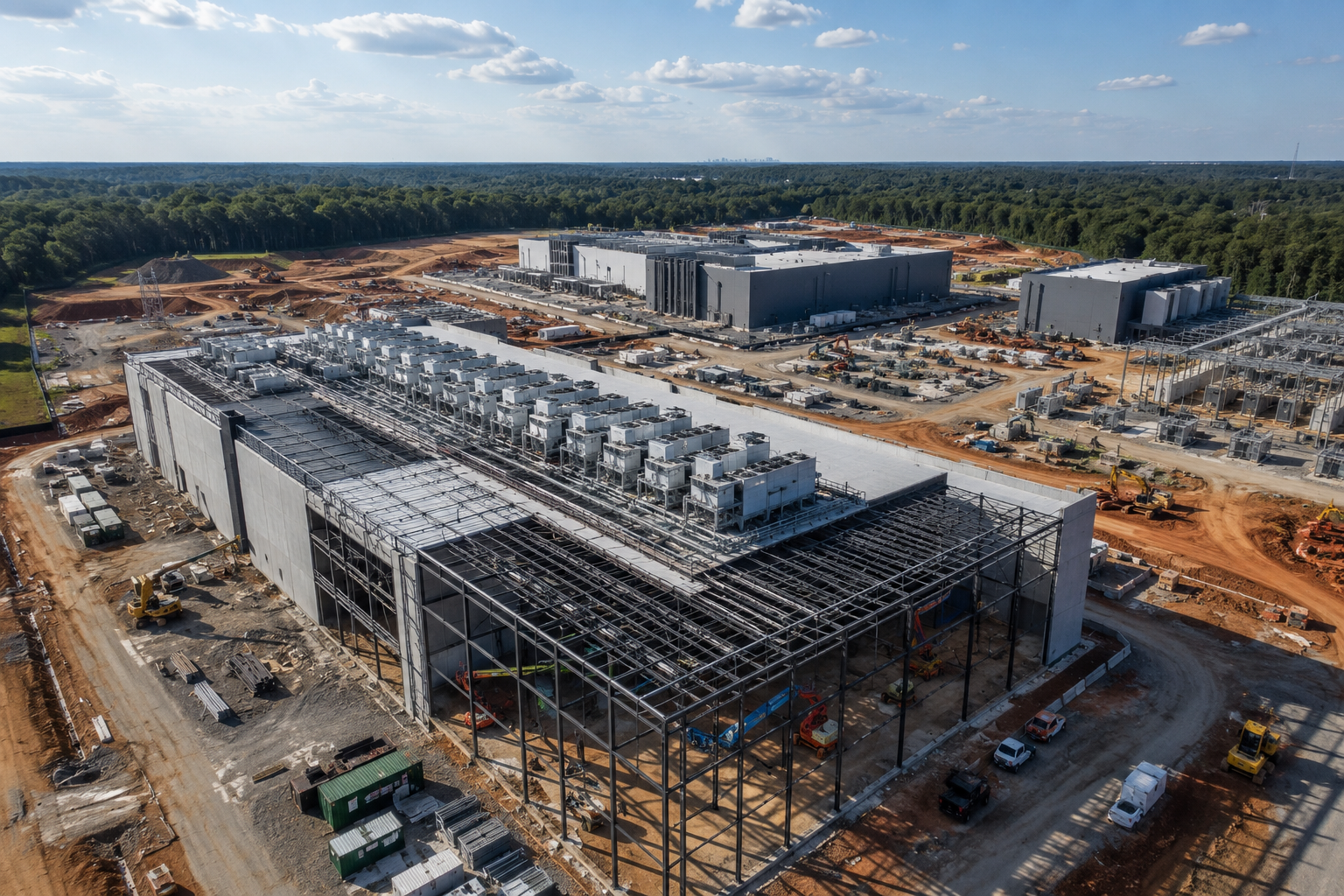
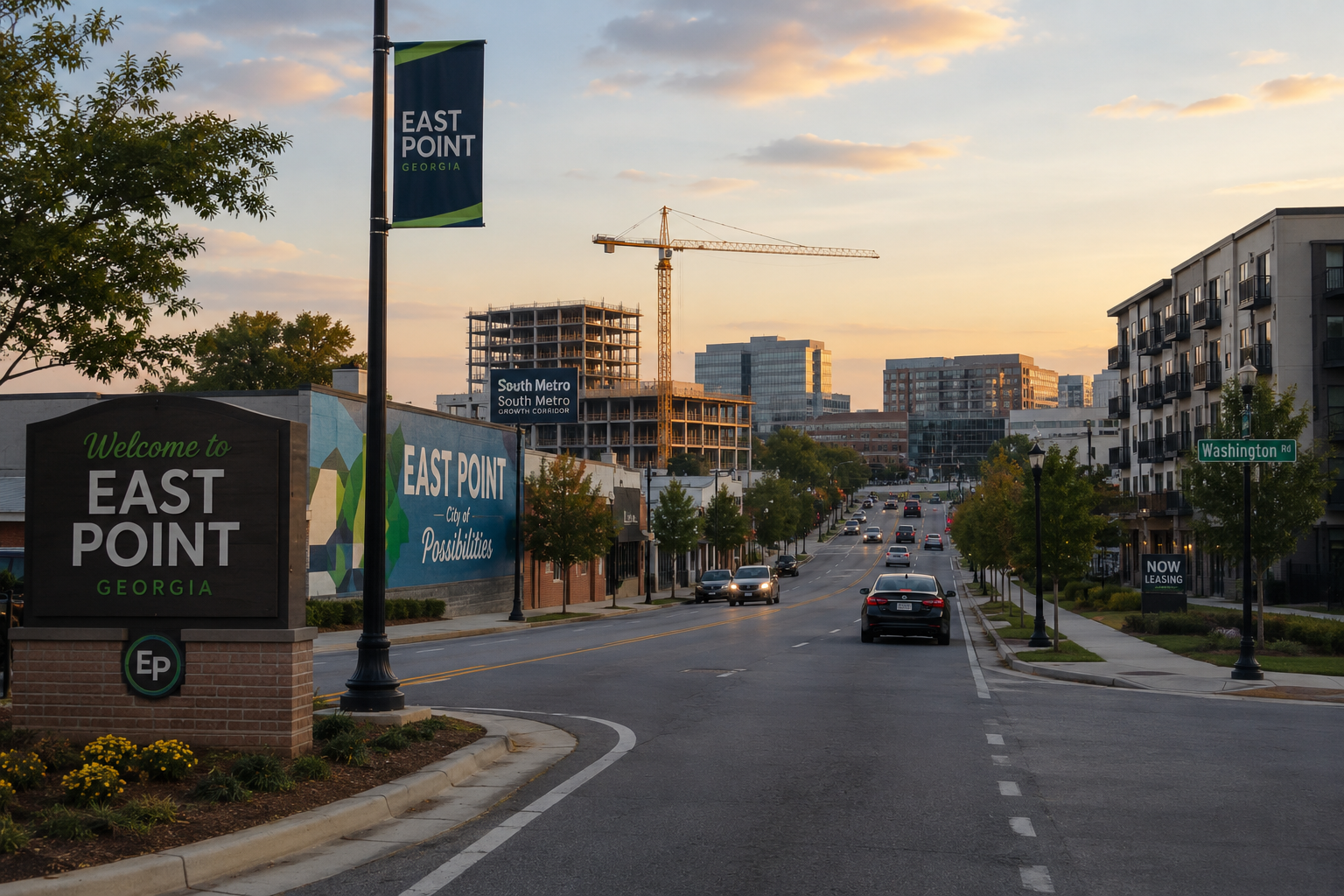
If you are buying in metro Atlanta right now, the projects most likely to land near your future home fall into two bands: a crescent of data center construction running through South Fulton, Union City, Palmetto, Douglas County, and stretching out to Newton, Coweta, Spalding, and Henry counties, and a set of major road and transit projects concentrated on the SR 400 corridor north of the city and the top end of I-285. I grew up in East Point, which sits in the middle of that south-metro data center crescent, so this is not an abstract topic for me. It is my old zip code.
I work with buyers across Metro Atlanta, and over the past two years the questions have shifted. People used to ask only about schools, commute, and price. Now they also ask whether the vacant land down the road is about to become a server farm, whether a data center next door will tank their resale, and whether their power bill is going up because of all of it. Those are good questions. The answers are more specific than the headlines suggest, and they vary a lot block to block.
This post is the buyer's companion to my earlier piece on the impact of data center expansion on Atlanta's housing market. That one looked at the market overall. This one is about due diligence: where the projects actually are, what the research says about home values, what is happening with power rates, and the exact things to check before you write an offer near one of these sites.
Here's what you need to know.
Where are the data centers actually being built in metro Atlanta?
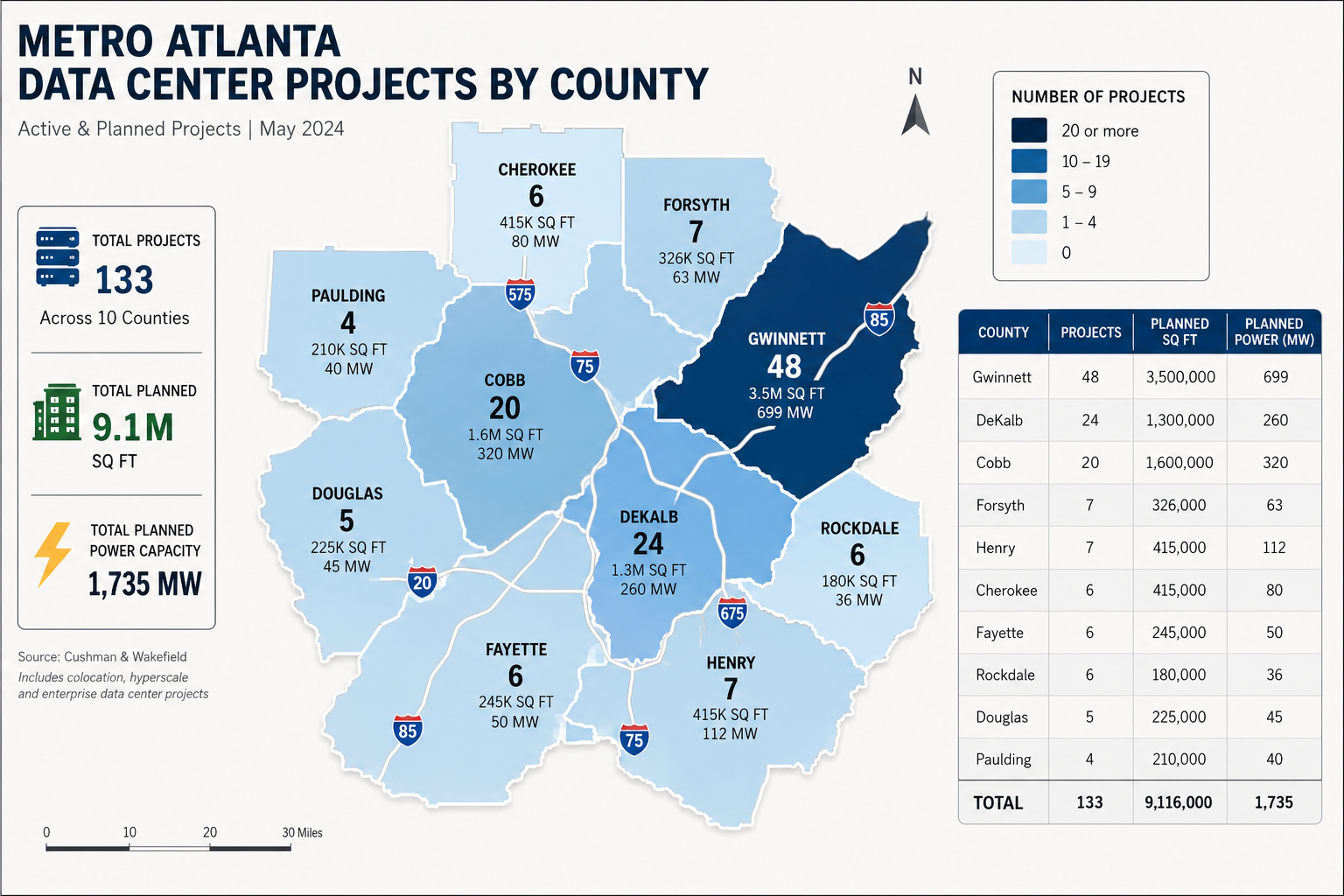
Metro Atlanta became the fastest-growing data center market in the country, and the construction is heavily concentrated south and west of the city. In 2024 the Atlanta region recorded more net data center absorption than Northern Virginia for the first time, and the pipeline since then has only grown. As of early 2026, industry trackers counted dozens of facilities under construction within roughly 60 miles of Atlanta and many more planned.
The geography matters for buyers because the impact is local. A data center campus in Coweta County does nothing to a home in Brookhaven. What you care about is what is being built near the specific areas you are shopping. Here is the current map of the largest projects by county, drawn from county filings, development authority records, and reporting through spring 2026.
| Area | County | Notable projects | Status |
|---|---|---|---|
| Union City, Palmetto, South Fulton | Fulton | Microsoft (roughly 480 acres, around $1.8B), T5 Atlanta IV, Burr and RSC campuses on Stonewall Tell Rd, Edged Energy | Mix of under construction and approved |
| Douglasville, Lithia Springs | Douglas | Microsoft, Google, AWS (part of an $11B Butts and Douglas investment), Vantage, Stream, DC BLOX, Flexential | Multiple operating and under construction |
| Covington, Social Circle | Newton | Meta Stanton Springs (operating since 2018), Newton County Technology Park (around $5B proposed) | Operating plus large proposal |
| Newnan area | Coweta | Project Sail (around 829 acres, rezoned to industrial in April 2026) | Rezoned, early stage |
| South of the city | Spalding | Wallace Jackson campus (roughly $3.7B to $3.9B, around 190 acres, proposed) | Proposed |
| Fayetteville, plus Henry and Rockdale | Fayette, Henry, Rockdale | QTS Project Excalibur (Fayetteville), multiple Henry County proposals, Rockdale pipeline activity | Mix of under construction and proposed |
| Doraville, Lithonia, Ellenwood corridor | DeKalb | Several pending applications, including a roughly 1M sq ft proposal | Under moratorium while an ordinance is finalized |
| Downtown Atlanta | Fulton | QTS West Marietta Street (around $1.3B) | In development |
Sources: county development authority records, Development of Regional Impact filings, and reporting through spring 2026. Projects move quickly. Verify the current status of any specific site before relying on it.
A few patterns stand out. South Fulton and Union City have become the densest cluster inside the metro core, anchored by Microsoft's roughly 480 acres around Union City and Palmetto and a string of campuses along Stonewall Tell Road and South Fulton Parkway. Douglas County, west of the city around Douglasville and Lithia Springs, has a Microsoft and Google footprint plus AWS investment. The largest single proposals are actually farther out: a roughly $5 billion campus near Covington in Newton County, an $17 billion proposed campus near Newnan in Coweta County, and a multi-billion-dollar campus pitched in Spalding County south of the city.
The point for buyers is not that these are bad places to live. East Point, College Park, South Fulton, and the Newnan and Covington areas have real affordability and real appeal, which is part of why I work with so many buyers there. The point is that if you are shopping in the southern and western crescent, data center activity is a live variable you should research parcel by parcel, the same way you would research a flood zone or a planned road widening.
Will a data center hurt my home's value?
The research available so far does not show data centers systematically dragging down nearby home values, but the studies come from older, denser markets that do not map cleanly onto Atlanta, and immediate adjacency is a different question from being in the same county. That is the honest version. Let me break it down, because the nuance is where the real answer lives.
The most cited research comes out of Northern Virginia, the largest data center market in the world. A George Mason University Center for Regional Analysis study of 2023 and 2025 home sales found that homes closer to data centers actually sold for more than comparable homes farther away. A separate academic paper published in early 2026, using air-permit data matched to home price indices in Virginia, found effects that were economically small and slightly positive, with confidence intervals that ruled out large price declines. Studies in Indiana counties reached similar conclusions, with homes near data centers appreciating roughly in line with their local markets.
Before you take that as all-clear, read the fine print the researchers themselves flag. Northern Virginia is unusual. It has an extreme concentration of facilities, decades of experience absorbing them, an affluent tax base, and residential tax rates that have fallen partly because data centers carry so much of the load. Those conditions can lift surrounding home values regardless of whether anyone enjoys living near a server farm. The researchers were clear that the result may not transfer to places without that density and those resources. Metro Atlanta is earlier in the cycle and far less concentrated, so the Virginia premium is not something a buyer here should bank on.
There is also a real distinction between distance tiers. Market analysts who study this describe a proximity pattern: a home pressed right up against a facility can carry an adjacency discount from noise, traffic, and the view, while a home a few miles out can capture an economic and tax-base premium. One distance-tiered analysis put the near-adjacency discount in a Virginia case study in the mid-teens percentage-wise for a home roughly 200 feet from a hyperscale campus, while homes five to fifteen miles out tracked a premium. Treat the exact percentages as illustrative rather than gospel, because they come from one market. The takeaway that does travel is the shape of it.
| Distance from facility | General pattern in the research | What drives it |
|---|---|---|
| Immediate adjacency (campus visible, audible, on your street) | Possible discount; treat like a home backing to a highway or rail line | Noise, construction traffic, viewshed, lighting |
| Nearby but buffered (within a mile, not adjacent) | Generally neutral in the available studies | Buffer distance offsets most adjacency effects |
| Same area, several miles out | Neutral to slightly positive in dense established markets | Added tax base, local economic activity |
This reflects findings from Northern Virginia and a handful of other markets, summarized for orientation. Metro Atlanta is earlier in the cycle and less concentrated, so treat these as directional, not as a guarantee for any specific home.
So what does this mean for an Atlanta buyer? If a home is directly adjacent to an operating or approved data center, with the campus visible from the yard, the cooling systems audible, and construction traffic on the road, that is a condition you price in and negotiate around, the same as you would a home backing to a highway or a rail line. If the facility is a mile or more away and there is a buffer between you and it, the evidence does not support panic, and the added tax base can actually help local services. The mistake I see buyers make is treating "there is a data center in this county" as a reason to walk, when the real question is "how close, what is between us, and what is planned next door."
Will data centers raise my power bill?
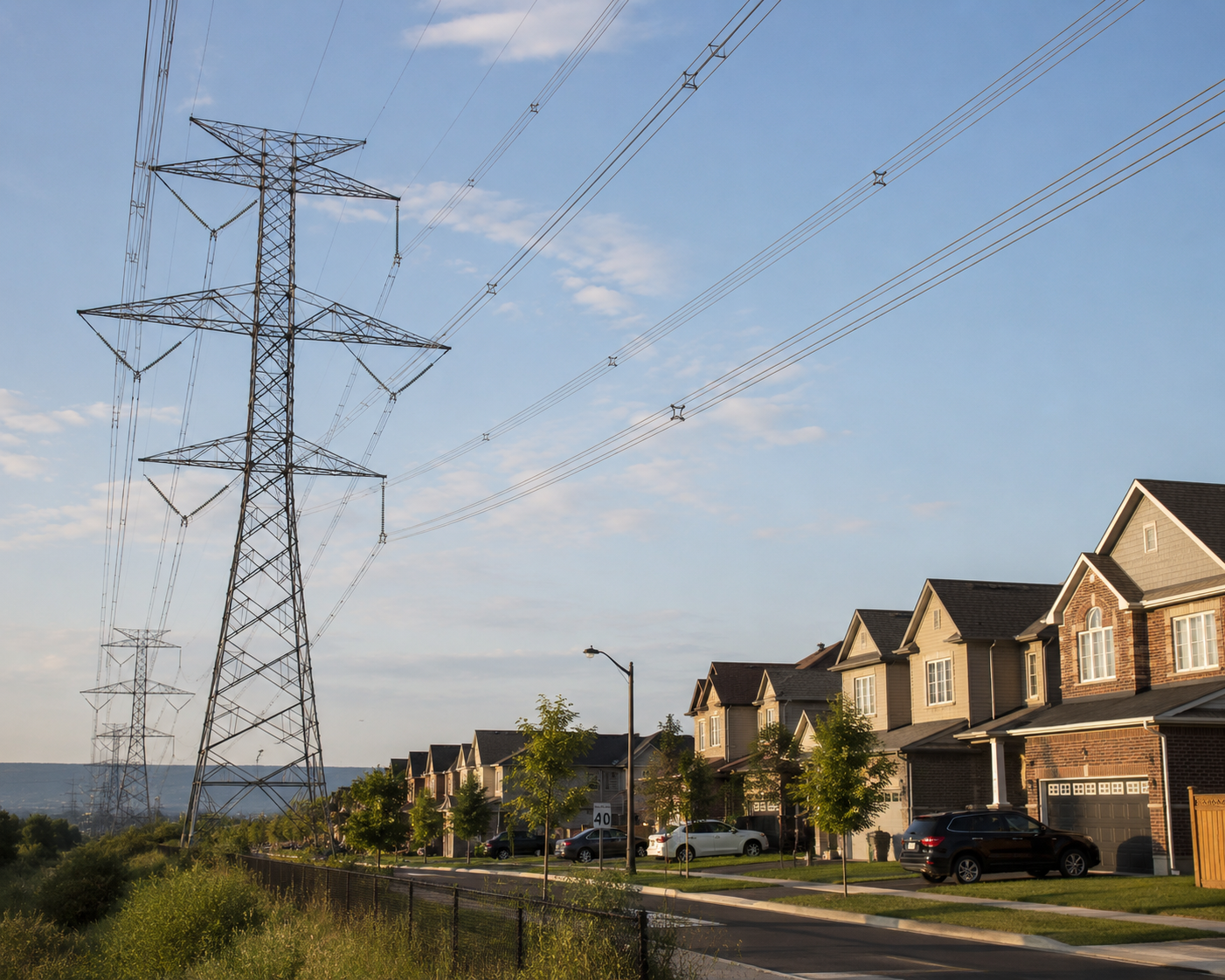
The Georgia Public Service Commission has put rules in place that are designed to keep data center costs off residential bills, but the question is genuinely contested, and it is one of the bigger policy fights in the state right now. Both things are true, and a buyer deserves both.
Here is the structure. In December 2025 the PSC voted unanimously to approve a Georgia Power plan to add nearly 10,000 megawatts of new generation capacity, with the commission saying roughly 80 percent of it is expected to serve data centers. The construction cost is estimated around $16.5 billion, and critics note that customers could pay far more than that over the multi-decade life of the resources. To protect existing customers, the PSC pointed to a rule it adopted in 2024 and 2025: any new customer using 100 megawatts or more can be billed under special terms, must sign a minimum 15-year contract, must pay for upstream generation and transmission costs as their project is built, and must fund cost studies before construction. The commission also instituted a Georgia Power rate freeze on base rates through the end of 2028. The PSC's position is straightforward: data centers pay their own way, and ratepayers are shielded even if the projected demand does not fully materialize.
The other side is just as real and worth understanding before you assume your bill is untouchable. Before the December vote, PSC staff cautioned that the expansion could add around $20 a month to bills if things went sideways, a figure Georgia Power then negotiated to address with guaranteed revenue commitments. Consumer and environmental groups, including the Southern Environmental Law Center, Georgia Watch, and Science for Georgia, argued the protections have gaps and that if Georgia Power's demand forecasts prove too high, existing customers could be left paying for generation that was built on speculation. They also point out that the average residential Georgia Power bill has already climbed more than $40 a month over the past two years, mostly from fuel costs unrelated to data centers, so households are sensitive to any added pressure. In the 2026 legislative session, lawmakers from both parties introduced bills to codify ratepayer protections into law, require large facilities to publicly report energy and water use, and in one case pause new data center construction statewide until 2027.
My read for buyers: do not assume a data center boom automatically means your power bill is going up, because the rules currently in place are specifically built to prevent that, and they have a rate freeze behind them through 2028. Also do not assume the question is permanently settled, because it is being litigated in dockets and debated in the legislature, and forecasts can be wrong. If long-term operating cost is part of your buying math, this is worth following the same way you would follow property tax trends.
What should I actually check before buying near a data center?
Run a specific, parcel-level due diligence list, because the difference between a non-issue and a real problem comes down to distance, zoning, and what is planned on the land around you. This is the part of the post I would tell a client to screenshot.
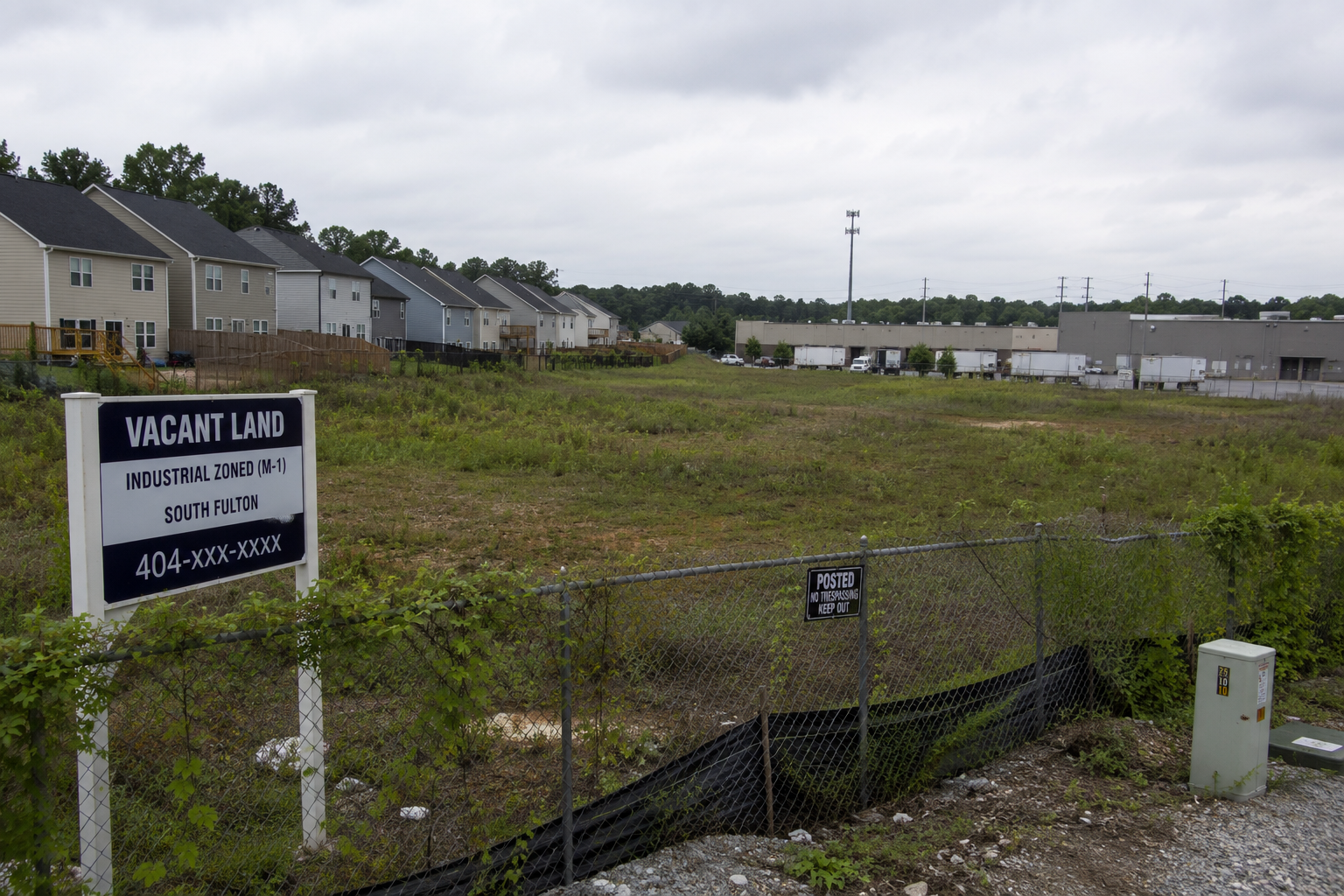
Start with the land, not the building. The most common surprise is not the data center you can see, it is the one that gets approved on vacant land after you close. Find out how nearby undeveloped parcels are zoned. Light industrial (often M or M-1) and heavy industrial (M-2) zoning is where data centers typically go, and a large vacant industrial tract within sight of a home is the single biggest tell. If a parcel is currently zoned residential or agricultural, ask whether a rezoning application has been filed, because the large campuses in Coweta and elsewhere went through exactly that rezoning step before construction.
Check the local ordinance, because the rules now vary dramatically by jurisdiction and many are brand new. Metro Atlanta is in the middle of a wave of data center ordinances and moratoriums. The City of Atlanta, in ordinances adopted in late 2024, requires a special use permit for data centers and prohibits them within the BeltLine Overlay District and within roughly half a mile of MARTA rail stations. DeKalb County spent 2025 and into 2026 under a moratorium while it drafted an ordinance that proposes setbacks of 500 feet from residential parcels and from parks and trails, plus transit buffers. Counties including Douglas, Clayton, Coweta, and Bartow have passed moratoriums or new restrictions on noise, buffers, and siting. At least ten Georgia jurisdictions have imposed moratoriums at some point. What this means practically: the setback and buffer protections around a given parcel depend entirely on which county or city you are in, and whether that jurisdiction has adopted an ordinance yet. Ask.
Then walk the specific conditions a data center actually creates for neighbors:
Noise. Cooling systems and backup generators run continuously. The newest AI-focused facilities lean on large cooling infrastructure, and noise is the most common neighbor complaint. If a campus is close, visit at different times and listen.
Transmission lines. Big facilities require new high-voltage transmission to reach them, and new transmission corridors are a long-standing buyer concern in their own right. A data center a mile away may still mean new lines or a substation closer to you. Ask where the power is coming from.
Water. Some facilities use significant water for cooling, though many newer ones use closed-loop or recycled systems. In counties debating these projects, water draw has been a central concern. It is reasonable to ask how a nearby facility is cooled.
Traffic and construction. The construction phase brings heavy trucks and crews for a year or more. The permanent job count is low, so the daily traffic settles, but the build-out period is disruptive.
Viewshed and lighting. These are large industrial buildings with security lighting. If you can see the campus from the home, that is a permanent feature, not a temporary one.
None of these automatically makes a home a bad buy. Plenty of solid homes sit near industrial uses and hold value fine. The goal is to know what you are buying so you can price it correctly and decide with open eyes, not to discover it at the inspection.
Which Atlanta neighborhoods are most affected by the road and transit projects?
The biggest active road projects are on the north side, along SR 400 and the top end of I-285, while the most significant transit changes touch the intown south side and the bus network across the whole metro. If data centers are mostly a south-and-west story, the major infrastructure build is mostly a north-side and intown story.
The headline project is the SR 400 Express Lanes. This is one of the largest highway public-private partnerships in the country, with a total cost in the range of $10 to $11 billion, running 16 miles from the North Springs MARTA station in Fulton County up to McFarland Parkway in Forsyth County. Heavy construction began in spring 2026 and runs through 2031. It adds tolled express lanes in each direction, with bus rapid transit that ties into MARTA. The communities directly along that corridor, Sandy Springs, Roswell, north into Alpharetta and southern Forsyth, are living with a five-year construction window: tree clearing, utility relocation, lane shifts, and staging. That is real day-to-day disruption now in exchange for faster, more reliable travel and transit access later.
Behind it is the I-285 Top End Express Lanes project, which would add barrier-separated express lanes along roughly 19 miles of the northern perimeter through Cobb, Fulton, and DeKalb counties, with connections to I-75, SR 400, and I-85, and BRT-ready design. It is earlier in its timeline than SR 400, still moving through environmental review and procurement, so the disruption there is mostly ahead rather than underway.
On transit, MARTA rolled out major changes in 2026: a redesigned NextGen Bus Network launching in April with more frequent service to far more residents, an on-demand MARTA Reach service, and the Rapid A-Line, the region's first bus rapid transit line, connecting downtown to Summerhill and the BeltLine's Southside Trail. Five Points Station is being rebuilt as part of a systemwide station program. For intown buyers, the A-Line and the Southside Trail connection are the changes most likely to touch home values on the south side.
| Project | Corridor and areas affected | Timeline | What it means for buyers |
|---|---|---|---|
| SR 400 Express Lanes | 16 miles, North Springs MARTA to McFarland Pkwy: Sandy Springs, Roswell, Alpharetta, southern Forsyth | Heavy construction began spring 2026, open around 2031 | Years of construction now along the corridor; tolled express lanes and BRT later |
| I-285 Top End Express Lanes | Roughly 19 miles of the northern perimeter: Cobb, Fulton, DeKalb | In environmental review and procurement; construction later | Disruption mostly ahead, not yet underway; BRT-ready design |
| MARTA NextGen Bus and Rapid A-Line BRT | Metro-wide bus redesign; A-Line connects downtown to Summerhill and the BeltLine Southside Trail | Launched 2026 | New transit access on the intown south side; fixed BRT stops can support nearby value |
How do highway and transit projects affect home values and daily life?
Road and transit projects cut two ways, and which way depends on whether your home sits on the corridor or near a new access point. The construction phase is a cost. The finished project can be a benefit. Buyers get the timing of those two things backwards all the time.
During construction, a home directly on a corridor like SR 400 absorbs years of noise, dust, lane closures, and reduced curb appeal. That is a legitimate negotiating point if you are buying along the route between now and 2031, and it is a legitimate reason some sellers in those pockets are pricing to move. If you are buying there, factor the construction window into both your daily life and your resale timeline.
Once a project opens, the calculus changes. Reliable travel time and new transit access tend to support values over the long run, which is the whole reason transit-oriented development commands a premium intown. The SR 400 express lanes are tolled, though, so the faster trip is a pay-per-use benefit rather than a free one, and that is worth being honest with yourself about. Bus rapid transit stops, like the planned A-Line stations on the south side or the future BRT nodes along SR 400, are the kind of fixed infrastructure that can lift nearby property over time the way rail stations have.
The practical move is the same one I give buyers on the data center question: figure out exactly where you sit relative to the project. On the corridor during construction is one situation. A short drive from a new interchange or BRT station, with the disruption a mile off, is a very different and often better one.
Is the south metro data center crescent still a smart place to buy?
Yes, for the right buyer, because the affordability that draws people to East Point, College Park, South Fulton, Union City, and the southern crescent is real, and the data center activity is a factor to manage rather than a reason to avoid the whole area. I want to be direct about this part, because it matters to a lot of the buyers I work with.
The southern and western arc of the metro has long been where buyers find more house for the money, and that has not changed. What has changed is that this same arc is absorbing the heaviest concentration of data center development, and the siting has not been evenly distributed across the metro. Community members in South Fulton and elsewhere have organized around exactly that, raising concerns at county meetings about power costs, water, transmission lines, and transparency in how these projects get approved, often under non-disclosure agreements. Those concerns are documented and ongoing, and they are part of an honest picture of the area.
For a buyer, that translates into a clear strategy rather than a verdict. The affordability is a genuine reason to look south and west. The concentration of projects is a genuine reason to do more parcel-level homework there than you would in, say, a built-out intown neighborhood where there is no large vacant industrial land left to develop. Both can be true at once. A home in East Point or South Fulton that is well away from industrial-zoned tracts, with no rezoning applications pending nearby, is a different proposition from one staring at an approved campus, even though they share a zip code. My job is to help you tell those two apart before you fall for a house.
What this means if you're buying in metro Atlanta right now
The single most useful thing you can do is stop thinking at the county level and start thinking at the parcel level. "There are data centers in South Fulton" and "there is highway construction on SR 400" are headlines. They do not tell you whether a specific house is affected. Distance, zoning of the land around you, the local ordinance, and what is planned next door are what actually determine the impact on your home and your daily life.
For most buyers, none of this changes the basic decision. The Atlanta market in 2026 is the most buyer-favorable it has been in years, with more inventory and more room to negotiate, and these projects are a layer of due diligence rather than a reason to wait. If you want to understand the broader market backdrop, I have written separately about whether now is a good time to buy a house in Atlanta and about what actually works when you negotiate in this market.
What I do for clients buying in affected areas is simple and specific: I pull the zoning on the parcels around a home you like, check for pending rezoning or special use applications, look at the local ordinance status, and tell you plainly where a project is likely to help, where it is likely to hurt, and where it is genuinely neutral. That is the difference between buying on a headline and buying on the facts.
Frequently asked questions
Are data centers being built inside the city of Atlanta? Mostly no, by design. Atlanta adopted ordinances in late 2024 that require a special use permit for data centers and prohibit them within the BeltLine Overlay District and within roughly half a mile of MARTA rail stations. The large campuses are concentrated in surrounding counties, especially South Fulton, Douglas, Newton, Coweta, and Spalding. There are some facilities downtown, including a planned QTS campus on West Marietta Street, but the city's rules push new large development away from the intown core and the BeltLine.
Which metro Atlanta counties have the most data center activity? South Fulton and Union City have the densest cluster inside the metro, with Douglas County west of the city close behind. The largest individual projects are farther out: Newton County near Covington, Coweta County near Newnan, Spalding County, plus activity in Butts, Henry, Fayette, Bartow, and Rockdale counties. DeKalb has spent recent months under a moratorium while it writes an ordinance.
Does living near a data center lower your home value? The available research, mostly from Northern Virginia and a few other markets, does not show a systematic drop in nearby home values, and in some cases shows homes near data centers selling for more. But those markets are denser and more affluent than metro Atlanta, so the results may not transfer, and immediate adjacency is a real exception. A home pressed right against a facility can carry a discount from noise, traffic, and views, while a home a mile or more away with a buffer is usually a non-issue. Distance and what sits between you and the campus are what matter.
Will the data center boom raise my Georgia Power bill? The Georgia Public Service Commission has rules requiring large data centers to pay their own generation and transmission costs and a base rate freeze through the end of 2028, both intended to keep these costs off residential bills. Consumer and environmental groups argue the protections have gaps and that existing customers could be exposed if demand forecasts prove wrong, and lawmakers have introduced bills to strengthen the rules. The short version: current rules are designed to protect you, but the issue is still being actively debated.
How do I find out if vacant land near a home could become a data center? Check the zoning. Data centers typically go on light or heavy industrial land (often labeled M, M-1, or M-2). A large vacant industrial tract near a home is the biggest tell. Then check whether any rezoning or special use permit application has been filed with the county or city, since the bigger projects rezone agricultural or industrial land before they build. I do this research for clients as part of evaluating a home.
Which neighborhoods are affected by the SR 400 construction? The SR 400 Express Lanes project runs 16 miles from the North Springs MARTA station up to McFarland Parkway in Forsyth County, so the corridor through Sandy Springs, Roswell, Alpharetta, and southern Forsyth is most directly affected. Heavy construction began in spring 2026 and continues through 2031, meaning years of lane shifts and staging for homes along the route, in exchange for tolled express lanes and bus rapid transit when it opens.
Is it a bad idea to buy a home on a corridor that is under construction? Not necessarily, but you should price it in. A home directly on SR 400 or another active project absorbs years of construction disruption now, which is a fair negotiating point and a real daily-life consideration. Once the project opens, reliable travel and transit access tend to support value. The key is knowing whether you are buying on the corridor during the build or a comfortable distance from it.
Do data centers bring jobs to the area? Far fewer than their size suggests. These are land- and power-intensive but labor-light. A multi-billion-dollar campus often creates only a few dozen permanent jobs along with several hundred temporary construction jobs. The economic argument for them is mostly tax base, not employment, which is part of why communities have pushed back on giving large tax incentives for relatively little local hiring.
Are transmission lines from data centers a concern for buyers? They can be. Large facilities require new high-voltage transmission and sometimes new substations, and proximity to transmission corridors is a long-standing buyer concern independent of data centers. A campus a mile away might still mean new lines or equipment closer to a home. It is worth asking where a nearby facility's power is coming from and whether new transmission infrastructure is planned in the area.
Where should I look if I want affordability but want to avoid heavy data center activity? That is exactly the kind of trade-off I help buyers map. Plenty of affordable pockets across the metro have little or no large vacant industrial land near them, which removes most of the data center risk. The answer depends on your budget, commute, and which side of town fits your life. The honest move is to look at specific neighborhoods and specific parcels rather than ruling out a whole region.
I work with buyers across Metro Atlanta, and I treat data center and infrastructure due diligence as part of the job, not an afterthought. If you are weighing a home near one of these projects, I will give you the parcel-level facts and a straight read on what they mean for your value and your daily life.
Visit kristenjohnsonrealestate.com or reach out directly. Come as you are, come on home.
Looking for more on the Atlanta market and the areas touched by this growth? I've written about the impact of data center expansion on Atlanta's housing market, living in South Fulton, and whether Atlanta investors or low supply are really behind rising prices. Browse the full guide series at kristenjohnsonrealestate.com.