

3 Atlanta Neighborhoods Where It's Cheaper to Own Than Rent in 2026
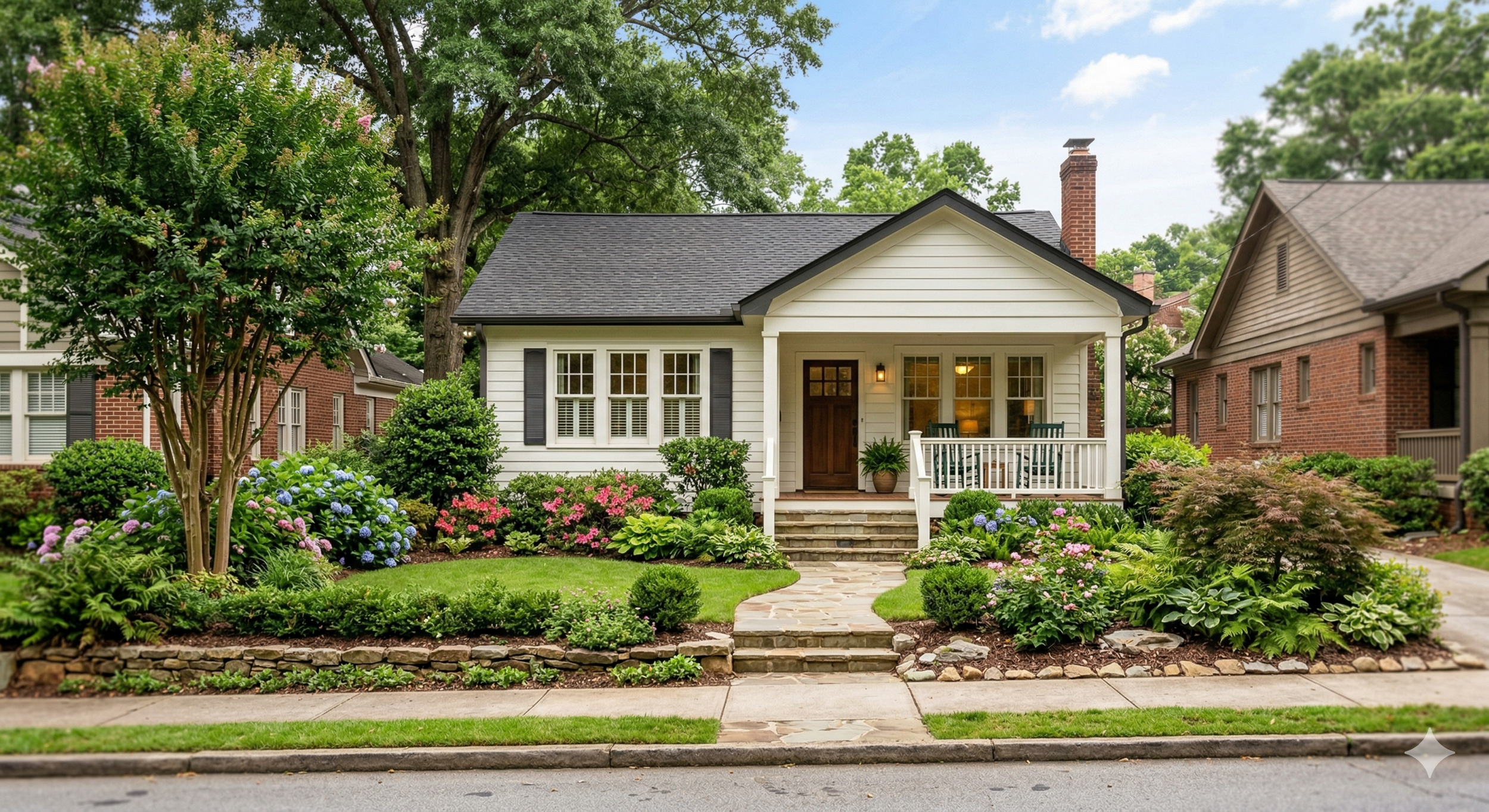
In three Atlanta ZIP codes right now, the monthly cost of owning a modest single-family home is at or below what it costs to rent a comparable one: East Point (30344), the West End side of 30310, and the Cascade corridor of South Fulton (30331). That runs against almost everything you have read about the 2026 housing market, and it is true for a specific reason I will walk through with real numbers.
Here is the backdrop. A widely circulated 2026 LendingTree analysis found that renting was cheaper than owning in all 100 of the largest U.S. metros, with mortgaged homeowners paying roughly a third more per month than renters on average. When people repeat "it's always cheaper to rent right now," that study is usually what they are quoting. It is accurate at the metro level. It is also the wrong tool for picking a neighborhood, because it compares the median rent of any unit to the median cost of any mortgaged home across an entire region. Drop down to the ZIP level and compare a house to a house, and the picture changes in pockets of Atlanta where home prices sit well below the metro median while single-family rents have climbed.
I work with buyers across Metro Atlanta, from first-time buyers to relocation clients moving in from out of state, and the rent-versus-buy question comes up in almost every first conversation. So I ran the actual math on the three areas where the gap has closed or flipped.
Here is what the numbers show.
Wait, isn't renting cheaper than owning everywhere right now?
On average across Atlanta, yes. In specific lower-priced ZIPs, no. The difference comes down to one ratio.
The number that matters is the price-to-rent ratio: the home price divided by a full year of rent for a comparable property. As a rough guide, a ratio under 15 tilts toward owning, and a ratio of 20 or higher tilts hard toward renting. Across the full Atlanta metro, where the median sale price is around $429,000 and the typical rent is closer to $2,000 a month, the ratio sits near 18, which is why the regional headlines favor renting.
In East Point, West End, and the Cascade side of South Fulton, the ratio lands closer to 10 to 12. Home prices in these areas run between roughly $230,000 and $290,000, while a comparable three-bedroom house rents for $2,000 to $2,500. When the price of the house is low relative to what that same house rents for, the monthly cost of owning it falls to meet, and sometimes drop below, the cost of renting it.
PITI is the other piece. When I say "cost of owning," I mean the full monthly payment: Principal, Interest, Taxes, and Insurance, plus mortgage insurance if you put down less than 20 percent. Not just principal and interest. A lot of rent-versus-buy comparisons quietly leave out taxes and insurance, which makes owning look cheaper than it is. I am including all of it.
How I ran the numbers
I used one consistent set of assumptions for all three ZIPs so you can compare them directly. These are estimates for illustration. Your actual numbers depend on your credit, your loan, and the specific property, so treat this as a framework, not a quote.
| Assumption | Figure used |
|---|---|
| Loan type and rate | 30-year fixed at 6.5% (Freddie Mac averaged 6.47% the week of June 18, 2026) |
| Down payment | 5% down (a realistic first-time-buyer figure) |
| Mortgage insurance (PMI) | About 0.5% of the loan per year; drops off once you reach 20% equity |
| Property taxes | Local effective rate after the basic homestead exemption (Fulton County median is about 1.05% of value; City of Atlanta runs higher). Verify by address. |
| Homeowners insurance | About $1,950 per year; higher for older homes and aging roofs |
| Not included | Closing costs, maintenance, HOA (most of these homes have none), and the tax benefits of ownership |
Rents are pulled from current single-family listings and rental market data for each ZIP, comparing a house to a house rather than a house to a cheap apartment. That last point matters more than anything else in this post.
East Point, 30344: the cleanest case in the metro
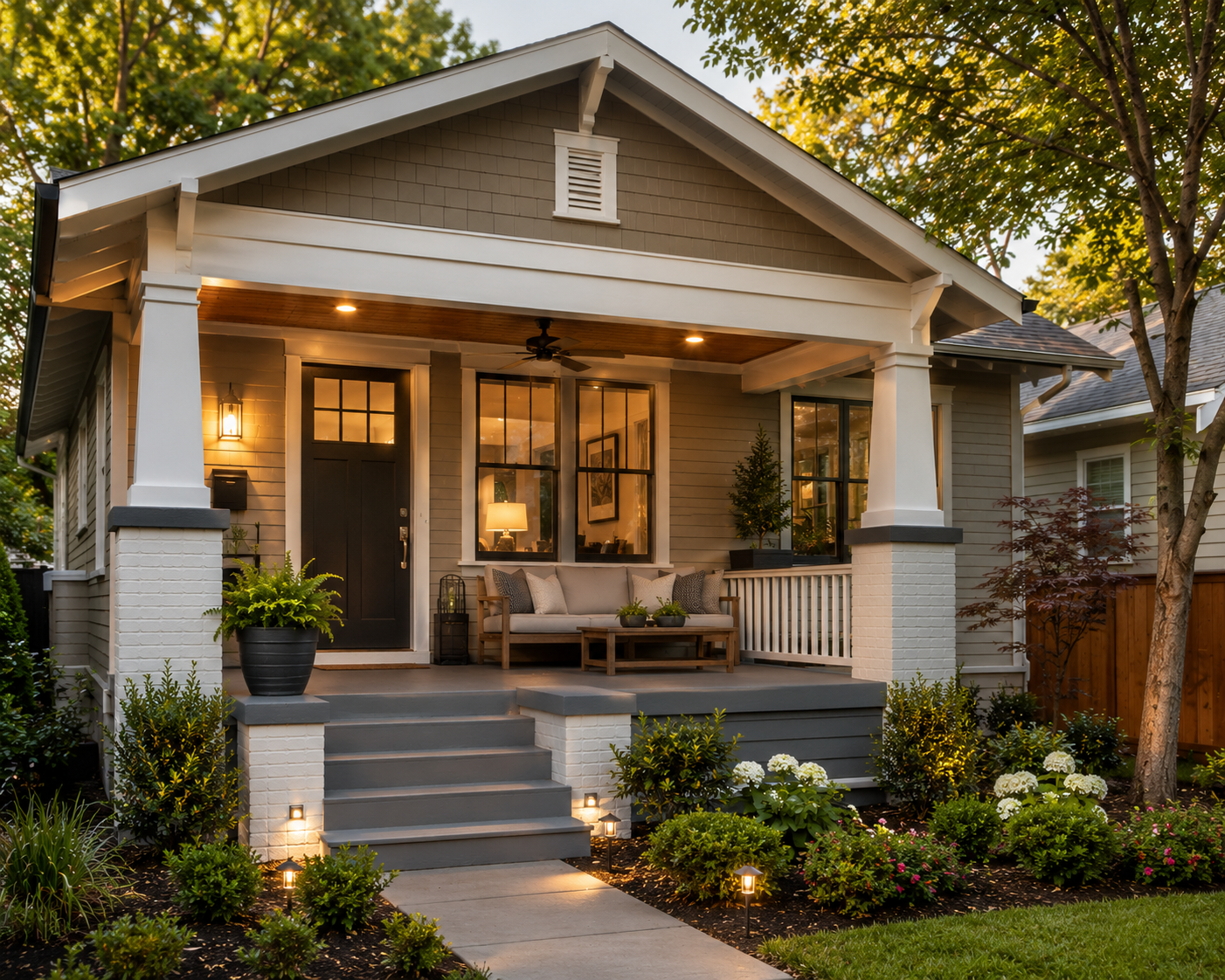
East Point is where owning beats renting by the widest margin of the three, and it is the area I know best on a personal level, because I grew up there. The housing stock is mostly brick ranches and bungalows on real lots, the MARTA rail line runs straight through it, and you are about ten minutes from the airport, which matters for the relocation and travel-heavy buyers I work with.
The typical move-in three-bedroom house in 30344 runs around $245,000 in 2026. The Zillow Home Value Index for the ZIP sits near $246,000, and recent median sale prices have ranged from the low $230,000s to the mid $260,000s depending on condition. A comparable three-bedroom house rents for roughly $2,000 to $2,200 a month.
Here is the monthly math on a $245,000 home with 5% down.
| East Point (30344): $245,000 home | Monthly |
|---|---|
| Principal & interest ($232,750 loan at 6.5%) | $1,471 |
| Property taxes (est. after homestead) | $235 |
| Homeowners insurance (est.) | $163 |
| Mortgage insurance (PMI) | $97 |
| Total monthly cost to own (PITI + PMI) | $1,966 |
| Rent for a comparable 3BR house | $2,000 to $2,200 |
Owning lands around $1,966 a month against rent of $2,000 to $2,200 for the same kind of house. You come out ahead from month one, and the gap widens later: once you hit 20 percent equity the PMI falls off, knocking nearly $100 off the payment, while rent on the house next door keeps climbing.
West End and the 30310 Westside corridor
In 30310, owning a renovated three-bedroom house costs about the same as renting one, and less than renting one near the BeltLine. This ZIP covers West End, Adair Park, and Oakland City, the historic bungalow neighborhoods on the Westside Trail extension of the Atlanta BeltLine, with the Lee + White food and brewery district anchoring the area and MARTA stations at West End and Oakland City.
This is the closest call of the three, and I want to be straight about why. The City of Atlanta carries a higher combined tax rate than East Point or South Fulton, which adds to the monthly payment. But home prices here are still modest. The Zillow Home Value Index for 30310 sits near $265,000, and a move-in three-bedroom bungalow runs around $275,000. A comparable house rents for roughly $2,200 to $2,500, with renovated homes near the trail at the top of that range.
Here is the math on a $275,000 home with 5% down.
| West End / 30310: $275,000 home | Monthly |
|---|---|
| Principal & interest ($261,250 loan at 6.5%) | $1,651 |
| Property taxes (est. after homestead, City of Atlanta) | $309 |
| Homeowners insurance (est.) | $165 |
| Mortgage insurance (PMI) | $109 |
| Total monthly cost to own (PITI + PMI) | $2,234 |
| Rent for a comparable 3BR house | $2,200 to $2,500 |
Owning runs about $2,234 a month. That sits right inside the rent range and below the going rate for a renovated house near the trail. The honest read on 30310: the rent-versus-buy gap has effectively closed, and it tips to owning the closer you get to a renovated home near the BeltLine, where rents are highest. If you want the full picture on these neighborhoods, I have written detailed guides on West End, Adair Park, and Oakland City.
Cascade and South Fulton, 30331
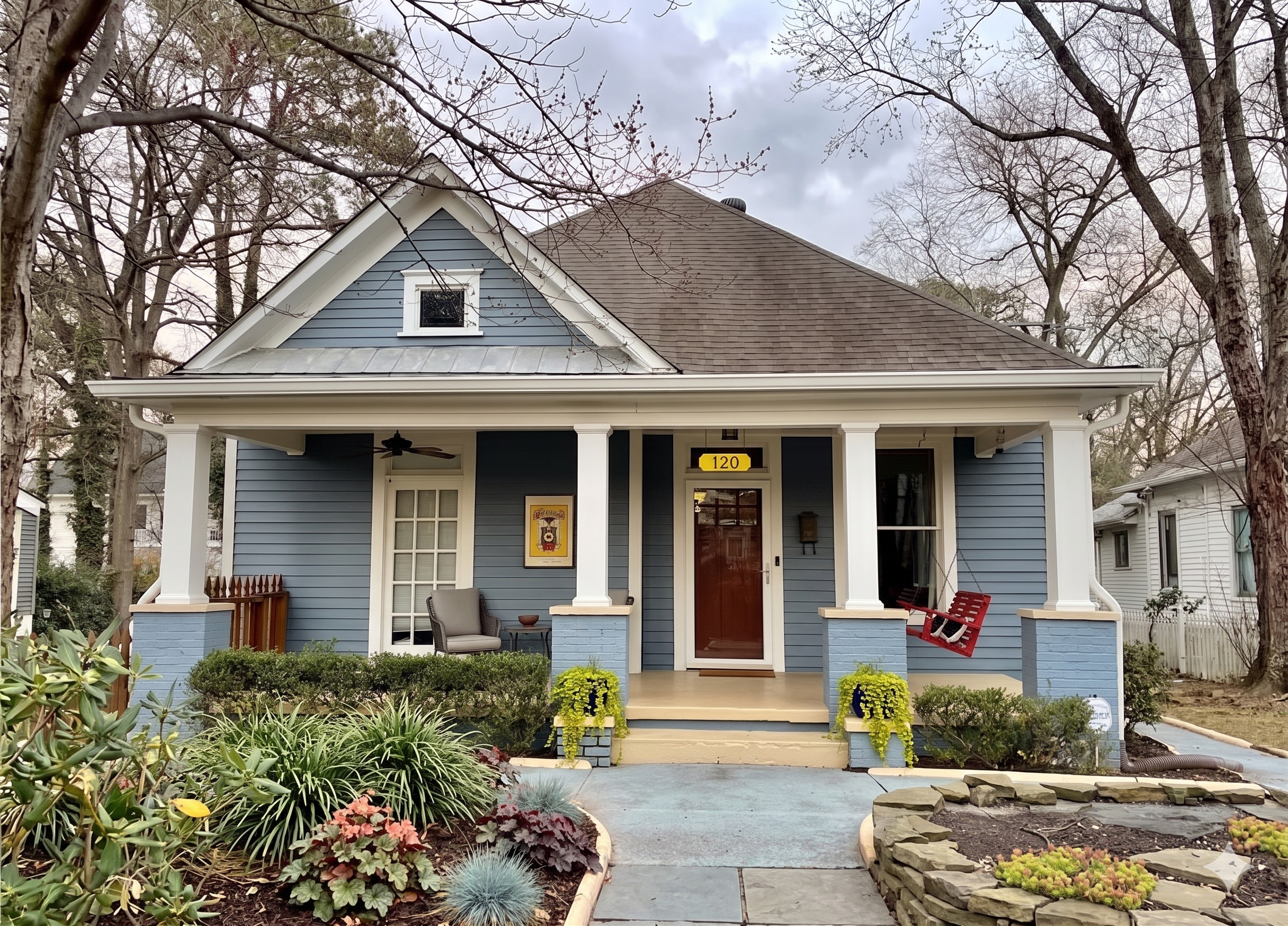
In the Cascade corridor of South Fulton, owning a comparable house costs about the same as renting it, and less for the larger homes that define this area. The 30331 ZIP covers Cascade Heights, Sandtown, Niskey Lake, and Ben Hill, where you find larger lots and bigger houses than you do intown, including a lot of brick traditionals and newer construction.
Median sale prices in 30331 have run around $280,000 to $290,000, with price per square foot near $150, well below the city average. A comparable three- or four-bedroom house rents for roughly $2,200 to $2,500. Because the homes here are larger, the rent-versus-buy comparison is strongest on the bigger properties, where rents push toward the top of that range.
Here is the math on a $285,000 home with 5% down.
| South Fulton / 30331: $285,000 home | Monthly |
|---|---|
| Principal & interest ($270,750 loan at 6.5%) | $1,712 |
| Property taxes (est. after homestead) | $238 |
| Homeowners insurance (est.) | $165 |
| Mortgage insurance (PMI) | $113 |
| Total monthly cost to own (PITI + PMI) | $2,228 |
| Rent for a comparable 3-4BR house | $2,200 to $2,500 |
Owning comes in around $2,228 a month against rent of $2,200 to $2,500 for a comparable house, with the advantage growing on the larger homes. For more on this market, see my guide to living in South Fulton.
Side by side: the three ZIPs
| Area (ZIP) | Sample home price | Cost to own (PITI + PMI) | Rent, comparable house |
|---|---|---|---|
| East Point (30344) | $245,000 | $1,966 | $2,000 to $2,200 |
| West End / Westside (30310) | $275,000 | $2,234 | $2,200 to $2,500 |
| Cascade / South Fulton (30331) | $285,000 | $2,228 | $2,200 to $2,500 |
What this math doesn't include, and you should read before you celebrate
The monthly comparison is real, but it is not the whole decision. Renting wins on flexibility and on costs that owning hides, and I would rather you hear that from me than find out later.
Owning carries costs that rent does not. You are responsible for the roof, the HVAC, and the water heater. A reasonable rule is to set aside about 1 percent of the home's value each year for maintenance, which is roughly $200 to $250 a month on these homes. Add closing costs of a few percent of the price up front. Property taxes can rise as your home is reassessed, and insurance in Georgia has been climbing, so build in cushion on both.
The comparison also depends entirely on what you compare. Buying a $275,000 house beats renting the same kind of house. It does not beat renting a one-bedroom apartment, which you can do in these same ZIPs for $1,000 to $1,400. If your real alternative is a small apartment, renting is cheaper, full stop. This post is for the buyer choosing between renting a house and owning one.
Time horizon is the other big factor. Because of closing costs and the slow early build of equity, owning usually needs about five years to pay off versus renting. If there is a real chance you move within two or three years, renting is often the smarter financial call even when the monthly numbers favor buying.
Here is the part the monthly comparison undersells, though. Your rent is not fixed and your mortgage payment mostly is. Rent on a house in these areas has been rising, and it will likely keep rising. A fixed mortgage payment does not. Every month you own, a slice of that payment goes to principal instead of to a landlord, and once you cross 20 percent equity the PMI disappears. Five years in, the gap between owning and renting in these ZIPs is usually not close.
If you want to go deeper before you decide, I would start with whether now is a good time to buy in Atlanta, how much house you can actually afford, and FHA versus conventional financing, since the loan you choose changes these numbers.
Frequently asked questions
Is it really cheaper to own than rent in Atlanta in 2026?
In most of the metro, no. On average across Atlanta, renting a typical unit costs less per month than owning a typical home, which matches the national pattern. But in lower-priced ZIPs like East Point (30344), the West End side of 30310, and the Cascade corridor of South Fulton (30331), the monthly cost of owning a single-family house is at or below the cost of renting a comparable house, because home prices there are low relative to rents.
What is PITI and why does it matter for this comparison?
PITI stands for Principal, Interest, Taxes, and Insurance, the four parts of a full mortgage payment. Many rent-versus-buy comparisons only count principal and interest, which makes owning look cheaper than it really is. Every figure in this post includes taxes, insurance, and mortgage insurance so the comparison to rent is honest.
What mortgage rate and down payment did you use?
A 30-year fixed rate of 6.5 percent, which is in line with where rates sat in June 2026, and a 5 percent down payment. A larger down payment lowers the monthly cost and removes mortgage insurance sooner. A smaller down payment, such as 3.5 percent on an FHA loan, raises the payment slightly but lowers the cash you need up front.
Which of the three areas has the biggest gap?
East Point (30344). It has the lowest home prices of the three and a lower tax rate than the City of Atlanta, so owning comes in clearly below the cost of renting a comparable house. The 30310 Westside is the closest call because City of Atlanta taxes are higher.
Does this work with a low down payment?
Yes, with a tradeoff. Low-down-payment loans like FHA at 3.5 percent down make the up-front cost much smaller, which is how many first-time buyers get into these homes. The monthly payment is a bit higher because you are borrowing more and paying mortgage insurance, but in these ZIPs the math still lands close to or below comparable rent.
What costs am I taking on as an owner that I don't have as a renter?
Maintenance and repairs, closing costs up front, and the risk that taxes or insurance rise. Budget roughly 1 percent of the home's value per year for upkeep. The upside is that your payment is mostly fixed, you build equity, and you control the home.
How long do I need to stay for buying to pay off?
Usually about five years. Closing costs and slow early equity mean a short stay can favor renting even when the monthly numbers favor owning. If you expect to move within two or three years, run the numbers carefully before buying.
Are these the only Atlanta areas where this is true?
No. These three are clear, well-documented examples, but the same dynamic shows up in other lower-priced ZIPs across the south and west sides of the metro. The method matters more than the list: compare a house to a comparable house, use full PITI, and check the price-to-rent ratio for the specific ZIP. I am happy to run that math on any area you are considering.
Will home prices in these areas keep rising?
No one can promise that. These areas have seen real price growth and also real swings, and 2026 has been a more balanced, slower market across Atlanta. Buy for the monthly math and the long-term fit, not on the assumption of fast appreciation.
Let's run your numbers
The headline that renting is always cheaper is true on average and wrong for a lot of individual buyers. If you are choosing between renting a house and owning one in East Point, the Westside, South Fulton, or anywhere else in Metro Atlanta, I will run your real numbers, your rate, your down payment, the specific property, before you decide either way.
Visit kristenjohnsonrealestate.com or reach out directly. Come as you are, come on home.
Looking for more Metro Atlanta buyer guidance? I've covered living in West End, living in South Fulton, and whether Atlanta really is one of 2026's most buyer-friendly markets. Browse the full guide series at kristenjohnsonrealestate.com.