

Atlanta Neighborhoods Where You Can Still Buy a House Under $450K and Walk to the BeltLine in 2026
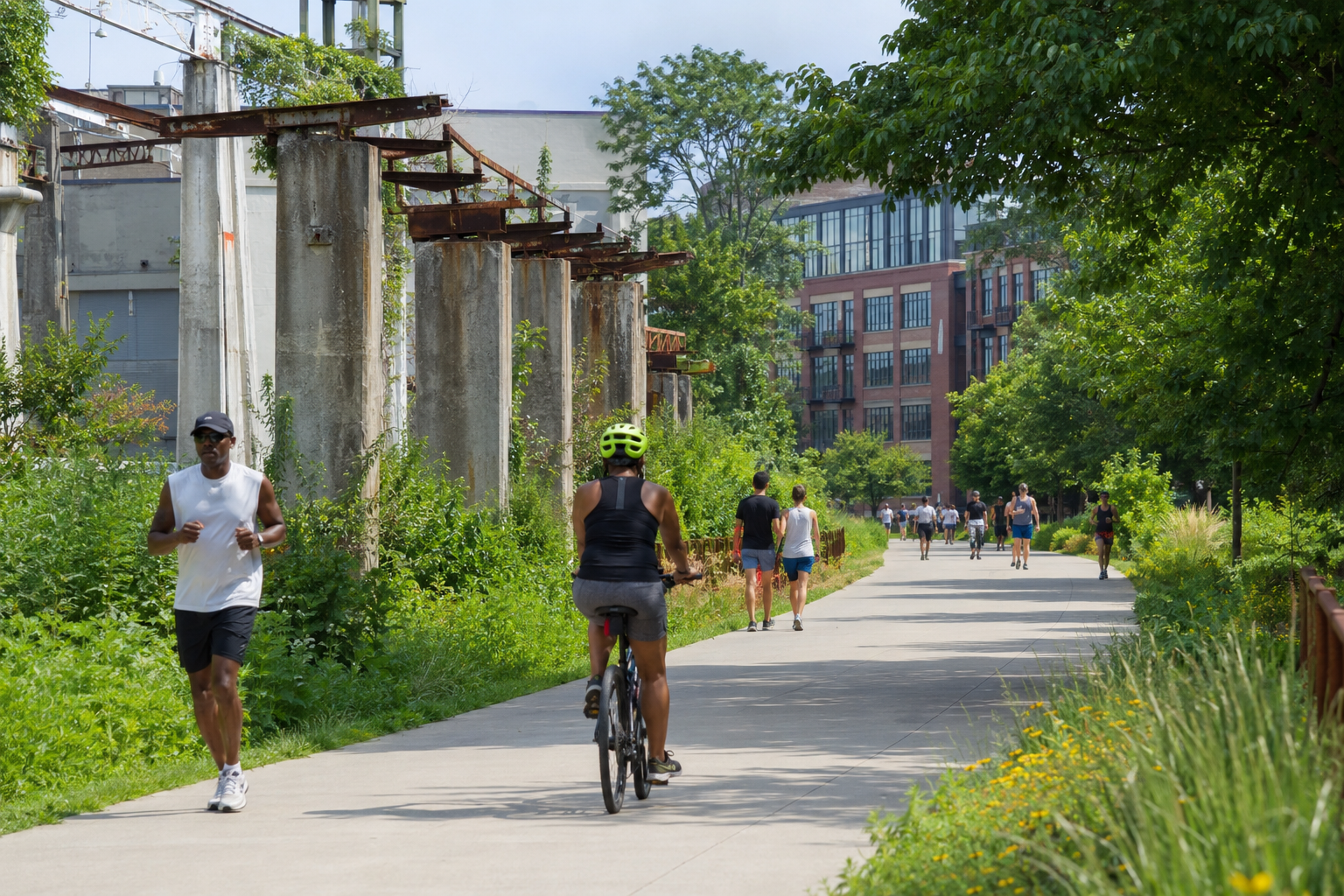
Yes, you can still buy a single-family house for under $450,000 within walking distance of the Atlanta BeltLine in 2026. The list of neighborhoods where that math actually works has gotten shorter every year, and as of this month it got a lot more interesting.
On June 12, 2026, the BeltLine closed what it calls "The U," opening Southside Trail Segments 2 and 3 and creating roughly 16.7 continuous miles of paved mainline trail. For the first time, the Eastside and Westside are connected by a single uninterrupted path running through Pittsburgh, Capitol View Manor, Peoplestown, Chosewood Park, and Boulevard Heights, according to Atlanta BeltLine, Inc. Those are the southwest and southside neighborhoods that have stayed the most affordable, and the trail that drives intown values is now physically open at their doorstep.
I live in Edgewood, just off the Eastside Trail, and I grew up in East Point. I work with buyers across Metro Atlanta, and the question I get more than almost any other right now is some version of "can I still afford to live near the BeltLine, or did I miss it?" The honest answer is that the eastside window has mostly closed for houses under $450K, but the southwest and southside corridors are exactly where that window is still open. They will not stay this way.
Here's what you need to know.
What "Walk to the BeltLine" Actually Means in 2026
Before the neighborhood list, one distinction that will save you money and disappointment: there is a real difference between a home that is BeltLine adjacent and a home with genuine walkable BeltLine access.
Adjacent means the neighborhood is in the general orbit of the trail. Access means you can leave your front door on foot and be on the trail in a reasonable walk, usually a quarter mile to half mile, without crossing a highway or a hostile arterial road. Listings stretch the word "BeltLine" constantly. A house that is technically in a BeltLine neighborhood but sits a mile away across Metropolitan Parkway is not the same product as one three blocks from a trail entrance, and the price should reflect that.
The second thing to understand is which parts of the trail are open. The Westside Trail has had about 3.4 paved miles open for years, serving West End, Adair Park, Westview, and Oakland City. The Southeast Trail (the old Segments 4 and 5) opened in April 2026. And the Southside Trail Segments 2 and 3 opened June 12, 2026, connecting the rest. So the neighborhoods below are not betting on a future trail. The pavement is down and people are on it now.
The full 22-mile loop is not projected to finish until around 2030, so some pockets are still working with interim or gravel segments. I will tell you which is which for each neighborhood, because the difference matters for both lifestyle and resale.
What Under $450K Buys Near the BeltLine Right Now
For context: Redfin put the Atlanta citywide median sale price at about $429,000 for the three months ending May 2026, down roughly 1.6 percent year over year, with homes averaging around 54 days on market. Zillow's typical-value figure for the city runs lower, around $380,000. The takeaway is that $450K is right around the city median, which means near the BeltLine you are usually buying one of three things at that price:
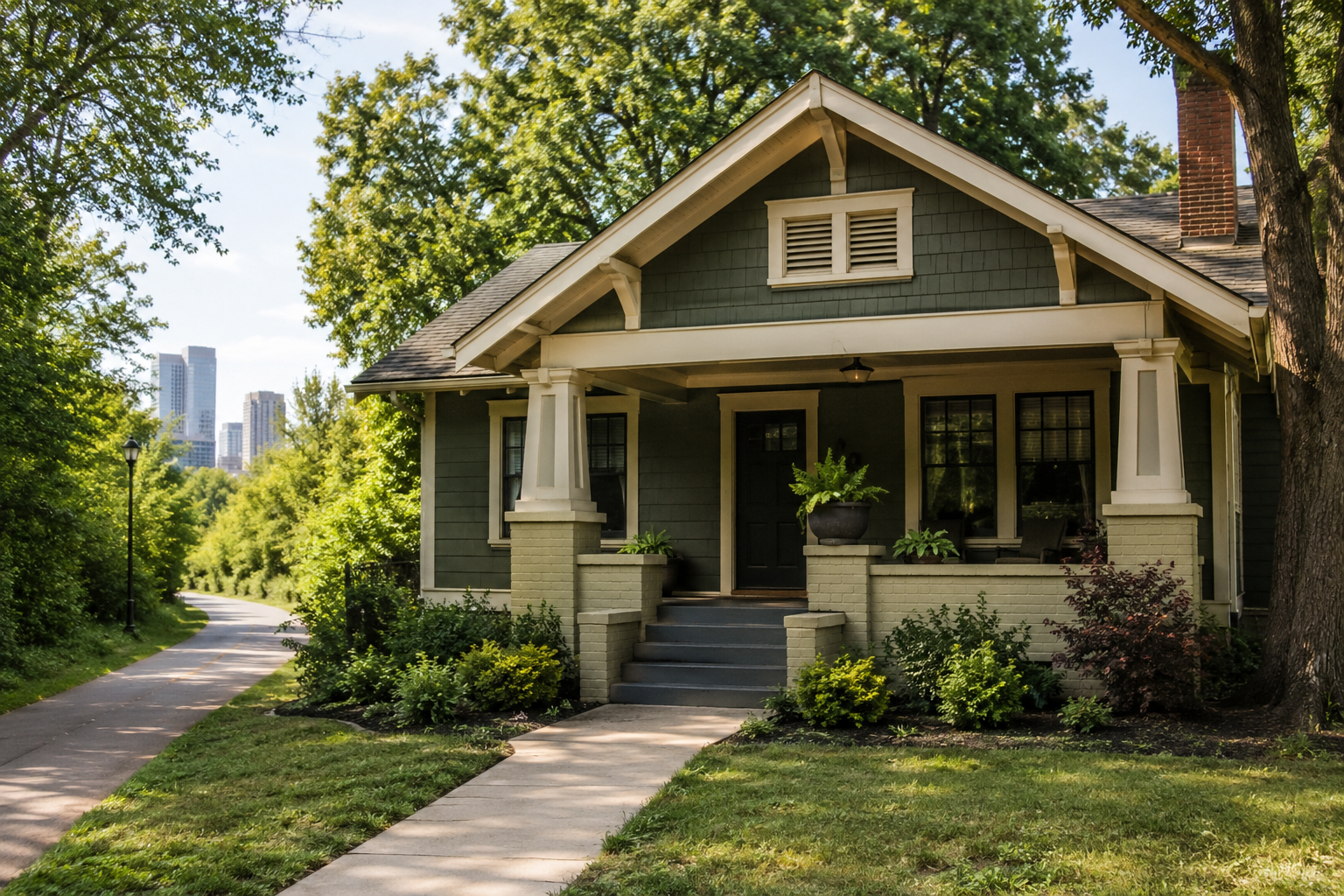
A smaller or older bungalow that is solid but not fully renovated. A renovated home on the more affordable southwest or southside corridors. Or a newer townhome where detached houses have already priced past your budget.
What you are almost never getting at $450K near the trail is a large, fully renovated, detached house on the Eastside Trail. Those left the under-$450K conversation a while ago. The neighborhoods that follow are where the price still pencils out for a house.
The Neighborhoods
I have ordered these roughly from most established to most early-stage, because the trade-off across this list is consistent: the more proven the BeltLine access, the closer you are to the $450K ceiling, and the earlier the stage, the more room you have on price and the more you are betting on the trajectory.
West End
West End is the anchor of the affordable BeltLine conversation, and for good reason. The Westside Trail runs directly through the neighborhood, two MARTA rail stations serve it, and the Atlanta University Center, the nation's largest consortium of historically Black colleges including Spelman, Morehouse, and Clark Atlanta, sits along its northern edge. Lee + White, the brewery and food hall district, is right on the trail.
Redfin data for early 2026 showed a West End median sale price around $430,000, with a broad working range of roughly $300,000 for unrenovated bungalows up to $600,000-plus for fully renovated homes and newer infill. That puts a real West End house right at the $450K line, with the lower end genuinely accessible. Days on market have run long here, around 120 in some readings, which means buyers often have negotiating room that you will not find on the eastside.
The honest caveat: West End is large and changes block by block, and there is meaningful development churn, including the roughly $450 million Mall West End redevelopment. That activity is part of the upside and part of the construction-zone reality of buying now.
Adair Park
Adair Park is one of the most affordable intown neighborhoods with direct BeltLine access, full stop. The Westside Trail runs along its southern border, it has been a National Register historic district since 1994, and it is a compact square mile of Craftsman bungalows and Folk Victorian cottages.
Pricing here sits well below the $450K ceiling. Redfin and market readings through early 2026 have placed Adair Park's typical sale price in the roughly $240,000 to $360,000 range depending on the period and the home's condition. The most significant catalyst to understand is Murphy Crossing, the 20-acre former industrial site directly on the Westside Trail that the Atlanta BeltLine itself took over as lead developer in 2025, with plans for hundreds of housing units and a retail village.
The honest caveat: buy Adair Park because you want to live in Adair Park. Murphy Crossing is real, but Atlanta development timelines are not guarantees, and you should not pay a premium today for a buildout that is still in master planning.
Westview
Westview sits on the Westside Trail just south of West End, with Enota Park as a neighborhood green space and a stock of historic bungalows similar to Adair Park's. It has historically traded under $400,000 for detached homes, which keeps it comfortably inside this budget while offering the same Westside Trail access as its better-known neighbors.
The honest caveat: like the rest of the southwest corridor, Westview is early in its appreciation cycle relative to the eastside. That is the opportunity and the risk in the same sentence.
Oakland City
Oakland City is a Westside Trail and MARTA neighborhood that is arguably the most active construction story on this list right now. The Oakland City MARTA Station and Murphy Connector Trail project is building a 1.31-mile connector linking the station into the Southside Trail network, which meaningfully improves on-foot and on-bike access over the next couple of years.
Pricing remains among the more accessible on the Westside, generally below the West End median. The honest caveat is the same connector project that is the upside: parts of it are still under construction, so some of the best access is interim today and permanent later.
Pittsburgh
Pittsburgh is one of the headline neighborhoods of the June 2026 "U" milestone. The new Southside Trail segment begins right at Pittsburgh Yards on University Avenue, putting the trail directly in the neighborhood. Pittsburgh has long been one of the most affordable intown neighborhoods, with a large share of homes historically trading well under $300,000, though renovated product and new construction push higher.
The honest caveat: Pittsburgh is genuinely early-stage, with a wide range between unrenovated homes and finished ones, and a renovation budget can turn an apparent bargain into a mid-range purchase quickly. This is a neighborhood for buyers who understand what they are taking on.
Capitol View and Capitol View Manor
Capitol View and Capitol View Manor were named directly in the BeltLine's announcement of the Southside Trail Segments 2 and 3 connection. They sit between the Westside and Southside corridors, near the Murphy Crossing and Oakland City activity, and they have stayed affordable, generally trading under $450K for detached homes.
The honest caveat: this is a transition corridor where condition and exact location vary a lot within a few blocks, so block-by-block due diligence matters more here than in a more settled neighborhood.
Peoplestown
Peoplestown sits within walking distance of the Southside Trail, minutes from downtown and roughly ten minutes from Hartsfield-Jackson. Redfin reported a Peoplestown median sale price around $412,000 in late 2025, with homes selling in the high-50-day range. The housing stock runs from older Craftsman and shotgun homes to new construction, with smaller homes listed from the low $200,000s to the mid $500,000s.
D.H. Stanton Park, with a splash pad and a walking path that connects to the trail, anchors daily life here, and The Beacon commercial district with its Sunday farmers market is a short distance away.
The honest caveat: flood risk is worth checking by specific address in parts of Peoplestown, and new construction and original homes sit side by side, so comps require a careful eye.
Chosewood Park
Chosewood Park sits directly on the Southside BeltLine corridor and was highlighted as part of the new "U." A trailing 12-month median around $435,000, up roughly 8 percent year over year, puts it near the top of this budget while still under the line, and it has historically priced below Grant Park immediately to the north.
The honest caveat: at $435K trending up, Chosewood Park is the neighborhood on this list closest to pricing out of the under-$450K conversation. If the southside corridor behaves the way the eastside did, this is one of the first places that ceiling gets tested.
Quick Comparison
Use this as a starting frame, not a substitute for current, address-specific numbers. Neighborhood medians move with very few sales, so always verify with me before you anchor on a figure.
| Neighborhood | BeltLine Access | Typical Price Range (2026) | Stage |
|---|---|---|---|
| West End | Westside Trail (open), 2 MARTA stations | ~$300K to $600K+, median ~$430K | Established |
| Adair Park | Westside Trail (open), southern border | ~$240K to $360K | Early to mid |
| Westview | Westside Trail (open) | Generally under $400K | Early to mid |
| Oakland City | Westside Trail + MARTA, Murphy Connector building | Below West End median | Early |
| Pittsburgh | Southside Trail (opened June 2026) at Pittsburgh Yards | Often under $300K, higher for new builds | Early |
| Capitol View / Capitol View Manor | Southside Trail (opened June 2026) | Generally under $450K | Early |
| Peoplestown | Southside Trail (opened June 2026) | Low $200Ks to mid $500Ks, median ~$412K | Mid |
| Chosewood Park | Southside Trail (opened June 2026) | ~$435K median, trending up | Mid, near ceiling |
How to Actually Buy Before Prices Catch Up
The strategy in these neighborhoods is different from buying in a settled market. A few things I tell every buyer working this list:
Get fully pre-approved before you tour, and know your renovation number. Several of these neighborhoods are full of homes that look like deals until you price out a kitchen, systems, and roof. A $475K-equivalent purchase can hide inside a $375K list price once you add a real renovation budget. If you are not prepared for that, narrow to move-in-ready homes and adjust your target neighborhoods accordingly.
Verify the actual walk to the trail. Pull up the specific address, find the nearest trail entrance, and check what is between them. A half-mile walk on sidewalks is a different home than a half-mile that requires crossing a six-lane road.
Look at the southwest and southside seriously if your priority is a house, not a condo, under $450K. The eastside corridor is where this used to be possible and largely is not anymore for detached homes. The trail is now open on the southside, which historically has been the leading edge of the next appreciation wave.
Ask about down payment assistance. Several of these neighborhoods fall within areas where city, state, and lender down payment assistance programs apply. That can change what your $450K ceiling actually feels like month to month.
If you want to understand the budget mechanics first, I have a full walkthrough on how much house you can afford in Atlanta and what you need to buy a house here.
Who This List Is Right For
This approach tends to work well when you want a detached house rather than a condo, you value walkable trail access over square footage, you are comfortable with a neighborhood that is still changing around you, and you can either buy renovated at the top of the budget or take on a project at the bottom of it.
Think carefully about this list if you need a fully renovated, move-in-ready house on a settled block at the absolute bottom of the budget, because that specific combination is genuinely hard to find near an open trail right now. It also deserves a real conversation if your timeline assumes a specific future development will be finished by a certain date, because Atlanta's construction timelines move.
FAQ
Can you really still buy a house under $450K near the Atlanta BeltLine in 2026? Yes, primarily in the southwest and southside corridors: West End, Adair Park, Westview, Oakland City, Pittsburgh, Capitol View, Peoplestown, and Chosewood Park. On the Eastside Trail, detached houses under $450K have largely disappeared, though some condos and townhomes still qualify.
Which BeltLine neighborhoods are the most affordable right now? Adair Park, Pittsburgh, Westview, and Oakland City are generally the most affordable with genuine trail access, often trading well under $400K. West End, Peoplestown, and Chosewood Park sit closer to the $450K ceiling.
Is the BeltLine actually open in these neighborhoods, or still under construction? The Westside Trail serving West End, Adair Park, Westview, and Oakland City has been open for years. The Southside Trail segments serving Pittsburgh, Capitol View Manor, Peoplestown, and Chosewood Park opened June 12, 2026, completing what the BeltLine calls "The U." Some connector pieces, like the Oakland City Murphy Connector, are still being built.
What is the difference between BeltLine adjacent and BeltLine access? Adjacent means the home is in a BeltLine neighborhood but may be a significant distance from an actual trail entrance. Access means you can walk to the trail from the front door without crossing a major barrier. Listings use "BeltLine" loosely, so always verify the real walking route to the nearest entrance.
Why are the southwest and southside neighborhoods cheaper than the eastside? The Eastside Trail opened and matured first, so prices there rose earlier and further. The southwest and southside corridors got their continuous trail connection much more recently, in 2026, so prices have not yet caught up to comparable eastside neighborhoods. That gap is the opportunity and the reason these areas are early-stage.
Will buying near the BeltLine here be a good investment? The BeltLine has consistently driven price appreciation in the neighborhoods it touches, and these corridors are early in that cycle. That said, I never recommend buying a home you do not actually want to live in on the bet that a development finishes on schedule. Buy the neighborhood, and treat the upside as a bonus.
Do I need a big renovation budget in these neighborhoods? Often, yes, especially in Pittsburgh, Adair Park, Westview, and parts of West End and Capitol View, where unrenovated bungalows make up a meaningful share of the affordable inventory. Budget for it before you fall in love with a list price, or focus on move-in-ready homes near the top of your range.
What about schools in these neighborhoods? These neighborhoods fall within several Atlanta Public Schools attendance zones, and zoning can change by specific address. Research and visit schools to determine fit for your family, and always verify zoning by the exact property address before you make an offer.
How fast do homes sell here? It varies a lot. West End has seen longer days on market, around 120 in some readings, which can mean negotiating room. Peoplestown has run in the high-50-day range. Renovated, well-priced homes near the trail move faster than the neighborhood average, so pre-approval and speed still matter.
Where should I start if this is my first home? Start with the budget and the financing, then narrow to two or three of these neighborhoods based on whether you want a project or a finished home. I can walk you through the specific trade-offs for your situation, including which blocks have genuine trail access and which are stretching the definition.
Let's Talk
I work with buyers across Metro Atlanta, and the affordable BeltLine corridors are some of the neighborhoods I know best, block by block and trail entrance by trail entrance. If you want a house under $450K with real walkable access to the trail, the southwest and southside are where it is still possible, and I can help you move before the window narrows further.
Visit kristenjohnsonrealestate.com or reach out directly.
Come as you are, come on home.
Looking for more on these neighborhoods? I have full guides to West End, Adair Park, and Oakland City, plus nearby intown options like Grant Park and Reynoldstown. If you are still working out the numbers, start with is now a good time to buy in Atlanta. Browse the full guide series at kristenjohnsonrealestate.com.