

Living in West End Atlanta GA: Homes, Prices & BeltLine 2026
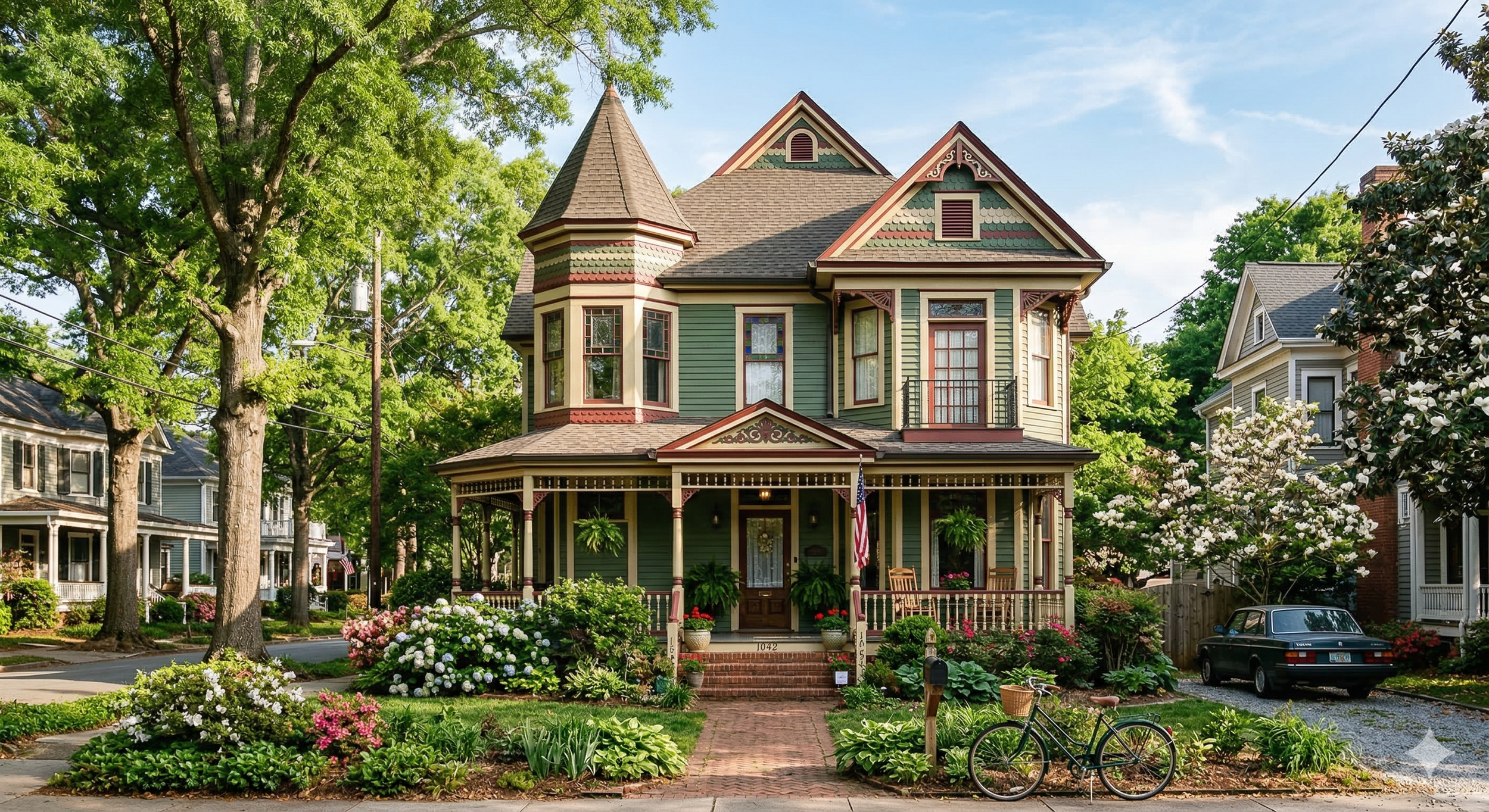
If you are looking at West End Atlanta, you are looking at one of the few intown neighborhoods with BeltLine access, two MARTA stations, and historic bungalows that still start around $300,000. West End is the oldest neighborhood outside of Downtown Atlanta. That is not marketing copy. The area was settled in the 1830s as a frontier outpost called White Hall, predating Atlanta itself, which wasn't founded until 1837. It became West End when the Atlanta and West Point Railroad established its western terminus here in the 1840s. The streetcar came in the 1880s, making West End Atlanta's first true suburb. When the BeltLine's pilot segment opened here in 2008, history was repeating a very old pattern: West End leading the way.
What makes West End distinctive in 2026 is not just the history. It is the convergence of assets that most intown neighborhoods cannot claim at once. The Atlanta University Center is here. The BeltLine Westside Trail runs directly through the neighborhood. Two MARTA stations serve it. Lee + White, one of the most successful adaptive reuse projects in the city, sits right on the trail. The Mall West End is mid-redevelopment, with a $450 million project underway that will add a grocery store, retail, and hundreds of mixed-income housing units. And the prices, while rising, still reflect a neighborhood whose westside location has kept it below the valuations of comparable intown neighborhoods on the east side of the city.
I work with buyers across Metro Atlanta, and West End comes up regularly in the conversation with first-time buyers, investors, and people relocating for AUC-affiliated institutions who want to live close to campus. Nearly ten years in this market means I have watched what the BeltLine and coordinated public investment do to neighborhoods over time. West End is not a secret. But it is still undervalued relative to its asset base.
Here's what you need to know.
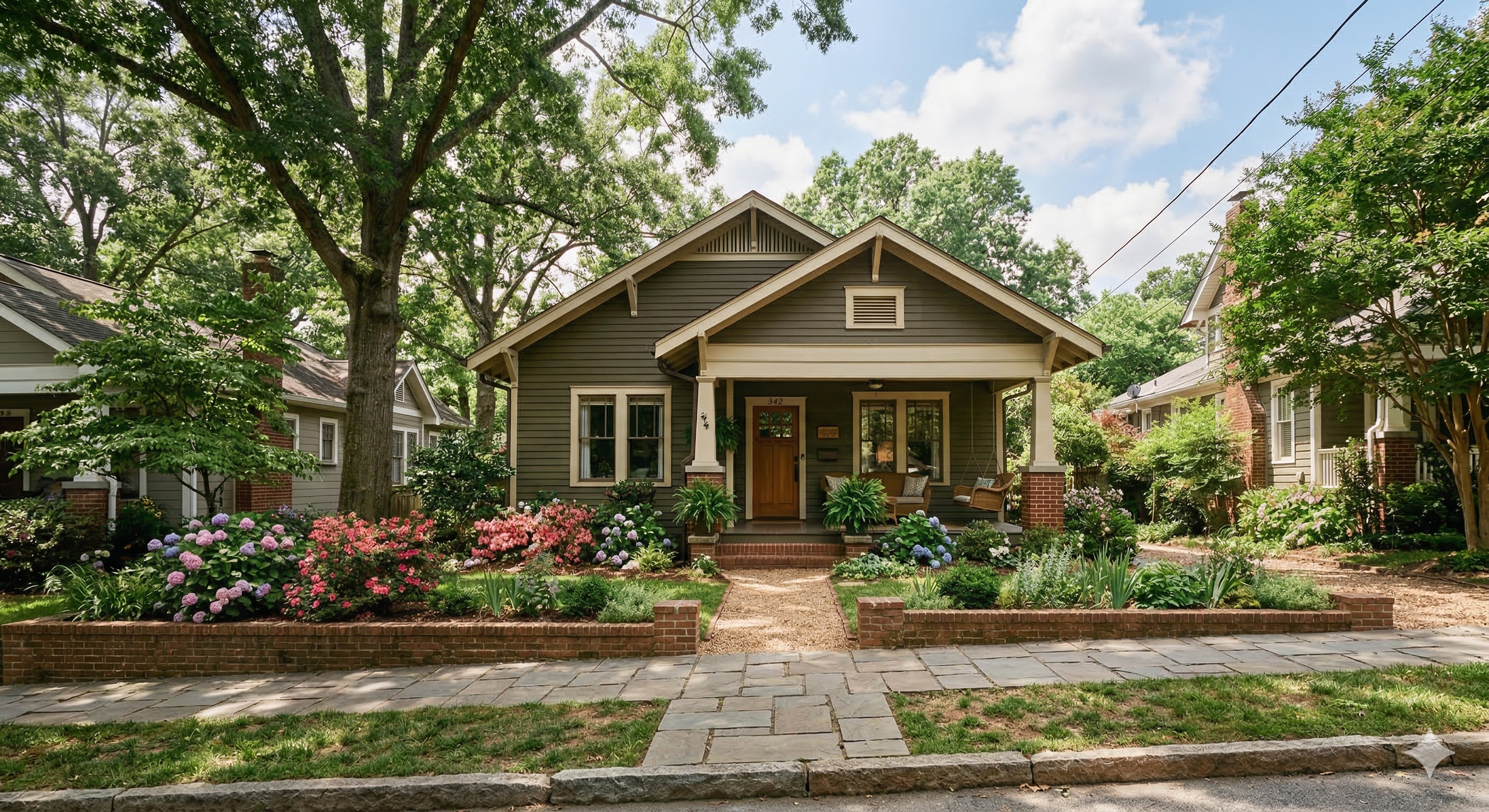
What Is West End and Where Is It?
West End is a historic neighborhood in southwest Atlanta, in Fulton County, ZIP code 30310. It sits roughly between I-20 to the north, the BeltLine Westside Trail to the south and west, and the MARTA rail line to the east. The Atlanta University Center, which includes Spelman College, Morehouse College, Clark Atlanta University, and Morehouse School of Medicine, anchors the northern edge of the neighborhood along Fair Street and MLK Jr. Drive.
West End is larger than Adair Park and has more commercial activity. The main commercial corridor runs along Ralph David Abernathy Boulevard and Lee Street, with a mix of neighborhood businesses, restaurants, and services. The BeltLine Westside Trail cuts through the southern portion, with Lee + White on the trail at the corner of Lee and White Streets.
The neighborhood boundaries matter for buyers because West End proper is distinct from the AUC campus, from the Westview neighborhood to the west, and from Adair Park to the south. The residential streets run north-south between the commercial corridors, lined with Craftsman bungalows, Queen Anne Victorians, Folk Victorian cottages, four-squares, and Colonial Revival homes from the late 19th and early 20th centuries. Like Adair Park, West End is a City of Atlanta Historic District, which means exterior changes require approval from the Atlanta Urban Design Commission.
The neighborhood's listed boundaries on the National Register of Historic Places reflect its status as Atlanta's first designated historic district — a distinction that predates even the BeltLine planning era and speaks to how long community activists and preservationists have worked to protect what is here.
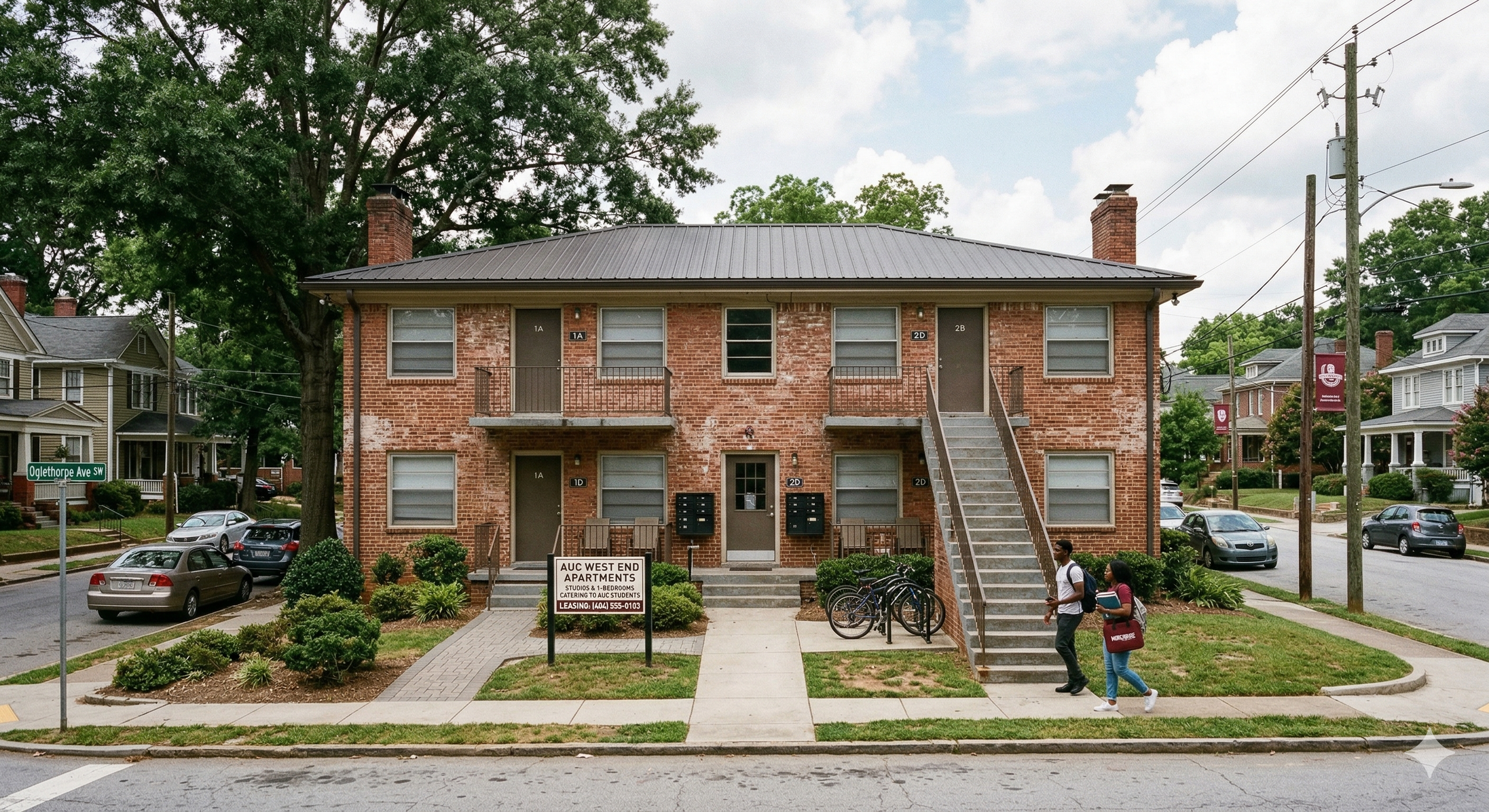
The AUC: What It Means for West End Buyers
The Atlanta University Center Consortium is the largest contiguous consortium of historically Black colleges and universities in the world. Spelman College, Morehouse College, Clark Atlanta University, and Morehouse School of Medicine share a campus footprint in and immediately adjacent to West End. The complex employs thousands and draws faculty, staff, students, researchers, and affiliated professionals who want to live nearby.
For buyers, this is meaningful in two ways. First, it creates a stable demand base for West End real estate that exists independent of broader market cycles. Faculty and staff affiliated with AUC institutions have been buying in West End for decades and continue to do so. Second, it shapes the neighborhood's cultural identity in ways that are specific and observable: the Hammonds House Museum at 503 Peeples Street houses a permanent collection of more than 450 works by African American, African, and Caribbean artists, including works by Romare Bearden, Jacob Lawrence, Elizabeth Catlett, and others. The Wren's Nest at 1050 Ralph David Abernathy Boulevard is a National Historic Landmark and the former home of Joel Chandler Harris, now operated as a storytelling center with Saturday tours and live storytelling sessions open to the community.
These are not background details. They are the specific institutional and cultural anchors that give West End its character and that distinguish it from comparable-priced neighborhoods elsewhere in the city.
One thing worth naming directly for buyers considering West End: the AUC's presence means this neighborhood has a specific cultural context and history that is deeply rooted. West End was where Atlanta's Black professional class built institutions during segregation and afterward. That history is present in the architecture, the museums, the schools, and the institutions on the street. Buyers who thrive in West End are the ones who come in with respect for and genuine interest in that context.
The Architecture: What You're Actually Buying
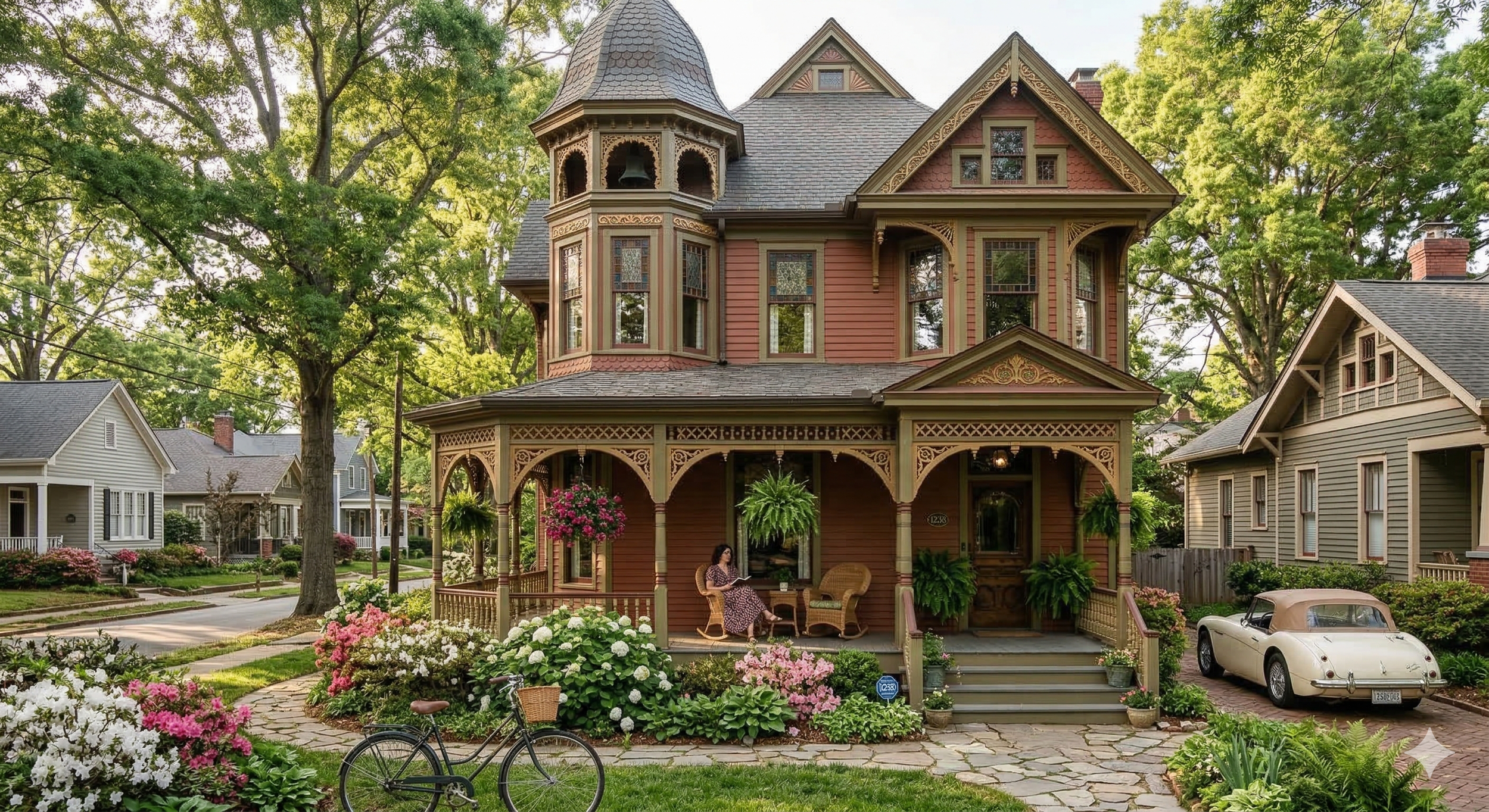
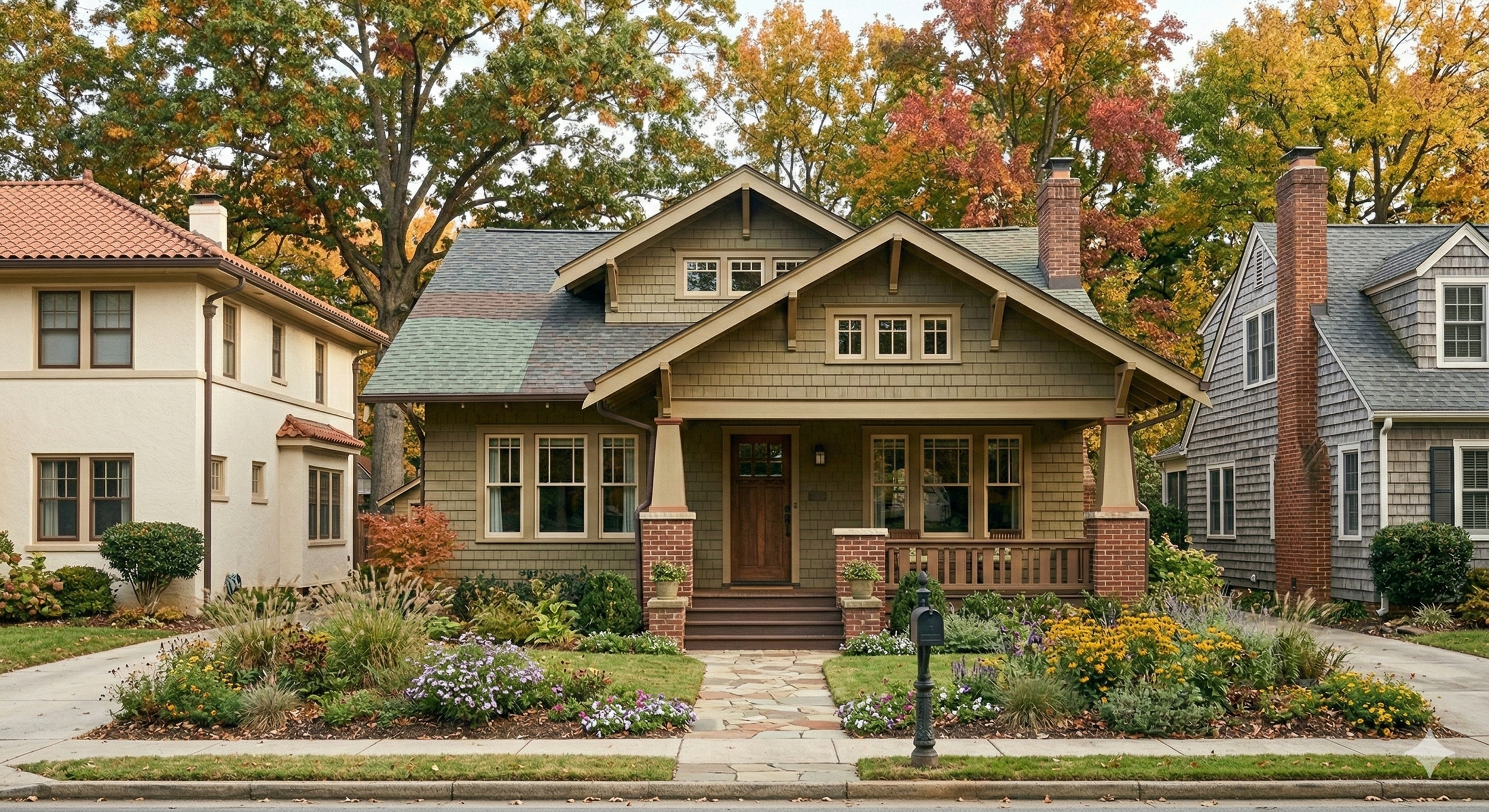
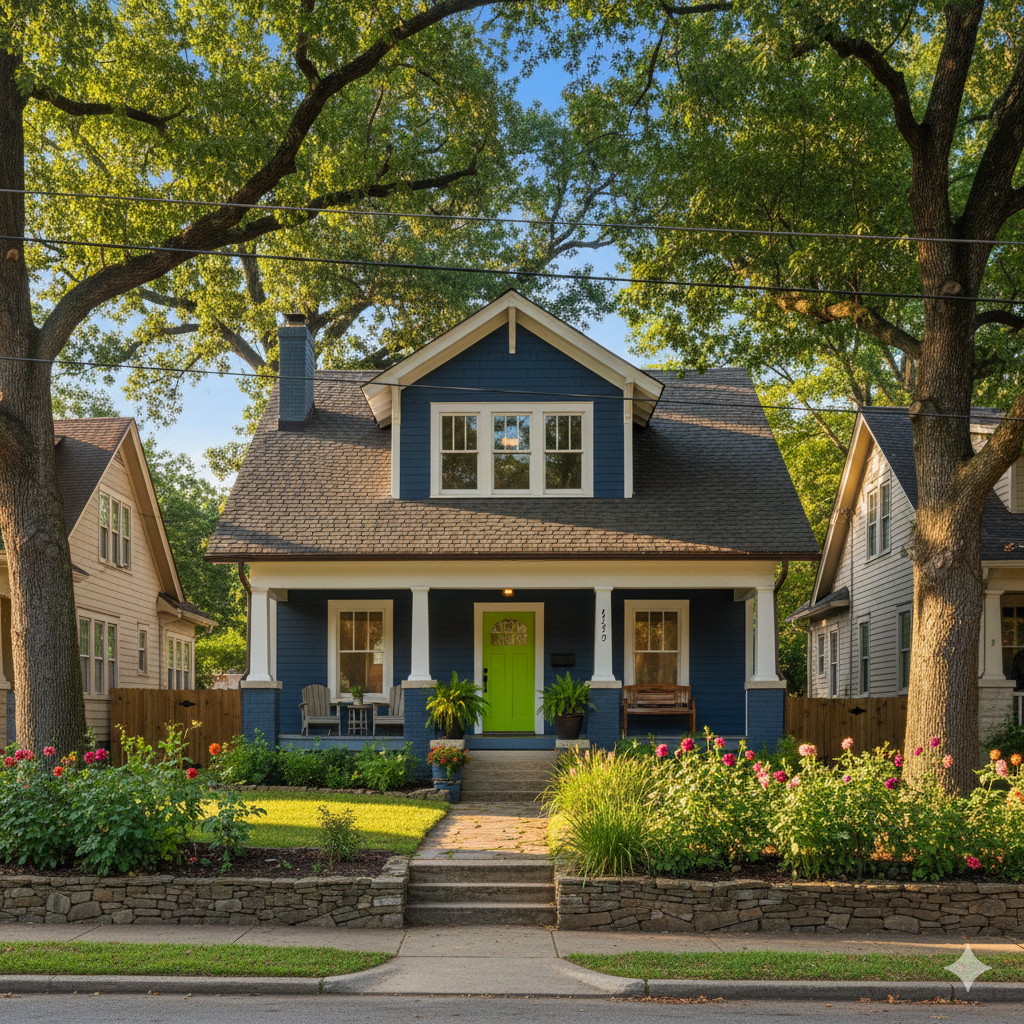
West End's Historic District designation covers a wide range of late 19th and early 20th century residential architecture. The dominant types are Craftsman bungalows, Queen Anne Victorians, Folk Victorian cottages, Colonial Revivals, and American Four-squares. There are also some A-frame cottages tucked among the bungalows. Lots are generally larger than in Adair Park, and many homes have generous front porches — a defining feature of the neighborhood's streetscape.
The renovation spectrum in West End is similar to Adair Park but wider in scale. Some homes have been fully restored with period-appropriate materials, updated systems, and careful preservation of original details. Others remain partially updated or substantially original. The block-by-block condition variation is real: West End's revitalization has been uneven in its geographic spread, with some streets fully turned over to renovated owner-occupied homes and others still carrying significant inventory of unrenovated properties.
Because of the Historic District protections, full gut-renovations that strip original character are not possible without AUDC approval and compliance. For buyers who want architectural integrity protected, this is an advantage. For buyers looking for new construction in an established neighborhood setting, the AUDC process adds time and constraint.
New construction infill does exist in West End. The BeltLine announcement and subsequent trail opening have drawn infill development in the form of townhomes and small multifamily projects, particularly on vacant lots along or near the trail corridor. In 2024, 23 new modern townhomes along the BeltLine in the neighborhood were announced with a 2026 completion target.
Home Prices in West End: What the Market Looks Like in 2026
Redfin data for February 2026 shows a West End median sale price of approximately $430,000, with homes averaging around 120 days on market. That median reflects a notable jump from prior periods, though the low transaction volume in any given month means individual sales can move the needle significantly. A more stable read on the market puts the range for West End broadly between $300,000 for unrenovated or partially updated bungalows and $600,000+ for fully renovated homes on larger lots or newer infill construction.
The Atlanta city median as of early 2026 sits around $385,000 to $393,000 depending on source, putting a fully renovated West End home above the city average while the lower end of the West End market remains accessible.
What you can find at different price points:
Under $300,000: Unrenovated bungalows with original bones, deferred maintenance, and original systems. These exist in West End but are increasingly rare as the neighborhood has attracted more renovation activity than Adair Park. This is a buyer comfortable with a meaningful renovation budget layered on top of the purchase price.
$300,000 to $450,000: The core of the West End market for owner-occupants. Partially to substantially renovated bungalows — updated kitchens and baths, new roof and HVAC, original floors preserved. Some fully renovated homes at the higher end of this range depending on size and location.
$450,000 to $600,000: Fully renovated larger bungalows, Queen Anne Victorians, or newer infill townhomes with modern finishes and BeltLine proximity. This segment has expanded as the Westside Trail has driven demand and as more investors have completed full renovations.
Above $600,000: Primarily infill new construction or exceptionally renovated historic properties on double lots or with significant square footage. Less common but present, particularly in the southern sections closest to the trail.
Days on market in West End are longer than the city average, reflecting a market where buyers are patient and properties priced above realistic comps sit. Sellers in West End who price correctly and present a clean, well-maintained home move properties. Sellers who test price often end up with extended time on market and eventual reductions.
Lee + White, the BeltLine, and What's Actually There
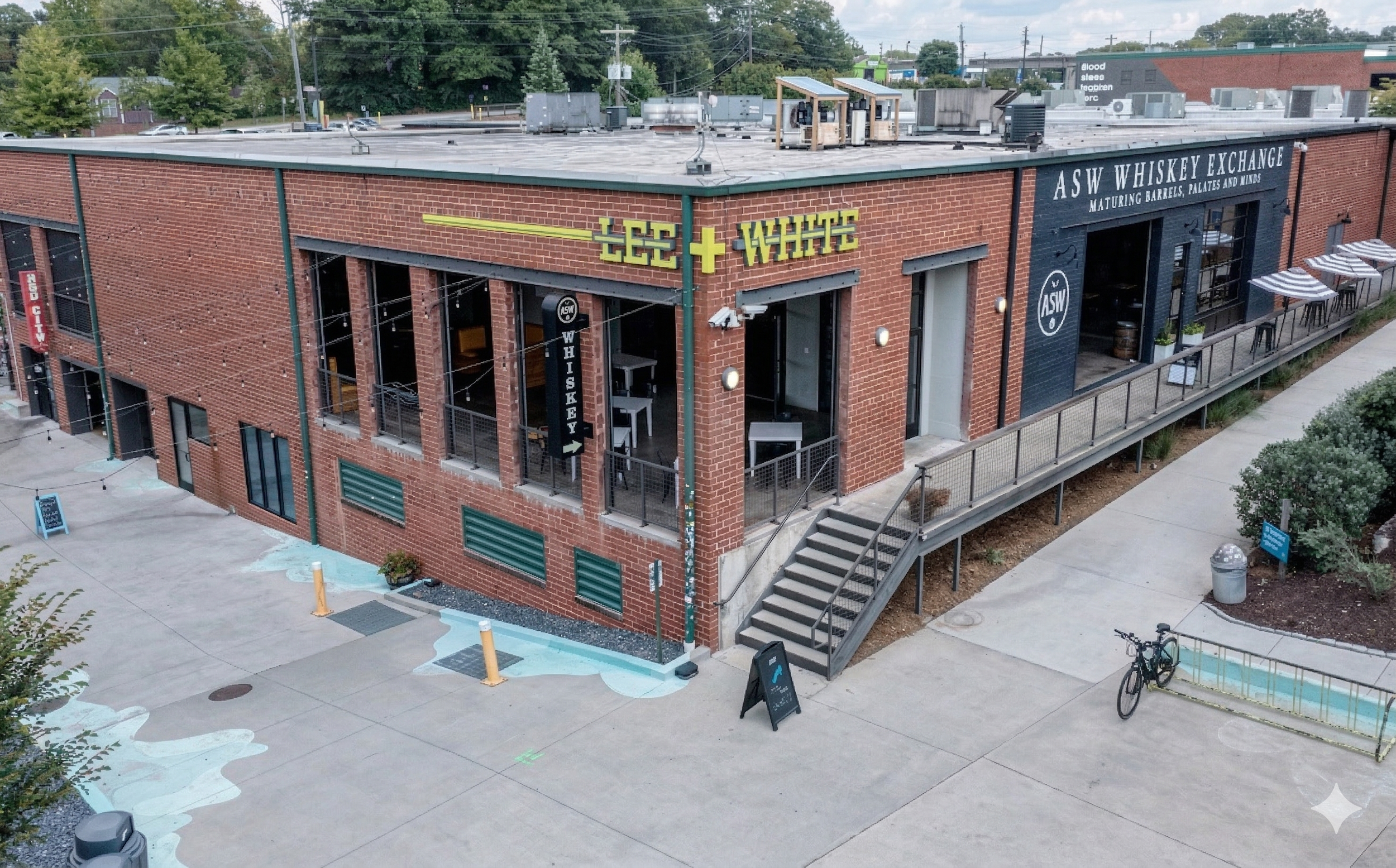
Lee + White at 1000 White Street is a 23-acre adaptive reuse of former warehouse space directly on the BeltLine Westside Trail. It is one of the most visited destinations on the trail system and the clearest example in the city of what BeltLine-adjacent development can become. Current tenants include Monday Night Brewing (flagship location with taproom and outdoor space), ASW Distillery, Hop City, Wild Heaven Beer (the "Malt Disney" location), Boxcar, and a rotating set of food and retail tenants. The complex has four direct access points to the Westside Trail.
For West End residents, this is not a destination you drive to on weekends. It is walkable or bikeable from most addresses in the neighborhood's southern half, and it represents the kind of daily lifestyle amenity that significantly changes how intown living feels.
The Mall West End redevelopment is the larger story. The city, Atlanta Urban Development Corporation, and Atlanta BeltLine acquired the 12-acre mall site in 2024. The redevelopment is led by BRP Companies and The Prusik Group. The current plan calls for approximately 125,000 square feet of retail including a grocery store, fitness center, food and beverage, and local boutiques; approximately 900 mixed-income rental units with 70% workforce housing, 20% affordable at 50% AMI, and 10% at 80% AMI; and affordable commercial space reserved for qualified local small businesses. Construction was expected to begin in 2025 with a phase one completion targeted for 2026.
This is significant for West End buyers specifically because one of the most consistent complaints about living in West End has been the lack of a full-service grocery store within walking distance. The Mall West End redevelopment directly addresses that. If phase one delivers as planned, West End's everyday walkability profile changes meaningfully.
There are also the newer developments: 1200 White Street, an abandoned warehouse being converted in part into Dill Dinkers, a pickleball club that opened in early 2025, with retail, office, and restaurant space being added. And the BeltLine TAD-funded historic warehouse construction underway in the Oakland City area adjacent to West End, with Ameris Bank construction financing and affordable retail and housing components.
West End has more development activity in its immediate orbit right now than at any point since the BeltLine trail opened.
Schools in West End: Atlanta Public Schools, Washington Cluster
West End is served by Atlanta Public Schools within the Washington Cluster. The cluster includes:
Elementary: M.A. Jones Elementary School, a well-attended neighborhood elementary that has been a consistent community priority for West End families. As of late 2025, M.A. Jones faces a potential closure or restructuring under the APS long-range facilities master plan. The APS board was expected to take up a first reading of recommendations in November 2025 with a vote in December. This is an active situation that buyers with elementary-age children should research and verify before purchasing. The community has been engaged and vocal in opposing closure.
Middle: Herman J. Russell West End Academy, serving grades 6-8, is the cluster middle school. Michael R. Hollis Innovation Academy (K-8) is also within the cluster and has been subject to reconfiguration discussions in the APS facilities plan.
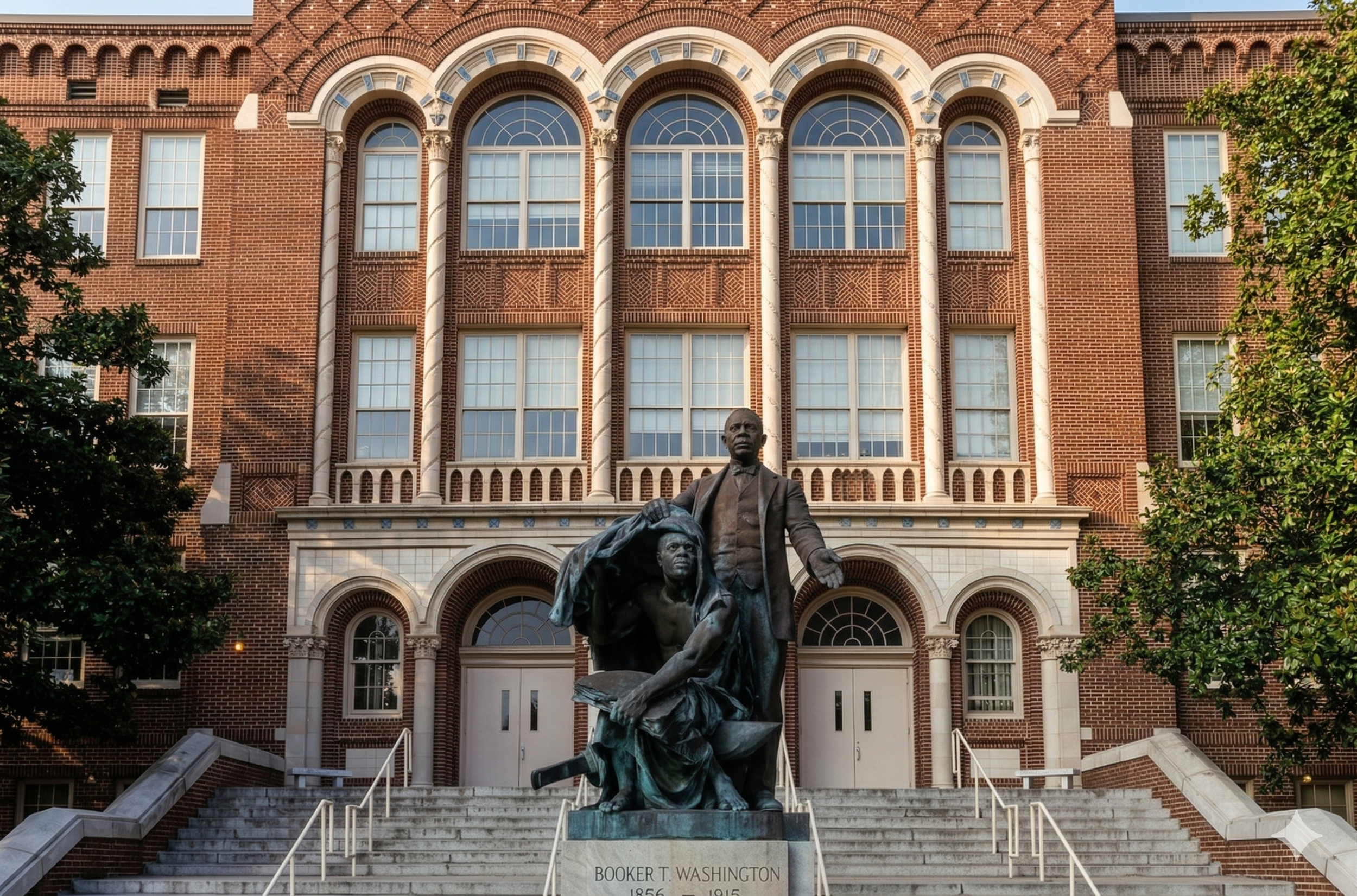
High School: Booker T. Washington High School, 45 Whitehouse Drive SW, is the cluster high school. Established in 1924 as Atlanta's first high school for Black students, it is a City of Atlanta designated landmark building with notable alumni including Dr. Martin Luther King Jr. Booker T. Washington offers multiple small school programs including an Early College program, a Health Science and Nutrition program, and a Banking, Finance and Investment program. AP participation rate is 24%. The school has a strong community identity and history that is distinct from its academic performance metrics — both are part of the picture families should understand.
Charter and magnet options accessible to Atlanta residents and worth researching for West End families include Drew Charter School, the KIPP Metro Atlanta network, The Kindezi School, and Wesley International Academy. These are application-based and not guaranteed, but they are options families in West End have historically navigated successfully.
Always verify zoning by specific property address before purchasing. Research and visit schools to determine fit for your family.
Commuting from West End: Real Numbers
West End has one of the strongest transit access profiles of any southwest Atlanta neighborhood, with two MARTA stations and direct interstate access.
West End MARTA Station (Red/Gold Lines): On the western edge of the neighborhood. From most West End addresses, a 5 to 15 minute walk. Direct rail service to Downtown (Five Points, one stop, approximately 8 minutes), Midtown (Arts Center, two stops, approximately 14 minutes), and the Airport (four stops south, approximately 22 minutes).
Ashby MARTA Station (Green/Blue Lines): On the northeastern edge of the neighborhood near the AUC campus. Adds connectivity to the east-west rail line, with access to Edgewood-Candler Park, Decatur, and other eastside destinations via transfer at Five Points.
Downtown Atlanta: By MARTA, one stop and under 10 minutes. By car off-peak, 8-12 minutes via I-20 East or surface streets. During morning rush (7-9 AM), by car 15-20 minutes; MARTA is a genuine alternative.
Midtown: By MARTA, approximately 14-18 minutes with one transfer at Five Points. By car off-peak, 12-18 minutes via I-75/85 North. During rush, 25-35 minutes by car.
Airport: By MARTA, 22-25 minutes on the Red/Gold line from West End station. By car off-peak, 15-20 minutes. This is one of West End's most practical advantages for frequent travelers and airport workers.
Buckhead / Perimeter: By car, 22-35 minutes off-peak. During morning rush, 35-55 minutes. Not a comfortable all-car commute but manageable with early departures.
AUC Campus: Walking or biking from most West End residential streets. For anyone working or studying at Spelman, Morehouse, Clark Atlanta, or Morehouse School of Medicine, West End is the closest residential neighborhood and the commute is a short walk.
The honest summary: West End's MARTA access is the best of any neighborhood on the southwest side of the city. If you work downtown, in Midtown, or at the airport, MARTA from West End is a practical daily option. If your primary destination is a north or east suburbs employer, you are looking at an all-car commute.
West End vs. Nearby Neighborhoods: Direct Comparisons
West End vs. Adair Park: These are the two most directly comparable southwest Atlanta neighborhoods. Adair Park is immediately south of West End, has the same BeltLine Westside Trail access, and has a slightly lower price point currently. The key differences: West End has more commercial activity, more cultural institutions, and more development momentum with the Mall West End redevelopment. Adair Park has stricter Historic District architecture (the Craftsman bungalow stock is more consistent) and slightly more affordable entry points for unrenovated properties. For buyers choosing between the two, the question is usually whether proximity to the AUC corridor and the existing commercial infrastructure of West End is worth the price premium over Adair Park.
West End vs. Grant Park: Grant Park is on the southeast side, also a historic intown neighborhood with bungalow stock and BeltLine access, and is further along in its appreciation cycle. Grant Park's median prices are generally higher than West End's current range, and it has more developed retail and restaurant options along Memorial Drive and Cherokee Avenue. If you have no directional preference in the city, Grant Park is more mature as a neighborhood; West End offers more upside on a comparable budget.
West End vs. Westview: Westview is immediately west of West End, also on the BeltLine trail corridor. It has a slightly more residential and less commercial character, larger lots in some sections, and prices that run comparable to or slightly below West End. Westview has a strong neighborhood association and an active community. For buyers who want a quieter residential setting with the same BeltLine access and lower price floor, Westview is a direct alternative.
West End vs. Vine City: Vine City is north of West End, closer to Mercedes-Benz Stadium and the State Capitol complex. It has seen investment driven by stadium-area development, but has a different character and less developed amenity base than West End. For buyers focused on investment potential tied to the stadium corridor, Vine City is a separate conversation. For buyers focused on neighborhood livability and BeltLine access, West End is the more developed choice.
Who Is West End Right For?
West End tends to be the right fit when:
You are affiliated with or interested in proximity to the Atlanta University Center. Whether you work at one of the AUC institutions, are a student, or simply want to be embedded in that cultural ecosystem, West End is the neighborhood where that proximity is built into daily life.
You want the most complete lifestyle package on the southwest side of the BeltLine. West End currently has more: more commercial corridors, more cultural institutions, more restaurants, more MARTA access, and more development momentum than any other southwest neighborhood. If you want to minimize the "not there yet" aspects of southwest Atlanta intown living, West End is the furthest along.
You are a first-time buyer who wants intown Atlanta with legitimate MARTA access at a below-Eastside price point. West End is not cheap, but it is meaningfully less expensive than Inman Park, Old Fourth Ward, or Kirkwood for comparable architectural character and trail access.
You are an investor looking for long-term appreciation in a neighborhood with institutional anchors and coordinated public investment. The AUC, the BeltLine, and the Mall West End redevelopment are three separate converging forces of demand that are not going away.
You want to be part of a neighborhood with deep community roots and active civic engagement. West End has organizations, events, and institutions that have been here for generations. The West End Neighborhood Development group (WEND), the Hammonds House, the Wren's Nest — these are not new. Buyers who engage with that fabric find West End has a community culture that is distinct from newer intown neighborhoods.
Think carefully about West End if:
Your school situation requires specific academic metrics that the Washington Cluster's zoned schools do not currently deliver. Navigating APS charter and magnet options is a real and workable path for West End families, but it requires time and active engagement. If you need a plug-and-play school situation, West End requires more navigation than some buyers are prepared for.
You want fully walkable grocery and everyday retail right now. The Mall West End redevelopment is the answer to this, but it is under construction. Today, everyday errands require a car for most West End residents. That changes meaningfully if the redevelopment delivers on its timeline.
You are not comfortable with block-to-block variation in neighborhood conditions. West End is uneven geographically. Some blocks are fully renovated and owner-occupied with strong curb appeal throughout. Others still have a mix of renovated and unrenovated properties with more visible deferred maintenance. Walk the specific block carefully before committing to a property.
You need a suburban-style detached garage or significant off-street parking. Most West End bungalows have limited parking, similar to Adair Park. If two-car covered parking is a necessity, inventory is constrained.
The Honest Development Picture for West End
West End has three major development stories running simultaneously in 2026, which is unusual for any neighborhood and worth understanding clearly.
Lee + White: Built and operating. Not a future development story — this is a present asset that already drives foot traffic to the trail and supports the neighborhood's food and entertainment options. The complex continues to add tenants.
Mall West End Redevelopment: Active. The city and BeltLine acquired the 12-acre site in 2024. BRP Companies and The Prusik Group are the selected developers. The plan is for 900 mixed-income units, 125,000 square feet of retail including a grocery store, and affordable commercial space. Construction was targeted for 2025 with phase one completion in 2026. This is a real, funded project with specific government and private partners. The community engagement process is ongoing. Verify current construction status before purchasing if this is a key factor in your decision.
1200 White Street: The former abandoned warehouse at 1200 White Street is being converted in phases. Dill Dinkers pickleball club opened in early 2025. Retail, office, and restaurant space is being added. This is a smaller-scale project but adds to the trail-adjacent activity base.
What is not confirmed: the long-term resolution of M.A. Jones Elementary under the APS facilities plan. This is a live issue that could be resolved or continued depending on board action. Track it if you have elementary-age children.
Frequently Asked Questions About West End Atlanta
Is West End Atlanta safe? Safety in West End, as in most transitional intown Atlanta neighborhoods, is block-specific and has been improving as investment and owner-occupancy increase. The neighborhood has a more established infrastructure of community organizations than many comparable southwest Atlanta neighborhoods, and the BeltLine has brought consistent foot traffic to the trail corridor. Review current data for the specific block you are considering and talk to neighbors. Conditions vary meaningfully within the neighborhood's footprint.
What is the Atlanta University Center and how does it affect West End? The AUC Consortium includes Spelman College, Morehouse College, Clark Atlanta University, and Morehouse School of Medicine. It is the largest cluster of HBCUs in the world. The institutions share a campus in and immediately adjacent to West End, employ thousands, and have been a defining anchor of the neighborhood for over a century. Their presence supports stable demand for West End real estate and shapes the neighborhood's cultural identity.
What is happening with the Mall West End? The city, Atlanta Urban Development Corporation, and Atlanta BeltLine acquired the 12-acre Mall West End site in 2024. The $450 million redevelopment is led by BRP Companies and The Prusik Group, and the plan includes a grocery store, fitness center, retail, affordable commercial space, and approximately 900 mixed-income rental units. Construction was expected to begin in 2025. Verify current status before purchasing if this is a key factor in your decision.
What is the Wren's Nest? The Wren's Nest at 1050 Ralph David Abernathy Boulevard is a National Historic Landmark and the former home of Joel Chandler Harris, author of the Brer Rabbit stories. It operates today as a community storytelling center open for tours and live Saturday storytelling sessions. It is one of the few active National Historic Landmarks in Atlanta.
What is the Hammonds House Museum? The Hammonds House Museum at 503 Peeples Street is a Victorian-era home that houses a permanent collection of over 450 works by African American, African, and Caribbean artists. The collection includes works by Romare Bearden, Jacob Lawrence, Elizabeth Catlett, and Robert S. Duncanson. It is one of the few museums in Atlanta specifically focused on African Diaspora art and is embedded in the residential fabric of West End.
How are West End schools? West End is served by the Washington Cluster of Atlanta Public Schools. The cluster's elementary school, M.A. Jones, has been popular with neighborhood families and is currently facing a potential closure or reconfiguration under the APS facilities master plan — verify current status. The high school, Booker T. Washington, has significant historical importance as Atlanta's first high school for Black students, offers multiple specialized programs, and has a strong community identity. Charter and magnet options including KIPP and Drew Charter are accessible to Atlanta residents through an application process. Research and visit schools to determine fit for your family. Always verify zoning by specific property address.
What is Lee + White? Lee + White at 1000 White Street is a 23-acre converted warehouse complex directly on the BeltLine Westside Trail. Tenants include Monday Night Brewing, ASW Distillery, Hop City, Wild Heaven, Boxcar, and other food and retail operators. It has four direct BeltLine access points and is walkable from most of the southern half of West End.
Is West End a Historic District? Yes. West End was Atlanta's first designated Historic District. Exterior changes to homes require review and approval from the Atlanta Urban Design Commission. The designation covers the neighborhood's late 19th and early 20th century residential architecture including Craftsman bungalows, Queen Anne Victorians, Folk Victorian cottages, and Colonial Revival homes.
Can you buy a home in West End Atlanta for under $400,000?
Yes. The core of the West End market for owner-occupants runs roughly $300,000 to $450,000, so under $400,000 you can find a partially to substantially renovated historic bungalow with BeltLine Westside Trail access and two nearby MARTA stations. Unrenovated bungalows still turn up below $300,000 for buyers working with a renovation budget. For how West End compares to other affordable BeltLine-adjacent areas, see my guide to Atlanta neighborhoods under $400K for first-time buyers.
Is West End Atlanta a good neighborhood for first-time buyers?
It is one of the stronger intown options for a first-time buyer who wants BeltLine access and real MARTA service at a price below comparable east-side neighborhoods like Inman Park or Kirkwood. The tradeoffs are honest: condition varies block by block, and full-service grocery within walking distance is still under construction at the Mall West End site. Walk the specific block before you commit.
Ready to Look at West End?
West End is a neighborhood with more going for it right now than at any point in a generation, and the price still reflects the southwest side's slower appreciation cycle rather than the full value of what is here. The AUC is permanent. The BeltLine is built. Lee + White is operating. The Mall West End redevelopment is underway. MARTA access is excellent. The architecture is protected.
I work with buyers across Metro Atlanta and know the West End market in detail, including which blocks have turned and which haven't, what the school navigation looks like practically, and how to compare West End against Adair Park, Westview, Grant Park, or wherever else you're looking.
Visit kristenjohnsonrealestate.com or reach out directly. Come as you are, come on home.
Looking for more southwest Atlanta and intown neighborhood guides? I've also covered Adair Park, East Cobb, Smyrna, and Vinings. Browse the full guide series at kristenjohnsonrealestate.com.