

Living in Adair Park Atlanta GA: BeltLine Westside Trail, Historic Craftsman Bungalows & Home Prices 2026
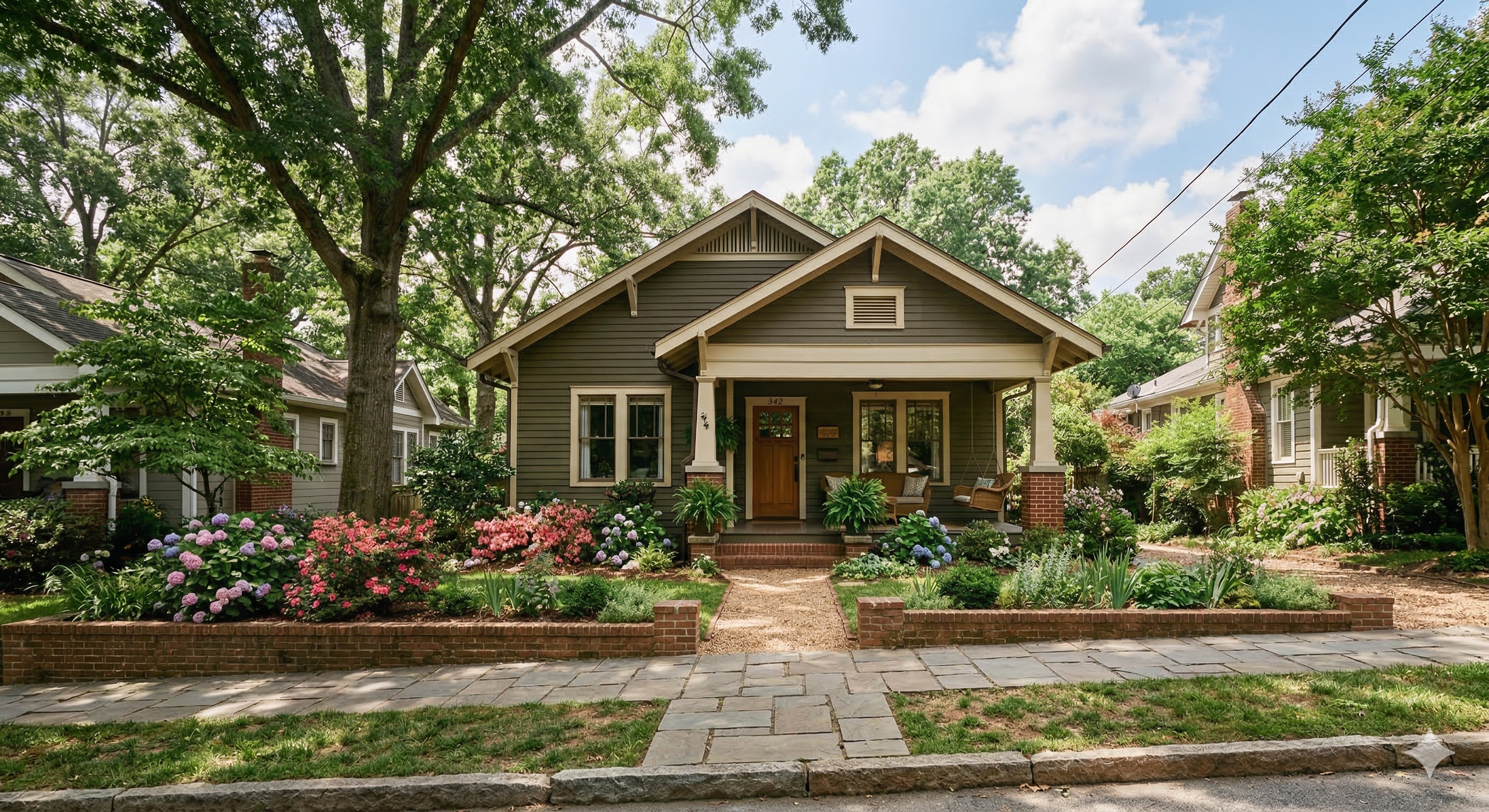
Adair Park doesn't show up on most buyers' radar until they stumble across it — usually because they were looking at West End or Oakland City and someone mentioned the neighborhood just south of Lee Street. That's how a lot of Adair Park buyers find it. And when they do, they tend to get serious fast.
This is a small neighborhood. Roughly bounded by the MARTA north-south rail line on the west, Metropolitan Parkway on the east, and the BeltLine Westside Trail on the south, Adair Park covers maybe a square mile of tree-lined streets, Craftsman bungalows, and Folk Victorian cottages built mostly between 1890 and the 1940s. It has been on the National Register of Historic Places since 1994 and carries protected Historic District status, which means the architectural character here is not going anywhere.
What's changing is everything around it. The BeltLine Westside Trail runs along the southern border. Lee + White — the brewery and restaurant district at 1000 White Street — is a short walk away. Murphy Crossing, the 20-acre former industrial site directly adjacent to the Westside Trail, is now under active redevelopment by the Atlanta BeltLine itself with plans for more than 600 housing units, a retail and office village, and a new MARTA connection that Mayor Andre Dickens has publicly backed. That project is in entitlement and demolition-permit phase as of early 2026 with land disturbance planned for fall/winter 2026.
Nearly ten years helping Atlanta buyers means I've watched what happens to neighborhoods when BeltLine investment and transit-oriented development converge at the same time. Adair Park is at that intersection right now, and the entry price still reflects a neighborhood in transition rather than one that has already arrived.
Here's what you need to know.
What Is Adair Park and Where Is It?
Adair Park sits in southwest Atlanta, in Fulton County, ZIP code 30310. It is about two miles southwest of Downtown Atlanta and immediately adjacent to West End to the north and Oakland City to the south and west. The neighborhood is small — one of the smallest named neighborhoods in Atlanta's southwest cluster — with a residential population of roughly 1,700 people.
The boundaries matter because they shape what the neighborhood feels like day to day. The MARTA North-South Line runs along the western edge, which creates some noise but also puts the West End MARTA station within a short walk from most of the neighborhood. The BeltLine Westside Trail along the southern edge is not just a trail — it is the spine of a corridor that has already generated hundreds of millions in private investment within a one-mile radius. And Metropolitan Parkway to the east is a commercial corridor that separates Adair Park from the Pittsburgh neighborhood.
The northern portion of Adair Park shifts in character. This is where you find The Metropolitan (commonly called The MET), a former warehouse complex converted into a business and arts district. It also includes Academy Lofts, an adaptive reuse of the historic George W. Adair School building that now houses 35 residential micro-units, office space, and event space. The southern and central residential blocks are where the bungalows are — modest lots, deep backyards, street trees, and sidewalks throughout.
One thing to understand about the "Adair" name: the neighborhood is named after George Washington Adair and his sons, prominent Atlanta real estate developers in the late 19th and early 20th centuries. The elder Adair's documented ties to the Ku Klux Klan have led to ongoing community conversation about the school name and neighborhood name, a history that is part of the neighborhood's public record and something buyers should be aware of before moving here. The neighborhood association, Adair Park Today, Inc., is active and engaged — this is a community that talks honestly about its history.
The Architecture: What You're Actually Buying
Adair Park's Historic District designation is what makes it architecturally distinctive and what protects it from the kind of teardown-and-replace development that has altered other nearby neighborhoods.
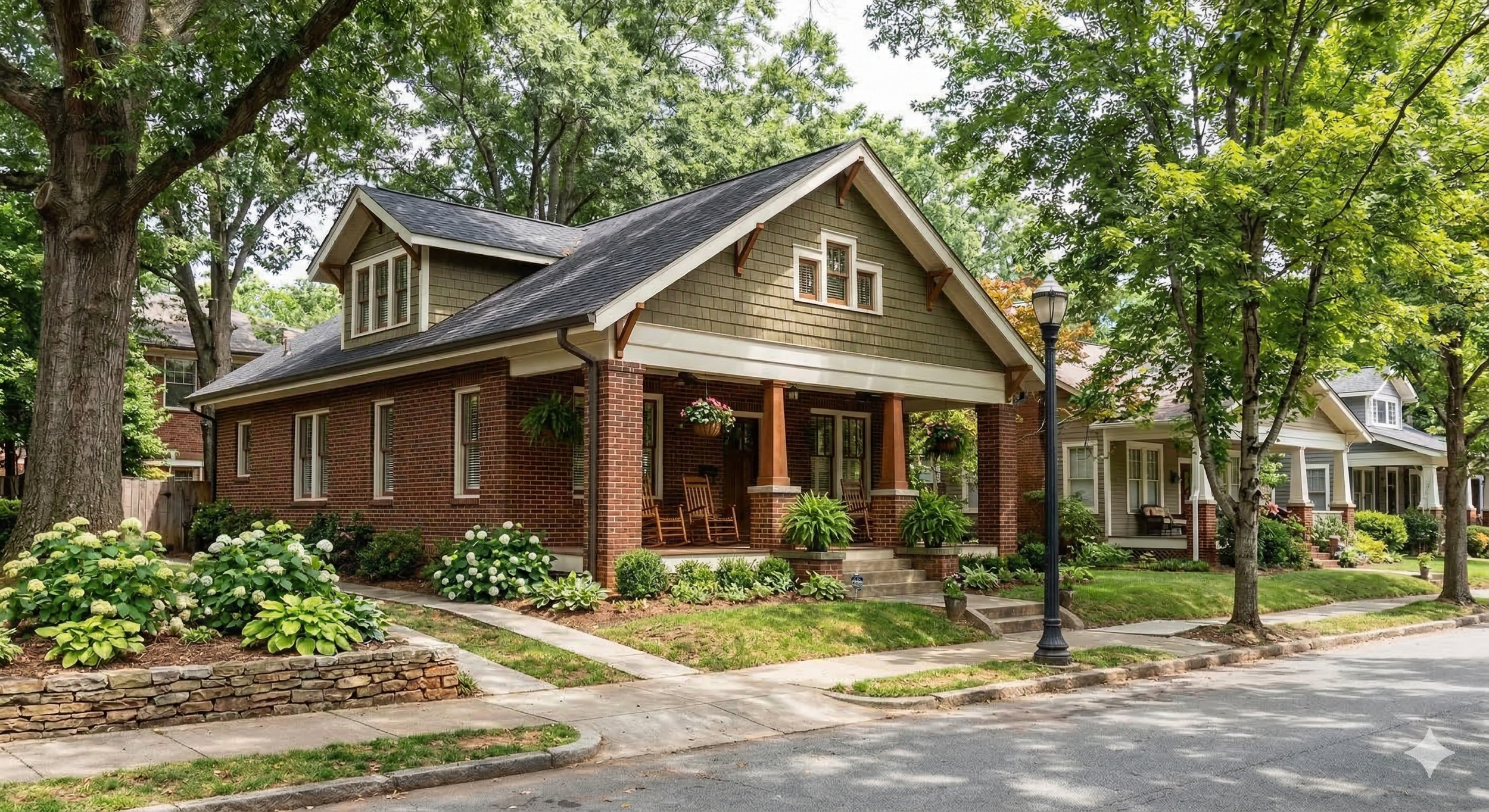
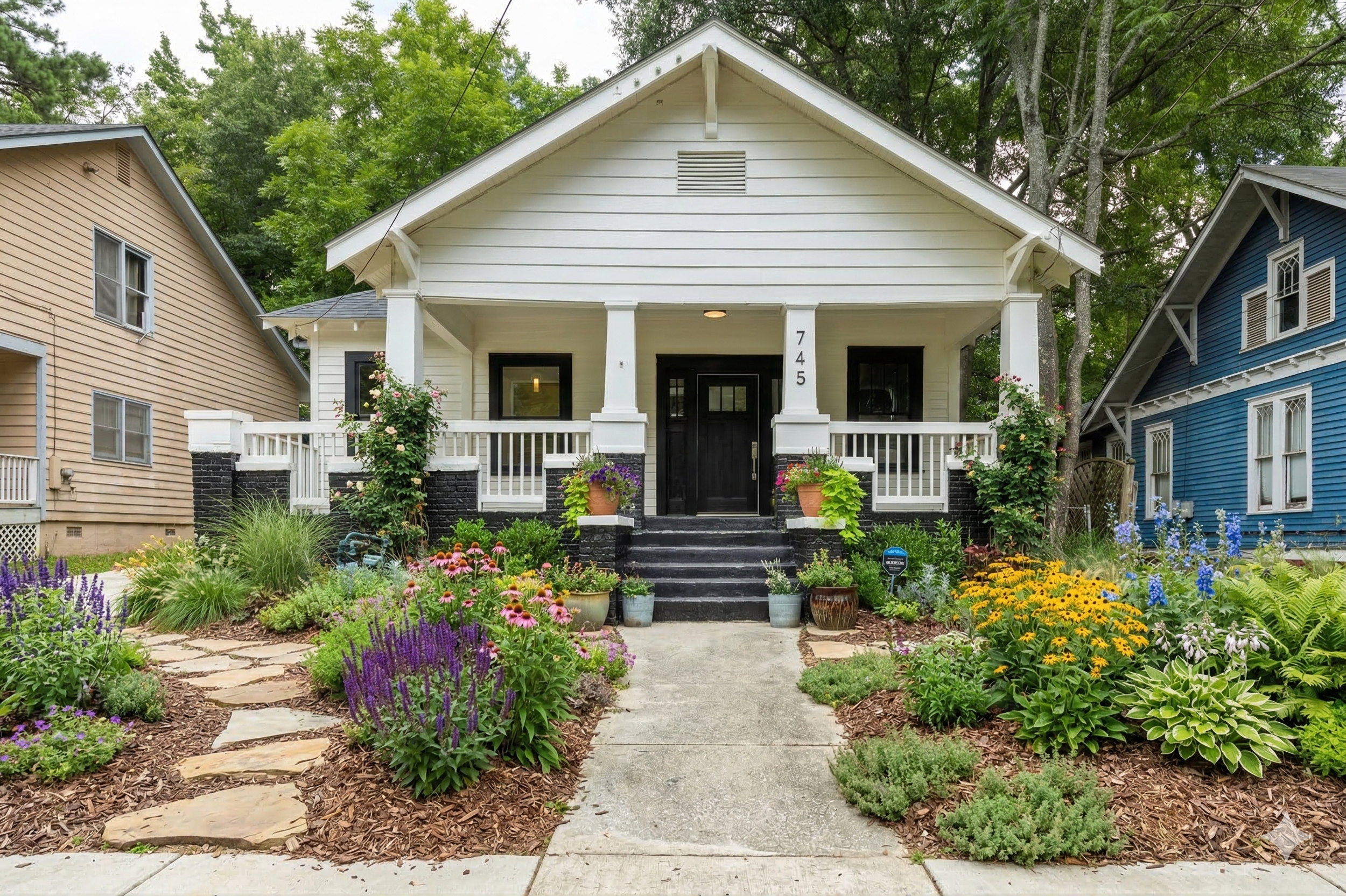
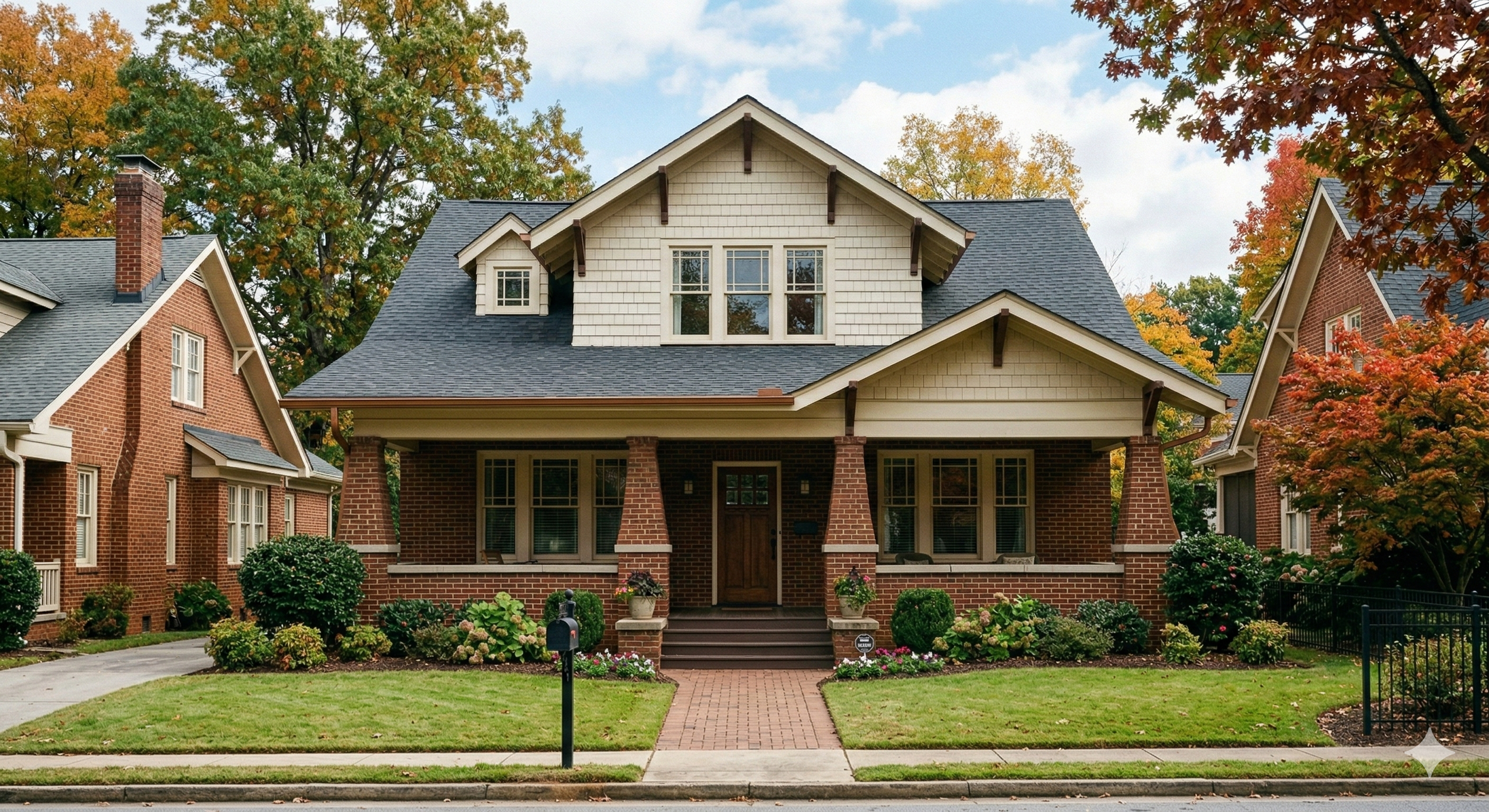
The housing stock is dominated by Craftsman bungalows — typically one story or story-and-a-half, with front porches, exposed rafter tails, tapered columns, and careful woodwork details. There are also Folk Victorian cottages, some four-squares, and a small number of larger two-story homes from the earlier development phases. Most lots are modest in size, with long backyards that extend away from the street. Street trees are throughout, and the sidewalk grid is intact.
Because Adair Park is a protected Historic District, any changes to the exterior of a home require approval from the Atlanta Urban Design Commission. This means renovations stay in character with the period architecture — no vinyl windows replacing original wood, no synthetic siding, no additions that clash with the original scale. For buyers who value architectural integrity, this is a significant protection. For buyers who want to gut-renovate and flip, it adds process.
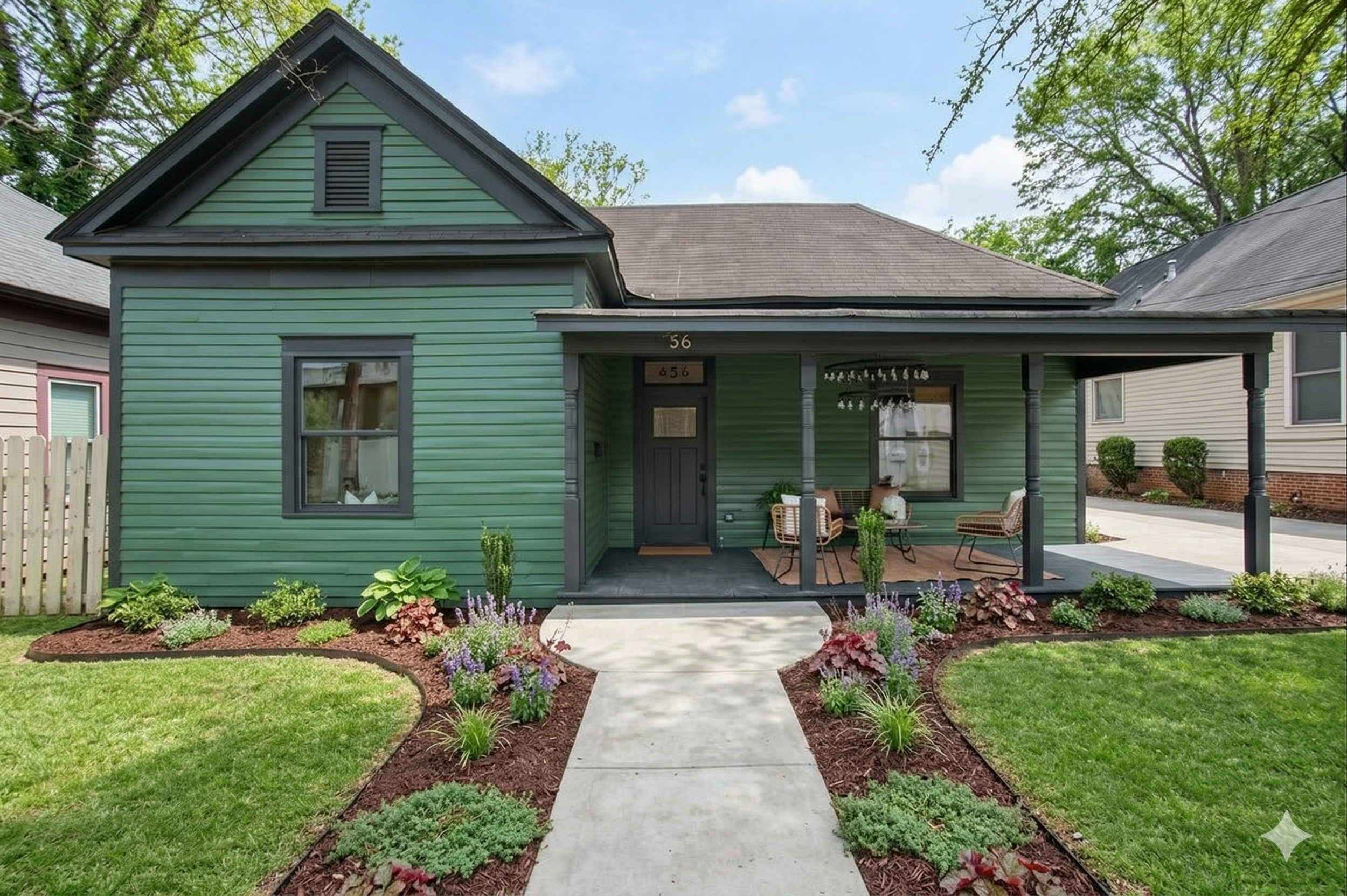
The renovation spectrum in Adair Park is wide. Some homes have been fully restored to period-appropriate standards with updated systems, modern kitchens, and preserved original details. Others remain unrenovated or partially updated, with original floors and trim intact but deferred maintenance throughout. The block-by-block condition variation is real — one street may have four fully renovated homes and two that haven't been touched in decades. Doing a thorough walkthrough of the specific block matters here, not just the specific property.
The BeltLine and What It Means for Adair Park Specifically
The Atlanta BeltLine is a 22-mile trail-and-transit loop connecting 45 Atlanta neighborhoods. The Westside Trail — the segment that runs along Adair Park's southern border — opened in 2017 and was the first major trail segment completed on the west and south sides of the loop. It connects northward toward Westview, West End, and eventually the Northside Trail, and southward toward Capitol View and other southwest neighborhoods.
For Adair Park buyers, BeltLine access means two things practically. First, you can walk or bike from your front door onto a paved, maintained trail that connects to a growing network of parks, greenway, and destinations across the city. The Lee + White complex at the trailhead — a collection of food halls, breweries, and restaurants anchored by Monday Night Brewing and Boxcar, with more tenants ongoing — is a specific destination, not an abstraction.
Second, and more importantly for buyers thinking about long-term value: the BeltLine has consistently driven price appreciation in the neighborhoods it touches, and Adair Park is still in the earlier stages of that cycle compared to neighborhoods on the Eastside Trail like Poncey-Highland or Inman Park. The infrastructure is there. The trail is there. The investment corridor is building. The question is timing.
Murphy Crossing, the 20-acre site at 1050 Murphy Avenue just south of the trail, is the most significant near-term development to understand. The Atlanta BeltLine took over as lead developer in March 2025 after negotiations with the previously selected developer broke down. As of early 2026, the BeltLine has completed rezoning the site from industrial to I-Mix (allowing industrial, commercial, and residential uses), finalized a Development of Regional Impact review, and hired Perkins+Will to lead master planning. The current vision calls for more than 600 housing units, a retail and office village, and light industrial space. Land disturbance is planned for fall/winter 2026. Mayor Dickens has publicly supported adding a new MARTA station at Murphy Crossing that would link heavy rail directly to the Westside Trail.
This project has a complicated history — three failed or terminated developer relationships over more than a decade. Buyers should understand that with the BeltLine now as lead developer and master planner, the project is on a different footing than prior iterations, but development timelines in Atlanta are not guarantees. Buy Adair Park because you want to live there. The Murphy Crossing upside is real but should not be the primary reason for the purchase.
Home Prices in Adair Park: What the Market Looks Like in 2026
Adair Park is one of the more affordable intown Atlanta neighborhoods with direct BeltLine access. That combination is genuinely rare, and it reflects both the upside potential and the honest reality that the southwest side of the BeltLine has not yet seen the same price appreciation as the eastside corridor.
Median sale prices in Adair Park have ranged from approximately $300,000 to $360,000 depending on the period and data source. Redfin data from late 2024 showed a median around $357,000 with homes spending roughly 97 days on market, which reflects a cooling from the more competitive 2022-2023 window when days on market were closer to 45. The broader Atlanta market median as of early 2026 sits around $393,000 to $411,000 depending on source, putting Adair Park below the city average.
What you can find at different price points:
Under $250,000: Typically unrenovated bungalows with deferred maintenance — original bones, original systems, work needed throughout. These exist in Adair Park, particularly on blocks that haven't yet seen renovation activity. This is a buyer who is comfortable with a significant renovation budget on top of the purchase price, or an investor.
$250,000 to $350,000: Partially updated homes — new roof, updated HVAC or electrical, some cosmetic work, but not a full renovation. Original floors typically intact. May still need kitchen and bathroom work. This is the most active part of the Adair Park market for owner-occupants.
$350,000 to $500,000: Fully or substantially renovated bungalows, typically with updated kitchens, new bathrooms, restored original details, and modern systems. Some new construction infill at the higher end of this range. These properties move faster than lower-tier listings when they're priced correctly.
Above $500,000: Rare in Adair Park currently. Would represent fully renovated large bungalows or new construction on double lots. This price point is more common in adjacent West End or in Westview.
For investors, Adair Park has historically had higher renter occupancy than owner-occupancy — Niche data reflects a majority-renter neighborhood. This is shifting gradually as more owner-occupants buy and renovate, but it means rental comps exist and the neighborhood has a functioning rental market for those considering an investment purchase.
Days on market have extended across the broader Atlanta market heading into 2026, and Adair Park reflects that. Sellers pricing within 2% of realistic comps move properties. Sellers testing price are sitting.
The BeltLine Westside Trail and Lee + White: What's Actually There
The Westside Trail runs directly along Adair Park's southern boundary. The trailhead access point near the intersection of Catherine Street and Allene Avenue is the most-used entry point from the neighborhood. From there, you're on a paved, maintained trail that connects the southwest cluster of neighborhoods to the broader BeltLine network.
Lee + White at 1000 White Street is a converted warehouse complex on the trail in the West End / Oakland City border area, within walking distance of Adair Park. Current tenants include Monday Night Brewing (one of Atlanta's most established craft breweries), Boxcar (a bar and entertainment venue), and a rotation of food and retail tenants. The complex continues to evolve. This is a destination, not a neighborhood strip mall, and it is directly trail-accessible.
Pittsburgh Yards, a 31-acre mixed-use development also along the trail in the Pittsburgh neighborhood, is another nearby anchor development with arts, food, and creative economy tenants. These are not Adair Park attractions exactly, but they are part of the walkable ecosystem that the BeltLine has created for the southwest corridor.
The MET, at the northern end of Adair Park, is a former warehouse complex that has housed a variety of creative businesses, makers, and light industrial tenants over the years. Its future is in flux following acquisition by Atrium Health, which has not announced definitive plans for the site. This is a question mark for the neighborhood that is worth monitoring.
Schools in Adair Park: Atlanta Public Schools, 30310
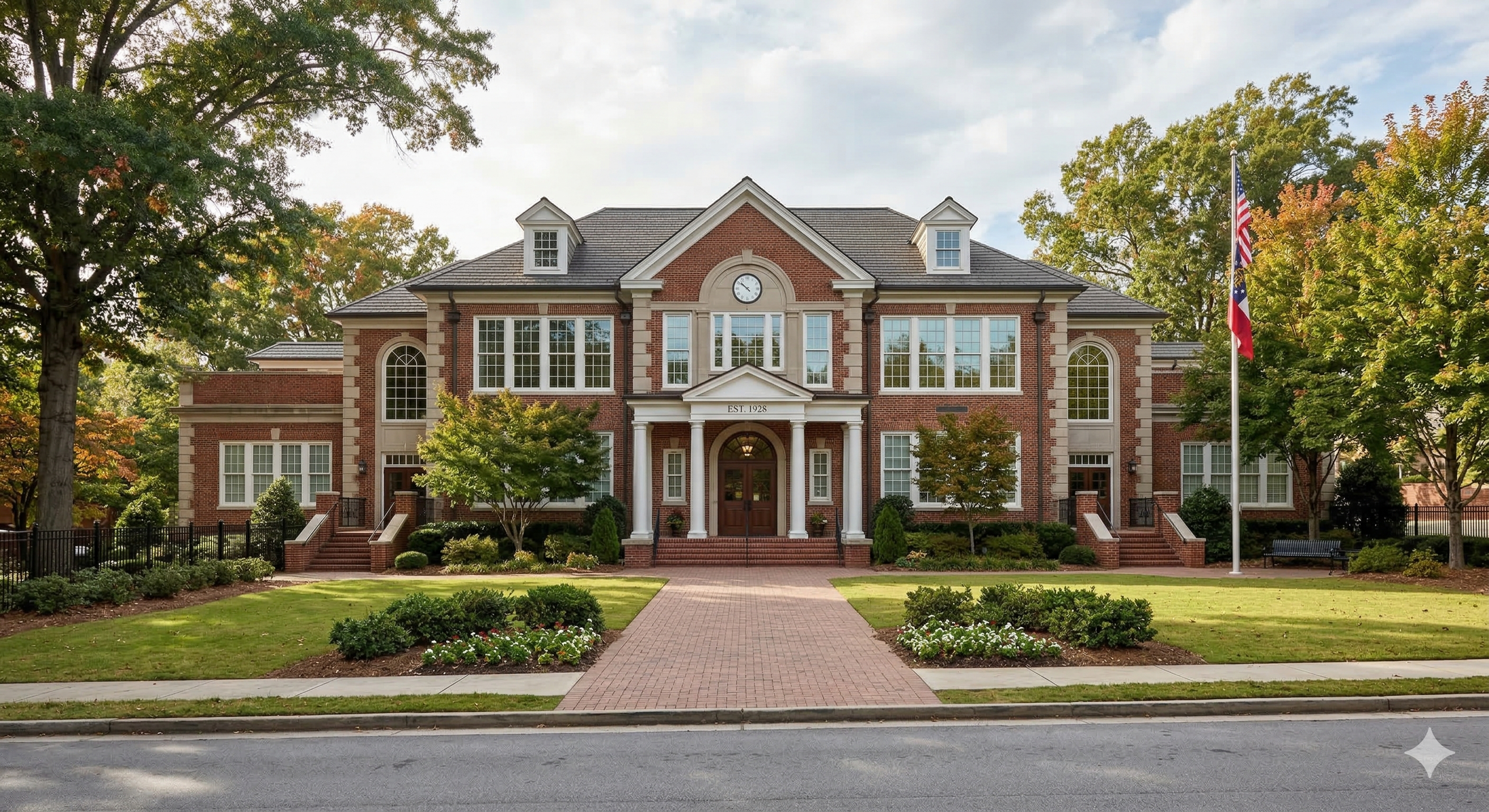
Adair Park is served by Atlanta Public Schools. Schools serving 30310 include:
Elementary: M.A. Jones Elementary School, which is part of APS and has a STEM focus. Research and visit to determine fit for your family.
Secondary: The school zone picture for middle and high school in southwest Atlanta includes options across APS, and zoning assignments should be verified by specific property address before purchasing.
Charter and magnet options in the area:
Drew Charter School (elementary through secondary) is a well-regarded APS charter school in the East Lake area, open to Atlanta residents through an application process. It is not zoned but is a frequently sought-out option for APS families.
Wesley International Academy (K-8) is an IB (International Baccalaureate) school within APS.
The KIPP network operates several schools serving southwest Atlanta families.
APS school zoning in this part of Atlanta can be complex and changes over time. Always verify the specific zoning assignment for any property address you are seriously considering. Research and visit schools to determine fit for your family.
Commuting from Adair Park: Real Numbers
Adair Park's location — southwest of downtown, adjacent to the West End MARTA station, with direct I-20 and I-75/85 access — makes it genuinely competitive for commute purposes compared to neighborhoods farther intown.
Downtown Atlanta (Five Points MARTA / Centennial Olympic Park area): By MARTA from West End station, approximately 10-12 minutes. By car off-peak, 8-12 minutes via I-20 East or surface streets. During morning rush (7-9 AM), surface street commute is 15-25 minutes; MARTA is largely unaffected.
Midtown (14th Street / Arts Center corridor): By car off-peak, 12-18 minutes via I-75/85 North. During morning rush, 20-35 minutes. MARTA from West End to Arts Center station, approximately 18-22 minutes with the transfer at Five Points.
Airport (Hartsfield-Jackson): By MARTA from West End, the airport is 4 stops south on the Red/Gold line, approximately 20-25 minutes. By car off-peak, 15-20 minutes via I-85 South. During morning rush, allow 25-40 minutes. For airport workers and frequent travelers, Adair Park's MARTA access to the airport is a genuine lifestyle advantage.
Buckhead / Perimeter: By car off-peak, 20-28 minutes via I-75/85 North. During morning rush, 35-50 minutes depending on your exact destination. Not a MARTA-friendly commute from Adair Park unless your Buckhead destination is near a station.
West Midtown / Howell Mill corridor: By car, 15-20 minutes off-peak via I-20 West to I-285 or I-75 North. During rush, 20-35 minutes.
The honest commute summary: Adair Park works extremely well for commuters to Downtown and the airport, and it works reasonably well for Midtown. Buckhead, Perimeter, and north suburbs are all-car commutes that range from manageable to frustrating depending on departure time.
Adair Park vs. Nearby Neighborhoods: Direct Comparisons
Adair Park vs. West End: West End is immediately north of Adair Park and shares the BeltLine Westside Trail access. West End has more retail, more restaurant options, and a slightly higher price point. The AUC (Atlanta University Center) corridor — Spelman, Morehouse, Clark Atlanta, Morris Brown — is in West End and shapes the neighborhood's character and energy in a distinctive way. West End has more name recognition. Adair Park has more architectural consistency (the historic district protection) and slightly lower prices. If you want more amenities walkable from your door, West End has more now. If you prioritize historic character and value the BeltLine access at a lower price, Adair Park is the argument.
Adair Park vs. Oakland City: Oakland City borders Adair Park to the south and west. Oakland City has a slightly larger residential footprint, comparable price ranges, and is also along the Westside Trail. Murphy Crossing sits between the two neighborhoods. Oakland City has its own neighborhood character and active association. The two are often compared directly because of their proximity and similar price points. Adair Park has the stronger Historic District protections and more Craftsman-dominant architecture. Oakland City has more development activity in its immediate orbit.
Adair Park vs. Westview: Westview is southwest of Adair Park, also on the Westside Trail corridor. It has a slightly more suburban residential feel with larger lots in some sections, and prices generally comparable to Adair Park. Westview is well-organized as a neighborhood and has one of the more active neighborhood associations on the southwest side. The BeltLine access is slightly less direct from Westview's residential core than from Adair Park's southern boundary. For buyers who want a bit more space per dollar and are comfortable being a few blocks further from the trail, Westview is a direct comparison.
Adair Park vs. Grant Park: Grant Park is on the opposite side of the city — southeast rather than southwest — but buyers considering Adair Park often also look at Grant Park because both offer historic intown bungalows with BeltLine access at relatively accessible price points. Grant Park is further along in its appreciation cycle, with median prices typically higher than Adair Park's current range. It has more established retail and restaurant options along Memorial Drive. If budget is a primary driver and you don't have a strong preference for one side of the city, Adair Park currently offers more value per dollar for the same architectural character.
Who Is Adair Park Right For?
Adair Park tends to be the right fit when:
You want intown Atlanta living with direct BeltLine trail access and you're not willing or able to pay Inman Park or Kirkwood prices. Adair Park gives you the trail, the historic architecture, the intown feel, and real MARTA access at a significantly lower price point.
You value architectural integrity and want a neighborhood where the visual character is protected. The Historic District designation is meaningful — your neighbors cannot put vinyl siding on their Craftsman bungalow and you cannot either. The streetscape will remain cohesive.
You work downtown or at the airport and want MARTA to be a real option. West End station is a short walk from most Adair Park addresses and puts you one or two stops from Five Points and four stops from the airport. This is a commute that actually works.
You are comfortable being in a neighborhood that is still in transition. Not every block is renovated. Not every amenity is in place yet. The upside is real but it requires patience and honest assessment of where development is in its cycle.
You want to be positioned for the Murphy Crossing development without betting on it. Buy in Adair Park because the neighborhood itself makes sense for your life — the BeltLine access, the architecture, the MARTA connection, the price. If Murphy Crossing delivers what the BeltLine is planning, that's appreciation you benefit from. If it continues to face delays, you still have a livable, connected intown neighborhood.
Think carefully about Adair Park if:
Your school situation requires a specific zoned school with particular performance characteristics. The APS schools zoned for this area require research and a willingness to engage with the charter and magnet options if traditional zoned schools aren't a fit. This is a solvable problem for families committed to the neighborhood, but it requires active navigation.
You want walkable retail and dining directly in the neighborhood. What's in Adair Park itself is limited. Lee + White and the West End commercial corridors are accessible by foot or trail, but they are not your front door. If you want neighborhood restaurants, coffee shops, and grocery stores within a few blocks, Adair Park is not there yet. West End is closer to that, and neighborhoods like Inman Park or Virginia-Highland are further ahead.
You are not comfortable with renovation risk. Much of the inventory in Adair Park still has meaningful work left to do — systems, kitchens, bathrooms, or more. If you need a fully finished, move-in-ready home with no unknowns, the pool of options here is smaller and you will pay a premium for it.
You need significant parking or garage space. Most Adair Park bungalows have a single-car garage or carport at most, with limited off-street parking beyond that. If you have two cars and need covered parking for both, this is a constraint you'll hit consistently.

The Honest Development Picture: What's Coming and What Isn't
Adair Park has been in the "up and coming" conversation for more than a decade. That framing deserves honest examination.
What is real and happening now: The Westside Trail is built and operational. Lee + White is open. Pittsburgh Yards is active. Academy Lofts converted the former school into residential and commercial space. Historic warehouses adjacent to the trail are now under construction with BeltLine TAD funding and Ameris Bank financing secured in April 2025. These are not renderings — they are buildings.
What is in progress with a credible timeline: Murphy Crossing. The BeltLine is now the lead developer, Perkins+Will is on the master plan, rezoning is complete, and land disturbance is planned for fall/winter 2026. The project has a specific vision (600+ units, retail, office, MARTA connection), real financing activity, and political support. The track record of this site is messy — two prior developer relationships terminated over a decade. But the current structure, with the BeltLine owning the property and leading development, is different from prior attempts.
What is aspirational but not confirmed: The MARTA station at Murphy Crossing. Mayor Dickens supports it. A station has not been funded or formally approved. Do not price it into your purchase decision.
What is uncertain: The future of The MET. Atrium Health acquired the property and has not announced a clear vision for the site. It currently houses a variety of tenants but the long-term use is an open question that could significantly affect the northern end of the neighborhood.
Frequently Asked Questions About Adair Park
Is Adair Park safe? Safety in Adair Park, like most intown Atlanta neighborhoods in transition, is block-dependent and improving. The neighborhood has seen a meaningful reduction in property crime over the past decade as more owner-occupants have moved in and community investment has increased. Adair Park Today, the neighborhood association, runs active safety and community engagement programs including The Node Project, which is working to improve pedestrian safety at the MARTA crossing near Adair Park II. Review current crime data for the specific block you're considering and talk to neighbors. Street-level conditions vary.
What is the Adair Park Historic District? Adair Park was designated a protected Historic District by the City of Atlanta in August 1994. This designation covers District 14, Land Lots 106 and 107 in Fulton County. Under the designation, changes to the exterior of homes require review and approval from the Atlanta Urban Design Commission. The protections apply to materials, design, and character. The goal is to preserve the neighborhood's early 20th century architectural character while allowing appropriate updates and additions.
Is the BeltLine Westside Trail finished? The Westside Trail is open and operational along Adair Park's southern boundary. It connects the southwest neighborhoods as a paved trail. Full BeltLine loop completion — including the transit component — is a long-term project that is not complete citywide. For trail access from Adair Park, what is there now is real and functional.
How close is Adair Park to West End MARTA? West End MARTA station (Red and Gold lines) is walkable from most Adair Park addresses — typically 5 to 12 minutes on foot depending on where you are in the neighborhood. This is one of Adair Park's most practical advantages: legitimate MARTA access within walking distance.
What is Murphy Crossing? Murphy Crossing is a 20-acre former industrial site at 1050 Murphy Avenue, directly adjacent to the BeltLine Westside Trail and bordering Adair Park, Oakland City, and Capitol View. The Atlanta BeltLine owns the property and is now leading its redevelopment directly. As of early 2026, the current vision calls for more than 600 housing units, a retail and office village, and a MARTA station connection. Rezoning is complete; land disturbance is planned for fall/winter 2026. It is one of the most significant pending developments along the entire Westside Trail.
What are homes in Adair Park actually like inside? It depends heavily on renovation level. The unrenovated homes have original hardwood floors, original trim, and period details intact — but also original windows, outdated electrical, older HVAC, and deferred maintenance. Fully renovated homes in the neighborhood have addressed all of that while often preserving the original character details. The variation is wide. Always inspect thoroughly and have a specific conversation with your inspector about the age and condition of the major systems.
Is Adair Park good for investors? It has been and likely continues to be. The neighborhood has historically been majority-renter, rental comps exist, and the BeltLine trajectory supports long-term appreciation. The Historic District designation adds renovation complexity and cost for investors who want to alter exteriors. The best investor buys here are unrenovated bungalows with structurally sound bones that can be restored to period-appropriate standards — which commands higher rents and resale values than generic renovation work.
How is Adair Park for families with children? Families are in Adair Park, and the parks — Adair Park I at Catherine Street and Maywood Place, and Adair Park II at Bonnie Brae Avenue and Shelton Avenue — are active community spaces with playgrounds and fields. The school situation requires active navigation of APS options including charter and magnet schools. The neighborhood's walkability is real. The lack of walkable family amenities — no nearby grocery, limited dining — is a real tradeoff families should weigh honestly.
Ready to Look at Adair Park?
Adair Park is a neighborhood I know well and believe in — the architecture is genuine, the BeltLine access is real, the MARTA connection works, and the price still reflects where the southwest corridor is in its development arc rather than where it is going. That gap closes over time.
If you're weighing Adair Park against West End, Oakland City, Westview, or neighborhoods on the other side of the city, I can walk you through the honest comparison — what your budget gets you in each, what the school situation looks like practically, and what the development trajectory means for your specific timeline.
Visit kristenjohnsonrealestate.com or reach out directly. Come as you are, come on home.
Looking for more intown Atlanta neighborhood guides? I've also covered West End, East Cobb, Smyrna, and Vinings. Browse the full guide series at kristenjohnsonrealestate.com.