

Moving from NYC to Atlanta: Cost of Living, Lifestyle Trade-Offs & What Your Money Actually Buys in 2026

Moving from NYC to Atlanta usually means your housing dollar stretches about three times as far, your state income tax rate drops by roughly half, and you trade a subway pass for a car payment. That is the honest summary, and the rest of this guide is about what those numbers actually look like in 2026 and what they cost you in ways a spreadsheet does not show.
I work with relocation buyers across Metro Atlanta, and a steady share of them are coming from New York. They tend to arrive with the same two questions: what will my money buy here, and what am I giving up to get it. Both deserve real answers, not a pitch.
So here is the real version. Atlanta is meaningfully cheaper than New York on nearly every line item that matters, housing most of all. It is also a different kind of city: more spread out, more car-dependent, with a transit system that does a fraction of what the subway does. Whether that trade works for you depends on what you actually value day to day, not on which city wins a cost-of-living index.
Here's what you need to know.
How much does it actually cost to move from NYC to Atlanta?
Day to day, living in Atlanta runs roughly 50 to 55 percent less than living in New York City once you factor in housing. Multiple 2026 cost-of-living comparisons land in the same range: Numbeo puts the standard of living you get for about $12,000 a month in New York at roughly $7,300 a month in Atlanta when you rent in both places, and BestPlaces pegs New York as about 54 percent more expensive than Atlanta overall.
Housing drives almost all of that gap. Atlanta's overall cost of living sits close to the national average, actually a few points below it, while Manhattan's runs more than double the national average. Food, healthcare, and utilities are closer between the two cities than people expect. Atlanta utilities tend to run lower, and summer air conditioning is a real line item you should plan for. The thing that changes your financial life when you move here is what you pay for a place to live.
One caution before you get attached to a single number: "I'll save half" is the headline, not the guarantee. If your New York salary drops when you take an Atlanta job, the savings shrink fast. The math only works cleanly if you keep your income, which is exactly why remote and hybrid workers from New York have been some of the biggest winners in this move. More on that below.
How do Atlanta home prices compare to NYC?

This is where the gap is widest, and it is not close. As of mid-2026, the median sale price across Metro Atlanta sits in the high $300,000s to low $400,000s depending on the data source and the month. Georgia MLS reported a metro median around $385,000 heading into 2026, and Realtor.com's listing median for the Atlanta metro was about $425,000 in May 2026. The City of Atlanta proper runs higher than the broader metro, and the most in-demand intown neighborhoods run higher still.
New York is in a different universe. Manhattan's median sale price was about $1.4 million over the three months ending May 2026, per Redfin. Brooklyn's median house price was around $960,000 with condos closer to $1.2 million. Citywide across all five boroughs, the median sale lands somewhere between roughly $790,000 and just over $1 million depending on the source.
Here is the comparison in one place:
| Buying a Home (mid-2026) | New York City | Metro Atlanta |
|---|---|---|
| Median sale price (citywide / metro) | ~$790K–$1.05M | ~$385K–$425K |
| Core-market median | ~$1.4M (Manhattan) | ~$425K (City of Atlanta) |
| Approx. price per square foot | ~$1,440 (Manhattan) | ~$200–$260 (metro) |
| Typical days on market | ~76–96 (Manhattan) | ~55 |
| 2026 price direction | Stable to modest gains | Flat to +2–4% |
The structural difference matters as much as the price. In New York, a huge share of for-sale inventory is co-ops and condos, which means board approvals, building financials, monthly maintenance, and assessments. In Atlanta, the default purchase is a single-family house on its own lot with a yard. You are not just paying less. You are usually buying a fundamentally different kind of property.
For a current read on what your budget translates to here, I keep two posts updated that buyers from out of state lean on: how much house you can afford in Atlanta and what you actually need to buy a house in Atlanta.
What will my money actually buy in Atlanta?
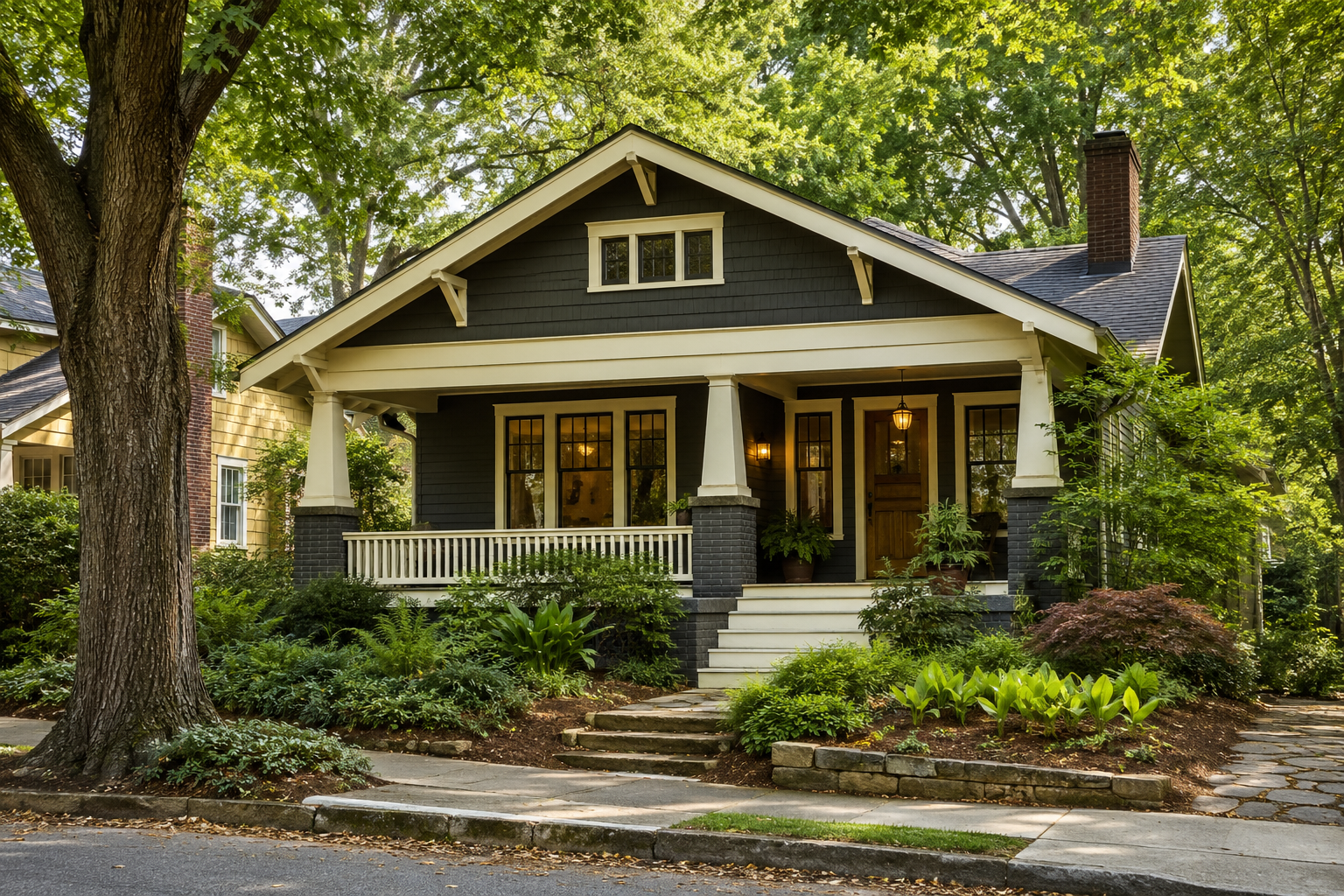
The dollar figure that buys a one-bedroom co-op in a decent Manhattan building buys a detached house with a yard in much of Metro Atlanta. That is the trade in one sentence. Here is how it tends to break down by budget.
Around $350,000 to $450,000, the metro median range, you are looking at a renovated bungalow or a townhome in an intown neighborhood, or a larger and newer single-family home in the suburbs. New-construction townhomes from some Atlanta-area builders start in the $200,000s, which is below the metro median and one of the cheaper paths into ownership.
Between $500,000 and $750,000, intown you move into renovated homes in established walkable neighborhoods, and in the suburbs you get substantial square footage, often four or five bedrooms with a real lot. This is roughly the price of a modest one-bedroom condo in a good part of Brooklyn or Manhattan.
At $1 million to $1.4 million, the price of a typical Manhattan apartment, you are buying near the top of most Atlanta neighborhoods: large, fully updated homes in the most sought-after intown areas, or estate-style properties in the northern suburbs. The same money that gets you a two-bedroom condo in Manhattan gets you a genuinely high-end house here.
None of this means you should stretch to the top of your range just because you can. The strongest position in Atlanta's 2026 market is a well-prepared buyer with a clear number, because inventory is up and you have more leverage than buyers had a couple of years ago. Zillow even named Atlanta one of the most buyer-friendly major markets of 2026, which I broke down here.

What about renting in Atlanta vs NYC?
If you are renting first, which I often recommend for relocation buyers who want to learn the city before they commit, the gap is just as stark. Atlanta's citywide average rent across all unit sizes sits around $1,773 in 2026, with one-bedrooms averaging closer to $1,498. New York's citywide median asking rent hit about $3,900 in January 2026, and Manhattan's median crossed into the $4,700 to $4,950 range.
| Renting (early 2026) | New York City | Atlanta |
|---|---|---|
| Citywide median asking rent (all sizes) | ~$3,900 | ~$1,773 |
| One-bedroom average | ~$3,000–$4,000+ | ~$1,498 |
| Two-bedroom (market/HUD) | ~$3,590 | ~$2,140 |
| Core-market median rent | ~$4,695–$4,950 (Manhattan) | varies by neighborhood |
Atlanta has been on a multi-year apartment construction run, ranking among the top metros nationally for new units, and that supply has kept rent growth flatter than in supply-starved New York. Practically, that means a renter relocating here usually has options and some negotiating room, the opposite of the bidding-war dynamic that defines New York's entry-tier rental market.
How much do I save on taxes moving from New York to Atlanta?
You stop paying a city income tax entirely, and your state rate drops by more than half. Those are the two changes that show up in every paycheck.
New York State income tax is graduated from 4 percent up to 10.9 percent, and most middle earners land at an effective rate in the 5.5 to 6.85 percent range. On top of that, New York City residents pay a local income tax of roughly 3.1 to 3.9 percent. Georgia, by contrast, moved to a flat income tax that is 4.99 percent for 2026, down from 5.39 percent in 2025, with scheduled reductions toward 3.99 percent if state revenue targets are met. Georgia has no separate local city income tax, so an Atlanta resident pays the state rate and nothing more on income.
Property taxes lean the same direction. Georgia's effective property tax rate on owner-occupied homes runs around 0.87 percent, versus roughly 1.3 to 1.7 percent in New York. Sales tax is closer to a wash: Atlanta's combined rate is about 8.9 percent, near New York City's 8.875 percent.
| Tax (2026) | NYC Resident | Atlanta Resident |
|---|---|---|
| State income tax | 4%–10.9% (graduated) | 4.99% flat |
| Local city income tax | ~3.1%–3.9% | None |
| Top combined marginal rate | ~14.8% | 4.99% |
| Effective property tax rate | ~1.3%–1.7% | ~0.87% |
| Combined sales tax | ~8.875% | ~8.9% |
To put rough numbers on it: independent tax comparisons in 2026 estimate that a household earning around $150,000 saves on the order of $10,000 a year in income tax alone by moving from NYC to Georgia, before property tax savings. I am a real estate agent, not a CPA, so treat these as directional. Run your own situation by a tax professional, because your filing status, deductions, and whether you keep a New York-sourced income all change the real figure.
How much income do I need in Atlanta vs NYC?
Less than you think, and that is the whole point. Cost-of-living calculators in 2026 generally show that a $150,000 New York salary supports roughly the same standard of living as about $117,000 in Atlanta. Going the other direction, the Atlanta Regional Commission's analysis using the national Cost of Living Index found that a $50,000 Atlanta salary would require roughly $110,000 in Manhattan to match the buying power.
For a baseline, a single person living comfortably in Atlanta generally needs somewhere in the $55,000 to $75,000 range, and a family of four lands closer to $100,000 to $130,000, depending heavily on housing choices and commute. A single adult's monthly spend, rent included, tends to run $2,500 to $3,200.
The catch worth repeating: Atlanta employers, on average, pay somewhat less than New York employers for the same role, often in the mid-teens percentage-wise. So if your move comes with a new local job, model the lower salary against the lower costs honestly. If your move comes with a kept salary, remote or hybrid, the arbitrage is real and substantial. That second group is exactly who has been driving a lot of the Northeast-to-Atlanta migration.
Is Atlanta as walkable as NYC?
No, and this is the trade-off you most need to be honest with yourself about. New York is one of the most walkable, transit-rich cities in the world. Atlanta is not. MARTA, the rail and bus system, covers a useful but limited footprint, mostly along a few rail lines through the core and out to the airport. It does not blanket the region the way the subway blankets New York, and most of Metro Atlanta is built around driving.
For someone coming from a no-car life in New York, this is the single biggest adjustment. You will almost certainly need a car, which means a car payment, insurance, gas, and parking factored back into your budget. Atlanta traffic is genuinely heavy at rush hour, and "Metro Atlanta" covers a lot of ground: two addresses that look close on a map can be a 45-minute drive apart. Out-of-town buyers and national listing sites routinely underestimate this, which is exactly the kind of thing I help relocation clients sanity-check before they commit to an area.
The bright spot is the BeltLine, a former rail corridor being converted into a continuous loop of multi-use trail connecting intown neighborhoods. Along its completed sections, you get something closer to a walk-and-bike lifestyle, with restaurants, retail, and parks reachable on foot. It is not the subway, but it is the closest Atlanta comes to letting you live without leaning on a car for everything. If walkability is non-negotiable for you, point your search at BeltLine-adjacent and intown neighborhoods rather than the suburbs.
Which Atlanta neighborhoods feel most like NYC?
The neighborhoods that translate best for New Yorkers are the dense, walkable, mixed-use intown pockets, not the suburbs. A few worth knowing:
Old Fourth Ward is probably the closest fit. It is one of the most walkable, fastest-changing neighborhoods in the city, anchored by Ponce City Market and direct BeltLine Eastside Trail access, with apartments, condos, and historic homes side by side. If you want to recreate a walk-to-everything urban life, start here.
Midtown is Atlanta's most vertical, high-rise neighborhood: condo towers, Piedmont Park, the arts district, and the most pedestrian-dense street grid in the city. It is the most "live in a tower and walk out the door" option Atlanta offers.
The City of Decatur is a separate small city just east of Atlanta with a genuine walkable downtown square, its own MARTA stations, and a restaurant scene that punches well above its size. It reads as a real town center rather than a strip-mall suburb, covered in detail here. The Decatur, GA neighborhood guide covers home prices and what to expect from the buying process there.
Kirkwood and Reynoldstown give you walkable historic streets, a main-street feel, and BeltLine access at intown prices that are often lower than Old Fourth Ward or Midtown. Reynoldstown in particular sits right on the BeltLine, which I wrote up here, and Kirkwood's market is broken down here. Edgewood, adjacent to Kirkwood and along the BeltLine corridor, is another walkable intown option worth exploring — the Edgewood neighborhood guide covers what buyers find there.
Inman Park and Virginia-Highland belong on the same list for their walkable commercial strips and historic housing. If your priority is being able to walk to dinner and live music, my guides to the best neighborhoods for foodies and the best neighborhoods for nightlife and live music are the fastest way to narrow it down. And if you are working remotely, the best Atlanta neighborhoods for remote workers guide weighs walkability, fiber internet, and quality of life together.

What lifestyle trade-offs should I actually expect?
Here is the honest ledger, because the financial case is only half the decision.
What you gain: space, and a lot of it. Yards, square footage, and the realistic possibility of owning a detached house on a single income that would be impossible in most of New York. A real four-season climate with long, mild springs and falls, though summers are hot and humid from roughly May through September, and air conditioning runs constantly. A deep food and cultural scene, major-league sports, a large international airport that makes travel easy, and a lower-pressure daily pace. Atlanta is a major metro of more than six million people with Fortune 500 headquarters, a large film and television industry, and strong healthcare, tech, and logistics employment, so you are not trading down on opportunity.
What you give up: the walk-everywhere convenience and density of New York, the subway, and the kind of street-level spontaneity that comes from millions of people packed into a small footprint. You trade a transit pass for a car and traffic. Some transplants miss the energy and the sheer optionality of New York at 2 a.m. Others find that getting their evenings and weekends back, plus a yard and a mortgage smaller than their old rent, is exactly the life they were looking for.
Neither answer is wrong. The mistake is moving without being clear-eyed about which set of things you actually care about.
Who should make the NYC-to-Atlanta move (and who should think twice)?
The move tends to work well when:
You can keep your income, remote or hybrid, and want your paycheck to go dramatically further.
You want to own a home, ideally a house with space, and ownership in New York feels out of reach.
You are at a life stage where more space, a slower pace, or proximity to the Southeast matters more than peak urban density.
You are comfortable driving and willing to choose your neighborhood around your commute.
Think carefully if:
A car-free, walk-and-transit lifestyle is non-negotiable for you. Atlanta can support it in a handful of intown areas, but your choices narrow sharply and prices in those areas run higher.
Your job is New York-anchored and would pay meaningfully less, or not exist, in Atlanta.
You thrive on the specific density and round-the-clock energy of New York and know you would feel its absence.
For relocation buyers, this is the part I spend the most time on, because the financial savings are easy to see and the lifestyle fit is the thing that actually determines whether you are happy a year later.
FAQ
Is it cheaper to live in Atlanta than New York City? Yes, substantially. Overall cost of living in Atlanta runs roughly 50 to 55 percent below New York City once housing is included, and Atlanta sits near the national average while Manhattan runs more than double it. Housing is the biggest driver of the difference.
How much does a house cost in Atlanta compared to NYC? As of mid-2026, the Metro Atlanta median sale price is roughly $385,000 to $425,000, versus a Manhattan median around $1.4 million and a citywide New York median between about $790,000 and $1 million. Your housing dollar generally goes about three times as far in Atlanta, and you are usually buying a single-family house rather than a co-op or condo.
How much will I save on taxes moving from New York to Georgia? You eliminate New York City's local income tax entirely and drop from New York State's graduated rate (up to 10.9 percent) to Georgia's flat 4.99 percent for 2026. Independent 2026 comparisons estimate a household earning around $150,000 saves roughly $10,000 a year in income tax alone, before property tax savings. Confirm your specific numbers with a tax professional.
How much income do I need in Atlanta to match my NYC salary? Roughly, a $150,000 New York salary supports about the same standard of living as around $117,000 in Atlanta. A single person generally lives comfortably on $55,000 to $75,000 here, and a family of four on about $100,000 to $130,000, depending on housing and commute.
Do I need a car in Atlanta? For most of Metro Atlanta, yes. MARTA covers the core and the airport but does not reach most of the region, and the metro is built around driving. A small number of intown, BeltLine-adjacent neighborhoods support a mostly car-light lifestyle, but going fully car-free is much harder than in New York.
Is Atlanta walkable like New York? Not at the same scale. New York is one of the most walkable cities in the world; Atlanta is car-oriented overall. The walkable exceptions are intown neighborhoods like Old Fourth Ward, Midtown, the City of Decatur, Inman Park, Virginia-Highland, Kirkwood, and Reynoldstown, especially along the BeltLine trail network.
Which Atlanta neighborhoods feel most like NYC? Old Fourth Ward and Midtown are the closest for density and walkability. The City of Decatur offers a true walkable town center with its own transit stops. Kirkwood, Reynoldstown, Inman Park, and Virginia-Highland give walkable historic streets, often at lower prices than Midtown.
Is now a good time to buy in Atlanta? Inventory is up and buyers have more leverage in 2026 than they had a couple of years ago, with prices forecast to be roughly flat to up a few percent. It is a more balanced market than the recent past. Whether the timing is right depends on your situation more than the calendar.
How is the job market in Atlanta? Atlanta is a major employment hub with Fortune 500 headquarters and strong tech, healthcare, film and television, and logistics sectors. Salaries for many roles run somewhat below New York levels, so weigh a lower local salary against the lower cost of living, or keep your income through remote work.
What is the biggest adjustment for New Yorkers moving to Atlanta? Car dependence and distance. Going from a transit-and-walking life to a driving life, and recalibrating how far apart places actually are across a sprawling metro, is the change most transplants underestimate.
Let's talk about your move
I work with relocation buyers across Metro Atlanta, including a lot of people leaving New York, and I help them translate the savings on paper into the right neighborhood for the life they actually want. If you are weighing the move, deciding between intown and the suburbs, or buying from a distance, let's talk. Schedule a consultation to talk through the move.
Visit kristenjohnsonrealestate.com or reach out directly. Come as you are, come on home.
Planning your search? A few related guides: how much house you can afford in Atlanta, is now a good time to buy in Atlanta, and the best Atlanta neighborhoods for remote workers. Browse the full guide series at kristenjohnsonrealestate.com.