

Best Atlanta Neighborhoods for Foodies: Where Restaurant Lovers Should Actually Buy in 2026
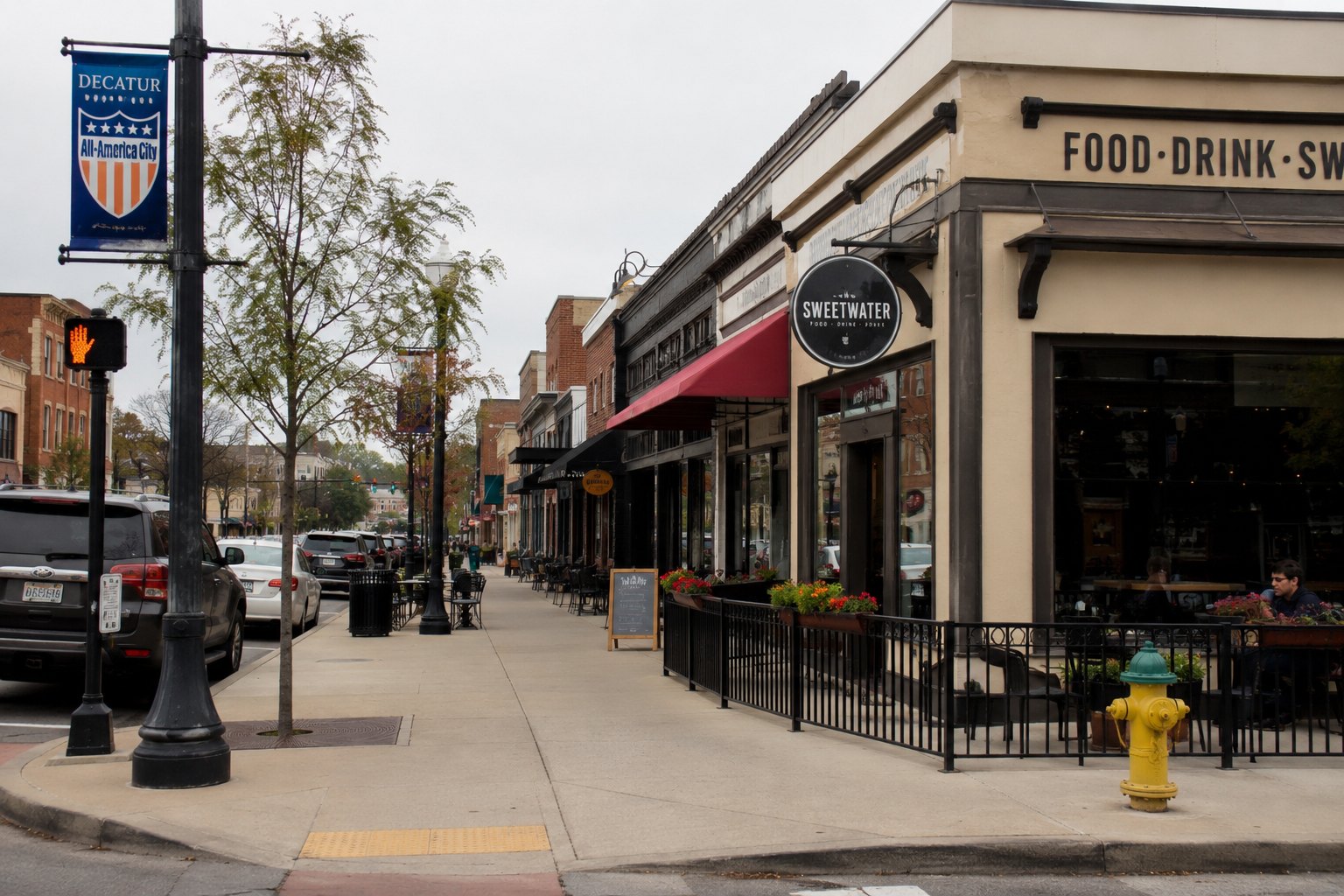
If you plan your life around where you're going to eat, buy where the food already is. Let the walk to dinner be part of what you're paying for.
That sounds obvious until you're three offers deep on a house you love and realize it's a fifteen-minute drive from anything worth eating. In a lot of Metro Atlanta, "close to restaurants" means a chain on the highway. In a handful of neighborhoods, it means you never need the car.
I work with buyers across Metro Atlanta, and food comes up more than people expect. Rarely as the headline reason someone's moving. Almost always as the thing that quietly decides whether they actually like where they landed.
Here's the part most buyers don't price in until it's too late. Walkable access to a real restaurant district is the most expensive amenity in intown Atlanta after square footage and school zones. That's not a reason to avoid these areas. It's a reason to know exactly what you're paying for, and where the value actually sits.
Here's what you need to know.
The One Question That Decides Your Budget
Before we get into neighborhoods, one honest frame. When a buyer tells me food matters to them, I ask one thing: do you want to walk to it, or do you just want it nearby?
Those are completely different budgets.
Walking distance to a dense food corridor is the priciest lifestyle amenity intown. A house four blocks from Ponce City Market and a comparable one a short drive away can differ by six figures, and the food is the reason. If you want to walk, you pay for the walk.
Nearby is a different deal entirely. Some of the best eating in the whole metro sits along corridors where the housing is among the most affordable intown real estate you can buy. If your real requirement is a short drive to extraordinary food, your money goes much further.
So for every neighborhood below, I'll tell you two things: what the food actually is, and what it costs to live in it. The hard numbers live in the table near the end. The prose is about which one is right for you.
The Beltline Eastside: Inman Park, Old Fourth Ward, and Edgewood
If there's a single answer to "where do Atlanta foodies live," it's the Beltline Eastside Trail running through Inman Park, Old Fourth Ward, and the blocks around them. This is the densest walkable food district in the city, and you can walk or bike between dinner spots on the trail itself.
Inman Park is the heart of it, and it has a real sit-down canon, not just food-hall stalls. Sotto Sotto has been the Italian mainstay on North Highland for more than fifteen years, the place people book when they want handmade pasta and a serious wine list. A few doors down sits Amore e Amore, the white-tablecloth Italian institution that ran for two decades as Il Localino before reopening under longtime owner "Mama Gale" Parker, still serving the same old-world, theatrical dining-room tradition. Kitty Dare brought a plant-filled patio and a Mediterranean-leaning menu that gave the neighborhood a new anchor. BeetleCat is Ford Fry's nautical seafood spot for oysters and the salt-and-pepper squid, and Bread & Butterfly does the French café thing as well as anyone in the city. Round it out with Barcelona Wine Bar for tapas, Fritti for blistered Neapolitan pizza, and Wrecking Bar Brewpub in a restored mansion.
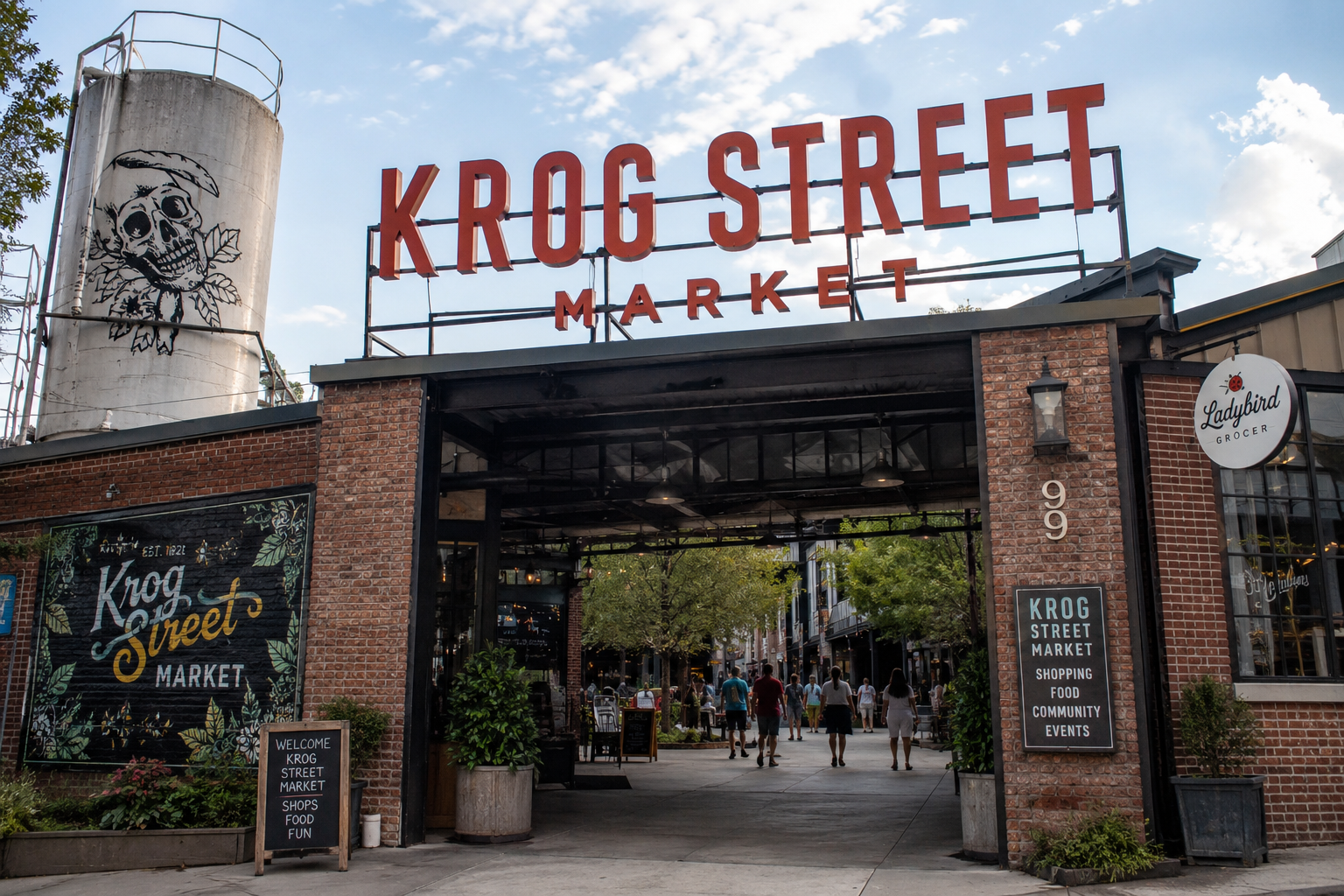
Then there's Krog Street Market, the warehouse food hall that locals will tell you is the best in town. Fred's Meat & Bread for the burger, Ticonderoga Club for cocktails, Varuni Napoli for pizza, Superica for Tex-Mex, all under one roof. It's the move when you're with people who can't agree on a cuisine.
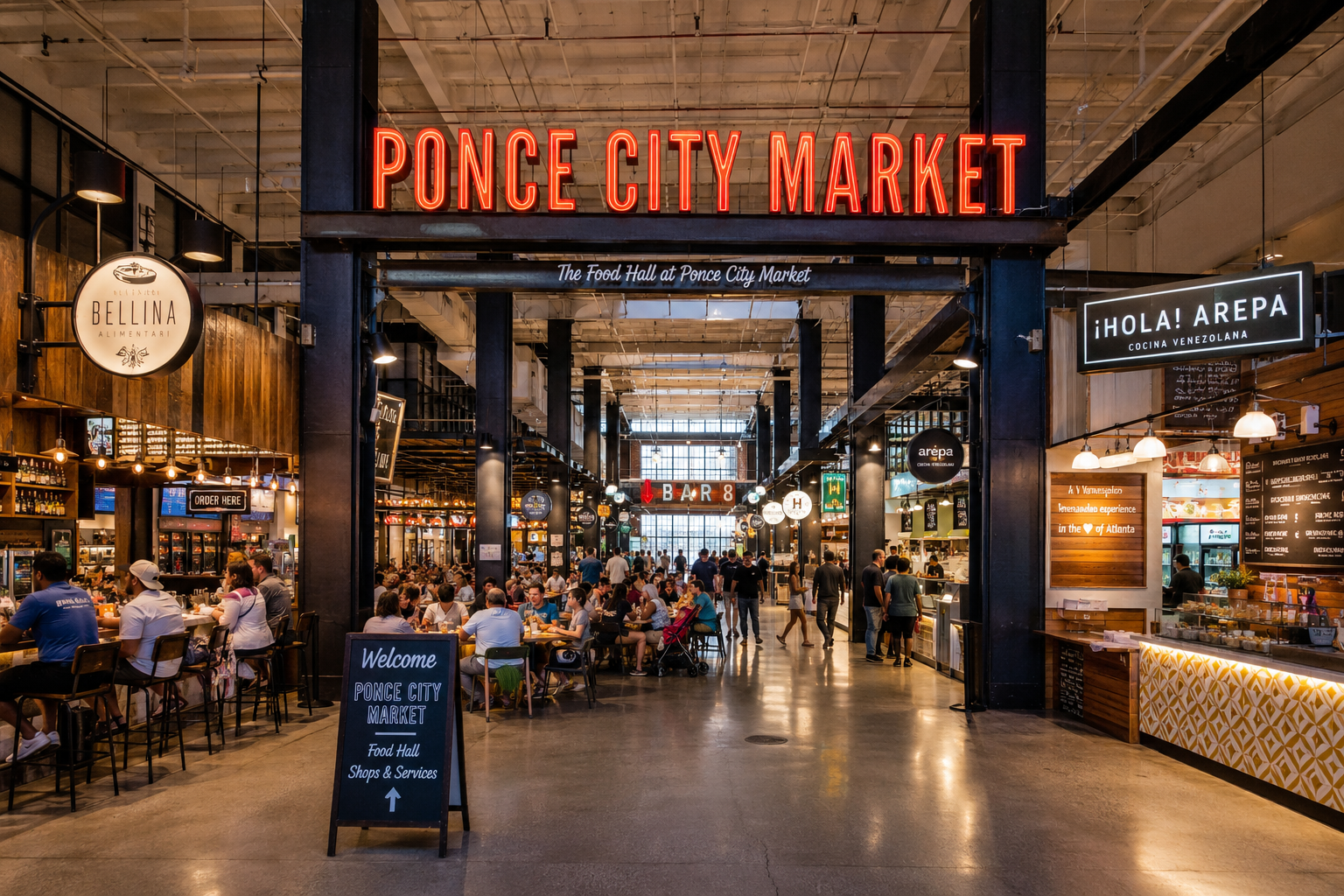
A mile north, Old Fourth Ward gives you Ponce City Market's central food hall plus a hotel dining scene that's become a destination on its own. The FORTH Hotel, right on the Eastside Trail, holds Il Premio, a modern Italian steakhouse, the Mediterranean spot Elektra, and the rooftop bar Moonlight overlooking the park. Just up Ponce, Tiny Lou's in the Hotel Clermont is the pink French-American room that picked up a Michelin nod for its steak frites and duck confit.
And don't sleep on Edgewood, the stretch just east. El Tesoro on Edgewood Avenue is the original location of one of the best taquerias in the city, Guerrero-style tacos and mezcal, the kind of everyday spot that makes a neighborhood worth living in.
This is the most expensive food district in the city, and the numbers reflect it. Inman Park sits at the top of the intown market, and Old Fourth Ward runs a wide range, from condos and lofts on the low end to renovated houses and townhomes well into seven figures. You're buying the density, and the density is real. It's right for you if walkable access is the whole point and the budget supports it, and if you'll genuinely use the Beltline.
Midtown: Walkable, Dense, and Underrated for Food
Midtown gets talked about for the High Museum, the Fox Theatre, and Piedmont Park, and the food gets undersold. It shouldn't. This is one of the most walkable food neighborhoods in the city, with serious kitchens tucked between the high-rises.
Lyla Lila is the one I send people to first. Chef Craig Richards runs a southern European room near the Fox where pasta is the reason to come, and the kitchen has been a James Beard semifinalist. Lazy Betty brings a tasting-menu, Michelin-recognized experience to the neighborhood. South City Kitchen has been the dependable upscale-Southern standard for years, and Mary Mac's Tea Room has served meat-and-three Southern cooking since 1945, a genuine landmark. For something newer, El Valle does ambitious Mexican and Tio Lucho's puts a James Beard semifinalist's Peruvian cooking a short walk away.
On housing, Midtown is overwhelmingly a condo and high-rise market, which makes it one of the more accessible ways to buy into a truly walkable, food-dense neighborhood without a single-family price tag. If you want to leave the car parked and still have a dozen good dinners within a few blocks, Midtown deserves a longer look than it usually gets.
West Midtown: The Chef-Driven Frontier
West Midtown is where Atlanta's most ambitious restaurants keep opening. If the Eastside is about density, the Westside is about destination dining. These are the places people book a week out and drive across town for.
The anchor is the Westside Provisions District, a converted warehouse complex holding a tight cluster of top-rated kitchens. Marcel, the steakhouse, carries a nationally recognized wine list. Avize landed on North America's 50 Best list in 2026. A few minutes away, Miller Union has been one of the most awarded farm-to-table restaurants in the city for years, with a James Beard recognized pastry program. And Westside Paper has become its own food cluster, with more arriving as the area connects toward the Beltline's Westside Spur.
So the food ceiling here is the highest in the city. The honest tradeoff is walkability. West Midtown is more car-dependent than the Eastside, and you're likely to drive between spots rather than stroll. On housing, it skews toward condos and townhomes more than single-family.
It's right for you if ambitious, destination cooking matters more than walking to it. I break the area down fully in my West Midtown neighborhood guide.
Decatur: The Best Everyday Dining in the Metro
If you want the most walkable everyday food life in Metro Atlanta, the City of Decatur is the answer. This isn't food halls and splashy openings. It's a real town square ringed by independent restaurants where you can leave the car parked all weekend.
Decatur has, by most counts, more restaurants per resident within walking distance of its square than anywhere in the metro. Kimball House doubles as one of the best cocktail and oyster destinations in the state. Leon's Full Service set the template for Southern gastropub dining and still delivers. Brush Sushi, from a James Beard recognized chef, draws people across the city for omakase. The White Bull handles Mediterranean and Brick Store Pub is the beer institution. The square itself works as one continuous walkable district.
Now the part out-of-town buyers get wrong constantly. The City of Decatur, the small incorporated city with the walkable square and its own schools, is expensive. But "Decatur" as a mailing address stretches across a much larger swath of unincorporated DeKalb, where prices run far lower. Those areas share a postal name with the food town and very little else.
If the square and the restaurants are why you're moving to Decatur, you need to be inside the actual city limits, and that costs accordingly. This is exactly the kind of map-versus-reality trap I walk buyers through before they fall for the wrong listing.
Buford Highway: The Best Food Value in the Metro
This is the corridor I tell food-obsessed buyers about when their budget is real but not unlimited. Buford Highway is the most important eating destination in Atlanta, and the housing along it costs a fraction of comparable proximity on the Eastside.
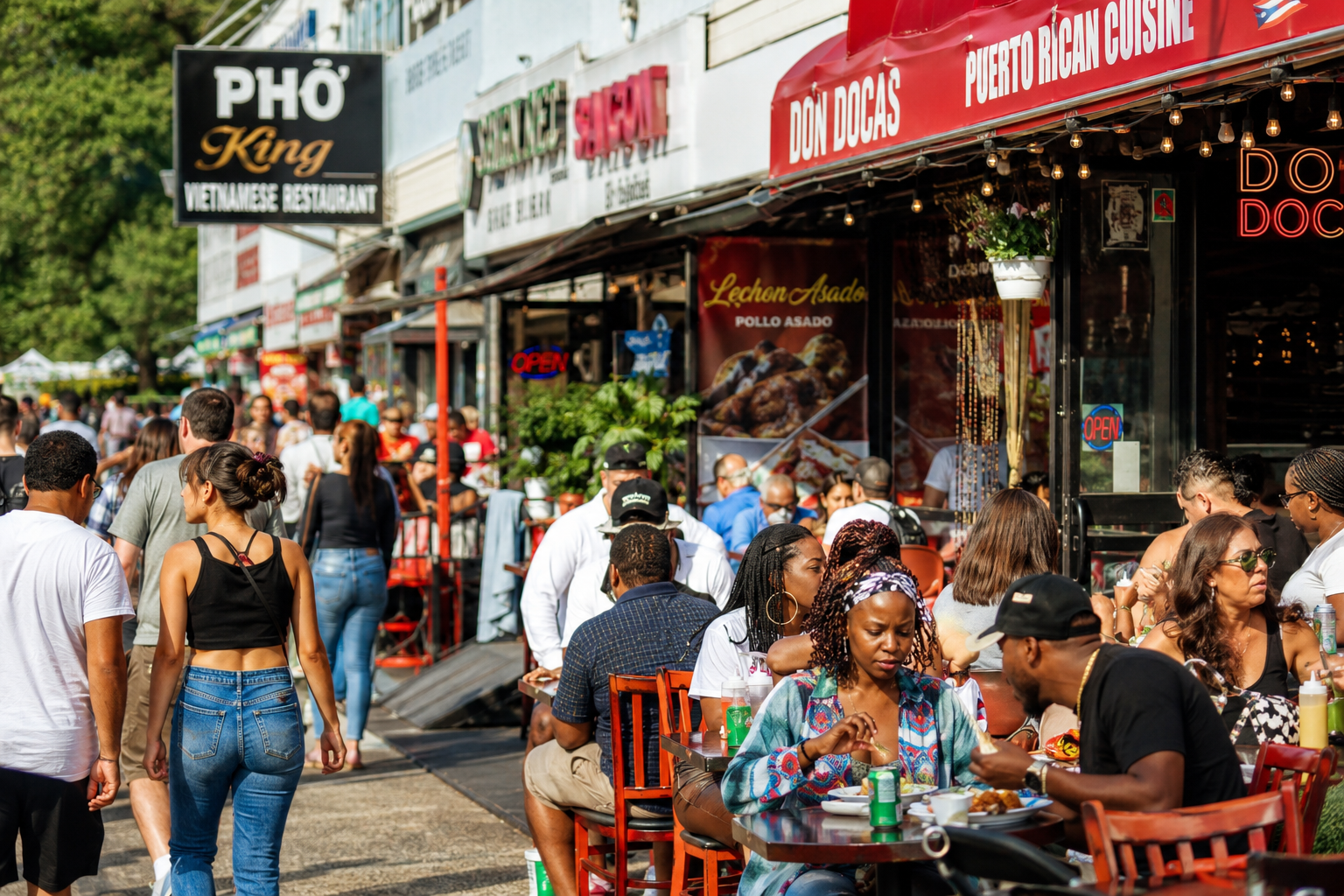
The corridor runs from inside the perimeter out through Brookhaven, Chamblee, and Doraville, and it holds one of the deepest concentrations of international restaurants in the American South. Lee's Bakery has been called a national front-runner for banh mi. Kamayan serves Filipino food, chicken adobo and sisig, you won't find done this well anywhere else, and its chefs have been James Beard recognized. Canton House is the Cantonese dim sum standard, and Gu's Kitchen brings Sichuan street food. Several spots along the road are Michelin-recommended.
The markets are destinations too. Super H Mart anchors a Korean grocery complex in Doraville. Plaza Fiesta, a 350,000-square-foot indoor Latin American market and food court, packs in more than a dozen restaurants under one roof and draws millions of visitors a year.
Here's the value story. Much of the housing convenient to this corridor, including walkable pockets of Chamblee, comes in around or below the broader metro median rather than at Eastside premiums. Chamblee in particular has become one of the more interesting buys in the city: a real downtown, MARTA on the Gold Line, and that food corridor at its doorstep. I make the case in my Chamblee guide.
If your requirement is a short drive to extraordinary, genuinely diverse food rather than a short walk to a food hall, this is the smartest food-money play in Metro Atlanta. Full stop.
Summerhill and Grant Park: Georgia Avenue's Quiet Rise
A few blocks south of downtown, Georgia Avenue in Summerhill has become one of the more interesting food streets in the city. It sits right next to Grant Park, one of Atlanta's oldest residential neighborhoods.
The cluster is tight and high-quality. Wood's Chapel BBQ does a modern take on Southern barbecue. Talat Market, from chefs Parnass Savang and Rod Lassiter, has been one of the most acclaimed kitchens in the city. Little Tart Bakeshop covers French pastry and coffee, Big Softie handles dessert, and Junior's Pizza fills the casual slot. The biggest news for 2026: chef Demetrius Brown is turning his long-running Heritage Supper Club into a Georgia Avenue restaurant built around a tasting menu exploring the cuisines of the African diaspora. That's the kind of opening that tells you where a street is headed.
On price, this corner gives you range. Grant Park's historic bungalows and Victorians command intown prices toward the top end. Summerhill, with more new-construction townhomes, gives you walkable entry points that start lower.
It's right for you if you want a genuine, still-developing food street with both attached and detached options. This is one of the better balances on the Southside right now.
East Atlanta Village: Personality Over Polish
East Atlanta Village, EAV to locals, is the food neighborhood for people who want character over polish and don't want to pay Inman Park prices to get it.
The cooking has gotten genuinely good. Banshee, from chef Nolan Wynn, is the neighborhood's fine-dining anchor, James Beard recognized, famous for its pepperoni butter and as good a date-night room as you'll find on this side of town. Argosy is the gastropub everyone defaults to, a former grocery store with forty-plus taps, wood-fired pizza past midnight, and skee-ball in the back. Gaja Korean Bar does bulgogi and late-night banchan, and So So Fed runs a Lao pop-up that's worth planning around. And The Earl is the music venue with the burger that lands on every best-of-Atlanta list.
What makes EAV work for food-focused buyers is the value math. You get a genuinely walkable village center with its own restaurant identity, and surrounding housing that's more attainable than the Beltline Eastside a few miles north. It's right for you if your idea of a great food neighborhood is one where you know the bartenders. I cover the full picture in my East Atlanta Village guide.
The Westside and Southside Story Worth Knowing
A guide that stopped at the Eastside and Decatur would tell you half the story, and skip some of the most consequential food development happening right now.
In the historic West End, the Lee + White district turned the old Warehouse Row into a cluster of breweries, restaurants, and food makers, with a food hall expanding it and Beltline Westside Trail access at the door. West End remains among the more attainable intown buys with strong Beltline access. I detail the market in my West End neighborhood guide.
Downtown and South Downtown are mid-expansion, with new concepts around Centennial Yards and the historic core, including a second El Tesoro arriving on Hotel Row. Castleberry Hill, the arts district on downtown's edge, gives you loft living with walkable access to that growing scene. I cover it in my Castleberry Hill guide.
And across the south and west sides, chefs and owners are building real institutions, Heritage in Summerhill among them. For buyers who grew up here or are moving back, living near food that reflects this city's actual culture is part of the value. East Point, where I grew up, has its own Main Street momentum and stays one of the most overlooked Southside buys. I make the case in my East Point guide.
The Numbers: Food Neighborhoods Compared
Here's the side-by-side, with the food anchor and the approximate cost of buying in. Treat the ranges as a planning frame, not a quote. They blend recent listing and sale data from sources including Redfin, Movoto, Zillow, and Houzeo as of mid-2026, and intown micro-markets move fast. Before you set a number, get current figures for the specific blocks you're considering, which I can pull for you.
| Neighborhood | A Few Staples | Approx. Buy-In (2026) | Best For |
|---|---|---|---|
| Inman Park | Sotto Sotto, Amore e Amore, Kitty Dare, Krog Street Market | Median ~$700K; range ~$575K–$1.3M+ | Historic homes plus top food halls |
| Old Fourth Ward | Ponce City Market, FORTH Hotel, Tiny Lou's | Condos from $300Ks; houses/townhomes ~$550K–$950K+ | Maximum walkable density |
| Midtown | Lyla Lila, Lazy Betty, South City Kitchen, Mary Mac's | Largely condos/high-rise; wide range by building | Walkable food without an SFH price |
| West Midtown | Marcel, Avize, Miller Union, Westside Paper | Condos/townhomes ~mid $300Ks–$700K; SFH higher | Destination, chef-driven dining |
| City of Decatur | Kimball House, Leon's Full Service, Brush Sushi | City limits median ~$700K (broader DeKalb lower) | Everyday car-free dining |
| Chamblee / Buford Hwy | Lee's Bakery, Kamayan, Canton House, H Mart, Plaza Fiesta | Around or below metro median (~$400K range) | Best food value in the metro |
| Summerhill / Grant Park | Heritage, Talat Market, Wood's Chapel BBQ | Townhomes ~$400K–$700K; Grant Park SFH $600K–$1M+ | A still-rising food street |
| East Atlanta Village | Banshee, Argosy, Gaja, The Earl | More attainable intown; varies by block | Personality over polish |
| West End | Lee + White district, Westside Trail breweries | Among the more attainable intown buys | Value plus Beltline access |
How to Buy in a Food Neighborhood Without Overpaying
Loving a neighborhood's food and buying smart in it are two different skills. Here's how I keep food-driven buyers from paying for the emotion of it.
Separate the walk from the drive, and budget for the one you actually need. It's the biggest money lever in this whole post. If you'll truly walk to dinner several nights a week, the Eastside or Decatur premium can be worth it. If you're honest that you'll mostly drive, Buford Highway, Chamblee, EAV, and West End give you extraordinary access for a lot less.
Watch the block, not the brand. "In Old Fourth Ward" or "in Decatur" means nothing until we look at the specific block. A few hundred feet changes walkability, noise, parking, and price. Two listings with the same neighborhood name can be a different daily life.
Don't let a new opening set your price. A buzzy restaurant down the street is exciting, and sellers know it. New food doesn't retroactively justify an overpriced house. We anchor your offer to comparable sales and the home's condition, and let the restaurants be the bonus.
And use the market you're in. Through 2026 the metro has been more balanced than it was two years ago, with homes sitting longer and often selling under list. That gives food-driven buyers more room to be selective. It's leverage worth using.
Which Food Neighborhood Is Right for You?
A quick way to narrow it down.
Pick the Beltline Eastside (Inman Park, Old Fourth Ward) if walkable density is the whole point and your budget supports intown premiums.
Pick Midtown if you want walkable, food-dense living without a single-family price, and condo life suits you.
Pick Decatur if you want the most genuine everyday car-free dining, and confirm the address is inside the actual city limits.
Pick West Midtown if ambitious, destination cooking matters more than walking to it.
Pick Buford Highway and Chamblee if you want the best food in the metro at the best housing value, and a short drive is fine. This is the value champion.
Pick Summerhill, Grant Park, or East Atlanta Village if you want a real food street with more attainable entry points and a neighborhood that still has character.
Pick West End, Castleberry Hill, or the Southside if you want walkable, emerging food access with strong Beltline connectivity and prices that haven't fully caught up.
Frequently Asked Questions
What is the best Atlanta neighborhood for foodies?
For walkable density, the Beltline Eastside through Inman Park and Old Fourth Ward is the top answer, with Krog Street Market, Ponce City Market, and sit-down anchors like Sotto Sotto, Kitty Dare, and BeetleCat. For the best everyday car-free dining, the City of Decatur has the strongest restaurant-to-resident ratio in the metro. For the best value, Buford Highway and Chamblee are unmatched. The right pick depends on whether you want to walk to dinner or are fine with a short drive, and on your budget.
Which Atlanta neighborhood has the best food for the money?
Buford Highway, including the Chamblee and Doraville stretches, gives you the best combination of extraordinary food and attainable housing in Metro Atlanta. The international corridor, with spots like Lee's Bakery, Kamayan, and Canton House plus markets like Super H Mart and Plaza Fiesta, is among the deepest in the South, and the homes near it generally cost around or below the broader metro median rather than Eastside premiums. If a short drive to great food works for you, this is the smartest food-money play in the city.
How much do I need to spend to live in a walkable Atlanta food neighborhood?
It depends on the neighborhood and home type. Inman Park sits near the top of the intown market, with a median around $700,000 and townhomes ranging from the high $500,000s past $1.3 million. Old Fourth Ward is wider, with condos starting in the $300,000s and houses and newer townhomes commonly running from roughly $550,000 to $950,000 and up. The City of Decatur also runs near a $700,000 median. Midtown's condo market and the Chamblee corridor offer more accessible entry points. These figures move, so verify current numbers for your target blocks before budgeting.
Is Decatur a good place to live for restaurants?
Yes. The City of Decatur is one of the most walkable everyday dining destinations in Metro Atlanta, with dozens of independent restaurants and bars within walking distance of its square, including Kimball House, Leon's Full Service, and Brush Sushi. The key thing to understand is that the walkable food town is the small incorporated City of Decatur, which is expensive, while the broader Decatur postal area in unincorporated DeKalb is much more affordable and is not the same walkable district.
What is Buford Highway known for?
Buford Highway is Metro Atlanta's premier international food corridor, running from inside the perimeter out through Brookhaven, Chamblee, and Doraville. It holds one of the deepest concentrations of international restaurants and markets in the American South, including Lee's Bakery for banh mi, Kamayan for Filipino food, and Canton House for dim sum, alongside large international markets like Super H Mart and the indoor Latin American market Plaza Fiesta. Several of its restaurants are Michelin-recommended.
Is Midtown Atlanta good for food?
Yes, and it's underrated for it. Midtown is one of the most walkable neighborhoods in the city, with serious kitchens tucked between the high-rises, including Lyla Lila for southern European pasta, the tasting-menu spot Lazy Betty, the longtime South City Kitchen, and the 1945 landmark Mary Mac's Tea Room. Because Midtown is largely a condo and high-rise market, it's also one of the more accessible ways to buy into a truly walkable, food-dense neighborhood without a single-family price tag.
Where is the best new restaurant development happening in Atlanta?
Several corridors are growing fast in 2026. West Midtown keeps adding chef-driven concepts at Westside Provisions and the newer Westside Paper district. Georgia Avenue in Summerhill is rising quickly, with chef Demetrius Brown's Heritage opening as a tasting-menu restaurant centered on the cuisines of the African diaspora. Downtown and South Downtown are expanding around Centennial Yards, and the Lee + White district in West End keeps adding restaurants, breweries, and a food hall.
Do homes near restaurants in Atlanta cost more?
Yes. Walkable access to a dense restaurant corridor is one of the most expensive amenities in intown Atlanta, and it can add six figures to comparable homes a short drive away. The upside is that this proximity tends to hold value well. The strategy is to be honest about whether you'll truly walk to dinner often enough to justify the premium, and to anchor your offer to comparable sales rather than to the excitement of a new opening nearby.
Is West End a good neighborhood for food lovers?
West End has become a strong and growing food destination, anchored by the Lee + White district, which redeveloped the old Warehouse Row into breweries, restaurants, food makers, and an expanding food hall with Beltline Westside Trail access. It remains among the more attainable intown buys with good Beltline connectivity, which makes it a value-forward option for buyers who want walkable, emerging food access without Eastside prices.
How do I make sure I buy in the right part of a food neighborhood?
Look at the specific block, not just the neighborhood name. Within any of these areas, a few hundred feet changes walkability, noise, parking, and price, and the same neighborhood name can mean very different daily lives. In Decatur specifically, confirm whether an address is inside the City of Decatur or in the broader unincorporated postal area, because they are not the same place. Working with someone who knows the blocks, not just the listings, makes the difference.
Let's Find Your Food Neighborhood
Food is one of the most honest ways to figure out where you actually want to live, and Atlanta gives you more distinct food neighborhoods than almost any city its size. I work with buyers across Metro Atlanta and know these districts block by block, including the part the listings never tell you: which side of the street is worth the premium and which one isn't. If you want to match the way you eat to a home you can afford and won't regret, let's talk.
Visit kristenjohnsonrealestate.com or reach out directly. Come as you are, come on home.
Looking for more Metro Atlanta neighborhood guides? I've covered the intown and westside food corridors in depth, including West Midtown, Old Fourth Ward, Chamblee, East Atlanta Village, West End, Castleberry Hill, and East Point. Browse the full guide series at kristenjohnsonrealestate.com.