

Living in East Point, Georgia: The City That Atlanta Keeps Overlooking
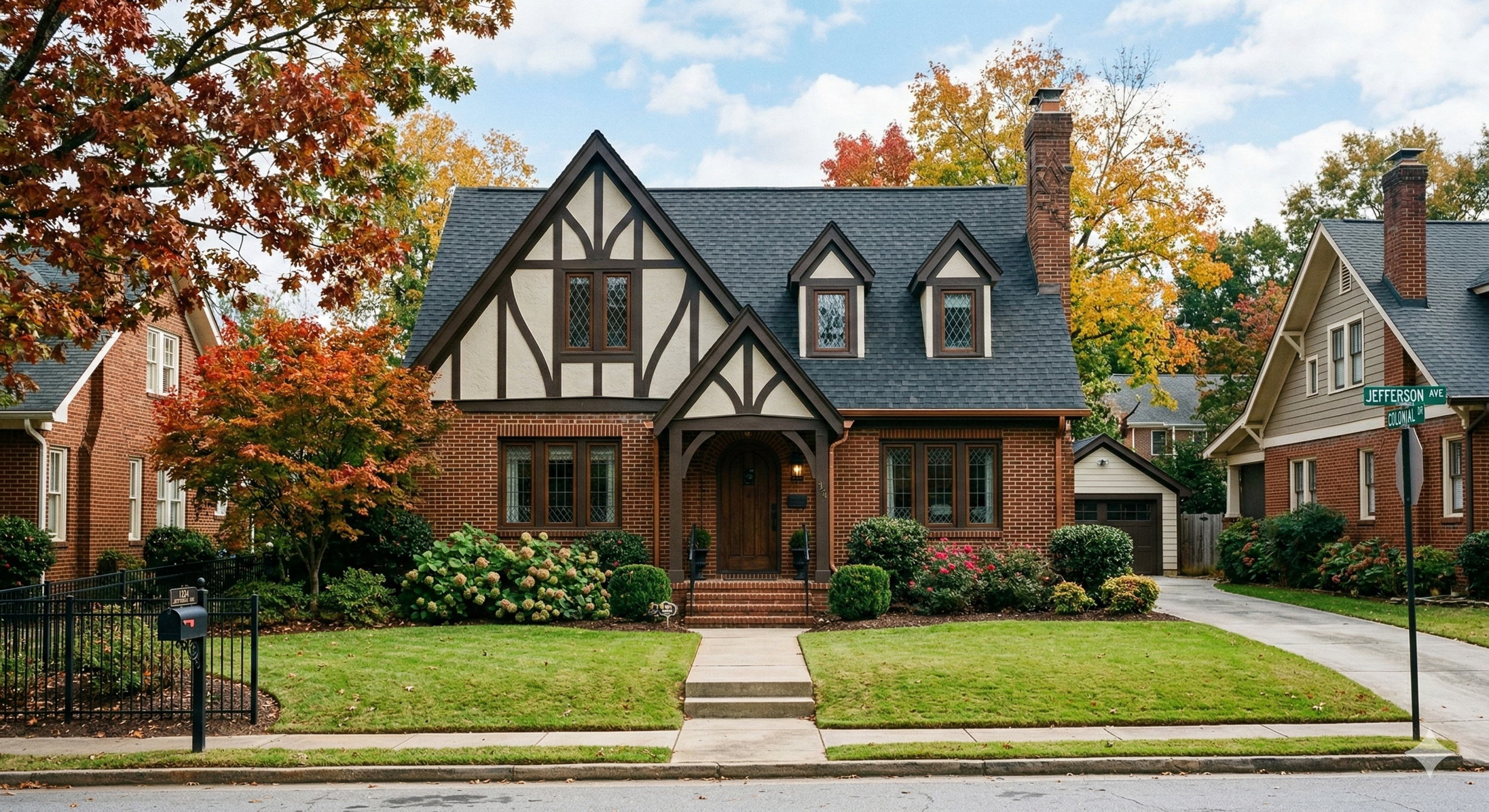
I grew up in East Point.
That's not a line I drop at the beginning of every neighborhood guide because it's not true for most of them. For Dunwoody and Chamblee, I'm the expert who did the research. For East Point, I'm the person who learned to navigate the city before I learned to navigate a real estate contract. I know the streets. I know the history. I know what it meant to grow up in a community that Metro Atlanta spent decades either ignoring or mischaracterizing — and I know what it looks like now from the other side of nearly a decade in this business.
So let me give you the honest version of East Point that most real estate content doesn't, because most of it is written by people who have never spent a real day in this city.
East Point is a self-contained city of approximately 38,000 residents in Fulton County, sitting about seven miles southwest of downtown Atlanta. It is not a neighborhood of Atlanta — it has its own city government, its own police department, its own parks and recreation system, its own identity, and its own civic pride. That distinction matters. Buyers who treat East Point as simply "an Atlanta suburb" tend to miss what makes it genuinely compelling: this is a city with bones, with history, with character — and with a real estate market that offers some of the most accessible entry prices to the intown-adjacent Atlanta corridor anywhere in the metro area.
The airport is four miles south. Downtown Atlanta is twenty minutes north without traffic. The East Point MARTA station sits at the center of the city, putting you on the Red and Gold Lines with direct access to Midtown, Buckhead, the airport, and beyond. There is no other city in the Atlanta metropolitan area where you can buy a renovated brick ranch for under $300,000 and still have MARTA rail, highway access, and proximity to one of the largest film and television production operations in the country all within the same zip code.
That's East Point. Here's what you need to know.
The Market: Real Numbers, Real Opportunity
East Point's market data requires some honest context, because the raw numbers look discouraging if you don't understand what's driving them — and very different if you do.
Current market snapshot (2025):
Multiple sources point to a 2025 median in the range of $225,000–$266,000 for closed sales, with list prices typically running higher — Movoto tracking median list prices around $299,900 and active inventory around 200 homes. Redfin's November 2025 data showed a median sold price of $230,000, down approximately 7% year-over-year, with homes averaging 97 days on market. Rocket Homes tracked a median of $266,734 in March 2025, reflecting a 9.6% year-over-year decrease with an average listing age of 62 days.
What's actually happening in those numbers:
The price softening across 2024–2025 reflects a broader Atlanta-area market correction from post-pandemic peaks, not a fundamental deterioration in demand for East Point specifically. Investors have noticed — East Point is specifically called out in multiple 2025 Georgia market analyses as an active target for acquisition and renovation, with buyers pursuing single-family homes under $350,000 for rental portfolios and value-add flips. The revitalization activity is measurable: one listing platform notes that property values in the immediate area around Fort McPherson and the Tyler Perry Studios corridor have climbed approximately 25% over three years, with an estimated $1 billion in recent infrastructure and commercial investment in the East Point area.
Price ranges by product type:
Entry-level renovation projects and smaller bungalows: $150,000–$225,000 (investor-heavy inventory, condition varies widely)
Move-in ready brick ranches and bungalows (3BR/1-2BA): $225,000–$310,000
Updated and renovated homes in sought-after sub-neighborhoods (Jefferson Park, Conley Hills): $280,000–$400,000
Larger renovated homes with basement, 4BR+: $350,000–$450,000
New construction (Cottages of East Point and similar 2024–2025 communities): $250,000–$325,000
The investor reality: East Point has active investor competition at the entry level, meaning condition-based pricing is sharp and turnkey-ready inventory in the desirable sub-neighborhoods moves faster than the raw days-on-market average suggests. Fully renovated, accurately priced homes in Jefferson Park and Conley Hills are cited specifically across multiple 2025 sources as selling quickly. The homes that are sitting are usually priced optimistically for their condition or located on less desirable corridors.
The buyer opportunity: For first-time buyers, move-up buyers from the rental market, and buyers priced out of intown Atlanta ($450,000+ for comparable square footage in Edgewood, Grant Park, or East Atlanta Village), East Point offers a genuine alternative. You are buying real square footage, real brick construction, real lots, MARTA access, and highway connectivity — at prices that are becoming increasingly rare this close to Atlanta's core.
The Housing Stock: Brick, Character, and Room to Breathe
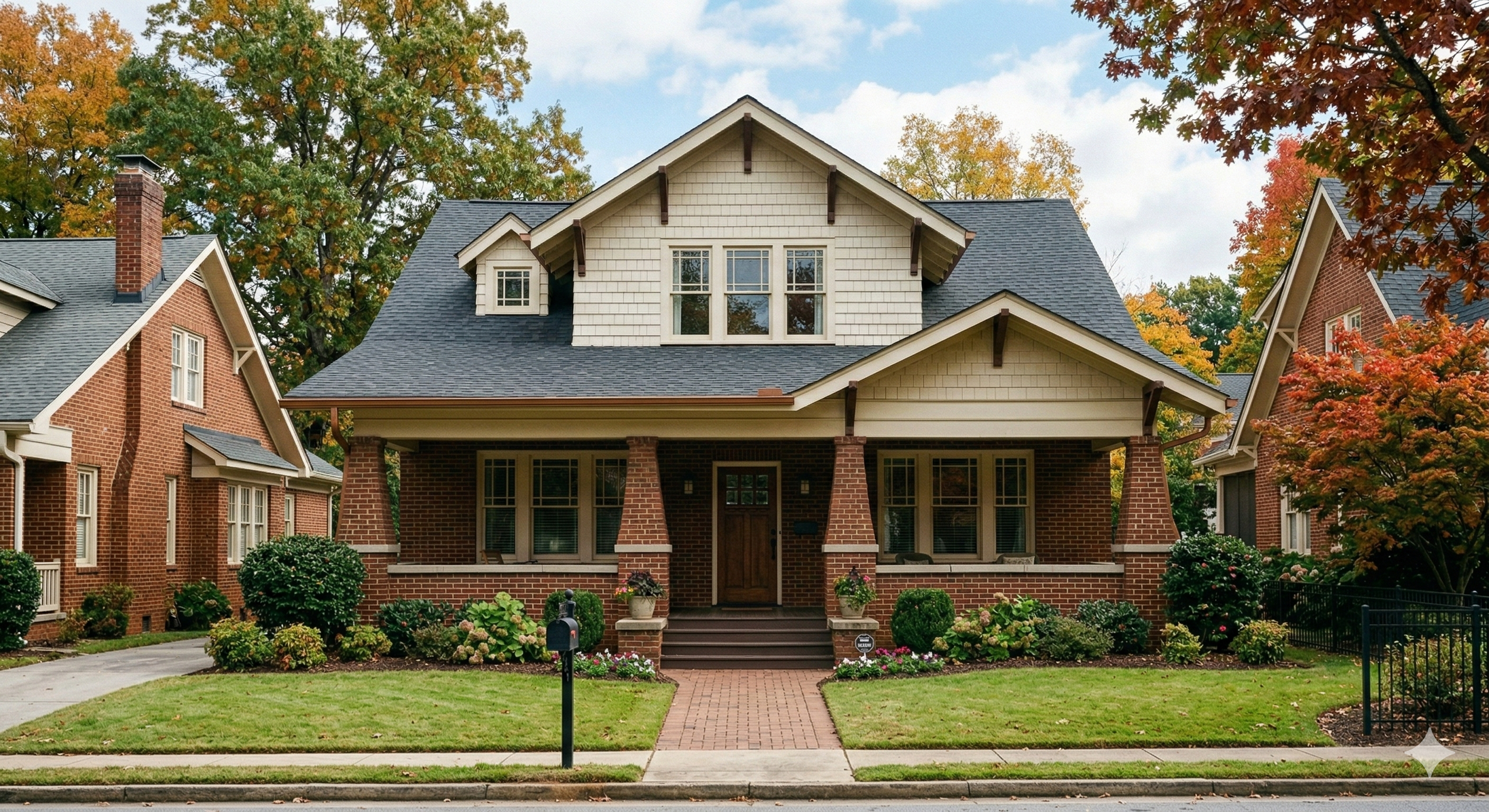
East Point's residential character is dominated by mid-century construction — primarily 1940s through 1970s brick ranches, Craftsman-influenced bungalows, and colonial-style homes that were built during the city's post-World War II suburban expansion. This is solidly built housing stock. Four-sided brick construction is common. Hardwood floors under carpet are common. Lot sizes are generous by intown Atlanta standards — actual yards, actual setbacks, actual space.
The sub-neighborhoods that matter:
Jefferson Park is East Point's most sought-after residential address and consistently draws the most buyer attention from people relocating into the city. Tree-lined streets, carefully maintained early 20th-century homes, a strong neighborhood association, and ongoing revitalization energy make Jefferson Park feel more like Kirkwood's quieter cousin than a suburban city neighborhood. The housing mix includes flat single-story ranches, colonial-style two-stories, and Craftsman bungalows. Four-bedroom homes covering 2,000 square feet have sold for under $450,000 in recent market conditions. Renovated homes here move faster than anywhere else in East Point.
Conley Hills sits adjacent to Sumner Park — East Point's flagship recreational space — and has a strong Tudor Revival architectural presence alongside bungalows and mid-century ranches. It is historically one of the city's most photographed neighborhoods precisely because of that Tudor architecture, which is genuinely distinctive. The homes tend toward larger lots with mature landscaping. MARTA bus connections to the East Point station run along Headland Drive and Washington Road, keeping the neighborhood connected without requiring a car for every trip. Conley Hills is a short walk from the Dick Lane Velodrome.
Heritage Park sits in the city's southwestern corner, quieter and more removed from the commercial corridors than Jefferson Park or Conley Hills. Family-oriented, adjacent to green space, and priced accessibly — three-bedroom condos under $250,000 and four-bedroom single-family homes under $400,000 exist in this market. For buyers who want lower density and more residential tranquility within East Point, Heritage Park is worth targeting.
Colonial Hills and Center Park offer additional inventory that draws buyers looking for the East Point value proposition in slightly different architectural expressions. Colonial Hills is particularly close to the East Point MARTA station, making it a strong choice for buyers who prioritize transit access over a specific neighborhood character.
Frog Hollow and Semmes Park are smaller, less publicized sub-neighborhoods that offer strong value propositions for buyers who are willing to research beyond the headline addresses. These areas are part of East Point's emerging revitalization story in pockets where investor attention hasn't yet fully priced in the upside.
New construction has entered East Point meaningfully in the past two years. The Cottages of East Point (established 2024) brings modern single-family homes with contemporary finishes and an emphasis on walkability and community design to a city that was historically dominated by resale inventory. New construction in East Point typically ranges from the mid-$200,000s to low $300,000s — lower than comparable new product in Atlanta proper, College Park, or South Fulton.
ADU and income potential: East Point's lot sizes and bungalow stock create genuine opportunity for accessory dwelling units, basement apartments, and duplex configurations that support house-hacking strategies. For first-time buyers wanting to use rental income to offset their mortgage, East Point's housing stock is more accommodating than most intown Atlanta inventory at comparable prices.
Fort McPherson, Tyler Perry Studios, and the Development Story
This is the part of the East Point story that matters most for long-term buyers — and it's also the part that requires the most honest assessment of timeline versus potential.
The foundation: In 2011, the U.S. Army's Fort McPherson base closed, eliminating over 6,000 jobs and devastating the local economy. The 488-acre base sat four miles southwest of downtown Atlanta, directly adjacent to East Point's northern edge. In 2015, Tyler Perry purchased 330 acres of the former base for $30 million, and in 2019, Tyler Perry Studios opened as one of the largest film production studios in the United States — and notably, the first major film studio in the country to be wholly owned by an African American.
The studio currently employs over 500 people directly and has brought significant production activity — and the attention that follows it — to the East Point corridor.
What's being planned: In mid-2025, Perry's team filed for a Development of Regional Impact review with the Georgia Department of Community Affairs for a "Tyler Perry Entertainment District" covering approximately 38 acres adjacent to the existing studio complex. The filing proposes nearly 1.3 million square feet of mixed-use development including retail, a theater, office space, a park, outdoor dining courts, and public-accessible pedestrian and bike greenway connections planned to eventually link to the Atlanta BeltLine. The projected completion date in the filing is January 2028.
Separately, T.D. Jakes' development entity controls approximately 95 acres of remaining Fort McPherson acreage, with plans filed that would include over 900 multifamily units, 200 townhomes, 181 standalone houses, a hotel, and a senior living facility.
The honest buyer assessment: Both of these development programs have been percolating for years and have encountered delays. The Tyler Perry Entertainment District DRI filing is a meaningful step — it represents actual permitting paperwork, not just a concept rendering — but a January 2028 completion date for a 1.3 million square foot mixed-use development in an area with environmental remediation history should be treated with appropriate skepticism. Real estate decisions should not hinge on these developments completing on schedule.
What you can bank on: Tyler Perry Studios exists, employs people, attracts production industry workers to the area, and generates ongoing attention from businesses and investors. That's real. The entertainment district and Fort McPherson redevelopment represent potential upside that, if it materializes as planned, would be transformative for the surrounding real estate market. Buy East Point because of what it offers today — and let the development story be the bonus.
Getting Around: MARTA Is Real Here
East Point's transit connectivity is one of its most underrated assets, and it's something buyers coming from North Fulton, DeKalb County, or the suburbs consistently underestimate.
East Point MARTA Station sits at the center of the city on the Red and Gold Lines. From East Point station, direct rail connections reach:
Downtown Atlanta (Five Points): approximately 15–18 minutes
Midtown (Arts Center/Midtown stations): approximately 20–25 minutes
Buckhead (Buckhead Station): approximately 30–35 minutes
Hartsfield-Jackson Airport: approximately 8–12 minutes south
North Springs (end of Red Line): approximately 45–50 minutes
For buyers who work downtown, near Georgia Tech, in Midtown, or who travel frequently through the airport, the East Point station is a genuine quality-of-life advantage. This is a city where car-lite living is realistic for a significant portion of daily activity in a way that is not true for comparable-priced suburbs farther from the city.
The Lakewood/Fort McPherson MARTA station serves the northern edge of East Point near the Tyler Perry Studios complex — relevant for buyers in Colonial Hills and neighborhoods closest to the Fort McPherson corridor.
Highway access: I-285, I-85, and I-75 all run through or adjacent to East Point, providing strong connectivity in every direction. Drive times: downtown Atlanta approximately 15–20 minutes; airport approximately 10 minutes; College Park 5 minutes; Camp Creek Marketplace 5–10 minutes.
Airport proximity: Hartsfield-Jackson is four miles south. For buyers who travel frequently for work, the East Point location is genuinely strategic. The airport is Atlanta's single largest employer, with over 63,000 employees — many of whom live in and around East Point specifically because of that proximity.
Parks, Recreation, and the Dick Lane Velodrome
Sumner Park is East Point's centerpiece recreational space, anchored in Conley Hills and adjacent to the Dick Lane Velodrome. The park includes tennis courts, a dog park, nature trails, and a recently improved approximately 1.5-mile trail that connects to downtown East Point. East Point Parks and Recreation recently added trees along the trail and repaved tennis courts as part of ongoing park improvement investment.
The Dick Lane Velodrome deserves its own mention because it is genuinely unusual. Built in 1974 after city officials visited the 1972 Munich Olympics and came home wanting to build one, the Dick Lane Velodrome is a 1/5-mile indoor bicycle racing track — one of only 21 or 22 such facilities in the entire country, and the only velodrome in Georgia. Olympic cyclists used it during training for the 1996 Atlanta Games. Today the East Point Velodrome Association operates youth cycling programs including a Youth Cycling League offering free activities. For cycling enthusiasts or families with kids interested in the sport, this is not a detail — it's a defining neighborhood feature that you simply cannot find anywhere else in the metro area.
East Point Commons is a community gathering space hosting farmers markets, seasonal events, and programming that gives the city's downtown core a genuine civic heartbeat. It is part of the city's ongoing effort to strengthen Main Street and make downtown East Point a walkable commercial center rather than just a pass-through corridor.
Sykes Park, Brookdale Park, Grayson Field, Jefferson Park (the park), and Chris Stacks Field round out a parks system of 23 parks total — meaningful green space infrastructure for a city of 38,000.
North Camp Creek Parkway Nature Preserve provides hiking and natural area access for residents who want green space beyond the traditional park experience.
Food, Culture, and Community
East Point's dining and cultural scene reflects the city's character: authentic, community-rooted, and diverse in a way that no amount of curated development can manufacture.
Thumbs Up Diner — A genuine East Point institution. Breakfast and brunch with the kind of consistency that earns a local following over years, not months. This is the kind of place that regulars treat as an extension of their kitchen.
Lov'n It Live — East Point's well-known raw and vegan restaurant has built a following that extends well beyond the city. Community-focused, health-forward, and a consistent presence in conversations about Atlanta's plant-based dining scene.
Louisiana Bistreaux Seafood Kitchen — Cajun and Creole seafood with a vibrant atmosphere. One of East Point's more distinctive dining options, drawing from a culinary tradition that feels genuinely different from the standard Atlanta restaurant landscape.
El Rocio — Traditional Mexican cuisine in a casual neighborhood setting. A consistent community anchor for the city's Hispanic population.
Windmill Arts Center — East Point's primary cultural venue for live performance, immersive theater, dance, artist residencies, and experimental programming. This is where local creative life concentrates.
Camp Creek Marketplace — Opened in 2003, this 309,000 square foot retail destination with 39 stores and 14 restaurants is one of East Point's primary commercial anchors. For everyday shopping, dining, and services, Camp Creek is what most East Point residents use most often.
Downtown East Point / Main Street corridor — The White Way stretch and portions of Main Street represent the emerging core of East Point's downtown revitalization. Restaurant activity here is genuine and growing, driven by the city's Downtown Development Authority and ongoing investment in making the corridor more walkable and commercially active.
Greenbriar Mall — A historic South Fulton shopping destination that, while past its peak retail years, remains a community institution and a landmark of the area's commercial history.

Schools
East Point is served by the Fulton County Schools district, which earns an overall A rating on Niche — one of the strongest district-level ratings in Georgia.
School assignments vary by address. East Point spans multiple elementary, middle, and high school zones, and buyers should verify specific assignments through Fulton County Schools directly for any address they are considering. Here is an honest overview of what the school landscape looks like:
Elementary schools serving East Point include Asa G. Hilliard Elementary, Hamilton E. Holmes Elementary, Conley Hills Elementary, Continental Colony Elementary, and several others depending on specific address. Ratings across these schools range from C+ on Niche, reflecting the district-level strength being unevenly distributed across individual schools.
Middle schools include Paul D. West Middle School (C+ Niche rating, with notable after-school STEAM programming including Girls Who Code and a Marketing Club) and Woodland Middle School (56 full-time teachers, 15:1 student-teacher ratio).
Tri-Cities High School serves most of East Point and has a C Niche rating with an 84% graduation rate. Tri-Cities is distinguished by its Visual and Performing Arts Magnet Program — partnerships with institutions including the Debbie Allen Dance Academy and Tyler Perry Studios (less than three miles away) make this a meaningful magnet option for students with arts and performance interests that is genuinely distinct from the standard high school offering. Westlake High School serves some portions of East Point as an alternative assignment.
Woodward Academy (private, K–12, located in adjacent College Park) is one of the most academically rigorous private schools in metro Atlanta, with a 7:1 student-teacher ratio and a national reputation. Proximity to Woodward Academy is a meaningful factor for families who plan to pursue private education — the school is immediately accessible from East Point addresses.
Charter options: Fulton County operates charter schools including KIPP South Fulton Academy School (B- Niche) and Rise Prep School (B- Niche) serving students in the East Point corridor. Charter school availability is an important consideration for families who want to expand beyond the zoned public school options.
Research directive: Buyers for whom school assignment is a primary consideration should research and visit schools to determine fit for their family, verify current enrollment eligibility directly with Fulton County Schools, and explore charter and private options as part of a complete picture.
Who Buys in East Point
East Point tends to be the right fit for:
First-time buyers seeking genuine affordability within intown Atlanta access — this is one of the last markets in the broader Atlanta area where $250,000–$350,000 buys actual square footage, actual land, and actual brick construction with MARTA rail access
Airport-adjacent workers — Hartsfield-Jackson's 63,000+ employees represent a massive buyer pool that consistently gravitates toward East Point for its proximity and transit access
Entertainment and production industry workers — Tyler Perry Studios and the broader film and television production ecosystem in Atlanta has created steady demand from production professionals who want Southwest Atlanta proximity
Investors building rental portfolios — East Point's combination of affordable acquisition prices, consistent rental demand from MARTA commuters, airport workers, and Woodward Academy families, and value-add renovation opportunity makes it one of the stronger investor markets in the metro area under $350,000
Buyers priced out of Edgewood, Grant Park, or East Atlanta Village who want comparable residential character and community feel at meaningfully lower prices
Down payment assistance candidates — East Point's price points make it one of the most accessible markets for buyers using Georgia Dream, employer-assisted housing, or other DPA programs
Remote workers who need Atlanta proximity without Atlanta prices, and who will leverage MARTA for the city access they do need
East Point is probably not your first choice if:
You need North Fulton school ratings as a primary driver — East Point's public school profile does not compete with the Alpharetta, Milton, or Johns Creek corridors, and buyers for whom school ratings are the non-negotiable should be looking in a different geography
You want a fully activated commercial walkability experience — East Point's Main Street revitalization is real and ongoing, but the downtown corridor is not yet at the density of Decatur Square, Inman Park's Krog District, or the Eastside Trail scene; this is a city still building toward that
You are buying primarily on the strength of the Fort McPherson and Tyler Perry Entertainment District development timelines — those are genuine upside scenarios, not guaranteed near-term catalysts
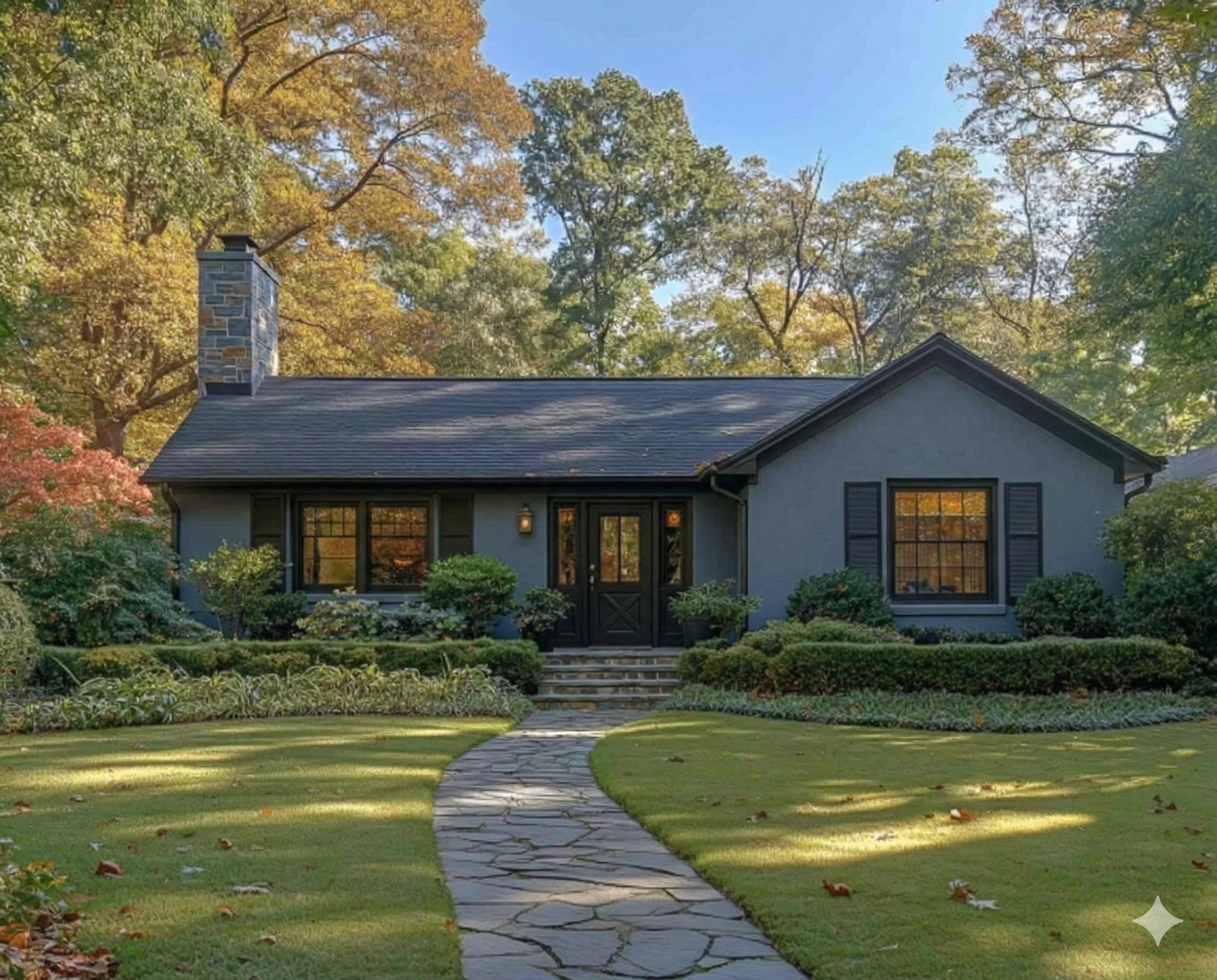
How East Point Compares to Nearby Options
East Point vs. College Park: College Park sits directly adjacent to East Point and also offers airport proximity and MARTA access. College Park has its own distinct historic neighborhoods (Historic College Park is beautiful and has strong architectural character) and Woodward Academy at its center. Prices in College Park's desirable areas have risen more steeply than East Point in recent years, narrowing the gap. Both are strong; East Point offers more raw inventory diversity.
East Point vs. Hapeville: Hapeville is the smallest of the airport-corridor cities and has done real work on its downtown revitalization, with a tight-knit community feel and some of the area's better dining options. Hapeville homes trade at prices comparable to or slightly above East Point in the most renovated inventory. The cities are complementary; buyers who don't find what they want in one often find it in the other.
East Point vs. Mableton / Smyrna (southwest corridor): Mableton and Smyrna offer larger homes and more suburban character, but you lose MARTA rail access and gain commute distance. East Point wins on transit connectivity and proximity to intown Atlanta. Smyrna wins on new construction density and some retail amenities.
East Point vs. Southeast Atlanta (East Atlanta Village, Ormewood Park): EAV and Ormewood Park carry an intown premium that puts comparable product at $150,000–$200,000 more than East Point across most price bands. East Point buyers are making an explicit tradeoff: accepting less commercial activation and lower school ratings in exchange for significantly lower acquisition costs and comparable or better transit access.
Practical Details
City: City of East Point (independent municipality)
County: Fulton County
ZIP codes: 30344 (primarily), portions of 30349
Population: approximately 38,358 (2020 census)
Schools: Fulton County Schools (A district rating on Niche); verify specific assignment for any address directly with Fulton County Schools
High school: Tri-Cities High School (most addresses); Westlake High School (some addresses)
Private option: Woodward Academy (College Park, immediately adjacent), 7:1 student-teacher ratio
MARTA: East Point Station (Red/Gold Lines); Lakewood/Fort McPherson Station (northern corridor); multiple bus routes throughout city
Drive to downtown Atlanta: 15–20 minutes
Drive to airport: 10 minutes
Drive to Midtown: 20–25 minutes
Highway access: I-285, I-85, I-75
Key employers nearby: Hartsfield-Jackson Atlanta International Airport (63,000+ employees), Tyler Perry Studios (500+ direct employees), Delta Air Lines regional facilities
Dick Lane Velodrome: 1640 Sumner Road SW, East Point. One of only 21–22 track cycling facilities in the country. Youth Cycling League, free youth summer programming. Contact East Point Velodrome Association for current schedule.
Sumner Park: 1640 Sumner Road SW. Tennis courts, dog park, 1.5-mile trail to downtown, adjacent to Conley Hills neighborhood.
Camp Creek Marketplace: 3660 Camp Creek Pkwy SW. 309,000 sq ft, 39 stores, 14 restaurants. Primary commercial anchor for everyday needs.
East Point Commons: Downtown East Point, seasonal farmers market, community events, civic programming.
Crime: East Point Police Department reported a 19% decrease in reported crime between 2023 and 2024. Theft represented 59% of all reported crimes in 2024. As with any city, specific blocks and corridors vary; buyers should research specific addresses and visit at different times before purchasing.
Ready to Look at East Point?
This is a neighborhood I know differently than any other in my series — not just professionally, but personally. I grew up here. I've watched this city navigate decades of being underestimated and overlook while Atlanta got the attention, the investment, and the headlines. What I know from the ground level is that East Point has always had the bones. What's changing now is that more people are starting to see it.
If you're a first-time buyer being priced out of the neighborhoods you originally targeted, if you're an investor looking for a market with genuine value-add upside, or if you're a relocation buyer trying to understand what this part of the metro area actually offers — let's talk. I can show you East Point in a way nobody else can.
📞 [Your phone number] 📧 [Your email] 🌐 kristenjohnsonrealestate.com
Come as you are, come on home.
Related Neighborhood Guides:
Frequently Asked Questions About East Point, Georgia
Is East Point part of Atlanta? No. East Point is an independent city in Fulton County with its own city government, police department, parks system, and municipal services. It borders the City of Atlanta to the southwest and sits approximately seven miles from downtown Atlanta. The distinction matters — East Point residents pay East Point city taxes and vote in East Point city elections, not Atlanta's.
What are home prices in East Point, Georgia? As of 2025, East Point median sold prices range from approximately $225,000–$266,000 depending on the data source and time period, with active list prices typically higher at around $299,000. Move-in ready renovated homes in the most sought-after sub-neighborhoods like Jefferson Park and Conley Hills sell toward the top of the range. Entry-level fixer opportunities begin in the $150,000s. Verify current conditions with an agent using active comparable sales.
Is East Point safe? East Point Police Department reported a 19% decrease in reported crime between 2023 and 2024, with theft accounting for the majority of reported incidents. As with any city, safety conditions vary by specific street and corridor. Buyers should research specific addresses, visit at different times, and discuss neighborhood context with a local agent who knows the city well.
How far is East Point from the airport? Hartsfield-Jackson Atlanta International Airport is approximately four miles south of East Point — about a 10-minute drive. East Point MARTA station provides direct rail service to the airport in approximately 8–12 minutes.
What is the Dick Lane Velodrome? The Dick Lane Velodrome in Sumner Park is a 1/5-mile indoor bicycle racing track built in 1974 — one of only 21–22 such facilities in the entire United States and the only velodrome in Georgia. Olympic cyclists trained here for the 1996 Atlanta Games. The East Point Velodrome Association operates youth cycling programs and a Youth Cycling League with free activities for local children.
What is Tyler Perry Studios and why does it matter for East Point real estate? Tyler Perry Studios is a 330-acre film and television production facility on the former Fort McPherson Army base, opened in 2019 and widely considered one of the largest studios in the country. It employs over 500 people directly and has brought production industry workers, investor attention, and development pipeline activity to the East Point corridor. As of mid-2025, Perry's team filed for review of a proposed 1.3 million square foot mixed-use entertainment district adjacent to the existing studio, with a projected completion date of January 2028.