

Best Dog-Friendly Neighborhoods in Atlanta: Dog Parks, Trails & What Homes Cost in 2026
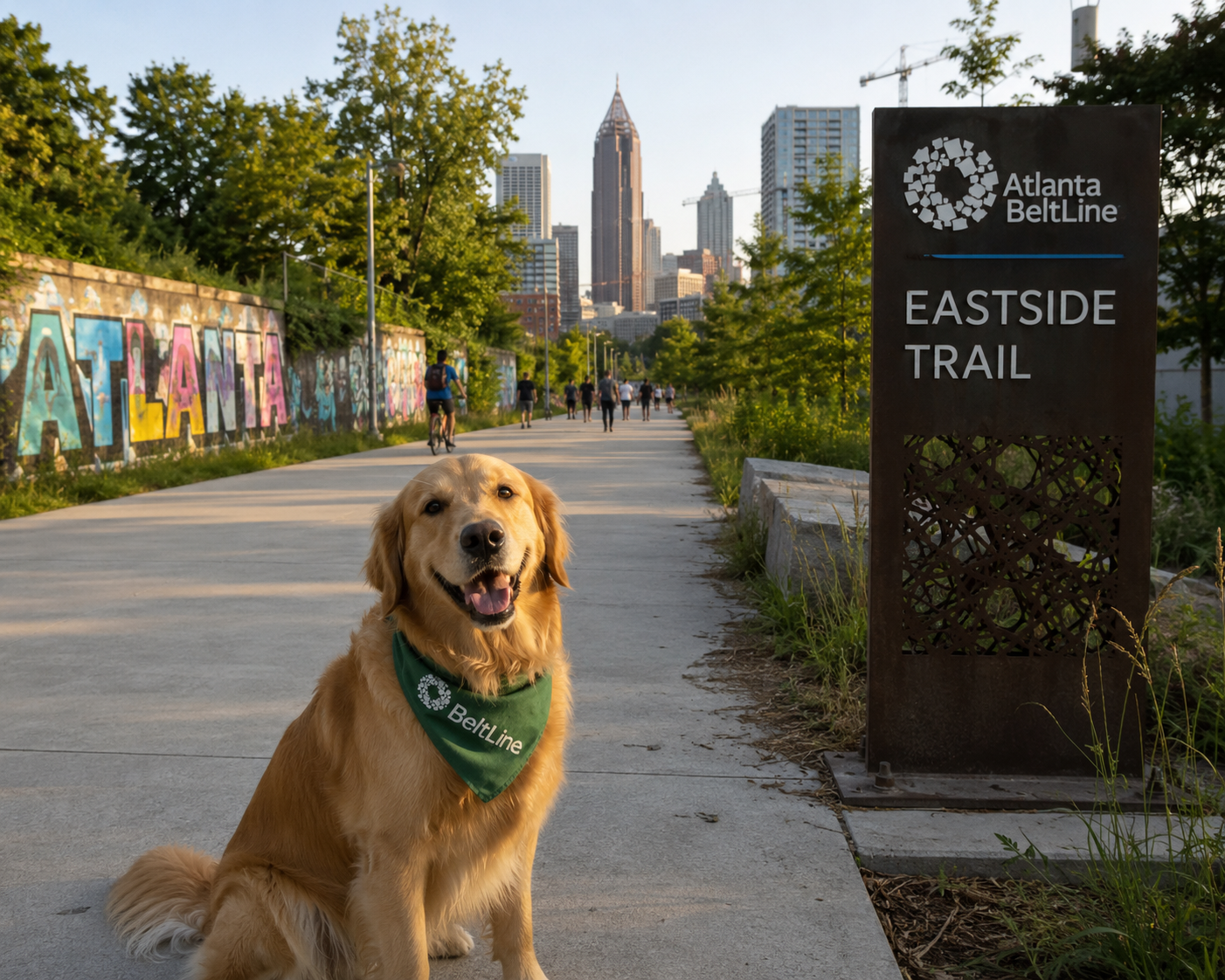
If you have a dog and you are buying in Atlanta, the neighborhoods that make daily life with a pet easiest are Old Fourth Ward, Grant Park, Kirkwood, Candler Park and Lake Claire, Reynoldstown, the Oakhurst section of Decatur, Brookhaven, Smyrna, and West End. Each one gives you some combination of an off-leash dog park, a real trail or greenway for walks, sidewalks that actually connect, and patios where your dog is welcome to come along.
Here is the part most online lists get wrong. They rank neighborhoods on the number of dog parks and stop there. A single off-leash park does not make a place work for a dog owner. What matters is the daily picture: can you walk out your front door and get a real walk in without driving, is there shade and water on the route, are the breweries and coffee shops within range going to wave you onto the patio, and does the house itself give your dog a yard or quick access to green space. Those are the things you live with every morning at 6 a.m. and every evening after work.
I work with buyers across Metro Atlanta, and I have three dogs of my own, so I am always reading a neighborhood for whether it is naturally easy on a dog before I ever think about it as an agent. Dog owners are one of the groups most likely to fall in love with a house and forget to test the block. A gorgeous renovation on a street with no sidewalks and a 40-foot setback to four lanes of traffic is a harder life with a dog than a smaller home two streets over with a flat sidewalk to a park. I will tell you which neighborhoods give you the easiest version of dog ownership, what homes cost in each one right now, and how to pressure-test a specific street before you write an offer.
A note on the numbers: every price below reflects mid-2026 data from public sources, and Atlanta neighborhood medians swing month to month because so few homes sell in any given pocket. Treat these as ranges, not quotes. Reach out for a current pull on the exact streets you are considering.
Here's what you need to know.
What Actually Makes a Neighborhood Dog-Friendly?
Before the list, here is the framework I use, because it will help you evaluate any neighborhood, including ones I do not cover here. It is also, more or less, the same checklist I run in my own head every time I am out walking my three dogs and notice a neighborhood that just works for them.
Off-leash access. A fenced dog park with separate large-dog and small-dog sides, water, and shade. Atlanta has good ones, but proximity matters more than prestige. The best dog park in the city does you little good if it is a 25-minute drive.
A real walking route. Sidewalks that connect, or a multi-use trail you can reach on foot. This is the single most underrated factor. The Atlanta BeltLine, the Silver Comet Trail, and the PATH Foundation trails (a network of paved off-street paths across the region) are the backbone of dog-friendly Atlanta because they give you flat, continuous, traffic-separated miles.
Dog-welcoming businesses. Patios, breweries, and coffee shops that put out water bowls and do not blink when you walk up with a leash. Atlanta is generous here, especially intown and along the BeltLine.
The home and the lot. Fenced yards, manageable lot grades, and quick green-space access. A townhome with no yard can still work beautifully if it is steps from a trail. A house with a big sloped lot and no fence may not.
Veterinary and pet services. General vets, an emergency clinic within reasonable distance, groomers, and daycare. These exist almost everywhere intown and in the established suburbs, so this rarely breaks a decision, but it is worth confirming for your specific area.
None of these factors involve who lives in a neighborhood. They are all things you can verify by standing on the street and looking. That is exactly how you should evaluate a dog-friendly area, and it is how I have framed every neighborhood below.
Old Fourth Ward: The Most Dog-Saturated Neighborhood Intown
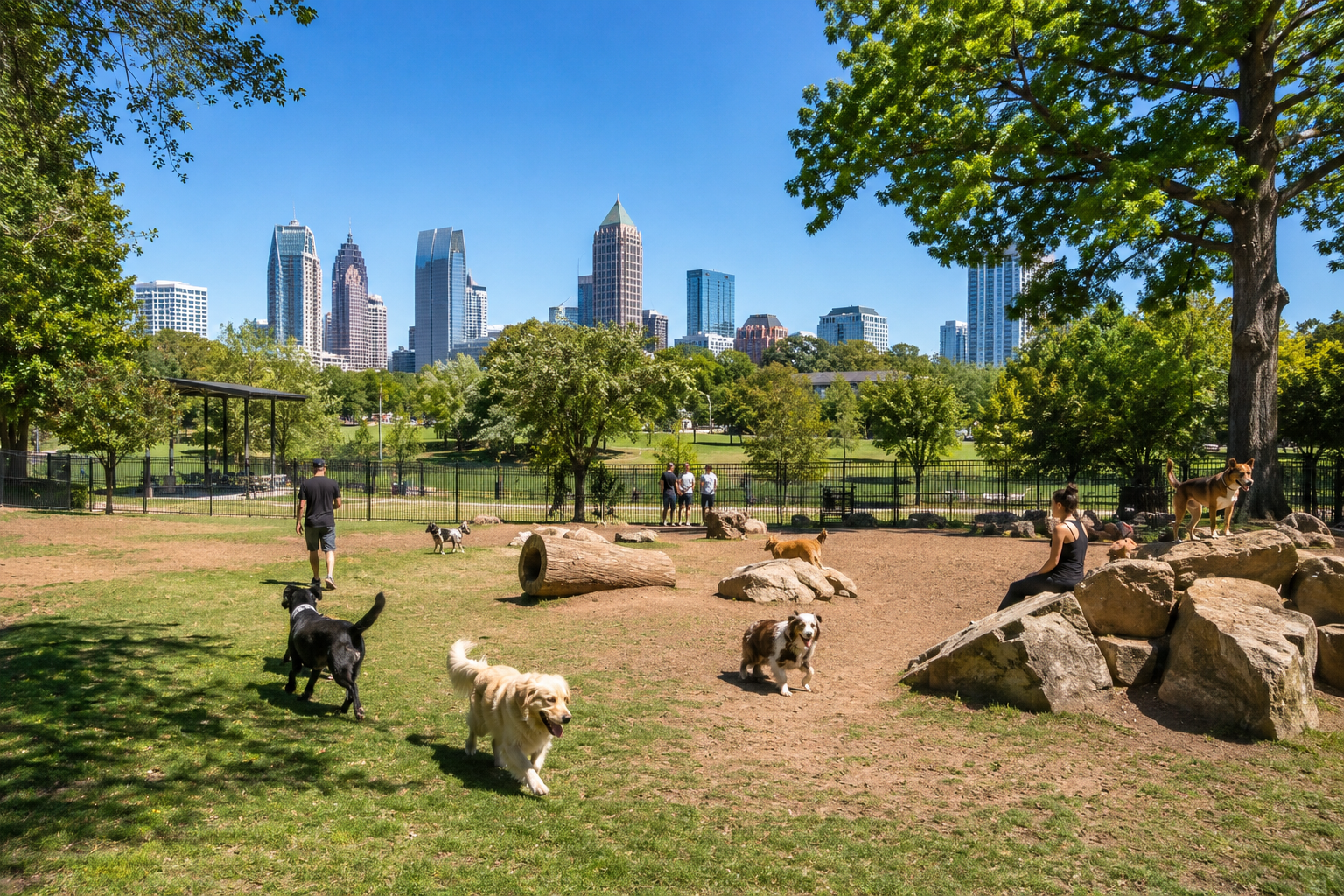
If I had to name one Atlanta neighborhood built around dogs without trying to be, it is Old Fourth Ward. The infrastructure is unusually dense.
Start with Freedom Barkway, a community-run off-leash park of roughly two acres just off Freedom Parkway near the Martin Luther King Jr. National Historical Park. It has separate areas for dogs over and under 20 pounds, shade trees, benches, a dog wash, and an active volunteer community that runs cleanup and improvement days. It sits steps from the BeltLine, so you can pair off-leash time with a leashed walk in one trip.
Then there is Fetch Park, which is something different: a full-service dog park bar. You buy a day pass or membership, your dog runs on turf with on-site attendants and cooling stations, and there is a bar built into a converted 1976 Airstream serving beer, wine, and cocktails for the humans. It is a paid facility, dogs need to be current on vaccinations, and it is one of the genuine standouts in the city for socializing a dog while you actually relax.
For walking, Old Fourth Ward has the Eastside Trail of the BeltLine running through it, plus Historic Fourth Ward Park with its open lawns and stormwater pond loop, plus the Freedom Park Trail connecting east toward Candler Park. You can string together miles without repeating yourself. On the business side, Ponce City Market's outdoor areas, Ladybird Grove & Mess Hall right on the Eastside Trail, and the Muchacho coffee patio all welcome leashed dogs.
What homes cost: Old Fourth Ward is condo and townhome heavy, which suits a lot of dog owners fine given the trail access. As of mid-2026, the broader neighborhood median has run in the mid-$400Ks to mid-$500Ks depending on the month and mix, with a Walk Score around 82. Condos and townhomes commonly start in the high $300Ks, renovated and new-build townhomes run into the $600Ks and up, and detached homes and larger BeltLine-adjacent properties reach $1M and beyond. Days on market have stretched into the 70-to-90-day range recently, which means buyers have more room to negotiate than they did two years ago.
Old Fourth Ward is the right call if you want to live a car-light life with a dog and you value off-leash options and trail access over a private yard. Read my full breakdown of the neighborhood here: Old Fourth Ward real estate trends.
Grant Park: A Historic Park, the BeltLine, and Room to Grow
Grant Park is anchored by the city's oldest park, 130-plus acres of mature tree canopy, open meadows, and walking loops that give you a genuine green outlet without leaving the neighborhood. The Southside Trail segment of the BeltLine runs along the edge, adding paved, traffic-separated miles, and Eventide Brewing sits steps off the BeltLine with dog-friendly outdoor seating. On Sundays the Grant Park Farmers Market draws a crowd, dogs included.
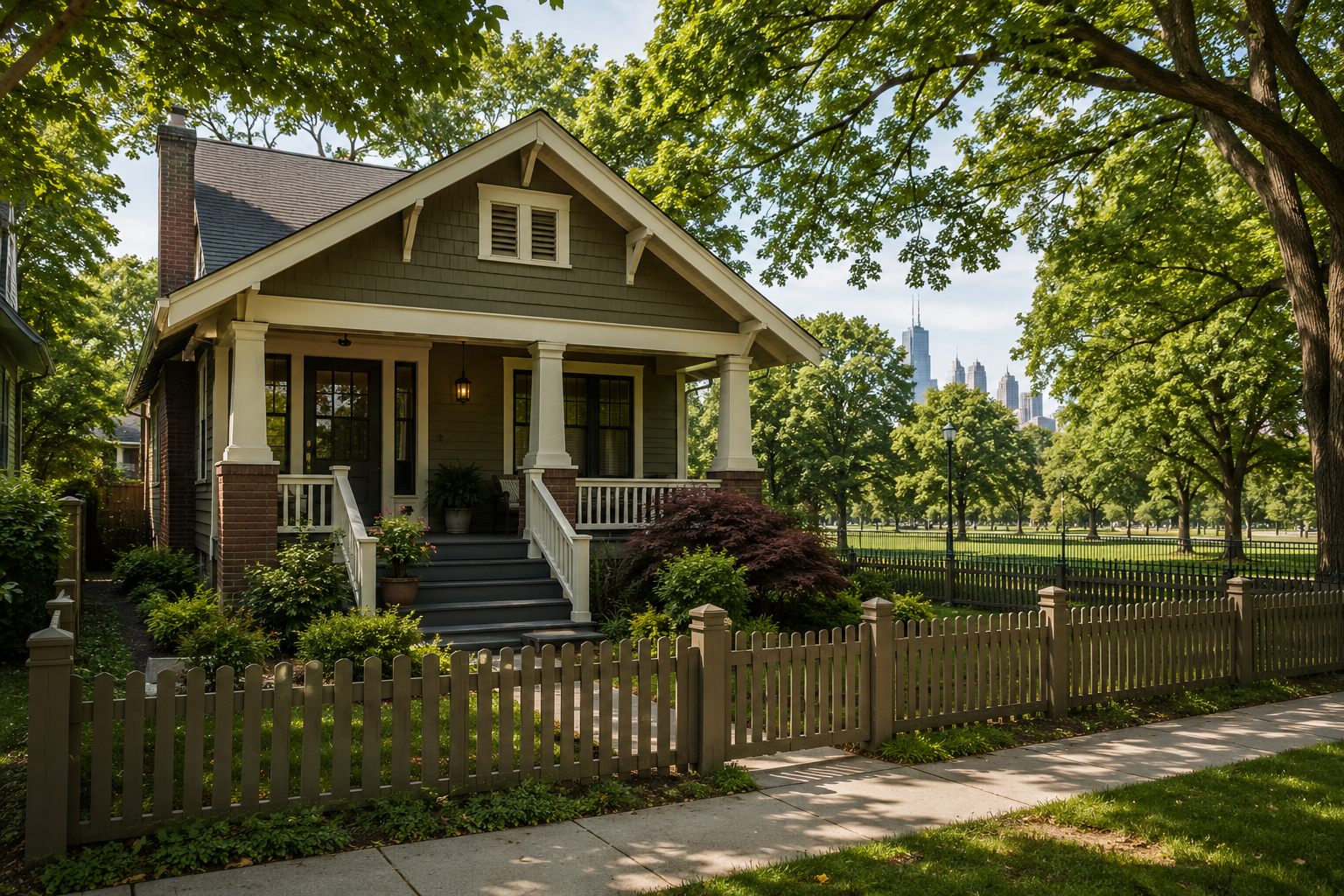
The housing stock leans toward bungalows and renovated historic homes on lots that, by intown standards, give you actual yard. That combination, real green space plus the chance at a fenced yard, is why Grant Park lands so well with dog owners who do not want to give up outdoor space entirely.
What homes cost: Grant Park medians have run in the high $500Ks to around $600K through 2026, with days on market climbing into the 80-to-90-day range in some recent months. That softening is good news if you are buying. You can still find smaller bungalows below the median and larger renovated homes well above it. Here is my deeper look at values: how much is my Grant Park home worth.
Kirkwood: Walkable Streets and a Neighborhood Dog Park
Kirkwood is one of the more genuinely walkable intown neighborhoods, with a connected sidewalk grid, a small main street along Hosea Williams Drive, and the Kirkwood dog park at Bessie Branham Park giving you a local off-leash option you can often reach on foot. Pullman Yards on the edge adds an entertainment district, and the Eastside Trolley Trail links the area toward the BeltLine network.
For a dog, the appeal here is the everyday walk. You are not relying on a single destination park. You can do a real loop on flat, sidewalk-connected streets, which is exactly the kind of routine that makes dog ownership easy rather than a daily logistics problem.
What homes cost: Kirkwood medians have hovered around $650K, with price per square foot near the mid-$300s and homes typically going under contract in roughly a month. The stock is largely bungalows and renovated historic homes, many with fenced backyards. Full neighborhood detail here: how much do homes cost in Kirkwood Atlanta.
Candler Park and Lake Claire: The Freedom Park Trail Corridor
I am grouping these two because they share the same dog-walking spine: the Freedom Park Trail, a paved PATH-network route that runs through the area and connects to the BeltLine's Eastside Trail. That gives you continuous off-street walking for miles, which is the thing dog owners end up valuing most.
Candler Park itself has the park of the same name, with open space and a relaxed feel, and Lake Claire sits just east of it as the quieter neighbor. Both are on-leash environments rather than off-leash destinations, so if a fenced dog park is your top priority you will drive a few minutes to Freedom Barkway or Oakhurst. But for daily walking, the connected greenway and the canopy-shaded streets are hard to beat.
What homes cost: Both neighborhoods run higher than the citywide median, with most homes trading in the high $600Ks through the $800Ks depending on size, renovation level, and street, and larger restored homes reaching higher. These are tightly held pockets where inventory is thin, so I would not anchor to a single number. I have full guides for each: living in Candler Park Atlanta and living in Lake Claire Atlanta.
Reynoldstown: BeltLine-Adjacent with a Dog Bar Built In
Reynoldstown earns its place for one specific reason most lists miss: ParkGrounds, a coffee shop and patio with an attached dog area that has been a neighborhood gathering spot for years. Pair that with direct Eastside BeltLine access and a cluster of dog-welcoming spots nearby, including the Muchacho coffee patio and several BeltLine breweries within a short walk, and you get a daily routine that runs on foot.
The neighborhood has changed quickly with new townhome and condo construction alongside renovated historic homes, so the housing mix is broad. For a dog owner, the draw is the same as Old Fourth Ward: trail access and walkability that let you skip the car for most outings, even if the home itself is a townhome without much yard.
What homes cost: Reynoldstown has commonly traded in the $500Ks to low $700Ks through 2026, with newer townhomes and detached renovations at the upper end and condos below. My full neighborhood guide is here: Reynoldstown real estate guide.
Oakhurst in Decatur: A Walkable Village with a Real Dog Park
Oakhurst is a pocket within the City of Decatur, and it is one of the most dog-comfortable places in the metro for a simple reason: it combines an actual walkable village center with the Oakhurst dog park and a sidewalk network that connects homes to shops to green space. Brick Store Pub in downtown Decatur, a short distance away, upgraded its outdoor spaces to include a courtyard beer garden with pet-friendly seating and water bowls, and Wild Heaven's Avondale location nearby offers a large dog-friendly patio on the edge of the area.
One thing I want you to understand, because it trips up out-of-town buyers and even local ones: "Decatur" means two different things. The City of Decatur is a specific municipality with its own city school system, and it commands a real price premium. A huge number of homes with a "Decatur" mailing address sit outside the city limits in unincorporated DeKalb County, with completely different pricing and school zoning. When you see a low "Decatur" median online, you are almost always looking at the broad mailing-address area, not the city. Confirm which one any given home is in before you fall for a number.
What homes cost: Within the City of Decatur, recent three-month medians have run around $700K, with homes selling in roughly a month to six weeks. Oakhurst specifically tends to trade strong because of its walkability and bungalow stock. Mailing-address "Decatur" outside the city runs far lower and far more variable. My full guide explains the distinction in detail: living in Decatur GA, what you need to know before you buy.
Brookhaven: Suburban Space with Two Big Parks
If you want a dog and a yard, Brookhaven is one of the strongest inner-ring options. Blackburn Park sits near the center of the city and includes a dog park, and Murphey Candler Park gives you 135 acres of green space with a lake loop and walking trails. The Dresden Drive corridor and the Town Brookhaven area add patios and dining, and Brookhaven MARTA gives you a rail link if you commute downtown.
For dog owners, the trade is straightforward. You give up the car-light, walk-everywhere intown lifestyle in exchange for lot size and proximity to large parks. Many Brookhaven homes deliver fenced yards with real room, which for an active dog can matter more than trail access.
What homes cost: Brookhaven is one of the pricier inner-ring areas, with city medians running in the high $700Ks through 2026 and the overall range spanning roughly $550K to $1.25M and up. The stock is genuinely eclectic, from 1950s brick ranches to new traditional builds to estate homes in the historic section. Read the full breakdown here: living in Brookhaven Georgia.
Smyrna: The Silver Comet Trail Changes Everything
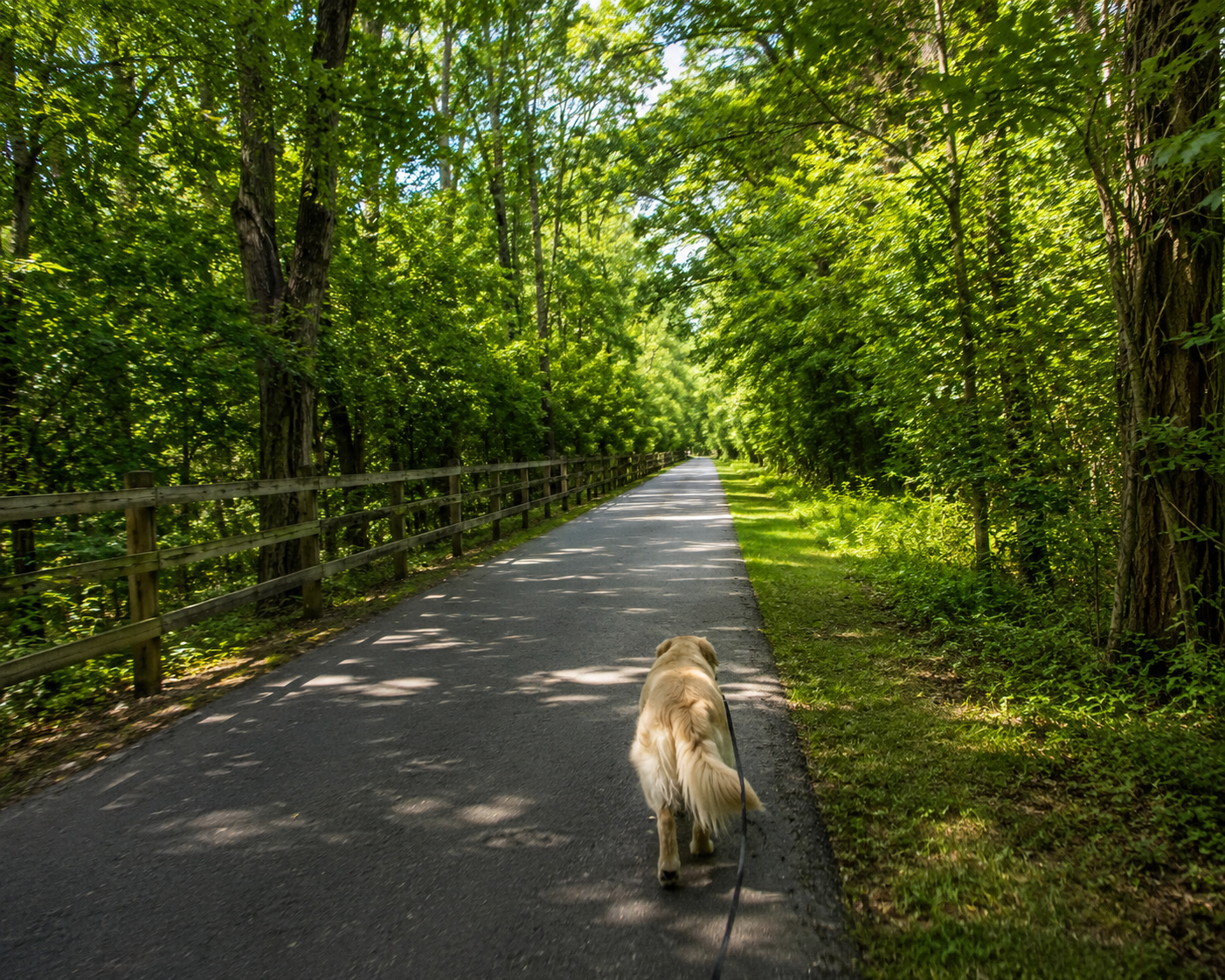
Smyrna's dog-friendly case rests largely on one asset: access to the Silver Comet Trail, a paved rail-trail (a former rail line converted to a multi-use path) that runs continuously for more than 60 miles from the Smyrna and Mableton area toward the Alabama line. For a dog owner, a flat, traffic-free, shaded, continuous trail is close to ideal, and it is the kind of amenity you cannot manufacture. Lake Court Park adds a fenced off-leash dog park, Rev Coffee near the trail serves dog treats and "pupcups" on its umbrella-shaded patio, and StillFire Brewing's Smyrna location welcomes dogs inside and out with a beer garden and rooftop deck.
Smyrna also gives you the suburban lot most intown neighborhoods cannot, so fenced yards are common and you get more square footage and outdoor space per dollar.
What homes cost: Smyrna list medians have run in the mid-$400Ks through 2026, with a typical range from the low $350Ks to around $600K, and inventory has been building, which favors buyers. The mix runs from townhomes near Market Village to single-family homes on full lots. Full neighborhood guide here: living in Smyrna GA.
West End: BeltLine Access at a Lower Entry Price
West End is the most affordable neighborhood on this list, and its dog-friendly credentials are real. The BeltLine's Westside Trail runs through the area, giving you the same paved, traffic-separated walking that makes the east side so livable with a dog. Wild Heaven Beer's West End location sits right on the Westside Trail with a large dog-friendly patio, and Monday Night Brewing's Garage taproom in the historic district welcomes dogs and pours from more than 20 taps.
For buyers priced out of Grant Park or Kirkwood, West End offers BeltLine access and historic housing stock at an entry point well below the east-side intown neighborhoods. The Westside Trail continues to expand its connections, which directly affects how far you can walk your dog without crossing traffic.
What homes cost: West End remains one of the more accessible intown options, with renovated homes commonly trading from the $300Ks into the $400Ks and up, and unrenovated historic homes below that. It is a neighborhood where the specific block and the renovation level drive price more than the neighborhood median does. Full guide here: living in West End Atlanta GA.
Quick Comparison: Dog-Friendly Atlanta Neighborhoods in 2026
Here is the at-a-glance version. Prices are mid-2026 ranges and move with the market, so confirm current numbers before you make a decision.
| Neighborhood | Area / County | Signature Dog Amenity | Typical Price Range (2026) |
|---|---|---|---|
| Old Fourth Ward | Intown / Fulton | Freedom Barkway, Fetch Park, BeltLine Eastside | High $300Ks to $1M+ |
| Grant Park | Intown / Fulton | Grant Park green space, BeltLine Southside | High $500Ks to $600K+ |
| Kirkwood | Intown / DeKalb | Bessie Branham dog park, walkable grid | Around $650K |
| Candler Park / Lake Claire | Intown / DeKalb | Freedom Park Trail, PATH connections | High $600Ks to $800Ks+ |
| Reynoldstown | Intown / Fulton | ParkGrounds dog patio, BeltLine Eastside | $500Ks to low $700Ks |
| Oakhurst (Decatur) | City of Decatur / DeKalb | Oakhurst dog park, walkable village | City of Decatur around $700K |
| Brookhaven | Inner-ring / DeKalb | Blackburn Park dog park, Murphey Candler | $550K to $1.25M+ |
| Smyrna | Suburban / Cobb | Silver Comet Trail, Lake Court dog park | Low $350Ks to $600K |
| West End | Intown / Fulton | BeltLine Westside Trail, dog-friendly breweries | $300Ks to $400Ks+ |
How Do I Tell If a Specific Block Works for My Dog?
The neighborhood is the starting point. The block and the house are what you actually live with. Here is how I have buyers test a property before they commit, and it is the same thing I do with my own three dogs in tow when I am scouting an area.
Walk the route you would walk every day, on foot, at the time you would actually walk it. A street that feels fine at 2 p.m. on a Saturday can be a different experience at 7 a.m. on a weekday when commuter traffic is moving. Look for continuous sidewalks, not sidewalks that end mid-block and force you into the street. Note the shade, because Atlanta summers are real and hot pavement burns paws.
Check the distance to the nearest green outlet. Pace it. A dog park that is "close" on a map can be a 20-minute walk across two major roads, which means you will end up driving, which means you will go less often. The neighborhoods that work are the ones where the walk is short enough that you do it without thinking.
Look hard at the lot and the fence. Is there a fence already, and does it actually contain a dog, or is it decorative? If there is no fence, can you add one, and what will the HOA or the historic district allow? On sloped intown lots, a "backyard" can be a steep drop that is not usable. Stand in it.
Map the noise and the hazards. Backing to a busy road, a rail line, or the BeltLine itself can mean more stimulation than a reactive dog can handle. Some dogs love a busy BeltLine-adjacent home. Others would be calmer two streets in.
HOAs, Breed Rules, and Rentals: The Fine Print
Three things catch dog owners off guard, and all three are worth checking before you write an offer.
Condo and townhome HOAs frequently set rules on the number, size, or breed of dogs, and on where dogs can relieve themselves on common property. Even in an area full of dog parks, you can buy into a building where your specific dog does not qualify. Get the HOA documents and read the pet section before you are emotionally committed.
Historic districts, which cover parts of several neighborhoods on this list, can restrict fencing. If a fenced yard is essential for your dog, confirm what is allowed at that address rather than assuming.
If you plan to rent the home out later or buy it partly as an investment, pet policy affects your tenant pool and your insurance. Some homeowner insurance policies have breed restrictions of their own. None of this is a reason to avoid a neighborhood. It is a reason to do the homework on the specific property.
How I Help Dog Owners Buy
The neighborhoods on this list are the easy starting points, but the right answer depends on your dog, your commute, and your budget. A high-energy dog that needs a yard points toward Brookhaven or Smyrna. A buyer who wants to walk everywhere and socialize a dog points toward Old Fourth Ward or Reynoldstown. A buyer balancing price against trail access might land in West End or Grant Park.
What I do is help you match the home to the life you actually live, then pressure-test the block before you commit so you are not surprised after closing. I will pull current numbers on the exact streets you are weighing, walk the routes with you if that helps, and tell you honestly when a beautiful house sits on a block that will make daily life with a dog harder than it needs to be.
Frequently Asked Questions
What is the most dog-friendly neighborhood in Atlanta?
For sheer density of dog infrastructure, Old Fourth Ward is hard to beat. It has Freedom Barkway, the Fetch Park dog bar, Historic Fourth Ward Park, direct BeltLine Eastside Trail access, and a long list of dog-welcoming patios, all within a walkable area. If you want a yard instead of a car-light lifestyle, Brookhaven and Smyrna are stronger choices because they offer suburban lots near large parks.
Which Atlanta neighborhood has the best dog park?
Piedmont Park Dog Park in Midtown is the marquee off-leash park, with about three acres, separate large-dog and small-dog sides, agility features, and water stations, though it gets crowded because of its popularity. Freedom Barkway in Old Fourth Ward and the off-leash parks at Blackburn Park in Brookhaven and Oakhurst in Decatur are excellent neighborhood-level options. Fetch Park in Old Fourth Ward is a paid, full-service dog park bar if you want amenities and on-site attendants.
Are there dog-friendly neighborhoods in Atlanta with yards instead of just dog parks?
Yes. Brookhaven and Smyrna give you the best odds of a fenced yard with real space, since both are more suburban with larger lots. Intown, Grant Park and Kirkwood often have fenced backyards on their bungalow lots, though the yards are smaller than what you find in the suburbs. Always confirm the fence and the usable lot grade at the specific property.
How much do homes cost in Atlanta's dog-friendly neighborhoods?
It spans a wide range as of 2026. West End is the most affordable, with renovated homes commonly from the $300Ks. Smyrna runs in the mid-$400Ks. Grant Park sits in the high $500Ks to around $600K, Kirkwood near $650K, and Old Fourth Ward in the mid-$400Ks to mid-$500Ks with a heavy condo and townhome mix. Candler Park, Lake Claire, the City of Decatur, and Brookhaven run higher, generally from the high $600Ks into the $800Ks and beyond. These are mid-2026 ranges and move month to month.
Can I walk my dog on the Atlanta BeltLine?
Yes. The BeltLine is a dog-friendly multi-use trail, and leashed dogs are welcome throughout. The Eastside Trail runs through Old Fourth Ward and Reynoldstown, the Southside Trail edges Grant Park, and the Westside Trail runs through West End. The trail's flat, paved, traffic-separated design is a major reason these neighborhoods work so well for dog owners.
Is Decatur good for dog owners?
The Oakhurst section of the City of Decatur is one of the most dog-comfortable pockets in the metro, combining a walkable village center, the Oakhurst dog park, connected sidewalks, and dog-friendly patios like the Brick Store Pub beer garden nearby. Just be clear on whether a home is in the City of Decatur, which carries a price premium and its own school system, or in the broader unincorporated DeKalb area that shares the "Decatur" mailing address.
What should I look for when buying a home for a dog?
Walk the daily route on foot at the hour you would actually use it, and check for continuous sidewalks and shade. Pace the real distance to the nearest dog park or trail, since "close on a map" often means you will drive instead of walk. Inspect the fence and the usable lot grade. Confirm any HOA pet rules and historic-district fencing restrictions. And consider noise and traffic, especially for a reactive dog.
Do Atlanta breweries and restaurants allow dogs?
Many do, especially intown and along the BeltLine. Dog-welcoming spots include Fetch Park and Ladybird Grove & Mess Hall in Old Fourth Ward, Eventide Brewing near Grant Park, ParkGrounds in Reynoldstown, the Brick Store Pub beer garden in Decatur, Wild Heaven and Monday Night Brewing's Garage in West End, and StillFire Brewing and Rev Coffee in Smyrna. Policies are usually for outdoor patios, so confirm at the specific location.
Which dog-friendly Atlanta neighborhood is best for a first-time buyer on a budget?
West End offers the lowest entry point with genuine dog-friendly infrastructure thanks to the BeltLine Westside Trail and nearby dog-friendly breweries. Smyrna is the strongest budget-conscious suburban option, pairing the Silver Comet Trail with lots and yards that intown neighborhoods cannot match at the price.
Is the Silver Comet Trail good for dogs?
It is one of the best dog-walking assets in the metro. The Silver Comet is a paved rail-trail running continuously for more than 60 miles, which gives you flat, traffic-separated, shaded miles right from the Smyrna and Mableton area. For an active dog, continuous off-street distance like that is difficult to find anywhere else in the region.
The right neighborhood depends on your dog, your commute, and your budget, and the right block within that neighborhood matters just as much. I help you weigh those tradeoffs, pull current numbers on the exact streets you are considering, and walk the routes with you so you know what daily life with a dog will actually feel like before you commit. If you are buying in Metro Atlanta and your dog gets a vote, let's talk.
Visit kristenjohnsonrealestate.com. Come as you are, come on home.
Looking for more Metro Atlanta neighborhood guides? I've covered intown and suburban areas across the metro, including Old Fourth Ward, Kirkwood, and Smyrna. Browse the full guide series at kristenjohnsonrealestate.com.