

Living in Castleberry Hill Atlanta GA: Arts District, Downtown Access & Home Prices 2026
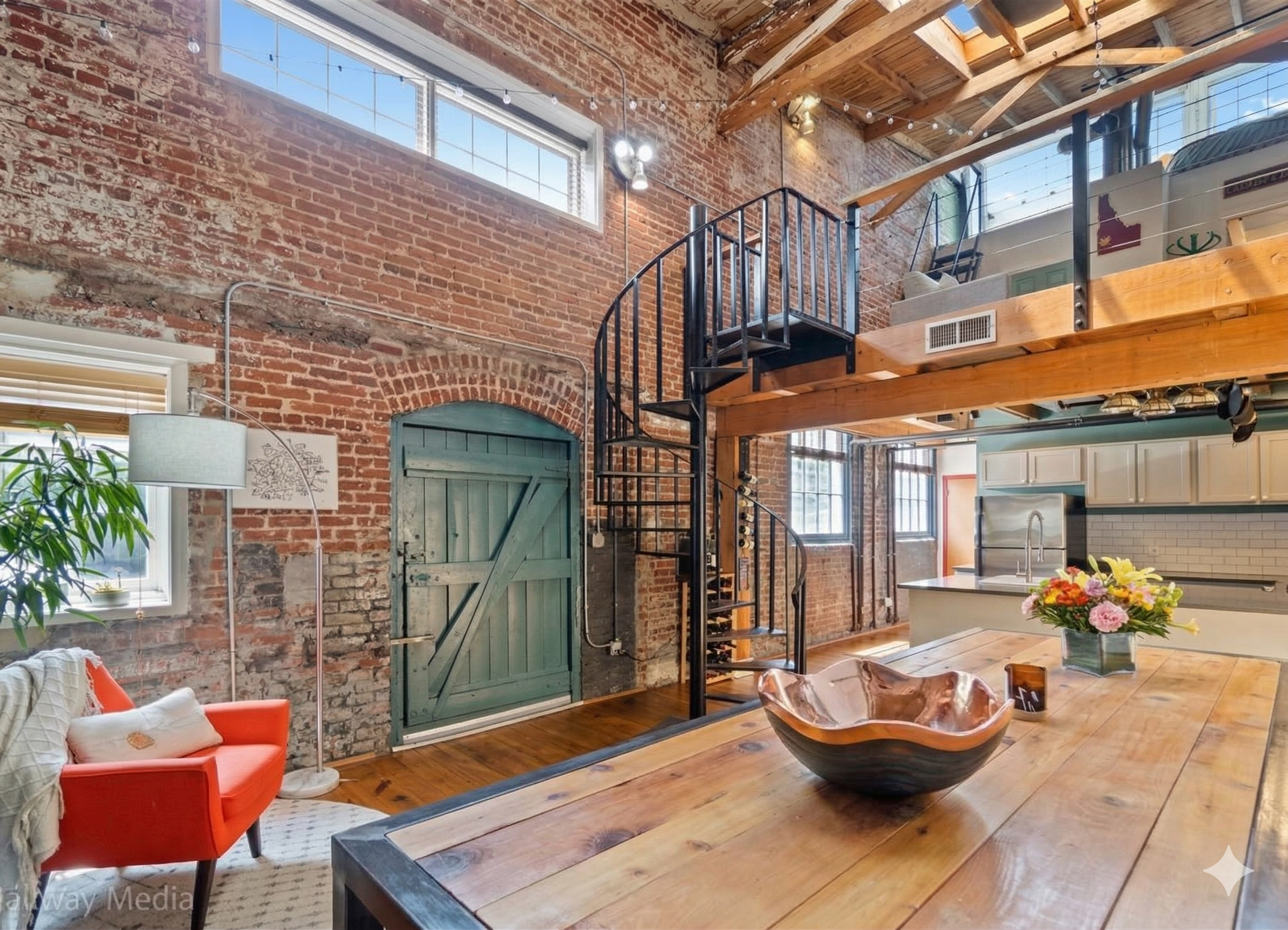
Castleberry Hill sits at Atlanta's front door. From Peters Street, you can see Mercedes-Benz Stadium. From the Nelson Street Bridge, you look directly into the Centennial Yards construction zone, the largest urban redevelopment project in Atlanta's history. The lofts here occupy buildings that were warehouses and factories in the 1800s — exposed brick, heart pine floors, 20-foot ceilings, palladium windows. This neighborhood has a specific, undeniable physical character, and that character is one of the main reasons buyers search for it.
I work with buyers across Metro Atlanta, and I can tell you that Castleberry Hill attracts a particular kind of buyer: someone who knows exactly what they want. They're not searching for Alpharetta or East Cobb. They want to be inside the city, they want walkable access to major venues and downtown, they want real square footage in a converted industrial building, and they want to buy into a neighborhood with a documented creative identity — one that has hosted the Second Friday Art Stroll for more than two decades and holds the annual Loft Tour and Wine Tasting every fall.
Nearly a decade of helping buyers navigate Metro Atlanta means I've also watched Castleberry Hill's investment story evolve in real time. This neighborhood has sat adjacent to Atlanta's downtown core for decades, benefiting unevenly from that proximity. What's different in 2026 is the scale of what's arriving on its doorstep: Centennial Yards, the FIFA World Cup infrastructure, the Hotel Phoenix, Cosm, and a boutique hotel under construction along Elliott Street on the neighborhood's eastern boundary. Whether you're buying to live here or buying because you see what's coming, the context matters and the details matter. I'll give you both.
Here's what you need to know.
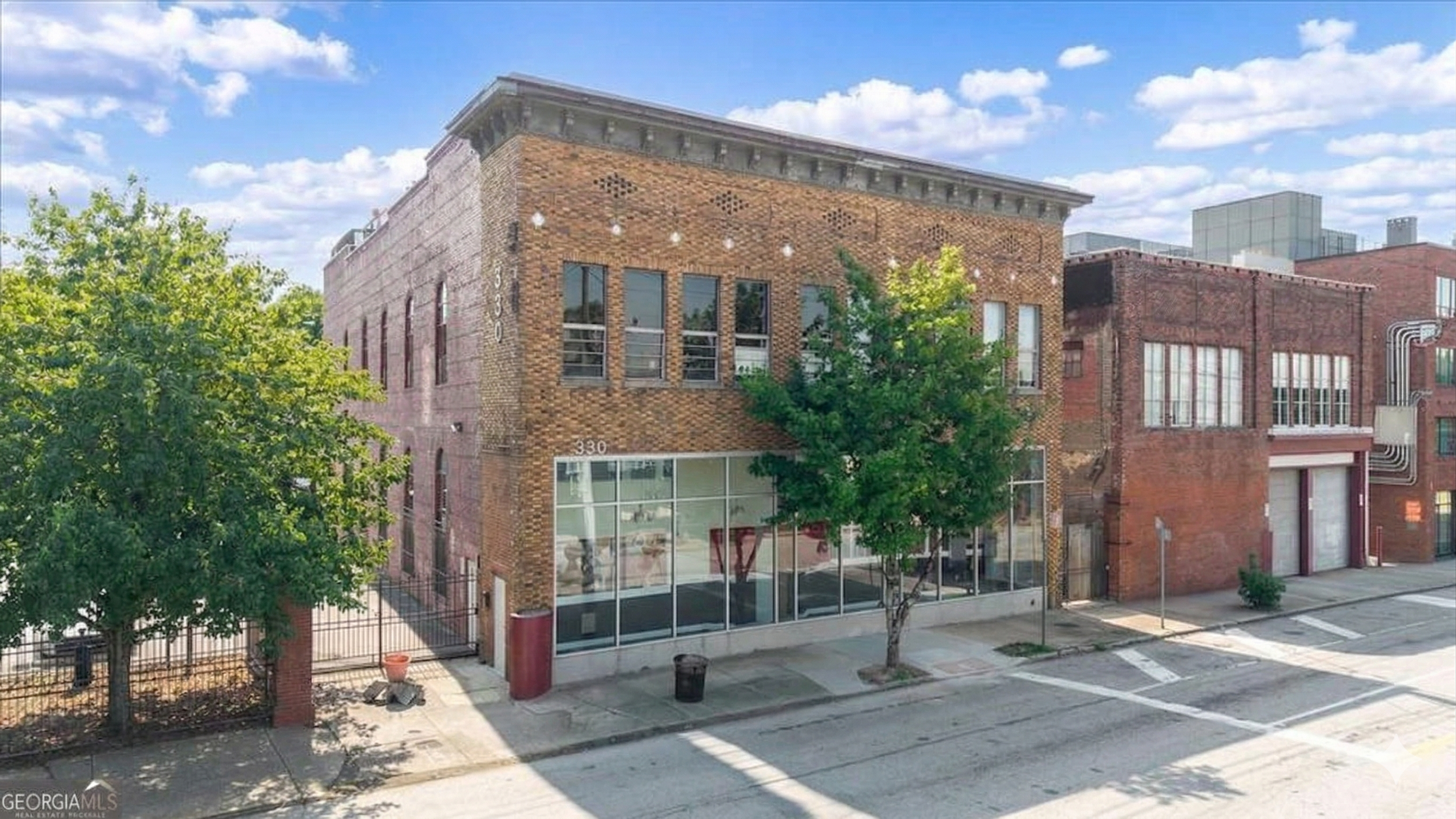
What Is Castleberry Hill and Where Is It?
Castleberry Hill occupies the southwestern edge of Atlanta's downtown core, roughly bordered by I-20 to the south, MLK Jr. Drive to the north, Spring Street to the east, and Murphy Avenue to the west. The neighborhood falls within Atlanta's NPU-M (Neighborhood Planning Unit M) and is part of the City of Atlanta in Fulton County.
The name comes from the hill that peaks along Walker Street between Fair and Stonewall Streets — land originally owned by Daniel Castleberry, an early settler. After the Civil War, the area developed as an industrial corridor: cotton warehousing, terra cotta factories, meat packing plants (Swift and Kingan operated here), and railroad distribution businesses connected to Atlanta's emerging role as a regional rail hub. Peters Street functioned as the main commercial strip, receiving a boost in 1871 when Atlanta's first horse-drawn trolley routed along it.
By the early 20th century, the area was dense with warehouses and manufacturing. By the early 1990s, it had declined significantly, and it was the industrial grit of those years that set the stage for what followed. Artists began moving into the old warehouse buildings in the mid-to-late 1980s, drawn by cheap space, high ceilings, and proximity to downtown. Loft conversions accelerated. By 1992, the neighborhood counted roughly 120 lofts with 150 residents. The 1996 Atlanta Olympics brought another wave of investment.
Today, Castleberry Hill is listed on the National Register of Historic Places and is designated as Atlanta's eighth Landmark District. It is recognized as the most complete surviving warehouse district in the city of Atlanta. The federal historic district designation came in 1985; City of Atlanta Landmark District status followed in 2006. Those designations have real implications for buyers: they protect the neighborhood's architectural character and restrict the kind of demolition and alteration that erases the industrial fabric that makes these properties valuable.
The neighborhood's housing stock is almost entirely lofts and condominiums. You will not find many traditional single-family homes here. What you will find are authentic converted industrial buildings — brick exterior, timber frames, original details — alongside purpose-built condo and loft communities from the early 2000s. The housing is dense and urban. What you trade in yard space, you gain in ceiling height, architectural character, and walkability to some of the highest-traffic entertainment destinations in the Southeast.
The 2026 Context: What Is Happening Right Now
I want to address this directly, because it's central to any honest Castleberry Hill conversation in 2026: the neighborhood is sitting at the edge of an enormous transformation that is actively underway.
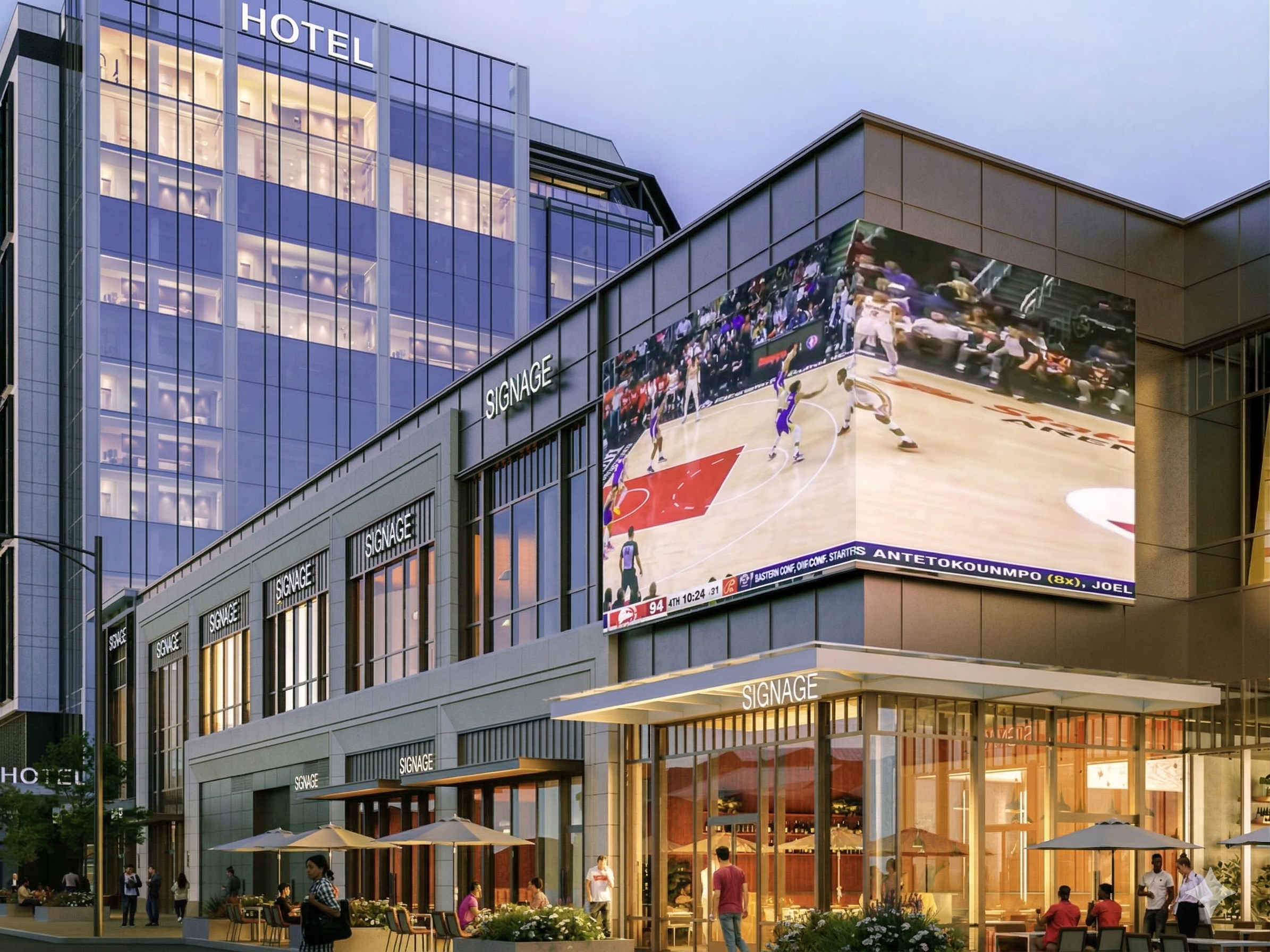
Centennial Yards, the 50-acre redevelopment of the former Gulch railroad depression directly adjacent to Castleberry Hill, represents what project backers describe as one of the largest public-private partnerships in the United States. The $5-billion project, backed by a record $2-billion city tax incentive package, is in active construction across multiple phases. As of early 2026:
The Mitchell, an 18-story, 304-unit luxury apartment tower, is open and accepting residents. Hotel Phoenix, a 292-room, 18-story hotel with 15 suites, a ballroom, and panoramic city views, opened in fall 2025. The 8-acre Centennial Yards Entertainment District, anchored by Cosm Atlanta (a 70,000-square-foot, 87-foot LED dome venue) and a new mid-rise hotel, is targeted to open in time for the eight FIFA World Cup matches Atlanta is hosting, beginning June 2026. A 141-key boutique hotel along Elliott Street, on the western boundary of Centennial Yards directly at the doorstep of Castleberry Hill, is in the permitting and construction pipeline.
When Centennial Yards is fully built out, plans call for over 2,600 residential units (with 20 percent affordable), nearly 3,000 hotel rooms, and more than 900,000 square feet of entertainment and retail space. The Nelson Street Bridge, completed in 2023, provides pedestrian access from Castleberry Hill directly into this development zone.
What this means for a Castleberry Hill buyer: you are buying into a neighborhood that has been, for decades, in the shadow of Mercedes-Benz Stadium and State Farm Arena. You are now also buying within walking distance of one of the most significant urban development projects in Atlanta's modern history, actively under construction, with a World Cup acting as a hard deadline and marketing engine for the entire area.
The short-term rental potential is real and worth examining seriously if that is part of your strategy. The long-term question is what Centennial Yards becomes when the World Cup is over, and that depends on factors outside any individual buyer's control. I will give you the honest version: major urban redevelopment projects in Atlanta have historically taken longer than projected and delivered mixed results for immediately adjacent neighborhoods. Centennial Yards is further along and better capitalized than most. Whether that translates into rising property values in Castleberry Hill over the next five years is a genuine question, not a certainty. What is certain is that the development pressure is real, the construction is happening, and the neighborhood's location is not going to become less convenient.
Castleberry Hill Home Prices in 2026: What the Market Looks Like
Castleberry Hill's real estate market is small, niche, and genuinely different from most Metro Atlanta submarkets. The housing stock is primarily condos and lofts. Inventory is thin. Monthly transaction volume is low — sometimes only a handful of units trading hands in a given month — which means that individual sales can move the reported median significantly up or down.
With those caveats on the table, here is what the data shows heading into 2026:
Median sale prices in Castleberry Hill have ranged across multiple sources from approximately $240,000 on the lower end (Redfin, mid-2025) to $350,000-$395,000 across broader 12-month windows, with NeighborhoodScout reporting a median around $449,000 that likely reflects the inclusion of high-end loft sales in larger units. The variation reflects how small the sample size is and how dramatically a few luxury loft sales in a given month can shift reported medians.
A more useful framework for buyers is thinking about price by unit type:
Studio and one-bedroom lofts: Typically range from the mid-$100,000s to mid-$200,000s. These are the most common entry point and make up the largest share of available inventory. Buildings like Centennial Station, Fair and Walker Lofts, and Century Lofts (the 1920 Chrysler showroom conversion) regularly have one-bedroom units in this range. At the lower end, you are looking at studios and compact one-bedrooms. At the upper end, you are getting true loft character with exposed brick, high ceilings, and city views.
Two-bedroom units: Range from the upper $200,000s to the upper $400,000s. This is where you start to see meaningful variation between buildings. A two-bedroom in a purpose-built condo complex from the early 2000s will be priced differently than a two-bedroom in a historic warehouse conversion with original heart pine floors and 20-foot ceilings.
Larger lofts and multi-level units: The upper end of the Castleberry Hill market can reach $600,000-$800,000 and above for the largest and most distinctive conversions. Multi-level units with 30-foot ceilings and city views, like some of the units in the Peters Street factory conversion, represent Castleberry Hill at its most specific and expensive. These are rare. When they come up, buyers who have been watching the neighborhood show up quickly.
Days on market: Recent data shows Castleberry Hill averaging 49-66 days on market depending on the measurement window, which is slower than intown Atlanta's most active neighborhoods. This is consistent with the niche market dynamic: the buyer pool for a converted industrial loft in downtown Atlanta is smaller than the buyer pool for a traditional single-family home in Kirkwood or East Lake. Buyers who want Castleberry Hill know they want it; buyers who are uncertain typically go elsewhere.
For current, accurate numbers — including what's under contract and what comparable units have closed for in the past 90 days — I can pull that data for you directly. Reach out through kristenjohnsonrealestate.com.
What You Get for the Money in Castleberry Hill
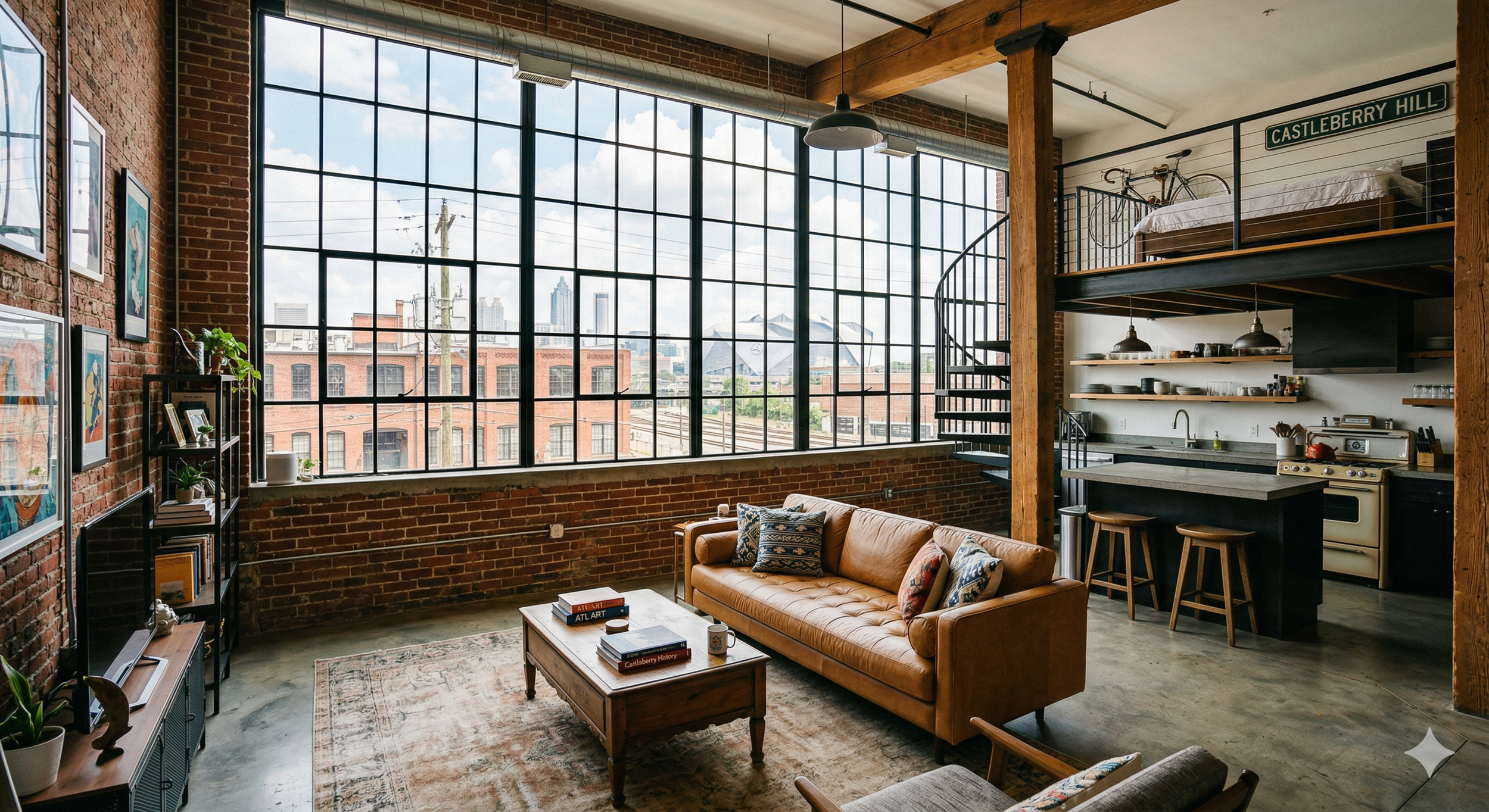
The Castleberry Hill value proposition is specific: architectural character you cannot replicate in new construction, downtown walkability, and comparably lower price points than intown Atlanta neighborhoods that get more search traffic.
Under $250,000: Studio and one-bedroom lofts in buildings like Centennial Station or Century Lofts. You are getting real loft character at this price — exposed brick, concrete floors, factory windows, open floor plans. The tradeoff is size: most of these units are under 800 square feet, some significantly under. If you are a remote worker who spends most of your time in your unit, the square footage matters. If you are someone who is out in the city most of the day and uses home primarily as a base, it matters less.
$250,000-$400,000: The range where you start to access two-bedroom units and larger single-bedroom spaces. Buildings like Duo Condominiums, Castleberry Point, and the machine shop loft conversions along Peters Street and Walker Street fall here. This is also where short-term rental buyers are often looking, given proximity to Mercedes-Benz Stadium and State Farm Arena. A one-bedroom with stadium views and a private balcony in this range is a legitimate investment conversation.
$400,000-$700,000+: The distinctive, larger conversions. Multi-level lofts with mezzanines, units with separate bedrooms carved out of expansive warehouse floor plates, corner units with 360-degree city views. These are not common listings. When they come up, they attract serious buyers who have been watching the neighborhood. The Peters Street factory lofts at the upper end of this range represent what Castleberry Hill is at its most specific: industrial architecture converted into genuinely singular living spaces.
One thing I want buyers to understand about pricing here: price per square foot is often a less useful metric in Castleberry Hill than it is elsewhere. A 900-square-foot loft with 22-foot ceilings, original timber columns, and views of the Atlanta skyline is a different product than a 900-square-foot suburban condo, even if the price-per-square-foot looks similar. You are buying a type of space, not just square footage.
Getting Around: Commute and Transit Access from Castleberry Hill
Castleberry Hill's downtown location gives it genuine transit and highway access that most Metro Atlanta neighborhoods cannot match. Here is the honest version:
Downtown Atlanta: Walking or a very short drive. You are already in the downtown core. Centennial Olympic Park, the surrounding office corridor, and the major downtown institutions are within walking distance. If you work downtown, this is a zero-commute neighborhood.
Midtown: 10-15 minutes off-peak via Spring Street or I-75/I-85 North. During morning rush (7-9 AM), expect 20-30 minutes, sometimes more if there is event traffic. MARTA is a viable and often faster alternative.
Buckhead: 20-30 minutes off-peak. During morning rush, 30-45 minutes by car. MARTA to Buckhead Station is significantly more predictable — take the Red or Gold line from Garnett Station to Buckhead in roughly 25 minutes without the highway variable.
Hartsfield-Jackson Atlanta International Airport: 15-20 minutes off-peak by car via I-85 South or I-285. The MARTA airport connection via the Red and Gold lines from Garnett Station is direct and typically takes 20-30 minutes, making this one of the most airport-convenient neighborhoods in Atlanta for frequent travelers.
Perimeter/Dunwoody: 30-40 minutes off-peak. During peak hours, 45-60 minutes. This is a real commute if you work at Perimeter Center. Most people commuting to Dunwoody daily will find Castleberry Hill viable only if they use MARTA (Garnett to Dunwoody Station) or are comfortable with daily highway time.
MARTA access: Garnett Station on the Red and Gold lines is the nearest rail station, approximately a 10-15 minute walk from much of the neighborhood. Multiple MARTA bus lines serve Peters Street and the surrounding corridors. For a car-optional lifestyle, Castleberry Hill works better than most intown neighborhoods that lack direct rail access.
The honest summary on commute: if you work downtown, Midtown, or in a MARTA-accessible corridor, Castleberry Hill's location is as good as it gets for intown Atlanta. If you work in the northern suburbs and need to commute by car daily, the neighborhood works, but it is not the frictionless reverse commute that Smyrna or Marietta would be.
Things to Do in Castleberry Hill
The neighborhood's identity is anchored in arts and creative community. That is not marketing language — it is observable. Here is what is actually here:
The Second Friday Art Stroll: On the second Friday of every month, galleries and studios across Castleberry Hill open their doors for a free, self-guided evening of art, culture, and community. The stroll has been running for more than two decades and helped establish Castleberry Hill as Atlanta's recognized Historic Arts District. Participating venues rotate each month. Information and maps are updated monthly at castleberryhill.org. This is the best ongoing way for prospective buyers to experience the neighborhood before committing to a purchase.
The Annual Loft Tour and Wine Tasting: Held every fall (scheduled for October 24, 2026), this fundraiser opens private loft residences and artist studios to the public. The 2025 tour raised approximately $15,000 — its largest total to date — and was presented in partnership with Centennial Yards. For buyers considering Castleberry Hill, attending the Loft Tour before purchasing is one of the best ways to see the range of what these spaces actually look and feel like on the inside.
Paschal's: Established in 1947, Paschal's Restaurant served as the unofficial headquarters for civil rights activists in Atlanta during the 1960s, hosting meetings and strategy sessions during a period when that activity carried significant personal risk. Today it continues to serve soul food and craft cocktails and operates as both a dining destination and a historical landmark in the neighborhood.
No Mas! Cantina: An eclectic Mexican restaurant and artisan emporium on Walker Street, No Mas! is one of the neighborhood's longstanding dining institutions. The space incorporates works by Mexican artisans alongside authentic dishes, with a patio that functions as a neighborhood gathering spot.
Bookstore Gallery: A neighborhood anchor for creative community gathering, cannabis wellness, and art events. Bookstore Gallery serves as the 2026 Neighborhood Hospitality Sponsor for the Loft Tour and is a regular presence in the Second Friday Art Stroll.
City Winery Atlanta: Located in Old Fourth Ward, City Winery offers live music, wine production, and a full dining menu. It draws from across Atlanta for its programming and has become part of the broader downtown entertainment circuit.
Castleberry Market: Established to bring locally produced food to southwest and west Atlanta communities, the market operates with a focus on sourcing from Georgia growers and producers and prioritizes serving the unhoused community while providing a platform for local entrepreneurs.
The Urban Regatta: This annual neighborhood festival features a bike-boat street race, an artist market, and a gathering of the businesses and residents who have shaped the district's identity.
Major Venues — Walking Distance: Mercedes-Benz Stadium and State Farm Arena are within easy walking distance. With eight FIFA World Cup matches scheduled at The Benz beginning June 2026, along with Falcons games, Atlanta United matches, Hawks games, and major concerts year-round, the neighborhood's proximity to that level of activity is a specific and ongoing reality of Castleberry Hill life.
Centennial Olympic Park and the downtown museum corridor: The park, the Georgia Aquarium, the National Center for Civil and Human Rights, the World of Coca-Cola, and the Children's Museum of Atlanta are all within roughly a mile. For Castleberry Hill residents, they are walkable.
The neighborhood does not have a grocery store within its immediate boundaries. The Walmart in University Center and the Municipal Market (Sweet Auburn Curb Market) downtown are accessible by foot or short transit. If daily walkable grocery access is a priority, that is a real and practical consideration before buying here.
Schools in Castleberry Hill: Atlanta Public Schools
Castleberry Hill falls within Atlanta Public Schools (APS). School zoning in APS is address-specific and subject to change. Always verify zoning for any specific property at the APS School Zone Locator (maps.apsk12.org) or by contacting APS Student Assignment directly at (404) 802-2233 before making any school-related decisions.
Schools that commonly serve Castleberry Hill addresses include:
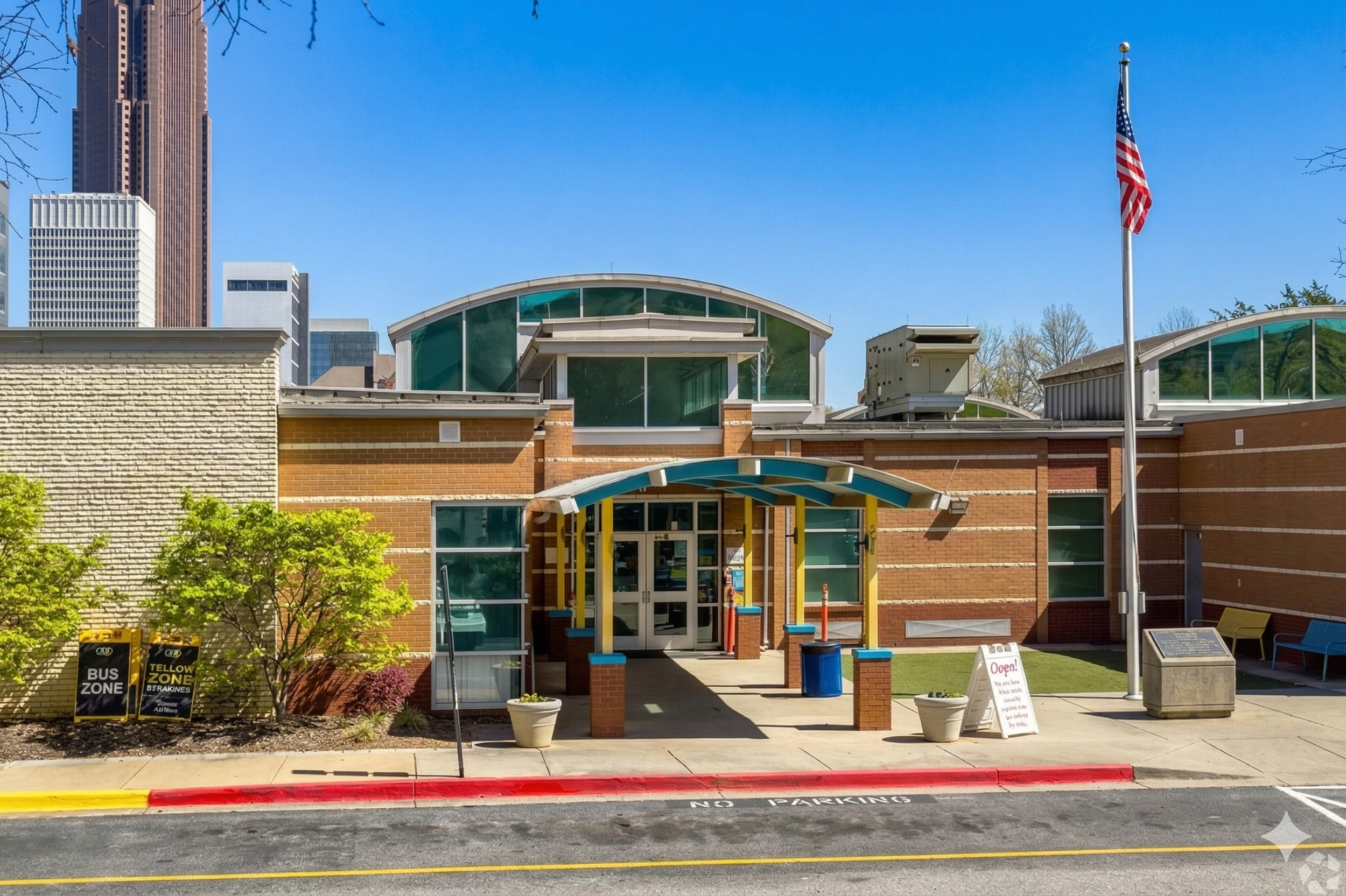
Centennial Place Elementary School (220 Baker Street NW): Operates as a magnet school with a Core Knowledge curriculum. Enrollment is through both zoned and magnet application processes. Recognized for its curriculum and programming within APS.
King Middle School: Serves much of the downtown Atlanta corridor. Student-teacher ratio of 13:1 per available data.
Maynard Holbrook Jackson High School: Commonly serves Castleberry Hill addresses. Student-teacher ratio of 14:1 per available data. Some addresses in the area may zone to Midtown High School depending on specific location.
Atlanta Public Schools also operates one of the most robust magnet and charter option systems of any urban district in the Southeast. Schools including KIPP, Atlanta Classical Academy, and Drew Charter School are available through application processes independent of residential zoning and can expand the educational options available to families living in the downtown corridor significantly.
Research and visit schools to determine fit for your family. Always verify zoning by specific property address before making any real estate decisions based on school attendance zones.
How Castleberry Hill Compares to Nearby Neighborhoods
Castleberry Hill is not for everyone, and it is not trying to be. Here is how it stacks up against the neighborhoods buyers most often compare it to:
Castleberry Hill vs. Old Fourth Ward: Old Fourth Ward is Atlanta's most active intown market — higher prices, more inventory, BeltLine access, a strong restaurant and retail corridor along Ponce City Market and Krog Street Market. OFW buyers are often looking for a mix of nightlife, walkability, and appreciation potential with more varied housing options. Castleberry Hill buyers are looking for more specific architectural character at a lower price point, with a more concentrated arts district identity. OFW has more options and more buyer traffic. Castleberry Hill has more specificity.
Castleberry Hill vs. Summerhill: Summerhill, just southeast of downtown along Georgia Avenue, is in an active development phase with new mixed-use along Georgia Avenue and proximity to Grant Park and Zoo Atlanta. Summerhill buyers are often looking at single-family homes and townhomes rather than lofts. If a yard and traditional homeownership are the goal, Summerhill is the conversation. If authentic industrial loft architecture is the goal, Castleberry Hill has inventory that Summerhill does not.
Castleberry Hill vs. West End/Adair Park: West End and Adair Park offer the Westside BeltLine Trail, historic bungalow stock, and lower overall price points. The architectural character is fundamentally different — Craftsman and Victorian residential versus warehouse industrial — and the amenities are different. West End and Adair Park buyers are often looking for traditional homeownership at accessible price points. Castleberry Hill buyers are looking for urban loft living with direct downtown access.
Castleberry Hill vs. Downtown Atlanta condos: If you are considering downtown condos broadly — glass towers, high-rises in the Central Business District — Castleberry Hill often provides more architectural distinctiveness at comparable or lower price points. The downtown high-rise condo market is a different product: newer construction, glass exterior, amenity packages, standard unit layouts. Castleberry Hill gives you brick and timber. The choice comes down to what type of space you are actually looking for.
Castleberry Hill vs. Midtown: Midtown condos tend to be higher-priced, newer, and more amenity-focused. Castleberry Hill offers entry-level loft ownership significantly below Midtown's median, in a neighborhood with a more defined cultural identity and a direct transit connection via Garnett Station.
For posts on many of these neighborhoods, browse the full guide series at kristenjohnsonrealestate.com.
Streets, Buildings, and Loft Communities in Castleberry Hill
The neighborhood is compact, but understanding the specific buildings matters because they vary significantly in character, HOA structure, price, and what ownership actually looks and feels like.
Peters Street: The main commercial and residential corridor of the historic district. Castleberry Hill's identity as an arts district is most concentrated along and around Peters Street. The Peters Street factory conversion contains multi-level units with 30-foot ceilings, corner exposure, and original industrial details — some of the highest prices in the neighborhood. Peters Street Station hosts many of the neighborhood's events and art shows.
Walker Street: One of the neighborhood's residential anchors, running through the topographic heart of the original hill. Historic brick buildings, No Mas! Cantina, and several of the smaller loft conversions. Quieter and more residential than Peters Street.
Elliott Street and the Nelson Street Bridge area: The southeastern boundary where the neighborhood meets the Centennial Yards development zone. The Nelson Street Bridge provides pedestrian and bike access directly into the project. Elliott Street is where the planned 141-key Centennial Yards boutique hotel is in development. This corridor will see the most visible change in the neighborhood over the next two to three years.
Centennial Station: A purpose-built condo community offering one and two-bedroom units with city views, pool, and fitness amenities. More conventionally finished than the historic warehouse conversions. Represents some of the most accessible price-point ownership in the neighborhood.
Century Lofts (former 1920 Chrysler showroom): No two units are alike. Polished concrete floors, original brickwork, curved architectural walls, oversized factory-style windows. You are purchasing a specific unit with specific features, not a unit type.
Duo Condominiums: Located near Mercedes-Benz Stadium. One and two-bedroom units with strong venue proximity. A draw for buyers who prioritize event access and short-term rental potential.
Machine Shop Lofts and similar warehouse conversions: Several buildings along the historic warehouse district with soaring ceilings, exposed structural systems, and large windows. HOA fees, condition of common areas, and building maintenance history vary. The specific building's financial and physical health matters as much as the unit itself.
Fair and Walker Lofts: An established loft community with one-bedroom units featuring hardwood floors, open-concept design, and granite finishes. A more finished product than some of the rawer warehouse conversions.
Castleberry Point: A larger condo development with a mix of unit types and price points. Popular with buyers looking for more conventional finishes in an arts district location.
A note on HOAs in Castleberry Hill: virtually all ownership here is condo or loft with HOA structure. HOA fees vary significantly across buildings. Some buildings maintain exterior reserves well; others carry deferred maintenance that a buyer's inspection and HOA financial review will surface. I always recommend a full HOA document review — financials, reserve study, meeting minutes — before waiving due diligence in any Castleberry Hill purchase. The building's condition and financial health is part of what you are buying.
Who Is Castleberry Hill Right For?
Castleberry Hill tends to be the right fit when:
You want to own urban real estate with genuine architectural character — authentic warehouse lofts, exposed brick, timber columns, original industrial details — rather than a conventional condo or townhome. The character here is not replicated anywhere else in Atlanta at this price point.
You work downtown, in Midtown, or in a MARTA-accessible corridor and want a car-optional or low-car lifestyle. The transit access, walkability to major venues, and downtown proximity make Castleberry Hill one of the most functionally convenient neighborhoods in Atlanta for certain professional profiles.
You are drawn to a neighborhood with a documented, ongoing arts identity. The Second Friday Art Stroll, the Loft Tour, and the gallery and studio concentration here have been real and ongoing for more than two decades.
You see the Centennial Yards development as a credible investment thesis and want to position in a walkable adjacent neighborhood before the full buildout materializes.
You want short-term rental income potential. Proximity to Mercedes-Benz Stadium, State Farm Arena, and the FIFA World Cup venues creates specific and documentable demand. Consult with a local attorney on current City of Atlanta short-term rental regulations and review HOA documents before building this into your underwriting — some buildings restrict short-term rentals in their governing documents.
Think carefully about Castleberry Hill if:
You need a yard, a garage, or a traditional single-family home footprint. Those do not exist here in any meaningful way.
Walkable grocery access is a non-negotiable in your daily routine. The neighborhood does not have an immediate grocery solution within its boundaries.
You are buying primarily because of the development story and have a short investment timeline. Urban redevelopment takes time, and major projects in Atlanta have historically delivered on timelines longer than initially projected. If you need the Centennial Yards thesis to play out in 18 months to validate your purchase, that is real underwriting risk.
You are not comfortable with the specific realities of condo and loft ownership in historic buildings: HOA fees, the possibility of special assessments, shared building systems, and the due diligence requirements of buying in an older converted structure where the building itself is part of the value proposition.
School zoning is your primary decision driver. The APS schools serving this area require independent, current research and site visits to evaluate their fit for your family specifically.
FAQ: Living in Castleberry Hill Atlanta
What is the median home price in Castleberry Hill in 2026?
The Castleberry Hill market is small enough that the median can shift significantly based on a handful of transactions. Across data sources and recent sales windows, prices range from roughly $240,000-$395,000 depending on the source and measurement period. Entry-level studio and one-bedroom lofts typically start in the mid-$100,000s to mid-$200,000s. Two-bedroom units run from the upper $200,000s to the upper $400,000s. Larger, distinctive multi-level warehouse lofts with significant architectural features can reach $600,000-$800,000 and above. For current comparable sales and active listings, reach out through kristenjohnsonrealestate.com.
What kind of homes are available in Castleberry Hill?
Almost entirely condos and lofts. The neighborhood's housing stock reflects its origins as an industrial district: converted warehouses, factory buildings, and purpose-built condo communities from the early 2000s. You will not find traditional single-family homes or townhomes with yards here. What you will find is some of the most architecturally distinctive urban residential space in Atlanta — exposed brick, 15-30-foot ceilings, original heart pine and concrete floors, oversized factory windows. If that is what you are looking for, Castleberry Hill has few competitors in Atlanta at the price points it offers.
Is Castleberry Hill a good investment in 2026?
That depends on your investment thesis and timeline. The case for investment is grounded in real factors: the neighborhood's proximity to Centennial Yards and its $5-billion buildout, the FIFA World Cup driving major infrastructure spending and visitor traffic to the immediate area, the short-term rental demand generated by Mercedes-Benz Stadium and State Farm Arena, and price points that are still below comparable intown Atlanta markets. The honest counterpoint is that urban redevelopment takes time, and the market in Castleberry Hill has not moved as dramatically as some early boosters projected over the past decade. The arrival of Hotel Phoenix, The Mitchell, and the Centennial Yards Entertainment District represents more tangible, active development than the neighborhood has seen before. Whether that translates to sustained appreciation is a question worth asking with clear eyes.
How close is Castleberry Hill to Centennial Yards and Mercedes-Benz Stadium?
Castleberry Hill is directly adjacent to both. Mercedes-Benz Stadium is visible from Peters Street. The Nelson Street Bridge connects the neighborhood directly to the Centennial Yards development zone on foot. State Farm Arena is similarly walkable. For eight FIFA World Cup matches scheduled in Atlanta beginning June 2026, along with Falcons games, Atlanta United matches, Hawks games, and major concerts, Castleberry Hill residents walk to the venue.
What is the Second Friday Art Stroll?
On the second Friday of every month, Castleberry Hill's galleries, studios, creative spaces, restaurants, and businesses open their doors for a free, self-guided evening of art and community. The stroll has been running for more than two decades and helped establish Castleberry Hill as Atlanta's recognized Historic Arts District. It is the best ongoing way for prospective buyers to experience the neighborhood and its community before making a purchase decision. Maps and participating locations are updated monthly at castleberryhill.org.
What MARTA access does Castleberry Hill have?
Garnett Station on the Red and Gold MARTA lines is the closest rail stop, approximately a 10-15 minute walk from much of the neighborhood. From Garnett, you have direct access to downtown, Midtown, Buckhead, and Hartsfield-Jackson Airport without a car. Multiple MARTA bus lines serve Peters Street and surrounding corridors. For buyers prioritizing car-free or low-car living in Atlanta, Castleberry Hill offers transit access that very few intown neighborhoods can match.
Is Castleberry Hill walkable?
Yes, for specific things. The neighborhood is walkable to Mercedes-Benz Stadium, State Farm Arena, Centennial Olympic Park, downtown office corridors, MARTA at Garnett Station, and the Centennial Yards development zone. It is not walkable to a grocery store — there is no grocery within the immediate neighborhood boundary. The Walmart in University Center and the Municipal Market downtown are accessible on foot or by short transit ride. Walk Score rates the neighborhood highly overall; the grocery gap is the most notable day-to-day friction point.
What are the schools like in Castleberry Hill?
Castleberry Hill falls within Atlanta Public Schools. School zoning is address-specific — always verify for the specific property you are considering at maps.apsk12.org or by calling APS Student Assignment at (404) 802-2233. Schools commonly serving the area include Centennial Place Elementary (a magnet school with Core Knowledge curriculum), King Middle School, and Maynard Holbrook Jackson High School, with some addresses potentially zoning to Midtown High. APS also offers a robust magnet and charter option system. Research and visit schools to determine fit for your family.
How does Castleberry Hill compare to Old Fourth Ward for buying?
Old Fourth Ward has higher prices, more inventory, BeltLine access, and a more active restaurant and nightlife scene. Castleberry Hill has more architectural specificity in its loft stock, lower price points overall, and a more concentrated arts district identity. OFW attracts buyers who want maximum intown amenities and walkability to the Beltline. Castleberry Hill attracts buyers who want a specific type of space and a specific kind of urban identity, at a lower cost of entry. They are different products for different buyer profiles.
What is the Castleberry Hill Loft Tour?
The annual Loft Tour and Wine Tasting, held every fall (October 24, 2026 for the next edition), opens private loft residences and artist studios to the public. It is a fundraiser for neighborhood infrastructure and community programming. The 2025 tour raised approximately $15,000 — its largest total. For prospective buyers, attending before purchasing is one of the most direct ways to see inside active Castleberry Hill loft residences, understand the range of what these spaces look like, and engage with the community. Tickets and details at castleberryhill.org.
Can I do short-term rentals in Castleberry Hill?
The proximity to Mercedes-Benz Stadium, State Farm Arena, and Centennial Yards creates documented demand for short-term rentals in Castleberry Hill. The City of Atlanta regulates short-term rentals through a permitting process. Consult a local real estate attorney and review the specific HOA documents for your target building before building short-term rental income into any purchase underwriting. Some HOA governing documents restrict or prohibit short-term rentals. The regulatory and HOA landscape matters as much as the demand picture.
What is happening with Centennial Yards and how does it affect Castleberry Hill?
Centennial Yards is a 50-acre, $5-billion redevelopment of the former Gulch railroad depression, directly adjacent to Castleberry Hill's eastern boundary. As of early 2026, Hotel Phoenix (292 rooms) is open, The Mitchell (304 apartments) is accepting residents, and the 8-acre entertainment district anchored by Cosm Atlanta is under construction and targeted to open for the FIFA World Cup. A boutique hotel along Elliott Street is also in development. The Nelson Street Bridge provides pedestrian access from Castleberry Hill directly into the project. When fully built out, plans call for over 2,600 residential units, nearly 3,000 hotel rooms, and more than 900,000 square feet of entertainment and retail. This is the most significant proximate development the neighborhood has experienced in decades, and it is actively underway.
Ready to Explore Castleberry Hill?
If you are looking at Castleberry Hill, you already know what draws you. The architecture is specific. The location is specific. The arts identity is specific. What I can do is give you the market context — what has sold, what is under contract, what the comps look like in the specific building you are considering, and what due diligence on a historic loft purchase actually requires. That combination of neighborhood knowledge and transaction specificity is what I bring to buyers across Metro Atlanta.
Visit kristenjohnsonrealestate.com to start the conversation.
Come as you are, come on home.
Looking for more Metro Atlanta neighborhood guides? I've covered the full intown and westside Atlanta picture, including Summerhill, West End, Collier Heights, Adair Park, Old Fourth Ward, Grant Park, East Atlanta Village, and Edgewood. Browse the full guide series at kristenjohnsonrealestate.com.