

Living in Oakland City Atlanta GA: Westside History, MARTA Access & Home Prices 2026
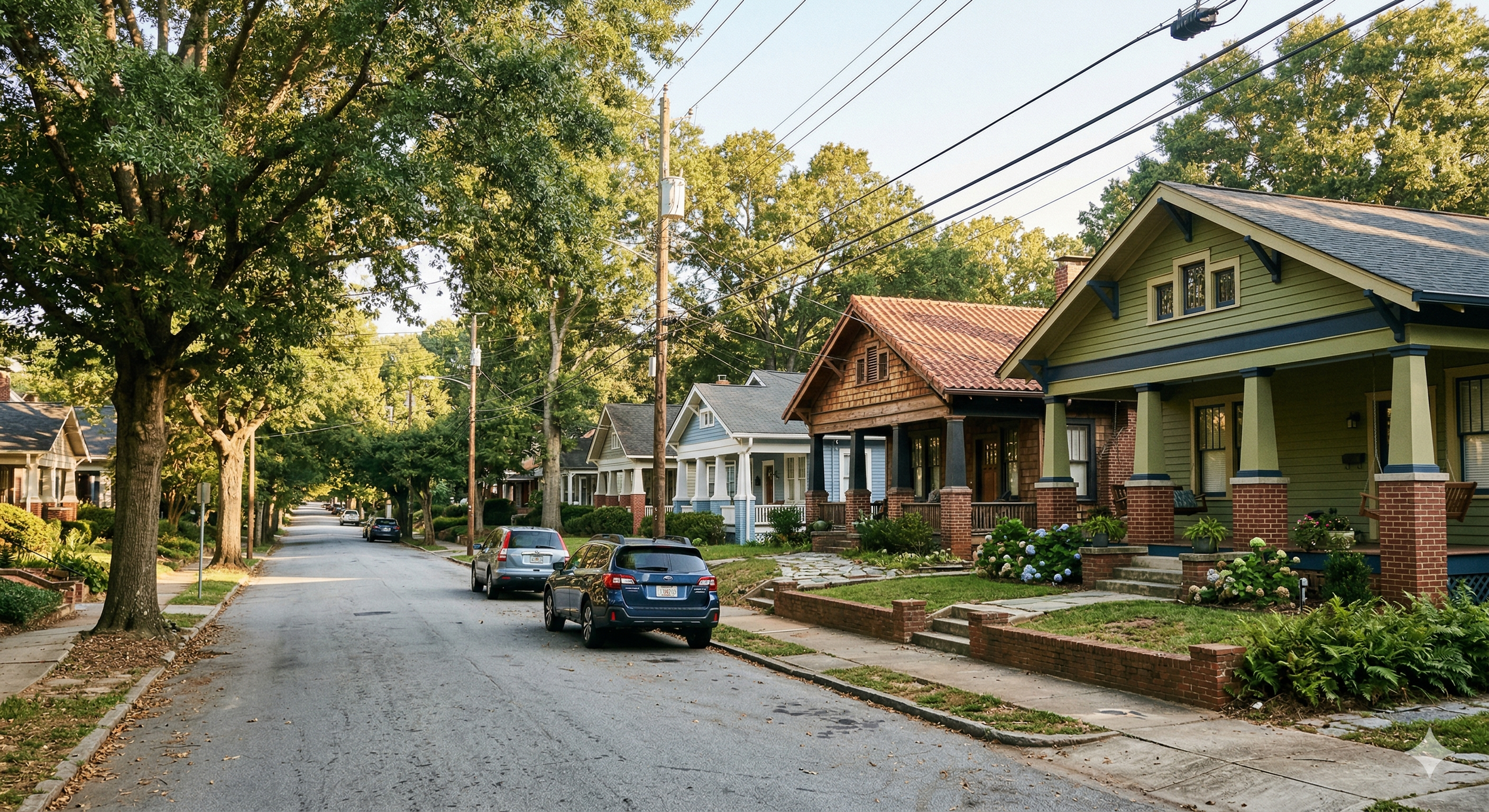
Oakland City sits less than four miles southwest of Downtown Atlanta, wedged between West End, Adair Park, and Capitol View, with direct MARTA access and a 1.31-mile BeltLine connector trail currently in design. If you've been searching for intown Atlanta at a price point that doesn't require you to compromise on location, Oakland City keeps coming up — and there are real reasons why.
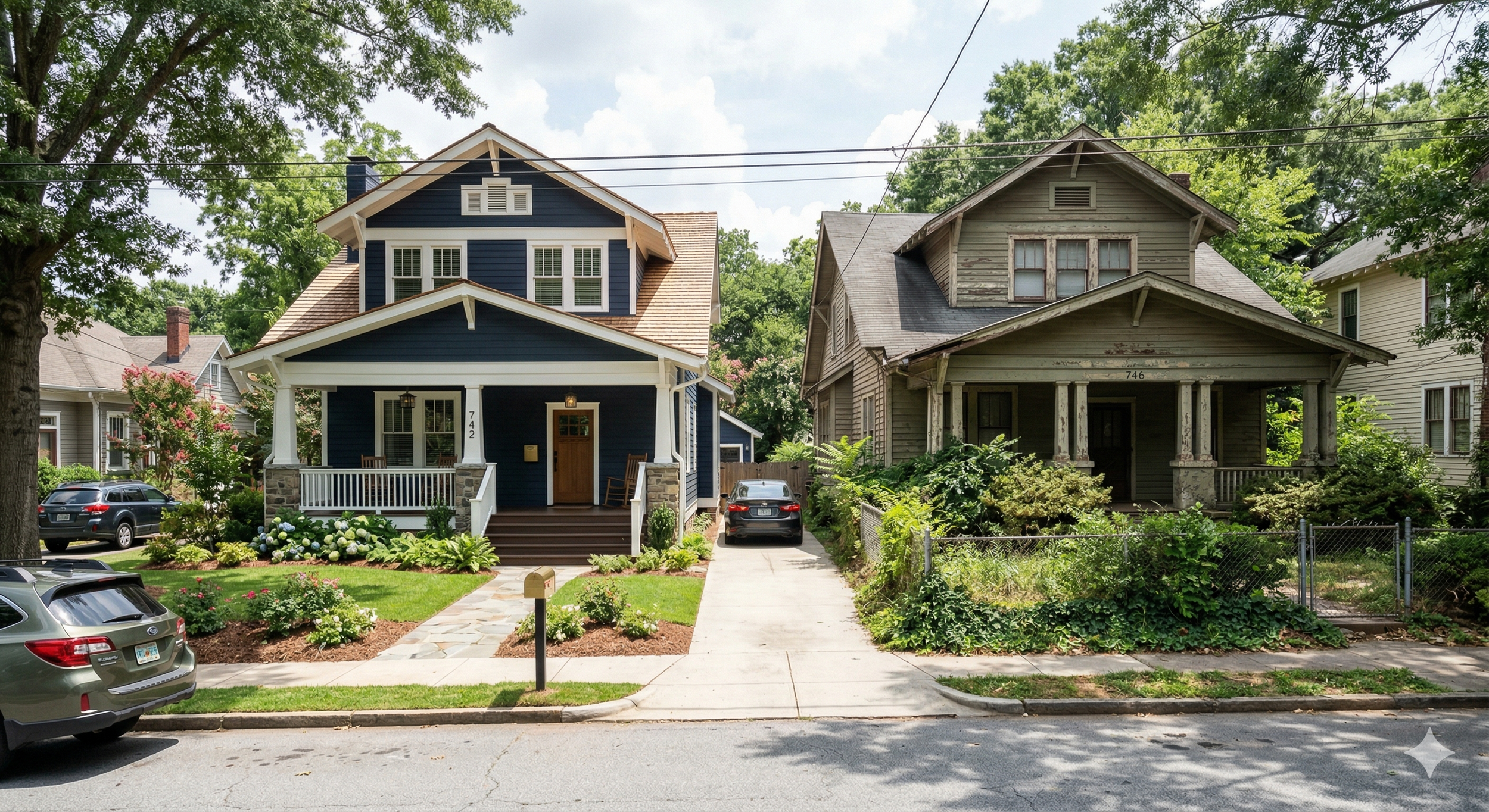
What I want you to understand before we get into the numbers: Oakland City is not a polished, fully-transitioned neighborhood. Parts of it are. Parts of it are still a work in progress. There's a 21% vacancy rate on certain data sets — legacy of disinvestment from decades past — alongside new townhome construction selling in the mid-$300Ks to $400Ks, renovated Craftsman bungalows getting multiple offers, and over a billion dollars in development announced for the immediate area. That gap between what was and what's coming is exactly what creates the real estate opportunity here. But you need to walk into it with your eyes open.
I work with buyers across Metro Atlanta, and I've watched Oakland City's story play out in real time. The conversations I have with buyers about this neighborhood are different from the ones about East Cobb or Alpharetta — this one requires more due diligence on specific blocks, more attention to what's under contract nearby, and a clearer sense of what you're actually buying into.
Nearly a decade of helping Atlanta buyers means I can tell you what the Zillow estimate and the neighborhood overview can't: which corridors are moving fastest, what the new construction is actually delivering, and where Oakland City is genuinely compelling versus where you're taking on real uncertainty.
Here's what you need to know.
What Is Oakland City, and Where Is It?
Oakland City is a historic Southwest Atlanta neighborhood in the 30310 zip code, bounded roughly by Ralph David Abernathy Boulevard to the north, Campbellton Road to the south, I-20 to the east, and Sylvan Road to the west. It's a short drive — or a direct MARTA ride — from downtown, Midtown, and Hartsfield-Jackson Atlanta International Airport.
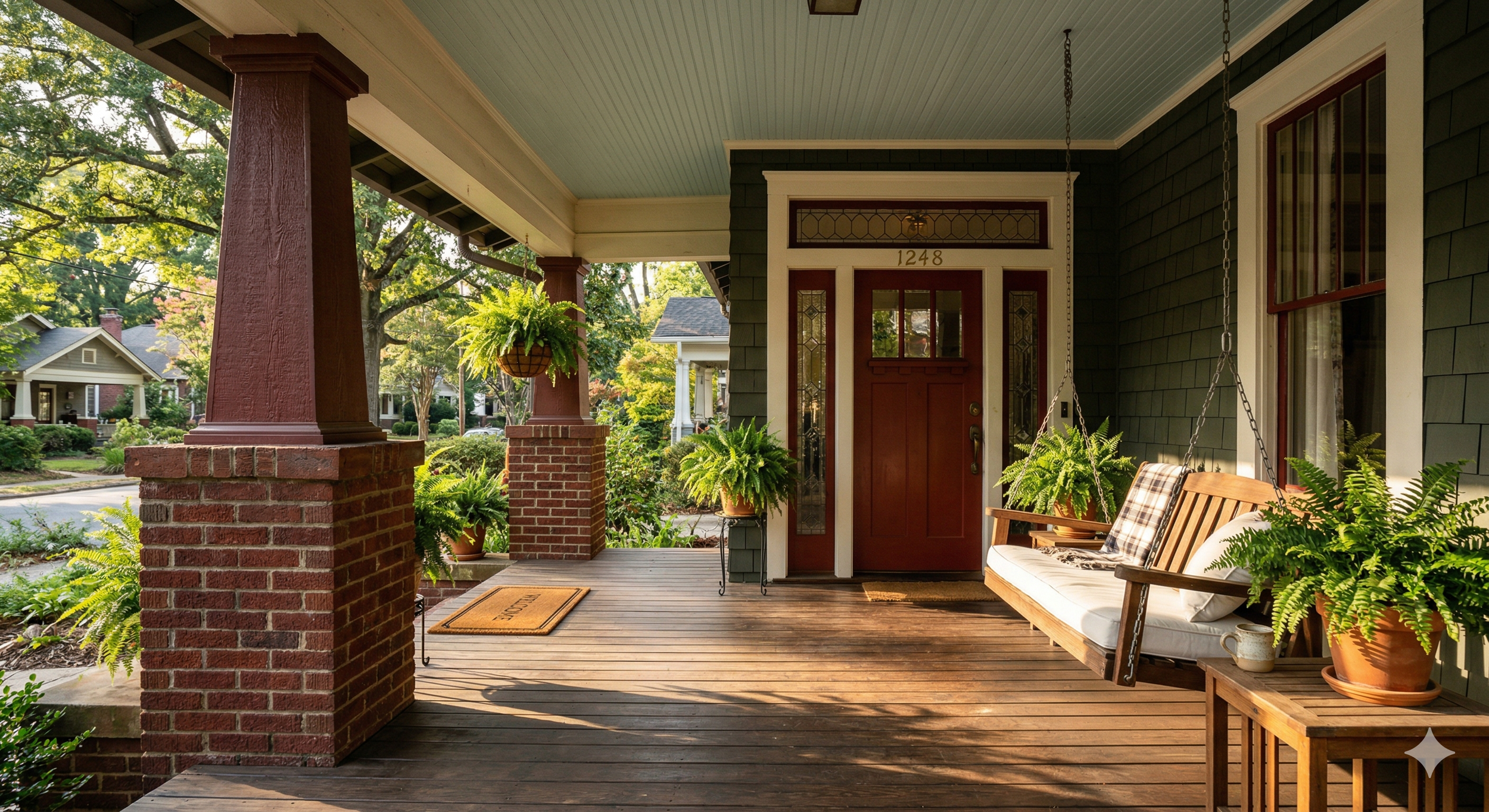
The neighborhood has been here a long time. Oakland City was incorporated as its own municipality in 1894, built out during the post-Civil War industrial boom when Fort McPherson's completion and a trolley line created the first wave of residential development. The City of Atlanta annexed Oakland City in 1910. Heavy development followed in the 1920s, particularly the Craftsman bungalows that now define the Oakland City Historic District — designated on the National Register of Historic Places in 2003, the district recognizes the neighborhood's collection of Queen Anne, Colonial Revival, Minimal Traditional, and Craftsman-style residential architecture. The Craftsman bungalow is the most common form, and the best-preserved examples are concentrated around Oakland Drive, Allene Avenue, and Gaston Street.
There's a layer of history here that goes deeper than architectural styles. The Bush Mountain area — what is today the blocks along Plaza Avenue, Ladd Street, Bridges Avenue, and Ingram Street — was the only part of Oakland City where Black families were permitted to live in the early 1900s. A 1913 mayoral statute mandating residential segregation, combined with subdivision deed restrictions explicitly barring Black ownership in other parts of the neighborhood, confined an entire community to a single corridor. That history is part of the land, and it's important context for understanding both the neighborhood's character and the community-led preservation work happening today.
The Oakland City Community Organization (OCCO), founded in 1992 with the slogan "Re-imagining One Street at a Time," leads neighborhood beautification, yard sales, cleanups, and civic engagement. Patchwork City Farms — founded by Jamila Norman, host of Magnolia Network's Homegrown — is based here and runs urban farming education along with a weekly Farm Fresh Fridays market. The concentration of urban community farms in Oakland City is notable, a direct continuation of the self-sufficiency practices that emerged from the area's history of isolation from mainstream resources.
The Outdoor Activity Center in Oakland City includes a practice field connected to the legacy of the Atlanta Black Crackers — a Negro Baseball League team that predated the Atlanta Braves and was recently officially recognized by MLB as Atlanta's first baseball team. That site sits adjacent to the Rev. James Orange Park and Recreation Center, named for the civil rights leader who worked alongside Dr. Martin Luther King Jr. and whose family members have lived in the neighborhood.
Oakland City Real Estate: Home Prices and Market Data in 2026
Oakland City's real estate market is in active transition, and the numbers reflect that. Here's where things stand based on data current through early 2026 — verify current figures with me directly, as this market moves.
Median sale price: Approximately $375K (Redfin, December 2025), representing a 13.6% increase year-over-year. Other data sources place it slightly higher, with NeighborhoodScout tracking a median closer to $471K when accounting for the full range of recent sales including new construction. The spread tells you something: Oakland City's market includes everything from $125K distressed inventory to $700K new construction, and the median shifts depending on what's selling in a given month.
Days on market: Oakland City homes were averaging 104 days on market as of late 2025 — which is considerably longer than comparable intown Atlanta neighborhoods. That number reflects both the mixed nature of the inventory and the fact that buyers here are doing more due diligence before committing. Well-priced, renovated properties in the historic district move faster; distressed inventory and overpriced flips sit. Hot homes — updated, well-located — can still go pending in around 44 days.
Active inventory: Approximately 83–109 homes on the market as of early 2026, up over 100% year-over-year. More supply means more negotiating leverage for buyers than you'd have in West End or Inman Park.
Price per square foot: New construction townhomes typically run $190–$240 per square foot. Renovated historic bungalows range from $175–$225 per square foot depending on condition and location. Unrenovated properties with good bones have sold at $80–$120 per square foot, representing the distressed end of the market.
Listing range: $125,000 (distressed, unrenovated) to $700,000+ (larger new construction). The realistic entry point for a move-in ready home is around $250,000–$300,000; renovated historic bungalows start around $300,000 and run to $450,000; new construction townhomes typically list $320,000–$450,000.
Rental rate: Average rental price approximately $2,035/month (NeighborhoodScout). Single-family rental income potential is meaningful here, particularly for investors watching the BeltLine development pipeline.
Data sourced from Redfin, NeighborhoodScout, and FMLS. Always verify current figures directly — this is a market where conditions change as development progresses.
What You Get for the Money in Oakland City
Oakland City offers more house per dollar than most intown Atlanta neighborhoods at comparable locations. Here's what different price points actually get you:
$200,000–$280,000: At this range, you're typically looking at distressed inventory — older bungalows needing significant work, investor-held properties, or land. There are deals here for buyers willing to renovate, but this tier requires a clear-eyed renovation budget and knowledge of what's structurally sound versus what's cost-prohibitive. Streets like Almont Drive SW and parts of Westboro Drive have seen investor activity in this price range.
$280,000–$350,000: This is where the move-in-ready entry point lives. Renovated two-bedroom, one-bath bungalows; smaller three-bedroom homes with updated kitchens and baths. Some new townhome communities like the units on Allene Avenue SW adjacent to the BeltLine have delivered in this range. These are functional, livable homes in a neighborhood with strong location fundamentals.
$350,000–$450,000: Renovated three-bedroom, two-bath Craftsman bungalows with modern interiors, open-concept layouts, and preserved historic character. This price tier is where the BeltLine-proximate streets — Gaston Street, Allene Avenue, blocks near Murphy Avenue — are concentrating the best inventory. New construction townhomes from developments like The Trust at Oakland City also sit in this range.
$450,000–$700,000+: Larger new construction, custom renovations on bigger lots, or premium finishes throughout. The $53 million Oakland Exchange project converting historic warehouse buildings at 1088 and 1100 Murphy Avenue into 126 loft apartments and commercial space is bringing new residential typologies to this end of the market. The 300-unit, $76.8 million mixed-use development at 840 Woodrow Street — approved by Fulton County with 20,000 square feet of retail — will also add housing product at the higher end of the range when it delivers in 2027.
Getting Around Oakland City: Commute and Transit
Oakland City's transit access is genuinely strong by Metro Atlanta standards — and it's about to get significantly better.
MARTA rail: Oakland City Station is on the Red and Gold lines, which run directly to Five Points (Downtown), Midtown, Buckhead, and Hartsfield-Jackson Airport. The station opened December 15, 1984, and offers 337 surface parking spaces, local MARTA bus service, a main entrance from Campbellton Road, and a pedestrian tunnel at the Murphy Avenue entrance. From the station, you can reach Five Points in about 10 minutes and Hartsfield-Jackson in about 20 minutes. The Lakewood/Fort McPherson station is one stop south.
Upcoming BeltLine connector to MARTA: A 1.31-mile Oakland + Murphy Connector Trail is in design — the first trail planned to provide direct, off-street BeltLine access to a MARTA rail station. One 0.86-mile segment will run from Allene Avenue across Sylvan Road to the Oakland City station. When complete, residents near the BeltLine Southwest Trail will be able to walk or bike directly to the rail network.
New MARTA rail station at Murphy Crossing: In April 2024, Mayor Dickens announced plans for a new infill MARTA rail station at Murphy Crossing, directly across Sylvan Road from the Oakland Exchange development. Estimated completion by 2030. This would give Oakland City effectively two rail stations — a rare asset for an intown neighborhood at this price point.
Driving commutes (honest rush-hour estimates):
Downtown Atlanta (Five Points): 10–15 minutes off-peak. During morning rush (7–9 AM), expect 20–30 minutes on surface streets; the MARTA option is faster.
Midtown: 15–20 minutes off-peak; 25–35 minutes in rush hour via I-20 East to I-75/85 North.
Buckhead: 25–30 minutes off-peak; 40–50 minutes in rush hour.
Hartsfield-Jackson Airport: 15–20 minutes off-peak via I-285 South; 25–35 minutes in rush hour. One of the cleanest airport commutes for an intown Atlanta neighborhood.
Fort McPherson/Camp GRACE: 5–10 minutes — functionally walkable via MARTA.
Tyler Perry Studios (adjacent): 5–10 minutes. Major employment anchor for the immediate area.
Lee + White District (West End): Under 10 minutes by car or a straightforward bike ride.
I-20 access: Interstate 20 runs along the northern edge of Oakland City, providing east-west access to downtown and Interstate 285.
The honest summary: Oakland City is one of the best-connected Southwest Atlanta neighborhoods for car-free or car-light living. The combination of existing MARTA rail access, the BeltLine Southwest Trail, and the planned connector trail makes this a genuinely transit-forward location — an advantage that most comparable price points in Atlanta don't offer.
Things to Do in and Around Oakland City
Oakland City's immediate footprint is primarily residential, but the surrounding corridor has enough going on to make the location feel connected to the city.
Lee + White District (West End, adjacent): The redevelopment of the former Warehouse Row into a food, beverage, and retail hub about two miles from Oakland City is the most significant dining and entertainment anchor nearby. Monday Night Garage (the original MNB taproom), Wild Heaven Beer, Boxcar (pingpong bar), The Interlock, and Chattahoochee Food Works are all part of this corridor. El Tesoro — a longtime local favorite for Mexican food and margaritas — is right in the neighborhood and regularly cited as a go-to for Oakland City residents.
Atlanta BeltLine Southwest and Westside Trails: The BeltLine's Westside Trail runs through the West End neighborhood, connecting to the Southwest Trail segment near Oakland City. The Southwest Trail, when fully built out, will connect all the way around the BeltLine loop. Current access points near Allene Avenue provide on-trail connectivity already.
Rev. James Orange Park and Recreation Center: The community recreation center on the east side of the neighborhood offers an after-school program, senior programming, a splash pad, playground, and basketball courts. Named for the civil rights leader whose family has long been part of the community.
Patchwork City Farms / Farm Fresh Fridays: Urban farm and weekly farmers market run by Jamila Norman. A neighborhood fixture for fresh produce and one of the more distinctive community assets in Southwest Atlanta.
Outdoor Activity Center: Multi-sport facility on the grounds historically associated with the Atlanta Black Crackers, the city's first professional baseball team. Practice fields, outdoor recreation.
Tyler Perry Studios (nearby): The 330-acre film and production studio complex — one of the largest in the country — sits immediately adjacent to the neighborhood on the former Fort McPherson grounds. It's a significant employment anchor and a factor in the area's continued development momentum.
Cascade Road corridor: Kroger on Cascade Avenue is the primary grocery option for most Oakland City households. The Cascade corridor extends further west into a broader network of retail, dining, and services in Southwest Atlanta.
Downtown and Midtown: The direct MARTA line makes this a realistic option for an after-work dinner in Old Fourth Ward or a weekend afternoon in Midtown. The airport proximity also matters for travelers.
Schools in Oakland City
Oakland City is served by Atlanta Public Schools. Always verify enrollment eligibility by specific property address directly with APS, as attendance zones can change. Research and visit schools to determine fit for your family.
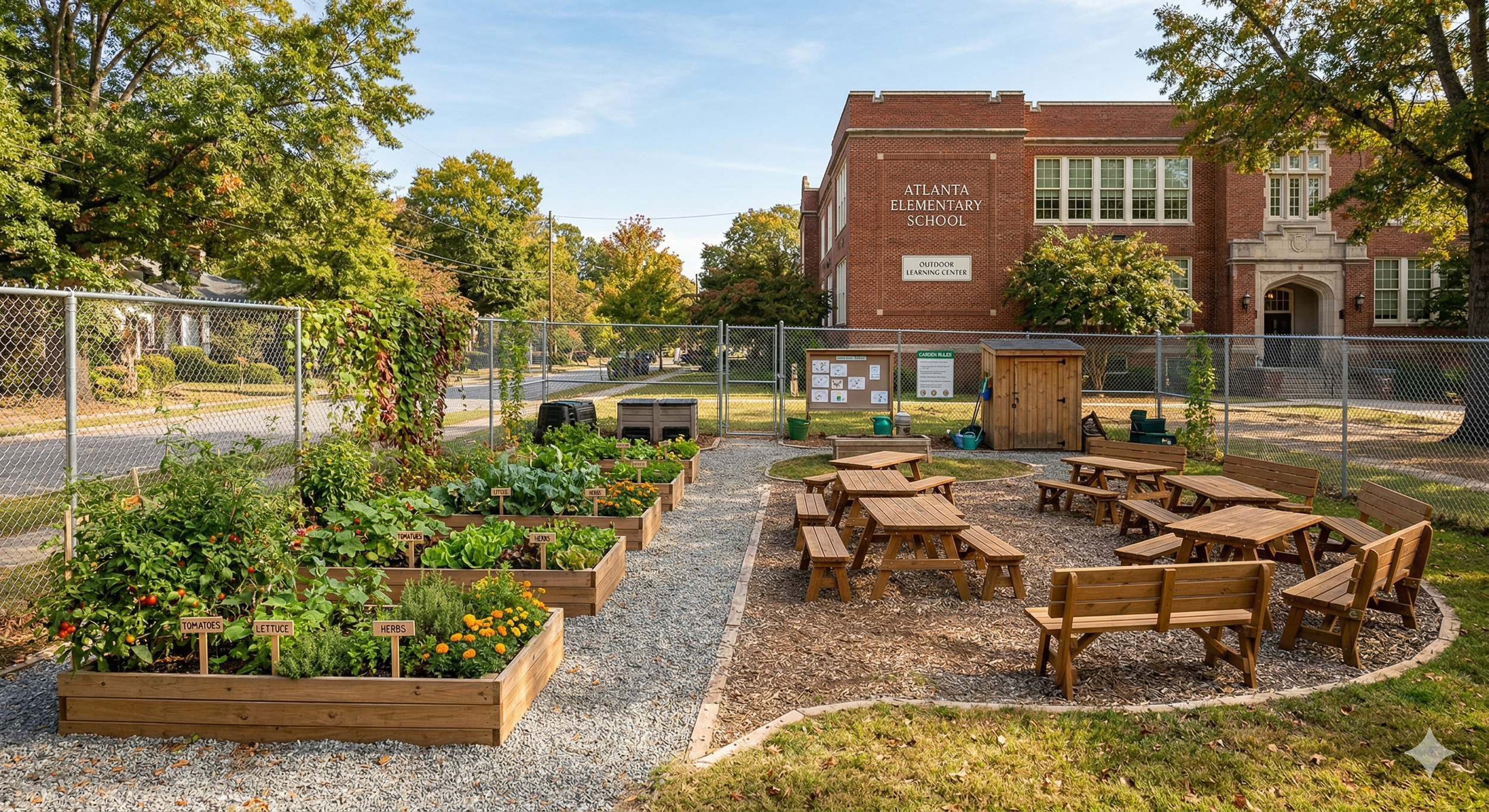
Finch Elementary School Finch Elementary serves pre-K through 5th grade and is one of the neighborhood's most community-connected schools — in 2021, neighbors and local volunteers collaborated to build an outdoor classroom with benches and picnic tables. Patchwork City Farms has run nutritional education workshops with Finch students. The school has developed a visible presence in neighborhood life.
Gideons Elementary School / Kindezi at Gideons 897 Welch Street SW, Atlanta, GA 30310. Serving pre-K through 5th grade, the Kindezi charter school program operates out of this location. Enrollment approximately 343 students, 10:1 student-teacher ratio.
Perkerson Elementary School An additional elementary option serving parts of the Oakland City attendance zone, located in the broader Southwest Atlanta area.
Sylvan Hills Middle School 1461 Sylvan Road SW, Atlanta, GA 30310. Serves grades 6–8 with an enrollment of approximately 430–445 students and a 12:1 student-teacher ratio. Sylvan Hills offers STEAM Signature Programming with a project-based learning focus and includes the Project Lead The Way curriculum as well as a Gifted & Talented program. The school's stated mission focuses on preparing students for post-graduation careers.
Booker T. Washington High School 45 Whitehouse Drive SW, Atlanta, GA 30314. The zoned high school for Oakland City, serving grades 9–12 with approximately 862 students and a 14:1 student-teacher ratio. Booker T. Washington has a historically significant legacy in Atlanta — the school has graduated many notable alumni and has a strong sense of community identity reflected in student reviews. 73 Niche users give it an average review of 4.3 stars.
Additional high school option — Carver STEAM Academy Carver STEAM offers three dual enrollment programs including Cybersecurity through a partnership with Atlanta Technical College, with students able to begin the program in 10th grade. An option worth researching for families interested in technical and STEM programming at the high school level.
Charter and magnet school options within Atlanta Public Schools are also available to families citywide. Research and visit schools to determine fit for your family. Always verify zoning by specific property address.
Oakland City vs. Nearby Neighborhoods
Oakland City vs. West End West End is immediately north of Oakland City along Ralph David Abernathy Boulevard and has seen more headline development — the Lee + White District, the West End Historic District, significant renovation activity. Prices in West End run somewhat higher: median sale prices have pushed into the $400,000–$500,000 range for renovated inventory. Oakland City offers comparable transit access (MARTA Red/Gold lines), comparable BeltLine proximity, and more room to negotiate at current prices. If you want to be in the mix of the most active commercial development, West End is ahead of Oakland City on that metric. If you're prioritizing value and you believe in the development timeline, Oakland City gives you more upside.
Oakland City vs. Adair Park Adair Park borders Oakland City to the northeast and shares the 30310 zip code. Both neighborhoods are in the historic district world and the BeltLine Southwest Trail corridor. Adair Park has seen more renovation activity in recent years and its prices reflect that — entry-level renovated bungalows push $350,000–$450,000. Oakland City is more mixed and offers more price diversity, including inventory below $300,000 that Adair Park doesn't really have anymore. For buyers with more flexibility on timeline and a higher renovation tolerance, Oakland City offers more options.
Oakland City vs. Capitol View Capitol View is immediately south and shares many of Oakland City's characteristics — historic Craftsman bungalows, BeltLine adjacency, affordable prices relative to the rest of intown Atlanta. Capitol View has been a bit quieter on the development front than Oakland City's Murphy Crossing/Oakland Exchange corridor, but the BeltLine connectivity is comparable. Oakland City pulls ahead on transit (dedicated MARTA station vs. no station in Capitol View) and on the volume of near-term development at Murphy Crossing.
Oakland City vs. East Point East Point — Kristen's hometown and the neighborhood she grew up in — is about 4 miles further southwest along the Red/Gold MARTA line. East Point offers more house for the money, a different community character, and solid transit connectivity, but you trade the immediate BeltLine proximity and the near-term development pipeline that Oakland City has right now. For buyers who want maximum square footage at minimum price, East Point remains one of the best values in Metro Atlanta. For buyers who want intown proximity and BeltLine access as core criteria, Oakland City wins.
Oakland City vs. Westview Westview is immediately west of Oakland City, sharing the BeltLine Southwest Trail corridor and a comparable historic bungalow stock — Craftsman and Folk Victorian homes built in the same early-to-mid 20th century era. Westview has Enota Park as a neighborhood anchor and has been a bit further along in its renovation cycle in certain blocks. Prices are comparable, though Westview doesn't have Oakland City's dedicated MARTA rail station — a meaningful distinction for car-free or car-light buyers. Oakland City's near-term development pipeline at Murphy Crossing and Oakland Exchange also gives it more documented upside than Westview's current horizon. If MARTA access and BeltLine connectivity are your core criteria, Oakland City wins on transit. If you want a quieter, more residential feel with slightly less construction activity nearby, Westview is worth a close look.
Streets, Subdivisions, and Development Projects
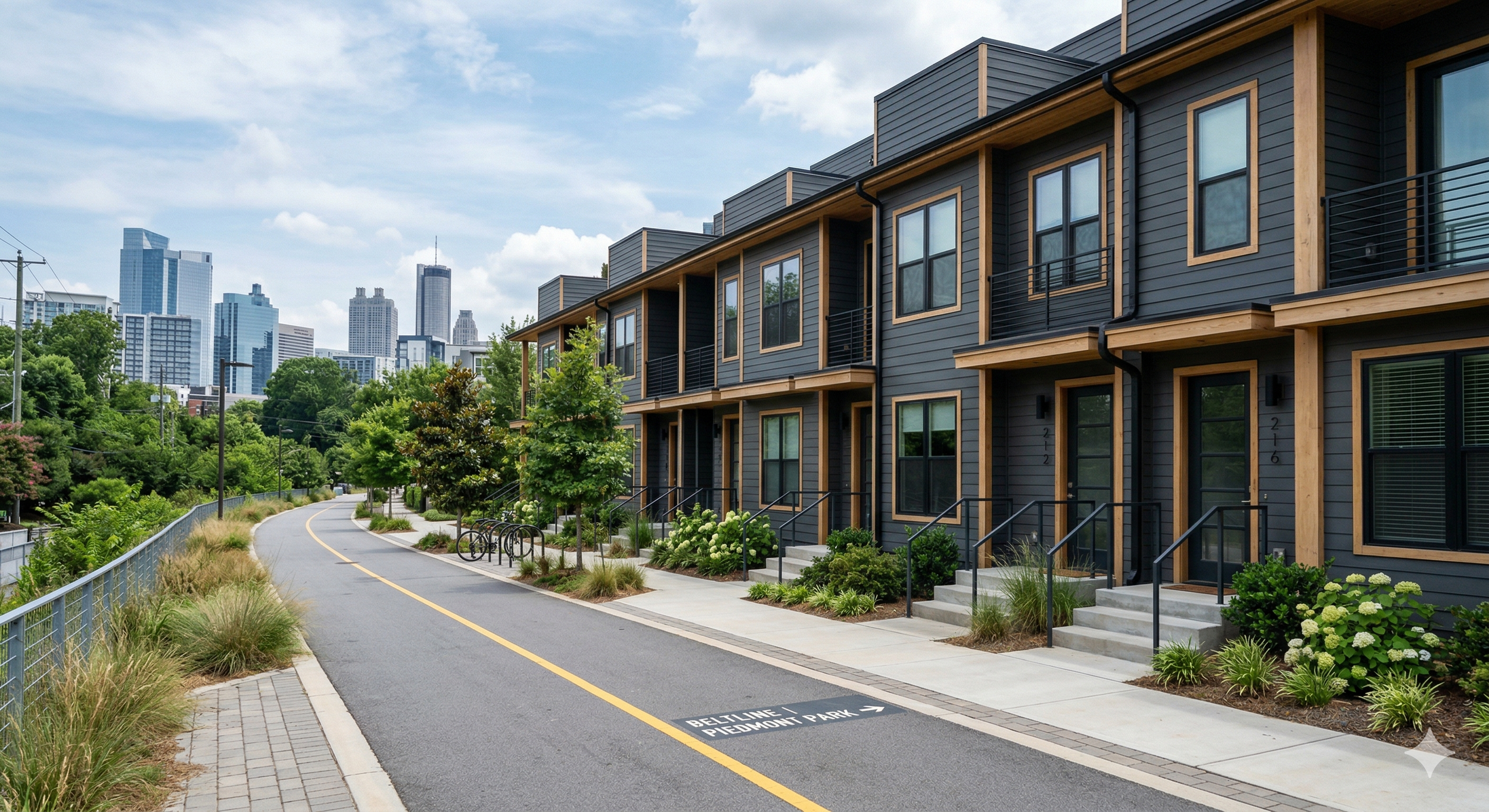
Allene Avenue SW: One of the most active streets for new construction and renovated bungalows. The BeltLine Southwest Trail access point is at Allene Avenue, and the planned Oakland + Murphy Connector Trail begins here. New townhomes at 1121 Allene are among the recently delivered units in this corridor.
Gaston Street SW: Historic bungalow row with some of the best-preserved Craftsman architecture in the neighborhood. Renovated properties here have sold in the $350,000–$450,000 range and represent the premium end of the historic district inventory.
Murphy Avenue SW: The industrial corridor along Murphy Avenue is undergoing the most significant transformation. The Oakland Exchange — at 1088 and 1100 Murphy Avenue — is converting historic warehouse buildings recognizable by their "Cut Rate Box Co." and "Welcome to Atlanta" painted signs into 126 loft apartments and 16,000 square feet of commercial space geared toward small businesses. Phase I is expected to complete in 2026.
Murphy Crossing (840 Woodrow Street SW / 1050 Murphy Avenue): The 20-acre Beltline-owned site directly across Sylvan Road from Oakland Exchange is the most consequential development planned for Oakland City. A proposed new MARTA infill station at this site was announced by Mayor Dickens in April 2024, with an estimated completion by 2030. The $76.8 million, 300-unit apartment and retail development at 840 Woodrow Street — approved by Fulton County — is scheduled to deliver in early 2027. Murphy Crossing's development trajectory has been complicated (the previously announced sale to a developer was terminated in January 2025 following a lawsuit), and Beltline leadership has stated they intend to accelerate planning with a goal of starting construction before the end of 2026.
Oakland Drive SW: One of the central corridors of the historic district. A mix of renovated and unrenovated bungalows; prices vary significantly block by block.
Bush Mountain area (Plaza Avenue SW, Ladd Street SW, Bridges Avenue SW, Ingram Street SW): The historically Black enclave of Oakland City, with a distinct character and community identity. Urban farming presence is highest here.
Avenue at Oakland City and The Trust at Oakland City: New townhome developments delivering in the neighborhood. Avenue at Oakland City and The Trust at Oakland City were set to deliver 42 combined units around 2026 in the $250,000–$400,000 range.
Westboro Drive SW / Almont Drive SW: More affordable corridor with significant investor activity. Distressed inventory coexists with recently renovated properties. Due diligence on specific addresses is important here.
Who Is Oakland City Right For?
Oakland City is the right fit when:
You want intown Atlanta with direct MARTA rail access and you're not willing to pay Poncey-Highland or Inman Park prices
You're a first-time buyer who wants to build equity in a neighborhood with documented development momentum without overextending your budget
You work in Downtown, Midtown, or near Hartsfield-Jackson and want a commute that doesn't depend on a car
You're a buyer who has done enough research to understand the difference between the BeltLine-proximate, renovated corridor and the less active parts of the neighborhood — and you're buying in the right part
You're an investor who can underwrite the development pipeline with patience — the Murphy Crossing MARTA station and the Oakland Exchange are not short-term flips, but the long-term fundamentals are solid
You want a real historic neighborhood with preserved architecture, community roots, and an active neighborhood organization rather than a brand-new master-planned community
Think carefully about Oakland City if:
You want a neighborhood where every block already looks finished. Oakland City has a significant vacancy rate in certain sections, and parts of it will take years to fully transition
You're buying without a thorough block-by-block analysis. The difference between the most active streets and the most distressed ones is real and significant
You want walkability for everyday errands without a car. The Walk Score is 45 — you'll need a car or MARTA for most grocery and retail needs; this is not a walkable-village neighborhood
You're prioritizing school quality as a primary driver. Research the public school options carefully and visit before making a decision
You're in a hurry — the development timeline on Murphy Crossing has already shifted once, and buyers who need certainty about neighborhood trajectory on a short timeline may find more stability elsewhere
Frequently Asked Questions: Living in Oakland City Atlanta
What is the median home price in Oakland City Atlanta in 2026? Based on late 2025 data, the median sale price for Oakland City is approximately $375,000, representing a 13.6% increase year-over-year. That figure reflects a mix of inventory types — renovated historic bungalows, new construction townhomes, and some distressed inventory — and can shift meaningfully depending on what's actively selling. Some data sources tracking a broader range of sales put the median closer to $471,000. For the most current numbers specific to the type of home you're searching for, reach out directly and I can pull what's actually moved recently.
Is Oakland City a good neighborhood to buy in Atlanta right now? It depends on which part of Oakland City and what your priorities are. The corridors nearest the BeltLine Southwest Trail — Allene Avenue, Gaston Street, blocks near Murphy Avenue — have strong fundamentals: MARTA access, development momentum, and intown prices that are still below comparable neighborhoods. The more distressed sections carry more uncertainty. Oakland City is compelling for buyers who've done their homework on specific streets and have a clear-eyed understanding of the development timeline. It's not the right choice for buyers who want a fully transitioned neighborhood right now.
Is Oakland City safe? Like most intown Atlanta neighborhoods, Oakland City is not uniformly one thing. Streets near the BeltLine and the historic district's most active renovation corridors have different character than the blocks with higher vacancy rates. I encourage buyers to spend time in the specific streets they're considering — day and evening — and to pull current crime data from the APD website for those addresses. This is a neighborhood where knowing the block matters more than knowing the neighborhood name.
How far is Oakland City from Downtown Atlanta? Less than four miles. By MARTA, it's about 10 minutes on the Red or Gold line to Five Points. By car off-peak, you're looking at 10–15 minutes. During morning rush hour, MARTA is genuinely the faster option.
Does Oakland City have MARTA access? Yes — Oakland City Station on Campbellton Road serves the Red and Gold lines, with direct service to Downtown, Midtown, Buckhead, and Hartsfield-Jackson Airport. There are 337 parking spaces and local bus connections. A new planned infill MARTA station at Murphy Crossing — announced by Mayor Dickens in April 2024 — would give Oakland City a second rail station by approximately 2030, one of only a handful of Atlanta neighborhoods with that level of transit access.
What's the BeltLine situation in Oakland City? The BeltLine Southwest Trail runs through the West End neighborhood adjacent to Oakland City, with access points near Allene Avenue. A 1.31-mile Oakland + Murphy Connector Trail is in design and will provide direct, off-street connection from the BeltLine Southwest Trail to the Oakland City MARTA station. This is significant — it would be the first BeltLine trail with direct MARTA station access.
What's happening at Murphy Crossing? Murphy Crossing is a 20-acre Beltline-owned site at 1050 Murphy Avenue, across Sylvan Road from the Oakland Exchange warehouse conversion project. A new MARTA infill rail station is planned for this site, estimated for completion by 2030. A separate 300-unit mixed-use development at 840 Woodrow Street has Fulton County approval and is scheduled to deliver in early 2027. Murphy Crossing's development has had some turbulence — a previously announced developer sale was terminated in early 2025 following a lawsuit — but Beltline leadership has committed to accelerating new planning with a goal of starting construction before the end of 2026.
What are the schools like in Oakland City Atlanta? Oakland City is served by Atlanta Public Schools. Elementary options include Finch Elementary and Gideons Elementary/Kindezi at Gideons. Sylvan Hills Middle School serves grades 6–8 with STEAM Signature Programming and Project Lead The Way curriculum. The zoned high school is Booker T. Washington High School, which has strong community identity and history. Carver STEAM Academy offers an alternative high school option with dual enrollment in Cybersecurity through Atlanta Technical College. Research and visit schools to determine fit for your family. Always verify zoning by specific property address.
Is Oakland City a good investment property location? For buyers focused on long-term investment, Oakland City has notable fundamentals: direct MARTA access, BeltLine adjacency, documented development pipeline (Oakland Exchange, Murphy Crossing, the new MARTA station), and price points that are still below the established intown Atlanta neighborhoods. Rental rates average approximately $2,035/month. The caveat: the development timeline has shown some delays, and investors who need a short horizon should price that uncertainty into their underwriting. For patient investors who believe in the 5–10 year arc, this is one of the more compelling positions available in Southwest Atlanta.
What types of homes are available in Oakland City? The inventory is varied: original Craftsman and Folk Victorian bungalows from the 1910s–1940s (some fully renovated, some distressed), new construction townhomes from several small and mid-size developments, older ranch-style homes, and a small number of larger two-story homes. Lot sizes are modest. The historic district designation means renovation work on contributing properties is subject to review by the OCCO Historic Neighborhood Committee. Buyers interested in significant exterior modifications should research historic district guidelines before purchasing.
How does Oakland City compare to West End? West End is immediately north and has seen more commercial development come online — the Lee + White District, significant renovation investment, and a more fully transitioned feel in the residential blocks nearest Abernathy Boulevard. West End prices are somewhat higher. Oakland City offers comparable transit access and BeltLine proximity at a lower entry point, with more development upside if the Murphy Crossing and Oakland Exchange timelines deliver. Which one is right for you depends on whether you want a neighborhood that's further along right now, or one with more room to run.
What is the Atlanta Black Crackers connection to Oakland City? The Atlanta Black Crackers were a Negro Baseball League team — Atlanta's first professional baseball team, predating the Atlanta Braves — and the Outdoor Activity Center in Oakland City is located on the historic site of their practice field. In recent years, MLB officially recognized the Atlanta Black Crackers as the first baseball team in Atlanta. The legacy is commemorated as part of the broader history of Black cultural and civic life in Southwest Atlanta.
The Bottom Line on Oakland City
Oakland City is one of the few intown Atlanta neighborhoods where the combination of price, transit access, and development pipeline genuinely lines up for first-time buyers and investors alike. MARTA Red and Gold line access from a station that's been there since 1984, BeltLine Southwest Trail connectivity, over $1 billion in announced nearby development, a National Register historic district, and entry-level prices that still exist — that combination is rare in the city.
What Oakland City requires is honest eyes. Not every block is there yet. The vacancy rates are real. The development timelines have already shifted once. Buyers who approach this neighborhood with a clear understanding of the specific streets they're considering — and who know the difference between the BeltLine-proximate corridor and the sections still in transition — are the ones who position well here.
I work with buyers throughout Metro Atlanta and know Oakland City's block-by-block dynamics in detail. If you're considering Southwest Atlanta, weighing Oakland City against West End or East Point, or trying to understand what the BeltLine development actually means for the property you're looking at, let's talk.
Visit kristenjohnsonrealestate.com or reach out directly.
Come as you are, come on home.
Exploring more Metro Atlanta neighborhoods? I've covered Southwest Atlanta's broader story through guides on West End, East Point, and West View. Browse the full neighborhood guide series at kristenjohnsonrealestate.com.