

Living in Blandtown Atlanta GA: Westside Emerging Neighborhood, BeltLine Proximity & Home Prices 2026
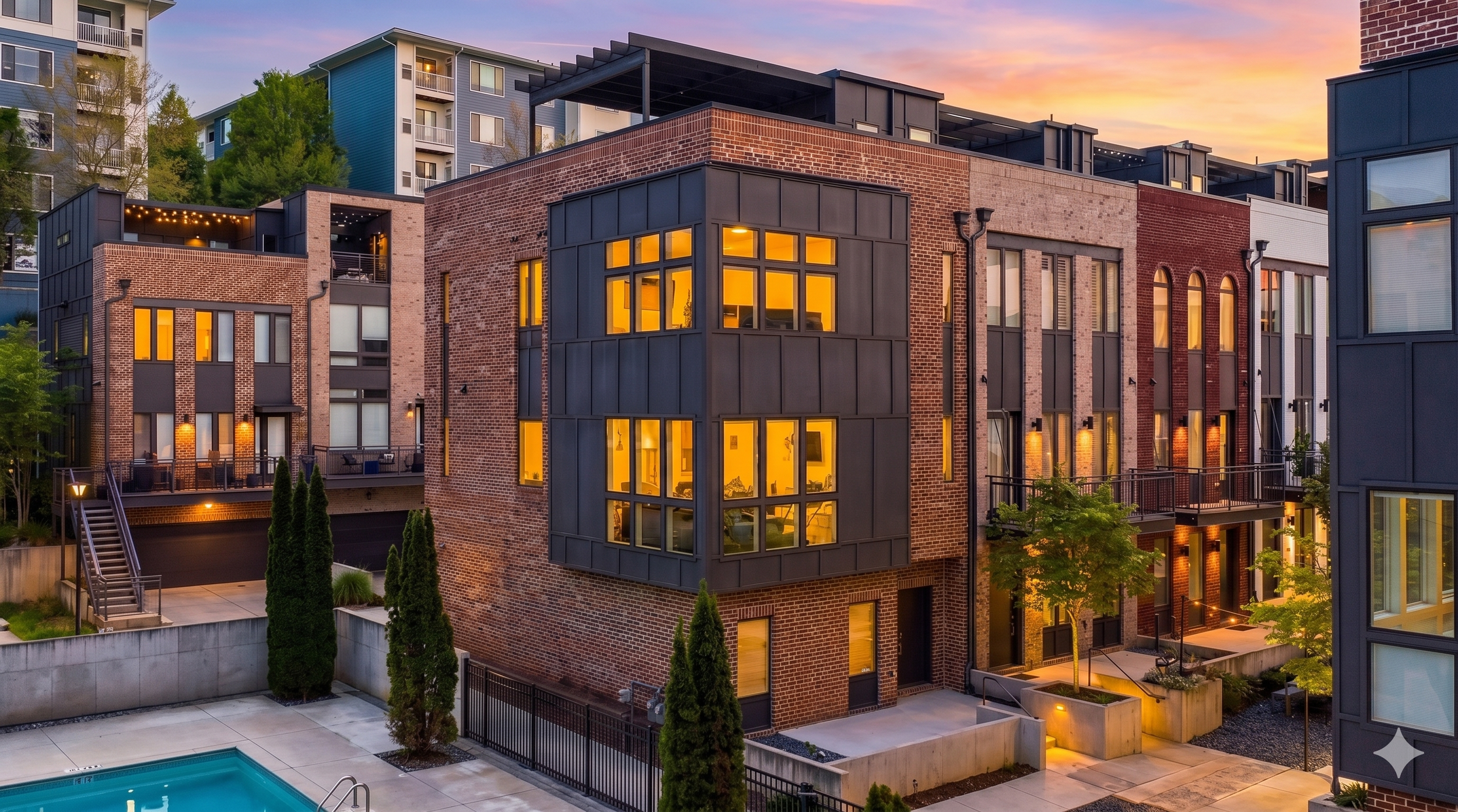
If you've been driving the Howell Mill / Huff Road corridor over the last decade, you've watched Blandtown change in real time. New townhomes going up where warehouses used to sit. The Goat Farm Arts Center anchoring one end, Westside Provisions District a quick drive away, and the Westside BeltLine Connector cutting through what used to be heavy industrial land. The neighborhood feels new because most of what's standing here today is new — but Blandtown is one of the oldest Black settlements in Atlanta, founded just years after the Civil War, and the story of how it almost disappeared is part of why buyers should understand where they're buying when they come here.
Blandtown sits along Huff Road from Howell Mill Road west to Marietta Boulevard, tucked into the Upper Westside between West Midtown proper and the rail yards. Most listings call it "West Midtown" — and most days it functions as part of West Midtown — but the official neighborhood name is Blandtown, and that name carries weight.
I work with buyers across Metro Atlanta, including a steady volume in the intown Westside corridor. I help relocation buyers, first-time buyers stretching their budgets to get inside the perimeter, and investors who want BeltLine proximity without paying Old Fourth Ward or Inman Park prices.
Nearly a decade of helping Atlanta buyers means I know what the listing photos don't show — the difference between a Huff Road address and a Marietta Boulevard address, what construction noise still sounds like on certain blocks, where the active rail spurs are, and which new builds were thoughtfully designed versus thrown up to capitalize on the BeltLine.
Here's what you need to know.
What Is Blandtown, and Where Is It?
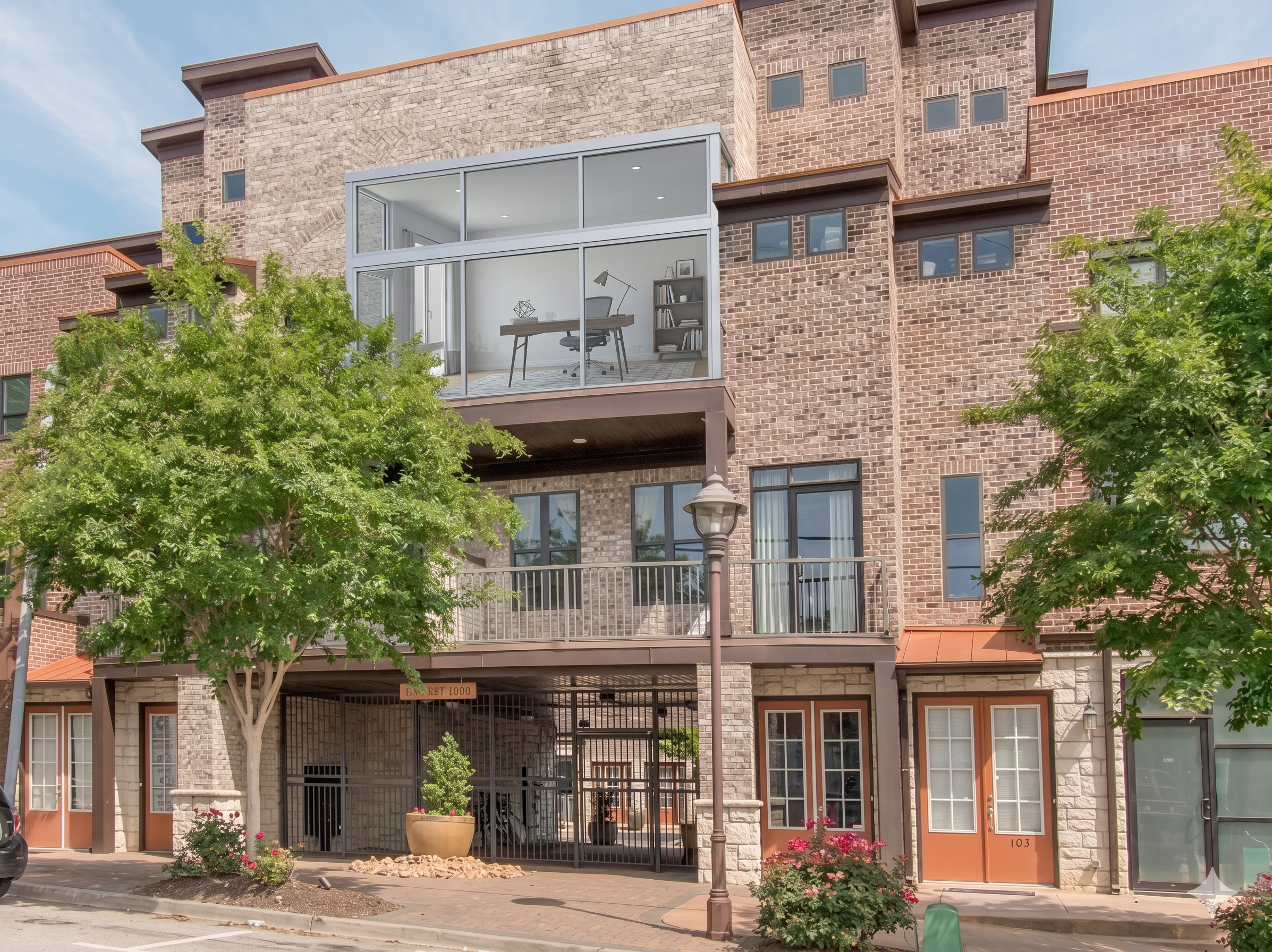
Blandtown is officially recognized as a neighborhood in NPU-D, on the Upper Westside of Atlanta. The boundaries are tight: roughly Huff Road as the spine, running from Howell Mill Road on the east end to Marietta Boulevard on the west, with the active CSX and Norfolk Southern rail lines forming the southern edge and the residential pockets of Berkeley Park and Underwood Hills bordering to the north.
The original residential blocks of Blandtown were Fairmont Avenue, Boyd Avenue, English Street, and Culpepper Street. Those streets still exist. Most of the homes that stood on them in 1950 do not.
Today the neighborhood is functionally divided into three layers stacked on top of each other:
The historic core — what's left of the original Black residential settlement, mostly along English Street, with a small handful of pre-1950s homes still standing
The industrial layer — active rail yards, truck terminals, distribution warehouses, and the legacy footprint of decades of heavy industrial zoning
The new residential layer — townhome developments, condo buildings, and mixed-use projects built primarily after 2010, including West Town, M West, Apex West Midtown, Alexan MetroWest, and a steady stream of new construction along Huff Road and the side streets feeding into it
When buyers tell me they want "Blandtown," they almost always mean the new residential layer — they want a townhome or condo within walking distance of the BeltLine, the Goat Farm, and the West Midtown restaurant scene. That's a real and valid buy. But the layers matter, because they affect what you'll see, hear, and live next to depending on which block you land on.
The History You Need to Know Before You Buy Here
Most neighborhood guides skip this section. I'm not going to.
Blandtown was named for the Bland family — Samuel Bland, his wife Viney, and their son Felix — who were Black, and who purchased four acres in this area in 1872, just years after Emancipation. Long-running local lore claimed Felix Bland was a former slave who received the land from a white former slaveowner. Recent research has corrected that record: Viney and Samuel Bland were Black themselves, and Felix was their son, never enslaved. The land changed hands over the following decades, but the Bland name stayed attached to the neighborhood that grew up here.
By the 1880 census, the area was already known as Blandtown. It became a thriving African American neighborhood of more than 200 homes, with rail lines arriving in the 1890s, mills, factories, and jobs following soon after. The community supported four churches, schools, and a public health clinic. WERD, the first Black-owned radio station in the country, built its broadcasting tower in Blandtown.
In 1928, a fire swept through and burned 15 homes, two restaurants, and a church, leaving 75 people homeless. The community rebuilt and continued to thrive into the early 1950s.
Then the City of Atlanta annexed Blandtown as part of its 1952 expansion, and in 1956 the city rezoned the area from residential to heavy industrial. The rezoning was a deliberate act designed to break up a cluster of African American residences and dilute the power of the Black vote. Heavy industry moved in. Residents were displaced. A new elementary school named for John P. Whittaker, a registrar at Atlanta University, opened in 1959 but was closed by 1974. By 2002, the area's last remaining school had closed.
In 1960 there were 370 residents. By 1990, the population had dropped 72%. By 2020, only four pre-1950s homes were still standing in the original residential core. The Norfolk Southern and CSX rail yards opened in the area in 1957, hardening the industrial character of the neighborhood for the next several decades.
Through the 1980s, residents tried to fight back. They pushed for rezoning back to residential. They had support from then-councilwoman Clair Muller. Nottingham Chemical and other industrial companies on the ground actively opposed the residential rezoning push, and it never succeeded. The neighborhood that the city dismantled never got the formal protections that would have allowed it to come back on its original residential terms.
The current wave of redevelopment started in the late 1990s and accelerated heavily after 2010, driven by warehouse-to-loft conversions, the Westside Provisions District, and proximity to the Atlanta BeltLine's Westside Trail and Connector. Two streets in the West Town development are named in memory of Azalee Stewart Hester Wharton, a longtime president of the Blandtown Neighborhood Association — one of the few formal acknowledgements of the people who held this community together while it was being actively undermined.
The "Welcome to Blandtown" sign on English Street — and the "Heart of Blandtown" billboard nearby — are works by local artist and resident Gregor Turk, whose ongoing project is to keep the Bland family's legacy and the neighborhood's name visible as the area transforms.
I tell buyers this history not as a guilt trip and not as a marketing angle. I tell it because if you're buying here, you should know what's under your feet. You should know why the streets are named what they're named. You should know that the "emerging neighborhood" framing isn't quite right — Blandtown isn't emerging. It's returning, after the city actively dismantled it. That context shapes how you understand the neighborhood you're moving into.
The Civil War Era Context
The land that became Blandtown sits just north of the site of the Battle of Peachtree Creek, one of the major engagements in General Sherman's 1864 Atlanta campaign. The Civil War was fought over the institution of chattel slavery — the Confederacy's own founding documents named it directly as the cause — and the campaign that swept through this part of Atlanta was part of the broader Union effort to end the Confederacy and the system it was built to protect.
But the Union victory was not what put land in Black hands. Federal Reconstruction-era promises around Black landownership — including Sherman's Field Order No. 15 and the famous "40 acres" provision — were largely reversed within months and never delivered at scale. Black families who acquired land in the post-war South did so in spite of the systems around them, not because those systems were finally working. They bought land while Black Codes restricted their movement, while sharecropping replaced slavery as the dominant labor system, and while Reconstruction's protections were being actively dismantled.
Samuel and Viney Bland purchased their four acres in 1872 — seven years after the war ended, in the narrow window before Reconstruction collapsed entirely — and what they did with that land for the next several decades is the story. They held it. They passed it down. They built a community on it that grew to more than 200 homes. The Bland name stayed attached to the neighborhood not because the federal government protected it, but because the family fought to keep it.
The Huff House, which stood at the corner of Huff Road and Ellsworth Industrial Avenue until it was demolished in 1954, was for decades the oldest house in the City of Atlanta. Built in 1854 or 1855, it overlooked the Peachtree Creek battlefield site. That house came down to make way for the Rushton Toy Factory, which itself was demolished in 2008 to make way for the Apex West Midtown residential development. Layers of history compressed into the same parcel of ground.
When you're walking Blandtown today, you're walking on land where the Confederacy fought and lost, where Black families built and sustained one of the first Black settlements near Atlanta against active institutional resistance, where the city worked deliberately to dismantle that community in the 20th century, and where the most recent wave of redevelopment is now writing the next chapter on top of all of it.
What Does Blandtown Cost? Home Prices in 2026
Let me give you honest numbers.
In January 2026, Blandtown home prices were up 5.9% compared to last year, selling for a median price of $560K. Homes sold after an average of 159 days on the market, compared to 119 days the year before, with 5 homes sold in January versus 10 the prior year.
That's three important data points worth sitting with.
The first is that Blandtown has held value while the broader Atlanta market softened — in March 2026, Atlanta home prices were down 3.3% compared to last year, with a median price of $440K and homes selling after 69 days on market. Blandtown bucked the trend on price.
The second is that days on market nearly doubled year-over-year. Inventory is sitting longer here, sales volume is down, and that's consistent with what I'm seeing on the ground in this corridor. The rapid-velocity new-construction townhome market that defined 2021 and 2022 has cooled. Buyers have leverage they didn't have two years ago.
The third is the volume drop — 5 homes sold in January versus 10 the prior year. That's a 50% decline in transaction volume in a single year. When buyers ask me whether Blandtown is "hot" or "cold," I tell them it's neither. It's repricing. New construction projects that were priced for 2022 demand are still working their way through the system, and the equilibrium is being recalibrated in real time.
Active inventory tracks consistently with that picture. Blandtown currently has roughly 27 residential homes for sale, with a median list price around $518,000 and an average price per square foot near $383. Listings range from $462,450 in the lower quartile to $799,000 in the upper quartile, with an inventory mix that skews heavily toward newer construction (most listings are around 3 years old) and breaks down into roughly 12 condos, 6 single-family houses, and 9 townhouses.
For the broader Blandtown / Berkeley Park combined area, NeighborhoodScout reports a median real estate price of $624,958 — higher than 85% of Georgia neighborhoods and 74% of U.S. neighborhoods — with an average rental price around $3,052. Roughly 77.5% of the residential real estate in the combined area was built in 2000 or later, which is one of the highest concentrations of newer housing stock anywhere in metro Atlanta.
Here's how price tiers actually shake out on the ground:
Under $400K — Limited inventory. Mostly 1-bedroom and smaller 2-bedroom condos in older mid-2010s buildings, or older townhome resales that need updating. M West and similar communities occasionally have units in this band.
$400K–$550K — The 2-bedroom condo and entry-level townhome band. Communities like M West, Apex West Midtown, and Alexan MetroWest fall in this range. Most units are 2 bed / 2.5 bath, multi-level construction, with shared parking decks or attached garages.
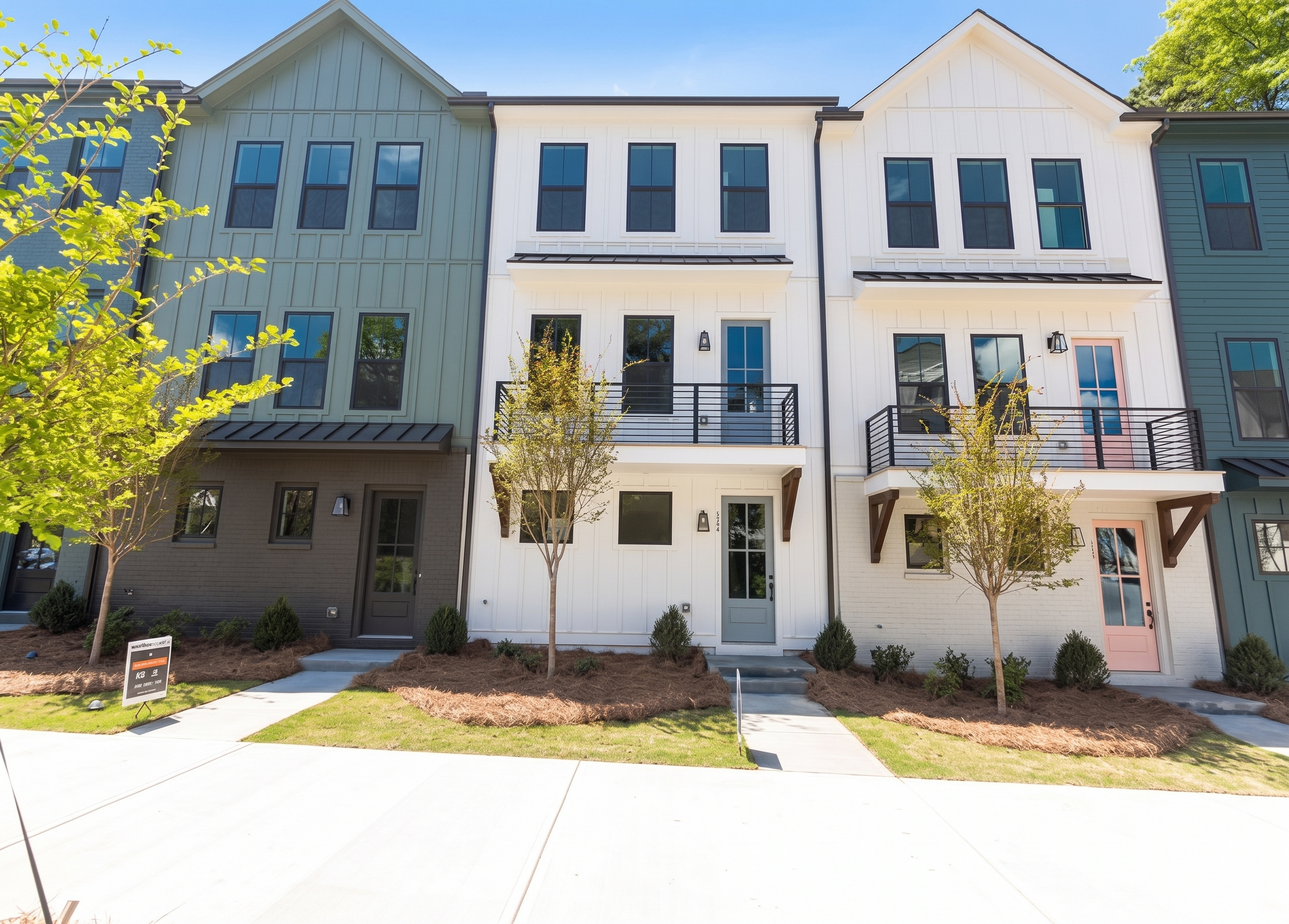
$550K–$750K — The 3-bedroom townhome heart of the market. New construction by builders like Brock Built (the West Town community), 3-story floor plans, rooftop decks, attached two-car garages, BeltLine-walkable.
$750K–$1.1M — Premium townhomes, larger floor plans, corner lots, rooftop terraces with skyline views, and a small number of detached new construction homes. The Westtown community currently shows the highest average sale price in Blandtown, averaging around $892,888.
Over $1.1M — A small but growing band of larger detached new construction and a handful of fully-renovated older homes. This is where the neighborhood is headed, but not where most of its current inventory sits.
These are real numbers based on current MLS data and Redfin's January 2026 reporting. By the time you read this, prices will have moved. Reach out for a current pricing pull on the specific block or building you're considering.
Why Buyers Choose Blandtown
The pitch for Blandtown is specific and worth naming directly:
BeltLine access without intown sticker shock. The Westside Trail and Westside BeltLine Connector run within walking or short biking distance of most Blandtown townhome developments. You can be on the BeltLine in 5–10 minutes by foot from many addresses, and on the connector loop heading toward the Eastside without ever getting in a car. That's a real lifestyle benefit that costs you $200K+ more in Old Fourth Ward, Inman Park, or Reynoldstown.
Walkability to West Midtown. The Westside Provisions District (West Egg, JCT Kitchen, Taqueria del Sol, Bocado, Cooks & Soldiers), The Works, Star Provisions, and the Howell Mill Road retail corridor are all within a 10-minute drive or a longer walk. The Goat Farm Arts Center is in the neighborhood. Atlantic Station is a short drive east.
New construction inventory at scale. Unlike most intown neighborhoods, Blandtown has actual new-construction inventory available — not 1920s craftsman with deferred maintenance, but newer townhomes with modern systems, energy-efficient builds, and warranty coverage. For relocation buyers and first-time buyers who don't want a renovation project, that's significant.
Highway access in every direction. I-75 is minutes away. I-285 connects from Marietta Boulevard. Hartsfield-Jackson is a 20-minute drive most of the day. Buckhead, Midtown, and Downtown are all under 15 minutes off-peak.
Townhome HOA living without the suburban tradeoffs. Most of the new construction here is fee-simple townhome with HOA, which means lawn care, exterior maintenance, and shared amenities are managed. You get the lock-and-leave benefits without giving up intown access.
That's the case for the neighborhood. Now let me tell you what to think about before you commit.
What You Need to Think About Before You Buy in Blandtown
These aren't dealbreakers — they're things buyers consistently underestimate when they first walk a Blandtown property.
The rail yards are still active. Norfolk Southern and CSX still run yards along the southern edge of the neighborhood. Depending on the block and the building's orientation, you'll hear train horns, you'll feel some vibration on certain nights, and there's truck traffic on the industrial streets. Buyers from quieter cities consistently tell me at the second showing that they didn't notice it the first time. Always do a second walk-through at a different time of day, including evening.
Heavy industrial uses still operate inside the neighborhood boundaries. The 1956 rezoning was never reversed. There are still active warehouses, distribution facilities, and industrial businesses scattered through the area. Some blocks feel fully residential. Others feel transitional. That mix is part of what's keeping prices accessible — but it's also what you're buying next to.
Truck traffic on Huff Road and Marietta Boulevard. These are working corridors. Marietta Boulevard especially carries heavy truck volume. If you're buying a townhome with a primary suite facing Marietta, that matters.
HOA fees on new construction townhomes. They run from $200 to $500+ per month depending on community and amenities. Always run the full monthly carrying cost — principal, interest, taxes, insurance, and HOA — before you fall in love with a list price.
Days on market are extending. The 159-day median days on market in January is real. If you're a seller looking at recent comps and assuming a fast sale, recalibrate. If you're a buyer, that means there's room to negotiate — and it also means you should look closely at what's been sitting and why.
The "BeltLine adjacent" framing varies by block. Some Blandtown townhomes are genuinely a 5-minute walk to the Westside Trail. Others are 12–15 minutes, across busy streets, and effectively require a car or a quick drive to access. Always test the walk yourself.
I bring these up not to talk you out of the neighborhood. I bring them up because the marketing language around Blandtown is consistently more aspirational than the day-to-day reality, and you should buy with both in your head.
What to Watch For When Touring Blandtown Homes
After working this corridor for years, here's what I tell every buyer to pay attention to on a Blandtown showing:
The HVAC zone configuration on multi-level townhomes. Many 3-story townhomes have one HVAC system serving the entire vertical floor plan, which means the third floor (often where the primary suite is) runs significantly hotter than the lower floors in summer. Two-zone or three-zone systems are worth the upcharge in this layout. Ask the listing agent or builder to specify.
Roof access and rooftop terrace condition. Rooftop terraces are a major selling feature in Blandtown townhomes. They're also exposed to weather, settling, and waterproofing issues. Always look at the seal around the door, the drainage slope, and any membrane visible at the edges. On a resale, ask about the most recent waterproofing service.
Window orientation relative to the rail yards. Some buildings face the rail corridor; some don't. A south-facing primary bedroom in a building close to the tracks will sound different than a north-facing one. Walk the property at night if possible.
HOA financial health, not just the monthly fee. A $300/month HOA with a healthy reserve fund is a much better deal than a $250/month HOA that's about to special-assess for a roof replacement. Always request the HOA financials, reserve study, and most recent meeting minutes during your due diligence period.
The walk to the actual BeltLine entrance. Map the walking route, including which streets you'd cross and whether there are sidewalks the entire way. Some Blandtown addresses are genuinely walkable to the Westside Trail. Others require crossing Marietta Boulevard or Howell Mill Road, which functionally means most residents drive.
Pre-2018 construction quality. Some of the earliest townhome builds in Blandtown (mid-2010s) used builder-grade finishes that have not aged well. By 2018 onward, the average build quality in the neighborhood improved noticeably. Always check inspection reports closely on units in older communities.
Parking situation. Most townhomes have attached garages, but some condo communities rely on shared deck parking with assigned spaces. Confirm what's deeded to the unit, what's permitted on-street, and what guest parking looks like.
This is where having an agent who knows the neighborhood block-by-block matters. The MLS listing won't tell you most of these things. The walk-through will, if you know what to look for.
Streets and Communities in Blandtown
Most of the inventory here is in named developments rather than freestanding addresses. Here's what you'll actually see on the MLS:
West Town — Brock Built Homes development on the western side of the neighborhood. Newer construction townhomes (mostly post-2018) with floor plans like the Daisy Plan and Edgemont Plan. Features include rooftop terraces, two-car garages, and BeltLine proximity. Two streets in the development are named for Azalee Stewart Hester Wharton, longtime president of the Blandtown Neighborhood Association — a meaningful gesture in a neighborhood with this history.
M West — One of the older established townhome communities in Blandtown, with units dating to the mid-2010s. 3-story floor plans, modern open layouts, walkable to The Works, Dr. Scofflaw's Brewing, and Bone Garden Cantina. Inventory turns more frequently here than in newer-build communities.
Apex West Midtown — Built on the site of the former Rushton Toy Factory (which itself replaced the historic Huff House, demolished in 1954). Mid-rise condo and townhome inventory, mixed-use commercial on the ground floor.
Alexan MetroWest — Larger mixed-use community along the Huff Road corridor.
The Goat Farm Arts Center area — A late-19th-century industrial complex repurposed into one of Atlanta's most distinctive arts venues. The surrounding streets have a mix of older homes, new construction infill, and creative live-work spaces.
English Street — The historic spine of the original Blandtown residential community. Home to the artist-installed "Welcome to Blandtown" sign and "Heart of Blandtown" billboard. A handful of pre-1950s homes still stand here.
Fairmont Avenue, Boyd Avenue, Culpepper Street — The other historic original streets of the neighborhood. Mostly redeveloped, but the street grid is unchanged.
Huff Road corridor — The neighborhood's main spine. Mix of new condo developments, older industrial, restaurants and retail.
Getting Around: Honest Commute Numbers from Blandtown
Off-peak times are easy. Rush hour is where Atlanta neighborhoods either work or don't. Here's the honest version:
Downtown Atlanta: 12–15 minutes off-peak via I-75 South or surface streets through Georgia Tech. During morning rush (7–9 AM), expect 20–30 minutes depending on the connector and direction.
Midtown: 8–12 minutes off-peak. Rush hour adds 10–15 minutes.
Buckhead: 12–18 minutes off-peak via Howell Mill or Northside Drive. Rush hour can stretch this to 25–35 minutes northbound.
Perimeter / Sandy Springs: 20–25 minutes off-peak via I-75 to GA-400. Rush hour northbound on I-75 is one of Atlanta's worst stretches — plan for 35–50 minutes.
Hartsfield-Jackson Airport (ATL): 18–25 minutes off-peak via I-75 or I-85 South. During rush hour, 30–45 minutes is more realistic.
Emory / CDC / VA Hospital: 20–30 minutes off-peak. Rush hour can extend to 40+ minutes.
Cumberland / The Battery: 15–20 minutes off-peak via I-75 North.
MARTA bus access runs along Howell Mill Road and Marietta Boulevard. The closest MARTA rail stations are Arts Center (about a 12-minute drive) and Bankhead (about 8 minutes). For most Blandtown buyers, MARTA rail isn't a primary commute option — driving and BeltLine biking dominate.
The honest summary: Blandtown commutes well to Midtown, Downtown, and the airport off-peak. Buckhead is doable. Anything that requires northbound I-75 during rush hour will test your patience. If you're working in Sandy Springs or Alpharetta, this isn't your neighborhood.
Things to Do In and Around Blandtown
Blandtown's geographic position is its biggest amenity — it sits inside one of Atlanta's most concentrated food, drink, and creative corridors.
In the neighborhood:
The Goat Farm Arts Center — A late-19th-century industrial complex now home to artist studios, performance space, and event venues. Historic, distinctive, and active.
Bone Garden Cantina — Long-running Mexican spot with a strong neighborhood following.
Dr. Scofflaw's Brewing — Local brewery with a taproom.
The Works — Mixed-use development with restaurants, retail, and gathering space, anchoring the eastern end of the neighborhood.
Atlanta Food Truck Park & Market — On Howell Mill Road, a rotating lineup of trucks that pulls a consistent local crowd.
Westside BeltLine Trail and Connector — Walkable from most Blandtown addresses.
Within a 5-minute drive (functionally part of the neighborhood for daily life):
Westside Provisions District — JCT Kitchen, Taqueria del Sol, West Egg Café, Bocado, Cooks & Soldiers, Star Provisions market, and a roster of design and home goods shops.
The Optimist — Chef Ford Fry's seafood-driven restaurant, one of the most consistently acclaimed kitchens in the city.
Bacchanalia — Atlanta's longest-running fine dining destination, relocated to the Westside.
Twisted Soul Cookhouse & Pours — Chef Deborah VanTrece's globally-influenced soul food restaurant.
Jeni's Splendid Ice Creams — Anchor of the Westside Provisions retail mix.
TopGolf Atlanta-Midtown — On Ellsworth Industrial, just south of the neighborhood.
Parks and outdoor space:
Westside Reservoir Park — A short drive, with extensive trails and views.
Atlanta BeltLine Westside Trail — Walkable to the entrance.
Tanyard Creek Park — Nearby, in the Collier Hills area.
The food and drink density on this side of town is one of the highest concentrations in Atlanta. You can eat extremely well within a 10-minute radius for years without repeating yourself.
Schools
Blandtown is part of Atlanta Public Schools (APS), and zoning runs through the North Atlanta cluster.
The general APS attendance zoning for the Blandtown area:
Elementary: E. Rivers Elementary School (4181 Northside Pkwy NW)
Middle School: Sutton Middle School (multiple campuses, North Atlanta cluster)
High School: North Atlanta High School (4111 Northside Pkwy NW)
North Atlanta High School is one of APS's largest comprehensive high schools, with extensive AP offerings, a strong magnet program, and substantial co-curricular activity.
APS attendance zoning can change, and within Blandtown specifically, charter and partial school choice options apply for some addresses. Always verify the current school zoning for the specific property address before relying on attendance assumptions. APS publishes its current attendance zone maps online, and I can pull current zoning for any specific address you're considering.
There are also private school options within reasonable distance, including The Westminster Schools, The Lovett School, The Galloway School, and Trinity School.
Research and visit schools to determine fit for your family. Always verify zoning by specific property address.
Comparing Blandtown to Nearby Neighborhoods
Blandtown sits inside a cluster of intown options that buyers commonly consider together. Here's how it stacks up:
Blandtown vs. Berkeley Park Berkeley Park is the residential neighborhood directly north of Blandtown, with more single-family inventory and an established mid-century street grid. Berkeley Park is quieter, more traditionally residential, and generally pricier on a per-square-foot basis for single-family. Blandtown wins on new construction inventory, BeltLine proximity, and townhome volume. Berkeley Park wins on yard sizes and quieter streets.
Blandtown vs. Underwood Hills Underwood Hills is the residential pocket between Blandtown and Buckhead, with a mix of mid-century homes and newer infill. Generally more single-family-focused than Blandtown, slightly higher entry prices, and a quieter character. Blandtown is the better fit if you want walkability to West Midtown restaurants and BeltLine access. Underwood Hills works better if you want a true single-family neighborhood with established character.
Blandtown vs. Home Park Home Park sits east of Blandtown, closer to Georgia Tech and Midtown. Older housing stock, smaller homes, more walkability to Tech and Midtown. Blandtown is generally newer construction with more amenities and larger floor plans; Home Park is more affordable on entry-level inventory but shows its age.
Blandtown vs. Old Fourth Ward This is the cross-town comparison most relocation buyers eventually make. Old Fourth Ward has more BeltLine frontage, more mature restaurant density, and longer-established neighborhood character. Blandtown has substantially more new construction inventory at lower price points than O4W's premium tier. If your budget is $500K–$700K and you want a new townhome on the BeltLine, Blandtown is your move. If your budget is $800K+ and you want established intown, O4W is the better fit.
Blandtown vs. Reynoldstown Reynoldstown is on the Eastside BeltLine, with a more established mix of single-family bungalows, modern infill, and townhomes. Comparable price points in many cases. Reynoldstown is more residential in character and further along in its redevelopment cycle. Blandtown is newer in feel, with more construction still active.
Blandtown vs. Westside Provisions / Westside Park area This is less a neighborhood comparison and more a question of which corner of the Westside you're choosing. Blandtown gives you more new-construction inventory and lower entry prices. The Westside Provisions / West Midtown commercial heart gives you walkability to the highest concentration of restaurants but very limited residential inventory at any price point. Most buyers end up living in Blandtown or Berkeley Park and using Westside Provisions as their amenity backyard.
Blandtown vs. Adair Park / Capitol View On the southern side of the Westside BeltLine Trail, Adair Park and Capitol View offer older single-family housing stock at substantially lower price points. The trade-off is older homes that need work, longer commute to most West Midtown amenities, and a different stage of redevelopment. Blandtown is the move if you want new construction on the BeltLine without renovation work; Adair Park or Capitol View is the move if you want an older home with character at a lower entry price and you're willing to invest in updates.
For more on these comparisons, browse my guides to Old Fourth Ward, Reynoldstown, Inman Park, and Midtown.
Who Is Blandtown Right For?
Blandtown tends to be the right fit when:
You want intown access and BeltLine walkability without paying Old Fourth Ward or Inman Park prices
You're looking for new-construction townhomes or condos rather than older homes that need work
You commute to Midtown, Downtown, the airport, or work from home
You value walkability to West Midtown restaurants and the Westside arts scene
You want a lock-and-leave lifestyle with HOA-managed exterior maintenance
You're a first-time buyer stretching to get inside the perimeter and you want a unit you don't have to renovate
You're an investor looking at appreciation in a neighborhood where new development is still active
Think carefully about Blandtown if:
You're sensitive to train noise, truck traffic, or industrial sightlines — this neighborhood still has all three
You commute regularly to Sandy Springs, Alpharetta, or any northbound rush-hour destination
You want a yard or single-family detached home with established trees — Blandtown's inventory skews heavily toward attached townhomes and condos
You prioritize school zoning above all else — APS zoning here is workable but should be researched property-by-property and against your specific needs
You want a neighborhood that feels fully "complete" — Blandtown is still in transition, with active construction, raw industrial parcels, and uneven streetscape
You're looking for the historic intown feel — most of Blandtown's housing stock is post-2010, and the historic Black community here was largely displaced before that redevelopment
This neighborhood is a strong match for buyers who understand and accept what they're walking into. It's not a strong match for buyers who want a finished, polished, established intown experience without any rough edges.
Frequently Asked Questions About Living in Blandtown
What is the median home price in Blandtown in 2026? The median sale price in Blandtown was $560,000 in January 2026, up 5.9% year-over-year. Active inventory currently shows a median list price around $518,000, with most listings being newer townhomes and condos. Days on market are running approximately 159 days, considerably longer than a year ago.
Is Blandtown the same as West Midtown? Blandtown is officially recognized as a distinct neighborhood within the Upper Westside, though most of it is marketed as "West Midtown" by listing agents and developers. Functionally, Blandtown sits inside the broader West Midtown area along Huff Road from Howell Mill to Marietta Boulevard. The Blandtown name is used in historical and official planning contexts; West Midtown is the term most buyers will see in MLS listings.
Is Blandtown walkable to the Atlanta BeltLine? Many Blandtown addresses are within a 5–15 minute walk of the Westside BeltLine Trail and Westside BeltLine Connector, depending on the specific block. Townhome communities along the western and southern edges of the neighborhood are typically closest. Always verify the actual walking route for any specific property — some addresses look close on a map but require crossing busy streets or industrial parcels.
What's the history of Blandtown? Blandtown was one of the first Black settlements established near Atlanta after the Civil War, named for the Bland family — Samuel, Viney, and their son Felix Bland — who were Black landowners that purchased four acres in the area in 1872. The neighborhood grew into a thriving community of more than 200 homes with churches, schools, and a health clinic, before the City of Atlanta rezoned it for heavy industrial use in 1956. That rezoning was deliberately designed to break up the Black residential community and dilute Black voting power. The neighborhood declined for decades and is now redeveloping as part of the broader West Midtown growth.
Is Blandtown a good investment in 2026? Blandtown has held value better than the broader Atlanta market over the past year, with prices up 5.9% year-over-year while metro Atlanta as a whole declined 3.3%. Days on market have extended significantly, which means buyers have more negotiating leverage and need to look carefully at individual properties. Long-term appreciation will likely depend on continued BeltLine investment, Upper Westside development, and infrastructure improvements. As with any specific investment decision, talk through your situation with someone who can run the numbers on the specific property and your specific goals.
What schools serve Blandtown? Blandtown falls within Atlanta Public Schools, generally zoned for E. Rivers Elementary, Sutton Middle School, and North Atlanta High School. APS zoning can vary by specific address and changes periodically, so always verify current zoning for the property you're considering.
How long does it take to drive from Blandtown to Hartsfield-Jackson Airport? Off-peak, the drive is 18–25 minutes via I-75 or I-85 South. During rush hour, plan for 30–45 minutes. Blandtown's airport access is one of its strongest commute features for frequent travelers.
Is Blandtown noisy? Blandtown still has active rail yards (Norfolk Southern and CSX) along its southern edge, active industrial uses scattered through the neighborhood, and significant truck traffic on Huff Road and Marietta Boulevard. Specific blocks vary considerably — some feel fully residential, others are more transitional. I always recommend buyers do a second walk-through at a different time of day to test noise levels honestly.
Are HOA fees high in Blandtown townhomes? HOA fees on Blandtown townhome and condo communities typically run $200–$500+ per month depending on the community, amenities, and shared maintenance scope. Always run the full monthly carrying cost — mortgage, taxes, insurance, and HOA — before committing to a budget based on list price alone.
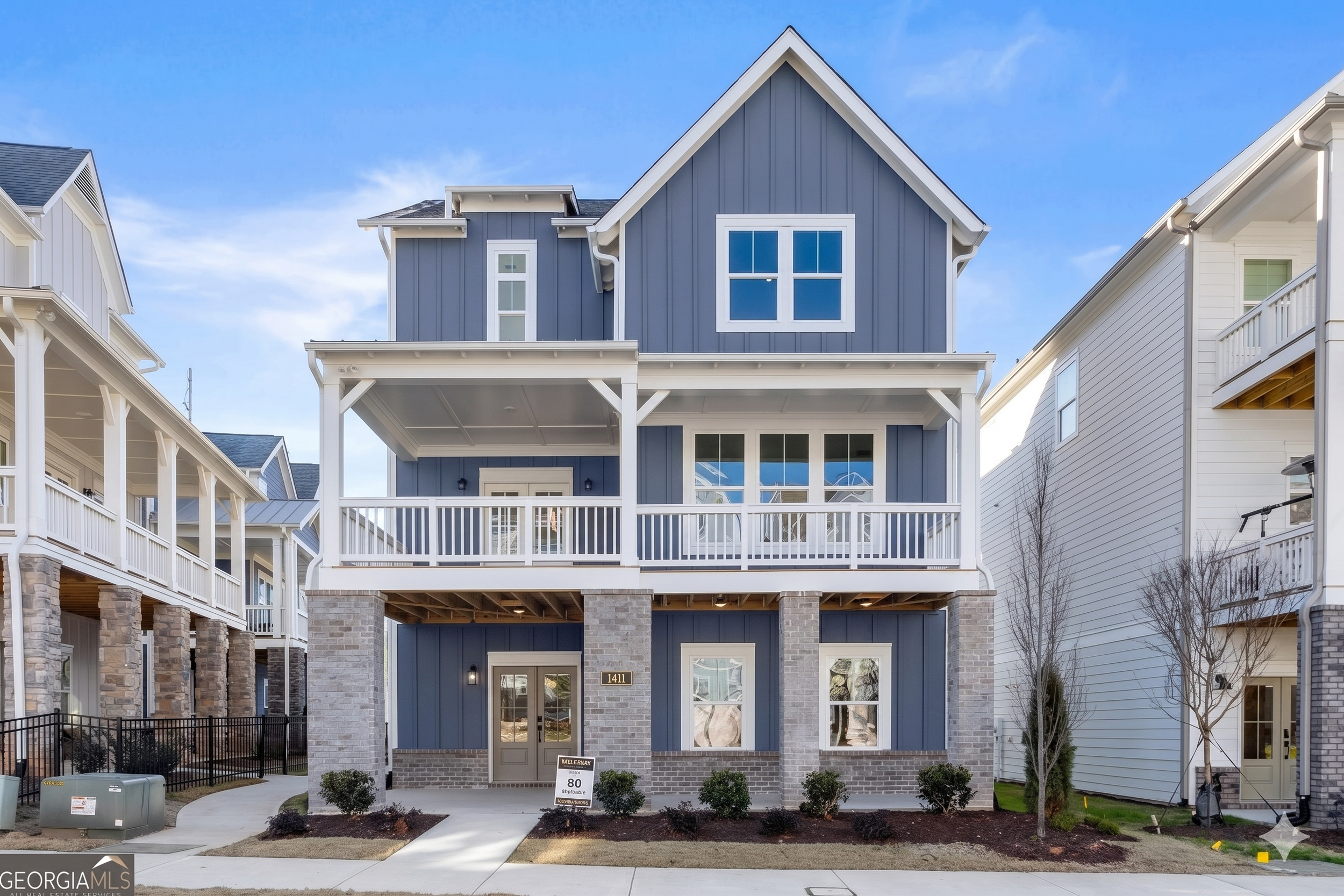
What types of homes are available in Blandtown? Inventory is heavily weighted toward newer-construction townhomes (most built after 2015) and condos in mid-rise buildings. There's a small inventory of single-family detached new construction, and a tiny number of pre-1950s homes still standing. If you want a true single-family detached home with a yard, you'll have very limited options here and should also look at Berkeley Park or Underwood Hills.
What restaurants and amenities are walkable from Blandtown? Within walking distance: The Goat Farm Arts Center, Bone Garden Cantina, Dr. Scofflaw's Brewing, The Works development, and Atlanta Food Truck Park & Market. Within a short drive: Westside Provisions District (JCT Kitchen, Taqueria del Sol, West Egg, Bocado, Cooks & Soldiers, Star Provisions), The Optimist, Bacchanalia, Twisted Soul Cookhouse, Jeni's Splendid Ice Creams, and TopGolf.
Is Blandtown a good neighborhood for first-time buyers? For first-time buyers who can stretch into the $400K–$550K range, Blandtown offers something most intown neighborhoods don't — newer construction at accessible price points with BeltLine and West Midtown access. Townhome and condo inventory is the realistic entry point. Always look at the full carrying cost including HOA, and look at multiple buildings since amenity packages and HOA fees vary widely.
How does Blandtown compare to the Eastside intown neighborhoods? Blandtown is generally newer in housing stock, more townhome-heavy, and earlier in its redevelopment cycle than Eastside neighborhoods like Old Fourth Ward, Reynoldstown, or Inman Park. Price points for comparable square footage are typically lower in Blandtown. The Eastside has a more established neighborhood character and more mature restaurant and retail density. Blandtown offers Westside BeltLine access; the Eastside neighborhoods sit on the Eastside BeltLine, which is more developed.
Final Word
Blandtown is one of Atlanta's most interesting neighborhoods to buy into right now — geographically advantaged, architecturally young, priced more accessibly than the Eastside BeltLine alternatives, and historically significant in a way most current marketing doesn't acknowledge. The buyers who do well here go in knowing what they're buying — including the rail yards, the truck traffic, the still-extending days on market, and the Black history that the city actively dismantled to make room for the heavy industry that's only now being unwound.
I work with buyers throughout Metro Atlanta and know the Westside corridor in detail — block by block, building by building, HOA by HOA. If you're considering Blandtown, comparing it against other intown options, or trying to figure out whether new construction townhome living is the right move for you, let's talk.
Visit kristenjohnsonrealestate.com or reach out directly. Come as you are, come on home.
Looking for more Metro Atlanta neighborhood guides? I've covered intown Atlanta in depth, includingEdgewood,Kirkwood,Old Fourth Ward,Inman Park,Reynoldstown,Midtown, andBuckhead. Browse the full guide series atkristenjohnsonrealestate.com.