

Living in Druid Hills Atlanta: Olmsted's Last Masterpiece and What Buyers Need to Know
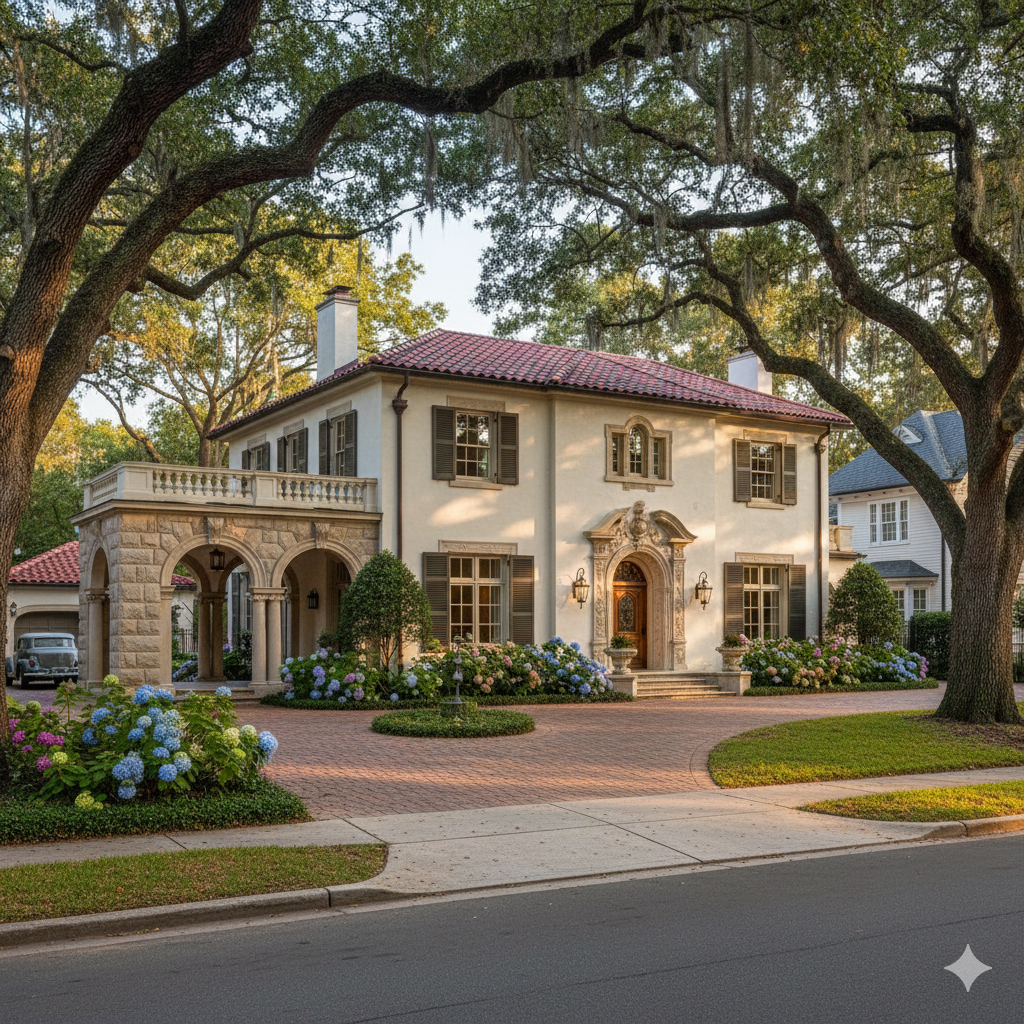
Druid Hills holds a distinction that sets it apart from every other Atlanta neighborhood: it was Frederick Law Olmsted's final commission before his death in 1903. The same landscape architect who designed New York's Central Park, the Biltmore Estate grounds, and the U.S. Capitol landscape spent his last creative energy planning this Atlanta suburb. When you drive Ponce de Leon Avenue through the six linear parks that form the neighborhood's spine, you're experiencing one of America's most important landscape architects' final vision for how people should live.
Nearly 10 years helping Atlanta buyers means I've seen plenty of neighborhoods claim historic significance. Druid Hills actually has it—both in design pedigree and in legal protection. Unlike Ansley Park where historic preservation is debated, Druid Hills has had local historic district designation since the 1980s and 1990s. If you buy here, you're subject to Certificate of Appropriateness requirements for exterior changes. No debate, no uncertainty—preservation is built into the zoning.
Here's what you need to know about buying in one of Atlanta's most architecturally significant and affluent neighborhoods, where the mean household income exceeds $238,500 and homes range from $500,000 to $6 million.
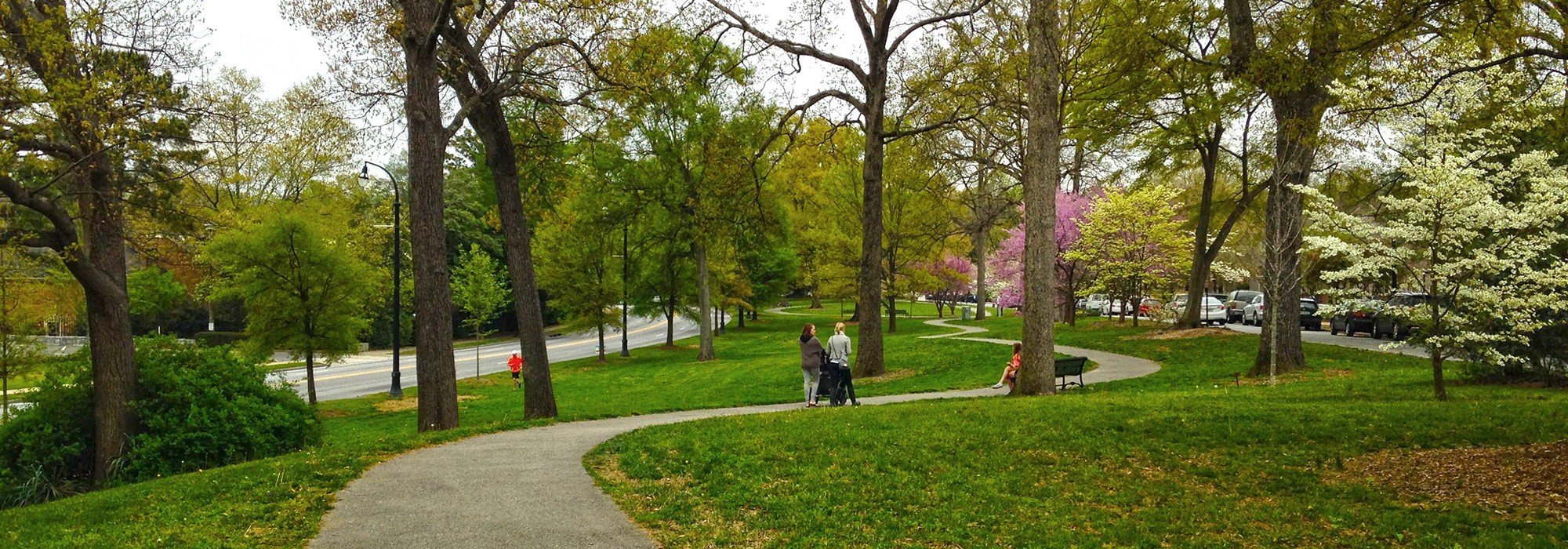
Olmstead Linear Parks
The Olmsted Legacy: Why This Design Matters
Frederick Law Olmsted's Final Work
In 1893, developer Joel Hurt hired Frederick Law Olmsted to design what Hurt called his "perfect suburb." Olmsted had already transformed American landscape architecture with Central Park, led the grounds design for the 1893 Chicago World's Fair, planned the Biltmore Estate in Asheville, and created the U.S. Capitol grounds. Druid Hills would be his last major commission.
Olmsted's plan centered on Ponce de Leon Avenue—a broad, divided parkway with six narrow public parks interlaced along a grassy median. This linear park system transformed the traditional village green concept into something new: parks that flowed through the community rather than sitting at its center.
Financial setbacks delayed the project, and before construction resumed, Olmsted had retired. The Olmsted Brothers (his sons) completed the final design in 1905, and development began that year. The neighborhood was substantially complete by 1936.
What makes Olmsted's design brilliant:
The parkway as organizing principle. Ponce de Leon Avenue isn't just a street—it's the neighborhood's central spine with parks integrated into the roadway itself. You're never driving through a park or around it. The park IS the drive.
Topography-based planning. Olmsted placed parkland in the valleys formed by Peavine Creek, with denser tree planting in pockets throughout the neighborhood and along streets. He worked with the land's natural contours rather than imposing a grid.
Deep setbacks and varied lot sizes. Spacious residential lots stipulated deep setbacks from the street, creating a sense of estate living even on smaller parcels. Larger lots along Ponce de Leon Avenue allowed for the stately mansions that define the neighborhood's character.
Integration of structure and nature. The powerful combination of formal architecture and naturalistic landscaping created what Olmsted called "a relaxing effect on the tensions of urban life." More than 120 years later, that effect still works.
The Six Linear Parks
The Olmsted Linear Park system consists of six park segments along Ponce de Leon Avenue:
Deepdene Park
Dellwood Park
Shadyside Park
Springdale Park
Virgilee Park
Oak Grove Park (also called Oakdale Park)
These 45 acres of parkland flow seamlessly into each other, separated by crossing streets but unified in design. The parks feature:
Mature hardwood forests with over 100 plant species
Winding paths for walking and running
Open lawns for gatherings
Creek valleys that provide natural drainage and habitat
Dense tree canopies that create cool, shaded spaces even in Georgia summers
The Olmsted Linear Park Alliance, founded in the 1980s, maintains and restores these parks according to Olmsted's original design principles. The parks look much as they did when first developed—a testament to both Olmsted's timeless design and the community's commitment to preservation.
Historic Protection That Actually Protects
Here's where Druid Hills differs fundamentally from neighborhoods like Ansley Park where historic designation is debated:
Druid Hills has BOTH national and local historic protection:
National Register of Historic Places (1979): The original 1,400-acre Druid Hills Historic District was listed in 1979, expanding an earlier 1975 designation of just the Parks and Parkways. This national designation recognizes significance but provides no legal protection from demolition or inappropriate alterations.
Local Historic Districts (1982-1996): Druid Hills has TWO local designations depending on whether your property is in the City of Atlanta or unincorporated DeKalb County:
City of Atlanta Landmark District (1982/1989): The Atlanta portion of Druid Hills was designated an Historic and Cultural Conservation (HCC) District in 1982. When the Comprehensive Atlanta Historic Preservation Act passed in 1989, the HCC District became a Landmark District—the highest form of protection under Atlanta law because it meets the most criteria.
DeKalb County Local Historic District (1996): The DeKalb County portion of Druid Hills received local historic district designation in 1996, administered by the DeKalb County Historic Preservation Commission.
What this means for buyers:
If you buy in Druid Hills, you WILL need a Certificate of Appropriateness (COA) to make exterior changes to your property. Depending on your location, you'll apply to either:
The Atlanta Urban Design Commission (if in the City of Atlanta portion)
The DeKalb County Historic Preservation Commission (if in the unincorporated DeKalb portion)
Changes requiring COA approval typically include:
Exterior paint color changes
Window or door replacement
Additions to the home
New construction (garages, outbuildings, pools)
Roofing material changes
Demolition
Significant landscaping alterations (in some cases)
This isn't theoretical or pending. It's been in place for 30-40 years. If you value absolute freedom to renovate however you want, Druid Hills may not fit. If you value neighborhood cohesion, architectural integrity, and property value stability that comes from strong preservation standards, this protection is an asset.
Nearly 10 years helping Atlanta buyers, I've watched neighborhoods where preservation is strong versus areas where anything goes. Druid Hills' property values have held remarkably well because the architectural character is legally protected. You're not going to wake up one day to find your neighbor demolished a 1920s Georgian mansion and replaced it with a contemporary glass box. The COA process prevents that.
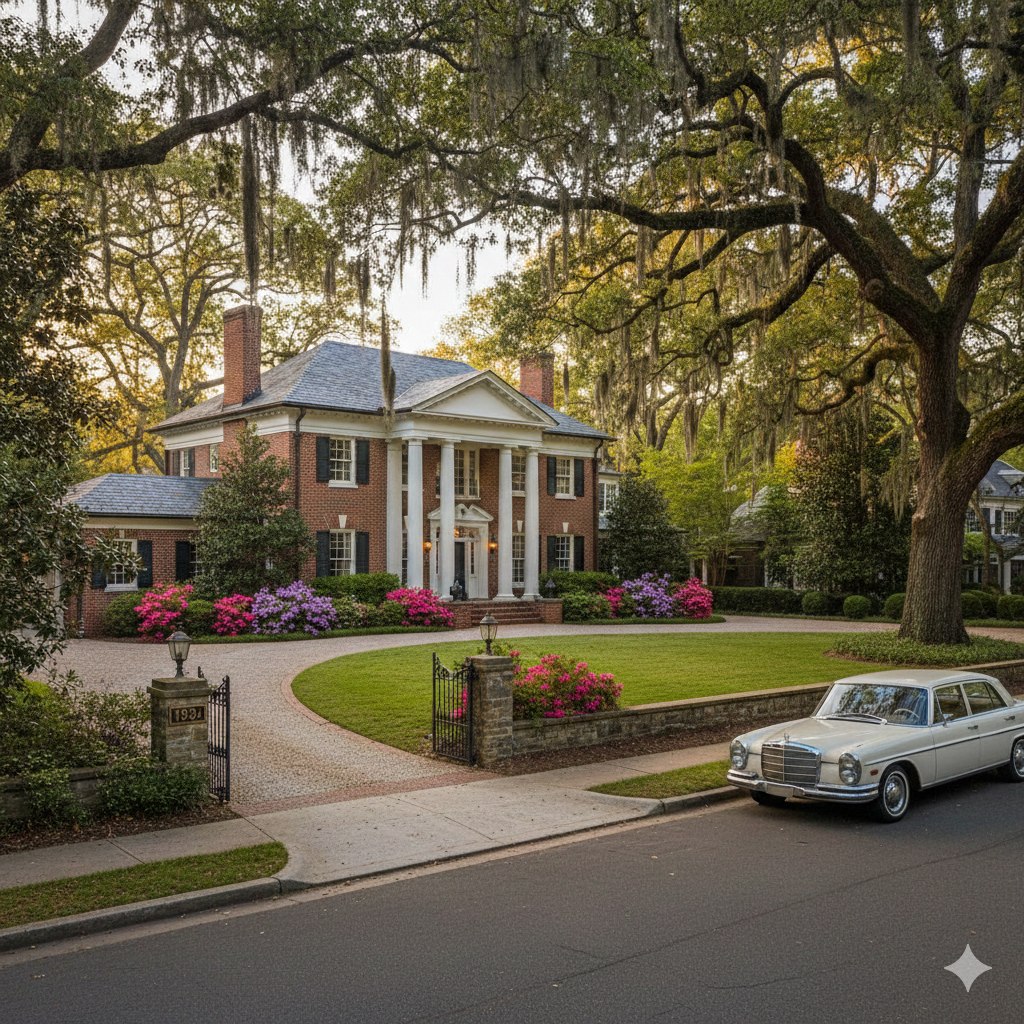
Location and Boundaries: The Complexity of Druid Hills
Druid Hills is geographically complicated because it spans both the City of Atlanta and unincorporated DeKalb County. Understanding where boundaries fall affects your schools, taxes, and which government entities control historic preservation decisions.
The Geographic Split
City of Atlanta Portion:
Bounded by Druid Hills CDP (unincorporated DeKalb County) on north and east
Morningside/Lenox Park, Virginia-Highland, and Poncey-Highland neighborhoods on west
Candler Park neighborhood on south
This section is part of NPU N (Neighborhood Planning Unit N)
Druid Hills CDP (Unincorporated DeKalb County):
Census-designated place with population of approximately 9,429 (2020 census)
Northern boundary: South Fork of Peachtree Creek
Eastern boundary: CSX railroad tracks and Decatur city limits
Western boundary: DeKalb County line (where City of Atlanta begins)
Southern boundary: Atlanta city limit
Total area: 4.2 square miles
The 2018 Emory/CDC Annexation
In January 2018, the City of Atlanta completed its largest annexation in 65 years, bringing Emory University's main campus and the Centers for Disease Control and Prevention (CDC) into Atlanta city limits. Previously, these major employers sat in the Druid Hills CDP (unincorporated DeKalb County).
This annexation affects:
Schools: Properties in the annexed area shifted from DeKalb County Schools to Atlanta Public Schools
City services: Police, fire, trash collection, and other services now come from City of Atlanta rather than DeKalb County
Taxes: City of Atlanta millage rates apply instead of unincorporated DeKalb County rates
If you're buying near Emory or the CDC, verify whether your specific property is in the City of Atlanta or still in unincorporated DeKalb County. This affects everything from your tax bill to which school district serves your home.
Proximity to Major Destinations
Druid Hills sits approximately 5 miles from Downtown Atlanta, positioned between the city core and Decatur. Key distances and commute times:
To Midtown: 10-15 minutes via Ponce de Leon Avenue or I-85 northbound
To Downtown: 15-20 minutes via I-85/I-75 southbound (longer during rush hour)
To Emory University: 5-10 minutes (some Druid Hills homes are walking distance to campus)
To Decatur: 5-10 minutes via Ponce de Leon Avenue or North Decatur Road
To Buckhead: 20-25 minutes via I-85 northbound or surface streets (significantly longer during rush hour)
To Hartsfield-Jackson Airport: 25-35 minutes via I-85 southbound (allow extra time during rush hour)
To Virginia-Highland/Inman Park: 5-10 minutes via Ponce de Leon Avenue
The proximity to Emory University is a major draw for Emory faculty, staff, physicians at Emory Healthcare facilities, and CDC employees. You can walk or bike to campus from parts of Druid Hills. For professionals working at these institutions, the commute becomes a non-issue.
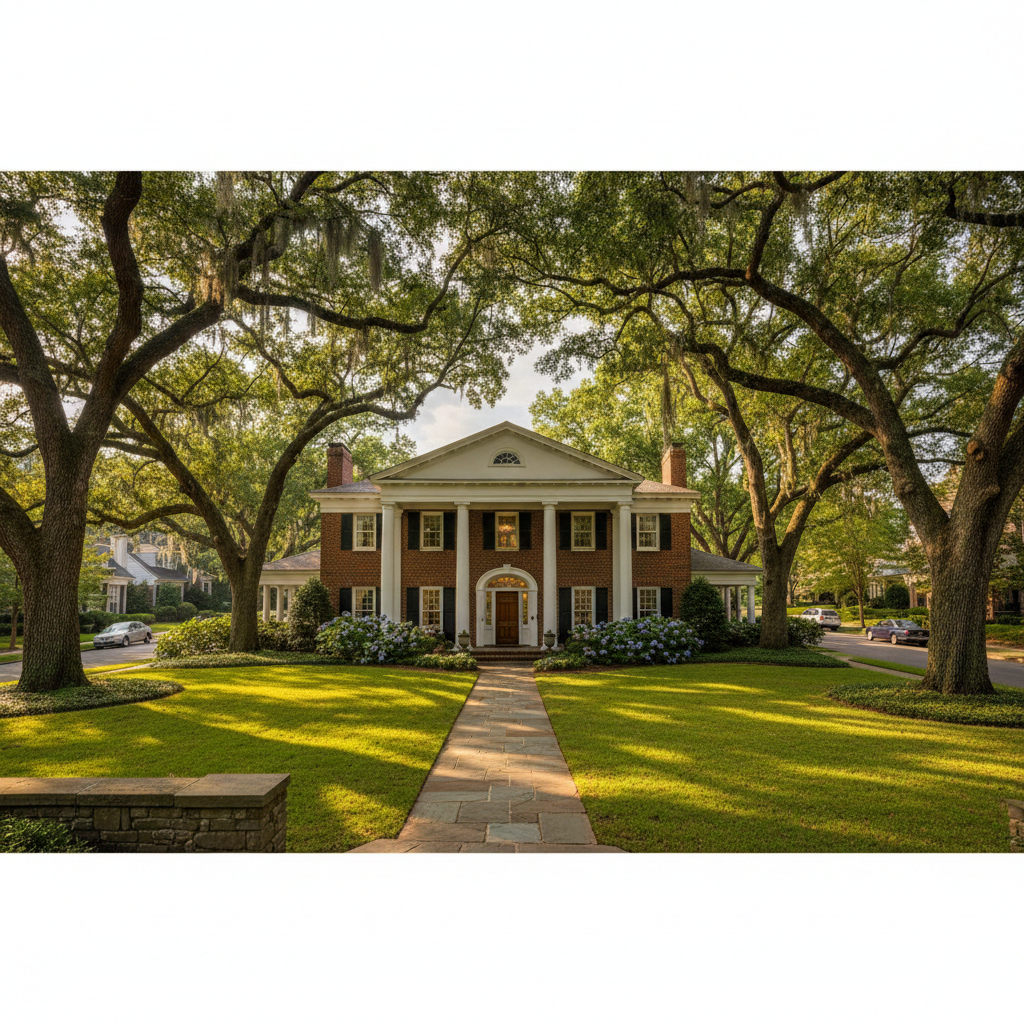
Architectural Significance: More Than Just Old Houses
The Architects Who Built Druid Hills
Druid Hills attracted some of Atlanta's most important early 20th-century architects. When you buy here, you're not just buying a house—you're potentially buying a work by a master architect.
Neel Reid: One of the South's most influential architects, Reid designed multiple Druid Hills homes. His neoclassical style defined Southern residential architecture in the early 1900s. A Neel Reid home in Druid Hills carries the same prestige as owning artwork by a recognized master.
Philip Trammell Shutze: Designer of the Swan House at the Atlanta History Center and the Fox Theatre (Atlanta's most iconic building), Shutze created several significant Druid Hills residences. His mastery of classical proportions and Italianate details is evident throughout the neighborhood.
Henry Hornbostel: Best known for designing the Emory University campus (the quadrangle and original buildings), Hornbostel also designed private homes in Druid Hills, including Callanwolde, the Gothic-Tudor estate built for Charles Howard Candler of the Coca-Cola Company.
Walter T. Downing: Noted for his Tudor Revival work, Downing designed homes throughout Druid Hills including the residence at 870 Lullwater Road NE, once home to the first woman graduate of Emory University.
Ernest Ivey and Lewis Crook Jr. (Ivey & Crook): This partnership produced significant residential work in Druid Hills during the neighborhood's development period.
Leila Ross Wilburn: One of Atlanta's first female architects, Wilburn designed Craftsman bungalows and other residential work in Druid Hills.
Architectural Styles Represented
Walking through Druid Hills is like touring an encyclopedia of early 20th-century American architecture:
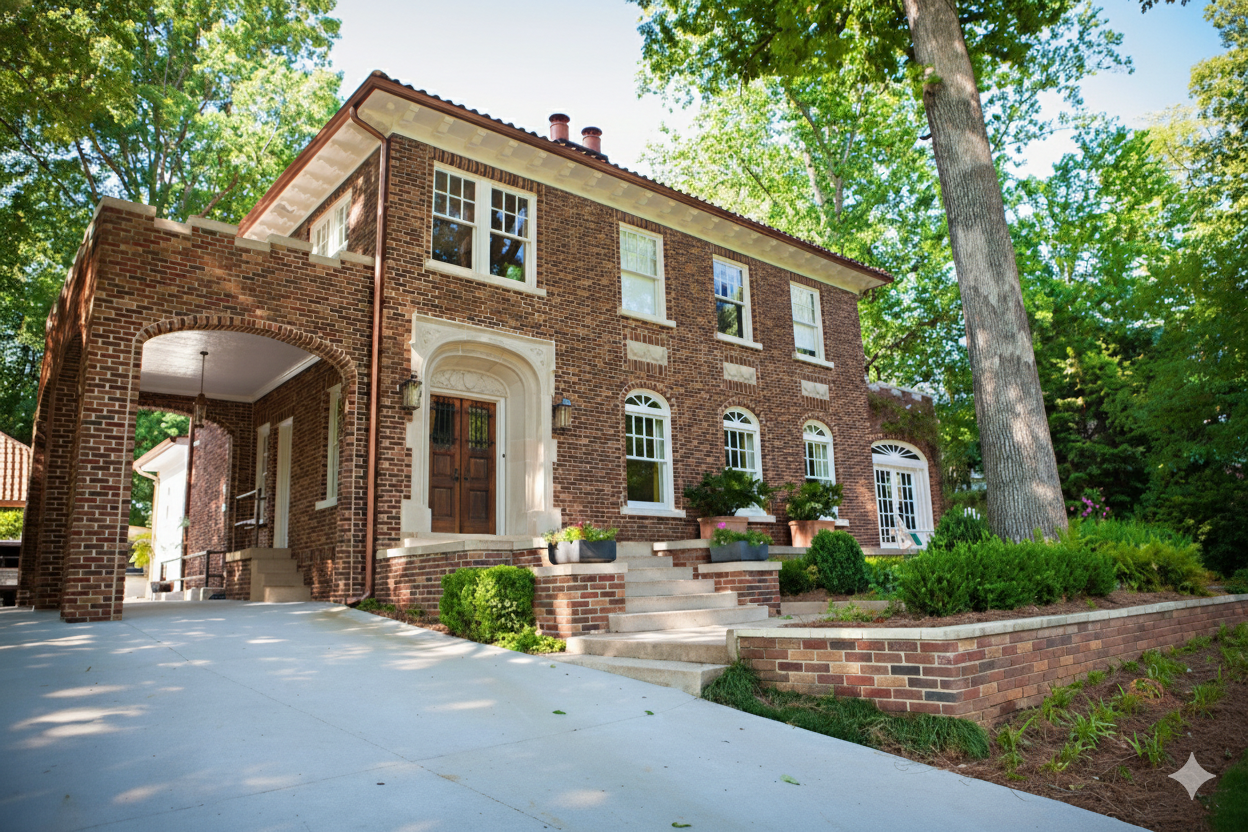
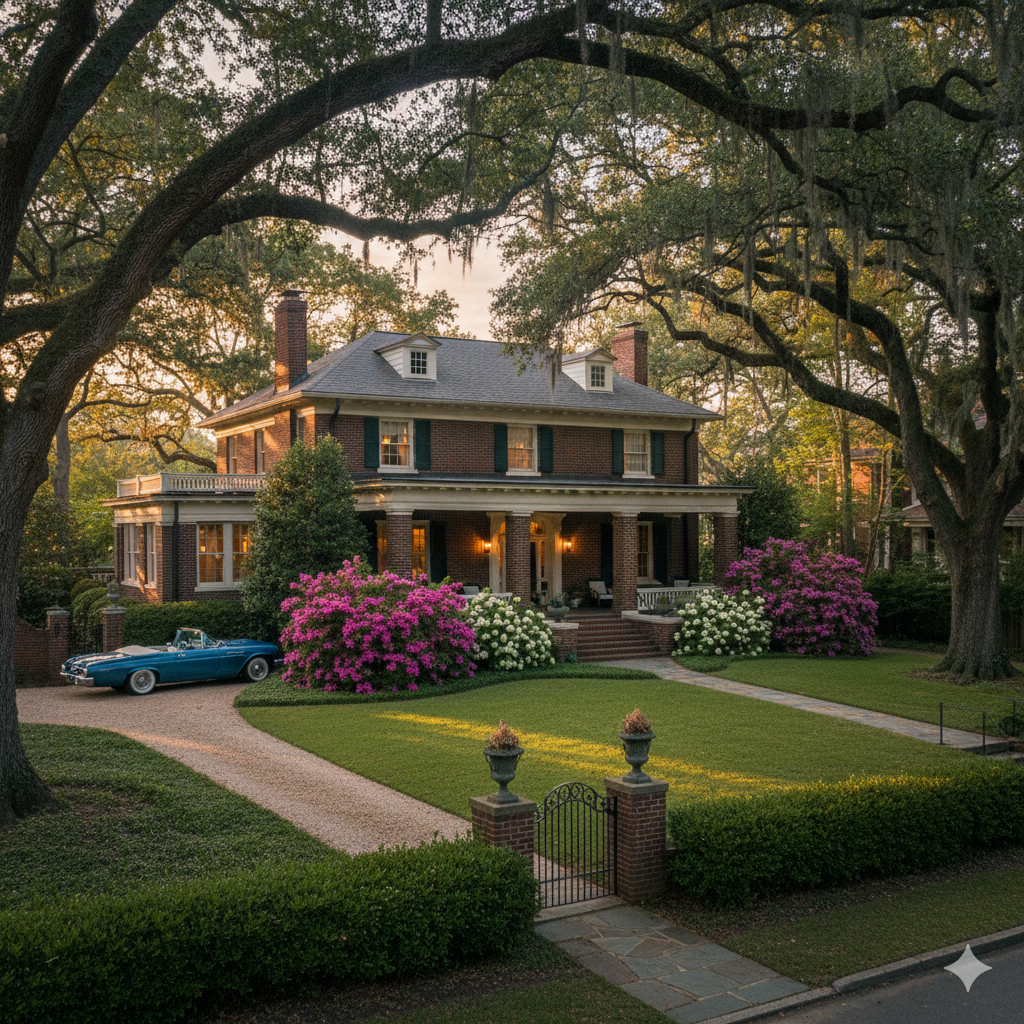
Georgian Revival: Symmetrical facades, classical proportions, brick construction, multi-pane windows, prominent front doors with fanlights or sidelights. These stately homes line Ponce de Leon Avenue and major secondary streets.
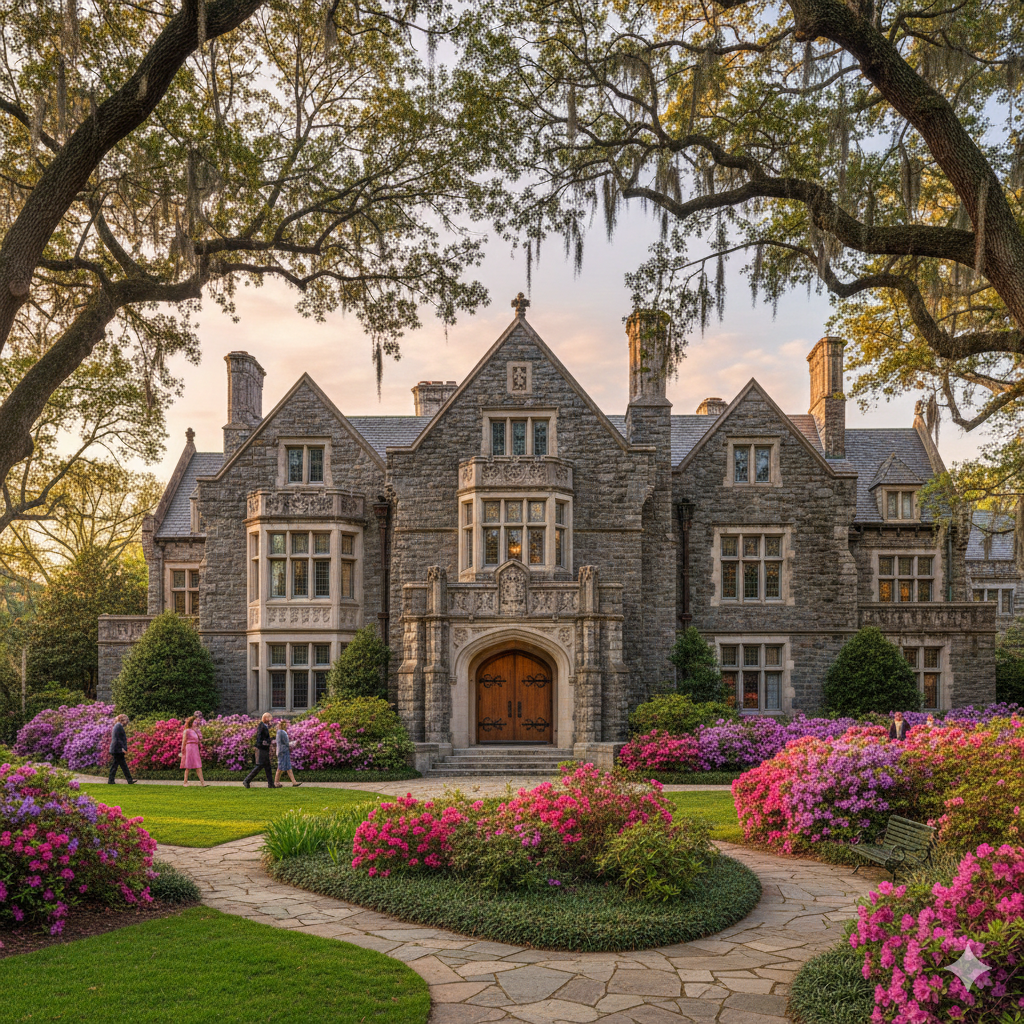
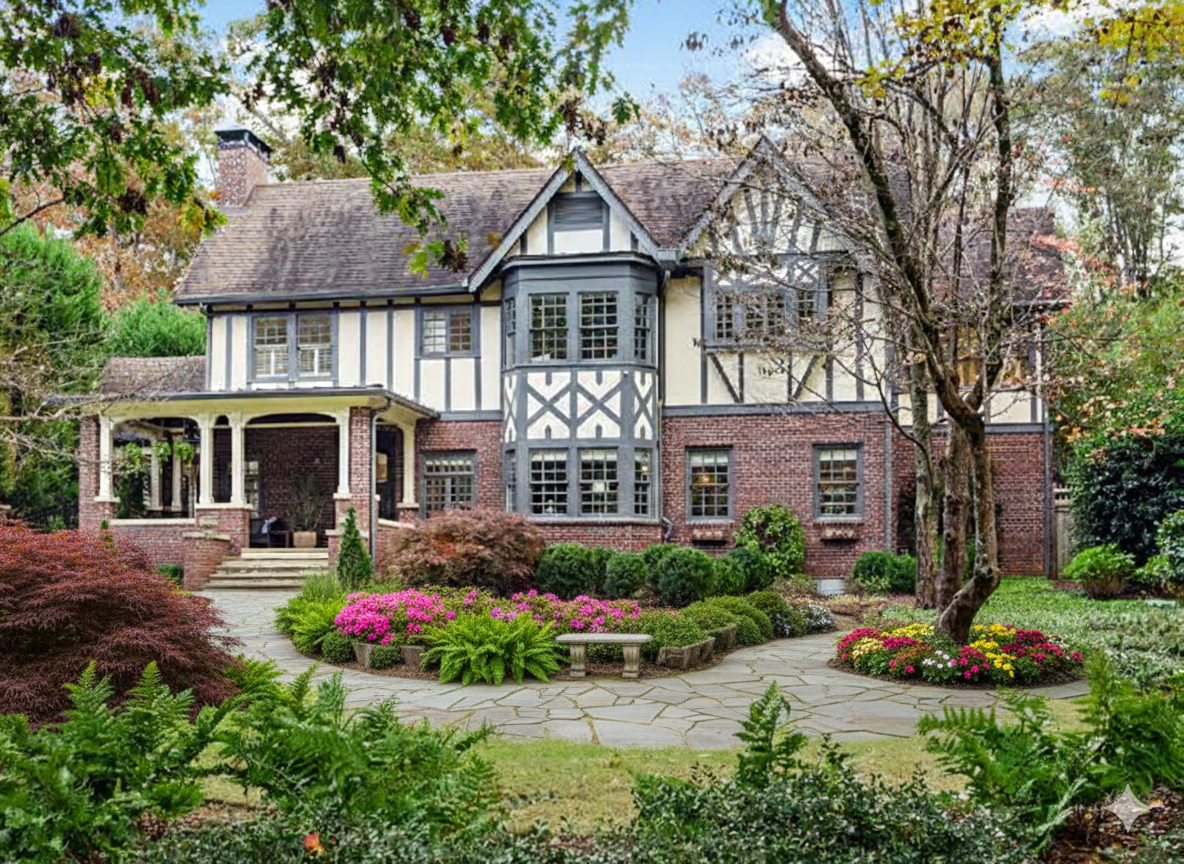
Tudor Revival: Steeply pitched roofs, decorative half-timbering, tall windows with multiple panes, massive chimneys, asymmetrical facades. Often in stone or brick with stucco.
Italian Renaissance Revival: Low-pitched tile roofs, arched windows and doorways, stucco exteriors, classical details, often with loggias or arcaded porches. These homes evoke Italian villas transported to Atlanta.
Colonial Revival: References to American colonial architecture with symmetrical facades, central chimneys, multi-pane windows, classical columns or pilasters. More restrained than Georgian Revival but similarly formal.
Craftsman Bungalow: Low-pitched roofs with wide eaves, exposed rafters, front porches with tapered columns, built-in cabinetry, natural materials. These smaller homes provide a more casual counterpoint to the grand mansions.
Classical Revival: Formal classical elements including columns, pediments, symmetrical facades, refined proportions. The most architecturally serious homes in the neighborhood.
Jacobean Revival: English Renaissance style with elaborate carved details, multi-gabled roofs, prominent chimneys, stone or brick construction. Rare but striking when present.
The variety creates visual interest while Olmsted's landscape design unifies everything. You're not looking at a monotonous streetscape of identical homes. Each property has individual character while contributing to the neighborhood's cohesive feel.
Notable Historic Properties
Callanwolde Fine Arts Center (980 Briarcliff Road NE): Charles Howard Candler's Gothic-Tudor estate, designed by Henry Hornbostel in 1920. Now a community arts center offering classes, workshops, concerts, and events. The mansion and grounds are open to the public—you can tour one of Druid Hills' most significant estates without buying it.
Rainbow Terrace: Former home of Lucy Beall Candler Owens Heinz Leide (Asa Candler's daughter). A significant estate representing the Candler family's influence on Druid Hills development.
Briarcliff (1428 Ponce de Leon Avenue): Asa Griggs Candler's mansion, now St. John's Chrysostom Melkite Church. Asa Candler was Coca-Cola's founder and purchased the Druid Hills development company in 1908, completing the neighborhood's construction.
The Candler family's deep involvement in Druid Hills development created a neighborhood designed for Atlanta's elite. The scale and quality of construction reflect that original vision.
Current Real Estate Market: What Homes Actually Cost
Price Ranges (2026 Data)
Druid Hills operates across a wider price spectrum than many buyers expect. The neighborhood's size and diversity of housing stock create opportunities from upper-middle-class to ultra-luxury.
Entry Level: $500,000 - $700,000
Smaller homes (1,200-1,800 sq ft) needing updates
Often 1950s-1970s ranch-style homes or modest bungalows
Locations on tertiary streets or edges of the neighborhood
May need significant renovation but provide entry to excellent schools and location
Typically 3 bedrooms, 2 bathrooms, single-car garage or carport
Mid-Range: $700,000 - $1,200,000
2,000-3,200 sq ft
Mix of renovated historic homes and well-maintained period properties
Craftsman bungalows, Colonial Revival homes, smaller Georgian or Tudor residences
Updated kitchens and bathrooms while preserving character
3-4 bedrooms, 2-3 bathrooms, often updated systems (HVAC, electrical, plumbing)
Good locations on secondary streets or smaller lots on primary streets
Upper-Mid-Range: $1,200,000 - $2,000,000
3,200-4,500 sq ft
Beautifully restored architect-designed homes or high-quality newer construction
Prominent locations on Ponce de Leon Avenue or major secondary streets like Lullwater Road, Springdale Road, Oakdale Road
Period details preserved with modern amenities integrated thoughtfully
4-5 bedrooms, 3-4 bathrooms, primary suites, gourmet kitchens, finished basements
Professional landscaping, mature trees, established gardens
Luxury: $2,000,000 - $4,000,000
4,500-6,500 sq ft
Significant architect-designed homes (Neel Reid, Philip Shutze, Henry Hornbostel)
Estate-scale properties with exceptional grounds
Premier locations with park views or particularly dramatic lots
Meticulous restoration or thoughtful renovation maintaining architectural integrity
5-6 bedrooms, 4-5+ bathrooms, multiple living spaces, wine cellars, pool houses
Top-tier finishes throughout: custom millwork, high-end appliances, luxury bathrooms
Ultra-Luxury: $4,000,000+
6,500+ sq ft
Landmark properties and exceptional estates
Homes that define Druid Hills' architectural significance
May include additional land (multiple lots combined)
Museum-quality restoration or new construction by top architects
Every amenity: pools, tennis courts, guest houses, professional landscaping
These homes are rare—only a handful at any given time
Median and Average Values
According to 2026 data, the average Druid Hills home value is approximately $756,803 (up 1.3% over the past year). The median value is $581,731. These figures reflect the neighborhood's full range from modest ranches to grand estates.
The mean household income in the City of Atlanta section of Druid Hills exceeds $238,500, making it the ninth most affluent neighborhood in Atlanta by that metric. The DeKalb County section has a median household income around $155,000—still well above Atlanta's overall median but less concentrated wealth than the City of Atlanta portion.
This income diversity creates a neighborhood where young professionals buying their first "real" house exist alongside established executives in multi-million-dollar estates. You'll find Emory professors, CDC scientists, physicians, attorneys, business owners, and tech executives. Economic diversity within an upscale framework.
Schools: The Emory Annexation Complication
The School District Split
Druid Hills' school situation is complicated by the 2018 Emory/CDC annexation to the City of Atlanta. Where your property sits determines which school district serves you.
DeKalb County Schools (Unincorporated Druid Hills CDP):
Fernbank Elementary School: One of DeKalb County's top-rated elementary schools. Founded in 1959 by Emory University families, Fernbank has maintained strong academics and high parental involvement. Located across from Fernbank Museum of Natural History, students benefit from proximity to this educational resource. Consistently high test scores, strong arts and enrichment programs, involved parent community.
Briar Vista Elementary School: Serves some Druid Hills residents depending on specific location. Solid academics, smaller than Fernbank.
Druid Hills Middle School: Serves all Druid Hills students in DeKalb County. Located in the North Decatur CDP. Academically strong middle school with good extracurriculars.
Druid Hills High School: Historic high school located in the Druid Hills CDP. The school was founded in 1929 and recently underwent discussions about modernization/renovation. Strong academics, good college placement, diverse student body. Some facilities are dated, but the school's academic reputation remains solid.
Atlanta Public Schools (City of Atlanta Portion, Including Emory/CDC Annexation):
Springdale Park Elementary School (SPARK): Often called Atlanta's first "green" elementary school. State-of-the-art facility opened in recent years. Offers programs including yoga, martial arts, chess club, debate team. Has already received multiple awards for academic excellence. For families in the annexed area, SPARK is the elementary option.
D.T. Howard Middle School: Serves the Atlanta portion of Druid Hills.
Midtown High School (formerly Grady High School): Renamed in recent years. Serves the Atlanta portion of Druid Hills. Strong academics, diverse student body, good college placement.
The annexation was scheduled to fully transition Emory/CDC area students from DeKalb County Schools to Atlanta Public Schools by 2024. If you're buying in the annexation area, verify current school assignments—transition timing may have shifted.
Private School Reality
Like Ansley Park and other affluent intown neighborhoods, many Druid Hills families choose private schools despite having access to good public schools. Atlanta's strong private school options and the neighborhood's high household incomes make private education common.
Popular private schools for Druid Hills families:
The Paideia School: PreK-12 progressive private school located nearby in the City of Atlanta. Known for strong academics, diverse student body, progressive educational philosophy. Tuition approximately $30,000-$35,000+ per year.
The Howard School: Small private school serving students with learning differences. Located near Druid Hills.
The Westminster Schools: One of Atlanta's most prestigious private schools. Located in Buckhead but draws students from across Atlanta. Tuition $35,000+ per year.
The Lovett School: Another top-tier Atlanta private school. Located in North Buckhead.
Pace Academy: Buckhead private school with strong academics and college placement.
Woodward Academy: Large private school in College Park with multiple campuses.
If you're planning on private schools, budget $30,000-$40,000+ per child per year. For a family with two kids, that's $60,000-$80,000 annually in after-tax dollars—equivalent to $85,000-$115,000+ in pre-tax income depending on your tax bracket. Many buyers focus entirely on what they can afford for housing and underestimate the cost of the full lifestyle.
Community and Lifestyle
Who Lives in Druid Hills
Emory University faculty and staff: Professors, researchers, and administrators attracted by proximity to campus. Short commute (or walkability) makes Druid Hills ideal for academics.
Emory Healthcare physicians and nurses: Emory's hospitals and clinics employ thousands of medical professionals. Living in Druid Hills means a 5-10 minute commute to work.
CDC employees: Scientists, epidemiologists, public health professionals working at the Centers for Disease Control. The CDC is one of Atlanta's major employers.
Established professionals: Attorneys, business executives, entrepreneurs who value historic architecture, walkable neighborhoods, and proximity to both Midtown and Decatur.
Empty nesters and retirees: Older adults who want intown living with neighborhood character, walkability to parks and cultural amenities, and a strong community culture.
Young families with high incomes: Dual-income professional couples, tech executives, successful entrepreneurs in their 30s-40s who want top schools, architectural character, and intown location.
The Emory/CDC connection creates intellectual and professional diversity. You'll have neighbors who are leading researchers, published authors, physicians treating complex cases, and public health officials working on national initiatives. This creates dinner party conversations different from what you'd find in a purely corporate executive neighborhood.
Druid Hills Civic Association (DHCA)
Founded in 1938, the Druid Hills Civic Association is one of Atlanta's oldest and most active neighborhood organizations. DHCA has played a critical role in preserving Druid Hills' character through historic designation efforts, advocacy for Olmsted's parks, and community engagement.
DHCA services and activities:
Monthly newsletter: Keeps residents informed about neighborhood news, upcoming events, and issues affecting Druid Hills.
Quarterly magazine: "The Druid Hills News" is mailed to all residents with in-depth coverage of community topics.
Committee participation: Committees covering historic preservation, transportation, safety, parks, and other neighborhood concerns. Residents can get involved based on their interests.
Community events: Social gatherings, neighborhood forums, and activities that build connections among residents.
Advocacy: DHCA represents Druid Hills interests to both the City of Atlanta and DeKalb County, depending on which jurisdiction applies.
Membership is voluntary but widely embraced. The organization has significant influence because of its longevity, track record of effective advocacy, and high participation rate among residents.
Walkability and Nearby Amenities
Emory Village: Small commercial district at the edge of Emory's campus with restaurants, coffee shops, bars, and retail. Walking distance from parts of Druid Hills. Perfect for casual meals, meeting friends for coffee, or grabbing groceries at the small market.
Olmsted Linear Park: The six parks along Ponce de Leon Avenue provide 45 acres of green space for walking, running, and outdoor activities. You can walk from one end of the neighborhood to the other on park paths.
Fernbank Museum of Natural History: World-class natural history museum with permanent exhibits, IMAX theater, and special exhibitions. The outdoor WildWoods and Fernbank Forest provide 75 acres of old-growth forest (extremely rare in urban Atlanta) with walking trails.
Callanwolde Fine Arts Center: Classes, workshops, concerts, and cultural events in the historic Candler mansion. Community arts programming accessible to residents.
Lullwater Conservation Park: Part of Emory's campus but open to the public. 154 acres of greenspace with trails, Candler Lake, and protected natural areas. Excellent for hiking, running, and nature observation.
Nearby commercial corridors: Ponce de Leon Avenue corridor (west of Druid Hills) offers restaurants, bars, shops. North Decatur Road and Clairmont Road provide grocery stores, services, and retail. Decatur Square is 5-10 minutes away with its walkable downtown district.
Druid Hills itself is primarily residential with limited commercial activity within the neighborhood. But you're close to multiple commercial areas without having them interrupt the residential character. It's a good balance—quiet streets at home, amenities within 5-10 minutes.
Practical Considerations
Property Taxes
Property taxes in Druid Hills depend on whether you're in the City of Atlanta or unincorporated DeKalb County.
DeKalb County (Unincorporated):
Total millage rate approximately 31-33 mills (varies by year and specific location)
On a $1,000,000 home: expect $11,000-$13,000 annually in property taxes
On a $1,500,000 home: expect $16,500-$19,500 annually
DeKalb County Schools funding is a significant portion of the millage rate
City of Atlanta:
Total millage rate approximately 37-40 mills when combining city, county, and school district
On a $1,000,000 home: expect $14,000-$16,000 annually
On a $1,500,000 home: expect $21,000-$24,000 annually
City of Atlanta millage adds to the county and school district rates
Property taxes are deductible on your federal income tax return up to $10,000 annually when combined with state income tax (under current federal tax law).
The Atlanta portion generally has higher property taxes than the DeKalb County portion due to the additional city millage. However, you're also receiving city services (Atlanta Police, Atlanta Fire Rescue, city trash collection) rather than county services.
Historic Preservation Requirements (COA Process)
If you're buying in Druid Hills, understand that Certificate of Appropriateness requirements are not optional. This is a legally designated historic district with enforceable regulations.
What requires a COA:
Exterior paint color changes
Window or door replacement
Additions (room additions, garage construction, sunrooms)
New accessory structures (sheds, pool houses, fences in some cases)
Roofing material changes (you can't swap standing seam metal for asphalt shingles without approval)
Demolition of any structure
Significant site work or landscaping changes (cutting large trees, major grading)
What typically doesn't require a COA:
Interior renovations (unless the building is a designated landmark)
Routine maintenance using like materials
Minor repairs
Landscaping that doesn't involve major trees or significant site alteration
The COA application process:
Determine jurisdiction: Are you in City of Atlanta (Atlanta Urban Design Commission) or DeKalb County (DeKalb County Historic Preservation Commission)?
Consult design guidelines: Both jurisdictions have published guidelines explaining what's appropriate for historic properties. Read these before planning your project.
Prepare application: Include drawings, materials specifications, photos of existing conditions, and explanation of proposed changes.
Submit application: Pay application fee (varies by jurisdiction and project scope).
Staff review: Historic preservation staff reviews application for compliance with guidelines.
Commission meeting: Complex or controversial projects may require appearance before the commission. Simple projects may receive staff-level approval.
Receive decision: Approval, approval with conditions, or denial. If denied, you can revise and resubmit or appeal.
Timeline varies but expect 30-60 days for straightforward projects, longer for complex applications.
The upside of COA requirements:
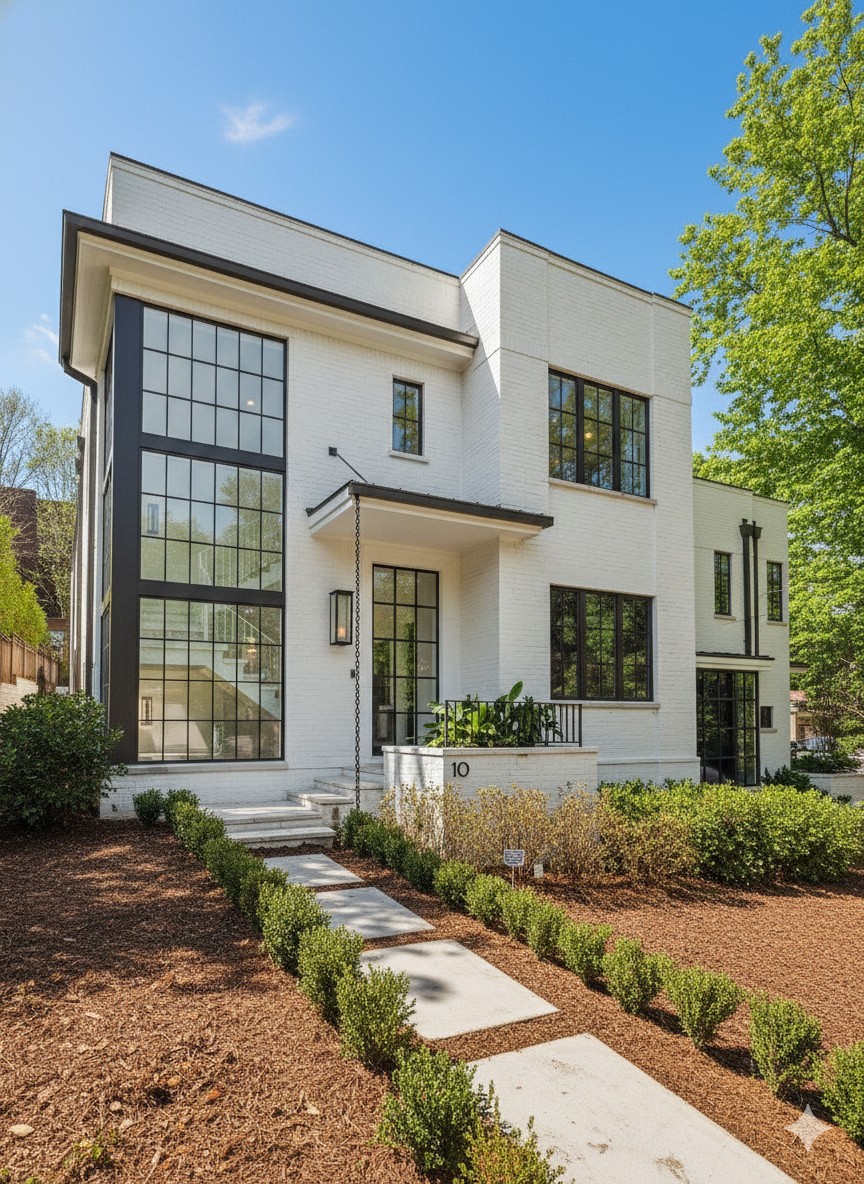
Your neighbor can't demolish the 1920s Georgian mansion next door and build a contemporary glass cube. The house across the street can't replace original windows with cheap vinyl. The property beside you can't paint their Tudor Revival home electric purple.
The regulations protect your property value by maintaining neighborhood cohesion. This isn't theoretical—nearly 10 years helping Atlanta buyers, I've watched neighborhoods without historic protections where one inappropriate project creates a ripple effect of declining property values as the character changes.
The downside of COA requirements:
You have less control over your own property. That deck you want? The commission might reject your proposed design and require modifications. The new garage you're planning? The materials, roofline, and placement all need approval. The timeline and cost of your project may increase because of the approval process and potential design modifications.
For buyers who value creative freedom and want maximum control over design decisions, this is a significant constraint. For buyers who value architectural integrity and long-term property value protection, it's a feature, not a bug.
Why Buyers Choose Druid Hills (And Why Some Don't)
You Should Buy in Druid Hills If:
Architectural significance and Olmsted's design matter to you. You appreciate the difference between a neighborhood designed by one of history's great landscape architects and a standard suburb. Olmsted's vision and the architectural pedigree add meaning to where you live.
You work at Emory or the CDC. If your commute is the primary factor, living 5-10 minutes from work (or walking distance) changes your quality of life. The time and money saved on commuting add up significantly over years.
Strong schools are essential and you want intown living. Fernbank Elementary is excellent. Druid Hills High School is solid. You're getting good public schools without moving to the suburbs. If private schools are your plan, the neighborhood's affluence means your kids' classmates' families will share similar values and resources.
Historic preservation protections appeal to you. You want confidence that the neighborhood's character won't change dramatically. The COA process ensures cohesion and protects your property value.
You value intellectual and cultural resources. Proximity to Emory's programming, Fernbank Museum, Callanwolde arts center, and the broader intown cultural scene matters to you. You want ongoing learning opportunities and cultural engagement.
You're buying for the long term. Druid Hills' combination of location, architectural significance, strong schools, and legal preservation protections creates stable long-term value. If you're planning to stay 10+ years, the initial premium you pay likely appreciates well.
You Probably Shouldn't Buy in Druid Hills If:
You want absolute renovation freedom. The COA process limits what you can do to your property's exterior. If that constraint frustrates you, choose a neighborhood without historic designation.
You're commuting to the suburbs daily. 45 minutes to Alpharetta or 50 minutes to Gwinnett gets exhausting. Druid Hills' location is optimized for working in Atlanta or Decatur, not for suburban commutes.
You want maximum square footage for your money. At $1.5 million in Druid Hills, you're getting 3,500-4,500 sq ft. At $1.5 million in East Cobb, you're getting 5,500-6,500 sq ft. You're paying for location, architecture, and Olmsted's landscape design, not pure square footage.
You need modern, low-maintenance living. If you want new construction with builder warranties, modern systems, and minimal upkeep, there are better neighborhoods. Druid Hills is about character and history, which comes with maintenance requirements.
You're price-sensitive about property taxes. The City of Atlanta portion has higher property taxes than many suburbs. Factor this into your total cost of ownership.
Walkable commercial districts matter more than parks and residential character. Virginia-Highland or Inman Park offer more walkable restaurants, bars, and shops within the neighborhood itself. Druid Hills is primarily residential—you're driving or biking to commercial areas.
Comparing Druid Hills to Other Atlanta Neighborhoods
Druid Hills vs. Ansley Park
Both neighborhoods share Olmsted-influenced design (designers who worked on Druid Hills later worked on Ansley Park), architectural significance, and affluent demographics.
Ansley Park is more Midtown-adjacent with better walkability to Midtown restaurants, offices, and Piedmont Park. No local historic designation (ongoing debate about pursuing it). Slightly higher prices on average. More luxury condos and apartment buildings mixed with single-family homes.
Druid Hills has established local historic protections. Closer to Emory and Decatur. More suburban feel despite being intown. Larger overall neighborhood with more housing diversity. Strong connection to Emory University and CDC.
If you work in Midtown and prioritize walkability to urban amenities, Ansley Park wins. If you work at Emory/CDC or value established historic protections and a more residential feel, Druid Hills wins.
Druid Hills vs. Virginia-Highland
Virginia-Highland is younger, more casual, more walkable to commercial districts (N. Highland Avenue, Amsterdam Walk). Smaller homes (mostly bungalows), lower average prices, younger demographic. Hip, eclectic vibe.
Druid Hills is more established, more expensive, more architecturally grand. Quieter, more residential, more oriented toward families with kids or established professionals. Intellectual culture driven by Emory connection.
If you want the coolest intown neighborhood with the most walkable nightlife and dining, Virginia-Highland wins. If you want architectural significance and Olmsted's landscape design, Druid Hills wins.
Druid Hills vs. Morningside/Lenox Park
Morningside/Lenox Park shares some similarities—tree-lined streets, architectural variety, family-friendly, proximity to Virginia-Highland. Slightly more affordable on average. Good schools. Active neighborhood association.
Druid Hills has the Olmsted pedigree and stronger architectural significance. Closer to Emory and Decatur. Larger estate-scale properties available.
Both are excellent family neighborhoods. Morningside may offer slightly better value. Druid Hills offers more prestige and the Emory connection.
Final Thoughts: Is Druid Hills Right for You?
Nearly 10 years helping Atlanta buyers means I've learned that the "best" neighborhood is the one that matches your actual life, not the one with the most prestige.
Druid Hills is objectively significant. Frederick Law Olmsted's last commission. Historic homes by Neel Reid, Philip Shutze, and other important architects. Legal preservation protections that maintain neighborhood character. Proximity to Emory University and world-class cultural institutions. Parks that demonstrate why Olmsted is considered America's greatest landscape architect.
But Druid Hills isn't for everyone.
The Certificate of Appropriateness requirements limit what you can do with your property. Historic home maintenance is expensive. Property taxes in the City of Atlanta portion are higher than suburbs. You're paying for location, architecture, and design pedigree more than square footage.
If you value Olmsted's vision and understand why it matters, if you appreciate the difference between a house designed by Philip Shutze and a generic luxury home, if you want neighborhood cohesion protected by law rather than hoping it holds through good faith, if you work at Emory or CDC and want a 10-minute commute, then Druid Hills makes sense.
Don't buy here because it's prestigious or because someone told you it's a good investment. Buy here because walking along the Olmsted Linear Parks makes you understand why landscape architecture matters. Because you walk into a Neel Reid home and see proportions that modern builders can't recreate. Because you value being part of a community that's actively preserved one of Atlanta's most important neighborhoods for 40+ years.
If those things resonate, let's talk. Nearly 10 years helping Atlanta buyers means I can show you what's real at different price points in Druid Hills, which streets offer the best value, how to evaluate historic homes for structural integrity versus cosmetic issues, what renovation projects make sense versus money pits, and how to navigate the COA process efficiently.
Druid Hills is special—the question is whether it's special in the ways that matter to you.