

Living in Dunwoody, GA: The Suburb That Has It All Figured Out
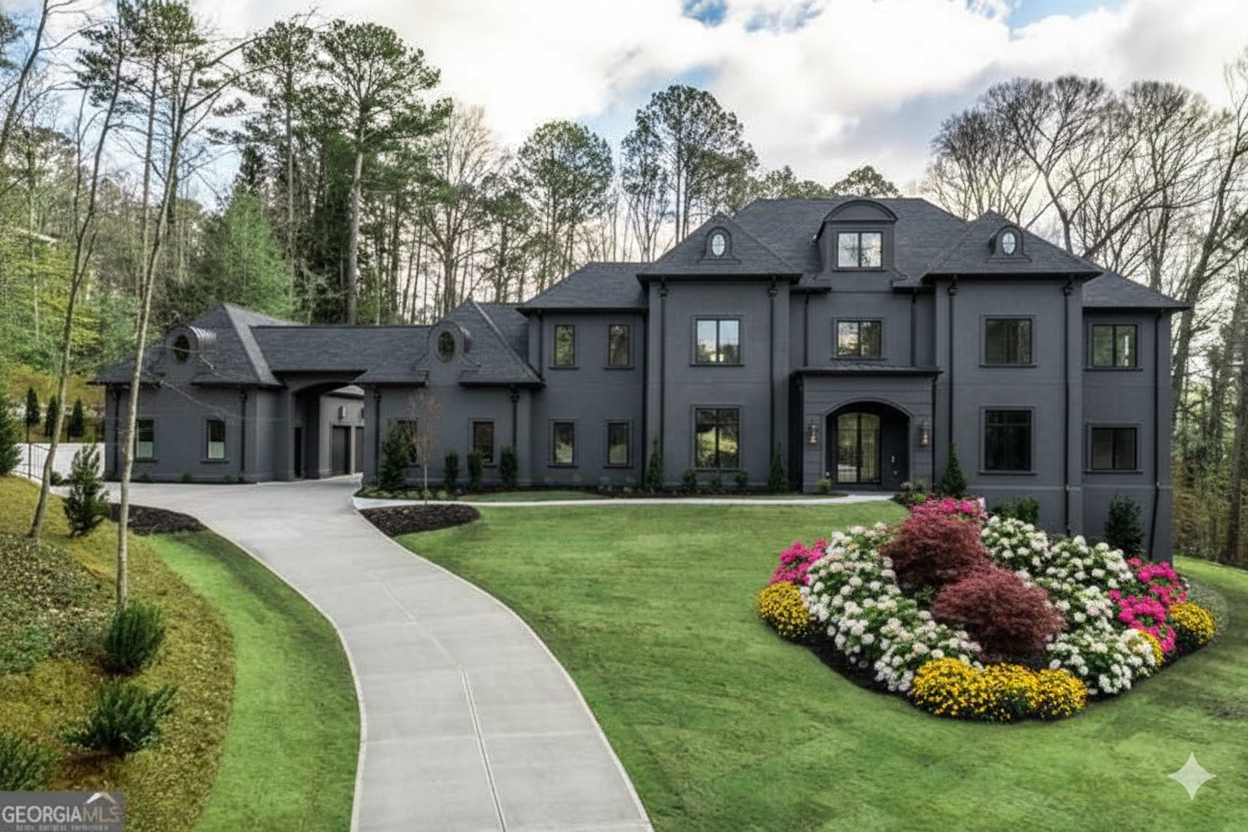
I've been helping buyers across Metro Atlanta for nearly a decade, and Dunwoody is the neighborhood I describe to corporate relocation clients before they've even told me their budget. It's not a flashy sell. Dunwoody doesn't need to be. It's the suburb that has quietly assembled every element a family or relocating professional tends to prioritize — schools, parks, MARTA rail access, major employers within a short commute, a genuine village center, and housing stock that ranges from entry-level townhomes to estates pushing $2 million — and then let the results speak for themselves.
Dunwoody didn't officially become a city until December 1, 2008, making it one of Georgia's newest incorporated municipalities. But the community identity was fully formed long before that. Residents fought for incorporation specifically to control their own planning, zoning, and green space decisions — and the ordinances they passed on day one tell you everything about what kind of city Dunwoody wants to be: strict limits on high-density housing permits, mandated green space expansion, and wide sidewalks as a non-negotiable. Dunwoody Village at the neighborhood's center preserves a Colonial Williamsburg architectural character that the community has maintained for decades. The historic Dunwoody Farmhouse sits in the middle of it all.
This is a city that takes its character seriously — and that intentionality shows up in the real estate market. Median prices in Dunwoody run $575,000–$695,000 depending on the source and the month, homes in good condition move quickly when priced right, and the North Springs MARTA station connects residents directly to Buckhead, Midtown, downtown Atlanta, and Hartsfield-Jackson Airport without a car. For buyers coming from cities like Los Angeles, New York, and Chicago — which are the top three metros sending buyers into Dunwoody according to Redfin migration data — the combination of space, greenery, schools, and transit at this price point is genuinely hard to find anywhere else in Metro Atlanta.
Here's what you need to know.
Dunwoody by the Numbers
Dunwoody's market data varies meaningfully across sources and months — worth noting because the city spans distinct sub-markets, from the Perimeter Center high-rise corridor to quiet cul-de-sac neighborhoods like Dunwoody Club Forest. Pull current comps with your agent before drawing any conclusions from the numbers below.
What the data shows as of mid-to-late 2025:
Median sale price: approximately $575,000–$695,000 depending on source and month (Redfin October 2025: $575K; Movoto June 2025: $695K; Rocket Homes June 2025: $669,500; Zillow average home value: $622,541)
Days on market: 31–60 days average — significant range reflecting the difference between well-priced homes in strong condition (which still move in under 30 days) and listings that have had to chase the market down
Price per square foot: approximately $242–$273
YoY trend: modest softening of 1–6% from 2024 highs, consistent with the broader Metro Atlanta intown and near-suburb correction
Active inventory: approximately 186–233 homes as of mid-2025 — inventory has increased meaningfully from recent years, giving buyers more options
Price range in active market: $300,000s (condos/townhomes) to $1.8M+ (luxury estates)
What the range actually means:
Dunwoody's price spread is one of the widest in the northern DeKalb market. Entry-level condos and townhomes near Perimeter Mall or the MARTA corridor can start in the $300,000s–$400,000s. The core single-family market — 3–4 bedroom homes in established neighborhoods with swim and tennis — runs $500,000–$800,000. Above $800,000 you're in fully renovated or larger homes in neighborhoods like Dunwoody Club Forest, Redfield, or Heritage at Dunwoody. Above $1M, you're in the estate tier, and it exists in meaningful volume here.
Compared to neighbors: Sandy Springs to the west runs a median around $725,000. Alpharetta to the north runs $600,000–$700,000+. Chamblee to the south runs $475,000–$560,000. Dunwoody sits in the middle of that range — not the cheapest option in the corridor, but generally priced below Sandy Springs for comparable square footage and suburban quality.
The Housing Stock: What You're Actually Buying
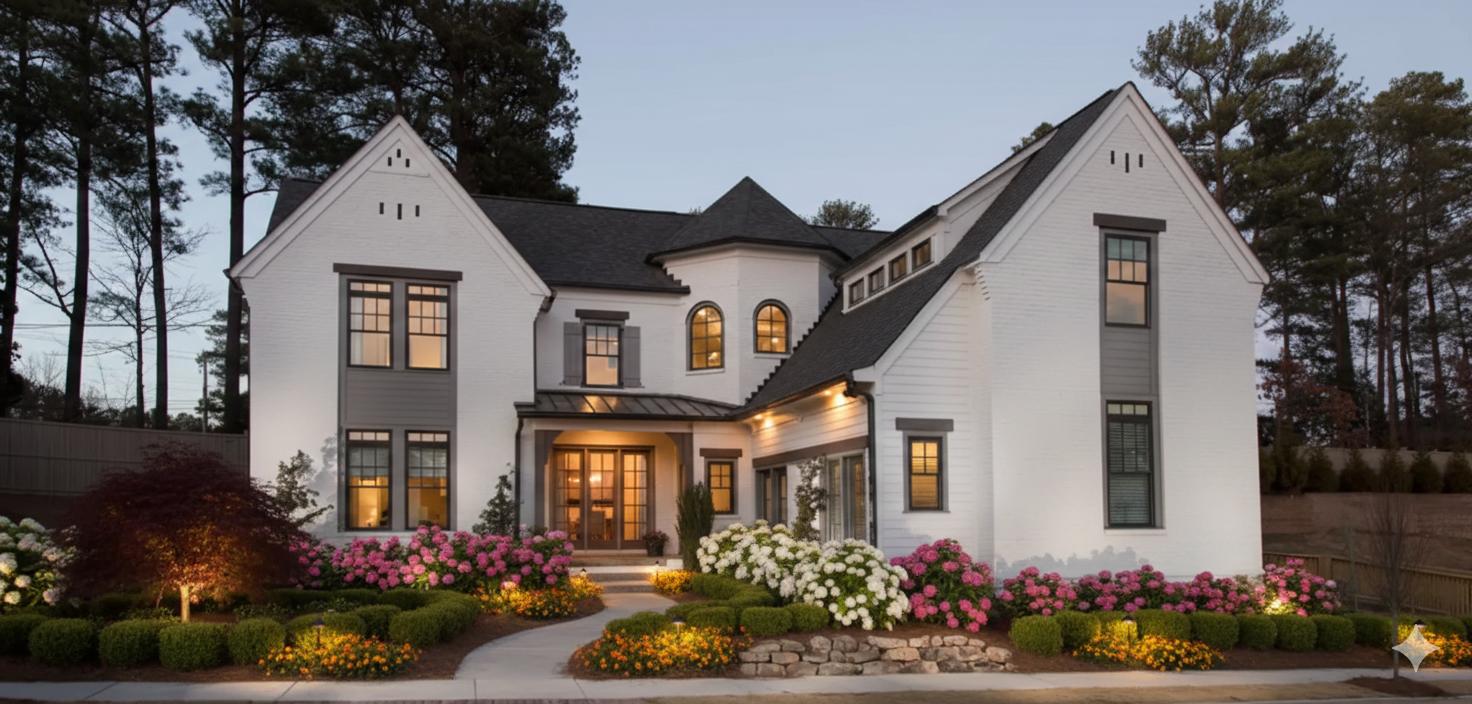
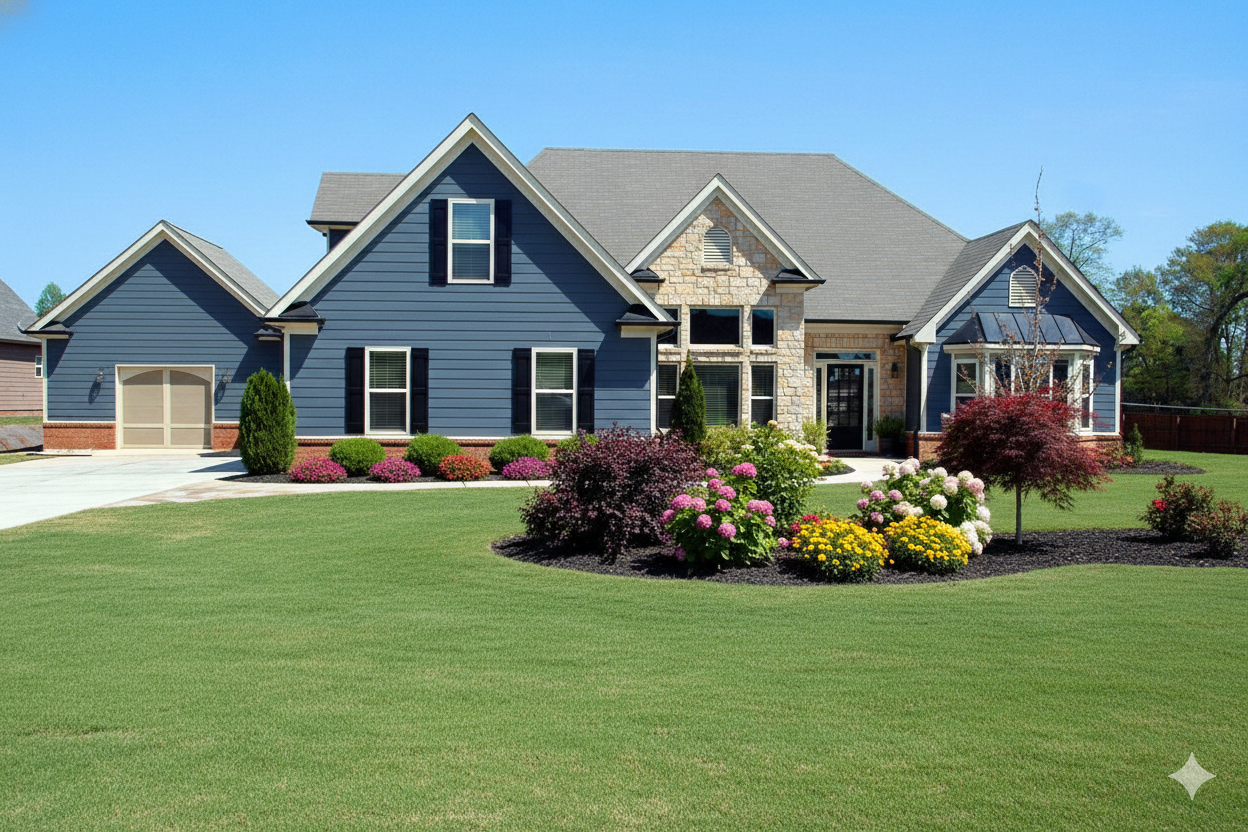
Dunwoody's residential character is anchored by well-built suburban homes from the 1970s through the 1990s — ranch homes, split-levels, Colonials, and Traditional-style homes on generous lots with mature tree cover and established landscaping. Unlike some suburbs that feel like they were built in a weekend, Dunwoody has the density of a neighborhood that grew over decades and has been maintained accordingly.
Key sub-neighborhoods to know:
Dunwoody Club Forest — One of the most established neighborhoods in the city, adjacent to Dunwoody Country Club's 18-hole championship golf course. Homes built primarily in the 1970s with brick exteriors in Craftsman, Ranch, and Traditional styles. Lots ranging from 0.40 to 0.80 acres. Floor plans from 2,700 to 5,400 square feet. Price range: $785,000–$1.13 million based on recent sales history.
Dunwoody Village — The historic heart of the community, centered on the Colonial Williamsburg-style commercial and residential district. The iconic Dunwoody Farmhouse anchors the area. Housing here reflects the neighborhood's established character and walkability to the Village's shops and restaurants.
Heritage at Dunwoody — A lower-density luxury community established in 2014, built by Ashton Woods. Custom residences from 4,000 to 7,700 square feet on lots from 0.31 to 0.35 acres. Hardwoods, crown molding, chef's kitchens, quartz counters. Price range: $1 million to $1.8 million based on five-year sale history.
Village Mill — A sought-after swim and tennis community near MARTA stations and I-285/GA-400. Home to Village Mill Club with six tennis courts, a pool, outdoor pavilion, and playground. Convenient to Buckhead, Sandy Springs, and Midtown.
Redfield — Established neighborhood with traditional architecture, generous lots, and mature landscaping. Homes typically 2,500–5,100 square feet.
Withmere — Quiet neighborhood with homes primarily constructed between 1967 and 2006. Ranch, Colonial, and Traditional styles. Lots from 0.40 to 0.69 acres.
Near Perimeter Center — The southern edge of Dunwoody adjacent to I-285 has a completely different character: high-rise office buildings, Perimeter Mall, hotels, and a growing concentration of condos and apartment towers catering to professionals working in the Perimeter employment district. If you're buying here for walkability to work and urban convenience, the character is more Atlanta suburban high-rise than quiet residential Dunwoody.
New construction: Dunwoody's founding ordinances deliberately limited high-density housing, which has kept the city's residential character intact. New construction is primarily infill — custom homes and small-scale developments on lots within established neighborhoods rather than large-scale subdivision development. This is a meaningful distinction from some surrounding suburbs and is part of why Dunwoody's street character has remained stable.
The Perimeter Employment District
For relocation buyers especially, this is a critical piece of Dunwoody's value proposition that doesn't get enough attention in standard neighborhood write-ups.
Dunwoody's southern edge borders the Perimeter Center Business District, one of the largest employment concentrations in Metro Atlanta. Major employers with significant Perimeter presence include InterContinental Hotels Group (IHG), State Farm, and numerous financial services, technology, and healthcare companies. Neighboring Sandy Springs along the Perimeter adds Fortune 500 companies including UPS, Cox Enterprises, and WestRock to the employment ecosystem accessible from a Dunwoody address.
For a buyer relocating to take a corporate position in the Perimeter — which describes a significant portion of Dunwoody's buyer pool — the math is compelling: you can live in a quiet residential neighborhood with good schools, walk to a MARTA station, and be at your office in the Perimeter in under 15 minutes, or ride MARTA to a Buckhead or Midtown office with no car required. That commute calculus is difficult to replicate anywhere else in the northern suburbs at Dunwoody's price point.
Peachtree-DeKalb Airport (PDK), the second-busiest airport in Georgia and a major general aviation hub, is also easily accessible from Dunwoody — relevant for buyers who travel privately or work in aviation.
Dunwoody Village: The Neighborhood Center
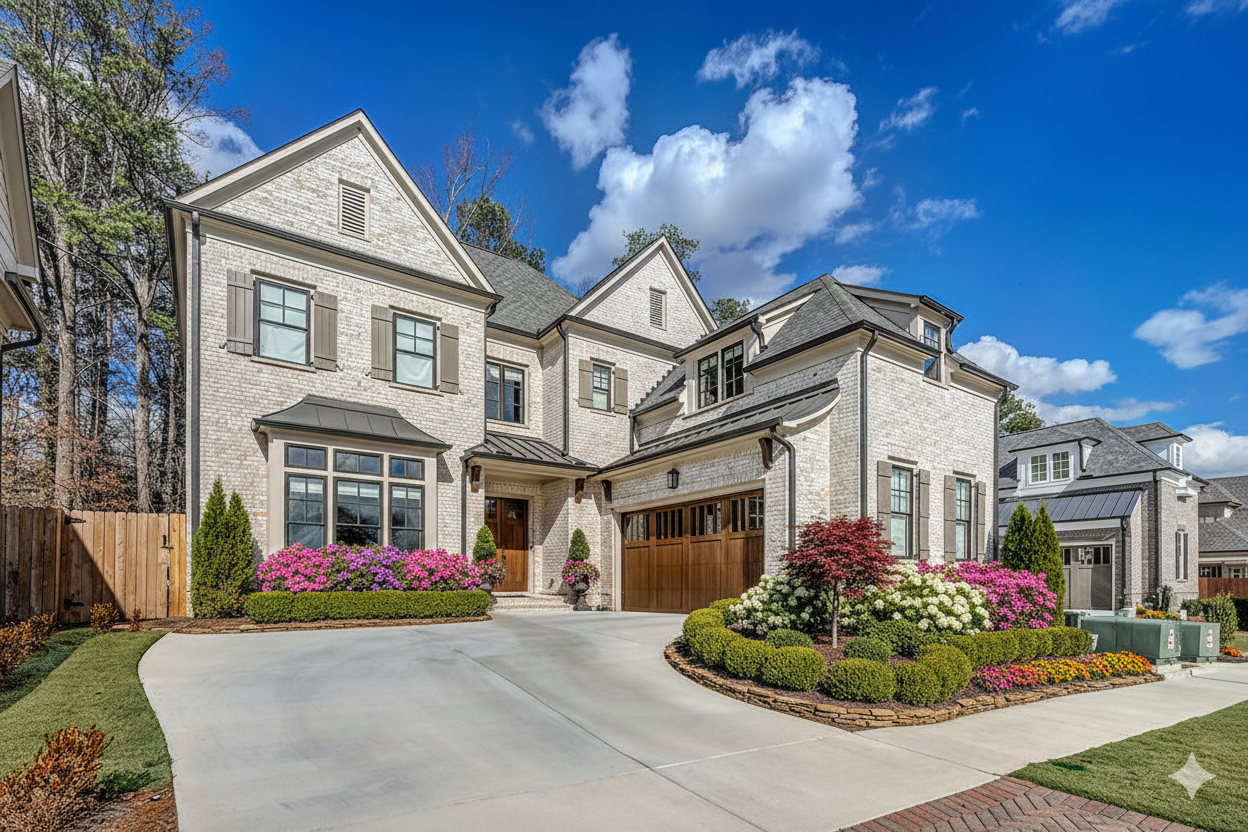
Dunwoody Village is the city's commercial heart — a Colonial Williamsburg-style district that was established with the construction of Dunwoody Village Shopping Center in the 1970s, after which all surrounding development was required to follow the same architectural character. The result is a neighborhood center with genuine visual coherence and a scale that feels human rather than highway-commercial.
The Village anchors local dining, boutique retail, and professional services in a walkable environment that residents describe consistently as feeling like a small town inside a major city.
Restaurants and dining worth knowing:
Eclipse di Luna — Spanish tapas and flamenco in a lively atmosphere. One of Dunwoody's most established and celebrated dining destinations.
Novo Cucina — Italian with a neighborhood following, consistent quality, and a good wine list. The kind of place you take clients or return to on a Friday without having to think about it.
North Italia — Upscale Italian chain that has built loyal local clientele. Reliably solid for a group dinner.
The Capital Grille — Fine dining near Perimeter Mall; the go-to for business dinners and celebrations in the Dunwoody-Perimeter corridor.
Lazy Dog Restaurant and Bar — Generous portions, reliable happy hour, family and dog-friendly patio. One of the most consistent crowd-pleasers in the area.
Bar{n} — A neighborhood bar concept that has become a local gathering point.
Taqueria del Sol — The beloved Atlanta mini-chain has a Perimeter-area location accessible from Dunwoody.
Food Truck Thursdays — A recurring community event where food trucks gather in Dunwoody, drawing residents from across the city. One of those small things that tells you a lot about how a community functions.
Dunwoody Farmers Market — Held every Saturday morning at Brook Run Park. Local and organic produce, vendors, and community gathering. One of the better farmers markets in the northern suburbs.
Beyond dining, Dunwoody Village has independently owned boutiques, specialty retailers, salons, and professional services that give the commercial district a character distinct from the chain-heavy Perimeter Mall environment nearby.
Parks and Green Space
This is where Dunwoody genuinely distinguishes itself from most northern Atlanta suburbs. The city's founding ordinances mandated green space expansion, and the results are visible throughout the city in maintained parks, trails, and preserved natural areas.
Brook Run Park — Dunwoody's largest park at over 100 acres. Features a 2-mile loop multiuse trail, a Tree Top obstacle and zip-lining course (Treetop Quest), a skate park, disc golf course, ballfields, a dog park, and ample open green space. The Saturday Farmers Market takes place here. Brook Run is a legitimate community hub — not a parking lot with a swing set.
Dunwoody Nature Center — A preserved natural area with gardens, wildlife habitat, and educational programming. Hosts an annual Butterfly Festival. The kind of amenity that makes a suburb feel like a place rather than just a ZIP code.
Austin Park — Neighborhood park with recreational facilities.
Pernoshal Park — Well-maintained park suitable for outdoor sports and community gatherings.
Swimming and tennis: Dunwoody's neighborhood swim and tennis club culture is strong and well-established. Village Mill Club, Dunwoody Club, Huntley Hills (nearby in Chamblee), and Dunwoody Country Club's 18-hole championship course all serve different parts of the residential market. For buyers who value this kind of community infrastructure — and many do — Dunwoody delivers it comprehensively.
MARTA and Getting Around
North Springs Station on the MARTA Gold/Red Line is Dunwoody's primary transit connection — and it's a meaningful one. The station provides direct rail service south through Brookhaven, Buckhead, Midtown, Downtown Atlanta, and all the way to Hartsfield-Jackson Airport. For buyers coming from transit-oriented cities, this is the detail that often closes the Dunwoody conversation.
Travel times by MARTA from North Springs:
Buckhead: approximately 10–12 minutes
Midtown: approximately 20 minutes
Downtown Atlanta (Five Points): approximately 30 minutes
Hartsfield-Jackson Airport: approximately 60–70 minutes (or 30 minutes by car)
Car: Dunwoody has excellent highway access via I-285, GA-400, and connecting surface roads. Drive time to downtown Atlanta is approximately 20–25 minutes without traffic. The Perimeter Center employment district is 5–10 minutes by car from most Dunwoody residential neighborhoods. Buckhead is approximately 15–18 minutes.
Walk Score: Varies significantly by sub-neighborhood. Dunwoody Village and the areas immediately surrounding it are genuinely walkable for local errands and dining. Most residential neighborhoods are car-dependent for daily needs beyond the immediate blocks. The city has invested in sidewalks as a deliberate policy — wide sidewalks on major corridors are part of Dunwoody's founding DNA — but this is still a suburban city designed around the automobile.
Schools in Dunwoody
This is the section that drives a substantial portion of Dunwoody's buyer demand, and the data supports the reputation. Dunwoody is served by DeKalb County School District, and the schools serving the city consistently perform above the district and state averages.
Dunwoody High School (grades 9–12)
Enrollment: 1,974–2,142 students
Student-teacher ratio: 16:1
Niche grade: A
GreatSchools rating: 7/10
US News ranking: 96th in Georgia
SchoolDigger ranking: 4th in DeKalb County School District
AP participation rate: 53%
Average SAT: 1,230; Average ACT: 29; Average GPA: 3.55
Graduation rate: 85%
GreatSchools College Success Award recipient for 2024–25
Offers AP coursework, Gifted & Talented program, Academy of Finance and Mass Communications (a two-year program with hands-on activities and internship opportunities)
Notable alumnus: TV host Ryan Seacrest
In 2024–25, Dunwoody High had 51.1% proficiency in American Literature and Composition, compared to 32.9% for DeKalb County and 40.4% for the state — a meaningful outperformance of both district and state benchmarks.
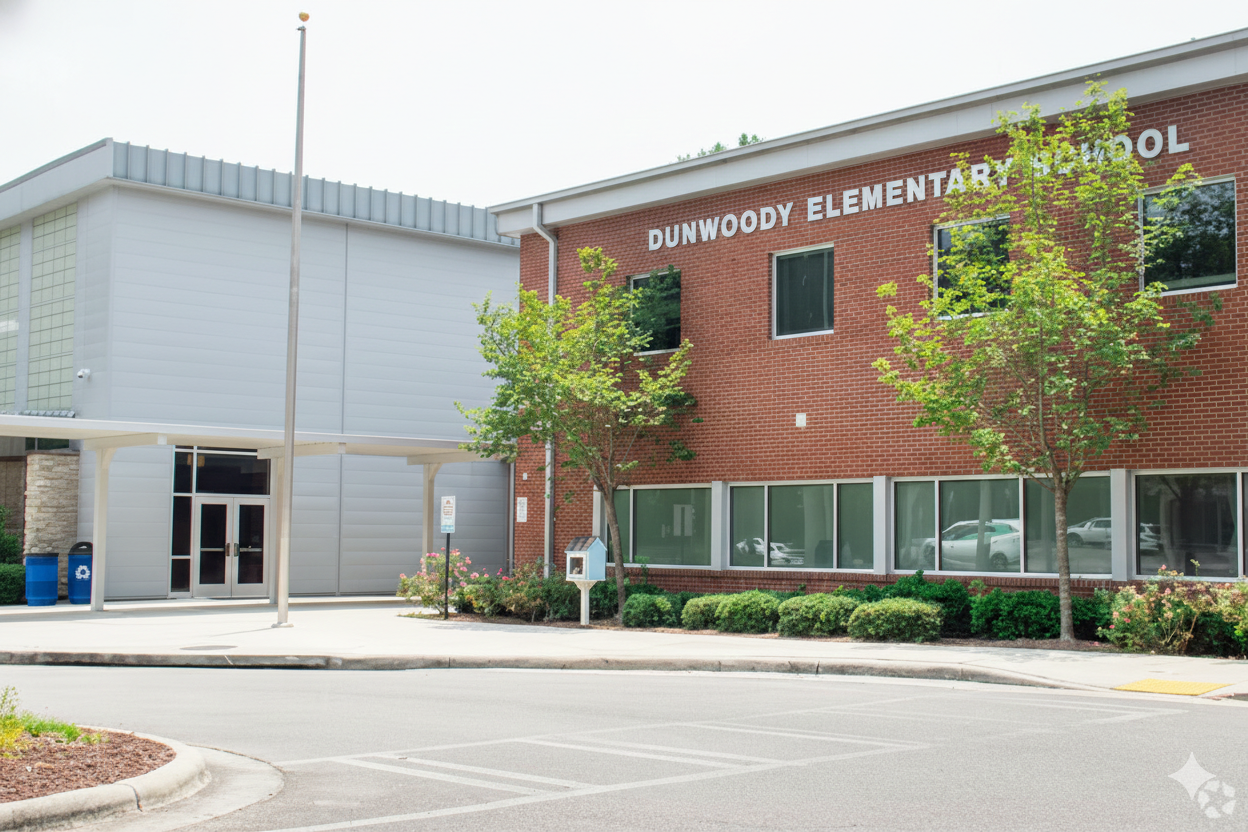
Elementary schools feeding Dunwoody High include Austin Elementary, Chesnut Elementary, Dunwoody Elementary, Hightower Elementary, Kingsley Elementary, and Vanderlyn Elementary. Several of these schools carry A- Niche grades and top-300 rankings among Georgia public elementary schools. Vanderlyn Elementary in particular has a strong community reputation and is frequently cited by current residents as a standout.
Peachtree Middle School serves most Dunwoody students at the middle school level.
Private options in and near Dunwoody include Dunwoody Christian School, Crossroads Christian Academy, and Mount Vernon School. Georgia State University's Perimeter College–Dunwoody Campus offers two-year higher education options within the city.
Research directive: Verify current enrollment eligibility and boundaries directly with DeKalb County Schools before making any purchasing decision based on school assignment. Boundaries can change. Do not rely on any real estate website, including this one, to confirm which school serves a specific address.
Who Buys in Dunwoody
After nearly a decade working with buyers across Metro Atlanta, here's the consistent pattern I see with buyers who land in Dunwoody:
Dunwoody tends to work well for:
Corporate relocation buyers — particularly those coming in for Perimeter-area positions who want a ready-made suburban infrastructure without having to figure out a new city from scratch
Dual-income households with school-age children who want above-average public schools without the price premium of North Fulton County
MARTA-dependent commuters who need rail access but want suburban space and privacy
Buyers coming from other cities (LA, New York, Chicago are the top three feeder metros) who are accustomed to paying more for less and find Dunwoody's value proposition genuinely surprising
Buyers who want the swim and tennis club lifestyle — Dunwoody's club culture is real and well-established
Move-up buyers from Chamblee who have appreciated equity and want more space, larger lots, and the Dunwoody school zone
Empty nesters who want to downsize into a low-maintenance townhome or condo near Perimeter without leaving the neighborhood they know
Dunwoody is probably not your neighborhood if:
Your priority is BeltLine access or intown walkability — Dunwoody is decidedly suburban and designed that way on purpose
You want the most affordable entry point in northern DeKalb — Chamblee offers a meaningful price advantage for buyers who can live without the Dunwoody school zone
You're looking for an edgy, nightlife-forward neighborhood identity — Dunwoody is family-oriented, community-focused, and quiet by design
You want the absolute top-performing schools in Metro Atlanta — Dunwoody's schools are strong within DeKalb County, but North Fulton County (Johns Creek, Milton, Alpharetta) consistently outperforms on raw metrics
How Dunwoody Compares to Nearby Neighborhoods
Dunwoody vs. Chamblee: Chamblee runs approximately $100,000–$150,000 less at the median for comparable square footage. Chamblee has MARTA Gold Line access, Buford Highway's food corridor, and a more urban feel near its downtown station. Dunwoody has better-performing schools by most metrics, more park infrastructure, a more established swim and tennis club culture, and a quieter residential character. Buyers choosing between them are usually weighing school zone priority against price point.
Dunwoody vs. Sandy Springs: Sandy Springs runs higher at the median — approximately $725,000 — with a more urban-suburban character particularly near Roswell Road and the City Springs development. Sandy Springs has more walkable commercial activity in certain pockets. Dunwoody has more green space, a more established residential feel, and slightly lower prices for comparable homes. The buyer who wants walkable urban energy leans Sandy Springs; the buyer who wants quiet suburban infrastructure leans Dunwoody.
Dunwoody vs. Alpharetta: Alpharetta is farther north with less MARTA access but strong school systems (Fulton County), a thriving tech corridor, and an active Avalon development that draws dining and retail. Prices are comparable. The buyer who works in the Alpharetta tech corridor leans Alpharetta; the buyer who works in the Perimeter or commutes by MARTA leans Dunwoody.
Dunwoody vs. Johns Creek: Johns Creek sits northeast of Dunwoody with top-performing Fulton County schools but no MARTA access and a longer commute to most Atlanta employment centers. For buyers for whom school performance is the single overriding variable, Johns Creek is worth a close look. For buyers who need MARTA or work in the Perimeter, Dunwoody is the better positioned choice.
The Investment Angle
Dunwoody's long-term value story is anchored by fundamentals that don't go away: MARTA rail access, Perimeter employment concentration, established school reputation, and founding ordinances that have actively protected the city's residential character from overdevelopment. These are durable drivers.
For buy-and-hold investors: Dunwoody's rental demand is supported by corporate relocations, Perimeter workers who don't want to own, and MARTA commuters. Single-family rental yields will be tight at current purchase prices — this is appreciation-focused territory. Condo and townhome rentals near the MARTA station and Perimeter corridor tend to perform better on yield.
For sellers: the inventory increase of the past year has shifted negotiating leverage somewhat toward buyers. Well-priced, well-presented homes still move. Overpriced or deferred-maintenance homes are sitting longer than sellers expect. Pricing accuracy and presentation matter more than they did in 2022.
Practical Details
ZIP codes: 30338, 30346, 30360 (portions)
County: DeKalb County (primarily); small portion in Gwinnett County
City: City of Dunwoody (incorporated December 1, 2008)
Schools: DeKalb County School District
Population: approximately 51,000–51,563
Median age: 36.5
Average individual income: approximately $57,873–$68,000 depending on source
MARTA: North Springs Station (Gold/Red Line)
Commute to downtown Atlanta: approximately 20–25 minutes by car; approximately 30 minutes by MARTA
Commute to Buckhead: approximately 15–18 minutes by car; approximately 10–12 minutes by MARTA
Airport: Hartsfield-Jackson approximately 30 minutes by car; approximately 60–70 minutes via MARTA
Flooding: 13% of properties have some risk of severe flooding over 30 years. Check specific addresses, particularly near creek corridors.
Grocery: Whole Foods, Publix, Kroger, and specialty options accessible within the city. Perimeter Mall area has comprehensive retail.
Hospitals: Northside Hospital (Sandy Springs), Children's Healthcare of Atlanta (Scottish Rite) nearby, Peachford Hospital within Dunwoody.
Higher education: Georgia State University Perimeter College–Dunwoody Campus within the city. Oglethorpe University in neighboring Brookhaven.
Ready to Look at Dunwoody?
With nearly 10 years and over $50 million in sales across Metro Atlanta, I know Dunwoody's market the way I know most northern DeKalb neighborhoods — from the sub-neighborhood differences that don't show up in a Zillow search to the school zone implications by address. Whether you're relocating for a Perimeter-area position, moving up from Chamblee, or comparing Dunwoody against Sandy Springs or Alpharetta, I can help you get specific.
Related Neighborhood Guides:
Frequently Asked Questions About Dunwoody, GA
Is Dunwoody a good place to live? Dunwoody consistently ranks among Metro Atlanta's most desirable northern suburbs. It offers MARTA Gold Line and Red Line rail access via North Springs Station, above-average schools within DeKalb County, over 100 acres of park space at Brook Run alone, proximity to the Perimeter employment district, and a genuine village center in Dunwoody Village. It's a strong choice for families, corporate relocation buyers, and professionals who want suburban space with transit access.
What are home prices in Dunwoody? As of mid-to-late 2025, median home prices in Dunwoody range from approximately $575,000–$695,000 depending on the data source and month, with active listings ranging from the mid-$300,000s for condos and townhomes to over $1.8 million for luxury estates. Verify current pricing with your agent using actual comparable sales.
Does Dunwoody have MARTA? Yes. North Springs Station on the MARTA Gold and Red Lines is located in Dunwoody, providing direct rail service to Buckhead (approximately 10–12 minutes), Midtown (approximately 20 minutes), Downtown Atlanta (approximately 30 minutes), and Hartsfield-Jackson Airport (approximately 60–70 minutes). The station has ample surface parking, with under 24 hours free.
What school district is Dunwoody in? Dunwoody is served by DeKalb County School District. Dunwoody High School carries a Niche grade of A, a GreatSchools rating of 7/10, ranks 96th in Georgia and 4th in DeKalb County, and earned a GreatSchools College Success Award for 2024–25. Several elementary schools serving Dunwoody carry A- Niche grades. Contact DeKalb County Schools directly to verify enrollment eligibility for a specific address.
How far is Dunwoody from downtown Atlanta? Dunwoody is approximately 10–12 miles north of downtown Atlanta — about 20–25 minutes by car without traffic, or approximately 30 minutes via MARTA from North Springs Station to Five Points.
When was Dunwoody incorporated? Dunwoody was incorporated as a city on December 1, 2008, making it one of Georgia's newest cities. Residents voted to incorporate in order to control their own planning and zoning decisions, which is why Dunwoody has strict green space requirements and limits on high-density housing that distinguish it from surrounding unincorporated suburban areas.