

What Are Atlanta's Short-Term Rental Rules? An Investor's Guide to Airbnb in the City for 2026
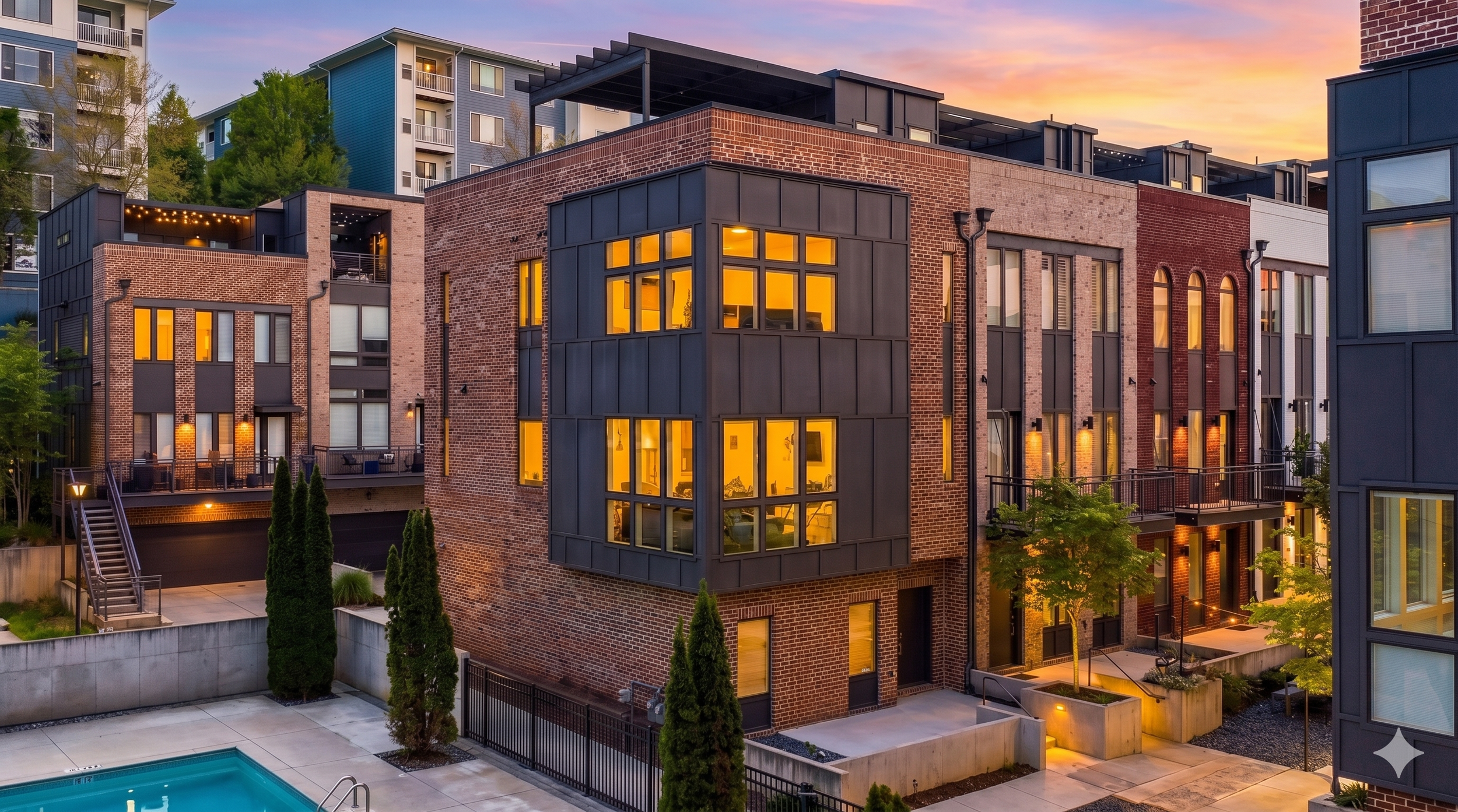
Atlanta caps you at two short-term rental licenses, requires that one of them be your primary residence, and since 2022 has been actively cross-referencing Airbnb and Vrbo listings against its registration database to find unlicensed operators. If you don't live in the city, you can't legally run an Airbnb inside city limits. That single rule reshapes the entire investment thesis for short-term rentals in Atlanta proper, and it's the rule most out-of-state investors miss when they call me about buying a duplex in Old Fourth Ward to put on Airbnb.
I work with buyers across Metro Atlanta, and short-term rental investors are some of the most common, and most misinformed, buyers I get on the phone. They've watched a YouTube video, run the numbers on AirDNA, found a property in East Atlanta that pencils out beautifully, and they're ready to write an offer. Then I have to walk them through what the City of Atlanta ordinance actually says, what DeKalb County is doing this year, what Brookhaven did, and why the same property in Decatur versus Atlanta versus unincorporated Fulton has three different regulatory paths.
Nearly a decade of helping buyers across Metro Atlanta means I've seen this conversation play out enough times to know where the confusion lives. The rules are not impossible. They are just specific, jurisdiction-by-jurisdiction, and they have changed three times in the last four years.
Here's what you need to know.
What Counts as a Short-Term Rental in Atlanta?
A short-term rental in the City of Atlanta is any rental of a residential dwelling, or a portion of one, for fewer than 30 consecutive days. That is the definition the City uses in Ordinance 20-O-1656, and it is the definition that triggers the licensing requirement.
Anything 30 days or longer is treated as a regular residential lease and does not require a Short-Term Rental License. This is why some investors structure their listings as 30-day minimum stays and operate under traditional landlord-tenant rules instead of the short-term rental ordinance. That is a legitimate strategy, but it is a different business model with different revenue dynamics, and most Airbnb investors don't actually want to run it.
The 30-day rule is also why corporate housing and traveling-nurse rentals occupy a gray area. If you consistently rent for 30+ days, you are not a short-term rental under the ordinance. If you mix 7-day and 30-day stays on the same property, the 7-day bookings make you a short-term rental, and you need a license.
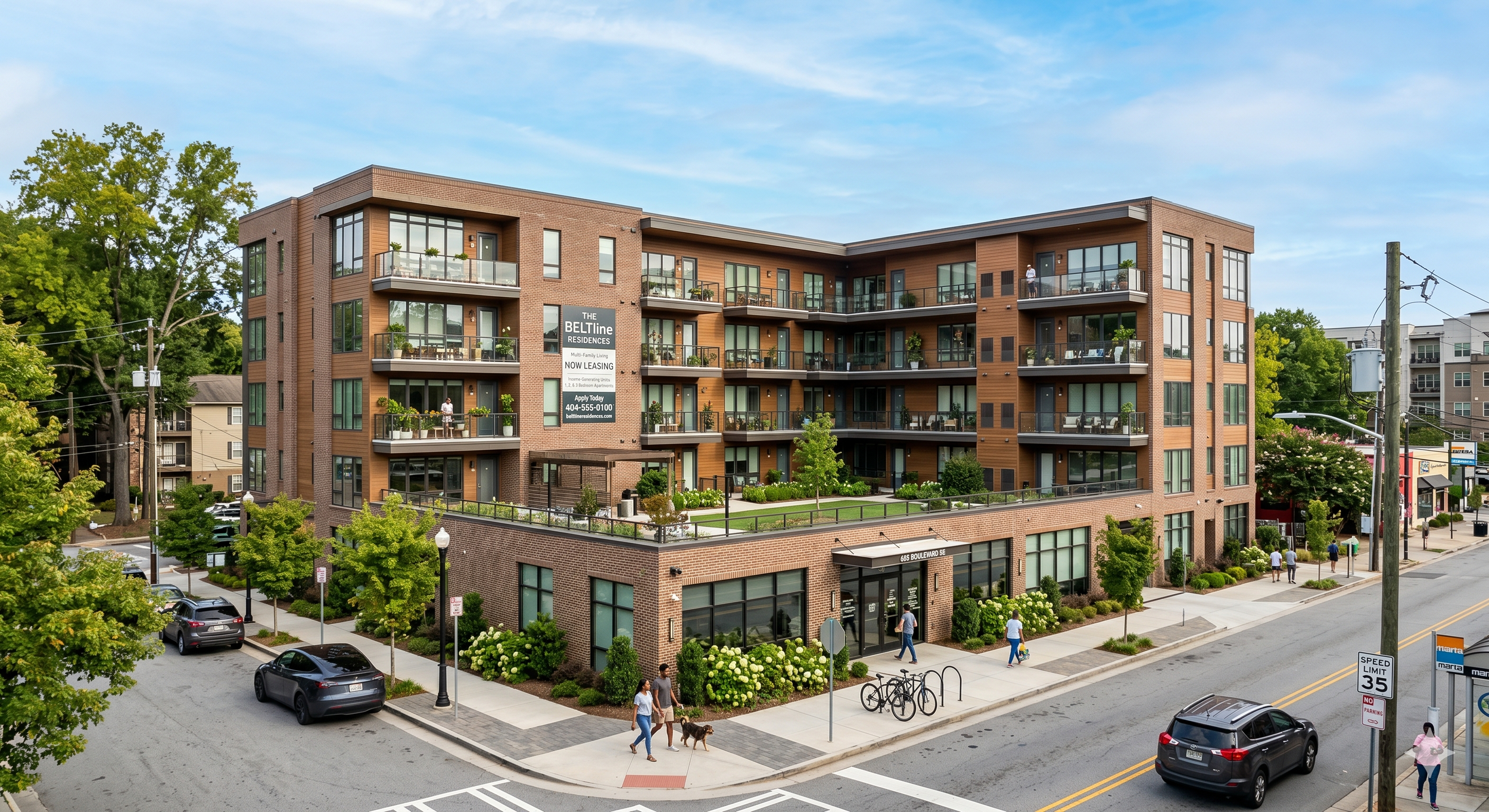
The Atlanta Short-Term Rental License: What It Requires
The City of Atlanta adopted its current short-term rental ordinance on March 15, 2021, and the licensing requirement became effective March 1, 2022. As of 2026, here is what the license actually requires.
| Requirement | What It Means |
|---|---|
| Annual license fee | $150 per property, per year. Renewals due January 31. |
| Primary residence rule | One of your two licensed properties must be your primary residence inside Atlanta city limits. |
| Maximum properties | Two short-term rental licenses per person. The second can be a separate investment property. |
| Notarized affidavit | Required with every application. Cost roughly $15–$25. |
| Proof of ownership or lease authorization | Deed for owners, signed lease with landlord authorization for long-term tenants. |
| Liability insurance | Required as part of the application. Industry standard is $1 million in coverage. |
| License number on listings | Required on Airbnb, Vrbo, and any other platform. Listings without it are flagged. |
| 24/7 contact person | A local person who can respond to complaints, emergencies, or police calls. |
| Neighbor notification | Certified mail notice to the properties immediately to your left and right. |
| Application timing | Two to four weeks for processing if paperwork is complete. |
Two things investors miss most often on this list.
First, the primary residence rule. You cannot get a short-term rental license in the City of Atlanta unless one of the properties you are licensing is your primary residence. The City verifies primary residence with a six-month-old utility bill, your driver's license, and your homestead exemption. If you live in Smyrna, Decatur, or anywhere outside city limits, you are ineligible to operate a short-term rental inside the City of Atlanta, period. Out-of-state investors are categorically locked out.
Second, the two-license maximum. One investor, two short-term rentals total, and one of them must be the primary residence. The second license can be on a separate investment property, but the City has signaled it will scrutinize the second-license application more carefully. You cannot scale a portfolio of five Airbnbs in the City of Atlanta. The ordinance was specifically designed to prevent that.
What the License Actually Costs
The license fee itself is $150 per property per year. That is one of the more affordable major-city short-term rental fees in the country. It renews annually, and renewals are due by January 31 each year.
Beyond the license fee, you will pay:
A notarized affidavit cost (roughly $15 to $25, available at most UPS Stores and banks)
Liability insurance specifically for short-term rental use (more on this below)
Annual renewal of the license
Application processing takes two to four weeks if your paperwork is complete. The application is submitted through the City of Atlanta's online permitting portal, atl311.com, or directly through the Office of Buildings.
The Tax Stack: What You Actually Owe
Atlanta's tax structure for short-term rentals is one of the heaviest in the country, and this is the area where I see investors miscalculate their pro forma most often. They run their numbers off gross revenue and forget that the tax stack alone can take 15% to 21% off the top before they pay the cleaning company.
Here is the full tax stack as of 2026, broken down by who collects what.
| Tax | Rate | Who Collects It |
|---|---|---|
| Georgia State Sales Tax | 4% of gross | Airbnb / Vrbo (automatic) |
| Georgia Hotel-Motel Fee | $5 per night (first 30 nights) | Airbnb / Vrbo (automatic) |
| Atlanta Hotel-Motel Tax | 7% of gross | Host (manual, monthly remittance to City of Atlanta) |
| Local option sales taxes | Variable (typically 3–4%) | Platform or host depending on jurisdiction |
| Total tax burden | Roughly 15%–21% of gross revenue | Mix of platform-collected and host-remitted |
Two notes on this stack.
First, Airbnb and Vrbo automatically collect and remit the Georgia state sales tax (4%) and the $5 per-night Hotel-Motel Fee on your behalf. This was mandated by Georgia House Bill 317 in 2021, which requires online lodging marketplaces to collect and remit state taxes for hosts.
Second, the Atlanta Hotel-Motel Tax (7%) is generally not collected by the platforms automatically. You as the host are responsible for registering with the City of Atlanta, collecting this tax from guests, and remitting it monthly. This is the tax line investors miss most often. If you operate for a year without registering and remitting, the city can pursue back taxes plus penalties.
If you book guests directly outside of a platform (your own website, a referral, a return guest), you are responsible for collecting and remitting all the taxes the platform would have handled, including the state-level pieces. Direct bookings are higher-margin, but the tax compliance burden is on you.
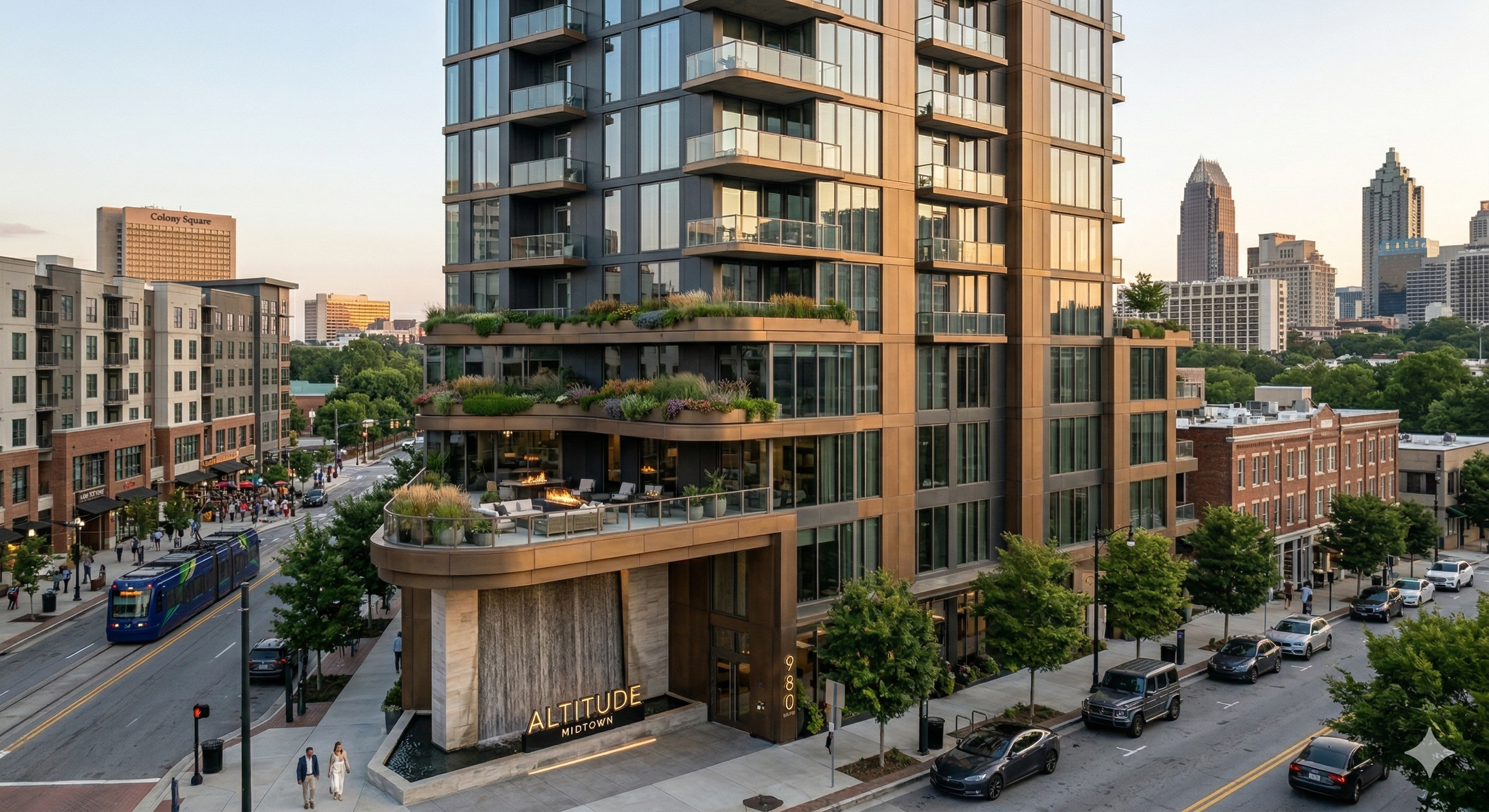
Operational Rules: Occupancy, Noise, and the 24/7 Contact
Atlanta's ordinance includes a set of operational rules designed to prevent short-term rentals from disrupting neighborhoods. These are the rules that get hosts in trouble after the license is already in hand.
Occupancy limits. Maximum two adults per bedroom. A three-bedroom house caps at six adults. Children under a certain age generally don't count toward the cap, but check the current ordinance language because the City has revised this. Your listing must clearly post the maximum occupancy on Airbnb, Vrbo, and any other platform.
24/7 contact person. You are required to designate a local contact person who can respond to complaints, emergencies, or police calls within a defined window. If you live in the property, that's you. If you don't, you need a property manager or co-host with a local phone number who can show up. This is non-negotiable, and it's one of the most common reasons out-of-state operators fail compliance.
Neighbor notification. Before you start operating, you must send certified mail to the properties immediately to your left and right notifying them that you intend to operate a short-term rental. The City provides a template letter. Skipping this step is a violation, and neighbors who later complain to the City will reference whether they received the notification.
Advertising compliance. Your Atlanta Short-Term Rental License number must be visible on every advertisement and listing. Airbnb and Vrbo have fields for this. Listings without a license number are flagged by the City's monitoring system and become enforcement targets immediately.
Noise and parties. Atlanta's general noise ordinance applies, with quiet hours typically 10 PM to 7 AM. Repeated noise complaints can result in license suspension or revocation. The "party house" problem is the single biggest political driver of stricter STR regulation in Atlanta and across Metro Atlanta, and the City has been consistent about pulling licenses from properties that generate repeated complaints.
Recordkeeping. Operators are required to maintain detailed records of guest stays for three years, including names, contact information, and dates of occupancy. This is enforced.
Insurance: Why Your Homeowner's Policy Probably Doesn't Cover This
Standard homeowner's insurance and landlord insurance policies typically exclude short-term rental activity because the City and the insurance industry treat short-term rentals as commercial use. If a guest is injured in your Airbnb and you're operating under a regular homeowner's policy, your insurer can deny the claim, leaving you personally liable.
The City of Atlanta requires proof of liability insurance as part of the license application. The standard recommendation across the industry is $1 million in liability coverage, with riders for property damage, loss of rental income, and guest injury.
Airbnb's host liability protection (currently called AirCover) provides some coverage but is not a substitute for a real STR-specific policy. Read the AirCover terms before relying on it. Direct bookings and bookings on platforms without host protection require their own liability layer.
This is a real cost line. Budget $1,500 to $3,000 per year per property for a proper STR policy, depending on coverage and property type.
Enforcement: How Atlanta Catches Unlicensed Operators
The single biggest change in Atlanta's STR enforcement in 2024 and 2025 was the City's adoption of platform data-matching. The City now actively cross-references Airbnb and Vrbo listings against its registration database. Listings without a valid license number, or with a license number that doesn't match the property address, are flagged automatically.
What enforcement looks like in practice:
The City identifies an unlicensed listing.
Code Enforcement issues a notice of violation.
The host is given a window to either license or take down the listing.
If the host does neither, fines accumulate, typically starting at $500 per violation per day.
The City contacts the platform, and the listing can be removed at the City's request.
Continued operation can result in liens on the property.
Hosting platforms are also required under the ordinance to provide information to aid enforcement and remove illegal listings. This means Airbnb and Vrbo are not your allies if you're operating without a license. They will cooperate with the City.
I have had buyers tell me they planned to "just operate quietly" without a license. That worked in 2018. It does not work now. The City has dedicated staff, a complaint hotline, and an automated platform-monitoring system. The risk of fines and revocation has gotten serious enough that the math no longer favors flying under the radar.
What Atlanta's Rules Mean for Different Investor Profiles
Different investor profiles run into the Atlanta ordinance in different ways. Here's how the rules play out for each.
| Investor Profile | Can You Operate? | Key Constraint |
|---|---|---|
| Atlanta resident, owner-occupant | Yes | Two-license cap; primary residence required for one license |
| Atlanta resident, scaling investor | Yes, but capped at 2 properties | Cannot exceed two licenses inside city limits |
| Metro Atlanta resident outside city limits | No (inside city limits) | Primary residence rule disqualifies you from City of Atlanta licenses |
| Out-of-state investor | No (inside city limits) | Same primary residence rule applies; no carve-out for non-residents |
| Long-term Atlanta tenant | Yes, with landlord authorization | Must have written authorization from property owner; subject to same rules |
| Owner of a property in an HOA | Maybe | HOA covenants override license rights; check the docs first |
The investor profile that works best inside the City of Atlanta is the owner-occupant who wants to short-term-rent a primary residence (when traveling) plus one additional dwelling unit, like a basement apartment or carriage house. That investor fits cleanly inside the ordinance, can scale to two licenses, and has the local presence to handle the 24/7 contact requirement.
The investor profile that struggles most is the out-of-state buyer scaling a portfolio. The primary residence rule is a hard wall.
What About the Surrounding Cities and Counties?
This is where the conversation gets more interesting, and where most of my investor buyers end up. If you can't operate inside the City of Atlanta as a non-resident, the question becomes: what jurisdictions will work?
Metro Atlanta is a patchwork of cities, counties, and unincorporated areas, each with their own short-term rental rules. Here is the current 2026 landscape for the major Metro Atlanta jurisdictions investors most often ask about.
City of Atlanta
Covered above. Two-license maximum, primary residence required, $150 annual fee, active enforcement.
DeKalb County (unincorporated)
DeKalb County's Board of Commissioners approved a substitute short-term rental ordinance on July 24, 2025, with a 180-day implementation period. That period was extended on January 13, 2026, and the implementation period now ends May 20, 2026. As of this writing, the application and registration process is being finalized.
The DeKalb ordinance requires registration, a business license, an emergency contact, noise compliance, and the standard occupancy and parking standards. The county is using the same playbook Atlanta used in 2022. Expect platform monitoring and active enforcement to follow shortly after the registration system is live.
If you're considering an unincorporated DeKalb property, including parts of areas like Decatur (outside the City of Decatur boundaries), Druid Hills, and Tucker, do not assume the prior gray-area enforcement will continue. The county is building its compliance infrastructure now.
City of Decatur
The City of Decatur is a separate jurisdiction inside DeKalb County and is implementing its own short-term rental registration system in 2026. The Decatur registration fee is $125. The application process requires 15 days of public notification before a license is issued, which is a meaningful operational delay. Maximum overnight occupancy is two people per guest room plus two additional people per property, with a hard cap of ten people per property regardless of bedroom count.
Decatur is small geographically and densely residential. Investor demand has been heavy, and the City has structured the ordinance to slow it down.
Brookhaven
Brookhaven banned short-term rentals citywide as part of its zoning code revisions. If you are looking at a property inside Brookhaven city limits, you cannot operate it as an Airbnb. Period. This is the strictest STR regulation in Metro Atlanta and one of the strictest in any Atlanta-adjacent city.
Sandy Springs
Sandy Springs has stringent zoning restrictions on short-term rentals. The current rules generally require short-term rentals to be adjacent to or part of the owner's primary residence, similar to the Atlanta primary-residence model but more restrictive on standalone investment properties.
Cobb County
Cobb County's regulatory posture has been less aggressive than Atlanta's or DeKalb's. Most Cobb cities (Marietta, Smyrna, Vinings, Kennesaw, East Cobb's unincorporated areas) require business licenses for any rental activity but have not implemented Atlanta-style STR-specific licensing or primary-residence requirements. This makes Cobb relatively friendlier to non-resident STR investors. That said, individual cities have been tightening, and HOA restrictions in Cobb subdivisions are widespread and enforceable.
Gwinnett County
Gwinnett has placed emphasis on short-term rental registration, proof of liability insurance, and the 24/7 contact requirement, but has not implemented a primary-residence rule. Gwinnett cities (Buford, Duluth, Lawrenceville, Peachtree Corners) have their own additional rules layered on top.
Fulton County (outside Atlanta and Sandy Springs)
South Fulton allows non-owner-occupied short-term rentals with proper licensing. North Fulton cities (Alpharetta, Roswell, Milton, Johns Creek) have stricter zoning. Alpharetta's ordinance, for example, prohibits two short-term rentals adjacent to each other on the same street and caps STR density at one residential lot or 5% of the residential lots within each subdivision, whichever is greater. Milton and Johns Creek are similarly restrictive in residential zones.
Clayton County
Clayton County, which includes the area around Hartsfield-Jackson Atlanta International Airport, has tightened enforcement of its business license requirement for short-term rentals to prevent unlicensed commercial lodging in residential zones. The proximity to the airport makes Clayton attractive on paper for layover and traveler stays, but you are still operating under a real licensing regime.
Henry County
Henry County (Stockbridge, McDonough, Hampton) currently has a lighter regulatory touch than the inner Metro counties. Investors looking for properties with fewer regulatory friction points have increasingly looked to Henry, but the county has signaled it may move toward more formal STR rules as inventory increases.
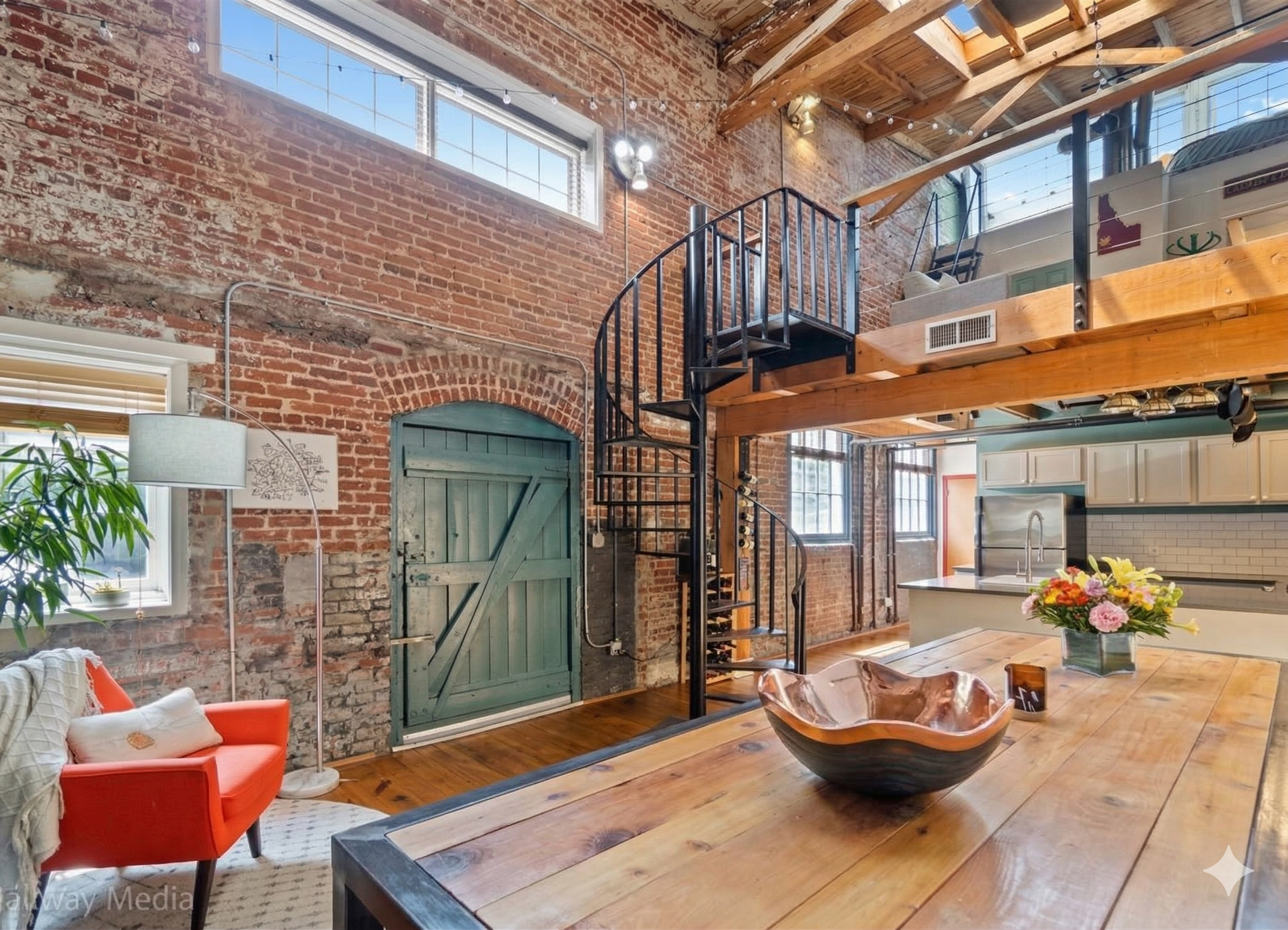
HOA Restrictions: The Rule Most Investors Forget
Even if your jurisdiction allows short-term rentals, your homeowners association or condo board can ban them. HOA covenants are enforceable in Georgia, and many subdivisions, condo buildings, and townhome communities have either banned short-term rentals outright or imposed minimum-stay requirements that effectively prevent Airbnb-style operations.
This is a particular issue in:
Newer subdivisions (most have HOA STR bans in their covenants)
Condo buildings in Midtown, Buckhead, and Downtown
Townhome communities, especially newer construction
Master-planned communities (Country Club of the South, Riverstone, etc.)
Loft buildings with HOAs
Always pull and read the HOA covenants and any rental restrictions before you write an offer. I tell every investor buyer the same thing: a $150 city license is no good to you if your HOA prohibits stays under 90 days. Read the covenants first, then think about the city ordinance.
Where Atlanta-Area Short-Term Rentals Actually Make Money
This is an investor's guide, so let's get specific about the financial picture.
According to AirDNA data referenced by industry sources in 2026, active short-term rental hosts in the City of Atlanta average roughly $30,539 per year in gross rental revenue. AirROI's 2026 Atlanta market report puts the average annual revenue around $23,322 with 38.1% occupancy and an average daily rate of $163. Rabbu's data shows similar numbers, with 6+ bedroom properties pulling roughly $85,714 per year in gross revenue, indicating that larger group-rental properties are where the upside lives.
What this tells you:
Atlanta is a moderate-revenue, moderate-occupancy STR market. It is not Sevierville or Blue Ridge.
Larger properties (5–6+ bedrooms) significantly outperform 1–2 bedroom listings, because they capture group bookings, family reunions, sports weekends, and corporate retreats.
Top-performing properties (top 10% of the market) can clear $5,800+ per month in revenue, but achieving that requires premium location, design, and active management.
Average home values in the City of Atlanta sit around $803,000 (Zillow Home Value Index, March 2026), so the revenue-to-acquisition-cost ratio is below the national leaders. Atlanta works for STR investors who own property they can run efficiently, not for investors paying top-of-market for a property and hoping nightly rates carry the deal.
The neighborhoods most active for STRs in the City of Atlanta tend to cluster around:
Downtown and Centennial Park (convention business)
Midtown (corporate travel, Georgia Tech, hospitals)
Old Fourth Ward and the BeltLine corridor (leisure)
West Midtown and the Westside (event and convention)
Buckhead (corporate)
East Atlanta Village (leisure, music tourism)
Each of these neighborhoods has its own demand profile, ADR ceiling, and HOA landscape. The right strategy for Old Fourth Ward (BeltLine-adjacent leisure stays) is different from the right strategy for Buckhead (corporate, longer stays, premium ADR).
Major Events: World Cup, MLB All-Star, and What "Event Pricing" Actually Means
Atlanta is hosting matches in the 2026 FIFA World Cup at Mercedes-Benz Stadium and the MLB All-Star Game in 2025. These events drive nightly rate spikes. Airbnb has projected that average nightly rates in Atlanta could rise from approximately $150 to $285 during World Cup matches.
Two things investors should understand about event pricing.
First, the rules don't relax for events. Your license requirement, primary residence rule, neighbor notification, and tax obligations are the same during World Cup week as they are in February. The City has been explicit on this: there are no event exemptions.
Second, event pricing is not a business model. It is a quarterly bonus inside a year-round operation. If your pro forma only works because of one or two event weekends, your underlying numbers are not strong enough. Build the business around 250+ nights of regular demand, and let event weekends be the margin layer.
How to Underwrite an Atlanta STR Deal
Here is the framework I walk investor buyers through when they're evaluating a specific property.
Step 1: Verify the jurisdiction and the rules. Pull the property's exact city, county, and zoning. Read the actual ordinance for that jurisdiction. Don't rely on what the listing agent says.
Step 2: Check the HOA. Pull the covenants. Read them yourself. If short-term rentals are prohibited or capped at 30+ day minimums, the deal is dead before it starts.
Step 3: Verify license eligibility. For City of Atlanta properties, do you have a primary residence in the city? If yes, you can license the property. If no, you cannot.
Step 4: Build the pro forma off real comps. Use AirDNA, AirROI, or Rabbu to pull comp data on similar properties in the same neighborhood. Don't use city-wide averages. A 4-bedroom in Old Fourth Ward performs differently than a 4-bedroom in East Atlanta. Pull at least 5–10 comparable listings.
Step 5: Model the full tax stack. Run your numbers off net revenue after the full tax stack. For City of Atlanta, that's at least 15% to 21% of gross. Forget about your gross revenue projection; underwrite the net.
Step 6: Add the operating costs. Cleaning ($75–$150 per turnover, 4–6 turnovers per month), supplies, utilities, internet, streaming services, professional photography, listing platform fees, dynamic pricing software, and management (if applicable, 15–25% of revenue). These add up to 30–40% of gross revenue for most operations.
Step 7: Model the loan. DSCR loans are now the standard financing instrument for non-owner-occupied STRs. They underwrite based on the property's projected cash flow. Rates are higher than conventional, typically 1–2 percentage points above conventional investment property rates. Don't assume conventional financing for a property you're not occupying.
Step 8: Stress test. What happens if occupancy drops to 30%? What happens if the City raises the tax stack (which it has discussed)? What happens if your specific neighborhood gets new restrictions? Build the deal so it survives a 25% revenue cut.
If the deal pencils after all eight steps, it pencils. If it requires the top 10% of the market on every metric to work, it's not a deal, it's a hope.
What I Tell Every Investor Buyer Before They Write an Offer
Three things, every time:
One. Short-term rentals are a hospitality business, not a real estate business. The asset is the property, but the income is the operation. If you don't have the time, systems, or budget for professional management, you don't have a short-term rental business. You have an empty house with a license.
Two. The regulatory environment is not done changing. Atlanta tightened in 2022. DeKalb tightened in 2025–2026. Brookhaven banned. Sandy Springs restricted. The next jurisdiction to tighten is probably going to tighten in the next 24 months, and you don't get to know which one in advance. Underwrite as if your STR license could become a long-term rental requirement. If the property still works as a long-term rental at the price you paid, the regulatory risk is contained. If it only works as an Airbnb, the regulatory risk is a single ordinance vote away from breaking the deal.
Three. The properties that perform best are the ones nobody else can replicate easily. Unique architecture, design that photographs well, walkable BeltLine or transit access, group capacity (5+ bedrooms), or hyperlocal proximity to a demand driver (stadium, hospital, college, convention center). Generic flips in generic neighborhoods get out-competed by the next operator who shows up with the same playbook. Invest in something that has a moat.
Frequently Asked Questions
Do I need a license to run an Airbnb in Atlanta?
Yes. The City of Atlanta requires a Short-Term Rental License (STRL) for any rental of less than 30 consecutive days. The annual fee is $150 per property, the application is submitted through the City's online permitting portal, and the license number must be displayed on every listing. Operating without a license can result in fines starting at $500 per violation, plus license revocation if a future application is filed.
Can I run an Airbnb in Atlanta if I don't live in the city?
No. The City of Atlanta requires that one of the two properties on your short-term rental license be your primary residence. If you live outside city limits (Smyrna, Decatur, Brookhaven, anywhere), you cannot operate a short-term rental inside the City of Atlanta. This is the single most common rule investors get wrong, and it's the rule most likely to disqualify an out-of-state investor entirely.
How many short-term rental properties can I own in Atlanta?
Two, maximum, with at least one being your primary residence. The two-property cap is hard. You cannot scale a portfolio of five or ten Airbnbs inside the City of Atlanta. The ordinance was specifically written to prevent that.
What taxes do I have to collect on Atlanta short-term rentals?
The full tax stack runs about 15% to 21% of gross revenue. It includes Georgia state sales tax (4%), the Georgia Hotel-Motel Fee ($5 per night), Atlanta's 7% Hotel-Motel Tax, and depending on jurisdiction, additional Fulton County or City of Atlanta levies. Airbnb and Vrbo collect and remit the state-level taxes automatically, but you are personally responsible for registering with the City and remitting the 7% Atlanta Hotel-Motel Tax monthly. This is the tax line investors miss most often.
What about DeKalb County, Decatur, and Brookhaven?
DeKalb County's new ordinance is in its final implementation phase, with full enforcement beginning May 20, 2026. The City of Decatur is rolling out its own registration program in 2026 with a $125 fee and a 15-day public notification period. Brookhaven has banned short-term rentals citywide. If your investment property is in any of these jurisdictions, the rules are different from Atlanta proper, and you need to verify them before writing an offer.
Can my HOA stop me from running an Airbnb even if the City allows it?
Yes. HOA covenants are enforceable in Georgia. Many subdivisions, condo buildings, and townhome communities have banned short-term rentals or imposed 30+ day minimum stays in their covenants. Always pull and read the HOA documents before you assume a property can be used as an Airbnb. A valid city license does not override an HOA prohibition.
How does Atlanta enforce its short-term rental ordinance?
The City actively cross-references listings on Airbnb, Vrbo, and other platforms against its registration database. Listings without a valid license number, or with a mismatched address, are flagged and routed to Code Enforcement. The City issues violation notices, fines starting at $500 per violation, and can require platforms to remove illegal listings. Hosting platforms are required by the ordinance to cooperate with enforcement. The "operate quietly without a license" strategy that worked in 2018 does not work in 2026.
What does it cost to actually start an Atlanta short-term rental?
Beyond the property itself, plan for: $150 annual license fee, $15–$25 notarized affidavit, $1,500–$3,000 annual STR-specific liability insurance, $5,000–$15,000 in furnishing and styling for a 1–3 bedroom property, professional photography ($300–$800), platform setup and dynamic pricing software ($30–$60 per month), and either active personal management time or 15–25% of revenue to a property manager. Realistic startup cost for a 2–3 bedroom Atlanta STR runs $10,000 to $25,000 before you take your first booking.
What kind of insurance do I need?
Standard homeowner's insurance and most landlord policies exclude short-term rental activity, treating it as commercial use. You need a short-term-rental-specific policy with at least $1 million in liability coverage, plus property damage protection, loss of income coverage, and guest screening. The City of Atlanta requires proof of liability insurance as part of the license application. Airbnb's AirCover provides limited host protection but is not a substitute for a proper STR policy. Budget $1,500 to $3,000 per year per property.
What's the actual revenue I can expect on an Atlanta Airbnb?
Atlanta is a moderate-revenue STR market. Average annual revenue per property in 2026 ranges from $23,000 to $33,000 depending on the data source, with average occupancy around 36–38% and an average daily rate near $163. Top 10% performers exceed $5,800 per month. Larger properties (5–6+ bedrooms) capable of capturing group bookings significantly outperform smaller listings, with 6+ bedroom homes pulling roughly $85,000 per year in gross revenue. Underwrite off net revenue after the 15–21% tax stack, not gross.
Are there neighborhoods in Atlanta that are better for STRs?
Yes. The most active STR neighborhoods cluster around Downtown and Centennial Park (convention business), Midtown (corporate, hospitals, Georgia Tech), the Old Fourth Ward and BeltLine corridor (leisure), West Midtown and the Westside (events), Buckhead (corporate), and East Atlanta Village (leisure and music tourism). Each has its own demand profile and HOA landscape. Property selection inside the right neighborhood matters more than picking the right neighborhood at the city level.
Is investing in an Atlanta STR still worth it in 2026?
It depends on your structure. If you live in the City of Atlanta and want to short-term-rent a primary residence and one additional dwelling unit, the math can work well, especially with a unique property in a high-demand neighborhood. If you live outside Atlanta and want to scale a portfolio of investment-only STRs inside city limits, you cannot. The primary residence rule blocks you. The better question for non-resident investors is: which surrounding jurisdictions still allow non-owner-occupied short-term rentals, and what are the rules there? Cobb County, parts of Gwinnett, South Fulton, and Henry County are generally more permissive than the City of Atlanta, DeKalb County, or Brookhaven. The opportunity exists. It's just not in the city.
Should I just structure my rental as a 30+ day minimum stay to avoid the ordinance?
This is a legitimate strategy and one I see used regularly. Stays of 30 consecutive days or longer fall outside the City of Atlanta's short-term rental ordinance and outside most other jurisdictions' STR rules. They are treated as standard residential leases, which means you avoid the licensing requirement, the primary residence rule, the two-property cap, and most of the operational compliance. The trade-off is lower nightly rates, longer vacancy windows between bookings, and a different guest pool (corporate housing, traveling nurses, relocations, sabbaticals). For some properties and some investors, the medium-term rental model produces better risk-adjusted returns than a fully compliant Airbnb. It's worth modeling both before you choose.
Closing
I work with buyers across Metro Atlanta, including investors looking at short-term rental opportunities in the City of Atlanta and the surrounding suburbs. The rules are specific, they have changed three times in four years, and they will likely change again. If you're considering an STR investment, the conversation starts with where the property is, what the jurisdiction allows, what the HOA permits, and whether your structure as an investor fits the legal framework.
If you want a straight answer on whether a specific property can work, let's talk through the address before you write the offer.
Visit kristenjohnsonrealestate.com or reach out directly. Come as you are, come on home.
Looking for more Metro Atlanta buyer education? I've covered topics like first-time home buyer mistakes to avoid in Atlanta, is now a good time to buy a house in Atlanta, and negotiating in the 2026 Atlanta market. Browse the full guide series at kristenjohnsonrealestate.com.