

Which Metro Atlanta ZIP Codes Have the Best Long-Term Rental Yield in 2026?
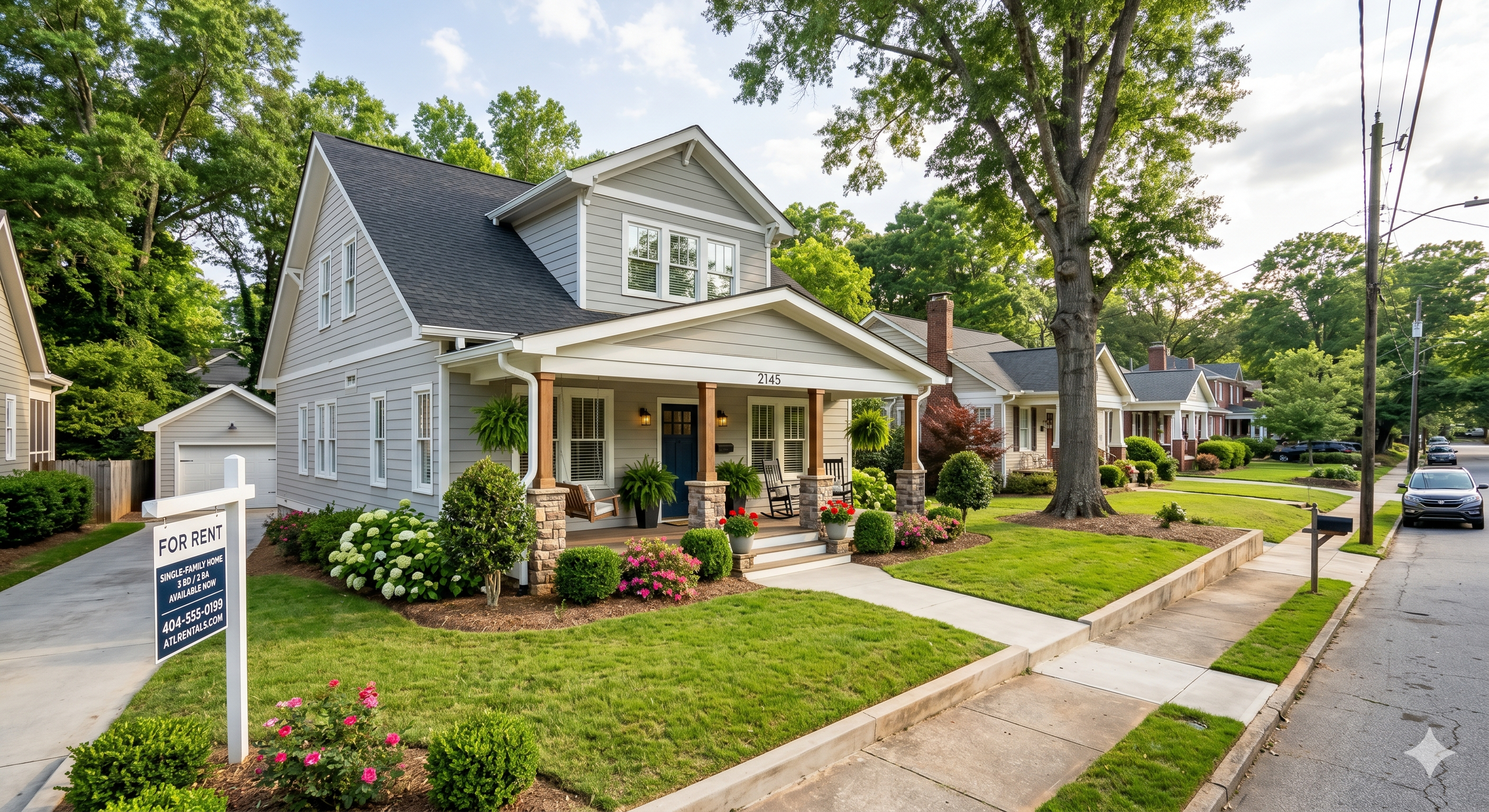
The Metro Atlanta ZIP codes with the strongest gross rental yields in 2026 are concentrated south and west of the city: 30315 (South Atlanta), 30310 and 30311 (Southwest Atlanta), 30238 (Jonesboro), 30274 (Riverdale), 30058 (Lithonia), and 30083 (Stone Mountain). These are also the ZIPs where the math is most likely to mislead you. Gross yield is a starting filter, not an answer. The real return depends on property condition, vacancy patterns, insurance and tax escalation, tenant turnover costs, and how realistic the rent comp actually is for the specific street, the specific floor plan, and the specific renovation level.
I work with investors across Metro Atlanta, from first-time landlords buying a single-family rental in Clayton County to portfolio buyers looking at small multi-family and build-to-rent. I'll walk you through which ZIPs show the highest gross yields right now, what the underlying numbers actually say, and where I think the math holds up versus where it falls apart once you account for what happens after closing.
Nearly a decade of helping Atlanta buyers means I know what the rental yield calculator does not show: the block-by-block differences in rent comps, the homes that look cheap on paper but need $40,000 of work before they can be leased, the ZIPs where institutional buyers have already compressed yields, and the suburbs where private landlords still hold a real edge.
Here's what you need to know.
What Rental Yield Actually Measures, and Why Most Investors Get It Wrong
Gross rental yield is a simple ratio: annual gross rent divided by purchase price. A $250,000 home renting for $1,800 per month produces $21,600 per year, which is an 8.6% gross yield. That number is useful as a first-pass filter, but it is incomplete on its own.
Net yield is what you actually keep. Net yield subtracts property taxes, insurance, vacancy allowance, repairs and maintenance, property management fees if you use one, capital expenditures (roof, HVAC, water heater, foundation), and any HOA dues. In Metro Atlanta, those expenses typically eat 30–45% of gross rent on a single-family rental, depending on age of home, neighborhood, and management style. A property with a 9% gross yield often delivers a 5–6% net yield. A property with a 6% gross yield often delivers 3–4% net.
Cash-on-cash return is what most buy-and-hold investors actually optimize for. It measures annual pre-tax cash flow divided by the cash you put into the deal (down payment, closing costs, initial rehab). With current mortgage rates in the high 6s to low 7s on investor loans, cash flow has gotten harder to find at any price point in Metro Atlanta. A property that nets 6% on a free-and-clear basis can be cash-flow negative when you finance it with 20% down at 7.25%.
The reason gross yield gets so much attention in published rankings is that it is the only number you can calculate before you close. Net yield and cash-on-cash require operating data you do not have until you own the property. So gross yield rankings are useful as a screening tool, but they should never be the deciding factor.
I bring this up at the start of this post because the ZIPs with the highest gross yields in Metro Atlanta tend to also be the ZIPs with the highest operating costs as a percentage of rent: older housing stock, higher property tax rates relative to rent, more deferred maintenance at acquisition, and longer vacancy windows when units turn. The yield ranking and the net return ranking are not the same list.
How I'm Ranking Metro Atlanta ZIPs for 2026 Rental Yield
For this analysis I'm using the methodology that ATTOM, Zillow, and Rentometer use to publish their public rankings: median single-family home value divided into annualized typical single-family rent for each ZIP. Home value data is pulled from Zillow's ZHVI and Redfin's median sale price reports through early 2026. Rent comps are pulled from Zillow's typical rent data, RentHop's bedroom-level breakdowns, and direct review of FMLS-listed leases through early 2026.
A few important notes on the data:
| ZIP Code | Area | Typical Home Value | Typical Monthly Rent | Gross Yield |
|---|---|---|---|---|
| 30311 | Cascade / Adams Park (SW Atlanta) | $234,236 | $1,936 | 9.9% |
| 30238 | Jonesboro (Clayton County) | ~$185,000 | $1,600–$1,800 | 10–12% |
| 30274 | Riverdale (Clayton County) | ~$210,000 | $1,700–$2,100 | 10–11% |
| 30058 | Lithonia (DeKalb County) | ~$220,000 | $1,800–$2,200 | 10–12% |
| 30083 | Stone Mountain (DeKalb County) | ~$198,000 | $1,500–$2,000 | 10–12% |
| 30310 | West End / Adair Park / Oakland City | $259,744 | $1,951 | 9.0% |
| 30315 | South Atlanta / Lakewood / Summer Hill | $245,743 | $1,834 | 9.0% |
| 30297 | Forest Park (Clayton County) | ~$170,000 | $1,400–$1,700 | 10–11% |
| 30135 | Douglasville (Douglas County) | $310,301 | $1,800–$2,400 | 7–8% |
| 30032 | Unincorporated DeKalb (NOT City of Decatur) | ~$255,000 | $1,800–$2,200 | 8–9% |
Source: Zillow ZHVI and typical rent data, Redfin median sale price reports, RentHop and FMLS rent comps, early 2026. Yields are gross (before expenses). Net yields typically run 4–6 percentage points lower after taxes, insurance, vacancy, maintenance, and management. Verify current numbers with a local agent before underwriting.
The table above shows the gross yield calculation across the Metro Atlanta ZIPs that consistently rank in the top tier. I'll walk through each cluster below with the context that the table cannot capture.
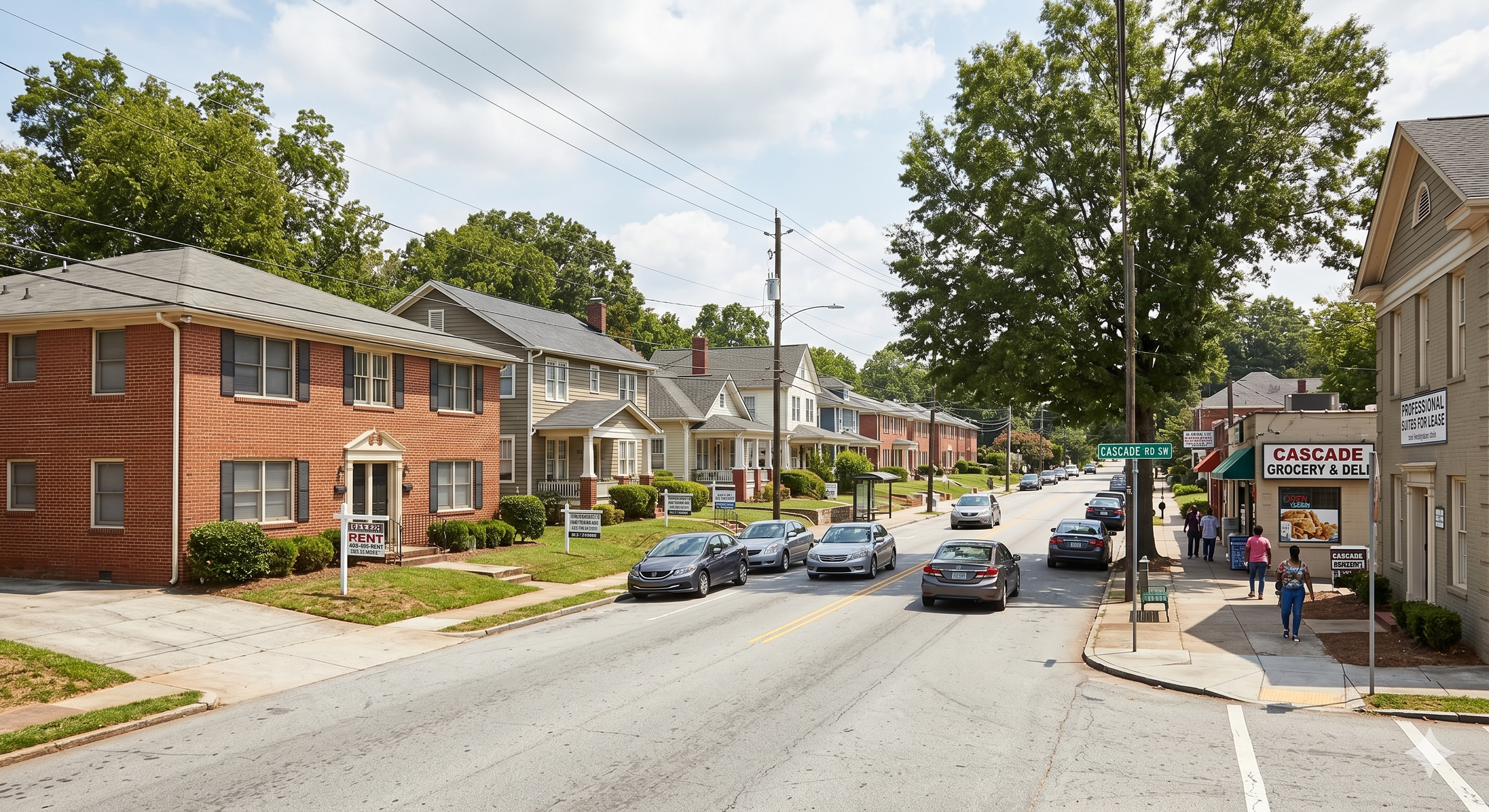
The Top-Yield ZIPs: Southwest Atlanta and South Atlanta City Limits
ZIP 30310: West End, Adair Park, Capitol View, Oakland City
ZIP 30310 covers Southwest Atlanta neighborhoods including West End, Adair Park, Oakland City, Capitol View, and Sylvan Hills. Zillow's typical home value in this ZIP is $259,744 with typical rent at $1,951 per month. That works out to a 9.0% gross yield, one of the highest in the City of Atlanta proper.
What makes 30310 distinctive for investors is the combination of price point, BeltLine Westside Trail access, and proximity to the Atlanta University Center colleges (Spelman, Morehouse, Clark Atlanta, Morehouse School of Medicine). Tenant demand is consistent because the area pulls from multiple sources: AUC graduate students, healthcare workers at nearby hospitals, MARTA commuters working downtown, and remote workers who want intown access at a price below the eastside.
The catch in 30310 is condition variance. The same street can have a fully renovated 1920s craftsman bungalow renting for $2,800 next door to a tear-down listed at $120,000. Median numbers conceal this. If you buy at the median price of $260,000 expecting median rent of $1,950, you need to verify that the specific property can actually achieve that rent in its current condition. Many cannot without significant rehab.
For investors looking at the West End cluster, my published guide on West End Atlanta covers the neighborhood in detail. The Oakland City and Adair Park guides cover the higher-yield sub-pockets within 30310 with specific block-level price ranges.
ZIP 30311: Cascade, Adams Park, Greater Cascade Heights
30311 sits west of 30310 and includes the Cascade Road corridor, Adams Park, and Greater Cascade Heights. Zillow's typical home value is $234,236 with typical rent at $1,936, which produces a 9.9% gross yield, the highest gross yield among Atlanta city ZIPs in this analysis.
30311 has older housing stock, larger lot sizes than the intown grid east of 30310, and more genuinely single-family character. It is the ZIP where I see the most interest from investors who want to hold long-term rather than flip. The corridor has solid demand because of John A. White Park, Cascade Springs Nature Preserve, the Adamsville MARTA station nearby in 30331, and reliable bus access along Cascade Road.
The reason yields look so favorable in 30311 is partly that home values have lagged the rest of Atlanta's appreciation curve over the last five years. That's a double-edged factor for an investor. Yields are high because prices stayed lower than rents would predict, but appreciation has also been slower. If you're buying primarily for cash flow, 30311 is one of the cleanest entries in the city. If you're buying expecting rapid appreciation, the historical pattern does not strongly support that thesis here.
ZIP 30315: South Atlanta, Lakewood Heights, Summer Hill, Pittsburgh
30315 covers a broad swath of South Atlanta including Lakewood Heights, Summer Hill, Chosewood Park, Pittsburgh, and the corridor around Lakewood Amphitheatre and Carver High School. Zillow's typical home value is $245,743 with typical rent at $1,834, producing a 9.0% gross yield.
This is the ZIP where the spread between top-of-market and bottom-of-market is widest. A renovated home a block off the BeltLine Southside Trail in Summer Hill rents at $2,400 to $2,800. A similar size home a mile south on a less-developed corridor rents at $1,400 to $1,600. The median number averages the two, but you need to underwrite specific to where the property sits relative to the BeltLine, the Carver cluster, and the Pittsburgh redevelopment activity.
The Summer Hill submarket specifically has been one of the most active investor zones in the city for the last three years because of the Centennial Yards development at the old Atlanta Constitution site, the rebuild of the Atlanta Civic Center area, and BeltLine Southside Trail progress. My Summer Hill guide breaks down the specific corridors where rent comps support the higher-yield math.
ZIP 30318: Westside, Bankhead, Howell Mill, Grove Park
30318 is the unusual case. Zillow's typical home value is $388,856 and typical rent is $1,807, which produces a gross yield of only 5.6%, lower than the south and southwest ZIPs. But 30318 includes wildly different sub-markets: West Midtown / Howell Mill, where homes sell at $700,000 to $1.5M, and Bankhead / Grove Park, where the median is closer to $200,000. The blended yield masks a tale of two markets.
For yield-focused investors, the Bankhead and Grove Park sides of 30318 produce gross yields in the 9–11% range on individual properties when you can buy at the right price. The West Midtown side produces gross yields below 5%. If you're filtering by ZIP alone, you'll miss this.
I include 30318 here as a caution against ZIP-level analysis. Sub-market matters more than ZIP for this part of town.
Clayton County: The Highest Gross Yields in the Metro
ZIP 30238: Jonesboro
Jonesboro's 30238 has been on every national rental yield ranking for nearly a decade. ATTOM ranked it the #1 ZIP code in the nation for single-family rental yield in their Q3 2017 report at 17.7%. The fundamentals that produced that ranking are still present: low entry prices (median home values in the $150K–$200K range), strong rental demand from Hartsfield-Jackson airport workers and Clayton County employment centers, and proximity to I-75 and I-285 for renters who work across the south metro.
Current rent comps from RentHop and FMLS show 3-bedroom rentals in 30238 averaging $1,400–$1,800 and 4-bedroom rentals averaging $2,000–$2,400. With median home prices in the high $100Ks to low $200Ks, gross yields in the 10–12% range are realistic on the right property.
Where 30238 gets complicated is condition and management intensity. Clayton County has older housing stock with more deferred maintenance than Fulton or DeKalb. Property tax assessments are lower, which helps net returns, but insurance costs have climbed significantly in 2024–2026 because of carrier exits in Georgia. Tenant turnover and rent collection require active management, which is why most investors here use a property manager and budget 8–10% of gross rent for that service.
Institutional buyers (Invitation Homes, Progress Residential, Tricon, Main Street Renewal) have been active in 30238 for a decade. They've absorbed a meaningful share of the standing inventory and are increasingly competing on the same pool of build-to-rent product. Private investors are still finding deals, but the easy yield environment of 2015–2018 has compressed.
ZIP 30274: Riverdale
Riverdale's 30274 sits north of Jonesboro and produces a similar gross yield profile. Median home prices are in the $180K–$240K range with rents on 3-bedroom homes between $1,600 and $2,200. That puts gross yields in the 10–11% range on most acquisitions.
What separates 30274 from 30238 is slightly newer housing stock on average, particularly in the eastern part of the ZIP near Tara Boulevard, and more townhome inventory. Townhomes in 30274 typically rent for $1,700–$1,850 and sell in the $150K–$190K range, which produces some of the cleanest cash-flow math in the metro.
The risk profile in 30274 mirrors 30238: insurance pressure, tenant turnover, and property management intensity.
ZIP 30297: Forest Park
Forest Park is the smallest of the Clayton County yield ZIPs but worth mentioning because of its proximity to the Atlanta Farmers Market, I-75, and Hartsfield-Jackson. Median home values are in the $150K–$200K range with rents on 3-bedroom single-family homes ranging $1,400–$1,800. Gross yields run 9–11%.
Forest Park has been seeing more institutional logistics and warehouse development along the I-285 / I-75 interchange, which has been pulling employment growth into the area and supporting rental demand from logistics workers.
DeKalb County: Stone Mountain, Lithonia, Decatur Outskirts
ZIPs 30083 and 30058: Stone Mountain and Lithonia
Stone Mountain's 30083 and Lithonia's 30058 are the DeKalb County equivalents of the Clayton ZIPs. Redfin shows the Stone Mountain market with median home prices around $198,000 in early 2026, with the wider Stone Mountain area at $271,000–$294,000 across all ZIPs. Rent comps on 3-bedroom single-family homes run $1,500–$2,000 in 30083 and $1,700–$2,200 in 30058.
That puts gross yields in the 10–12% range on the right acquisition. I've personally seen MLS listings in 30083 in early 2026 advertising 7.7% annual returns on currently leased properties, which gives you a real-world data point on what these ZIPs can actually produce.
Where 30083 and 30058 differ from the Clayton County ZIPs:
Tax base. DeKalb County millage rates are higher than Clayton's, which compresses net yield slightly compared to the Clayton equivalent.
Schools. Both ZIPs are in DeKalb County School District. Investors should research specific school zoning by address.
Distance to MARTA. Indian Creek MARTA station serves part of 30083, which expands the renter pool to include downtown commuters who don't want to drive.
Stone Mountain Park. 30083 and 30087 sit adjacent to the park, which is a meaningful amenity for renters but also brings tourist-traffic considerations on weekends.
ZIP 30032: Decatur (the unincorporated DeKalb part)
This is the ZIP that gets confused with the City of Decatur. 30032 covers unincorporated DeKalb County south of the City of Decatur, including the Belvedere Park, Candler-McAfee, and Gresham Park areas. It is NOT in the City Schools of Decatur district. Median home values are in the $230K–$280K range with rents on 3-bedrooms running $1,800–$2,200. Gross yields are 8–9%.
I separate 30032 from the City of Decatur (30030) carefully because investors searching for "Decatur rentals" often miss the difference. 30030 (City of Decatur, Decatur City Schools) produces gross yields of 4–5% on single-family homes. 30032 produces 8–9%. Same name, very different math.
West Metro: Douglasville and South Cobb
ZIP 30135: Douglasville
Douglasville's 30135 is the largest west metro ZIP and Zillow's typical home value sits at $310,301 (down 3.9% year-over-year, per Zillow's early 2026 data). Average rent across Douglasville per Redfin is $1,514, with single-family homes typically renting $1,800–$2,400 depending on size. That puts gross yields on single-family homes around 7–8%.
30135 is a different yield profile than the south metro ZIPs. Lower gross yields, but newer housing stock, lower vacancy rates, lower turnover, and stronger appreciation history. Investors who optimize for total return (yield plus appreciation) often prefer 30135 over the higher-yield Clayton ZIPs because the operating headaches are smaller.
I covered Douglasville in detail in my earlier neighborhood guide. The investor-friendly subdivisions tend to be in the 30135 portion of Douglasville, particularly along the Chapel Hill Road corridor.
ZIPs 30126 and 30168: Mableton and Austell
The South Cobb ZIPs of Mableton (30126) and Austell (30168) produce gross yields in the 7–9% range on single-family homes with median prices in the $250K–$320K range and 3-bedroom rents at $1,800–$2,300. They sit closer to Atlanta than Douglasville and have benefited from the BeltLine connection projects and the redevelopment around the Six Flags corridor.
Gwinnett County: Lower Yields, Stronger Appreciation
Gwinnett ZIPs do not show up in the highest-gross-yield rankings because home prices have appreciated faster than rents over the last five years. ZIP 30043 (Lawrenceville), 30024 (Suwanee), 30519 (Buford), and 30093 (Norcross) all produce gross yields in the 5–7% range.
Gwinnett's appeal for investors is different. Renter demand is consistently strong because of the school district reputation, the corporate employment along the Pleasant Hill Road and Sugarloaf Parkway corridors, and the international population that drives demand for Korean, South Asian, and Latino-oriented retail and services. Vacancy rates run lower than the south metro ZIPs, turnover costs are lower, and total return (yield plus appreciation) over a 10-year hold has historically outperformed the higher-yield ZIPs.
If you're buying for cash flow this year, Gwinnett is not the best fit. If you're buying for a 10–15 year hold and you weight appreciation, schools, and tenant quality, Gwinnett ZIPs deserve a longer look than the gross yield ranking suggests.
What the Gross Yield Ranking Doesn't Tell You
I want to walk through the variables that matter just as much as the headline yield number.
Property taxes by county. Fulton and DeKalb millage rates differ from Clayton, Cobb, Gwinnett, and Henry. A property with a 9% gross yield in a high-tax county can produce the same net cash flow as a property with an 8% gross yield in a low-tax county. Always pull the actual tax record for the specific parcel you're underwriting.
Insurance pressure. Georgia has seen meaningful homeowner insurance carrier exits in 2024–2026, which has pushed premiums significantly higher in flood-adjacent areas, on older housing stock, and on roofs over 12 years old. This affects the south metro ZIPs more than the Gwinnett and North Fulton ZIPs because the housing stock is older.
Section 8 / Housing Choice Voucher dynamics. Several of the highest-yield ZIPs (30310, 30311, 30315, 30238, 30274, 30058, 30083) have meaningful Housing Choice Voucher tenant populations. HUD's Fair Market Rent for the Atlanta MSA is set annually and acts as a soft ceiling on rents in voucher-heavy submarkets. Investors who are willing to participate in the voucher program get reliable on-time rent payments. Investors who refuse vouchers narrow their tenant pool in these ZIPs.
Build-to-rent competition. Institutional build-to-rent operators have been adding new construction inventory in Henry County, Clayton County, southern DeKalb, and west metro. New construction rentals at $2,200–$2,500 compete directly with private landlord rehabs at the same price point. The newer product wins on tenant preference. Private investors competing in BTR submarkets need to either buy lower (to underwrite at lower rent) or renovate to a higher finish level.
Property management economics. A self-managed rental in your own ZIP can produce 4–5% higher net yield than a professionally managed rental. If you don't live near the property and you're not willing to drive 45 minutes for showings and maintenance calls, you'll be using a property manager, and 8–10% of gross rent comes off the top.
Capital expenditures. Roofs are $12,000–$18,000. HVAC systems are $7,500–$12,000. Water heaters are $1,200–$2,500. Foundations on older homes can run $15,000–$40,000. These are not "if" expenses; they are "when" expenses. Annualize them across the holding period and they should be in your underwriting.
Where the Yield Math Actually Holds Up: Practical Filters
When I work with investor buyers in Metro Atlanta, the filters I use to separate viable deals from yield traps are:
| Filter | What I'm Looking For |
|---|---|
| Verified Rent Comp | At least 5 comparable properties leased within the last 90 days within a half-mile, in similar condition. Median rent on those leases is the underwriting number, not the Zillow estimate. |
| Capital Item Inspection | Roof under 10 years old, HVAC under 12 years old, water heater under 8 years old, no foundation issues, electrical panel updated. If any of these need replacement, that cost goes into the acquisition budget. |
| Insurance Quote | Real quote on the specific property, not an estimate. Insurance has tightened in Georgia and properties with older roofs or in higher-risk areas can carry premiums 50–100% above expectation. |
| Tax Record Pull | Actual property tax for the parcel, with no homestead exemption applied (since it's an investment property). County websites give this; don't rely on Zillow's estimated tax. |
| Cash Flow at 8% Vacancy + 1% Maintenance + 1% Capex | If the property still cash flows when you assume realistic operating reserves, it's a real deal. If it only works at zero vacancy and zero capex, the yield is illusory. |
A property that hits all five filters is a real candidate. A property that hits three or four needs a closer look. A property that hits one or two is rarely worth the operational complexity.
ZIP-Level Yield vs. Sub-Market Yield: The Distinction That Matters Most
The largest mistake I see investor buyers make in Metro Atlanta is treating ZIP code as the unit of analysis. ZIPs in this metro contain dramatically different sub-markets.
In 30318, the spread between West Midtown and Bankhead is $500,000+ on equivalent square footage.
In 30315, the spread between Summer Hill and the south end of the ZIP is $200,000+.
In 30310, the spread between Adair Park / Capitol View and the western edges of the ZIP is $150,000+.
In 30331, the spread between the Adamsville / Greenbriar corridor and Princeton Lakes is significant.
The published yield rankings use ZIP-level medians, which average across these sub-markets. Your actual deal will be in a specific sub-market, on a specific street, in a specific condition. You need block-level rent comps, not ZIP-level medians.
This is also why I push investor buyers toward agents who actually walk these neighborhoods. A Zillow estimator does not know that the renovated bungalow at one specific intersection rents for $2,500 while the unrenovated equivalent two blocks south rents for $1,500. I do.
Short-Term Rentals: A Different Math Entirely
This post is focused on long-term residential rental yield. Short-term rental (STR) yields in Metro Atlanta operate on different fundamentals: Atlanta's STR licensing requirements (Atlanta City Council passed updated regulations effective in 2024), neighborhood-specific HOA restrictions, and demand cycles tied to events at Mercedes-Benz Stadium, State Farm Arena, and the Georgia World Congress Center.
The intown ZIPs that produce the strongest STR yields (30312 around Old Fourth Ward and the BeltLine, parts of 30318 near Mercedes-Benz Stadium, parts of 30303 downtown) are not the same ZIPs that produce the strongest long-term rental yields. STRs require active operations and event-driven pricing strategy. If you're buying for STR, a separate analysis applies and the ZIPs ranked here are not the right starting list.
What Actually Happens in 2026 for Atlanta Rental Investors
The fundamentals supporting the south metro and southwest Atlanta yield ZIPs are still in place: population growth, employment growth at Hartsfield-Jackson and the logistics corridor, BeltLine progress on the Westside and Southside Trails, AUC enrollment stability, and a sustained gap between for-sale prices and what equivalent renters can pay each month.
What has changed since the 2017–2019 yield environment is that institutional capital has narrowed the easy-deal pool, insurance has compressed net returns, and interest rates have made financed deals harder to cash-flow. The investors I see succeeding in 2026 are the ones who buy below the median (not at it), underwrite conservatively on rent, budget realistically for capex, and either self-manage or partner with a property manager whose track record they have personally verified.
If your strategy is buy-and-hold for cash flow, the ZIPs to focus on remain 30310, 30311, 30315, 30238, 30274, 30058, and 30083. If your strategy is total return with appreciation tilt, look at the sub-markets within 30318, the BeltLine-adjacent parts of 30315, the Cascade corridor in 30311, and the Gwinnett corridors at lower gross yields but higher long-term appreciation history.
How I Work with Investor Buyers
I work with investors at every entry point: first-time landlords buying a single rental, portfolio buyers acquiring 5–15 doors per year, and clients building build-to-rent communities from the ground up. The work I do for investor clients is different from the work I do for primary residence buyers. I underwrite on cash flow, I run rent comps street-by-street, and I do not push you toward properties that look pretty but do not work on the spreadsheet.
If you're considering Metro Atlanta as a rental market, I'm happy to walk through your strategy, your target return, your management plan, and the specific ZIPs that fit. The published yield rankings are a starting point. The actual deal is what matters.
Frequently Asked Questions
What is a good rental yield for a Metro Atlanta property in 2026?
Gross yields of 8% or higher are realistic in the south metro and southwest Atlanta ZIPs (30310, 30311, 30315, 30238, 30274, 30058, 30083). Net yields after expenses typically run 4–6% on these properties. In the suburban ZIPs (30135, 30126, 30043), gross yields are 5–7% with net yields of 3–4%. What counts as "good" depends on your strategy: cash flow buyers want gross yields above 9%, total return buyers can accept 6–7% gross yields if appreciation history and tenant stability are stronger.
Which ZIP code has the highest rental yield in Atlanta right now?
Based on early 2026 data, ZIP 30311 (Cascade, Adams Park) shows one of the highest gross yields in the City of Atlanta at approximately 9.9%, calculated from a Zillow typical home value of $234,236 and typical rent of $1,936. Outside the city, 30238 (Jonesboro) and 30274 (Riverdale) in Clayton County produce gross yields in the 10–12% range on the right acquisitions. These are gross yields; net yields after expenses are typically 5–6 percentage points lower.
Are Atlanta rental yields better than Atlanta appreciation potential?
It depends on the ZIP. The high-yield ZIPs in the south metro have historically produced lower appreciation than the Gwinnett and North Fulton ZIPs but stronger current cash flow. The lower-yield ZIPs (Gwinnett, North Fulton, suburban Cobb) have produced stronger appreciation over 10-year holds but weaker current cash flow. Total return analysis (yield plus appreciation) needs to run on a 5, 10, and 15-year horizon, and the ranking shifts at each timeframe.
Should I buy a rental property in Clayton County in 2026?
Clayton County (30238, 30274, 30297, 30296) has the highest gross yields in Metro Atlanta and the most active institutional investor presence. The math works on the right property, but the operational intensity is higher than other counties: more management, more turnover, more insurance pressure on older housing stock. If you're a hands-off out-of-state investor, Clayton can work with the right property manager. If you're a first-time landlord without local support, the suburban ZIPs (30135, 30126, 30043) tend to be a smoother first acquisition.
What ZIP codes are best for build-to-rent investment in Metro Atlanta?
Build-to-rent activity has been concentrated in southern Clayton County, Henry County (30253, 30281), southern DeKalb (30058, 30083), and west metro (30135, 30126, 30168). These are areas where land prices support new construction at rent levels that produce viable yields, and where institutional buyers have demonstrated tenant demand. Smaller-scale BTR (single homes or 4–10 home pods) by private investors is most active in 30310, 30311, and 30315 inside the city.
How much cash do I need to buy a rental property in Atlanta?
For a $200,000 single-family rental in 30238 or 30274, you'll typically need 20–25% down ($40,000–$50,000), closing costs of $5,000–$8,000, an initial repairs / make-ready budget of $5,000–$15,000, and 6 months of reserves ($10,000–$15,000). Total cash to close on a turnkey acquisition is roughly $60,000–$85,000. For a $300,000 rental in suburban west metro, that figure rises to $90,000–$120,000.
Do Metro Atlanta rental properties cash flow at current interest rates?
Cash flow on financed deals is harder than it was in 2019–2021 but still possible. With investor mortgage rates running in the high 6s to low 7s, properties in the high-yield ZIPs (30310, 30311, 30315, 30238, 30274, 30058, 30083) typically cash flow with 25% down. Properties in suburban ZIPs (30135, 30043, 30024) often require 30–35% down to produce positive cash flow at current rates. Cash buyers and 1031 exchange buyers who can deploy without financing have the cleanest math right now.
What are the property tax rates for rental investors in Metro Atlanta counties?
Property tax rates vary by county and city. As a rough comparison: Fulton County millage in unincorporated areas runs around 35–40 mills, City of Atlanta adds roughly 10 mills on top. DeKalb County runs around 40–43 mills depending on city. Clayton County runs lower, around 35–38 mills. Cobb runs around 30–33 mills. Gwinnett runs around 30–33 mills. Investment properties don't qualify for the homestead exemption, so plan for the full assessment. Always pull the actual tax record on the specific parcel. Rates change annually.
Are short-term rentals a better strategy than long-term rentals in Atlanta?
Short-term rentals can produce higher gross income in event-adjacent intown ZIPs (30312, 30303, parts of 30318), but they require active operation, professional cleaning, dynamic pricing, and compliance with Atlanta's STR licensing requirements. They also carry more revenue volatility. Long-term rentals produce lower gross income but are largely passive after stabilization. The right answer depends on your time, risk tolerance, and whether your target ZIP is in an STR-permissible area with strong event-driven demand.
Which Metro Atlanta ZIP codes have the strongest tenant demand?
Tenant demand is strongest where employment, transit, and amenities cluster. In the city, 30310 and 30315 benefit from BeltLine access and AUC / hospital employment. 30311 benefits from Cascade Road employment and transit. 30318 has Mercedes-Benz Stadium and Georgia Tech proximity. In the south metro, 30238 and 30274 benefit from airport employment. In Gwinnett, 30043 and 30093 benefit from Pleasant Hill Road employment. Vacancy patterns vary, but 30 days or less to lease at market rent is typical in all of these ZIPs when the property is priced correctly.
How do I evaluate a specific rental property's yield before buying?
Pull the actual tax record for property tax. Get an insurance quote on the specific property (not an estimate). Run rent comps on at least five comparable properties leased within the last 90 days within a half-mile. Inspect the roof, HVAC, water heater, foundation, electrical, and plumbing. These are the high-cost capital items. Underwrite vacancy at 8% (one month per year), maintenance at 1% of home value annually, and capex reserves at 1% of home value annually. If the property still cash flows at those reserves, it's a real deal. If it only cash flows when you assume zero vacancy and zero capex, it's not.
Is it better to buy a rental property in cash or with financing in 2026?
Cash purchases produce higher current cash-on-cash yield because you skip the mortgage payment, but they tie up capital that could be deployed across multiple properties. Financed purchases produce lower current yield but allow leverage and higher total returns when appreciation is factored in. The right answer depends on how many properties you want to own, how active you want to be, and your tax situation. Most portfolio investors I work with use financing on most acquisitions and reserve cash for the deals where speed matters or where the property doesn't qualify for conventional financing.
What's the biggest mistake first-time rental investors make in Metro Atlanta?
Buying off the published yield ranking without verifying that the specific property hits the median rent number. The high-yield ZIPs all have wide condition variance, and a property that looks cheap at $180,000 may rent for $1,300 instead of $1,800 once it's in actual condition. The fix is simple: get rent comps on actually-leased properties on the specific street and within the specific condition tier of what you're buying. Don't underwrite on ZIP medians.
I work with investors at every level across Metro Atlanta, including first-time landlords, portfolio buyers, and build-to-rent partners. If you're evaluating ZIPs, working through your underwriting, or ready to look at specific properties, let's talk. The published rankings are a starting point. The actual deal is where the work happens.
Visit kristenjohnsonrealestate.com or reach out directly. Come as you are, come on home.
Looking for more Metro Atlanta neighborhood guides? I've covered the Westside Atlanta cluster, including West End, Adair Park, and Oakland City, as well as the South Atlanta cluster including Summer Hill. Browse the full guide series at kristenjohnsonrealestate.com.