

What Happens After Your Offer Is Accepted in Atlanta? A Georgia Buyer's Guide

After your offer is accepted in Atlanta, the clock starts on your due diligence period — the negotiated window, typically 7 to 14 days, during which you can inspect the property and back out for any reason without losing your earnest money. A Georgia-licensed closing attorney, not a title company, manages the transaction from contract to closing. Financed closings typically take 30 to 45 days, and you get your keys on closing day.
The moment both parties sign, the contract is binding. Your agent documents the exact date and time — that binding date starts every deadline in the transaction.
Send the executed contract to your lender the same day. They need it to order the appraisal and open your file for underwriting.
The Due Diligence Period: Your One Window to Walk Away
This is the part of a Georgia contract that surprises buyers coming from other states, and it's the most important thing to understand before you're in the middle of it.
The due diligence period is a negotiated window — typically 7 to 14 days in Metro Atlanta, sometimes 3 to 5 days in competitive situations — during which you can terminate the contract for any reason. Terminate in writing before the deadline, and your earnest money comes back in full. Miss that deadline by even one day, and the seller may keep it.
Here's the distinction a lot of buyers don't know going in: the due diligence fee and earnest money are two separate things.
The due diligence fee is paid directly to the seller at contract binding. It compensates them for taking the home off the market while you do your investigations. It is nonrefundable — even if you terminate within the window, even if the inspection turns up something serious. This fee is negotiated and typically runs from a few hundred dollars to around 1% of the purchase price depending on market conditions.
The earnest money — typically 1% to 3% of the purchase price — is held in escrow by the closing attorney. You get it back if you terminate during the due diligence period. You lose it if you walk away after the deadline without a valid contractual basis. Here's a full breakdown of what to budget when buying in Atlanta, including earnest money and closing costs together.
During your due diligence, work quickly. Here's what I tell every buyer to prioritize:
Home inspection. Atlanta homes have specific concerns that standard inspection checklists don't always flag clearly. Subterranean termites are common here — budget for a separate WDI (wood-destroying insect) report alongside the general inspection. Crawl space moisture and wood rot show up frequently in older intown homes. Red clay drainage creates foundation and yard issues. Aging electrical panels are common in anything built before 1990. A standard inspection runs $350 to $600; the WDI report adds $75 to $150.
Title review. Your closing attorney orders a title search and surfaces any liens, easements, or ownership questions that need to be resolved before closing.
HOA documents. If the property has an HOA, request the governing documents, current financials, and recent meeting minutes. An HOA with underfunded reserves or pending special assessments is a cost you inherit.
Permit history. Check with the relevant county — Fulton, DeKalb, Cobb, Gwinnett, or Douglas — for permits on any renovations. Unpermitted work can create issues at appraisal and complicates resale down the line.
While you're doing all of this, your lender is in underwriting — verifying your income, employment, and assets, and waiting on the appraisal. The appraiser compares your home to recent closed sales nearby to confirm the property is worth what you're paying. If the appraisal comes in below your contract price, you have options: negotiate the price with the seller, bring additional cash to cover the gap, challenge the appraisal with stronger comparable sales, or exit under the appraisal contingency depending on your contract terms.
If inspection turns up issues and you want to stay in the deal, you can submit a repair request or ask for a closing credit. In Atlanta's current market, sellers are negotiating more than they have in years — knowing how to use that leverage is part of getting the deal you want.
Know your due diligence deadline. Know how termination notice must be delivered and who delivers it. I track this with every buyer I work with, because missing it is expensive. I cover the Georgia due diligence period in detail — timelines, termination procedures, and what to watch for — in my full guide for Atlanta buyers.
What a Georgia Closing Attorney Actually Does
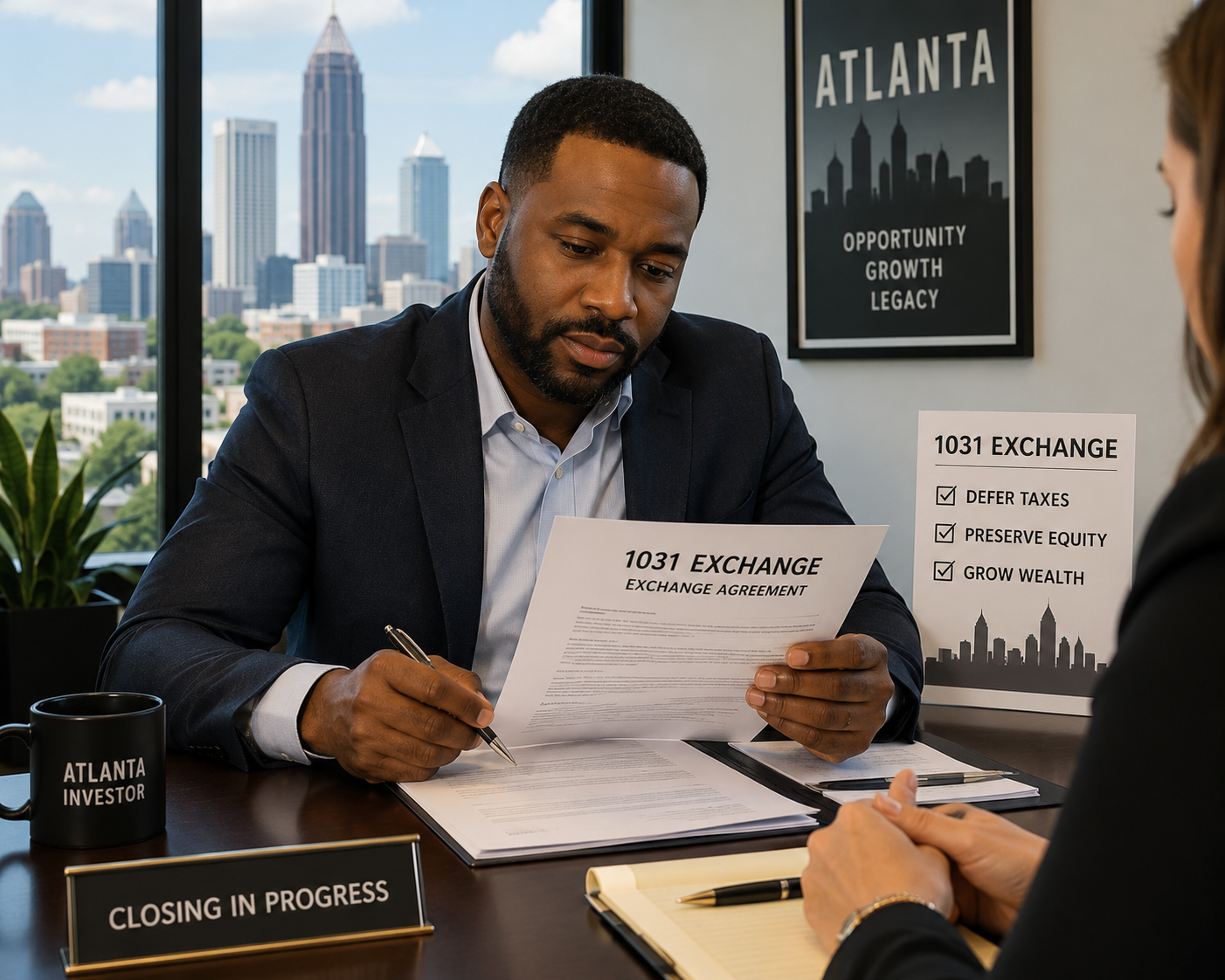
Georgia is an attorney-closing state. Every residential real estate transaction here must be closed by a licensed Georgia attorney — not a title company, not an escrow company, but an attorney. If you've bought a home somewhere else, this is different from what you're used to.
The closing attorney handles the title search, prepares all closing documents, coordinates with your lender, collects funds, disburses money to all parties, and records the deed with the county.
In most transactions, the buyer — or the buyer's lender — selects the closing attorney. The seller and their agent cannot require you to use a specific one. I cover who chooses the closing attorney in Georgia — including how your lender factors in — in detail. Attorney fees typically run $500 to $1,500. See the full breakdown of what Georgia buyers pay at closing so you know exactly what to bring to the table.
Three business days before your closing appointment, your lender is required to deliver the Closing Disclosure — the document that shows every cost, credit, and fee in your transaction. Review it carefully. If a number shifted from your Loan Estimate or something doesn't look right, raise it with your agent or the closing attorney before you sit down to sign. That's the time to ask questions.
Your closing appointment usually takes one to two hours. You'll sign 20 to 50 documents. The attorney walks you through each one.
The Final Walkthrough and Closing Day
The final walkthrough happens 24 to 48 hours before your closing appointment. This is your chance to confirm the property is in the agreed-upon condition — repairs were completed, the seller has vacated, nothing changed since your inspection. If something is off, tell your agent immediately. You have more leverage to address issues before you sign than after.
Closing day is exactly what it sounds like. You show up, sign the documents, the attorney disburses funds, and you walk out with your keys. The full buying timeline from pre-approval to closing typically runs 3 to 6 months — closing itself is just the finish line.
One thing easy to miss in the first week of owning a home in Atlanta: the Georgia homestead exemption. If you're moved in before January 1 and using the home as your primary residence, you're eligible to apply for a property tax reduction. The deadline is April 1 in Fulton, DeKalb, and most other Metro Atlanta counties. You only apply once. Your closing attorney or agent can point you to the right county office.

Frequently Asked Questions
How long does it take to close on a house in Atlanta after an offer is accepted?
Plan on 30 to 45 days from contract to closing for a financed purchase. Cash closings can move faster — sometimes 7 to 14 days if the title is clean and both sides are ready. The main variables are how quickly your lender moves through underwriting and whether the closing attorney encounters any title issues.
What is the due diligence period in Georgia?
The due diligence period is a negotiated window — typically 7 to 14 days in Metro Atlanta — during which you can terminate the contract for any reason and get your earnest money back. It's similar to an inspection contingency in other states, but in Georgia it's negotiated upfront and has a hard deadline. Miss the deadline, and the seller can keep your earnest money.
What is the due diligence fee, and do I get it back?
The due diligence fee is paid directly to the seller at contract binding — it's their compensation for taking the home off the market while you inspect. It's nonrefundable even if you terminate within the window. The amount is negotiated and typically runs from a few hundred dollars to around 1% of the purchase price.
Does Georgia require a closing attorney?
Yes. Georgia law requires a licensed attorney to close every residential real estate transaction. The buyer or buyer's lender typically selects the attorney. Fees generally run $500 to $1,500.
When do I get my keys in Atlanta?
You get your keys at closing, the same day you sign. Once the closing appointment is complete and the attorney has disbursed funds, the transaction is done and the keys are yours.
What if the appraisal comes in lower than my purchase price?
You have a few options: negotiate with the seller to lower the price, bring additional cash to cover the difference, challenge the appraisal by submitting stronger comparable sales, or — if your contract includes an appraisal contingency — exit the deal and recover your earnest money. The right move depends on the size of the gap and where the seller stands.
What should I watch for during a home inspection in Atlanta?
A few things are specific to Atlanta. Subterranean termites are common, so get a WDI report alongside your general inspection. Crawl space moisture and wood rot show up frequently in older intown homes. Red clay drainage creates foundation and yard issues. Aging electrical panels appear often in pre-1990 construction. Budget $350 to $600 for the inspection and $75 to $150 for the WDI report.
The Georgia contract has a few pieces buyers from other states don't always expect — the due diligence fee, the period's hard deadline, the closing attorney — but once you know how each one works, it moves clearly. I walk buyers through this process before we write an offer, because knowing what's coming makes every step easier to navigate.
If you're under contract or about to make an offer and want to talk through your specific timeline, I'd be glad to help. Reach out at kristenjohnsonrealestate.com/schedule.