

What Should I Fix Before Listing My Home in Atlanta? A Seller's Guide to Spending Smart in 2026
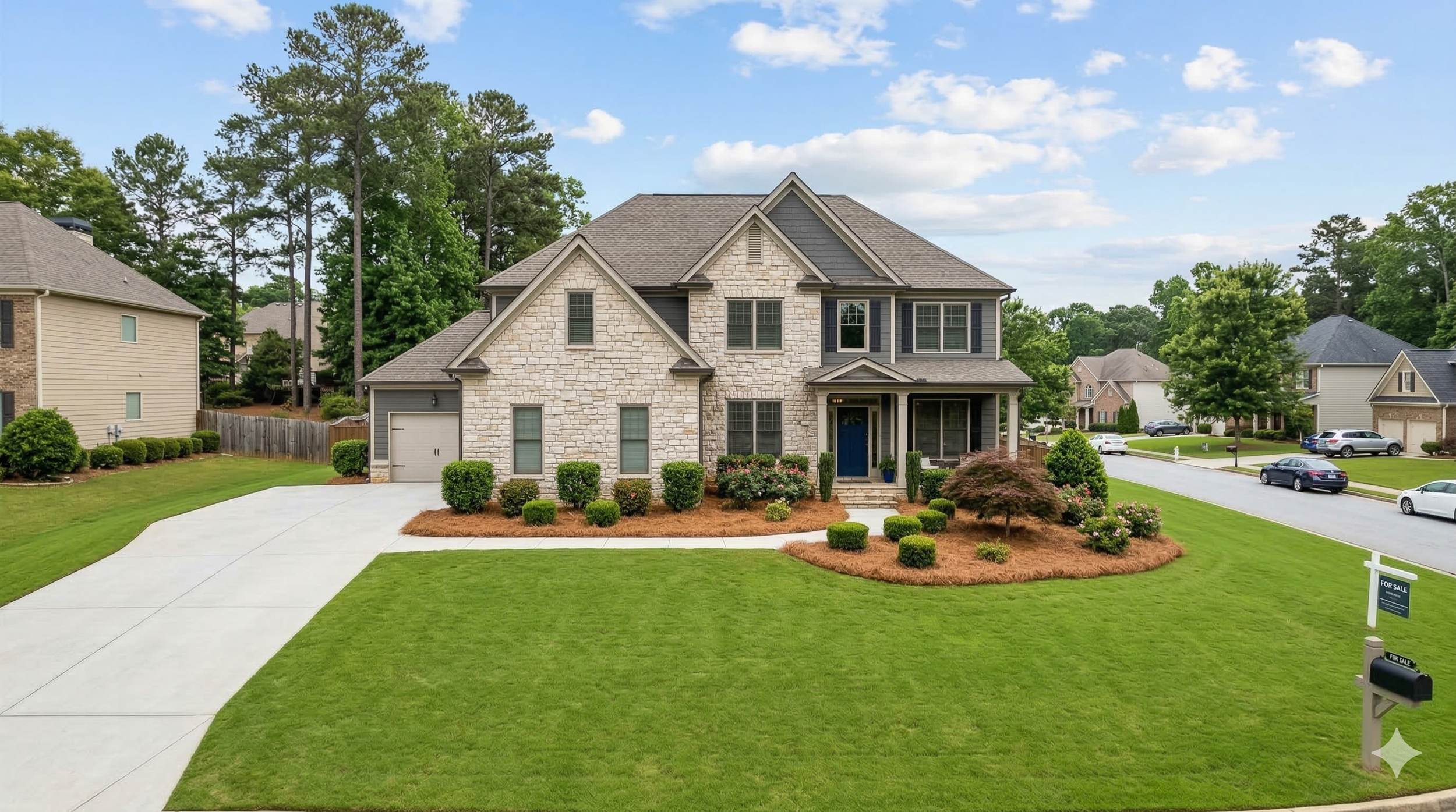
Here's what I see happen all the time: a seller decides to list, spends $30,000 on a kitchen renovation, and nets maybe $15,000 more at closing. Meanwhile, their neighbor listed with a fresh coat of paint, cleaned gutters, and a serviced HVAC unit — spent $3,500 — and sold in 12 days with multiple offers.
The question isn't just what to fix. It's what's actually worth fixing — and what's a waste of money that buyers won't pay you back for.
In Atlanta's 2026 market, buyers have more options than they've had in years. Inventory is up. Homes are sitting longer. Buyers are pickier, more financially cautious, and quicker to walk away over inspection findings than they were in 2021. That changes the calculus for sellers.
This guide is the honest version — not a renovation wish list, but a practical breakdown of what moves the needle in Metro Atlanta, what you can skip, and how to think through the decision before you spend a dollar. Here's what you need to know.
The Core Principle: Fix What Buyers Notice and What Kills Deals
Before getting into specifics, understand the framework. When preparing a home to sell, every dollar you spend should accomplish one of three things:
Prevent the deal from falling apart during inspection
Prevent buyers from walking in and immediately mentally discounting the price
Help the home photograph well and show well
That's it. Everything else is optional — and a lot of it doesn't pay back.
Buyers in 2026 are not going to give you $50,000 more because you renovated a kitchen that was already functional. They will, however, walk away from a home or demand a $15,000 credit because the HVAC system is 20 years old and clearly on its last legs.
The difference matters. Fix the things that lose you money. Don't over-invest in the things that feel like they add value but don't.
Start Here: Get a Pre-Listing Inspection
Before you do anything else — before you call a painter, before you replace a single fixture — get a pre-listing home inspection.
A pre-listing inspection costs $300 to $500 in Metro Atlanta and is one of the highest-return investments you can make before selling. Here's why:
When a buyer's inspector finds a problem, you're negotiating from the worst possible position. You're already under contract, the buyer has leverage, and you're scrambling to respond on their timeline. Repair requests, credit demands, and deal-fall-throughs are all more likely when problems surface during the buyer's inspection.
When you find the same problem yourself, first, you get to decide how to handle it. Fix it on your own timeline with your own contractors — usually at a lower cost than rushing to satisfy a buyer's repair demand. Or price the home accounting for it. Or disclose it and let buyers factor it in upfront.
Either way, you're in control. That's worth far more than the cost of the inspection.
Georgia is a caveat emptor state — buyer beware. Sellers are legally required to disclose known material defects. A pre-listing inspection eliminates "I didn't know" as a defense and positions you as a transparent seller, which buyers increasingly value in this market.
Get the inspection. Then use what follows to decide what to fix.
The Non-Negotiables: Fix These Before You List
These are the items that consistently kill deals, tank appraisals, or result in large repair demands during buyer negotiations. If your pre-listing inspection turns any of these up, fix them.
HVAC System
HVAC is the first thing buyers ask about and inspectors focus on in Georgia. Our climate means air conditioning isn't optional — it's essential.
If your system is 15 years or older, expect it to come up in every buyer's inspection. If it's not functioning properly, expect it to be a dealbreaker or a major credit demand.
A full HVAC replacement runs $7,500 to $15,000 depending on the system and size of your home. That's significant money. But an aging, marginal HVAC system often results in buyers asking for credits that exceed replacement cost — because they're not just pricing the equipment, they're pricing the inconvenience and uncertainty. A functioning, serviced system that you can document shows buyers the home has been maintained.
At minimum: have the system serviced and cleaned, replace filters, and have documentation to show buyers. If the system is clearly end-of-life, talk to your agent about whether replacing it or pricing to account for it makes more sense for your specific situation.
Roof
A damaged or aging roof is one of the most common deal-killers in Atlanta. Lenders often won't finance homes with roofs that have fewer than 3 to 5 years of remaining life, which means buyer financing can fall apart regardless of their interest in the home.
Missing shingles, visible damage, soft spots, flashing issues, and documented leaks all need to be addressed. A full roof replacement on a typical Metro Atlanta home runs $10,000 to $20,000 depending on size and materials — a substantial cost, but the alternative is often a buyer walking away entirely or demanding a credit that equals or exceeds the repair cost.
If your roof is in the 15 to 20 year range, get a roofer's assessment before listing. Know what you're working with so you can make an informed decision about whether to replace, repair, or price accordingly.
Water Intrusion and Moisture Issues
Atlanta's clay soil, humidity, and frequent rain create consistent moisture challenges. Crawlspace moisture, basement seepage, evidence of past roof leaks, and HVAC condensation issues all get flagged in inspections and all create anxiety for buyers.
Address active moisture intrusion before listing. This may mean crawlspace vapor barriers, proper grading around the foundation, gutter repairs, or addressing a specific leak source. The cost varies widely depending on the issue, but moisture problems that go unaddressed tend to grow in perceived severity during negotiations — buyers imagine the worst.
Georgia's red clay stains on siding, driveways, and exterior surfaces also matter more than sellers realize. Pressure washing is inexpensive and creates an immediate visual improvement that signals maintenance.
Electrical Issues
Outdated panels, aluminum wiring, GFCI outlets that are missing in kitchens and bathrooms, and any live safety hazards need to be corrected. Lenders and insurers increasingly flag electrical issues, and they're non-negotiable for buyers using FHA or VA financing.
Hire a licensed electrician for a pre-listing electrical check. Minor corrections — installing GFCI outlets, repairing a breaker issue — are usually low cost. Larger issues like full panel replacements or aluminum wiring remediation are more significant but need to be disclosed and addressed one way or another.
Plumbing
Leaking faucets, slow drains, signs of pipe corrosion, water heater age, and low water pressure all come up in inspections. The good news: most plumbing issues are repairable at reasonable cost. A $150 plumber visit to fix a dripping faucet and a running toilet prevents those items from showing up on an inspection report as deferred maintenance.
If your water heater is 10 or more years old, buyers will flag it. A new water heater runs $800 to $1,500 installed. That may be worth doing proactively, or worth disclosing and pricing accordingly — talk to your agent.
Termite and Pest Issues
Georgia's warm, humid climate makes termite activity extremely common. A current termite letter is standard in Metro Atlanta real estate transactions. Get a WDO (Wood Destroying Organism) inspection and address any active infestations or damage before listing.
Active termite damage is a significant finding. Remediation and repair costs vary widely, but discovering it during a buyer's inspection rather than beforehand puts you at maximum negotiating disadvantage.
High-ROI Improvements Worth Making
Once the non-negotiables are addressed, these improvements consistently return their cost and then some in Metro Atlanta's market.
Fresh Interior Paint: Highest ROI of Any Project
A full interior repaint is the single best-value improvement most sellers can make. Cost: $3,000 to $7,000 for most Metro Atlanta homes depending on size. Return: buyers respond to fresh, neutral paint more than almost any other single change.
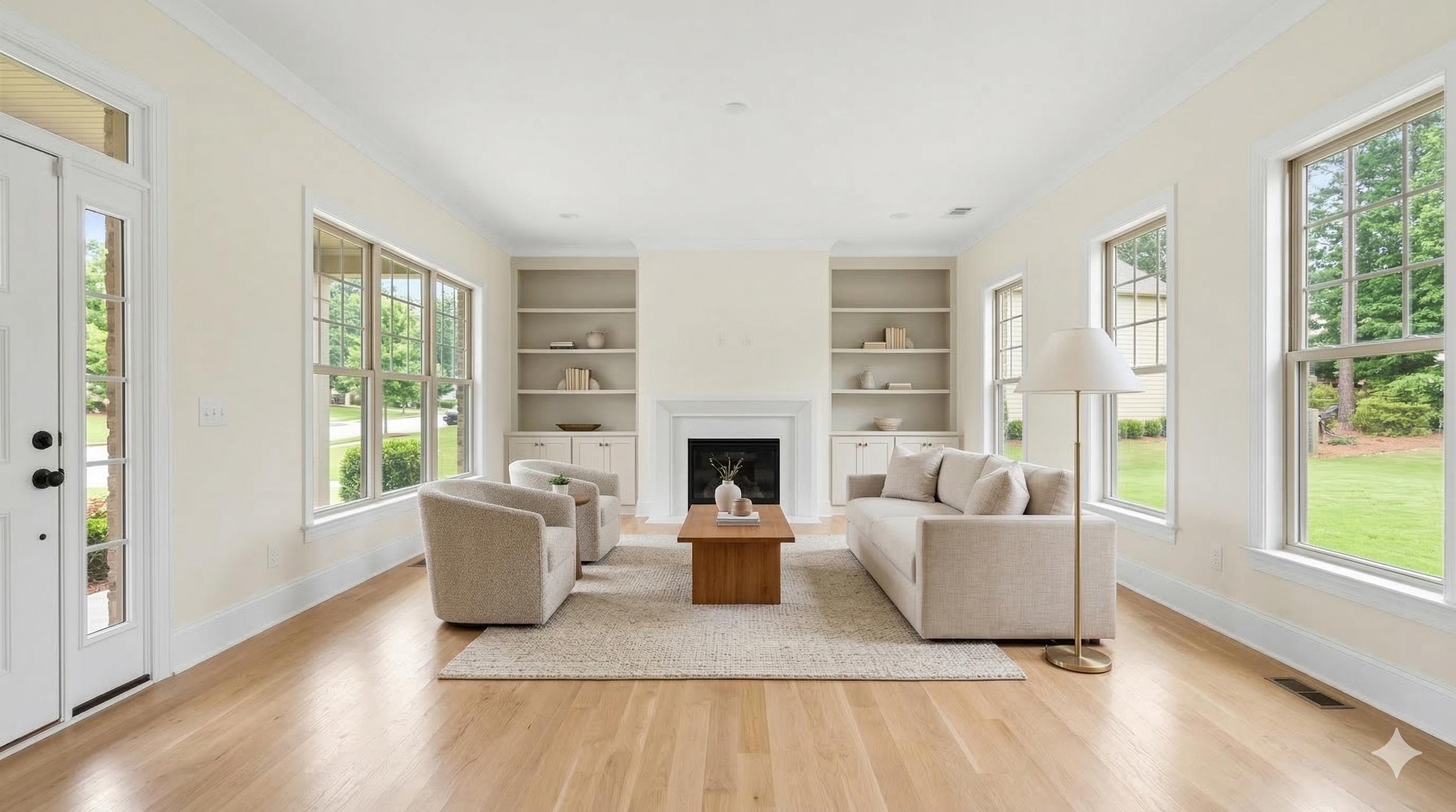
The rules: go neutral. Greige, warm white, soft gray. Not your personal taste — the broadest possible buyer appeal. Cover anything bold, dark, or dated. Fix all wall scuffs, nail holes, and dings before painting.
Fresh paint does three things: it photographs well, it makes the home smell clean, and it signals to buyers that the home has been maintained. The absence of fresh paint — scuffed, dirty, or dated walls — does the opposite.
Curb Appeal: First Impressions Are Made in 30 Seconds
Buyers form an emotional response to your home before they step inside. Curb appeal affects how they feel walking in the front door, which affects how they evaluate everything they see inside.
High-return curb appeal investments:
Front door: A freshly painted or replaced front door has outsized impact on first impression. New hardware — handle, knocker, house numbers — costs very little and reads as well-maintained. Cost: $100 to $500 for paint and hardware; $800 to $2,000 for a new door if replacement is needed.
Pressure washing: Power wash the driveway, walkways, siding, and any red clay staining. In Georgia this matters more than in most markets. Cost: $200 to $400. Return: immediate.
Lawn and landscaping: Mow, edge, trim overgrown shrubs, pull weeds, add fresh pine straw or mulch to beds. Clean, maintained landscaping signals a well-kept home. Cost: $300 to $800. Avoid expensive new plantings — buyers don't pay for them.
Gutters: Clean and repair any gutters with visible damage or overflow staining on the fascia. Neglected gutters are noted in inspections and signal deferred maintenance.
Garage door: If your garage door is dated, damaged, or mismatched to the home, replacement delivers strong ROI — industry data consistently shows garage door replacement returning close to its full cost at resale. Cost: $1,500 to $3,500 installed.
Deep Clean — Every Room, Every Surface
This is not optional and it costs almost nothing compared to its impact. Buyers notice. They notice pet odors, cooking smells, dirty baseboards, grimy window tracks, and bathroom grout. They notice when a home is pristinely clean. And they make assumptions about maintenance based on cleanliness.
Hire a professional cleaning service for a deep clean before listing. Every room, every surface, inside cabinets, inside the oven, grout lines, light fixtures. Cost: $300 to $600 for most homes. Return: significant — cleanliness affects both how buyers feel about the home and how it photographs.
Odor is especially important. Pet odors, smoke, and heavy cooking smells are the fastest ways to lose buyers. If you have pets or smoke indoors, address this aggressively — professional ozone treatment if needed, carpet cleaning or replacement, repainting walls that have absorbed smoke.
Kitchen and Bathrooms: Cosmetic Updates Only
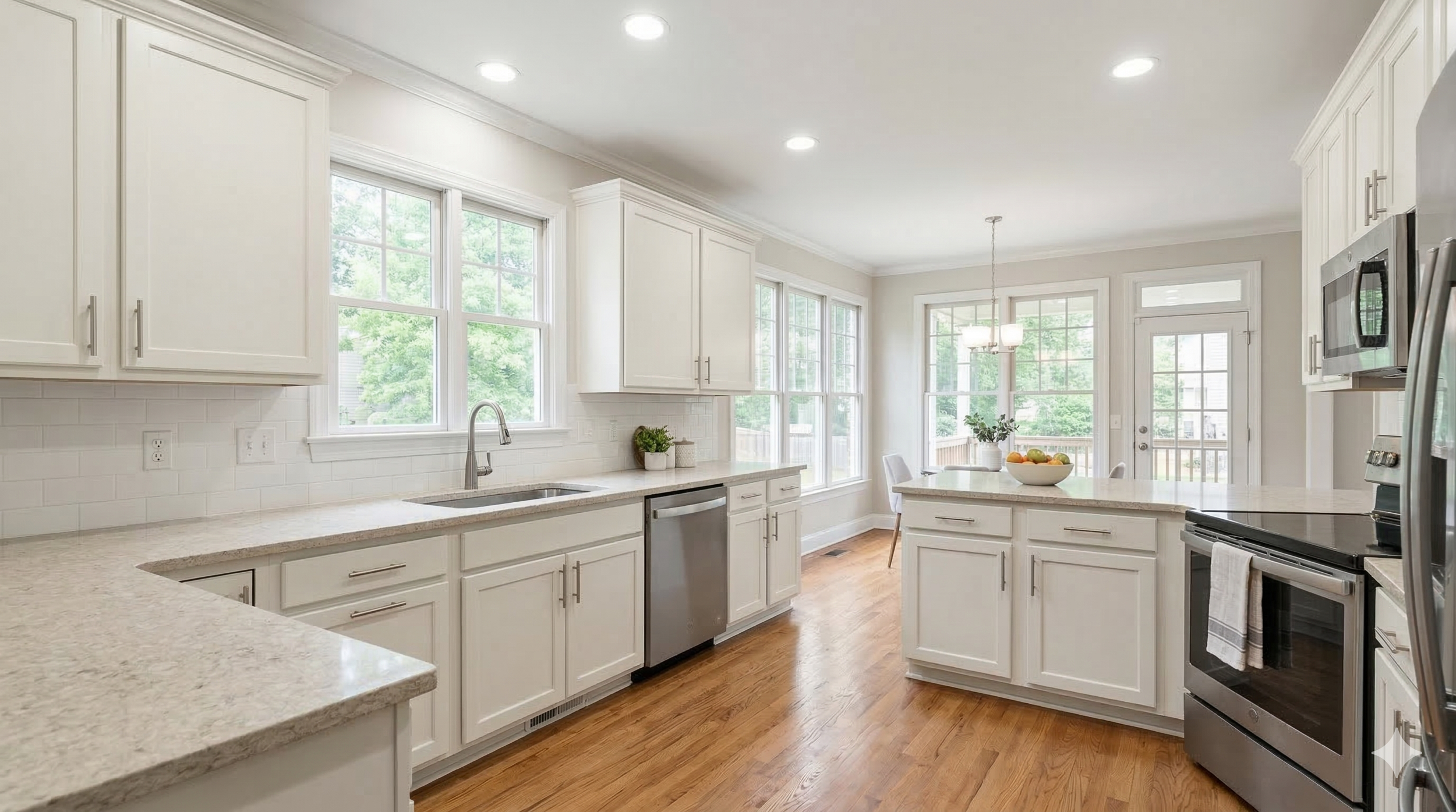
Kitchens and bathrooms are where sellers most often over-invest. A $40,000 to $80,000 full kitchen renovation returns 60 to 65 cents on the dollar at best. A $3,000 to $8,000 cosmetic refresh can return close to its full cost.
The cosmetic update formula for kitchens:
Paint or reface existing cabinets (don't replace unless they're falling apart)
Update hardware — pulls, knobs — for $200 to $400
Replace dated light fixtures
If countertops are visibly damaged or stained, consider laminate replacement rather than full granite/quartz installation — buyers won't pay the premium difference
Clean the appliances — buyers look inside the oven and fridge
The cosmetic update formula for bathrooms:
Re-caulk tubs and showers — old, yellowed, or moldy caulk photographs terribly and costs almost nothing to replace
Update faucets and fixtures if they're dated brass or visibly worn
Replace toilet seats
Re-grout if grout lines are dark or damaged
A new vanity mirror and light bar can modernize a dated bathroom for $300 to $600
What not to do: Don't gut and renovate a functional kitchen or bathroom hoping to recoup the cost at sale. You almost certainly won't.
Flooring: Repair and Clean Before You Replace
Hardwood floors should be professionally cleaned and assessed for refinishing only if they're significantly scratched or dull. Refinishing hardwood is $3 to $8 per square foot and often produces dramatic improvement. Replacement is rarely necessary unless the floors are damaged beyond refinishing.
Carpet: have it professionally cleaned. If it's stained or badly worn, replacement is often worth it — buyers see old, stained carpet as a negotiating chip. Basic carpet replacement runs $3 to $5 per square foot installed. If you're replacing, go neutral.
Luxury vinyl plank (LVP) is now widely accepted by Atlanta buyers and offers a cost-effective replacement option for dated flooring throughout main living areas.
Lighting: Update Fixtures in Key Rooms
Dated brass, plastic, or builder-grade fixtures from the 1990s and early 2000s make a home read as older than it is. Updated lighting in the entry, kitchen, dining area, and primary bathroom costs $100 to $300 per fixture and makes a visible difference in photos and showings.
Also: replace every burnt-out bulb throughout the home. It sounds minor. Inspectors note it, and buyers notice dim rooms.
Staging: Don't Skip It
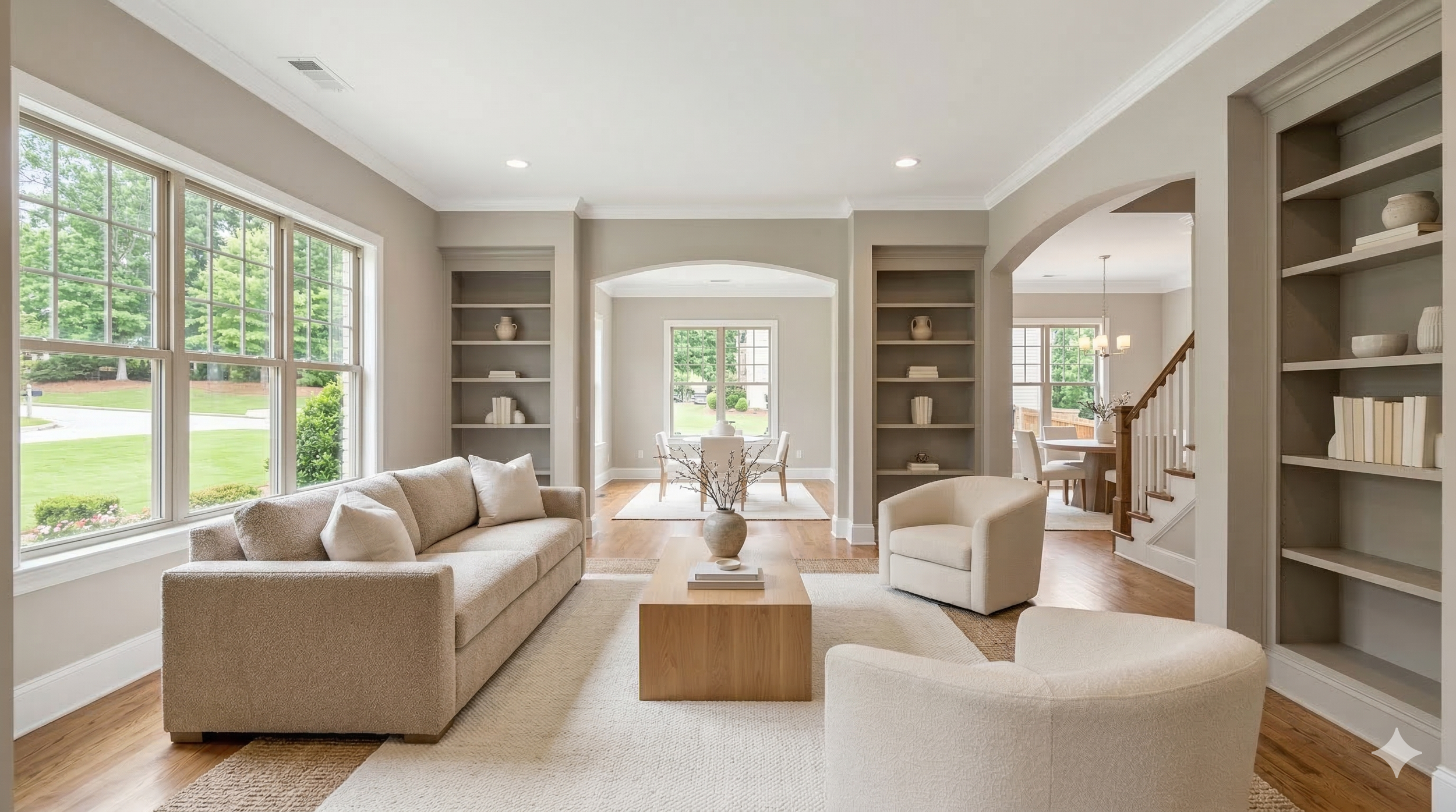
Staging is not the same as decorating. Staging is the strategic presentation of your home to its broadest possible buyer audience. It means removing personal items, reducing clutter, creating clear furniture arrangements that make rooms feel larger, and depersonalizing so buyers can imagine themselves in the home.
Data from the National Association of Realtors consistently shows staged homes sell faster and for more than unstaged homes. In Metro Atlanta's 2026 market, where buyers have more choices and homes are sitting longer, staging matters more than it did three years ago.
At minimum: declutter aggressively, remove personal photos and collections, and ensure furniture arrangement makes every room feel as large as possible. If the home will be vacant, professional staging is worth discussing with your agent.
What NOT to Fix: Save Your Money
These are the improvements sellers commonly make that do not pay back at sale.
Full Kitchen or Bathroom Renovations
Already covered above, but worth emphasizing: complete gut renovations rarely return their cost. Buyers can see the bones of a home and appreciate a cosmetic update. They don't pay a premium proportional to what a full renovation actually costs.
Exception: if the kitchen or bathrooms have significant functional issues — layouts that don't work, serious water damage, cabinets that are structurally failing — addressing those is warranted. But "dated style" alone doesn't justify a full renovation before selling.
Pools
A pool is a lifestyle amenity, not a value-add for most buyers. Some buyers actively don't want a pool because of maintenance cost, safety concerns with young children, and insurance implications. Adding a pool before listing is almost never the right decision.
High-End Upgrades in Average-Price Homes
Marble countertops, professional-grade appliances, and luxury fixtures in a $350,000 to $500,000 home add minimal resale value. Buyers at that price point won't pay the premium. Match your improvements to your price point and neighborhood — don't over-improve.
Converting Garages or Finished Basements
Buyers want functional space that matches the neighborhood norm. Converting a garage to a bonus room in a neighborhood where buyers expect garages removes something buyers want. Basement finishes can add value but rarely return their full cost at sale.
New Landscaping and Hardscaping
Mowing, trimming, and adding fresh pine straw: absolutely. A $15,000 hardscape project or significant new landscaping installation: almost never worth it at sale. Buyers see maintenance burden, not added value.
Highly Personalized Improvements
Anything that reflects very specific personal taste — bold accent walls, unusual tile patterns, niche-specific spaces — should be neutralized before listing. Don't add new personal-taste improvements thinking buyers will love them. They won't, and you won't recoup the cost.
Atlanta-Specific Considerations
A few things that matter specifically in Metro Atlanta:
Red clay: Georgia's red clay stains on driveways, walkways, siding, and brick are extremely common. Buyers notice them as a signal of deferred maintenance even when the underlying structure is fine. Pressure washing is worth doing for this reason alone.
Termites: More prevalent in Georgia than in most U.S. markets. A current termite bond and clear WDO letter is essentially expected. If you don't have a termite bond, get one.
Crawlspaces: A significant portion of Metro Atlanta homes have crawlspaces. Moisture, inadequate vapor barriers, and pest activity in crawlspaces are extremely common inspection findings. Address known crawlspace issues before listing.
HVAC in humidity: Georgia's climate is hard on HVAC systems. A system that's functioning but aging and not properly serviced will get flagged. Have it serviced, replace filters, and clean coils before listing — documentation of service history is a selling point.
Contract fall-through rate: In 2025 and into 2026, inspection and repair disputes were cited as a primary reason contracts terminated in Atlanta. Buyers have options and they're exercising them. This makes proactive preparation more important than it was in the seller's market of 2021 and 2022.
How to Prioritize When Your Budget Is Limited
If you can't address everything, prioritize in this order:
Safety and structural issues (anything a lender or inspector will flag as a deal-killer)
HVAC and roof condition (the two highest-stakes items in Atlanta buyer inspections)
Fresh paint and deep clean (highest ROI per dollar spent)
Curb appeal basics (mowing, pressure washing, front door)
Cosmetic kitchen and bath updates only if the condition is notably poor
Staging and decluttering
If budget is genuinely tight, prioritize the first four. A clean, well-maintained home priced correctly will sell. An over-improved home priced too high will sit.
The Conversation You Need to Have With Your Agent First
Here's the thing: the right pre-listing investment strategy depends on your specific home, your specific neighborhood, your timeline, and current buyer expectations in your price range.
A $500,000 home in East Cobb needs a different prep strategy than a $350,000 home in Smyrna. What moves buyers in Buckhead is different from what moves buyers in Marietta.
Before you spend a dollar on repairs or improvements, walk through your home with your agent. A good listing agent will tell you exactly what buyers in your price range and neighborhood are going to care about — and what they're not. I do pre-listing walkthroughs with all of my sellers, and I'm direct about what's worth addressing and what isn't.
My job isn't to oversell you on improvements that don't pay back. My job is to get your home sold for the most money with the least hassle. Sometimes that means a $3,500 investment in paint and cleaning. Sometimes it means a harder conversation about a roof or HVAC that needs to be dealt with before we list.
Either way, you need that conversation before you spend anything.
Ready to Talk Through What Your Home Needs?
If you're thinking about selling in Metro Atlanta, I offer pre-listing consultations at no cost and no obligation. We'll walk through your home, identify what's worth addressing and what isn't, and build a realistic plan that protects your net proceeds.
Reach out at info@kristenjohnsonrealestate.com or call (404) 790-0080. Let's figure out what your home actually needs before you spend a dollar getting it ready.