

New Construction vs. Resale Homes in Metro Atlanta: What Buyers Need to Know in 2026
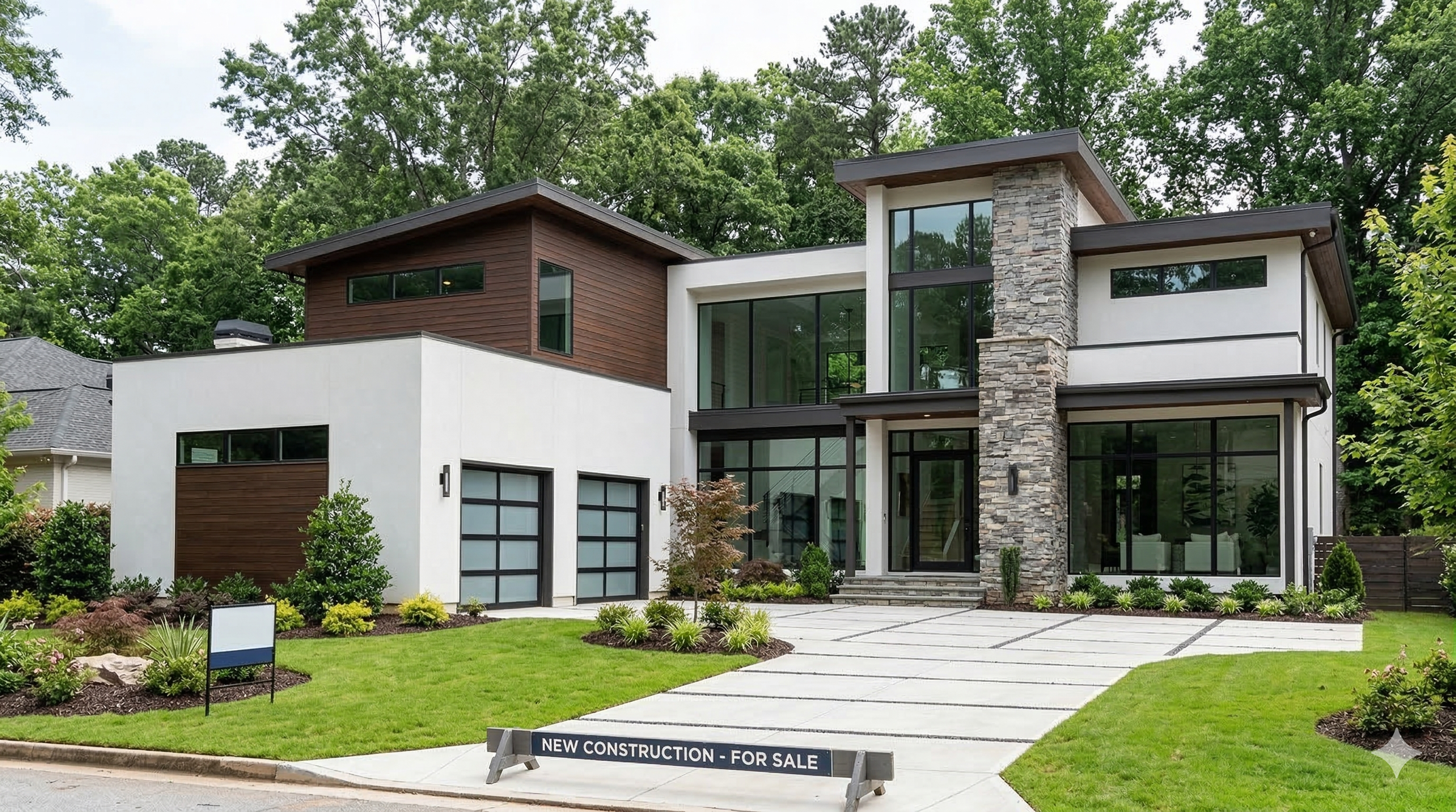
One of the biggest decisions you'll make as a buyer in Metro Atlanta right now isn't just where to buy — it's what to buy. New construction or resale? Both have real advantages. Both have real risks. And the answer is almost never the same for every buyer.
I work with buyers across the spectrum. Some clients walk into a model home and fall in love with the clean slate, the warranty, the shiny finishes. Others find a 1920s craftsman bungalow in Candler Park and wouldn't trade that charm for anything. I've helped people buy both, and I've watched both go sideways when buyers didn't fully understand what they were walking into.
This isn't a pitch for either option. It's a real breakdown of what each one actually costs, what the process looks like, and how to decide which one makes sense for your life, your budget, and your timeline. Here's what you need to know.
The Metro Atlanta Market in 2026: Why This Decision Matters More Right Now
Metro Atlanta has more new construction inventory than it's had in years. Builders are sitting on product in Cherokee, Forsyth, Gwinnett, Henry, and Douglas counties, and they're motivated to move it. At the same time, resale inventory is creeping up across the metro — homes are staying on market longer, and sellers are more willing to negotiate than they were in 2021 and 2022.
That means buyers have leverage on both sides. But leverage only works if you know how to use it.
New construction median prices in Metro Atlanta currently run around $486,000 compared to approximately $435,000 for resale homes. That gap has narrowed significantly compared to prior years, which changes the math for buyers who have traditionally assumed new construction is always a premium.
The right choice depends on five things: your timeline, your budget, your tolerance for uncertainty, your priorities for location, and your long-term plans for the home.
Let's work through each piece.
What You're Actually Comparing
Before diving into the pros and cons, it helps to understand what you're really comparing — because "new construction" isn't one thing, and neither is "resale."
New construction breaks into three categories:
To-be-built: You sign a contract, choose your lot and options, and wait 6 to 12 months (or longer) for the home to be completed. More customization, more uncertainty.
Spec homes (quick move-in): The builder has already started or finished the home with a standard set of finishes. Less customization, faster closing, often better incentives.
Semi-custom: You select finishes, elevations, and upgrades within the builder's menu. More flexibility than spec, less than fully custom.
Resale breaks into two broad categories:
Move-in ready: Updated, clean, priced to reflect current condition. Less negotiating room, but less risk.
Needs work: Unrenovated or dated homes, often with more negotiating room and more unknowns. Can be great value if you know what you're doing.
Knowing which type of property you're evaluating changes the entire conversation.
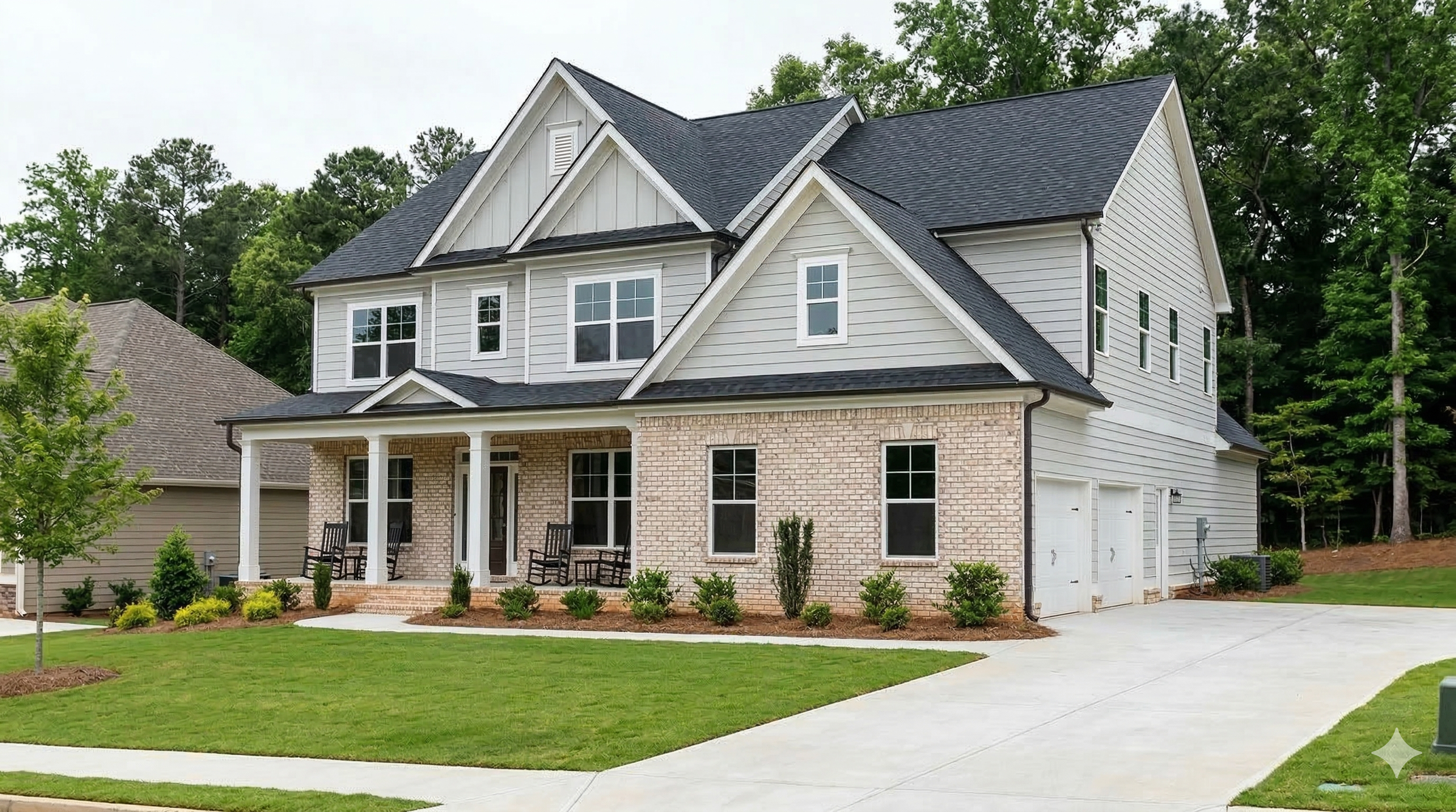
The Case for New Construction
Everything Is Warranted
This is the single biggest advantage of buying new, and buyers consistently underestimate how valuable it is. New construction homes in Georgia come with:
A 1-year builder warranty covering workmanship defects
A 2-year warranty covering mechanical systems (HVAC, plumbing, electrical)
A 10-year structural warranty
You're not going to call a plumber three months after closing because a pipe failed. You're not going to replace a water heater your first year in the home. The first several years of homeownership — historically the most expensive for repairs — are largely covered.
Compare that to a resale home where you inherit whatever deferred maintenance the previous owner left behind.
Lower Maintenance Costs in the Early Years
New homes are built to current building codes with new materials throughout. New insulation, new windows, new roof, new HVAC — everything is starting from zero. For buyers who are stretching their budget to buy, knowing that large repair bills are unlikely for the first several years is meaningful financial relief.
This matters especially for first-time buyers and corporate relocators who are moving on tight timelines and don't have the bandwidth to manage a renovation.
Builder Incentives Are Substantial Right Now
This is where the math gets interesting in 2026. Builders across Metro Atlanta are offering aggressive incentives to move inventory:
Rate buydowns to rates significantly below market
Closing cost credits ranging from $10,000 to $60,000 depending on community and builder
Free upgrades on design selections
Zero down payment programs on select homes
Builders like Beazer, Ashton Woods, Smith Douglas, PulteGroup, and others are all running active incentive programs. The key detail: most of these incentives require you to use the builder's preferred lender. That matters, because the preferred lender's rate — even bought down — may or may not be the best overall deal. Run the full numbers, not just the rate.
Having an agent who knows how to evaluate and negotiate builder incentives can make a significant difference in what you actually walk away with.
Modern Floor Plans and Features
New homes are designed for the way people live today. Open kitchens, larger primary suites, home office space, better storage, smart home wiring, energy-efficient systems. For buyers who prioritize these features, trying to retrofit them into an older resale home can cost far more than the price difference between new and resale.
If you want the open-concept floor plan, the covered back porch, the primary suite on the main level — buying new is often the more efficient path.
Energy Efficiency
New construction is built to current energy codes, which are significantly more stringent than codes from even 10 to 15 years ago. Better insulation, high-performance windows, tighter building envelopes, and newer HVAC systems all translate to lower utility bills.
On a $450,000 home, the monthly savings on utilities compared to an equivalent older resale home can be meaningful over the life of your ownership.
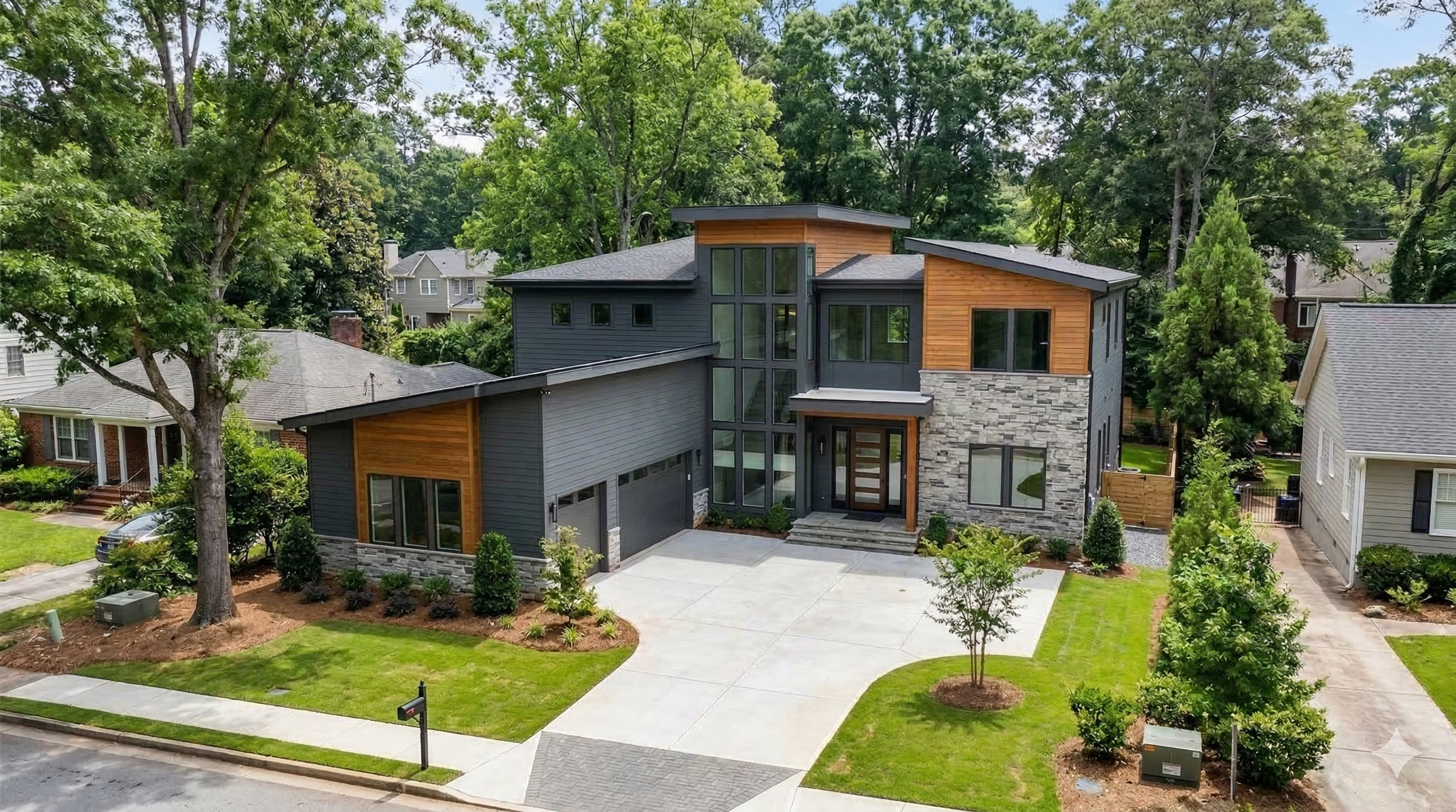
The Risks of New Construction (The Ones Builders Won't Tell You)
The Sales Team Works for the Builder
Walk into any builder model home and you'll be greeted by a pleasant, knowledgeable sales representative. That person is a builder employee. Their job is to sell you that builder's homes at the best possible price for the builder.
This doesn't make them dishonest. It makes them advocates for their employer — which is the opposite of what you need when you're making a $400,000 to $700,000 decision.
Bringing your own buyer's agent to a new construction purchase costs you nothing. Builders price buyer agent commissions into their homes regardless of whether you're represented. You don't get a discount for coming in without an agent. You just don't have an advocate.
I've helped clients negotiate meaningful upgrades, lot premiums, and contract terms on new construction that they never would have gotten on their own. The builder's sales team has done this thousands of times. Most buyers are doing it once.
The Base Price Is Not the Real Price
This is one of the most consistent surprises buyers encounter with new construction. The advertised price is the base price for the most basic configuration of the home. By the time you've selected your actual lot, your finishes, and any upgrades, the price can look very different.
Common add-ons:
Lot premiums: Corner lots, cul-de-sac lots, lots backing to greenspace, lots with better views. These can add $5,000 to $45,000 or more.
Design upgrades: Flooring, countertops, cabinetry, lighting, plumbing fixtures. Upgrade packages on a mid-range home can easily add $20,000 to $70,000.
Structural options: Adding a covered porch, a third-car garage, a finished basement — these are structural upgrades that add significant cost.
HOA fees: Most new construction communities in Metro Atlanta have HOAs. Monthly fees ranging from $50 to $275 are common.
Before you fall in love with a model home, ask to see a price sheet for the options that match what the model shows. The model is almost always an upgraded version of the base home.
Timelines Slip
Quoted build timelines of 6 to 8 months routinely extend to 10 to 14 months, and sometimes longer. Labor shortages in framing and finishing trades, supply chain delays on specific materials, and Georgia weather events all contribute.
If you're under contract on the sale of your current home or have a lease ending, timeline slippage can create real logistical and financial stress. Have a plan B before you sign.
New Communities Are Still Developing
Buying in a community where half the lots are still under construction means construction traffic, noise, and incomplete common amenities for months or years. Schools and retail may not have caught up with the residential development yet. What looks like a great location on a map may not reflect the reality of living there during build-out.
This is especially important in outer suburbs where new communities are being built in areas that are still developing infrastructure.
Resale Value Risk in Builder-Heavy Communities
When builders need to move inventory, they lower prices. If you paid $480,000 for your home and the builder drops the price on identical homes to $450,000 six months later, your equity picture changes immediately.
In communities with a lot of builder inventory, be careful about how much you're paying in lot premiums and upgrades, because not all of that will come back at resale.
The Case for Resale
Location, Location, Location
Resale homes have one advantage new construction simply cannot match: established location.
The neighborhoods closest to Atlanta's core — Buckhead, Brookhaven, Decatur, Candler Park, Morningside, East Cobb, Sandy Springs — are largely built out. There is no new construction in most of these areas. If your priorities include walkability, proximity to the BeltLine, access to specific school clusters, or short commute times to intown employment, you're almost certainly looking at resale.
The best locations are already taken. New construction is happening where land is still available, which generally means farther from the city.
Established Neighborhoods and Community Character
A resale home in an established neighborhood comes with mature trees, settled community identity, known neighbors, existing local businesses, and a track record you can actually research. You can walk the streets at different times of day. You can look at 10 years of comparable sales. You know what you're buying.
With a new construction community, you're betting on what it will become. That can work out — and often does — but it's a different kind of purchase.
Stronger Negotiation Position in Today's Market
As of 2026, resale inventory is up across Metro Atlanta. Homes are averaging 50 to 80 days on market in many areas. Sellers are more willing to offer concessions on closing costs, repairs, and price than they were in recent years.
For resale homes, you have real negotiating room — especially on homes that have sat on market for 30 or more days, homes that need cosmetic updating, and homes where sellers have strong motivation to move quickly.
Faster Timeline
No 8-month build timeline. In most cases, you can close on a resale home in 30 to 45 days. For buyers with firm move dates — a job relocation, a school enrollment deadline, a lease end — resale is often the only realistic option.
Character and Architecture
Metro Atlanta's older neighborhoods have character that can't be replicated. 1920s craftsman bungalows in Kirkwood. Mid-century ranches in Tucker. Victorian homes in Grant Park. 1970s-era brick traditionals in East Cobb. If architectural character matters to you, resale is where you find it.
Some buyers place real value on this. Others genuinely don't care. Know which type of buyer you are.
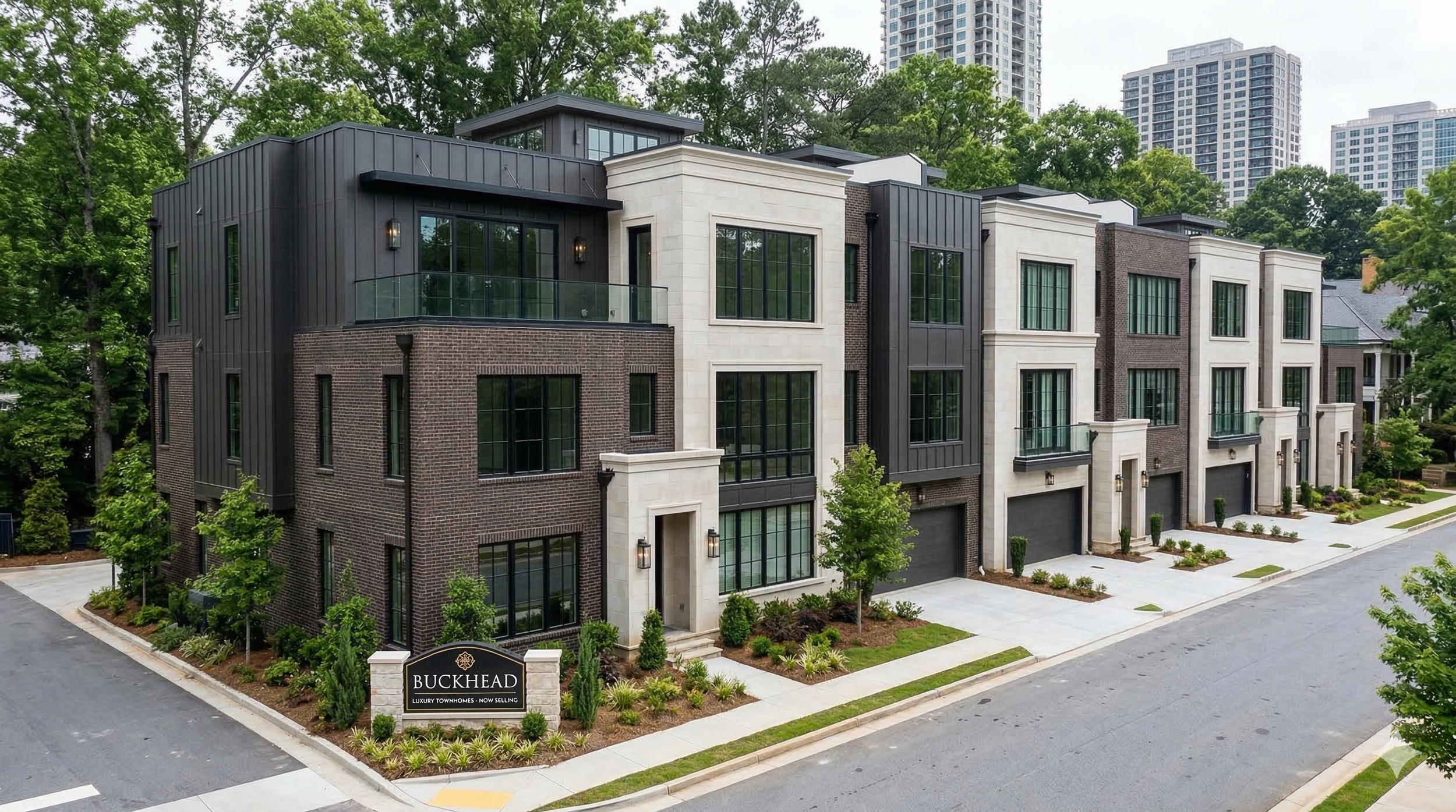
The Risks of Resale
Inherited Problems
You're buying someone else's decisions about maintenance, repairs, and updates — good or bad. Even with a thorough home inspection, there will be things you don't know until you've lived in the home for a year.
This is manageable if you budget for it. Go in assuming you will spend money on the home in the first two to three years. For a $400,000 resale home, having $10,000 to $20,000 in reserve for repairs and updates is realistic financial planning, not pessimism.
Inspection Risk
Georgia is a "caveat emptor" state, meaning buyer beware. Sellers are required to disclose known material defects, but they don't always catch or disclose everything. A good buyer's inspection is non-negotiable on resale.
Pay for a thorough inspection. Add specialists if the home has a crawlspace, is older construction, or shows any signs of moisture or structural issues. The $400 to $700 you spend on inspection is the best money you'll spend in the entire transaction.
Potentially Higher Ongoing Costs
Older systems — HVAC, roofs, water heaters, plumbing — are on their way out rather than on their way in. A home with a 10-year-old roof and a 12-year-old HVAC system is going to need capital investment in the next few years. Price that into your offer and your budget.
Less Customization
You're buying what's there. Changing the floor plan, updating the kitchen, or adding square footage requires contractors, permits, and money. For some buyers this is a feature — renovation projects can create significant equity. For others it's a dealbreaker.
The Hidden Cost Comparison: New Construction vs. Resale
Here's where buyers often get surprised. The sticker price difference between new and resale doesn't tell the full story.
For a $450,000 new construction home:
Base price: $450,000
Lot premium: $10,000 to $30,000
Upgrades and design selections: $25,000 to $60,000
HOA setup fees and monthly dues
Window treatments, garage door openers, landscaping (often not included)
Builder's preferred lender may not be competitive even with incentives
Real all-in cost: $500,000 to $560,000 in many cases
For a $435,000 resale home:
Purchase price: $435,000
Inspection and repair credits: Negotiated
Immediate updates needed: $0 to $30,000 depending on condition
No HOA, or existing HOA with known fee structure
Real all-in cost: $435,000 to $465,000 in most cases
The gap narrows or disappears once you account for upgrades and lot premiums on the new construction side. That said, the warranty and lower maintenance costs in early years are real value — they just need to be weighed against the premium.
Where Are New Construction Homes Actually Being Built in Metro Atlanta?
New construction in Metro Atlanta is concentrated in areas where land is available and demand is strong:
North: Cherokee County (Woodstock, Canton), Forsyth County (Cumming), Dawson County
Northeast: Gwinnett County (Buford, Hoschton, Braselton), Barrow County
East: Walton County (Monroe), Newton County (Covington)
South: Henry County (McDonough, Stockbridge), Clayton County, Fayette County (Fayetteville, Tyrone)
West: Paulding County, Haralson County, Douglas County (Douglasville)
Major builders active in Metro Atlanta include PulteGroup, Lennar, D.R. Horton, Traton Homes, The Providence Group, Smith Douglas Homes, Ashton Woods, David Weekley, and Toll Brothers, among others.
Inside the perimeter and in the established close-in suburbs, new construction is extremely limited — primarily infill lots, teardown rebuilds, and townhome communities.
How to Decide: A Simple Framework
Ask yourself these five questions:
1. How important is location to you?
If you must be in a specific school cluster, in a walkable neighborhood, or within 20 minutes of a particular employer — you're probably looking at resale. New construction in those locations is limited to nonexistent.
2. What is your risk tolerance for unknowns?
If the idea of a surprise $8,000 HVAC replacement two years after closing makes you lose sleep, the warranty and new systems in new construction are worth real money to you. If you're handy, have a strong maintenance reserve, and enjoy the process of improving a home over time, resale may be a better fit.
3. What is your actual timeline?
If you need to close in 60 days, new construction is off the table unless you find a spec home. If you have flexibility to wait 8 to 12 months, to-be-built opens up your options.
4. What does the math actually show?
Run both scenarios with all costs included — including upgrades, lot premiums, HOA, and near-term maintenance reserves. The number that looks better on paper isn't always the number that's actually better when you add everything up.
5. What are you going to do with this home in 5 to 10 years?
New construction in high-growth outer suburbs can appreciate strongly if the area continues to develop as expected. But resale homes in established intown neighborhoods have decades of track record showing consistent demand. If you're buying a forever home, your calculation looks different than if you're buying a five-year home.
What a Good Agent Does Differently in Each Scenario
For new construction:
Knows which builders have strong reputations for quality and follow-through
Understands how to negotiate upgrades, lot premiums, and contract terms
Evaluates builder incentives and preferred lender programs objectively
Attends the pre-drywall walkthrough and final walkthrough to protect your interests
Knows which communities have realistic timelines and which have track records of delays
For resale:
Reads comparable sales accurately and identifies pricing anomalies
Advises on inspection findings — what's negotiable, what's a dealbreaker, what's normal for the age of the home
Knows how to structure offers in a way that protects you while remaining competitive
Has local knowledge of specific streets, flood zone issues, school zoning quirks, and neighborhood dynamics that don't show up on Zillow
Ready to Figure Out Which One Is Right for You?
This is a conversation I have with buyers all the time. There's no universal right answer — only the right answer for your situation, your budget, and what you're trying to accomplish.
If you're trying to decide between new and resale in Metro Atlanta, I'd love to talk through the specifics of what you're looking for. I cover the full metro — from the close-in intown neighborhoods to the outer suburbs where most of the new construction is happening — and I know the market well enough to give you an honest read on where the value is right now.
Reach out at info@kristenjohnsonrealestate.com or call (404) 790-0080. Let's figure out which direction makes sense for you.