

Where Should You Actually Buy Your First Home in Atlanta? (A Native's Take on 2026)

Piedmont Park
Stop picking neighborhoods based on what you can afford on paper. Start with how you want to live.
I get asked this question constantly: "Kristen, where should I buy in Atlanta?"
And here's the truth — I can't answer that until I know how you actually want to live your life.
Do you want to walk to coffee on Saturday mornings, or do you want space to spread out? Is sitting in traffic for 90 minutes your personal hell, or is it worth it for the right house? Do you care more about being near the airport than being near trendy restaurants?
As a native Atlantan who's lived everywhere from East Point to North Fulton to intown, I've seen buyers make the same mistake over and over: they buy based on what sounds good on paper instead of what matches their daily reality.
Let me walk you through what's actually happening in Atlanta's 2026 market — and how to think about neighborhoods in a way that'll keep you from regretting your decision two years in.
The 2026 Atlanta Market Reality: Less Competition = Real Opportunity
Here's what I'm seeing right now:
No bidding wars. Inventory has opened up significantly compared to the frenzy of 2021-2022. The market slowed down because of interest rates and economic uncertainty, but rates are now the lowest they've been in a few years.
Translation for first-time buyers: You actually have time to think. You can tour multiple homes, ask questions, negotiate repairs, and not feel pressured to waive inspections or offer $50K over asking.
We expect 2026 to pick up as more buyers realize rates have dropped, but right now? This is one of the better windows first-time buyers have had in years.

Westside Park/Shirley Clarke Franklin Park
How to Think About Atlanta Neighborhoods (The Framework I Use With Clients)
Before we dive into specific areas, ask yourself these questions. I ask every client these before we even start touring:
Lifestyle Questions:
Do you want walkability, or do you want space?
Are you around action and restaurants, or do you recharge in quiet?
How much does your commute actually matter to your mental health?
Practical Questions:
How often do you travel? (Airport access matters more than people think)
Do you work from home, or are you commuting downtown daily?
What amenities do you actually use regularly?
Your answers to these questions matter way more than "what's the best neighborhood in Atlanta" clickbait lists.
Now let's talk specifics.
🌆 Intown Atlanta — When Walkability & Vibe Win
Budget Reality Check:
Single-family homes: $500K+ for something livable (not a teardown)
Condos/Townhomes: $300K-$400K for newer construction or well-maintained units
Neighborhoods to Know:
Cabbagetown, Inman Park, East Atlanta Village These are some of the most walkable, character-filled pockets intown. Historic cottages, bungalows, arts-district energy. You'll find quirky local spots, trail access, and a real sense of community.
The catch? Parking can be rough (think street parking only), and homes are close together. If you need a two-car garage and a big backyard, this isn't your vibe. But if you want to walk to dinner and actually know your neighbors? This works.
West End & Candler Park These neighborhoods offer character and value — you're getting more house for your money compared to Virginia-Highland or Midtown. West End especially has seen renewed interest thanks to trail access and community feel.
Who regrets buying here: People who underestimate how much commute stress matters. Living 3 miles from Midtown sounds great until you realize it can take 30 minutes to go 3 miles during rush hour. Atlanta traffic doesn't care that you live intown.
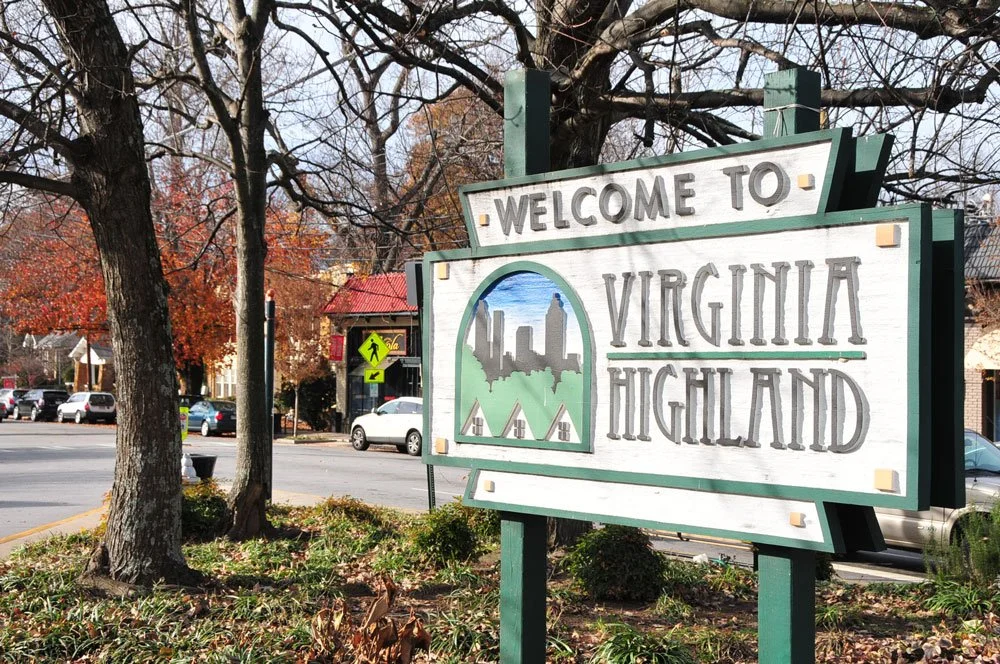
🏙️ Midtown, Virginia-Highland, Brookhaven — The "Established Intown" Tier
Midtown is Atlanta's urban core. Condos, walkability, restaurants, cultural venues. If you want city life without leaving the neighborhood, Midtown delivers.
Virginia-Highland ("VaHi") is classic Atlanta charm — tree-lined streets, local boutiques, strong sense of place. It's pricier, but buyers here tend to stay long-term.
Brookhaven sits between Buckhead and Midtown. You get walkable village areas, MARTA access, and a mix of historic homes and new construction. It's a little more neighborhood-y than Midtown but still urban-adjacent.
Who thrives here: People who value being in the mix. Professionals who want to walk to work or dinner. Buyers who don't need a yard but want lifestyle amenities at their doorstep.
🌳 North Atlanta Suburbs — Alpharetta, Milton, Johns Creek, East Cobb
This is where I've spent almost 10 years raising my daughter (in the early years), so I know these areas intimately.
Budget Reality Check:
Alpharetta: $500K+ for condos/townhomes, $700K+ for single-family homes
Milton: $700K+ (more land, larger lots, equestrian culture)
Johns Creek: $700K+ median (established, low-turnover neighborhoods)
East Cobb: $500K-$800K+ depending on proximity to amenities
What You're Getting:

Alpharetta
Alpharetta has a walkable downtown core with suburban ease around it. Even condos and townhomes start around $500K here, with single-family homes typically in the $700K+ range and luxury estates well over $1M. You'll find dining, shopping, and community events. It's grown significantly, which means prices have climbed — but demand stays strong.
Milton is for buyers who want space and privacy. Larger lots, horse farms, quieter roads. You're paying for land and low density. If "suburban" to you means big yards and not seeing your neighbors from your driveway, Milton fits.
Johns Creek skews more established with low turnover. Median prices are in the $700K+ range, reflecting the area's stability and strong community feel.
East Cobb offers suburban stability just north of I-75. You're close to shopping, parks, amenities, and you can still get to the city when you want.
The Commute Reality:
Milton to downtown Atlanta is 45 minutes without traffic, but easily 90 minutes during rush hour.
Let me be blunt: If you're commuting downtown daily, living in North Fulton will wear you down. I've had clients move back intown after two years because the commute crushed their soul.
But: If you work from home, work in the suburbs, or only go downtown occasionally? These areas give you more house and room to breathe.
Client Story:
I had a buyer relocating to Atlanta who was convinced they wanted Canton (even further north). After we spent a day touring and exploring, they realized Alpharetta/Milton gave them the suburban feel they wanted while keeping them closer to airport access and city amenities. They would've regretted that extra 30 minutes each way.
🏡 Value-Focused Suburbs — South Fulton, Douglasville, Stone Mountain
If affordability is the priority, these areas offer entry points below $500K for single-family homes.
South Fulton and Douglasville appeal to budget-conscious buyers who want space and are okay being further from the urban core.
Stone Mountain (east side) offers similar value — you're trading commute time for more house.
Who this works for: Buyers who work on the respective side of town, don't commute daily, or prioritize square footage over location.
❌ The Mistake I See First-Time Buyers Make Over and Over
They buy based on what they can afford on paper, not how they actually want to live.
Someone will say, "I can afford a $600K house in Milton," so they buy it. Then six months in, they're miserable because:
They didn't realize they'd be spending 3 hours a day commuting
They thought they wanted space, but they're lonely and isolated
They assumed they'd drive into the city for fun, but they never do
Or the opposite happens: Someone buys intown because it sounds cool, but they hate street parking, they miss having a yard, and they're annoyed by noise.
Here's what I tell every client: Think about your actual daily life. Not the life you think you should want. Not the life that sounds good on Instagram.
Where do you work? How do you spend weekends? Do you cook at home or eat out? Do you have hobbies that require space?
The right neighborhood is the one that fits your life — not someone else's idea of the perfect Atlanta neighborhood.

✅ My Take: How to Choose Your Atlanta Neighborhood in 2026
Start with lifestyle, not budget. Figure out what kind of daily life you want, then see what you can afford in areas that match.
Test the commute. Seriously. Drive it during rush hour before you make an offer. If it makes you want to scream, don't buy there.
Spend a day in the neighborhood. Walk around on a Saturday morning. Grab coffee. See if it feels like somewhere you'd actually want to be.
Don't just think about now — think about 5 years from now. Will your commute change? Will you need different amenities? Will your lifestyle shift?
Take advantage of this market. Less competition means you can actually be picky. Don't settle just because a house checks boxes on paper.
📞 Let's Find Where You Actually Belong
I'm Kristen Johnson, a native Atlantan and principal at Kristen Johnson Real Estate. I've lived in East Point, North Fulton, and intown. I've raised my daughter in these neighborhoods. I know every pocket of Metro Atlanta — and more importantly, I'll help you figure out how you actually want to live, not just where you can buy.
If you're thinking about buying your first home in Atlanta (or relocating here), let's talk. I ask a lot of questions, I'll tell you the truth about commutes and neighborhoods, and I won't let you make a decision you'll regret.
👉 Schedule a consultation — let's figure out where you belong in Atlanta.