

Why Luxury Inventory Is Rising in North Atlanta — And What Buyers Should Do
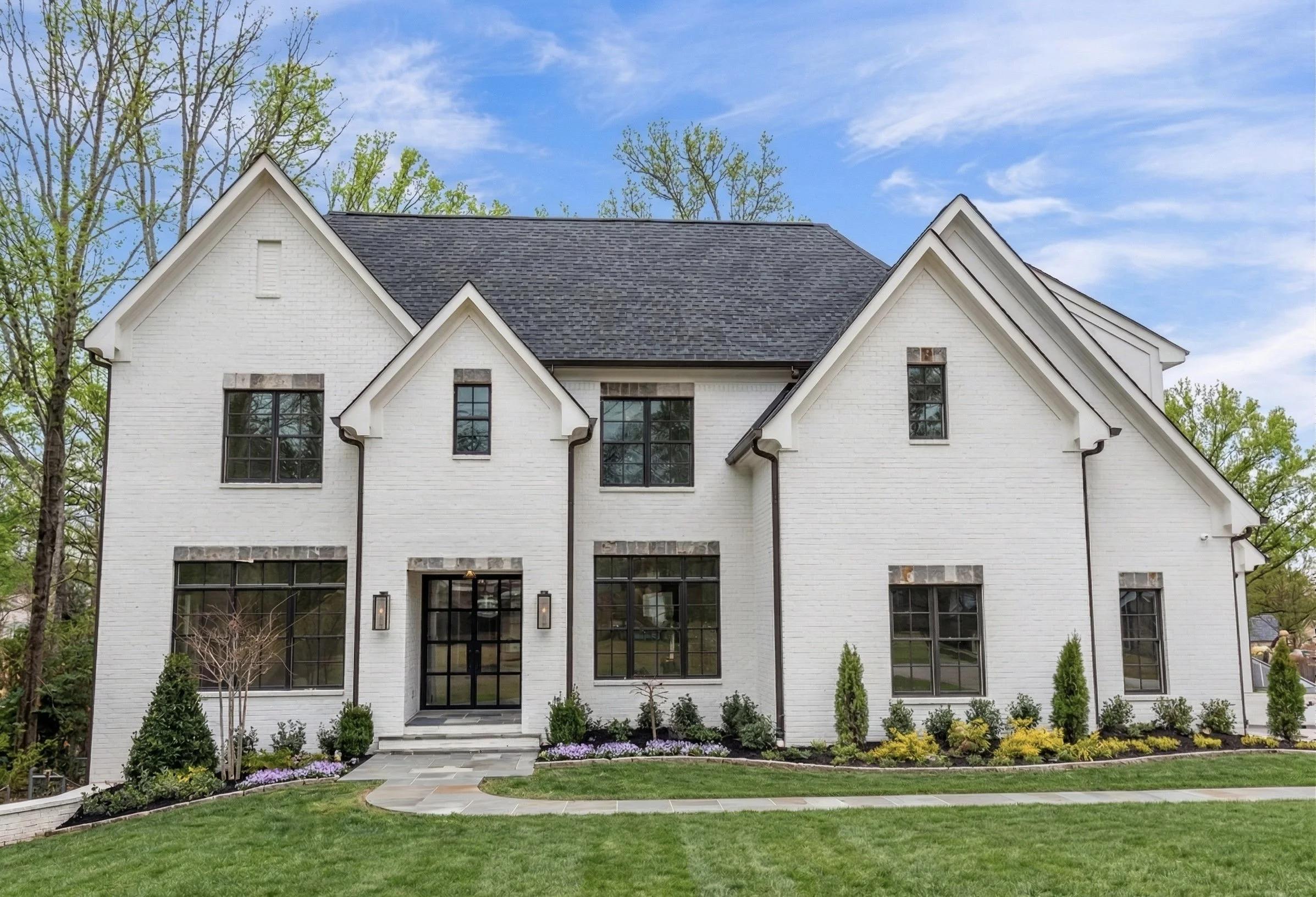
Luxury inventory in North Atlanta is up. That's not a rumor — it's showing up in the data across Buckhead, Sandy Springs, Brookhaven, Alpharetta, and Milton, and it is changing the calculus for buyers who've been waiting on the sidelines. But "more inventory" is not a simple story, and treating it like one is how buyers end up either missing real opportunities or misreading the market entirely.
I work with buyers across Metro Atlanta, including buyers entering the $700K to $3M+ range, and what I'm seeing right now is a market in transition — not a collapse, not a frenzy. A transition. Sellers are adjusting. Buyers have more choices. Days on market at the top end are stretching. And the window between "this is the right time to look" and "that one is gone" is getting wider.
Nearly a decade helping Atlanta buyers across all price points means I've watched this specific shift before. The conditions that create it, what typically happens next, and what the buyers who come out ahead actually do — that pattern is recognizable. This post is about that.
Here's what you need to know.
What Does "Rising Luxury Inventory" Actually Mean in North Atlanta?
Let's be precise, because this gets mischaracterized constantly.
Rising inventory does not mean prices are crashing. It does not mean there's suddenly an abundance of extraordinary homes. And it does not mean the sellers who were asking $2.8 million last spring are now accepting $1.9 million. That is not what's happening.
What is happening: overall active listings across Metro Atlanta have increased significantly — around 44% year-over-year by some measures as of early 2026 — bringing supply to roughly 3.5 months in the broader market. For the luxury segment, specifically homes in the $1 million and above range, that supply expansion is real and meaningful, but it is uneven.
At the $1 million to $2 million tier across North Atlanta, you are seeing more options than buyers have had in the past two to three years. Homes are sitting longer. The average days on market for homes in this range is running in the 60 to 90-day zone in many submarkets — compared to the 20 to 30 day pace buyers encountered at the peak. Homes that are not priced correctly are being passed over. Price reductions are happening, and they're happening earlier in the listing cycle than they were.
At the $2 million to $3 million tier, the picture is more selective. Supply exists, but the pool of buyers who can close at this level has not expanded commensurately with the listings. Days on market extend further. Negotiating leverage is more available than it has been, but sellers at this tier are often patient — they don't have to sell — which limits how far that leverage actually goes unless a property has been sitting for an extended period.
At $3 million and above, you are in an entirely different market. Less inventory, fewer buyers, longer timelines, and outcomes that are highly property-specific. The general market trends matter less here than the specific home, the specific seller's situation, and your agent's ability to surface off-market opportunities and read the seller's real motivation.
The submarket also matters considerably. Brookhaven saw median single-family sold prices hit $1,450,000 in February 2026 — up sharply — while days on market rose to 40 and supply stayed tight around two months. That is not a buyer's market by any measure. Meanwhile, other luxury submarkets within North Atlanta are showing longer sit times and a more measurable shift in negotiating dynamics.
This is a hyper-local market. The headline number is not your number.
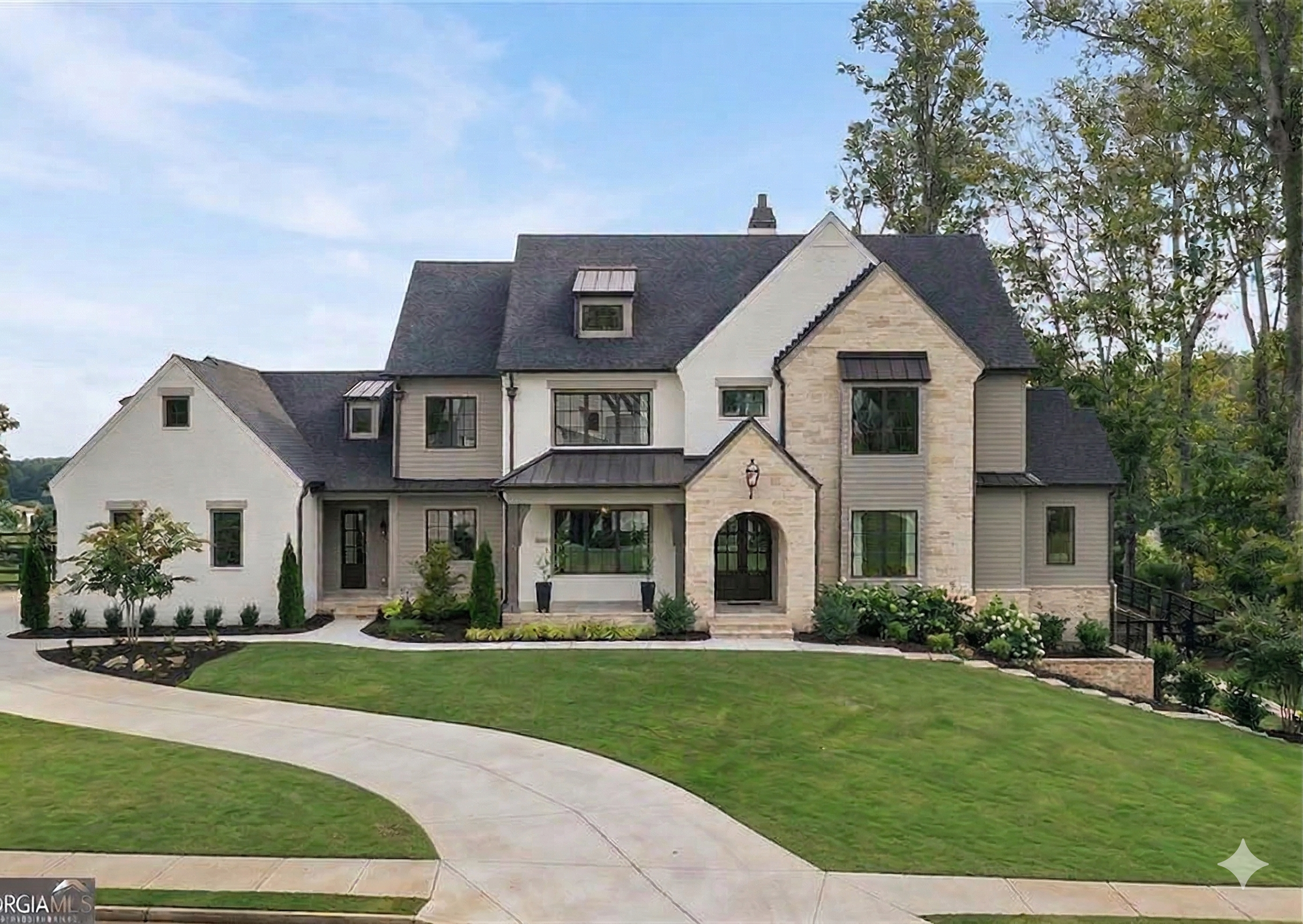
Why Is Inventory Rising Now? The Real Drivers
Understanding why inventory is rising matters because it tells you something about seller motivation — which directly affects what's negotiable and what isn't.
Rate lock-in is finally loosening — but slowly. A significant portion of North Atlanta homeowners bought or refinanced at rates in the 2.5% to 3.5% range between 2020 and 2022. Listing their home means giving up that rate and taking on something in the 6% to 6.75% range on their next purchase. For years, many of them stayed put. But life circumstances — job changes, corporate relocations, family transitions, estate situations — are now overriding that financial hesitation for more sellers. You're seeing more voluntary listings from people who need to move, not just people who want to time the market. Those sellers are more motivated than the ones who were listing opportunistically at the peak.
New construction is adding to the upper-end supply. Builders caught up during the supply chain normalization period, and completed new construction — particularly in the $800K to $1.5 million range in North Fulton and parts of Cherokee County — is now hitting the market and competing directly with existing home inventory. Builders have been cutting prices and offering incentives. This creates a direct competitive dynamic for resale sellers in the same price range, which is pushing days on market up and forcing price adjustments on homes that are not truly turnkey.
Corporate relocation patterns are shifting. Atlanta has long benefited from Fortune 500 headquarters and corporate expansion — companies like NCR, Microsoft, and Northside Hospital maintain and grow their presence here — and executive relocation remains a meaningful source of luxury demand. But the wave pattern of corporate moves matters. Senior leadership typically buys in the $1.5 million and above range within the first three to six months of a relocation announcement. When that first wave has passed and a company isn't announcing new expansion, demand from the top of the buyer pool quiets. The demand is still there — it's structural — but the urgency wave that drove 2021-2022 has normalized.
Some sellers priced aggressively and are correcting. This one is simple: homes that came on at peak ambition pricing in 2024 and didn't sell are now relisting or reducing. They're showing up in the active inventory count. Not because the market is worse, but because the original pricing wasn't supported. When you see an active luxury listing that's been on the market for 180 days, that is almost always a pricing story, not a market story.
The North Atlanta Luxury Submarkets: What's Happening Where
Buckhead and Sandy Springs
Buckhead remains Atlanta's most established luxury address, and demand for the top Buckhead micro-neighborhoods — Tuxedo Park, West Paces Ferry, Haynes Manor, Chastain Park — has not collapsed. Homes in these locations with the right positioning are still moving. What's changed is that the Buckhead luxury market is now clearly differentiated between homes that justify their price and homes that don't. Buyers in this submarket are more deliberate. They know what they're looking for, and they're willing to wait.
Sandy Springs, particularly in the area north of Chastain Park and near the I-285 perimeter, continues to attract buyers who want Buckhead proximity with Cobb or North Fulton tax implications. Inventory here has increased, giving buyers meaningfully more options than they had in 2022 and 2023.
Brookhaven
Brookhaven is an interesting case study in 2026 — prices are actually rising even as days on market extend. The February 2026 data showed median single-family sold prices at $1,450,000, up significantly, while homes took longer to close. What that tells you: when the right home in Brookhaven comes on at the right price, it still sells. But "the right price" has become much more specific, and overpriced homes are sitting.
The active inventory mix leans toward the $500K to $750K range and the $1.5 million-plus range, which means the middle segment of luxury — the $1 million to $1.4 million home — has remained relatively competitive.
Alpharetta and Milton
Alpharetta and Milton represent the northern arc of North Atlanta luxury, and they are dealing with direct competition from new construction in a way that Sandy Springs and Buckhead simply aren't. Builders in the Alpharetta and North Fulton corridor have delivered inventory. That new construction is priced aggressively by builders motivated to close units, and it competes directly with resale homes in the $800K to $1.4 million range.
For buyers, this is genuinely useful leverage. For resale sellers in this price range, it is a real competitive threat that is contributing to days on market creep and price reductions.
Milton's horse farm and estate segment operates differently. That market is defined by acreage, equestrian amenities, and a lifestyle that new construction simply can't replicate at scale. Inventory in true Milton estate properties remains constrained, and buyers in that segment are often competing for a small number of properties with limited comparables.
Roswell and Johns Creek
Roswell's luxury segment sits in a transitional band — more inventory than two years ago, but not oversupplied. The $700K to $1.2 million range here has more options than buyers have had recently, and sellers who aren't priced correctly are feeling it. Johns Creek, traditionally strong on school district appeal, is seeing similar dynamics: still competitive for well-positioned homes, but no longer a market where price cuts are rare.
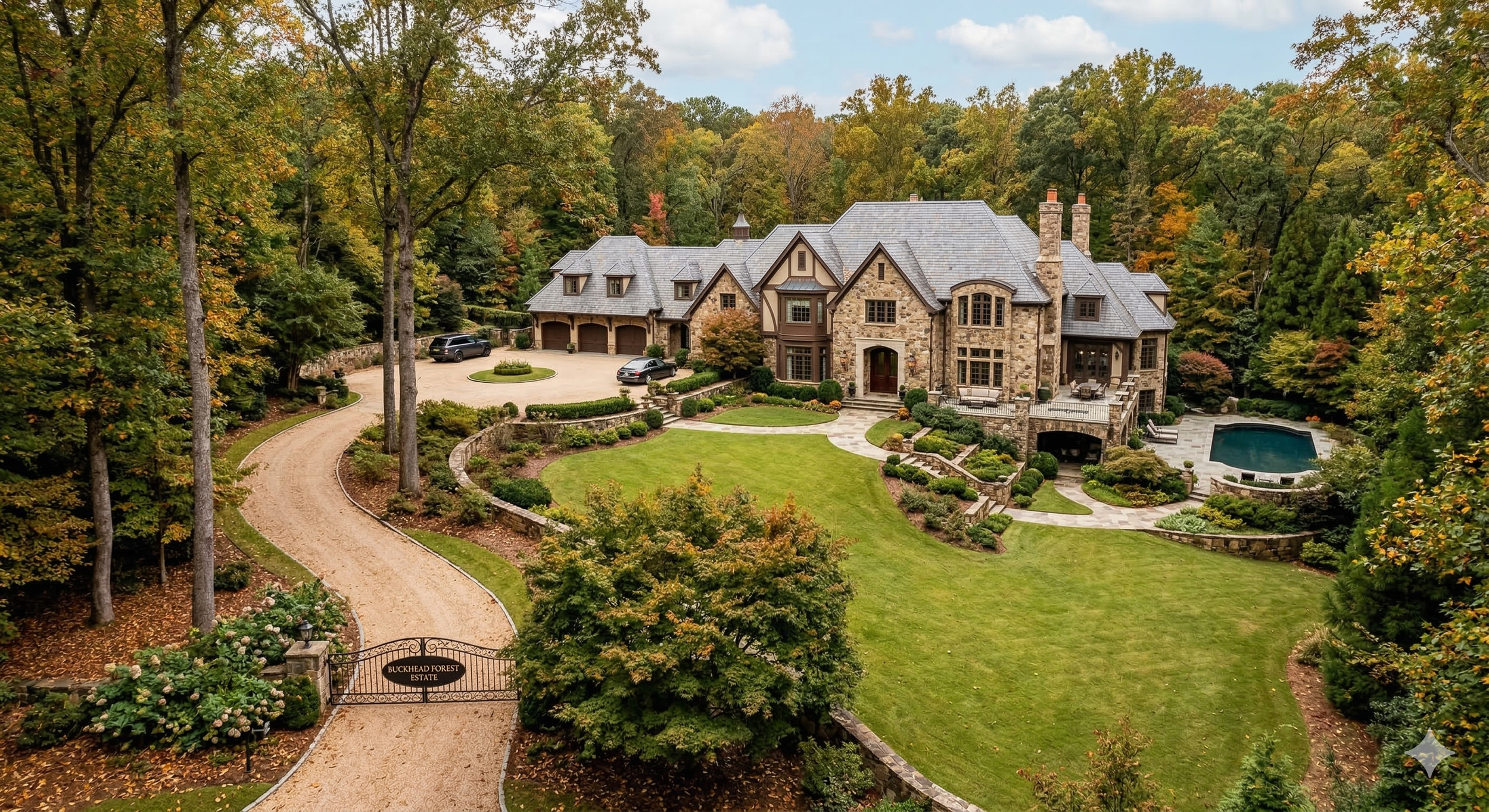
What Luxury Buyers Should Actually Do Right Now
Here's where I want to be direct with you, because the "more inventory = great time to buy" framing you'll hear from a lot of people misses the nuance that actually determines whether you come out ahead.
Get pre-approved or have your financing fully figured out before you start seriously shopping. This sounds basic, and it is — but at the luxury level, it changes your negotiating position meaningfully. Sellers of $1.5 million and $2 million homes are not going to accept an offer with financing contingencies from a buyer who hasn't been through the approval process. Many luxury sellers will specifically ask for proof of funds or pre-approval before a showing. Have your ducks in order before you start making lists.
Know the difference between a motivated seller and a seller who's just testing the market. Rising inventory doesn't mean all sellers are ready to negotiate. A home that's been on the market for 14 days with a seller who has nowhere to go yet is not the same as a home that's been on for 120 days with a seller who has already purchased elsewhere. Your agent's job is to find out which situation you're in before you structure your offer. Leverage exists in this market — but it's not distributed evenly across every listing.
Don't let the inventory headline make you passive. Here's the counterintuitive part: more inventory doesn't mean you can wait indefinitely on the right property. The homes that are correctly priced and genuinely positioned well are still moving. Brookhaven in February 2026 is a good example — prices up, days on market up, but the well-priced homes were gone in under 30 days. The inventory expansion has happened almost entirely in the overpriced and average-quality segments. The genuinely good homes at accurate pricing still have competition.
Use days on market as a diagnostic, not a discount trigger. A home that has been on the market for 90 days in the current luxury climate warrants a specific question: why? Sometimes the answer is pricing. Sometimes it's a condition issue, a deferred maintenance problem, or a functional obsolescence — a floor plan that doesn't work for today's buyers, a primary suite in the wrong location, an awkward layout. Those issues are real and need to be priced in or walked away from. But sometimes the answer is a seller who started high and is now realistic — and that's where your real buying opportunity lives. Know which situation you're in.
Understand what actually sells at the top of the market right now. Across North Atlanta, the clearest pattern in 2026 is this: turnkey beats project. Buyers at the $800K to $1.5 million level are renovation-fatigued. They don't want to manage a $200K renovation on top of a $1.2 million purchase price. Homes that are move-in ready, well-staged, and mechanically updated are moving faster and holding price better than homes with deferred maintenance or cosmetically dated finishes — even when the bones are strong. If you're buying a home that needs work, underwrite the renovation cost honestly and negotiate accordingly. Don't buy a project at turnkey pricing.
The primary suite location matters more than it used to. In Milton and parts of Alpharetta, homes with a primary suite on the main floor are consistently outperforming comparable properties without it. This is a demographic shift driven by aging buyers, multigenerational households, and buyers who've simply lived in enough two-story homes to know they'd prefer the primary on the main. If you're buying and resale value matters to you, this is worth paying attention to when you're comparing options.
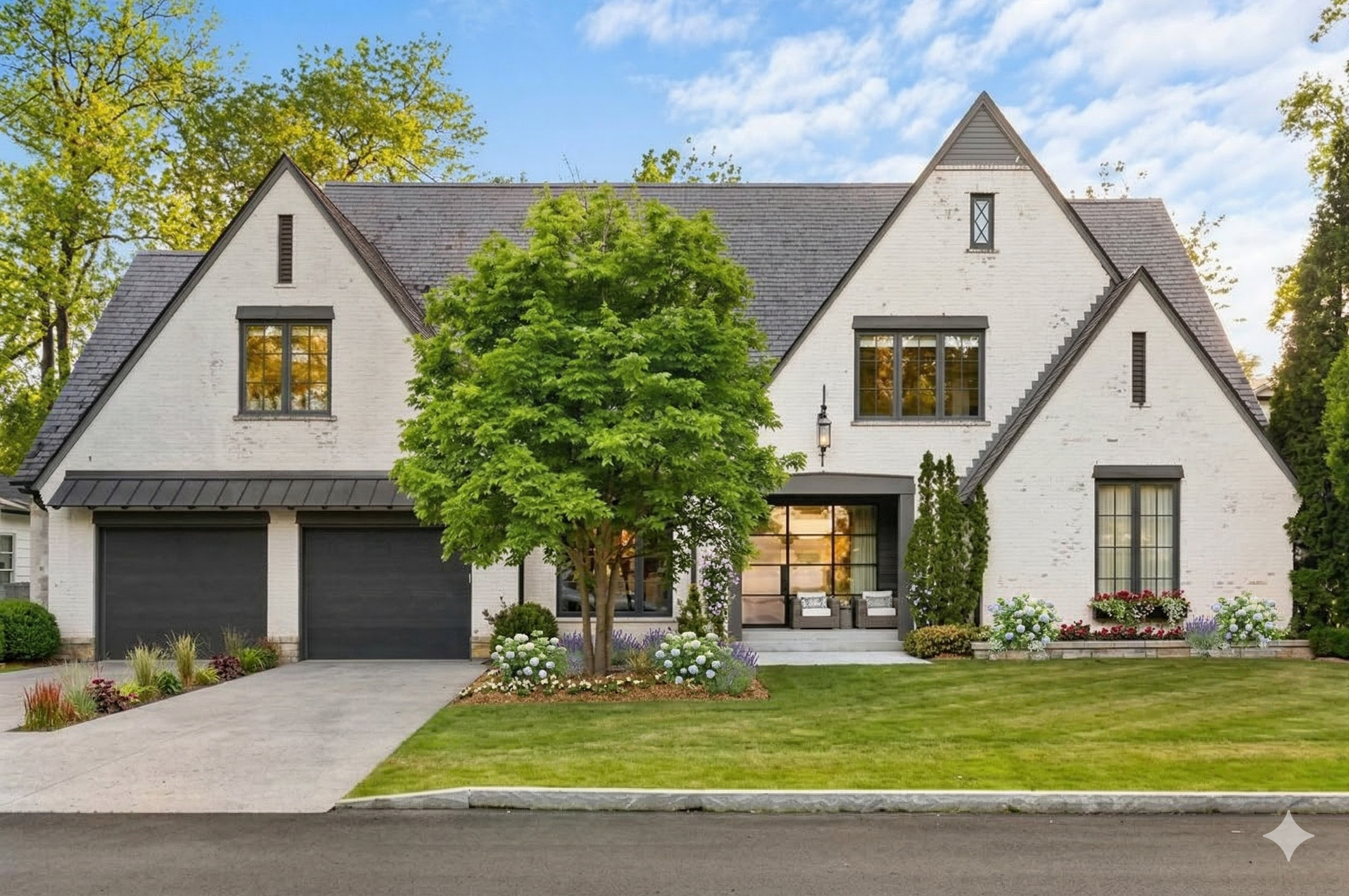
The Questions Luxury Buyers Are Actually Asking
Is now a good time to buy luxury in North Atlanta?
The honest answer is yes, with caveats. You have more options than you've had in two or three years. Days on market are longer, which means less pressure to decide in 48 hours. Some sellers are realistic about pricing in a way they weren't at the peak. Those are real advantages. The caveat is that this is not a market where everything is negotiable, prices are falling across the board, or you can afford to be passive about the properties that are genuinely right. It's a more balanced market, which means informed and prepared buyers do well and buyers who wait for a signal that never comes miss opportunities.
Are luxury home prices dropping in North Atlanta?
Prices are not falling broadly. They are becoming more differentiated. Well-priced, turnkey homes in high-demand submarkets like Brookhaven are actually showing higher median sold prices in early 2026 compared to a year ago. Overpriced homes — particularly those that listed aspirationally and haven't sold — are seeing price reductions, and that's what's creating the perception of a softening market. The distinction matters enormously depending on which segment you're shopping in.
What's the biggest mistake luxury buyers make in a rising-inventory market?
Waiting for prices to fall further. The buyers who consistently come out ahead are the ones who buy when the right property is correctly priced — not the ones who try to time the bottom. In a market where supply is expanding but demand for quality is still present, the homes worth buying rarely sit long enough to let you negotiate from a position of maximum leverage. The goal is to be prepared when the right property appears, not to find the most desperate seller.
How long are luxury homes sitting in North Atlanta right now?
It depends heavily on submarket and price tier. Well-priced homes in high-demand areas like Brookhaven are sitting 30 to 40 days at the median. In the broader $1 million-plus segment across North Atlanta, 60 to 90 days is more typical for homes without a strong competitive positioning. At the $3 million-plus level, 100-plus days is common — and in the Atlanta luxury condo market, median days on market for $1 million-plus condos ran over 100 days as of late 2025, with some properties requiring close to a year to find a buyer.
Should I wait for mortgage rates to drop before buying luxury in Atlanta?
Mortgage rates are not going to return to 3%. That expectation has kept buyers on the sidelines longer than has served their interests. Current rates are hovering in the 6% to 6.75% range nationally, with some buyers in Georgia landing rates closer to the lower end of that band with the right lender and structure. At the luxury price tier, cash and bridge loan buyers are more prevalent than in the broader market, so rate sensitivity is somewhat different. But for buyers who are rate-dependent: if the right property is correctly priced and matches your criteria, waiting for a rate that may never arrive is a strategy with real costs — primarily the opportunity cost of not owning the home while the market normalizes around it.
What North Atlanta areas offer the best luxury value right now?
This is the question I actually answer in detail for buyers I'm working with, because the answer depends on what "value" means to you. If value means price per square foot for quality of finishes, Sandy Springs outside I-285 and parts of Roswell are worth serious attention. If value means resale trajectory, Brookhaven's continued demand story is hard to argue with. If value means land and lifestyle, Milton's estate segment offers things that can't be replicated closer in. The generic "best value" answer is less useful than a real conversation about what you're actually optimizing for.
The North Atlanta luxury market in 2026 is not a fire sale and it is not a bidding war. It's a market where preparation, precision, and a clear-eyed read on what's actually driving each listing's situation determines outcomes more than timing does.
I work with buyers across the luxury price band throughout Metro Atlanta and I'm watching this market closely. If you're ready to get serious about what's available, what's negotiable, and what the right move looks like for your specific situation, let's talk.
Visit kristenjohnsonrealestate.com to get started.
Come as you are, come on home.
Looking for more on the Atlanta luxury market? I've covered specific North Atlanta neighborhoods including Living in Chastain Park, Living in Buckhead Forest & North Buckhead, and Living in Haynes Manor. Browse the full guide series at kristenjohnsonrealestate.com.