

Moving from New York to Atlanta: A Relocation Guide for NYC Transplants

Where should I live if I’m moving from New York to Atlanta?
If you’re moving from New York to Atlanta, the neighborhoods that will feel most familiar are Midtown, Old Fourth Ward, Inman Park, and Decatur. These four areas offer the walkability, urban density, and neighborhood personality that New Yorkers expect, at a fraction of what you’d pay in Brooklyn or Manhattan. Atlanta’s overall cost of living runs about 38% lower than New York City, and a budget that got you a studio in Manhattan will get you a three-bedroom house with a yard in many intown Atlanta neighborhoods.
By Kristen Johnson | July 28, 2026
Here’s what I tell every client who calls me from New York: the numbers are going to shock you, in the best way. But Atlanta is not New York with palm trees. There are real trade-offs to understand before you sign anything, and I’d rather walk you through them honestly now than have you discover them six months after you close.
Let’s start with what actually matters.
The Cost-of-Living Comparison
The headline number is this: the median home price in Atlanta is $416,000. The average home price in New York City is $896,000. That’s a gap of roughly $480,000, and it’s not comparing a condo to a condo. In Atlanta, $416,000 buys you a real house with a yard, a driveway, and in many intown neighborhoods, a front porch and a renovated kitchen.
Here’s the full breakdown by category:
A few things in that table deserve more than a glance.
The income tax difference is significant. New York State has nine tax brackets running from 4% to 10.9%, and if you lived in New York City itself, you paid an additional city income tax on top of that. Georgia moved to a flat 5.39% rate in 2025 with no local city income tax. For someone earning $150,000 a year, the Georgia tax rate can mean $6,000 to $8,000 back in your pocket annually, and that’s before you factor in what your housing costs do.
The property tax rates are nearly identical at 0.82%, but the lower home values in Atlanta mean your actual bill is lower. Georgia also offers a homestead exemption for primary residences that reduces the assessed value further, so your first full tax year as an Atlanta homeowner usually comes in lower than the sticker math suggests.
One thing worth knowing about New York property taxes: many NYC condos and co-ops carry tax abatements that temporarily suppress the bill. When those abatements expire, the jump can be significant. In Atlanta, what you see is generally what you get.
Sources: Atlanta REALTORS / FMLS via Norada Real Estate | HousingData.report NYC | Tax Foundation Georgia | Tax Foundation New York | Bankrate Property Tax by State
Which Atlanta Neighborhoods Feel Like Home to New Yorkers
Not every Atlanta neighborhood will suit a transplant from New York. A lot of Atlanta is beautiful, spacious suburban living, and for the right buyer, that’s exactly what they want. But if you’re used to walking to coffee, taking transit, and having a neighborhood with actual street life, these four are where I’d start your search.
Midtown Atlanta
Midtown has the highest walkability of any Atlanta neighborhood, with a Walk Score above 88. You have MARTA rail access at two stations (Midtown and Arts Center), a Peachtree Street corridor that functions like an urban boulevard, and Piedmont Park sitting at the north end of the neighborhood the way Central Park anchors the Upper West Side. The Fox Theatre, the High Museum, restaurants, and coffee shops are all within walking distance.
The housing stock in Midtown is mostly condos and high-rises, which makes it immediately familiar if you’re coming from a Manhattan or Brooklyn apartment building. Entry-level condos start around $250,000 to $400,000. Luxury high-rises go $500,000 and above. If you want to minimize your car use more than anywhere else in Atlanta, Midtown is your best shot.
Full Midtown Atlanta Neighborhood Guide →
Old Fourth Ward
Old Fourth Ward is where I send buyers who want urban energy grounded in real neighborhood history. The BeltLine Eastside Trail runs directly through it, functioning as Atlanta’s version of a linear greenway park. Ponce City Market anchors the southwest corner of the neighborhood the way Chelsea Market anchors that part of Manhattan, and the restaurant and bar scene along Highland Avenue and Krog Street is some of the best in the city.
The housing mix is a genuine range: loft-style condos in converted industrial buildings, townhomes, and renovated historic homes. That variety in product type makes it a good neighborhood for buyers with different budget targets. Price range is roughly $350,000 to $600,000 depending on what you’re buying.
Full Old Fourth Ward Neighborhood Guide →
Inman Park
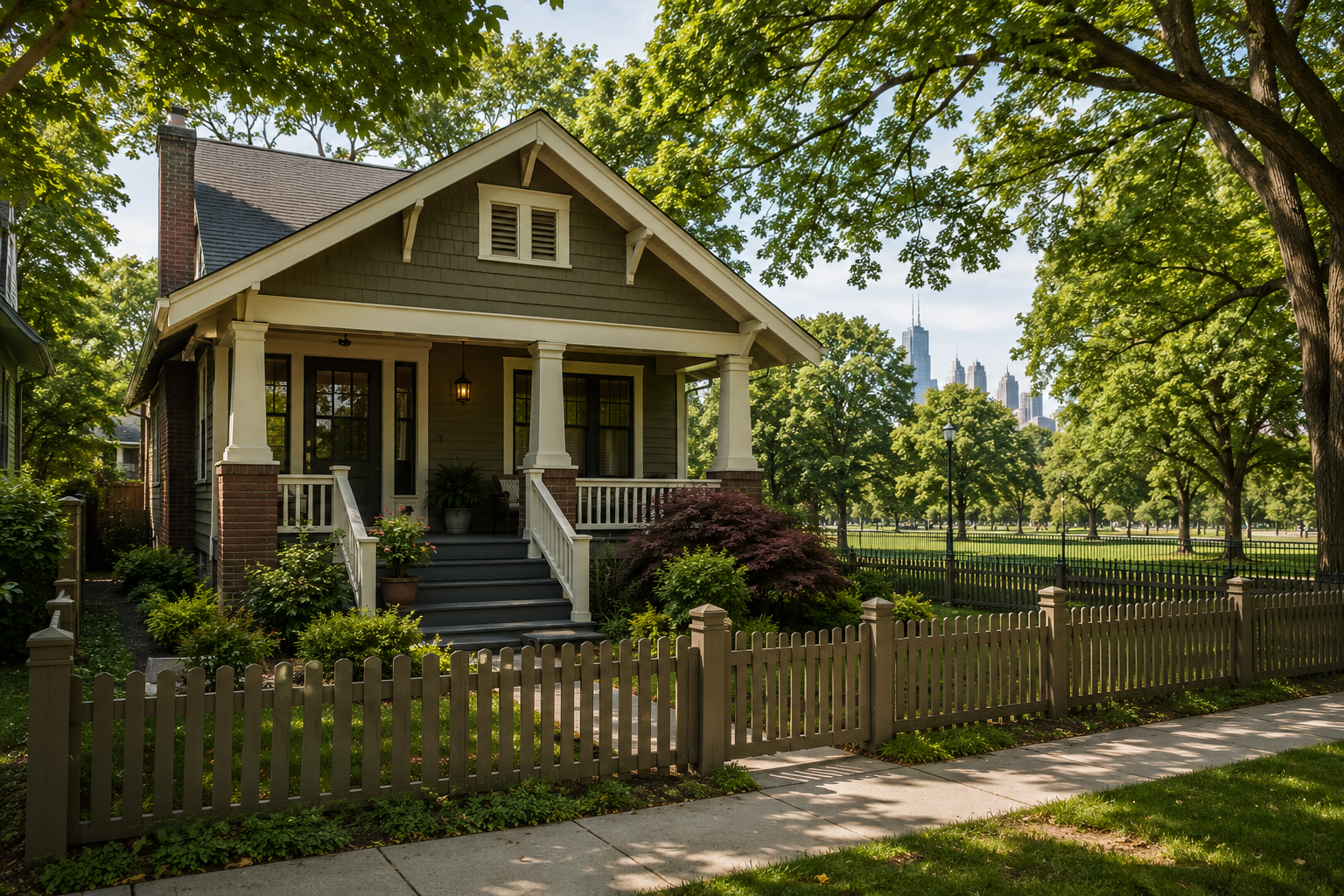
If the Brooklyn brownstone feel is what you’re chasing, Inman Park is the closest thing Atlanta has to it. The architecture is Victorian and Craftsman, the streets are tree-lined, and the neighborhood has the kind of scale that makes you want to walk it on a Sunday morning. Krog Street Market is a short walk, Ponce City Market is bikeable, and the BeltLine is accessible from the neighborhood’s edges.
Single-family homes here run $450,000 to $900,000 and above depending on size and condition. There are some condos and townhomes, but this neighborhood is primarily a single-family market. If you want architectural character and a real sense of place, this is the one.
Decatur
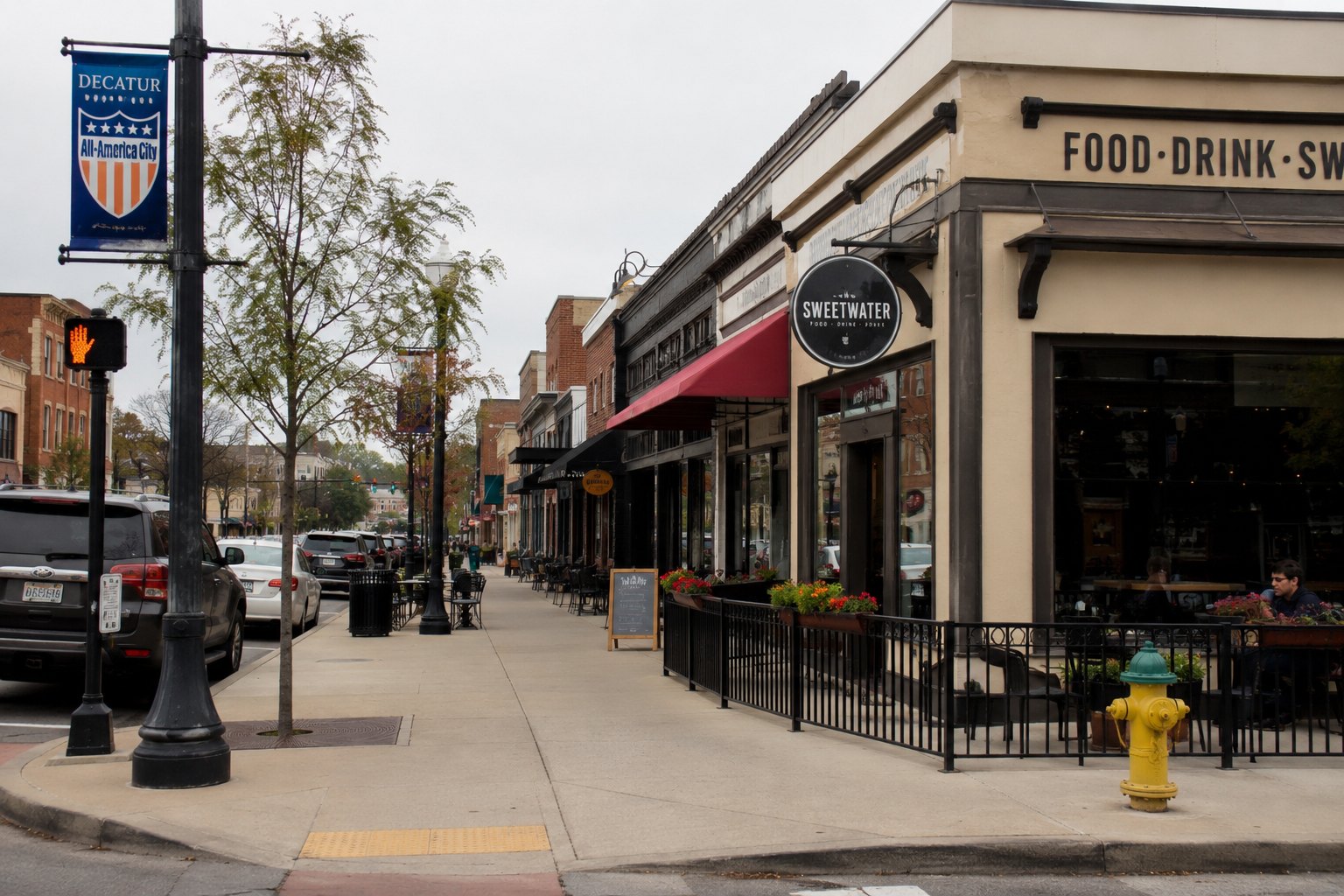
Decatur is the most underrated neighborhood on this list, and I’ll stand behind that. Downtown Decatur is a genuine, compact, walkable square, with coffee shops, restaurants, indie retail, and live music venues all within a few blocks of each other. It’s the closest thing Atlanta has to a small-city-within-a-city, and for buyers who want neighborhood personality over trendy density, it consistently wins.
Decatur is also served by MARTA rail at two stations (Decatur and Avondale Estates), making it one of the few places outside Midtown where you can genuinely reduce your car dependence. The housing stock is primarily bungalows and Craftsman single-family homes near the square, with some condos closer to the MARTA stations. Price range is roughly $350,000 to $700,000 for single-family homes.
Full Decatur Neighborhood Guide →
What Surprises New York Transplants About Atlanta
I’ve worked with enough relocating buyers to know the things that catch people off guard. Here are the three I hear most often.
You will need a car, and Atlanta traffic is genuinely bad.
This is the adjustment that surprises people the most. Atlanta has a subway system (MARTA), but it operates on 38 stations and 48 miles of track, primarily in Fulton, DeKalb, and Clayton counties. The suburban areas where a lot of Atlanta’s housing inventory sits — places like East Cobb, Roswell, Buford, and Duluth — have no rail service at all. Roughly 85% of Atlanta metro workers drive alone to work.
What makes this ironic is that Atlanta has some of the worst rush-hour traffic in the Southeast despite being an almost entirely car-dependent city. The I-75/85 Connector downtown and I-285 (the Perimeter) are reliably congested during morning and evening commutes. Budget for a car, insurance, and gas when you’re doing your cost-of-living math. The housing savings still make the math work, but this is a real lifestyle shift from subway life.
The summer heat is a different category than New York summers.
New Yorkers know hot summers. Atlanta’s summers are something else. June through September, you’re regularly at 90 degrees or above with humidity near 70%. Midday in July is physically oppressive in a way that makes you understand why every building, every car, and every storefront in the city has aggressive air conditioning. The mild winters (averaging in the 40s and 50s, rarely going lower) are a genuine trade-off that most transplants appreciate. But plan for higher utility bills from June through September, and give yourself a full summer to acclimate before you decide how you feel about it.

Their dollar goes a lot further than they thought possible.
This one is pleasant. Most New York transplants know intellectually that Atlanta is cheaper. They don’t expect the specific experience of walking through a three-bedroom, two-bath house with a yard, a two-car garage, and an updated kitchen in a walkable intown neighborhood and being told the price is $420,000. The reaction is usually some version of disbelief, and then the math starts to hit.
At $3,000 a month in housing costs, you’re renting a studio or a one-bedroom in many New York neighborhoods. In Atlanta, that same budget puts you in a house. Combined with the income tax savings, many transplants effectively receive a significant financial upgrade even when their salary stays the same. That’s not marketing language. It’s just what the numbers show.
Sources: Robb Realty Atlanta | HomeandMoney
Frequently Asked Questions
Is Atlanta actually cheaper than New York City?
Yes, significantly. Atlanta’s overall cost of living runs approximately 38% lower than New York City. The median home price in metro Atlanta is $416,000 compared to an average of $896,000 in New York City. Georgia’s flat 5.39% income tax with no city tax also means a meaningful reduction in annual tax burden compared to New York’s combined state and city rates, which can exceed 13% for high earners.
Do I need a car to live in Atlanta?
In most Atlanta neighborhoods, yes. MARTA rail connects the urban core and serves a handful of intown neighborhoods well, but the system covers 38 stations across 48 miles, far less coverage than New York’s 472-station subway. Outside of Midtown, Old Fourth Ward, Decatur, and a few other intown areas, day-to-day life in Atlanta requires a car. Budget for vehicle costs as part of your overall relocation financial plan.
What Atlanta neighborhoods are most similar to Brooklyn or Manhattan?
Old Fourth Ward, Inman Park, and Midtown are the closest comparisons. Old Fourth Ward offers BeltLine access and a walkable commercial corridor reminiscent of a smaller, warmer Brooklyn. Midtown is the most urban and transit-connected, similar in density to parts of Manhattan. Inman Park’s Victorian architecture and tree-lined streets draw frequent comparisons to Brooklyn brownstone blocks. Decatur is its own category — more like a walkable small city than a neighborhood — and consistently surprises buyers who assume Atlanta doesn’t have that kind of community character.
How much do I need to earn to buy a home in Atlanta coming from New York?
At Atlanta’s median price of $416,000 with a 10% down payment and current interest rates, you’d typically need a household income in the range of $100,000 to $130,000 to qualify comfortably. That number is meaningfully lower than what the same purchase would require in New York, and the Georgia income tax rate means more of your gross income is take-home pay. Running these numbers with a lender before you start searching is the move I recommend to every relocating buyer.
What’s the best time of year to move to Atlanta?
If you have flexibility, fall (September through November) is ideal. The heat breaks, the trees are beautiful, and you’ll get an accurate feel for the city without the summer humidity adjustment. Spring (March through May) is also excellent. Avoid moving in July or August if you can help it; the heat and humidity are at their peak and that’s not the full picture of what Atlanta is.
Ready to Make the Move?
The numbers in this guide are a starting point. Your specific situation, your timeline, your target neighborhoods, and the current inventory in the price range you’re working with all shape what the right move actually looks like for you.
I grew up in East Point and live in Edgewood now. I know this city from the inside, and I work with relocating buyers regularly — including buyers who purchased their Atlanta home sight-unseen via video walkthrough and FaceTime because their timeline didn’t allow for a trip down first. That process works when you have someone in your corner who knows the difference between what a neighborhood looks like on Zillow and what it feels like at 7pm on a Tuesday.
If you want to talk through your specific situation, reach out and schedule a time below. That’s the conversation I have with every relocating client before we start searching.
About Kristen Johnson
Kristen Johnson is a real estate agent and team lead with Kristen Johnson Real Estate at Compass Metro Atlanta. A native Atlantan who grew up in East Point and lives in Edgewood, she has guided clients through more than $50M in sales across the city and suburbs, drawing on a background as a labor doula that shapes her calm, clear, client-first approach. Connect with Kristen at kristenjohnsonrealestate.com.