

What's the Difference Between a Warrantable and Non-Warrantable Condo in Atlanta?

If you're shopping for a condo in Atlanta, the building matters as much as the unit. Two condos can sit on the same floor, look almost identical, and have wildly different financing outcomes, because one is in a building Fannie Mae and Freddie Mac will lend on and the other isn't. That distinction is what "warrantable" versus "non-warrantable" actually means, and it's one of the most consequential things buyers don't know to ask about until they're already under contract.
I work with buyers across Metro Atlanta, including a steady share of buyers looking at condos in Midtown, Buckhead, Downtown, Old Fourth Ward, and the Westside. Condos here run a wide spectrum: pre-2000 mid-rises with high investor concentrations, newer luxury towers like The Graydon and The Dillon, conversions, mixed-use buildings with ground-floor retail, and townhome-style condo projects scattered across intown neighborhoods. The financing rules apply differently to all of them.
Nearly a decade of helping Atlanta buyers means I've watched buildings move on and off the warrantable list, watched FHA approvals expire, watched buyers lose deals at the financing stage because no one flagged the building's status before the inspection period closed. The 2026 rule changes from Fannie Mae and Freddie Mac have made this more complicated, not less.
Here's what you need to know.
What Is a Warrantable Condo?
A warrantable condo is a unit in a condo project that meets Fannie Mae and Freddie Mac's eligibility standards for conventional financing. When the project meets those standards, the lender can sell the loan to Fannie or Freddie on the secondary market, and that's what makes conventional condo lending work the way it does, with competitive interest rates and down payments as low as 3 to 5 percent for owner-occupied buyers.
The standards aren't about the individual unit. They're about the condo association, the building, and how the project is run. Fannie and Freddie are evaluating the financial health of the HOA, the insurance coverage, the ownership concentration, and a handful of other factors that signal whether the project is stable enough that the loan is a reasonable risk.
When a building is warrantable, the financing options open up:
Conventional loans with 3 to 5 percent down for primary residences
FHA loans (separate approval process, but easier when the building is also warrantable)
VA loans (separate approval process)
Jumbo loans for luxury units above conforming loan limits
Standard interest rates that match what you'd pay on a single-family home, give or take a small condo premium
When a building is non-warrantable, those options largely disappear, and the buyer is left with portfolio loans and non-QM products that come with higher rates, larger down payments, and a much smaller pool of lenders.
The Warrantability Checklist: What Fannie Mae and Freddie Mac Are Actually Looking At
There's no single test. A building can fail any one of several criteria and become non-warrantable overnight. The 2026 rule changes (more on those below) shifted some of these thresholds, but the core categories are the same.
Reserves. The HOA must allocate a minimum percentage of the annual budget to reserves. Through January 3, 2027, that minimum is 10 percent of annual budgeted income; for loan applications dated on or after January 4, 2027, the minimum rises to 15 percent. Buildings with weak reserve funding, deferred maintenance, or outdated reserve studies are at risk of losing warrantable status.
Delinquencies. No more than 15 percent of units can be 60 or more days delinquent on HOA dues. If too many owners are behind on assessments, the project's financial health is in question, and lenders won't touch it.
Single-entity ownership. In a project with 21 or more units, no single entity can own more than 20 percent of the total units. This is meant to prevent any one owner, often a developer or investor group, from holding too much control over the project.
Insurance. The master insurance policy must cover the project at full replacement cost. As of July 1, 2026, the per-unit deductible on the master policy is capped at $50,000. Buildings with insurance gaps, inadequate coverage, or sky-high deductibles can lose warrantable status until the issue is resolved.
Commercial space. No more than 35 percent of the project can be allocated to commercial use. This affects mixed-use buildings with significant ground-floor retail, restaurants, or office space, which is a real consideration for some intown Atlanta condo projects.
New construction. For new or newly converted projects, at least 50 percent of units must be sold or under contract before the project is considered warrantable for most loans. Early buyers in a new tower can sometimes face financing challenges that resolve once the building hits that threshold.
There are also harder ineligibility rules. Projects in termination, deconversion, receivership, or insolvency are permanently ineligible. Projects operated as hotels, motels, or other commercial hospitality entities are not eligible. Buildings with active evacuation orders or unsafe structural conditions are not eligible until the issue is remediated.
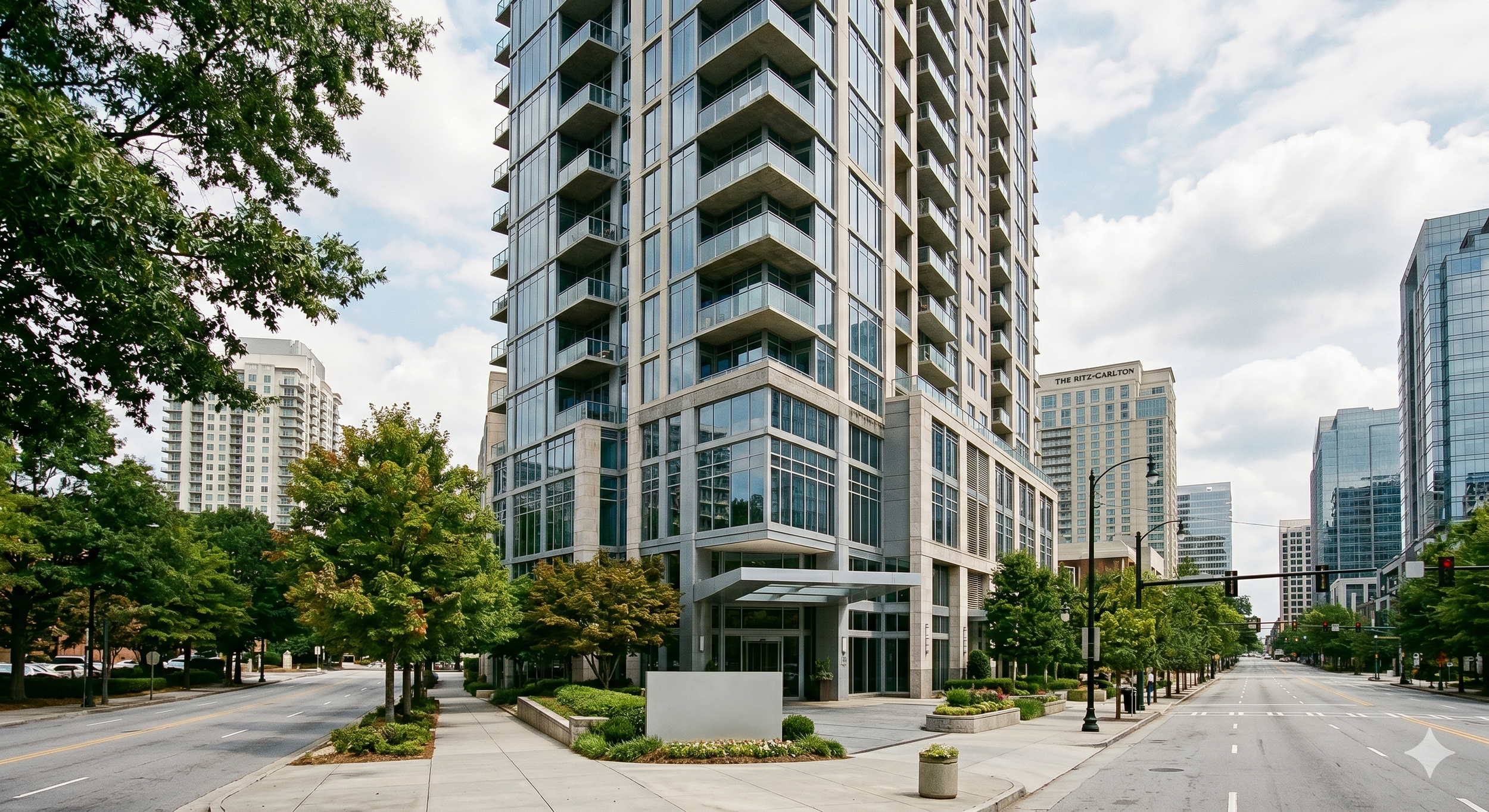
What Just Changed: The 2026 Fannie Mae and Freddie Mac Updates
This part matters because it changed the math for buyers in Atlanta this year. On the same day in March 2026, Fannie Mae issued Lender Letter LL-2026-03 and Freddie Mac published Bulletin 2026-C, releasing matching condo project rule changes designed to align the two agencies and tighten financial standards for condo associations.
Three changes are worth understanding:
Reserve funding moved from 10 percent to 15 percent. Effective for loan applications dated on or after January 4, 2027, HOAs must allocate at least 15 percent of their annual budget to reserves to maintain warrantable status. If a building loses warrantable status, conventional mortgages backed by Fannie Mae or Freddie Mac are no longer available for units in that building, and buyers would need to use portfolio loans, which typically carry higher interest rates and larger down payment requirements.
The 50 percent investor concentration rule was retired. Both agencies have eliminated the rule that made condos non-warrantable if more than 50 percent of units were investor-owned, effective March 18, 2026. This is meaningful in Atlanta because some Midtown and Downtown buildings, plus a handful of pre-2010 mid-rises, had high investor concentrations that locked them out of conventional financing for years. Some of those buildings are now eligible again, at least at the agency level.
There's a catch on that last one. Individual lenders can still apply their own overlays. Just because Fannie and Freddie dropped the limit doesn't mean your specific lender will approve the loan. Some banks and credit unions will continue to impose their own investor concentration thresholds. So if you're looking at a building that was previously non-warrantable specifically because of investor concentration, you need to ask your lender directly whether they follow agency guidelines or layer on additional overlays.
Limited Review is going away. Fannie Mae's Lender Letter LL-2026-03 retired the Limited Review process for established projects (effective for applications dated on or after August 3, 2026) and raised minimum reserve funding from 10 percent to 15 percent of annual budgeted assessment income (effective January 4, 2027). Freddie Mac issued a matching bulletin the same day. Limited Review was the streamlined path that let lenders skip the full project review on certain established condos. With it gone, every conventional condo loan now requires a full project review, which means more documentation, more scrutiny, and longer timelines on every condo file.
The combined effect is that condo financing in 2026 is tighter than it was in 2024 in some ways and looser in others. Investor concentration is no longer a dealbreaker at the agency level. Reserve funding is more important than ever. And every condo loan takes longer to underwrite.
Why Atlanta Buyers Should Care About This
Atlanta has a lot of condos. Midtown currently counts the most condos for sale among Atlanta neighborhoods (212 units), followed by North Buckhead (100) and Old Fourth Ward (90), and that doesn't include the older mid-rise stock scattered across Buckhead, Downtown, and intown neighborhoods like Reynoldstown, Inman Park, and Edgewood.
The warrantability question shows up most often in three Atlanta scenarios:
Older mid-rises with high investor concentrations. A meaningful share of pre-2010 Atlanta condo buildings drifted toward investor-heavy ownership during the post-2008 cycle, when units sold cheaply and landlords scooped them up. Some of those buildings have stayed that way. With the 2026 rule change retiring the 50 percent investor cap at the agency level, some are now financeable again, depending on the lender. Others still fail on different criteria, like reserves or delinquencies.
Mixed-use buildings. Some intown Atlanta condo projects sit above ground-floor retail, restaurants, or commercial space. If the commercial allocation exceeds 35 percent of the project, that alone makes the building non-warrantable, regardless of how strong the HOA finances are.
New high-rises before they hit 50 percent sold. Buyers who get into a new luxury tower early, before the project reaches the 50 percent presale threshold, can find themselves needing portfolio financing for the first phase of sales. Once the project clears that threshold, conventional financing typically becomes available. This came up around projects like The Graydon and The Dillon during their early sales phases, and it'll come up again as Elyse Buckhead and the next wave of Buckhead and Midtown towers move through pre-construction sales.
HOA financial issues. A building can be perfectly fine on paper for years and then fail a single criterion, usually reserves or delinquencies, after a major repair, a special assessment that goes uncollected, or a litigation issue. Warrantable status isn't permanent. It's evaluated every time a loan goes through review.
What Makes a Condo Non-Warrantable: The Common Reasons in Atlanta
The Fannie Mae checklist is a useful frame, but in practice most non-warrantable Atlanta condos fail for a small handful of reasons. Here's what I see:
Inadequate reserves. This is the most common reason in older buildings. The HOA has been kicking maintenance down the road, the reserve study is outdated or shows the building is poorly funded, and there isn't enough money set aside to cover predicted capital expenses. With the reserve funding minimum rising to 15 percent in January 2027, more buildings are about to slip into non-warrantable territory unless their boards raise dues or contributions.
Active or pending litigation. A condo project with an ongoing lawsuit, especially one involving the building itself (construction defects, structural issues, insurance claims), is generally non-warrantable until the litigation resolves. Common reasons include high investor ownership or ongoing legal issues, and lenders are conservative about anything that could result in a major financial hit to the HOA.
Special assessments tied to critical repairs. If a special assessment is associated with a critical repair and the issue is not remediated, the project is ineligible. Buildings dealing with major structural, mechanical, or safety repairs that haven't been completed can be locked out of conventional financing entirely.
High delinquency rates. If more than 15 percent of unit owners are 60 or more days behind on HOA dues, the project fails the delinquency test. This happens in buildings going through rough financial cycles, after major fee increases, or where investor owners have walked away.
Single-entity concentration. Sometimes a developer holds onto unsold units, or an investor group buys a block of units, and ownership concentration crosses the 20 percent threshold for a 21-plus-unit project. That alone makes the project non-warrantable.
Commercial allocation over 35 percent. Mixed-use buildings with substantial retail, hotel, or office space can fail this test, particularly some of the newer downtown and Midtown projects designed with significant commercial components.
Operating like a hotel. Buildings that allow short-term rentals at scale, are licensed as hotels, or restrict owner occupancy in any way can fall into the condotel category, which is its own non-warrantable bucket with a different set of financing options.
Real Atlanta Scenarios: Where This Comes Up
Abstract rules are easier to understand against actual Atlanta buildings and situations. Without naming specific projects, here are the patterns I see across the metro:
The older Midtown mid-rise. A pre-2000 building, six to twelve stories, built when condo financing was looser and short-term rentals weren't a big deal. Over the years, owners rented out units, some sold to investors, and the owner-occupancy ratio drifted below the old 50 percent threshold. Until March 2026, that alone made the building non-warrantable. With the investor concentration cap retired at the agency level, some of these buildings are now eligible for conventional financing again, but only if their lender doesn't apply an investor overlay. Many lenders still do. So the answer is "maybe," and it depends on which lender you go to.
The newer luxury Buckhead tower. Built in the last five to ten years, professionally managed, well-funded reserves, owner-occupied by design. These are usually clean for conventional financing, sometimes also FHA-approved. The thing to watch: as buildings age, reserve studies need to be updated, special assessments occasionally come up, and master insurance policies get reviewed. A building that was warrantable two years ago may not be today. Always verify.
The mixed-use Old Fourth Ward project. Ground-floor retail, residential above, often part of a larger mixed-use development. If the commercial allocation crosses 35 percent of the project, the building is non-warrantable on that criterion alone. This is something some intown Atlanta projects have to navigate, and it doesn't change as the project ages.
The new construction tower in pre-sales. Pre-sales at Elyse Buckhead were approaching $60 million as of April 2026. New construction projects like this require buyers to navigate the 50 percent presale threshold. Buyers who lock in early, before the project clears that threshold, may need portfolio financing for a window of time. Once the project sells through to 50 percent, conventional financing typically becomes available. This pattern played out with The Graydon and The Dillon during their early sales phases and will play out again with the next wave of Buckhead and Midtown towers.
The townhome-style condo project in Reynoldstown, Inman Park, or Edgewood. Some intown Atlanta neighborhoods have townhome-style condo developments that don't look like high-rises but are legally structured as condo projects. Same rules apply. Smaller projects (under 21 units) handle the single-entity ownership rule differently, and that's worth checking on smaller developments where one owner might hold multiple units.
The conversion building. A former apartment building converted to condos, sometimes recently. Conversions go through their own eligibility review, and newly converted projects have additional requirements under Fannie Mae's full review process. Older conversions are sometimes solid; newer ones can carry warrantability questions tied to the conversion process itself.

What's in the HOA Questionnaire and Why It Matters
When your lender starts the project review, they'll request a condo questionnaire from the HOA management company. This is the document that determines warrantable status more than anything else. Lenders require extensive HOA documentation to assess project financial stability. The HOA questionnaire completed by the association management company provides standardized information about the project including the number of units, owner-occupancy percentages, commercial space allocation, pending legal matters, insurance coverage details, and reserve funding.
The questionnaire usually covers:
Project basics. Number of units, year built, number of buildings, percentage complete, whether the developer still controls the HOA.
Ownership concentration. Number of units owned by a single entity, number of units owned by the developer, percentage of investor-owned units.
Owner occupancy. Percentage of units that are owner-occupied versus rented or held as second homes.
Delinquencies. Number and percentage of units 60+ days behind on dues.
Reserves. Annual budget, percentage of budget allocated to reserves, most recent reserve study date and findings.
Special assessments. Recent and planned special assessments, the reasons, the amounts, and whether they're tied to critical repairs.
Insurance. Master policy coverage limits, deductibles, replacement cost endorsement, fidelity bond, flood insurance if applicable.
Litigation. Active or pending legal matters involving the HOA or the project.
Commercial allocation. Square footage of commercial versus residential space.
Hotel/motel operations. Whether the building operates short-term rentals, has rental restrictions, or is licensed as a hospitality entity.
A clean condo questionnaire moves a loan forward fast. A questionnaire with red flags can stop it cold. The condo questionnaire serves as a detailed overview of the condominium project and its compliance with Fannie Mae and Freddie Mac Agency Guidelines.
The reason this matters for buyers: if the HOA management company is slow to return the questionnaire (and some are), or if the questionnaire surfaces issues mid-deal, you can lose weeks. I push for the questionnaire as soon as we go under contract, not three days before closing. If the building has had recent issues, I'll sometimes ask for a draft questionnaire or a recent one before we even write the offer.
How Financing Actually Works for a Non-Warrantable Condo
If you're under contract on a non-warrantable condo, conventional financing is off the table. Here's what's left:
Portfolio loans. These are loans the bank holds in its own portfolio rather than selling to Fannie or Freddie. Local banks, credit unions, and some regional lenders offer them for non-warrantable condos. Portfolio lenders typically want 660+ credit scores with 20-25% down. Non-QM lenders sometimes accept 10-20% down for strong borrowers but charge premium rates. Terms vary substantially between portfolio lenders.
Non-QM (non-qualified mortgage) loans. These are specialized programs for borrowers and properties that don't fit the standard conventional box. Interest rates for Non-QM loans generally run 0.5% to 2% higher than conventional mortgages, and for non-warrantable condos specifically, rates often fall at the higher end of that range.
Bank statement loans and DSCR loans. Used by self-employed buyers and investors, these alternative-documentation loans can sometimes pair with non-warrantable condo financing depending on the lender.
Cash, with potential refinance later. Some buyers pay cash for non-warrantable condos and then refinance into conventional financing if and when the building regains warrantable status. This is a viable strategy for buyers with the liquidity to make it work and a tolerance for the risk that the building never gets there.
The down payment math is the biggest practical difference. Conventional loans on warrantable condos typically require 5-10% down for well-qualified borrowers with strong credit, though some programs allow 3% down for first-time buyers in lower loan amounts. Conventional loans on non-warrantable condos demand 15-25% down due to higher risk profile. Portfolio loans or private financing often requires 20-30% down with terms varying significantly by lender.
The interest rate math is the second-biggest. Non warrantable condo loan rates currently range from 7.5-10% versus 6-6.5% for warrantable condos. The 1.5-3 point premium reflects lenders holding these loans in portfolios without secondary market liquidity. On a $400,000 loan, that's a meaningful difference in the monthly payment and the total interest paid over the life of the loan.
So a buyer looking at a $400,000 non-warrantable condo with 25 percent down at 8 percent is making roughly the same monthly payment as a buyer looking at a $475,000 warrantable condo with 10 percent down at 6.25 percent, even though they're financing $100,000 less. That's the trade.

FHA Approval Is Its Own Process
FHA approval is separate from Fannie/Freddie warrantability. A condo can be warrantable for conventional financing and not FHA approved, or vice versa. Most often, both approvals track together, but not always.
For FHA approval, the U.S. Department of Housing and Urban Development (HUD) maintains a list of condominium complexes it will and will not accept for FHA financing. The units must be at least 50 percent owner-occupied. No more than 15 percent of the owners can be more than 60 days delinquent on homeowner dues. There can be no pending litigation against the condo.
FHA loan borrowers can qualify for a mortgage with a credit score as low as 500 with a 10% down payment, or 580 or above with a 3.5% down payment. That accessibility is the main reason FHA matters for first-time condo buyers in Atlanta. If you're targeting FHA financing on a condo, the building has to be on the HUD approved list, and you need to verify that approval is current and not expired.
There's a workaround called single-unit FHA approval, sometimes called a spot approval, that allows FHA financing on individual units in certain non-approved buildings if the project meets specific criteria. It's narrower than full project approval and less commonly used, but it can save a deal in some cases.
VA loans require their own separate VA condo approval, which is not the same as FHA approval. Before December 7, 2009, the VA honored FHA-approved condo projects automatically. After that date, the VA stopped accepting the FHA list. A project showing "HUD Accepted" today is a historical record, not a current eligibility statement. If you're a VA-eligible buyer, your lender has to confirm current VA standing before treating the project as approved.
How to Check Whether an Atlanta Condo Is Warrantable Before You Make an Offer
This is the part that catches buyers off guard. There's no public Fannie Mae warrantable condo database. Warrantability is determined during the loan process, not before.
What you can do, before you go under contract:
Ask the listing agent or HOA management company. Some HOAs and management companies know their warrantable status. Some do not. The honest answer is often "we think so, but verify with your lender." A few will hand you a recent condo questionnaire if asked.
Run the building through your lender. A good lender, especially one who works with Atlanta condo product regularly, can pull the project up in Fannie Mae's Condo Project Manager (CPM) or Freddie Mac's Condo Project Advisor (CPA) and tell you the project's current status. If the project is approved by Fannie at the project level, that's a strong signal. If it shows up as ineligible or unavailable, that's a hard stop on conventional financing.
Check the HUD FHA approval list. The HUD database is public. The Condominiums page allows users to search for FHA-approved condominium projects by location, name, or status. If you're financing with FHA, this is the first thing to check. Make sure the approval is active and not expired.
Request the HOA questionnaire and reserve study early. Once you're under contract, your lender will need a completed condo questionnaire from the HOA management company, plus the master insurance certificate, the most recent budget, and (under the 2026 rules) the reserve study. The faster you get these, the faster the financing process moves. Ask your agent to push for them on day one.
Look at the building's recent special assessments and dues history. A building that's raised dues sharply or levied a major special assessment in the last few years is signaling something. Sometimes that signal is responsible board management. Sometimes it's a building catching up on deferred maintenance. Read the meeting minutes and ask questions.
Check for active litigation. Public records will show whether the HOA is named in active lawsuits. Your attorney can pull this. Litigation involving the project itself is a major red flag.
I run this check with buyers before we write offers on condos, particularly in older buildings or in buildings I know have had issues. The cost of catching a non-warrantable building before you're under contract is zero. The cost of catching it during the inspection period is your earnest money, your inspection fee, and a wasted two weeks. The cost of catching it during underwriting is much worse than that.
What to Watch in Atlanta Right Now
A few things to keep an eye on in 2026:
The reserve funding cliff in January 2027. The 15 percent reserve minimum doesn't take effect until early next year, but HOAs that were funding at 10 percent need to make up the difference now or risk losing warrantable status the moment the new rule kicks in. Some Atlanta HOAs are raising dues significantly to build reserves before the deadline. Others aren't, and those buildings are at risk.
Buildings reentering the warrantable pool. With the 50 percent investor concentration cap retired, some intown Atlanta buildings that were locked out for years are back in the financing conversation. Some lenders will follow agency guidelines fully. Others will keep their own investor caps. Verify with your specific lender.
Pre-construction sales in new towers. New Buckhead and Midtown projects, including Elyse Buckhead and others in the pipeline, will require buyers to navigate the 50 percent presale threshold. Early buyers may need portfolio financing for a window of time. Pre-sales at Elyse Buckhead were approaching $60 million as of April 2026, with current pricing starting at just shy of $1 million for one-bedroom options.
Insurance coverage and the master policy deductible cap. As of July 1, 2026, the per-unit deductible on the master policy is capped at $50,000. Buildings with high deductibles, particularly older buildings that adjusted their deductibles upward to manage premium costs, may need to restructure their insurance to maintain warrantable status. This is worth asking about before you make an offer in any older Atlanta building.
Should You Buy a Non-Warrantable Condo?
Sometimes yes. The discount can be real. Non-warrantable condos often sell at a measurable discount to comparable warrantable units, because the buyer pool is smaller and the financing is harder. If you have the cash, the credit, and the long-term horizon to absorb a higher rate or to pay cash and refinance later, the math can work in your favor.
But you need to go in with eyes open:
The financing will cost more, every month, for as long as you hold the loan
Your resale pool will be smaller, which can affect liquidity when you eventually sell
If the issue that made the building non-warrantable doesn't resolve, you may not be able to refinance into a better rate later
If the issue gets worse (reserves further depleted, more litigation, more delinquencies), the building's value can be affected
I have buyers who have done this successfully. They paid cash for a non-warrantable condo, watched the building's HOA get its reserves in order over a few years, then refinanced into conventional financing once the project regained warrantable status. I have other buyers who walked away from non-warrantable deals because the discount didn't make up for the financing costs and the resale risk.
There's no universal right answer. There's only the right answer for your specific situation: your liquidity, your timeline, your tolerance for risk, and what the building's specific issues actually are.
How I Help Condo Buyers Navigate This
When I'm working with a buyer who's looking at condos in Atlanta, the warrantability question gets factored into the search from the beginning. That means:
Identifying the buyer's financing path (FHA, conventional with low down payment, jumbo, cash) and screening buildings against that path before we tour
Pulling the FHA approval list for any building the buyer is interested in
Asking for HOA questionnaires and reserve studies before going under contract on older or more complex buildings
Working with lenders who know Atlanta condo product specifically, not generalists who haven't seen this before
Reading meeting minutes, special assessment history, and master insurance certificates as part of due diligence
Pushing for clean answers from HOA management companies before, not after, the inspection period closes
The buyers who have the worst experiences with condo financing are almost always the ones who didn't know to ask these questions before they made an offer. The buyers who have the best experiences are the ones who treated the building's warrantable status as a piece of due diligence equal to the inspection.

Long-Term Ownership: What Warrantability Means When You Sell
Buyers tend to focus on warrantability at purchase. Sellers learn it matters at exit, sometimes the hard way.
When you sell a condo, your buyer's financing options are determined by the building's status at the time of their purchase, not yours. So a building that was warrantable when you bought can be non-warrantable when you sell, and that affects your buyer pool, your timeline, and sometimes your price.
The most common patterns I see:
The building's reserves slipped. The HOA wasn't keeping up with the reserve study, or major repairs depleted reserves faster than they were rebuilt. By the time you list, the building is funding below the threshold and conventional buyers can't get to the closing table. You're left with cash buyers, portfolio loan buyers, and a smaller pool overall.
A lawsuit emerged. Construction defect claims, water intrusion litigation, or HOA disputes can push a building into non-warrantable status mid-cycle. Sometimes these resolve quickly. Sometimes they linger for years.
A special assessment landed. A major repair that wasn't reserved for triggers a special assessment. Depending on how it's structured and whether the underlying issue is remediated, the project can go non-warrantable until the work is done.
The owner-occupancy ratio shifted. Less of an issue post-March 2026 with the investor concentration cap retired at the agency level. Still relevant for lenders that apply their own overlays, and for FHA, which still has a 50 percent owner-occupancy requirement.
If you're a long-term condo owner in Atlanta, paying attention to your HOA's financial trajectory is part of protecting your asset. Reserve study findings, dues increases, special assessment patterns, insurance renewals, ongoing litigation, board turnover. All of it matters. The building's health is your home's health.
Special Considerations for Atlanta Investors and Second-Home Buyers
Down payment requirements increase substantially for non-primary-residence condos. Second home condos typically require 10-15% down minimum with conventional financing, often matching or exceeding primary residence requirements. Investment property condos require even more, generally 20 to 25 percent down at a minimum.
That math gets steeper on non-warrantable buildings. Investors typically require a down payment of 25% for condotel financing. For non-warrantable investor purchases, expect 25 to 30 percent down at the low end.
A few things investors should keep in mind:
The retired investor concentration cap helps. Some Atlanta buildings with high investor ownership are now eligible for conventional financing again. This opens up product that was previously unfinanceable except through portfolio loans.
Lender overlays still apply. Even with the agency-level rule retired, individual lenders can keep their own caps. Investors targeting buildings with high investor ownership need to shop lenders, not just shop buildings.
Condotel rules are different. Buildings that allow short-term rentals at scale, are licensed as hospitality entities, or otherwise operate as condotels fall into their own category with their own financing rules. Most conventional and FHA programs won't touch them. Specialty lenders will, with higher down payments and rates.
Rental restrictions in HOA bylaws matter. Even in a building that's warrantable, the HOA's bylaws may restrict short-term rentals, cap the number of units that can be rented, or require minimum lease terms. For investor buyers, these rules can affect the investment thesis as much as the financing.
Working with the Right Lender Matters More on Condos
Not all lenders are equal on condo financing. The ones who do this well have:
Atlanta condo experience. They've seen the specific buildings, know which ones have had warrantability issues in the past, and know which HOA management companies are responsive. A lender who closes a hundred condo loans a year in Metro Atlanta is going to navigate this faster than a lender who does mostly single-family.
Direct access to project review systems. Fannie Mae's Condo Project Manager (CPM) and Freddie Mac's Condo Project Advisor (CPA) are the systems lenders use to check project status. A lender who can pull the building up while you're on the phone is faster than one who has to escalate to a back-office team.
Portfolio loan options in-house or through partners. If the building turns out to be non-warrantable, the lender who can pivot to a portfolio product without restarting the loan from scratch saves you weeks.
Honest answers about overlays. A good lender will tell you upfront whether they apply overlays beyond agency guidelines. The 50 percent investor concentration rule is retired at the agency level, but if your lender still applies it as an overlay, that's a meaningful piece of information.
When I'm working with a buyer on a condo, I introduce them to lenders who specialize in this. Generalist lenders can absolutely close condo deals, but on the harder buildings, specialists save deals.
FAQ: Warrantable and Non-Warrantable Condos in Atlanta
What is a warrantable condo in Atlanta?
A warrantable condo is a unit in a condo project that meets Fannie Mae and Freddie Mac eligibility standards for conventional financing. The standards cover the project's reserves, delinquencies, ownership concentration, insurance coverage, commercial space allocation, and a handful of other criteria. When a project is warrantable, buyers have access to conventional, FHA, and VA loans with standard down payments and rates. When it isn't, financing options narrow to portfolio and non-QM products with higher rates and larger down payments.
How do I know if a condo is warrantable before I make an offer?
There's no public Fannie Mae warrantable condo database. The most reliable check is to have your lender pull the project up in Fannie Mae's Condo Project Manager or Freddie Mac's Condo Project Advisor. You can also ask the HOA management company directly, check the HUD FHA approval list, and request a recent condo questionnaire. I run these checks with my buyers before we write offers on condos in Atlanta, particularly in older buildings.
What makes a condo non-warrantable?
The most common reasons in Atlanta are inadequate reserves, active or pending litigation involving the project, special assessments tied to unresolved critical repairs, delinquency rates above 15 percent, single-entity ownership over 20 percent in a 21-plus unit project, commercial space exceeding 35 percent of the project, or operating as a condo-hotel. Any one of these can make a project non-warrantable on its own.
Can I get an FHA loan on a non-warrantable condo in Atlanta?
Possibly, through single-unit FHA approval, also called spot approval, if the building meets specific FHA criteria even though the project as a whole isn't approved. It's narrower than full project approval and less commonly used. If the building is fully FHA-approved and on the HUD list, that's the cleaner path. If it isn't, talk to a lender who specifically does single-unit FHA approvals.
What's the down payment on a non-warrantable condo?
Typically 15 to 30 percent depending on the lender and the specific reasons the project is non-warrantable. Buildings with minor issues (slightly over investor limits, for example) can sometimes get 15 percent down. Buildings with more serious issues usually require 20 to 25 percent or more. Portfolio lenders set their own thresholds and they vary.
How much higher are interest rates on non-warrantable condos?
Generally 1.5 to 3 percentage points higher than conventional rates on warrantable condos, though it varies by lender and the specifics of the building and borrower. On a $400,000 loan, that's a meaningful monthly payment difference.
Did the 2026 Fannie Mae rule changes affect condos in Atlanta?
Yes. The 50 percent investor concentration limit was retired in March 2026, which means some Atlanta buildings that were locked out of conventional financing for high investor ownership are eligible again, at least at the agency level. The reserve funding minimum is rising from 10 percent to 15 percent for loans dated on or after January 4, 2027, which puts pressure on HOAs that were funding at the lower threshold. The Limited Review process is going away effective August 3, 2026, which means every condo loan now requires a full project review.
Are most Midtown and Buckhead condos warrantable?
Most newer luxury towers are. Some older mid-rises in both neighborhoods have had warrantability issues over the years, mostly tied to investor concentration, reserves, or commercial allocation. The 2026 changes have shifted some of these buildings back into the warrantable pool, but you have to verify each building individually with the lender.
What happens if my condo loses warrantable status after I buy?
Your existing mortgage doesn't change. The bigger issue is resale: if you go to sell and the building is non-warrantable at that point, your buyer pool shrinks and your resale price may be affected. It can also affect your ability to refinance into conventional financing while you own the unit. If the building is heading in a bad direction (declining reserves, growing delinquencies, ongoing litigation), that's worth paying attention to as an owner.
Can a building regain warrantable status?
Yes. Buildings can move on and off the warrantable list as conditions change. An HOA that increases reserves, resolves litigation, or improves delinquency rates can regain warrantable status. New construction projects move from non-warrantable to warrantable as they cross the 50 percent presale threshold. The status is reassessed every time a loan goes through review, not on a fixed schedule.
Should I avoid non-warrantable condos in Atlanta?
Not necessarily. The discount can be meaningful and the financing is workable if you have the cash, credit, and timeline to absorb the higher rate. But you need to go in clear-eyed about the resale implications, the financing costs over time, and whether the issue causing the non-warrantable status is likely to resolve. I'd rather have my buyers walk into a non-warrantable deal with full information than walk into a warrantable deal blind.
Who should I talk to first about a condo I'm considering?
A lender who works with Atlanta condo product regularly. Not all lenders do this well. The ones who do can pull the building up in CPM or CPA, tell you whether they have any overlays beyond agency guidelines, and walk you through the specific issues if any exist. If you don't have a lender like that, I can point you to ones I work with regularly.
Final Thought
Most condo buyers in Atlanta don't need to become experts in Fannie Mae's project eligibility rules. What they do need is to know enough to ask the right questions before they're emotionally and financially committed to a building. Warrantable versus non-warrantable is one of those questions. So is FHA approval status, reserve funding, recent special assessments, and pending litigation. None of this is hidden, but most of it isn't volunteered either.
I work with buyers across Metro Atlanta and screen condo product against the financing path that's actually going to close the deal, not the financing path that looked good on paper at the start. If you're considering a condo in Midtown, Buckhead, Downtown, the Old Fourth Ward, or any other intown neighborhood, this is part of what I check before we tour, not after we're under contract.
Visit kristenjohnsonrealestate.com or reach out directly. Come as you are, come on home.
Looking for more Atlanta home buyer resources? I've covered related topics including FHA vs Conventional Loans in Atlanta, How Much House Can I Afford in Atlanta, What Credit Score Do I Need to Buy a House in Atlanta, and First-Time Home Buyer Mistakes to Avoid in Atlanta. Browse the full guide series at kristenjohnsonrealestate.com.