

Which Metro Atlanta Neighborhoods Have the Best Multigenerational Homes?
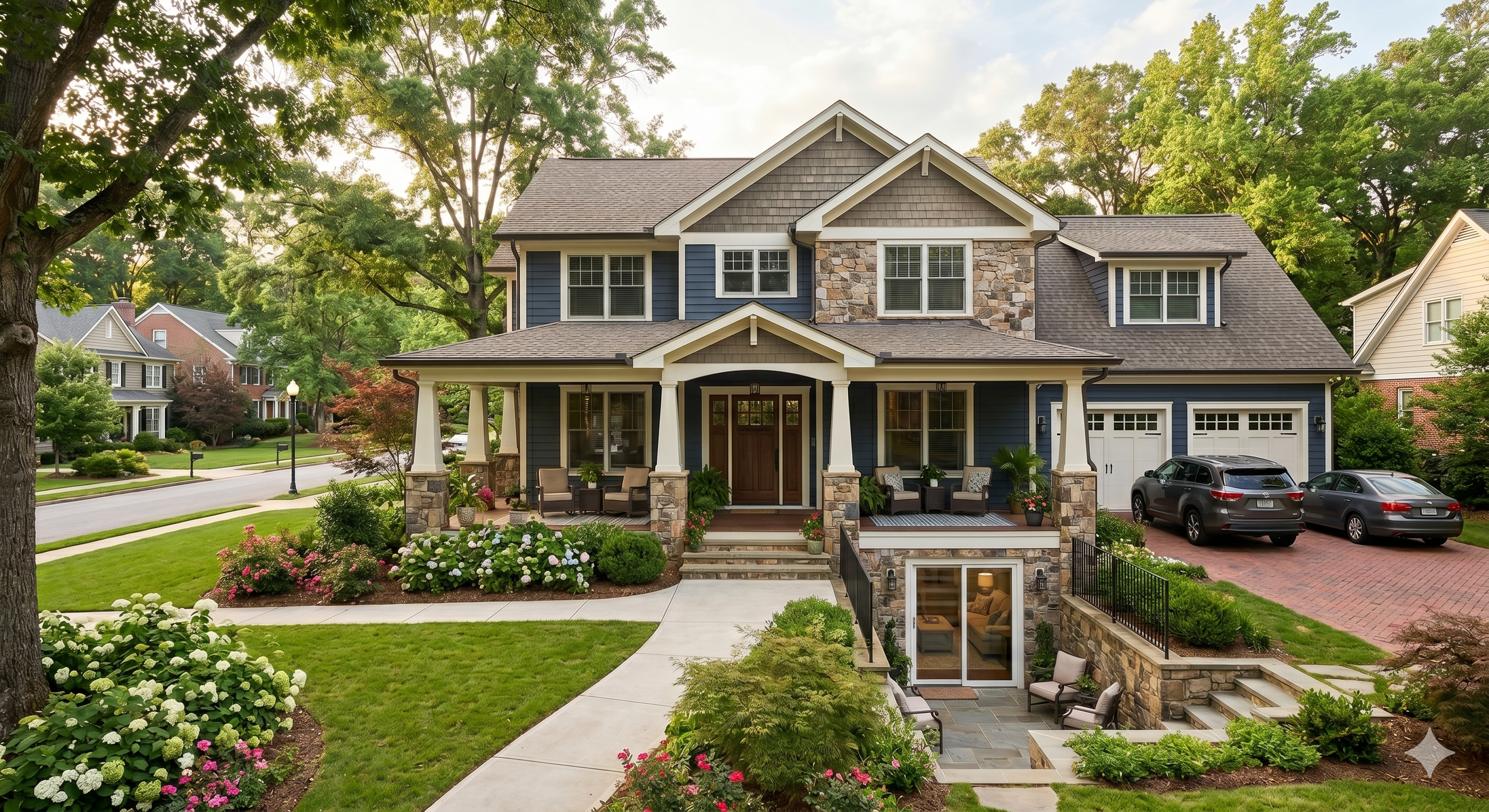
The short answer: the suburbs and intown areas with deep stocks of older brick ranches over full basements, the new-construction communities in Cobb, Cherokee, and Forsyth that are actually building purpose-designed multigen floor plans, and the City of Atlanta neighborhoods zoned R-4, R-4A, or R-5 where you can legally add an accessory dwelling unit. Stone Mountain, Tucker, Lithonia, Decatur, North Decatur, Stockbridge, Lawrenceville, Marietta, Cumming, and parts of intown Atlanta like Kirkwood, East Atlanta, and Grant Park are where I see real options for buyers shopping for in-law suites, basement apartments, ADUs, or true two-generation homes.
I work with buyers across Metro Atlanta who are looking to bring extended family under one roof. Sometimes it's aging parents moving in. Sometimes it's an adult child with a young family who can't crack the down payment alone. Sometimes it's a sibling, a grandparent helping with childcare, or a returning college graduate. The reasons are personal, but the search criteria are consistent: enough square footage, two functional living spaces, separation between them, and ideally a private entrance. Add a second kitchen and you're talking about a true multigenerational home rather than a big house with a guest room.
Nearly a decade helping Metro Atlanta buyers means I've walked enough basements, terrace levels, garage apartments, and Lennar Next Gen suites to know what actually works for families and what looks great in photos but falls apart in real life.
Here's what you need to know.
What Counts as a Multigenerational Home in Metro Atlanta?
Buyers throw the term "multigenerational home" around to mean a lot of different things. Before I send anyone listings, I want to know which version they're actually shopping for, because the price points and the inventory pools are very different.
The four main configurations I see in Metro Atlanta:
True dual-living homes. Two functional living spaces under one roof with separate kitchens, bathrooms, sleeping areas, and ideally separate entrances. This is what Lennar markets as a "Next Gen" home, what Pulte calls a "Smart Suite," and what older Metro Atlanta buyers call a mother-in-law or in-law setup. The second living space functions as its own apartment.
Homes with finished basements or terrace-level in-law suites. A primary house on the main and upper levels, with a fully finished basement that includes a bedroom, bathroom, living area, and either a full second kitchen or a kitchenette. Older brick ranches over full basements are the workhorse of this category in Metro Atlanta.
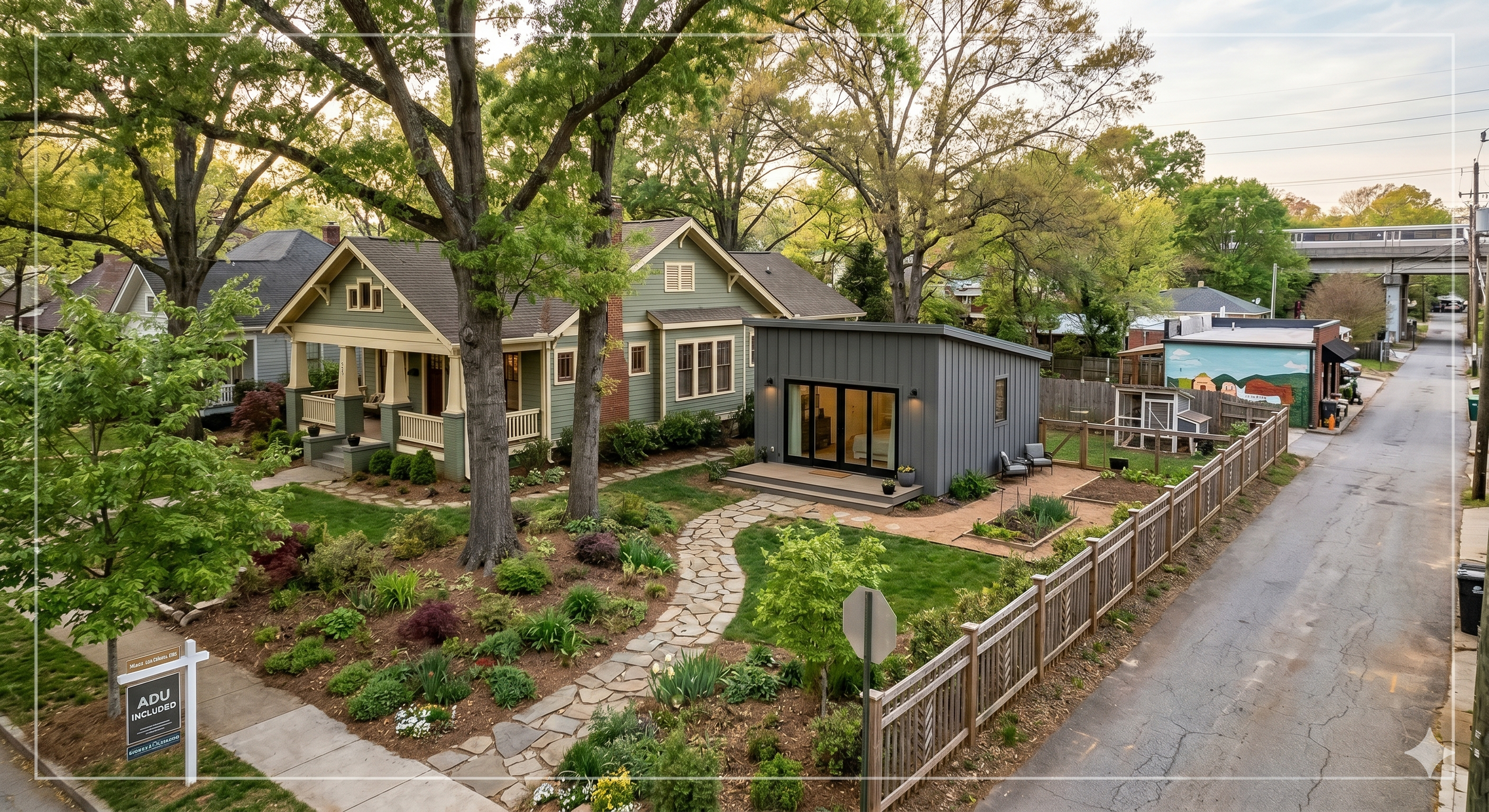
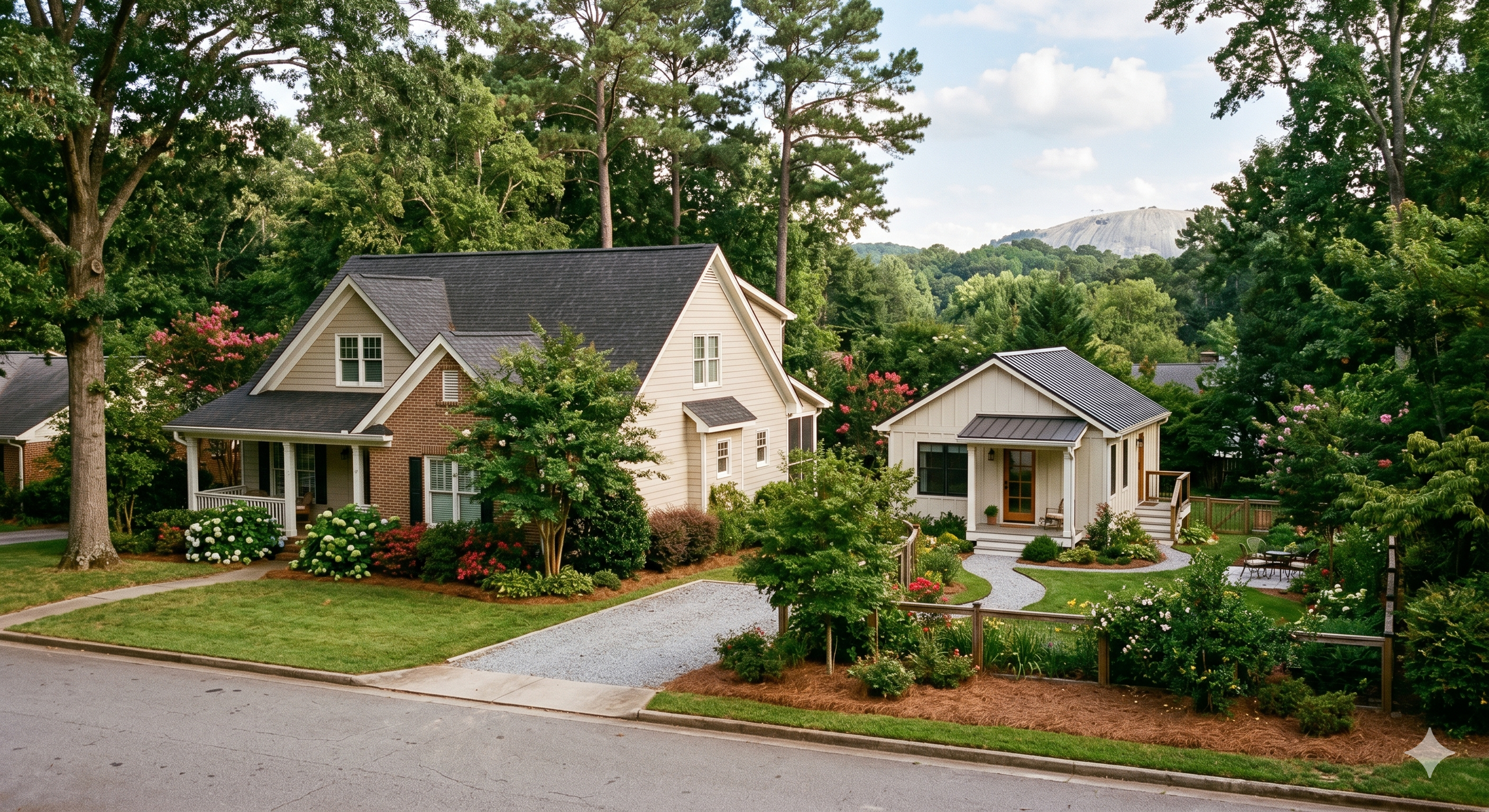
Single-family homes with a detached ADU. A primary residence plus a backyard cottage, garage apartment, or carriage house on the same lot. In the City of Atlanta, these are governed by specific zoning rules I'll cover below. Outside the city limits, rules vary by jurisdiction.
Large homes with a main-level bedroom suite plus upstairs bedrooms. Not technically multigenerational in the strict sense, but functionally it works for families where an aging parent doesn't want stairs and the rest of the household sleeps upstairs. These are common in newer Metro Atlanta builds.
When buyers tell me they want a multigenerational home, my first questions are: Do you need a second kitchen? Do you need a private entrance? Does anyone need to avoid stairs? Will the second household be paying part of the mortgage, or is this a family caregiving situation? The answers shift the search significantly.
Why Multigenerational Demand Is Climbing in Metro Atlanta
This is not a niche category anymore. According to Pew Research Center, 18% of the U.S. population, roughly 59.7 million people, lived in a multigenerational household as of 2021, and the trend has continued upward. Among adults ages 25 to 34, the share living in multigenerational households reached 25%, up from just 9% in 1971.
The drivers are stacked. Housing affordability has reached its most strained point in 40 years according to research from the Wharton School at the University of Pennsylvania. Student loan balances are pushing adult children to live at home longer. Childcare costs have outpaced wages, and families with grandparents available to help carry that load are saving meaningful money. On the other end, the cost of assisted living and skilled nursing care has climbed past what most middle-income families can absorb, and families are increasingly opting to bring aging parents home instead.
Atlanta's specific demographics add another layer. Pew data shows that Asian, Black, and Hispanic Americans are roughly twice as likely as white Americans to live in multigenerational households, and Metro Atlanta has significant and growing populations across all three groups. Foreign-born Americans are also more likely to live in extended-family households, and Metro Atlanta has seen sustained immigration growth across counties like Gwinnett, Cobb, and DeKalb.
What this means in real estate terms: demand for homes that can accommodate two or more adult generations is real, persistent, and growing. Builders have caught on. Resale inventory with the right bones moves faster than equivalent square footage without an in-law setup.
The Four Buckets of Metro Atlanta Multigenerational Inventory
When I'm searching for clients, I'm typically pulling from one of four pools. Each has its own price range, geography, and tradeoffs.
Bucket 1: Older Brick Ranches with Full Basements
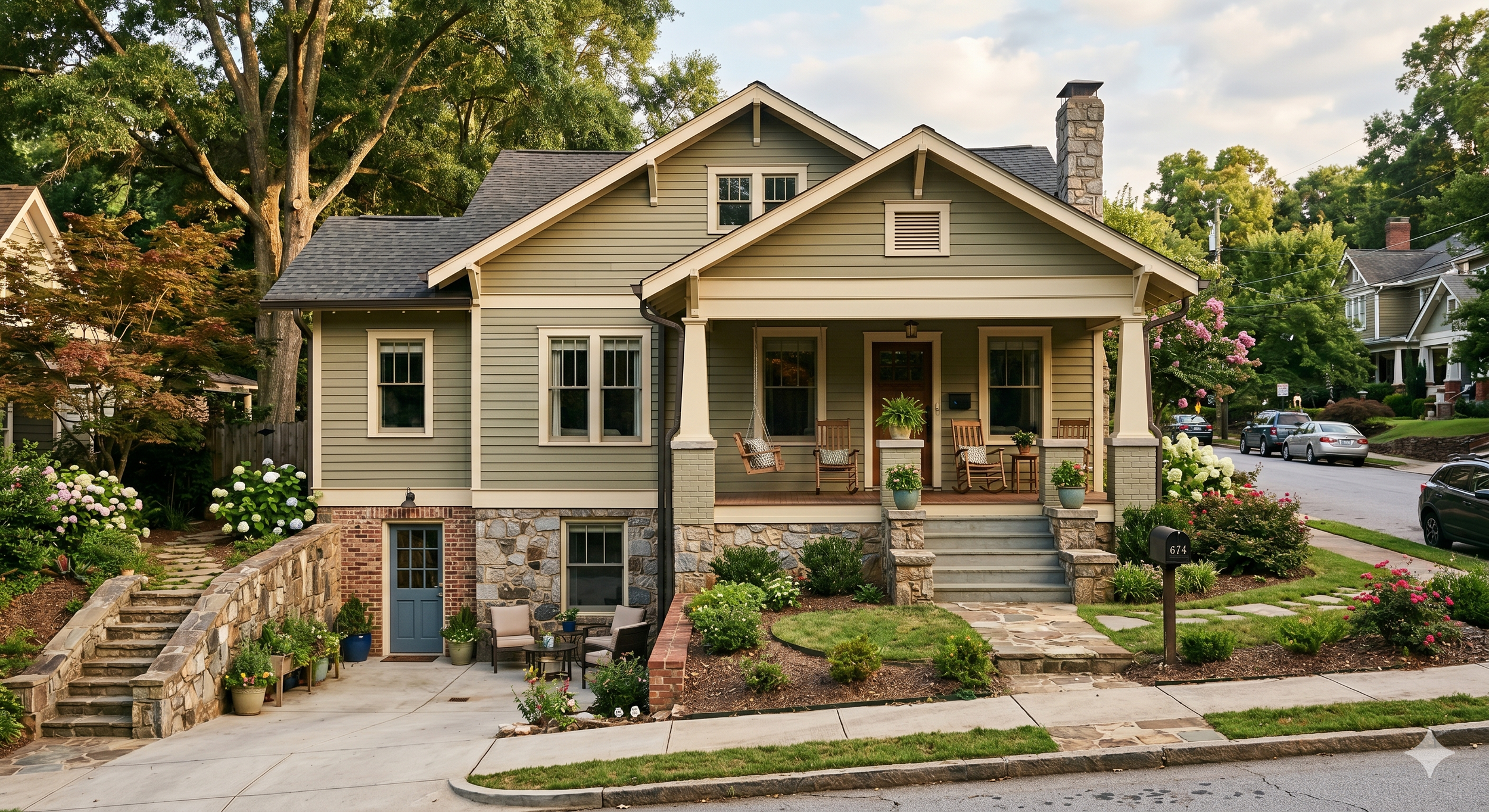
This is the deepest and most affordable bucket in Metro Atlanta. We're talking about homes built between roughly 1955 and 1985 on slab-and-basement lots, where the basement is daylight or full walkout, and previous owners (or the original builders) finished the lower level with a kitchen, bathroom, and separate entrance.
These homes show up across DeKalb County, parts of Gwinnett, eastern Cobb, and South Fulton. The neighborhoods where I see the most consistent inventory:
Stone Mountain (DeKalb). Especially the Smoke Rise, Hidden Hills, and Spencers Mountain communities. Brick ranches with finished basements regularly show up in the $400,000 to $650,000 range, with some larger homes pushing higher.
Tucker (DeKalb). Mid-century ranches on generous lots, many with daylight basements. Sagamore Hills, Northlake, and the older sections off Lawrenceville Highway are worth searching.
Lithonia and Stonecrest (DeKalb). Larger lots, lower entry pricing, deep inventory of homes with second kitchens or rentable lower levels. Some of the strongest value plays for multigenerational buyers shopping under $400,000.
Belvedere Park and parts of unincorporated North Decatur (DeKalb). Renovated brick ranches with finished basements. Closer to Decatur, Emory, and the CDC, so prices climb accordingly.
Stockbridge (Henry County). Newer subdivisions and resale inventory both. A reliable hunting ground for buyers who want square footage and a basement under $500,000.
East Cobb and parts of Marietta. More expensive, but the inventory of homes with finished terrace levels is solid, especially in the Walton, Pope, and Lassiter school zones.
The advantage: cost per square foot is the most attractive in this bucket. The disadvantage: every basement is a unique situation. Some have legal second kitchens with permits on file. Some have plumbing roughed in but no permitted kitchen. Some have low ceilings, water issues, or shared HVAC that makes true separation difficult. I always walk these basements with a clear checklist, and I push buyers to get a thorough inspection that specifically addresses the lower-level systems.
Bucket 2: New Construction Multigen Floor Plans
Builders have responded to multigenerational demand with floor plans designed from the studs up to support two generations. Lennar's Next Gen homes are the most well-known: a primary residence plus an attached suite with its own entrance, kitchenette, bedroom, bathroom, and living area. Pulte, Toll Brothers, Traton, and Fischer Homes all have versions of the same concept under different names.
Where you find them in Metro Atlanta:
Forsyth County (Cumming and South Forsyth). Strong builder activity in this category. Communities like Hillshire offer multigenerational-friendly farmhouse plans with dual primary suites, three-car garages, and main-floor flex rooms. Pricing runs from the mid-$700,000s for new construction.
Cherokee County (Canton and Hickory Flat). Traton Homes builds multigenerational floor plans in Prescott Manor and Autumn Brook, with five-bedroom layouts and main-level guest suites. Pricing typically starts in the $600,000s.
West Cobb (Marietta). Oak Valley Estates by Traton Homes sits in the Hillgrove High School zone and offers the Presley plan: five bedrooms, four-and-a-half baths, a main-level guest suite with en-suite bath and walk-in closet, plus flexible loft space. Priced from the high-$600,000s into the $800,000s.
South Atlanta and Henry County. Lennar, Meritage, and D.R. Horton are all building in the Stockbridge, McDonough, College Park, and Hapeville areas with floor plans that include main-level bedrooms with private baths, bonus rooms, and flex spaces that can function as multigenerational suites. Entry pricing is more accessible here than in the northern suburbs, often starting in the high $300,000s.
The advantage: these homes are designed for multigenerational living. Sound separation, dual HVAC zones, separate entrances, and code-compliant kitchens are baked into the plan. The disadvantage: pricing is at a premium compared to resale, you're typically further from intown amenities, and HOA rules in some communities restrict how the space can actually be used (short-term rental restrictions are particularly common).
Bucket 3: City of Atlanta Homes with ADUs or ADU Potential
This is the bucket where intown buyers have real options, but only if you understand the zoning rules. The City of Atlanta allows accessory dwelling units (ADUs) by right in residential zoning districts R-4, R-4A, and R-5, which together cover more than 60% of Atlanta's residential land area according to local ADU specialists.
What that means in practice: if you buy a single-family home in a qualifying zone, you can legally build a detached ADU up to 750 square feet, or convert a basement or attached garage into an ADU. Per Atlanta's zoning code, ADUs require a building permit, must include full cooking facilities, must connect to sanitary sewer, and are subject to setback, height (20 feet for detached), and lot coverage rules.
Atlanta is also one of the few jurisdictions in the metro that does not require the property owner to live on-site for long-term ADU rentals, which makes Atlanta ADUs more flexible than equivalent units in Decatur or DeKalb County. Short-term rental rules are stricter and require owner occupancy, but for multigenerational buyers, that's usually not the use case.
Intown neighborhoods with strong ADU and in-law suite potential:
Kirkwood. Many of the historic homes have full basements, deep lots, and existing carriage houses or garage structures that can be converted. Zoning is largely R-4 and R-5.
East Atlanta. Brick ranches with finished basements show up regularly here. Zoning supports ADU construction across most of the neighborhood.
Grant Park. Older homes on deep lots, many already with carriage houses or alley-accessible structures. Zoning generally supports ADU additions.
Edgewood. Smaller homes on smaller lots, but ADU construction is permitted and increasingly common as the neighborhood gentrifies.
Reynoldstown and Cabbagetown. Tighter lots, but the zoning rules and lot patterns support detached ADUs in many cases.
East Lake and the City of Decatur. ADU rules are different in the City of Decatur. In some ways Decatur is actually more ADU-friendly than Atlanta: Decatur allows ADUs up to 800 square feet (1,000 if combined with a garage) versus Atlanta's 750 sq ft cap, permits up to two bedrooms, and allows ADUs across a wider range of zoning districts including some multi-family zones. The tradeoff: Decatur requires the property owner to live in either the main house or the ADU for at least eight months per year, verified by affidavit. Atlanta has no owner-occupancy requirement for long-term rentals. Buyers need to know which side of the city boundary they're on and which rules fit their plans.
The advantage: you get intown lifestyle with multigenerational flexibility, and ADUs add real, durable property value. The disadvantage: building an ADU is expensive ($80,000 to $250,000+ depending on type), permitting takes months, and not every lot works for it. Buyers should always verify zoning, setbacks, lot coverage limits, and tree protection requirements before assuming an ADU is feasible on a specific property.
For my buyers, the strongest play in this bucket is usually buying a home that already has a finished basement with a kitchenette or a detached structure that's already being used as living space, rather than buying a property with the intent to build an ADU later. The "build later" math rarely pencils out unless you're committed to staying long enough to amortize the construction cost.
That said, for buyers who do want to go the build route (or for current homeowners thinking about adding an ADU to a property they already own), I work directly with a custom Atlanta ADU builder. I can connect clients into a feasibility conversation early, before they buy a property they think will work and find out it doesn't. Lot grade, tree protection zones, sewer access, and FAR limits kill more ADU projects than zoning does, and those issues are easier to flag at the offer stage than after closing.
Bucket 4: Suburban Two-Story Homes with Main-Level Bedroom Suites
This is the bucket for families where the multigenerational element is primarily about accommodating an aging parent who doesn't want stairs, but doesn't need a fully separate apartment. These homes look like standard four- or five-bedroom suburban builds, but the floor plan includes a full bedroom and bathroom on the main level (separate from the primary suite) that functions as a parent's quarters.
I see these consistently in:
Lawrenceville and Suwanee (Gwinnett). Newer construction frequently includes main-level guest suites.
Cumming and South Forsyth. Builder inventory often features this layout.
Acworth, Kennesaw, and West Cobb. Two-story plans with main-floor in-law arrangements are standard in the $500,000 to $800,000 range.
Alpharetta and Milton. At higher price points, these floor plans are nearly standard.
Buford (Gwinnett). Newer subdivisions in the Buford City Schools zone consistently offer this layout.
The advantage: more inventory, more price flexibility, and often these homes can be found below true multigen-floorplan pricing. The disadvantage: there's no second kitchen, no separate entrance in most cases, and shared common space. For some families that's exactly right. For others it isn't enough separation.
Atlanta-Specific Considerations You Need to Understand
ADU Zoning Inside the City of Atlanta vs. Surrounding Jurisdictions
The City of Atlanta and the surrounding jurisdictions treat accessory dwelling units very differently, and the comparison is more nuanced than it gets credit for.
Inside Atlanta city limits, ADUs are by-right in R-4, R-4A, and R-5 zones. Detached units cap at 750 square feet, height at 20 feet. There is no owner-occupancy requirement for long-term rentals, which makes Atlanta unusually flexible for owners who want to use an ADU as ongoing rental income.
Inside the City of Decatur, ADUs are actually permitted across a wider range of zoning districts (R-85, R-60, R-50, RS-17, RM-18, RM-22, RM-43, and PO), and the size cap is more generous: up to 800 square feet, or up to 1,000 square feet when combined with a garage. ADUs can have up to two bedrooms. The catch is owner-occupancy: the property owner has to live in either the main house or the ADU for at least eight months per year, confirmed by affidavit. So Decatur is more permissive on size, bedrooms, and the range of districts where ADUs are allowed, but more restrictive on how the units can be used (you can't buy a Decatur property and rent both units to separate tenants long-term unless you live there too).
DeKalb County has its own framework. Recent ordinance updates allow backyard cottages and garage apartments in qualifying residential districts, with units capped at 900 square feet and 24 feet in height. Owner-occupancy requirements apply in most cases.
Forsyth County's code doesn't formally name ADUs but allows accessory uses in residential zones if they meet accessory-use standards. Cobb, Gwinnett, Henry, and Cherokee counties each have their own rules.
For buyers using the second unit primarily for multigenerational family living rather than rental income, owner-occupancy isn't a barrier (you're living there with family). For buyers planning to rent the ADU separately at some point, the City of Atlanta's lack of owner-occupancy requirement is unique in the metro and worth understanding. Always verify with the local jurisdiction before buying — and verify at the parcel level, because zoning lines run through neighborhoods in ways that aren't always intuitive.
School Zoning and Multigenerational Households
When grandparents are part of the household and providing childcare, school zoning becomes a real factor in the home search. Atlanta Public Schools, Fulton County Schools, DeKalb County Schools, City Schools of Decatur, Cobb County, Cherokee County, Gwinnett County, Forsyth County, and the various city school systems all have different attendance zone rules. A multigenerational home needs to work for the school-age children's enrollment, which means the address has to land in the right attendance zone.
Always verify school zoning by specific property address. Online maps lag, and zone lines change. Research and visit schools to determine fit for your family.
Property Taxes and Homestead Exemptions
Multigenerational households often involve aging parents who may qualify for senior homestead exemptions if the home is in their name (or partially in their name). Counties handle this differently. Forsyth County has one of the most generous senior exemption structures in the metro, with significant tax breaks for residents over 65. DeKalb, Fulton, Cobb, and Gwinnett all have their own senior exemption rules.
If your multigenerational structure involves a parent contributing to the down payment or owning a portion of the property, talk to a real estate attorney and a CPA before the purchase. The tax planning piece can save (or cost) thousands per year.
Permits, Code Compliance, and the "Unpermitted Second Kitchen" Problem
A real issue I run into: a basement has a fully built-out second kitchen, but no permits on file. The seller marketed it as an in-law suite, but the work was done DIY or by a previous owner without proper permitting. This is fixable, but it's a negotiation point and sometimes a financing complication. Lenders occasionally flag unpermitted work. Insurance companies sometimes won't cover damage in unpermitted spaces. Future appraisers may discount the square footage.
Always ask for permit history. Always have an inspection that specifically addresses the lower-level systems, including kitchen plumbing, electrical, and ventilation. If permits weren't pulled, factor in the cost and timeline of bringing the space into compliance.
The Best Metro Atlanta Neighborhoods for Multigenerational Homes, Ranked by Use Case
Different priorities point to different neighborhoods. Here's how I sort it:
For maximum value per square foot under $500K: Stone Mountain (DeKalb), Lithonia, Stonecrest, Stockbridge (Henry County), and parts of South DeKalb. Older brick ranches with finished basements are the play here. You're trading commute time for square footage and a true second living space.
For intown lifestyle with multigenerational flexibility: Kirkwood, East Atlanta, Grant Park, Edgewood, and East Lake inside the City of Atlanta. The ADU zoning rules support real flexibility. Pricing runs higher, but you're in walkable, transit-accessible neighborhoods with restaurants, parks, and the BeltLine.
For new construction multigen floor plans: Cumming and South Forsyth, Canton and Hickory Flat (Cherokee County), West Cobb, parts of Gwinnett (Lawrenceville, Buford, Suwanee), and Henry County. Builder inventory in this category is most concentrated in these areas.
For top-rated schools combined with multigen capacity: East Cobb (Walton, Pope, Lassiter zones), Johns Creek, Milton, parts of Alpharetta, City of Decatur (with the caveat that Decatur ADU rules are more restrictive), and Brookhaven. Pricing climbs into the $700,000s and above for the right combination.
For aging-in-place primary residence with grandparent suite: Newer construction in Lawrenceville, Suwanee, Cumming, Acworth, Kennesaw, and Buford that consistently includes main-level bedroom suites. The single-story functionality makes mobility easier as parents age.
For lake access and outdoor lifestyle: Buford (Lake Lanier), Cumming (Lake Lanier), and parts of North Forsyth. Larger lots, more space between homes, and waterfront premium pricing in the right pockets.
Market Data on Multigenerational-Capable Homes in Metro Atlanta
I want to be honest: there's no clean MLS field for "multigenerational home." Buyers and agents use search filters like "in-law suite," "second kitchen," "finished basement," "guest suite," and "ADU" to approximate the inventory. These searches return overlapping but not identical results, and the data quality varies.
What I can tell you from working in this market:
Inventory is tighter than buyers expect. A search for homes with true second kitchens and separate entrances under $500,000 in Metro Atlanta typically returns 50 to 150 active listings on any given week. That's not a deep pool. The number drops significantly if you're filtering to specific school districts or commute zones.
Days on market are shorter than the broader market. Multigenerational-capable homes sell faster than equivalent-square-footage single-family homes without the second living space. The buyer pool is smaller, but the pool that wants this specific feature is highly motivated.
Pricing premium is real but not huge. A finished basement with a permitted second kitchen and separate entrance typically adds 5% to 12% to the home's value compared to the same home with an unfinished basement, depending on quality and location. The Lennar Next Gen and equivalent purpose-built multigen homes carry a higher premium, but you're also getting more total square footage and dual functionality from the original build.
New construction multigen floor plans are not on every site. Builders rotate the plans through different communities. If you want a Lennar Next Gen specifically, you may need to wait for the right release in the right community, or look at resale Next Gen homes from previous phases.
For current pricing in any specific neighborhood, reach out and I'll pull the most recent comparable sales. Numbers change quickly and broad averages don't capture what's happening at the street level.
What to Look for When Touring Multigenerational Homes
A checklist I run through with every client touring this category:
Two functional kitchens, or one full plus a real kitchenette? A microwave and a mini-fridge isn't a kitchen. A code-compliant second kitchen has a stove or cooktop, a sink, counter space, and proper ventilation.
Separate entrance? Can the second household come and go without walking through the primary living space? In a basement setup, is there a walk-out door or just interior stair access?
Sound separation? Older basements often have minimal soundproofing between floors. Walk the home with the upstairs HVAC running and listen.
HVAC zoning? Single-zone HVAC with one thermostat for both living spaces is a recipe for conflict. Look for separate zones or at minimum the ability to retrofit them.
Laundry? Is there a way for both households to do laundry independently, or is everyone sharing a single laundry room?
Stairs and accessibility? If an aging parent is part of the household, can the second living space be reached without stairs? Are there grab bars in the bathroom, or room to add them? Are the doorways wide enough for mobility aids if needed later?
Permit history? Were the basement finish, second kitchen, and any modifications properly permitted?
Privacy in shared outdoor space? Is the backyard configured so both households can use it, or does one party have to walk through the other's space?
Parking? Two households often means more cars. Is there adequate driveway and street parking?
Utilities? Are utilities shared on one bill, or is there sub-metering? For families splitting expenses, sub-metering matters.
I walk every showing with this checklist in hand. It exposes problems that don't show up in photos.
Frequently Asked Questions
What's the best Metro Atlanta neighborhood for multigenerational homes under $400,000?
Stone Mountain, Lithonia, Stonecrest, parts of South DeKalb, and Stockbridge. Older brick ranches with finished basements show up consistently in this price range, and many include a full second kitchen on the lower level. Tucker also has options at the upper end of this budget. You're trading some commute time and certain school zone considerations for substantially more square footage and a true second living space.
Are there new construction multigenerational homes in Metro Atlanta?
Yes. Lennar builds Next Gen homes throughout the metro, primarily in Forsyth, Cherokee, Gwinnett, Cobb, and Henry Counties. Traton Homes offers multigenerational floor plans in West Cobb and Cherokee County communities. Pulte, Toll Brothers, Fischer Homes, and Meritage all have versions. Pricing typically starts in the high-$300,000s for South Metro communities and climbs into the $800,000s and above for premium North Metro locations.
Can I build an ADU on my Metro Atlanta property?
It depends on your jurisdiction and zoning. Inside the City of Atlanta, ADUs are permitted by right in R-4, R-4A, and R-5 zoning districts, with detached units capped at 750 square feet. Inside the City of Decatur, ADUs are permitted across more districts with units up to 800 square feet (or 1,000 if combined with a garage), but owner-occupancy is required. DeKalb, Cobb, Gwinnett, Forsyth, and Henry each have their own framework. Always verify your specific property's zoning, lot grade, tree protection zones, and sewer access before assuming an ADU is feasible. I work directly with a custom Atlanta ADU builder, so I can pull clients into a feasibility conversation early, whether you're buying a property and want to confirm an ADU is buildable on the lot before you make an offer, or you already own and are thinking about adding one. Getting that read before closing saves the most expensive kind of mistake.
What's the difference between an in-law suite and an ADU?
An in-law suite is typically an attached living space within the main home (often a finished basement or main-level suite) with bedroom, bathroom, and sometimes a kitchenette. It shares the home's overall footprint and utilities. An accessory dwelling unit (ADU) is a separate, self-contained dwelling, either attached or detached, with its own kitchen, bathroom, and living space. ADUs are governed by specific zoning rules; in-law suites generally aren't. The legal and tax implications differ.
Do multigenerational homes hold their value in Metro Atlanta?
Yes, and demand has been strengthening. Pew Research Center data shows multigenerational living has roughly tripled since 1971, and the trend is continuing. In Metro Atlanta specifically, the buyer pool that actively wants this configuration has grown faster than the inventory pool. Resale times for true multigenerational homes are typically shorter than for equivalent single-family homes without the second living space.
Which Metro Atlanta jurisdictions are most ADU-friendly?
It depends on what you mean by friendly. The City of Atlanta is the most flexible on use: ADUs can be rented long-term without owner-occupancy. The City of Decatur is actually more permissive on size and zoning breadth (800 sq ft cap, up to 1,000 sq ft with garage, up to two bedrooms, and ADUs allowed across more zoning districts including some multi-family zones), but Decatur requires the owner to live in either the main house or the ADU for at least eight months annually. DeKalb County allows ADUs up to 900 sq ft with owner-occupancy requirements. If you're buying primarily for multigenerational family living, owner-occupancy isn't a barrier. If you're buying with the intent to rent the ADU separately as income while living elsewhere, the City of Atlanta is the only jurisdiction in the metro that makes that easy. Always verify at the parcel level.
Can a basement in-law suite be a separate rental unit legally?
Sometimes, but usually only if it was permitted as a separate dwelling unit at construction, and only in zoning districts that allow it. In the City of Atlanta, a permitted basement ADU in an R-4, R-4A, or R-5 zone can be rented. In most surrounding counties, basement in-law suites are accessory uses that can't be rented separately as their own unit. Always verify before assuming you can rent the lower level.
What should I look for in a multigenerational home inspection?
Beyond the standard inspection, ask the inspector to specifically address: lower-level moisture and waterproofing, basement HVAC capacity and zoning, second kitchen plumbing and electrical, second bathroom venting, separate-entrance door and window code compliance, and whether any visible work appears unpermitted. Permit research at the county or city building department is also worth the extra effort.
Are there schools in Metro Atlanta that specifically work well for multigenerational families with grandparents providing childcare?
School quality is highly individual to each family's needs and isn't tied to multigenerational household structure. Research and visit schools to determine fit for your family. What I'd say is that geographic stability matters when grandparents are part of the daily routine. Choosing a neighborhood you plan to stay in for the long term lets the kids stay in one school system through completion, which is often a goal when grandparents are providing daily care.
How do I find multigenerational homes that aren't actively marketed as such?
This is what I do every day. The MLS doesn't have a "multigenerational" filter, so I cross-reference search criteria (finished basement, square footage range, second kitchen, in-law suite keywords in the description) with my knowledge of which neighborhoods, builders, and floor plans actually deliver the function you need. Plenty of homes that work for multigenerational living aren't tagged that way in the listing. Plenty of listings that use the language don't actually deliver. Working with an agent who knows the inventory at the floor plan level saves significant time.
Is buying a multigenerational home a good investment if my situation might change?
It can be, especially in jurisdictions where the second unit can be legally rented if family circumstances change. In the City of Atlanta with a permitted ADU, you have flexibility. In suburban jurisdictions, the second unit is usually only legal as accessory family housing, not as a separate rental. The home itself still typically holds value well, but the income optionality varies. Plan for the use case you actually have, and don't overpay for optionality that may not exist legally.
What's the price premium for a Lennar Next Gen home compared to an equivalent standard plan?
In the same community, the Next Gen plan typically prices $30,000 to $80,000 above the equivalent square-footage standard plan, depending on the community and the size of the suite. You're paying for the additional kitchen, separate entrance, additional HVAC zone, and the design specifically built around dual-generation living. For families that actually need the configuration, the premium is usually justified compared to retrofitting a standard home.
Are there Metro Atlanta condo or townhome options for multigenerational living?
Limited but they exist. Some larger townhomes in Decatur, Brookhaven, and parts of Sandy Springs have layouts with main-level bedroom suites that work for an aging parent who doesn't need a separate kitchen. Condo buildings rarely work for true multigenerational living because the units aren't typically large enough or configured with two separate living areas. For most multigenerational buyers, single-family is the right product.
I work with buyers throughout Metro Atlanta and know the multigenerational inventory in detail across counties, school zones, and budget ranges. If you're trying to bring extended family under one roof and you don't know where to start, let's talk.
Visit kristenjohnsonrealestate.com or reach out directly. Come as you are, come on home.
Looking for more Metro Atlanta neighborhood guides? I've covered intown neighborhoods like Kirkwood, Grant Park, East Atlanta, and the City of Decatur, suburban guides for East Cobb, Marietta, Smyrna, Buford, and Brookhaven, plus North Fulton coverage of Alpharetta, Milton, Roswell, and Johns Creek. Browse the full guide series at kristenjohnsonrealestate.com.