

Fix-and-Flip vs. Buy-and-Hold in Atlanta: Which Strategy Wins in the 2026 Market?
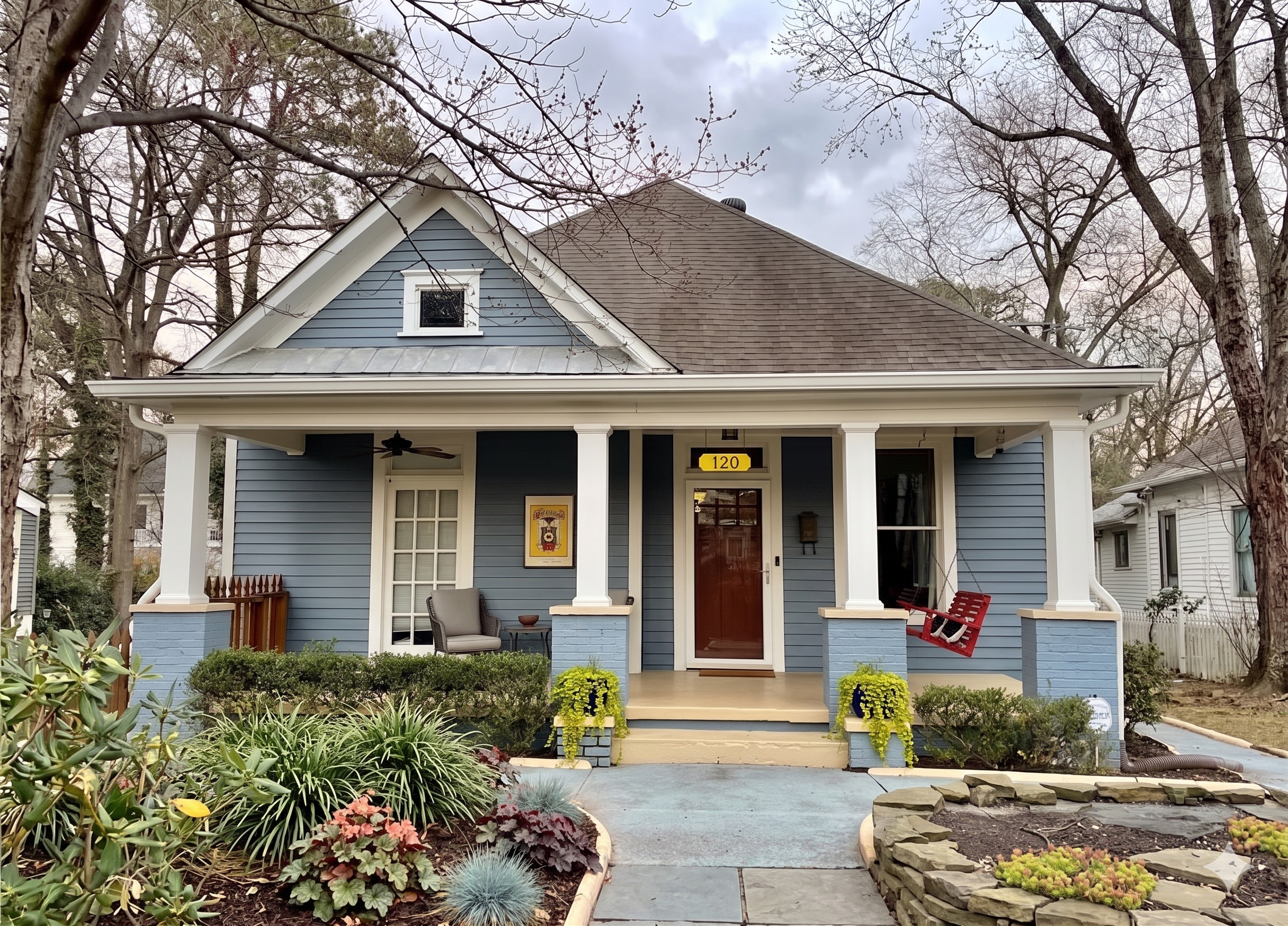
If you're an investor looking at Metro Atlanta in 2026, you're walking into one of the most active flip markets in the country and one of the most structurally sound rental markets in the Southeast at the same time. ATTOM ranks Atlanta third nationally for flip rate, with roughly 13.6% of all home sales here being flips. The Atlanta Regional Commission projects continued metro population growth of 65,000 to 70,000 new residents per year through 2030. Single-family rental inventory remains structurally tight. Both strategies have real footing here, which is exactly why the question gets confusing.
I work with investors across Metro Atlanta, from first-time buyers picking up a duplex in East Point to seasoned operators running portfolios across South Fulton, the Westside, and the southern suburbs. The honest answer to "fix-and-flip or buy-and-hold" is that the strategy follows the capital, the timeline, and the operator. It does not follow the trend.
Nearly a decade in this market means I've watched investors win big on both sides and lose money on both sides, and the difference almost always comes down to whether they understood what they were actually buying.
Here's what you need to know.
The Atlanta Investor Market in 2026: The Setup
Before we compare strategies, you need the macro picture, because national headlines do not describe what's happening here.
National flip ROI dropped to 23.1% in Q3 2025 according to ATTOM, the lowest since 2008. That number gets quoted in every investor article, and it's accurate at the national level. But Atlanta is not the national average. Atlanta is one of the most active flip markets in the country by volume, with a flip rate nearly double what cities like Seattle and Pittsburgh post. High volume cuts both ways: more deal flow, more competition, more lender familiarity, but also tighter margins on the obvious plays.
On the rental side, Metro Atlanta median rent for a single-family home sits in the $1,750 to $1,900 range as of early 2026, with workforce housing in the $1,200 to $1,800 band showing the deepest tenant pool. Apartment supply has surged after years of heavy construction, which has pushed Class A apartment rents flat or slightly negative. But single-family rentals in the core submarkets remain in tight supply, and rent growth in that segment is projected at 2 to 4% in 2026.
Mortgage rates as of early 2026 are running 5.85% on a 30-year fixed in Georgia, materially higher than pandemic-era lows but moderating compared to the 7%+ stretch in 2023 and 2024. Insurance costs across Georgia have climbed 20 to 40% for some investor portfolios. Property tax reassessments in Fulton, DeKalb, and Cobb are biting into operating budgets.
Both strategies are working. Neither is on autopilot. Here's the breakdown.
What Fix-and-Flip Actually Looks Like in Atlanta
Fix-and-flip is short. You buy distressed or undervalued, you renovate, you sell. The capital cycle runs 90 to 180 days for a clean operator, sometimes longer for heavier rehabs. The thesis is simple: capture the spread between acquisition cost plus rehab plus carrying costs, and the after-repair value (ARV).
In Metro Atlanta, the deals that work in 2026 share a few traits.
Acquisition price band matters more than ever. ATTOM data shows the $100,000 to $200,000 acquisition band delivers the highest gross ROI nationally, around 31%. In Atlanta, that price band shows up in specific submarkets: parts of the Southwest, South Atlanta, Lithonia, Stone Mountain, parts of East Point, and pockets of South Fulton. Inside the Perimeter, the obvious flip plays in Old Fourth Ward, Kirkwood, Reynoldstown, and the Westside have largely been priced through. The neighborhoods where flippers made 70 to 100% returns from 2018 to 2022 are now fully gentrified or close to it. The next wave, including Grove Park, parts of West End, and the southwest corridor near Westside Park, is where investor activity is concentrating.
Speed kills holding costs. A typical Atlanta flip in 2026 sits on a hard money loan at 9 to 12% interest, plus property taxes, insurance, utilities, and HOA where applicable. Carrying costs on a $250,000 acquisition with $75,000 in rehab can run $3,500 to $5,000 per month all-in. Every month past your 120-day target eats into the spread. Atlanta's average days-to-flip nationally is around 164 days, and that's a number you have to beat to make the math work.
ARV discipline is non-negotiable. Professional flippers in this market are buying at roughly 66% of ARV after rehab. That equity cushion is what protects the deal when the comp set softens, when an inspection issue surfaces, when the buyer pool thins out at your list price. If you're buying at 75 to 80% of ARV with no margin for surprise, you're betting on a market that doesn't exist anymore.
The buyer pool has shifted. First-time buyers using FHA, VA, and down payment assistance now make up a meaningful share of the under-$400,000 buyer pool in Metro Atlanta. That's a positive for flippers who price right and present clean, FHA-eligible properties. It's a negative for flippers who cut corners on inspections-killers like roof, HVAC, electrical, plumbing, and foundation.
The realistic 2026 Atlanta flip scenario for a $250,000 acquisition, $80,000 rehab, $400,000 ARV, with 120-day timeline:
Total project basis: roughly $355,000 to $365,000 including closing, holding, and selling costs
Gross profit at $400,000 sale: $35,000 to $45,000
Gross ROI on cash invested: 25 to 35% range, depending on financing structure
That's a working flip in 2026 Atlanta. Not the 60% returns of 2016. Not the disasters some markets are seeing. Real money for a competent operator with a clean scope.
Where flippers are getting hurt
Three patterns I see consistently:
The first is buying too high. The deal looks fine on paper at 75% of ARV, then the comps soften 5 to 8% during the rehab window, and now the deal is underwater. Atlanta intown comps have shown soft spots in 2025 and into 2026, particularly in the $600,000+ price band where buyer hesitation is more pronounced.
The second is over-improving. A $400,000 ARV neighborhood does not support $600,000 finishes. I see investors put quartz waterfall counters and Wolf appliances into homes where buyers are using FHA loans and need the price to land at $385,000. Match the rehab to the buyer pool, not to your Pinterest board.
The third is underestimating timeline. Permits in the City of Atlanta can take 60 to 90 days for substantive work. DeKalb and Fulton county permits run faster but still require buffer. Cobb is the fastest of the major counties for residential permitting. If your pro forma assumes a 30-day permit turnaround, you don't have a pro forma. You have a hope.
What Buy-and-Hold Actually Looks Like in Atlanta
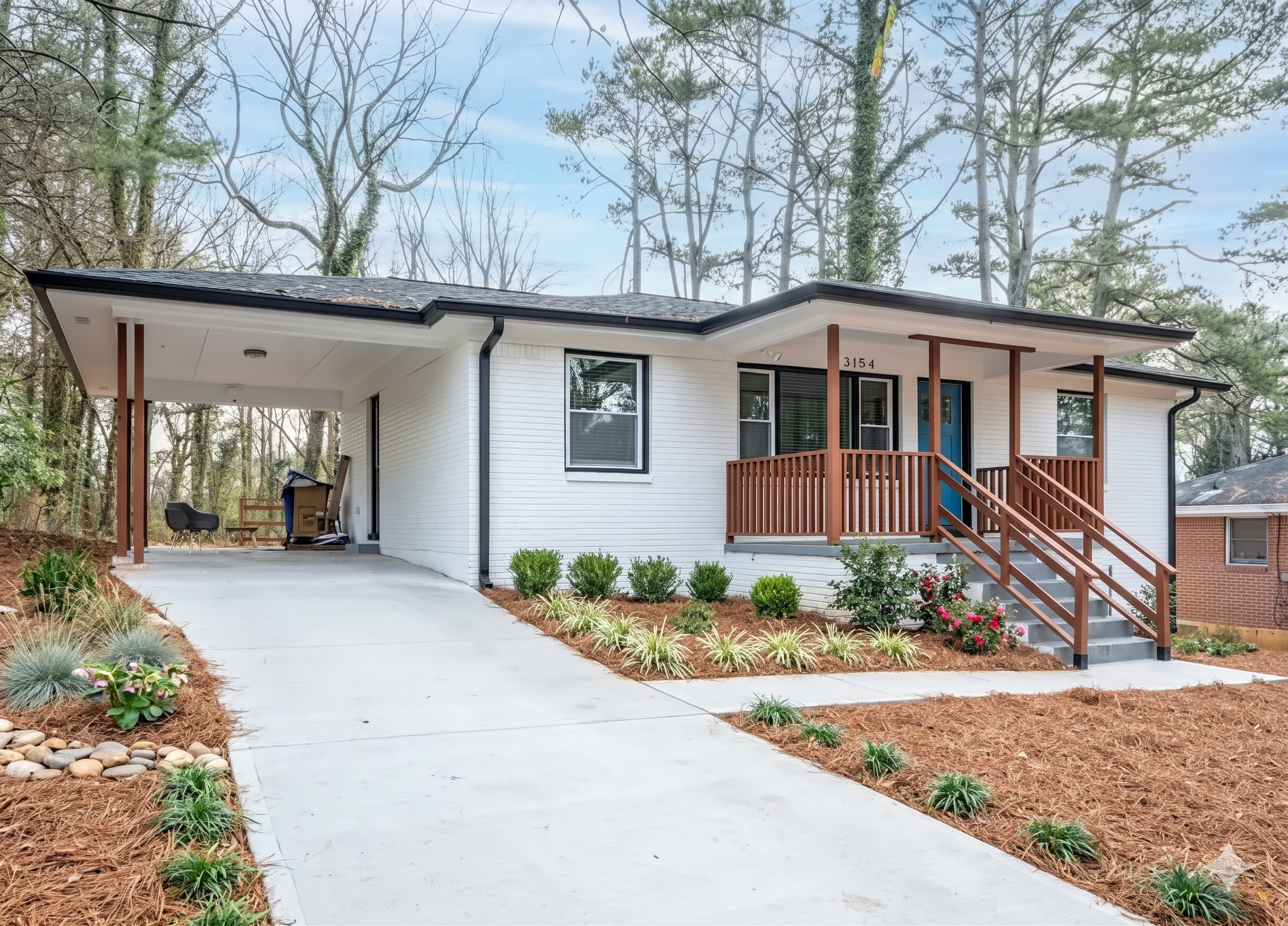
Buy-and-hold is the long game. You buy, you rent, you hold. The capital cycle runs 5, 10, 20 years or more. The thesis is rental cash flow plus principal paydown plus appreciation plus tax advantages, compounded over time.
The mechanics in Metro Atlanta in 2026 are different from the flip math.
Cap rates and cash-on-cash returns have compressed. Multifamily cap rates on Class B properties in Atlanta sit around 4.92%. Class C runs 5.38%. Single-family rentals in the core investor submarkets show gross yields in the 5 to 6% range. After expenses, financing, vacancy, and capex reserves, cash-on-cash returns on a leveraged SFR purchase in Atlanta in 2026 typically run 3 to 7% in year one, depending on the submarket and the operator.
If those numbers look thin compared to the flip ROI numbers, they should. They're different math measuring different things. The flip ROI is annualized over 120 days. The cash-on-cash return is annual, every year, with appreciation and equity buildup running underneath it.
Submarket selection drives the entire return. The South Fulton corridor remains the strongest rent-to-price story in Metro Atlanta, with median home prices in the $200,000 to $280,000 range supporting rents of $1,500 to $1,800. East Point continues to attract investors priced out of intown, with MARTA access, charming Craftsman housing stock, and infill development driving long-term appreciation. Stockbridge and McDonough in the southern metro, plus parts of Lithonia and Stone Mountain in DeKalb, offer purpose-built single-family rental opportunities and value-add plays on existing housing stock.
Inside the Perimeter, the calculation is different. Buying a $700,000 Reynoldstown bungalow that rents for $3,200 a month is not a cash-flow play. It's an appreciation play on one of the most desirable BeltLine-adjacent submarkets in the city, supported by tenant quality and stability. Both can work, but you have to know which one you're running.
Class B workforce housing is the deepest, safest tenant pool. The $1,200 to $1,800 monthly rent band has the broadest tenant base in Metro Atlanta. Tenant turnover in this band tends to be lower than in luxury rentals, vacancy is more predictable, and the pool of qualified applicants is larger. Class A luxury apartments are facing concession pressure from new supply. Class C properties carry higher maintenance and management overhead. Class B is the sweet spot for most SFR investors entering this market.
Section 8 is a viable strategy. The Atlanta Housing Authority and surrounding county housing authorities (DeKalb, Clayton, Cobb) administer significant voucher programs. Payment standards vary by county but generally range from $1,200 to $1,600 for a 3-bedroom, which is competitive with market rents in OTP suburbs. Inspections are rigorous, but voucher tenants tend to be stable, and the rent payment is guaranteed. Investors who structure for Section 8 from the beginning, including making sure properties pass inspection on first pass, can underwrite to a more predictable yield.
Insurance and tax escalation will eat your pro forma. If you're underwriting a Metro Atlanta SFR purchase using last year's insurance quote and the previous owner's tax bill, you're already wrong. Build in 5 to 8% annual expense increases for taxes and insurance. Get insurance quotes on the actual property before closing, not assumptions. Property tax reassessments after sale can add hundreds per month in DeKalb, Fulton, and Cobb.
The realistic 2026 Atlanta buy-and-hold scenario for a $275,000 South Fulton SFR purchase, 25% down, 30-year DSCR loan at 7.5%, $1,750 monthly rent:
Monthly principal and interest: roughly $1,440
Monthly taxes, insurance, HOA, capex, vacancy reserve: $550 to $650
Net cash flow: $50 to $200 per month in year one
Cash-on-cash return: 1 to 4% in year one, expanding with rent growth
That looks underwhelming until you add the components the cap rate doesn't show: principal paydown of roughly $200 per month in year one (rising over time), tax depreciation of roughly $7,500 to $9,000 per year offsetting passive income, and equity appreciation that, even at conservative 2 to 3% annual appreciation, adds $5,500 to $8,250 per year to your position.
Compounded over 10 years, that "underwhelming" return is meaningfully larger than it looks in year one. The flip closes in 120 days. The buy-and-hold pays you for the next 30.
Where buy-and-hold investors are getting hurt
Three patterns I see consistently:
The first is buying for appreciation only. If the property doesn't cash flow at acquisition, you're betting that rents will rise faster than your costs. In a metro where insurance is up 30% and tax reassessments are climbing, that's a dangerous bet. Buy where the numbers work today, with appreciation as a bonus.
The second is underestimating management. Self-managing one rental from across town is workable. Self-managing five rentals across South Fulton, East Point, and Stockbridge while holding a full-time job is not. Property management runs 8 to 10% of gross rents in Atlanta, and that line item belongs in the pro forma from day one.
The third is buying the wrong unit count for the strategy. Section 8 and workforce housing tenants want 3-bedroom, 2-bathroom homes with a yard. If you buy a renovated 1-bedroom in West Midtown for $385,000 and try to rent it for $2,100, you've narrowed your tenant pool to a specific renter profile that competes directly with new luxury apartment construction. Match the unit to the strategy.
The Honest Comparison
Here's the side-by-side, with the assumptions named clearly.
Capital intensity: Flips require more cash relative to the deal size because of higher down payments on hard money (typically 10 to 20% of purchase plus rehab), interest reserves, and renovation capital. Buy-and-hold using DSCR or conventional investment financing typically requires 20 to 25% down with no rehab capital needed. A $300,000 buy-and-hold purchase needs $75,000 to $90,000 to close. A $300,000 flip with $75,000 in rehab might need $100,000 to $150,000 in cash to control the deal.
Time commitment: Flips are time-intensive in concentrated bursts. You're managing contractors, inspections, draws, design decisions, and a sale process. Buy-and-hold is time-intensive at acquisition and tenant turnover, then minimal during the hold. If your time is your scarce resource, factor that.
Risk profile: Flip risk is concentrated in a 90 to 180 day window, exposed to comp softening, contractor problems, and buyer pool changes. Buy-and-hold risk is diffused across years, exposed to vacancy, capex surprises, regulatory changes, and slow appreciation. Different risks, not less risk.
Tax treatment: Flips are ordinary income, taxed at your marginal rate, plus self-employment tax in many cases. Buy-and-hold is typically passive income offset by depreciation, with capital gains treatment on sale and 1031 exchange options for deferring gains. Tax efficiency tilts hard toward buy-and-hold, particularly for high-income investors. This is a conversation for your CPA, not a blog post, but the structural difference is real.
Liquidity: Flips return capital quickly. Buy-and-hold ties capital up for years, with refinancing, HELOC, or sale as exit options. If your investment horizon is short or your capital is borrowed at high cost, flip cycles return cash faster.
Scale: Buy-and-hold scales through portfolio growth. Each property compounds. Flip scale requires constant deal flow, and most flippers plateau at the deal volume their team and capital can support. The investors I see building real long-term wealth in Atlanta are buy-and-hold operators with 8, 12, 20+ doors. The investors I see making the most cash in any given year are active flippers running 4 to 8 deals annually.
Which Strategy Wins in Atlanta in 2026
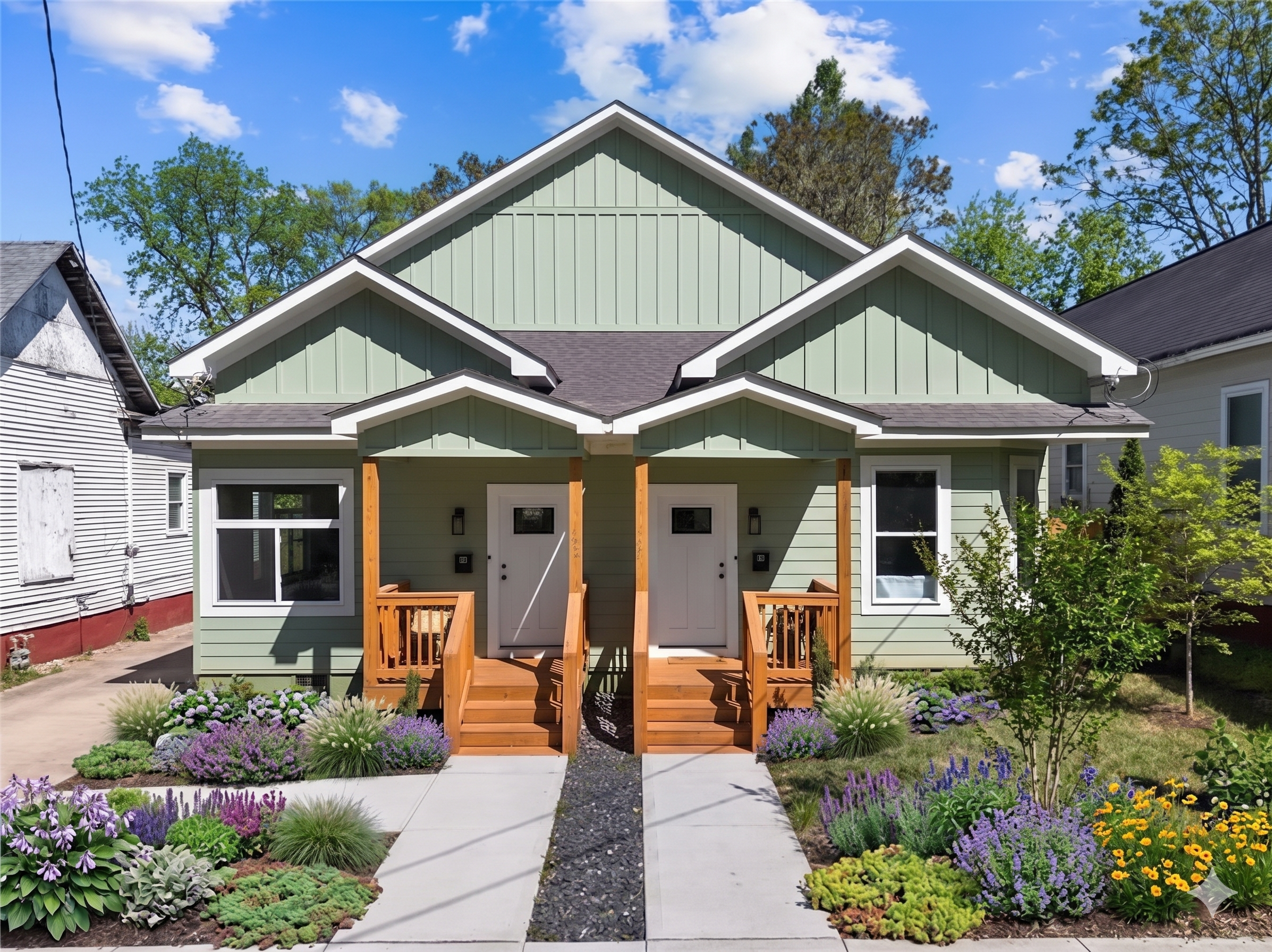
Neither strategy "wins" in the abstract. The strategy that wins is the one matched to your situation, your capital, your time horizon, and your operational capacity.
Fix-and-flip wins for you if:
You have $100,000+ in liquid capital and access to hard money
You have or can build a reliable contractor team
You can underwrite acquisition discipline (not buying at 75%+ of ARV)
You have time to actively manage the project and the sale
You want shorter capital cycles and faster cash conversion
You accept ordinary income tax treatment
Buy-and-hold wins for you if:
You have $75,000+ for a down payment and reserves
You're building wealth over 10, 20, 30 years rather than chasing annual income
You want tax-advantaged passive income with depreciation benefits
You can underwrite for cash flow at acquisition, not future appreciation
You're prepared to manage a tenant relationship or pay a property manager
You want compounding through principal paydown and appreciation
Hybrid strategies are working in Atlanta in 2026. The BRRRR approach (buy, rehab, rent, refinance, repeat) is one of the most effective for investors who want to combine the value-add upside of a flip with the long-term yield of a hold. Buy distressed at 70 to 75% of ARV, renovate, lease at market rent, refinance into a DSCR loan to pull most of your capital back out, then repeat. Done well, BRRRR lets you build a portfolio with limited capital recycled across multiple deals. Done poorly, it leaves you with cash trapped in a property that won't appraise for the refinance.
The other hybrid is the flip-to-rental fallback. If your flip doesn't sell on time, you have the option to convert it to a rental. This is one of the underrated advantages of flipping in Atlanta specifically: rents are deep enough that most renovated SFR product can lease in 30 to 45 days at a rate that covers the carry on a refinanced DSCR loan. That optionality is real money during soft sales periods.
How I Work With Atlanta Investors
I work with investors at every level, from first-time buyers picking up a small multi-family for owner-occupied house hacking, to seasoned operators building 20+ door portfolios across the Southside and South Fulton. The work I do is different from working with primary-residence buyers.
For acquisition, I focus on submarket selection, pro forma stress-testing, and identifying deals that match the investor's strategy and risk tolerance. I have deep familiarity with the South Fulton, East Point, Lithonia, Stockbridge, and Westside corridors where most active investor activity is happening. Inside the Perimeter, I work with investors targeting BeltLine-adjacent buy-and-hold positions and Westside flip opportunities, knowing the comp dynamics in each micro-neighborhood.
I work with investors on disposition too. Listing strategy for a flipped property is materially different from listing a primary residence. Pricing relative to ARV, staging for the right buyer pool, FHA-eligibility prep, and timing the listing for maximum competition all matter. I price flips to sell, not to sit.
If you're evaluating Metro Atlanta for your next deal or your first deal, the conversation starts with your strategy and your capital, not with a property address. We work backward from your goals.
Frequently Asked Questions
What's the average ROI on a fix-and-flip in Atlanta in 2026?
Realistic gross ROI for a competent Atlanta flip in 2026 runs 20 to 35% on cash invested for a 90 to 180 day project, depending on acquisition discipline, rehab scope, and submarket. National averages of 23.1% include underperforming markets that drag the number down. Atlanta operators with disciplined acquisition and clean execution can run higher. Operators who overpay or over-rehab can run negative. Net ROI after taxes is materially lower because flip income is ordinary income.
What's a realistic cap rate on Atlanta rental property in 2026?
Single-family rentals in core investor submarkets show gross yields in the 5 to 6% range. After operating expenses, true cap rates on SFR in Metro Atlanta typically run 4 to 6%, with the higher end of that range in South Fulton, East Point, Lithonia, and parts of the southern metro. Class B multifamily cap rates are around 4.92%. Class C is around 5.38%. Cap rates compressed in early 2025 as buyer sentiment improved.
Which Atlanta neighborhoods are best for fix-and-flip?
The acquisition price band that pencils best is $150,000 to $300,000, which puts you in submarkets like Grove Park, parts of West End, Sylvan Hills, parts of Adair Park (though competition there is heavy), the southwest corridor near Westside Park, parts of East Point, Lithonia, and Stone Mountain. The intown neighborhoods that delivered 60 to 100% returns in the late 2010s, including Old Fourth Ward, Kirkwood, and Reynoldstown, are largely priced through. Margins there have compressed substantially.
Which Atlanta neighborhoods are best for buy-and-hold rentals?
South Fulton offers the strongest rent-to-price ratios in Metro Atlanta, with median prices in the $200,000s and rents of $1,500 to $1,800. East Point is appreciating steadily with strong tenant demand. Stockbridge and McDonough in the southern metro support purpose-built SFR. Inside the Perimeter, BeltLine-adjacent neighborhoods like Reynoldstown, Old Fourth Ward, and East Atlanta support strong tenant quality and stability, but they're appreciation plays, not cash flow plays at current prices.
How much capital do I need to start?
For a buy-and-hold, plan on 25% down plus closing costs plus 6 months of reserves. On a $275,000 South Fulton SFR, that's roughly $80,000 to $90,000 in cash to close clean. For a flip, plan on 10 to 20% down on hard money plus 100% of rehab capital plus interest reserves and contingency. On a $250,000 acquisition with $75,000 rehab, that's $100,000 to $150,000 in cash to control the deal.
What about BRRRR in Atlanta?
BRRRR works in Atlanta in 2026, but the math is tighter than it was. The key constraint is the refinance appraisal. You need to buy distressed at a real discount, execute the rehab cleanly, and have the refinanced ARV come in at a number that lets you pull most of your capital back. Submarkets where the comps support BRRRR include South Fulton, East Point, Lithonia, parts of Decatur, and select Westside opportunities. The risk is buying at a price that requires aggressive ARV assumptions and finding the appraisal doesn't support the refinance.
What are typical hard money loan terms in Atlanta?
Hard money loans in Atlanta in 2026 typically run 9 to 12% interest, 1 to 3 points origination, with 12 to 18 month terms, interest-only payments, and balloon payoff at sale. LTC (loan-to-cost) ratios of 80 to 90% on purchase plus 100% of rehab are available for experienced operators. First-time flippers may face leverage reductions and higher rates. Beginner programs exist with high-leverage terms for borrowers with strong credit but no track record.
How does Section 8 work for Atlanta SFR investors?
Section 8 voucher tenants come from the Atlanta Housing Authority or surrounding county authorities (DeKalb, Clayton, Cobb, Fulton). Payment standards generally run $1,200 to $1,600 for a 3-bedroom, varying by county and ZIP code. The application and inspection process takes 2 to 6 weeks. Inspections require working smoke detectors, GFCI outlets in kitchens and bathrooms, secure handrails, and exterior maintenance. Properties that pass on first inspection save weeks of vacancy. Section 8 tenants tend to be stable, and the housing portion of rent is paid directly by the housing authority.
What's the realistic timeline for a flip from purchase to sale?
Cleanest case: 90 days. Realistic case: 120 to 150 days. Difficult case: 180+ days. Permits in the City of Atlanta can take 60 to 90 days for substantive work, which is the biggest variable in your timeline. DeKalb and Fulton county permits run faster. Cobb is the fastest. Material lead times on appliances, windows, and HVAC equipment can extend timelines. Build buffer into the pro forma.
How are insurance and property taxes affecting investor returns in 2026?
Property insurance costs in Georgia have increased 20 to 40% for many investor portfolios over the past 18 months. Property tax reassessments in Fulton, DeKalb, and Cobb after sale are adding meaningful operating expense to new acquisitions. Both lines need to be underwritten conservatively. Get actual insurance quotes on the property before closing. Pull the current tax assessment and model a likely reassessment after sale. Build in 5 to 8% annual escalation on both.
Should I form an LLC for my Atlanta investment property?
This is a conversation for your CPA and attorney, not a real estate agent, and the answer depends on your overall situation, financing structure, and liability profile. Many Atlanta investors hold rental property in single-purpose LLCs for liability protection. DSCR financing is generally available to LLCs. Conventional investment financing typically requires the property to be in your personal name. Plan the entity structure before you make offers, not after.
Can I house hack a multi-family in Atlanta?
Yes, and this is one of the most underrated entry strategies for first-time investors in Metro Atlanta. Buy a 2 to 4 unit property as your primary residence with FHA financing (3.5% down) or conventional owner-occupied financing (5 to 15% down), live in one unit, and rent the others. Atlanta has small multi-family inventory in pockets of East Atlanta, Reynoldstown, Kirkwood, parts of the Southside, and East Point. The math on a duplex or triplex with one unit owner-occupied can be very compelling, and you build investor experience with primary-residence financing terms.
When does it make sense to do a 1031 exchange?
When you've held a rental long enough to have meaningful capital gains and you want to roll those gains into a larger or different property without taking the tax hit. The 1031 exchange defers capital gains tax when you exchange one investment property for another like-kind property within specific timelines. This is one of the most powerful wealth-building tools in real estate. Talk to a 1031 qualified intermediary before listing your investment property if you're considering it.
Working With Me on Your Atlanta Investment Strategy
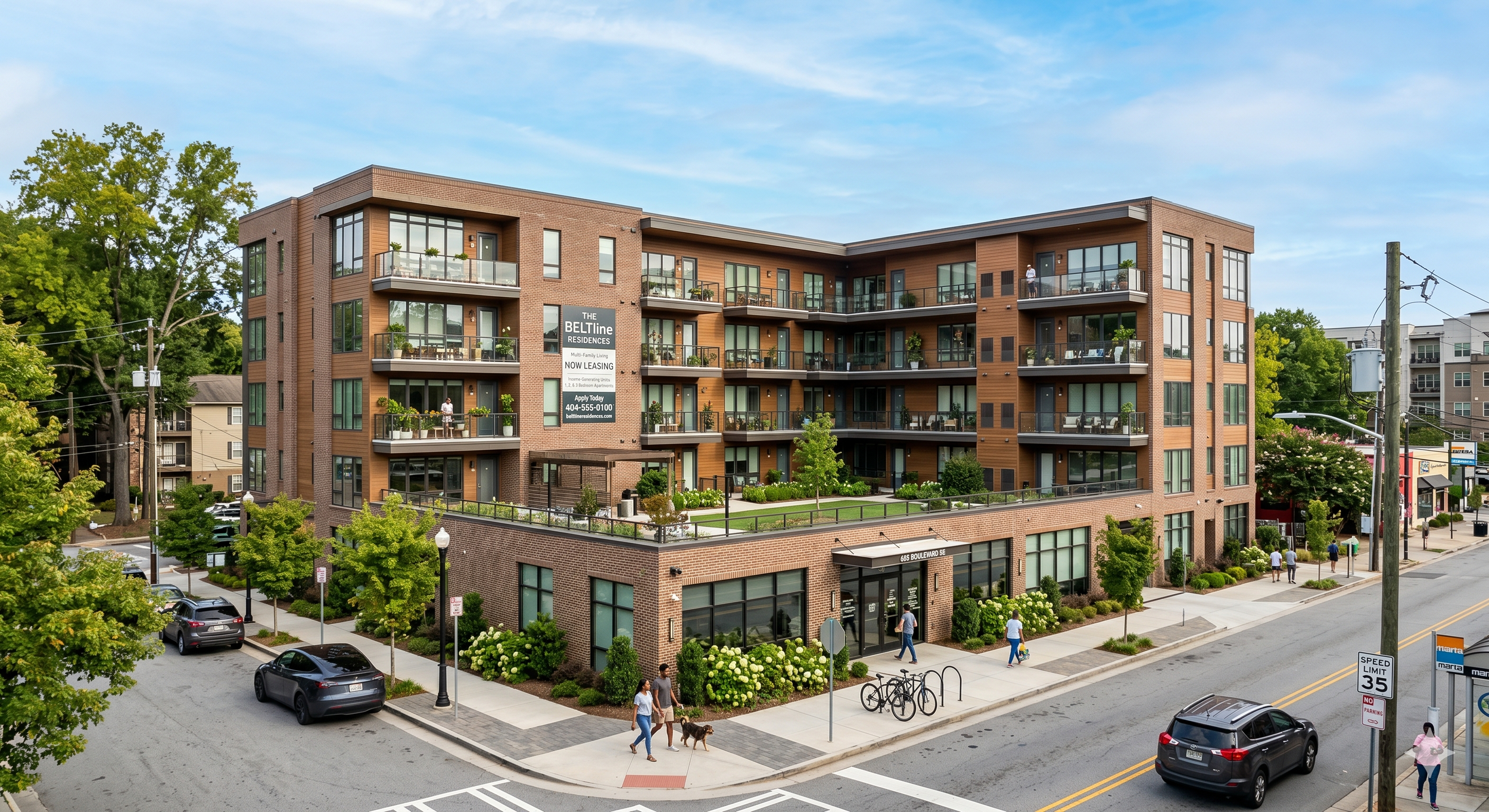
I work with investors at every level across Metro Atlanta, from first deals to mature portfolios. My approach is data-driven and direct: I'll tell you when a deal pencils and when it doesn't, when the strategy fits your capital and when it doesn't, and where the real opportunity sits in this market right now. If you're evaluating Atlanta for your next investment or your first one, let's talk.
Visit kristenjohnsonrealestate.com or reach out directly. Come as you are, come on home.
Looking for more Metro Atlanta investor and buyer guides? I've covered Southside investor neighborhoods including West End, Adair Park, Oakland City, and Summer Hill, plus intown buy-and-hold targets like Reynoldstown, Kirkwood, Old Fourth Ward, and East Atlanta. Browse the full guide series at kristenjohnsonrealestate.com.