

Living in Douglasville GA: West Metro Affordability, Sweetwater Creek & What Homes Cost in 2026
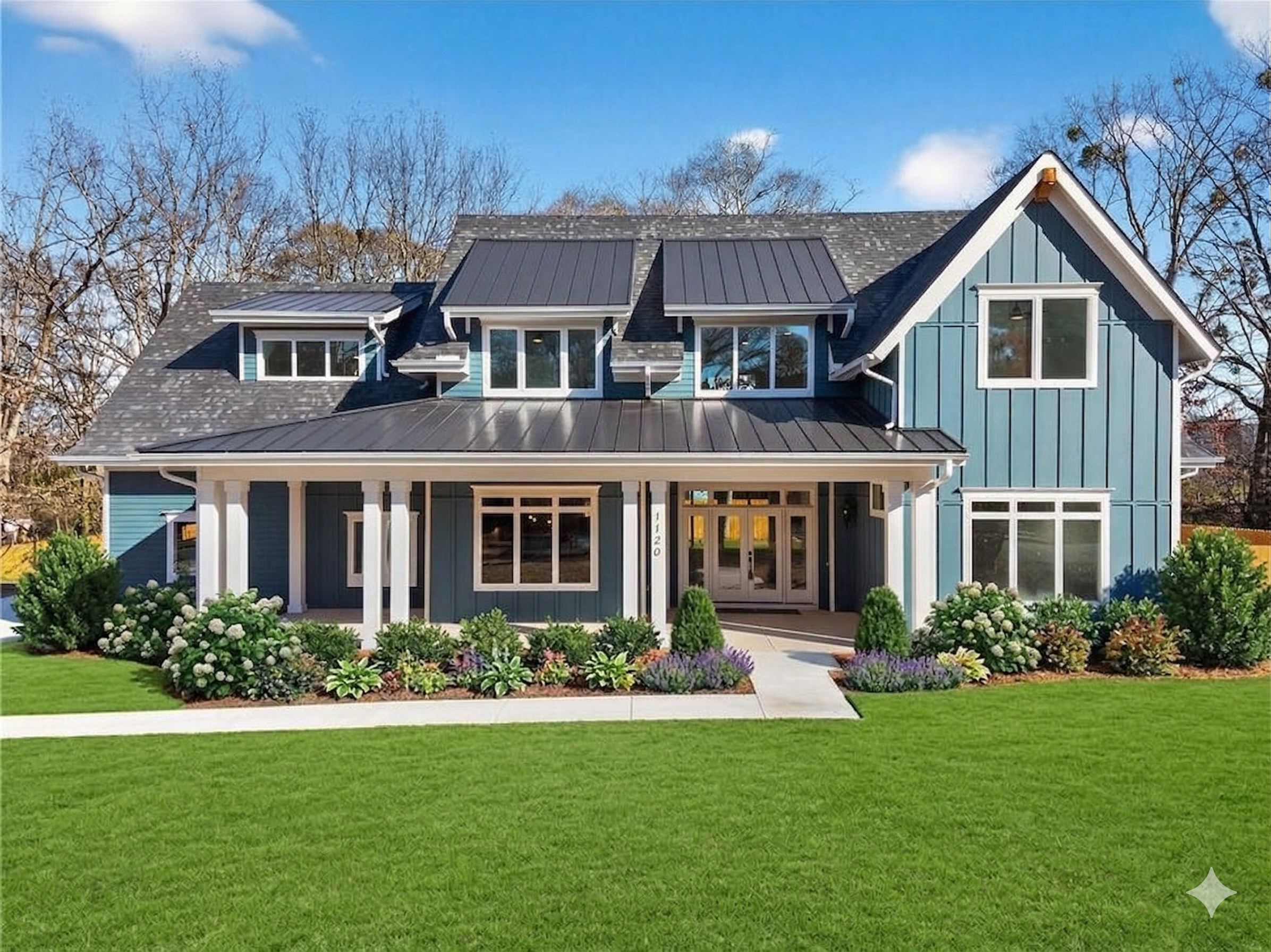
If you've watched the Atlanta market price you out of intown over the last five years and started looking west on I-20, Douglasville is usually the first place that makes the math work. It's roughly 22 miles west of downtown, a straight shot on the interstate, and the median sale price sits around $300,000 in a metro where the regional median is north of $375,000. That's the headline. The actual story is more layered.
Douglasville is a 100,000-plus-resident city that doubles as the county seat of Douglas County, which means you're getting both a real downtown with a historic square and the broader county footprint that stretches from Lithia Springs at the eastern Cobb/Fulton border out to the Paulding County line. Inside that footprint sits Sweetwater Creek State Park, the Civil War mill ruins that doubled as a Hunger Games filming location, the new $200 million Lionsgate Studios complex at Great Point Studios, an Arbor Place Mall corridor that pulls retail traffic from three counties, and a layer of master-planned subdivisions that look nothing like the older parts of town. People who lived in Douglasville fifteen years ago and haven't been back are going to be surprised.
I work with buyers across Metro Atlanta, including a lot of buyers who started intown and shifted west when affordability got real. Douglasville comes up constantly in those conversations.
Nearly a decade helping Atlanta buyers means I know what the numbers don't show: the difference between Highway 5/Bill Arp Road and Highway 92, what Lionsgate actually means for property values in the next five years, and the school zone and county tax line distinctions that change which subdivision you should be looking at. Douglas County is not Cobb County, and the parts of Douglasville near the Cobb line live very differently from the parts near Carroll.
Here's what you need to know.
What Is Douglasville, and Where Is It?
Douglasville is the largest city in Douglas County, located on the western edge of Metro Atlanta along the I-20 corridor. The city itself has around 36,000 residents inside the city limits, but most of what people call "Douglasville" is the broader 30134, 30135, and 30133 zip code footprint, which pushes the practical population well over 100,000.
Geographically, Douglasville sits about 22 to 25 miles west of downtown Atlanta, depending on where you're measuring from. To the east, you hit Lithia Springs and then cross into Cobb County around Six Flags Over Georgia. To the north and northeast, you're at the Cobb County line near Powder Springs and Austell. To the south, Chapel Hill Road takes you toward Carroll County and Villa Rica. To the west, you reach the Paulding County line.
The city is built around a historic downtown square anchored by O'Neal Plaza and the old Douglas County Courthouse. That downtown is on the National Register of Historic Places for its Victorian, Romanesque, and Queen Anne-style buildings, and it's been getting steady investment over the last five to seven years through the Town Green redevelopment. The two main commercial spines beyond downtown are Douglas Boulevard (where Arbor Place Mall sits, just off I-20 at Exit 36) and the Highway 92/Fairburn Road corridor.
The thing buyers from intown or out of state miss is that "Douglasville" is functionally three different places. The 30134 zip on the north side runs toward the Cobb line and includes older subdivisions, the historic downtown, and Wellstar Douglas Hospital. The 30135 zip on the south side is where most of the newer master-planned subdivisions sit, including Tributary at New Manchester, Anneewakee Trails, Chapel Hills, and the homes around Boundary Waters. The 30122 zip is technically Lithia Springs, but it's part of the Douglasville housing market and includes Sweetwater Creek State Park's main entrance. Where you land on that map changes your commute, your school zone, and your home price.
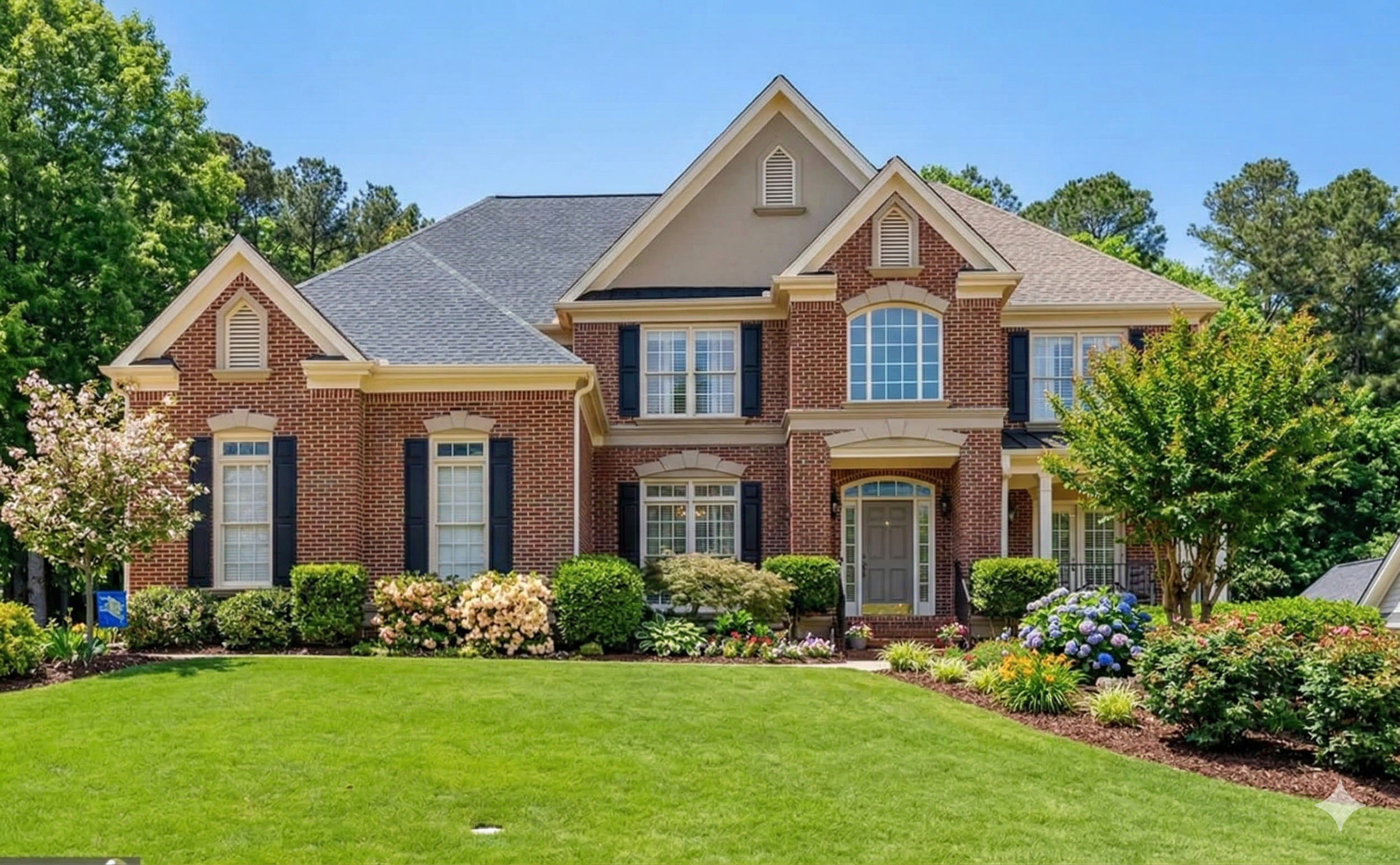
The 2026 Market: What Douglasville Homes Cost Right Now
Douglas County is one of the more affordable submarkets in Metro Atlanta and has been for years. That's the whole reason buyers move here. But the market right now is shifting in ways worth understanding before you write an offer.
According to Redfin data, the median sale price of a home in Douglasville was $303,000 in November 2025, down 13.8% year-over-year, with homes selling in around 49 days on the market. Zillow's typical home value index puts Douglasville at $310,482, down 1.4% over the past year, and Orchard's 30-day median is $270,000, down 18.1% year-over-year, with 195 new listings in that window and a median 44 days on market.
The picture splits sharply by zip code:
30135 (south Douglasville): Median sale price $300,000 in February 2026, down 12.5% year-over-year, with median sale price per square foot at $151. Median days on market is 92, up from 74 the year before, with 161 homes sold.
30134 (north Douglasville/historic downtown): Downtown Douglasville specifically is showing a different trend. Median sale price was $299,000 in November 2025, up 25.6% year-over-year, with sale-to-list ratio at 100%. That number runs counter to the broader county and reflects how thin the inventory is in the historic core.
Inventory: There are roughly 580 homes for sale in Douglasville at any given time, with 42 active townhouse listings and a small condo market of around 4 active condos in any given month.
Sale-to-list and competition: In the last 30 days, the median sale-to-list-price ratio was 97.7%, down 1 point year-over-year. About 16.3% of homes sold above list price, down nearly 3 points. Redfin rates Douglasville as "somewhat competitive," with most homes selling about 2% below list and pending in around 65 days.
What this means in plain English: the days of "any home in Douglasville will sell in a week with multiple offers" are over. Inventory has rebuilt, days on market have stretched, and sellers are negotiating. For buyers, this is the most balanced Douglasville market we've had since 2020. For sellers, pricing has to be right out of the gate or you'll sit.
The luxury layer is its own conversation. There are roughly 22 luxury homes for sale in Douglasville at a median listing price of $365,000, with most concentrated in Stewarts Mill, Chapel Hills, Tributary at New Manchester, The Villages at Brookmont, and Anneewakee Trails. "Luxury" in Douglasville means $500K to $800K, with a thin layer of homes pushing past $900K in the older Chapel Hills Country Club section and on acreage near Bill Arp Road.
I always pull current comps before any showing. The data above is directionally accurate as of early 2026, but Douglasville pricing varies enough between subdivisions and zip codes that you need a comp set specific to where you're actually looking.
What You Get for the Money in Douglasville
Price tier is the right way to think about Douglasville, because the same dollar buys very different things depending on which part of town you're in.
Under $250K. This is the entry-level Douglasville market: smaller ranches and split-levels in older neighborhoods, condos and townhomes near Arbor Place, and some 1980s and 1990s subdivisions in the 30134 corridor. You're typically looking at three bedrooms, 1,200 to 1,600 square feet, on a quarter to half-acre lot. Expect deferred maintenance and dated finishes at this price. The investor pool is active here, and a good portion of these homes have been rentals.
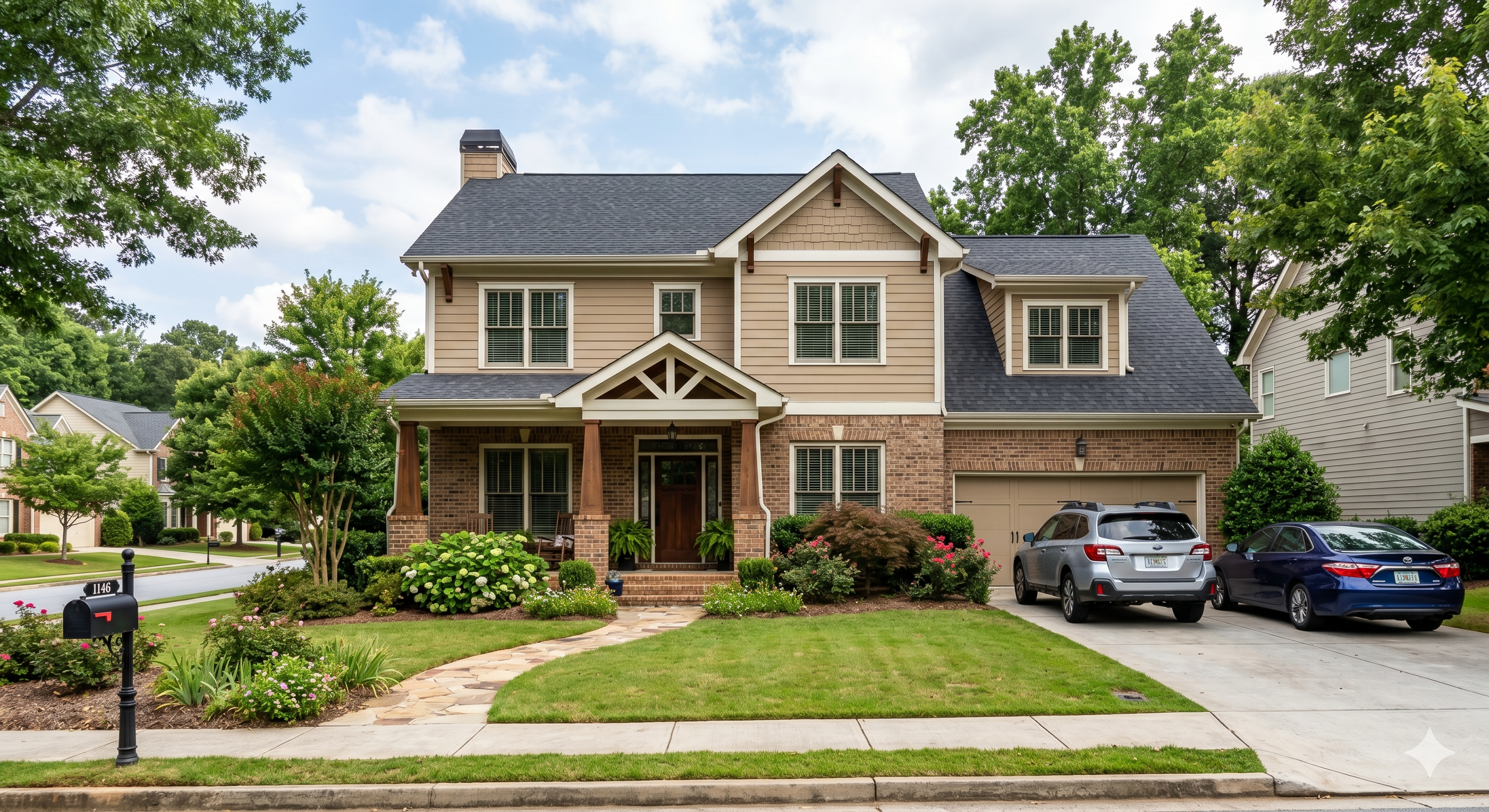
$250K to $400K. This is the heart of the Douglasville market, and where most of my Douglasville buyers actually land. You're looking at three to five-bedroom homes between 2,000 and 2,800 square feet, often in master-planned subdivisions like Anneewakee Trails, Stewarts Mill, The Villages at Brookmont, or Tributary at New Manchester (lower price tier). Many of these communities have pools, tennis, clubhouses, and walking trails. Construction quality varies. Tributary's traditional neighborhood design and craftsman-style streetscapes look and live differently than a typical 2005 cul-de-sac subdivision.
$400K to $600K. This is where you start getting newer construction with high-end finishes, larger lots in established Chapel Hills, and the upper tier of Tributary. Home sizes run 2,800 to 4,000 square feet. The Villages at Brookmont, the Reserve at Chapel Hill, and parts of Stewarts Mill sit in this range. Buyers in this tier are often coming from intown looking to scale up square footage and yard size while staying inside a 35-minute commute window.
$600K and up. Smaller pool but it exists. Chapel Hills Golf and Country Club has the largest concentration of homes at this price, often on golf course lots with custom builds from the 1990s and 2000s. There's also a band of acreage homes (3 to 10+ acres) along Bill Arp Road, Dorsett Shoals Road, and the southwestern parts of the county. Median luxury list price sits around $365,000, with the upper end of the active market pushing past $689,000 for newer five-bedroom builds in Wild Herrin and similar communities.
The acreage market deserves its own line. Douglas County still has rural pockets where you can buy a house on five-plus acres for under $500K, which is something almost impossible to find anywhere else inside the I-285 perimeter or in the inner-ring suburbs.
Sweetwater Creek State Park: The Reason a Lot of Buyers Even Look Here
If you've never been to Sweetwater Creek State Park, this section is going to make Douglasville and Lithia Springs make more sense.
Sweetwater Creek is a 2,549-acre Georgia state park in east Douglas County, 15 miles from downtown Atlanta. It features wooded hiking trails, the 215-acre George Sparks Reservoir, a visitor center, and the ruins of the New Manchester Manufacturing Company. Visitors can explore the Civil War-era New Manchester mill ruins, hike along scenic creekside trails, and fish or paddle on the 215-acre reservoir.
Here's the history part you should understand if you're considering buying nearby. The land was once part of the mill village of New Manchester, a 19th-century industrial town centered around the New Manchester Manufacturing Company. The brick textile mill was built in the 1840s and powered by Sweetwater Creek. The Civil War was fought to preserve and expand the system of slavery that the Confederacy was built around. The mill itself was built using enslaved labor in 1846. In July 1864, Union troops under General William T. Sherman occupied the area, burned the mill, and arrested the workers, mostly women and children, who were sent north as prisoners of war. The ruins that remain today are what's left of that mill, and the park frames them as a place to reckon with that history rather than just a scenic backdrop.
For day-to-day life, the park offers:
The Red Trail, a half-mile path that takes you to the five-story New Manchester mill ruins alongside the white-water rapids of Sweetwater Creek. It's the most popular trail and the recommended first hike.
The White Trail, a 5.2-mile loop through some of the most remote areas of the park, intersecting with the Red Trail at the mill ruins overlook.
A Blue Trail (2 miles, blazed blue, designed to highlight non-game wildlife) and several other trails. The full network is over 15 miles.
The 215-acre George Sparks Reservoir, popular for fishing, with rentals available for paddleboards, fishing boats, canoes, kayaks, and pedal boats. Rental yurts opened in 2015 along the lake.
A LEED Platinum visitor center, one of the most environmentally responsible buildings in Georgia, with eco-friendly features including a vegetative roof, solar power, and rainwater capture.
The Hunger Games connection is real and it brought a lot of national attention to the park. The park is a key stop on the Douglas County Film Trail, and the New Manchester Manufacturing Company ruins served as a backdrop in The Hunger Games: Mockingjay – Part 1, Avengers: Infinity War, and Killing Season.
Subdivisions immediately adjacent to or within walking/short-driving distance of the park include Tributary at New Manchester (literally named after the mill town), parts of Anneewakee Trails, and the older subdivisions off Mt. Vernon Road. Sweetwater Creek proximity is a real value driver in those communities, and worth paying attention to.
Getting Around: Commute Reality from Douglasville
The Douglasville commute story is straightforward: you have I-20 and you have everything else, and 95% of commuters use I-20.
Downtown Atlanta: The fastest route is I-20 West (in reverse for the commute), a straight shot that takes approximately 25-30 minutes off-peak. During morning rush, expect 40 to 60 minutes depending on which side of Douglasville you're starting from and where exactly downtown you're headed. Heavy congestion runs roughly 6:30 a.m. to 9:00 a.m. with slowdowns near Six Flags and approaching the Downtown Connector. Evening westbound traffic is heavy from 4:00 p.m. to 7:00 p.m..
Midtown: Add roughly 5 to 10 minutes to the downtown commute. You're exiting at the Downtown Connector and going north on I-75/85.
Hartsfield-Jackson Airport: Take I-20 East to the Downtown Connector, then I-85 South toward the airport. Off-peak this is around 25 to 35 minutes; during rush hour expect 45 to 60. The airport proximity is an underrated Douglasville selling point. Lionsgate Studios at Great Point markets the location as 15 miles from both Atlanta city center and Hartsfield-Jackson, and that distance shows up in real life as well.
Buckhead: This is where the commute gets harder. Plan on 45 minutes off-peak, 60 to 75 during rush hour. The route is I-20 East to either I-285 North (longer but sometimes faster) or the Downtown Connector to GA-400 / Peachtree.
Cumberland/The Battery: Surprisingly accessible from north Douglasville and Lithia Springs. Off-peak you can reach Truist Park in 20 to 25 minutes via I-285. Rush hour adds 15 to 25 minutes.
West Midtown / Westside: This is the easiest intown commute from Douglasville, often 20 to 30 minutes off-peak via I-20.
The MARTA option exists but it's limited. There's no direct rail to Douglasville. Many Douglasville commuters drive to a MARTA park-and-ride near the Westside or southwest Atlanta and ride the train in. The Hamilton E. Holmes Station on the Blue Line is the most commonly used by commuters from this direction. From Hamilton E. Holmes, downtown is about 15 minutes by train. So a Douglasville-to-downtown MARTA-and-drive trip can run 45 to 60 minutes total but with predictable timing.
The honest summary: Douglasville works well as a commute base if your job is downtown, west Midtown, the airport, or anywhere along I-20. It works less well if you're commuting daily to Buckhead, Sandy Springs, Alpharetta, or Perimeter. The math doesn't favor those routes.
What's New: Lionsgate, The Trails, and Why Douglasville Looks Different in 2026
Two developments are reshaping the Douglasville real estate conversation, and buyers should understand both.
Lionsgate Studios at Great Point Studios. This is the third major Lionsgate film and TV studio complex (after Yonkers, New York, and Newark, New Jersey), and it represents 2,000 new jobs for Douglas County. Lionsgate did location filming for The Hunger Games movies in Douglas County before establishing the facility. The complex is 450,000 square feet, includes 12 sound stages, and sits 15 miles from both downtown Atlanta and Hartsfield-Jackson. It's a $200 million complex on 40 acres, owned by Great Point Studios with Lionsgate as the long-term anchor tenant. This is a real economic anchor, not a press release. The film industry tends to import skilled workers and bring catering, set construction, vendor services, and other support businesses with it. For Douglasville, that translates to housing demand at a wider price band than the area was previously seeing.
The Trails mixed-use development. This is a 167-acre mixed-use development at the intersection of Fairburn Road and Lee Road, anchored by Great Point Studios and Lionsgate. It includes 575 luxury apartments and townhomes, a national hotel, Class A office space, and a 40,000-square-foot commercial village, with sidewalks and walking trails connecting the development. This is the closest thing Douglasville has had to a true live-work-play district, and it's actively under construction.
Beyond film, the data center and life sciences corridor is also building out. Microsoft paid $13.8 million for 93 acres to develop almost 1 million square feet of data center buildings in Douglasville. Google has data center operations in the county. Home Chef brought a $37.1 million investment and 690 new jobs in late 2022. Zoetis, the world's largest maker of animal vaccinations and pharmaceuticals, is investing $592 million in a 600,000-square-foot manufacturing and R&D facility in Douglasville.
This matters for buyers because it changes the long-term thesis on Douglasville. Five years ago, the case for Douglasville was simple: cheap relative to the rest of metro Atlanta, decent I-20 commute. The case now has a second leg: real corporate investment, real job creation, and a genuinely upgraded downtown experience. That's a different value proposition.
Things to Do in Douglasville
Beyond Sweetwater Creek and the new development, Douglasville has more to do than buyers initially expect.
Downtown Douglasville and the Town Green. The historic downtown around O'Neal Plaza and the old courthouse has been steadily upgraded. The Town Green redevelopment is bringing live-work-play density to the historic core. There's a growing restaurant and small-business scene around Broad Street, Church Street, and Veterans Memorial Highway. Downtown Douglasville is on the National Register of Historic Places for its Victorian, Romanesque, and Queen Anne-style buildings and has become a destination for specialty shops and restaurants.
The Stranger Things Block Party. This is a real thing and it draws people from across the metro. On November 8, Downtown Douglasville hosted its 5th annual Stranger Things Block Party with a "Rink-o-Mania" pop-up skating rink, Surfer Boy Pizza, live music, and an immersive walk-through of the Upside Down. In honor of "Stranger Things Day" Nov. 6, the Douglasville Convention and Visitors Bureau transforms downtown into the fictional Hawkins, Indiana.
Stranger Things filming locations. The Hawkins Police Station scenes were filmed at the Douglasville City Hall Annex on Courthouse Square. The Palace Arcade is at 6501 Church Street, and the Family Video storefront is two doors down at 6503 Church Street. The "Benny's Burgers" diner where Eleven first finds refuge is Tiffany's Kitchen at 7413 Lee Road in Lithia Springs.
Arbor Place Mall. Arbor Place is a shopping mall in Douglasville. Opened in 1999, the mall's anchors are Macy's, Dillard's, JCPenney, Belk Outlet, and Regal Cinemas. Junior anchors are Old Navy and Planet Fitness. Arbor Place is also anchored by The Landing at Arbor Place, an open-air center with retail, fitness, and dining. It's at 6700 Douglas Boulevard, just off I-20 at Exit 36.
Boundary Waters Aquatic Center and Park. Off Highway 92, Boundary Waters Aquatic Center offers year-round swimming in a heated indoor pool. Surrounding the center, Boundary Waters Park unfolds with two 18-hole disc golf courses, a playground, and picnic areas.
Anneewakee Lake. Anglers reel in bluegill and bass from Anneewakee Lake, with 15 miles of trails and fishing amenities.
Clinton Nature Preserve. A 200-plus-acre preserve in the Bill Arp area with hiking trails, historic cabins, and event space. The annual Twin Ponds Winery festival is a draw for residents in the western part of the county.
Hunter Park. A central city park with a pond, walking paths, playgrounds, and event space. It's where the city hosts its summer concerts and seasonal events.
Douglas County Museum of History and Art. Listed on the National Register of Historic Places, the museum holds the local archive and rotating exhibits.
Cultural Arts Council Douglasville/Douglas County. Hosts art shows, exhibits, and community events at its downtown facility.
Pine Mountain Gold Museum. Located in Villa Rica just west of Douglasville, this is the site of one of the earliest gold discoveries in Georgia and offers tours, panning, and a working narrow-gauge railroad.
The honest take: Douglasville is not a dining destination on the level of Decatur or East Atlanta. The restaurant scene is growing but still light. What Douglasville delivers is outdoor recreation, a real downtown core, and proximity to everything Atlanta itself offers via I-20.
Schools: Douglas County School District
Douglasville is served by the Douglas County School District, with a small section near the Cobb line served by Cobb County schools. The district headquarters is at 11490 Veterans Memorial Highway in Douglasville.
The district has five comprehensive high schools, plus a sixth alternative program. Here's the Georgia ranking and key data per U.S. News & World Report:
Chapel Hill High School (4899 Chapel Hill Rd, Douglasville): Ranked #194 in Georgia and #7,925 in National Rankings. AP participation rate is 30%. Total minority enrollment is 87%, and 57% of students are economically disadvantaged. 1,585 students, 18:1 student-teacher ratio.
Douglas County High School (8705 Campbellton St, Douglasville): Ranked #202 in Georgia and #8,201 in National Rankings. AP participation rate is 15%. Total minority enrollment is 94%, and 73% of students are economically disadvantaged.
Alexander High School (6500 Alexander Pkwy, Douglasville): Ranked #220 in Georgia and #8,912 in National Rankings. AP participation rate is 26%. Total minority enrollment is 58%, and 56% of students are economically disadvantaged. 1,844 students, 17.8:1 student-teacher ratio.
Lithia Springs Comprehensive High School (2520 E County Line Rd, Lithia Springs): Ranked #275 in Georgia. 1,494 students, 17:1 student-teacher ratio.
New Manchester High School (4925 Highway 92/166, Douglasville): Ranked #278 in Georgia.
Among Douglas County high schools, Alexander and Chapel Hill are the highest-performing on state Milestones assessments. Chapel Hill High has maintained a top 250 statewide ranking with strong performance in American Literature and Composition. All five high schools maintain a consistent 85.4% 4-year graduation rate.
For middle and elementary schools: Several schools stand out, including Holly Springs Elementary, Winston Elementary, Fairplay Middle, Chapel Hill Middle, and Mason Creek Middle.
A few practical notes for buyers:
Attendance zones are property-specific, not subdivision-specific. Two homes on the same street can occasionally fall into different zones. Always verify zoning by exact address with the Douglas County School District before writing an offer if school assignment is a deal-breaker.
Some Douglasville homes near the Cobb County line are zoned for Cobb County schools, including South Cobb High and Lindley Middle. This affects property tax rates, school assignments, and resale value.
If your child is in a specific magnet, IB, or special program track, confirm program availability at the assigned school directly.
Research and visit schools to determine fit for your family. Always verify zoning by specific property address.
Taxes and the County Line Question
Douglas County property tax rates are generally lower than Cobb, Fulton, and DeKalb. The combined county and city of Douglasville millage rate is competitive within Metro Atlanta, and the homestead exemption is straightforward to apply for once you're in the home.
The county line nuance matters for buyers in two specific situations:
Properties near the Cobb County line. Some homes physically located near Lithia Springs sit just inside Cobb County. That changes your property tax bill, your school zone, and (if you're east of I-285) your school district. A $400,000 home in Douglasville and a $400,000 home a half-mile away in Cobb can have noticeably different tax bills.
Inside Douglasville city limits vs. unincorporated Douglas County. The city of Douglasville layers a small additional millage on top of county taxes. For most subdivisions, this is a minor consideration, but it shows up at the higher price points. Anneewakee Trails, Tributary, and most of the south-side master-planned communities sit in unincorporated Douglas County. The historic downtown core and the Arbor Place corridor are inside the city.
I always confirm the exact tax jurisdiction for any home before we get to closing. It's a five-minute check that occasionally changes the math on a deal.
Streets, Subdivisions, and Where to Look
Here's the working map of Douglasville subdivisions buyers should know about, organized by area:
South Douglasville (30135), the most active resale market:
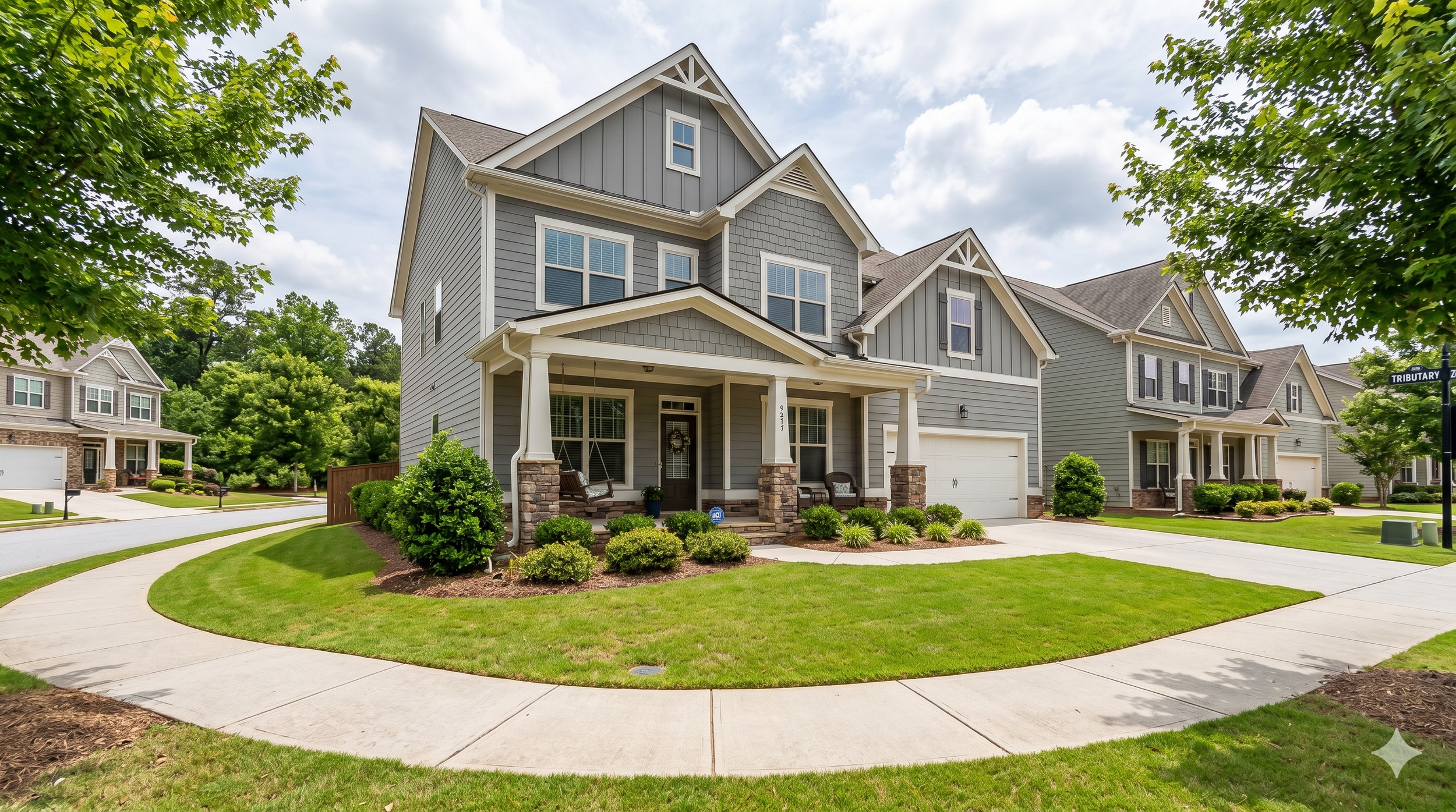
Tributary at New Manchester (off Cedar Mountain Road, near Sweetwater Creek): A master-planned community designed for active lifestyles, with miles of walking trails, parks, and resort-style pools. The community follows a traditional neighborhood design layout with sidewalk-fronted streets and craftsman-style architecture. Pricing runs from the upper $200s to $500K-plus depending on home size and tier. Tributary has a clear architectural identity that you don't find elsewhere in Douglasville.
Anneewakee Trails (off Anneewakee Road): A popular family neighborhood with affordable housing and excellent amenities. Features include trails, a clubhouse, swimming pools, and tennis courts. Multiple sub-sections (Bighorn, Ferncrest, Highlands, Hunting Creek, Lonetree, Redlodge, River Stone, Split Creek, the Bluffs, the Reserve, the Retreat) at varying price points from the $250s to upper $400s.
Chapel Hills Golf and Country Club (off Chapel Hill Road): Centered around Chapel Hills Golf Club, providing residents with golf course views and recreational amenities. Homes range from spacious single-family houses to custom-built estates. Top tier is in the $500K to $800K range.
Stewarts Mill / Lake at Stewarts Mill / Glen at Stewarts Mill / Stewart Mill Estates: Long-established subdivisions with an active resale market. Mid-range pricing.
The Villages at Brookmont and Brookmont Estates: Newer development with modern homes and contemporary designs. Suburban feel with well-maintained streets, swimming pools, and fitness centers.
North Douglasville (30134):
Holly Springs: Established neighborhood near the elementary school of the same name. Mix of price points.
Slater Mill / Slater Mill Plantation: Established neighborhood with a mix of historic charm and modern conveniences.
Older subdivisions along Highway 5/Bill Arp Road and Stewart Mill Road: Generally more affordable, more 1990s-era construction.
Bill Arp / West Douglasville:
Bill Arp Road corridor: Bill Arp combines rural living with proximity to Atlanta. Key attractions include Clinton Nature Preserve and Bill Arp Park. Twin Ponds Winery hosts an annual festival. This is where you find acreage.
Winston: A wooded Douglasville neighborhood featuring traditional and ranch homes among Georgia pines.
Lithia Springs (30122), eastern Douglas County:
Tributary at New Manchester (eastern entrance), older subdivisions off Mt. Vernon Road, and homes near the Sweetwater Creek State Park entrance. Lithia Springs technically is its own community but functions as part of the Douglasville housing market.
The Douglasville subdivision list is genuinely long. A more comprehensive inventory includes Anneewakee Trails, Audubon Forest, Banks Mill Plantation, Barrington Chase, Bear Creek Club, Biltmore Plantation, Bramlett Meadows, Bridge Station, Brookmont Estates, Bryson Lake, Cambridge Crossing, Carmel Chase, Carrington Lakes, Cedar Place, Chaparral Ridge, Chapel Heights, Chapel Hills, Chapel Hills at Stewarts Creek, Charlton Crossing, Cherokee Manor, Chestatee Farms, Chicago Park, Corner Heights, Creekwood Village, Daniell Springs, Dorsett Shoals, Douglas Ridge, Eagles West, Emerald Pointe, the Estates at Hurricane Pointe, the Fairways, Gateway Village, Governors Ridge, Grace Lake, Greythorne, Hagen Farms, Hamrick Lake, the Heritage, Hickory Bend Estates, and many more. The choice between subdivisions is more granular than buyers expect when they first start looking, and it matters: amenity quality, HOA discipline, build quality, and resale velocity vary widely across communities that look similar from the road.
Comparable Suburbs: How Douglasville Stacks Up
Douglasville vs. Lithia Springs: Same housing market, mostly the same school district (with some Lithia Springs zip code areas in the Lithia Springs Comprehensive High zone), but Lithia Springs is closer to Cobb County and the airport, and pricing tends to run slightly higher in established Lithia Springs subdivisions. Douglasville has the bigger downtown core and more retail. Lithia Springs has Sweetwater Creek and faster airport access. If airport proximity is critical, Lithia Springs has a small edge.
Douglasville vs. Mableton/South Cobb: Mableton sits in Cobb County, has Cobb schools, higher property tax rates, and home prices that run roughly $50K to $100K higher for comparable square footage. Mableton has better intown access to West Midtown and Smyrna. Douglasville has more affordable inventory and Sweetwater Creek.
Douglasville vs. Powder Springs: Powder Springs is Cobb County, smaller population, more rural feel in spots, and pricing comparable to or slightly higher than Douglasville. Powder Springs has tighter inventory and less new construction. Douglasville has more retail and the Lionsgate development.
Douglasville vs. Villa Rica: Villa Rica is further west, in Carroll County, with even lower price points but a longer commute. Villa Rica is a 30-to-35-minute drive from Douglasville and an additional 20-plus minutes to downtown Atlanta during rush hour. If you can stretch the commute, Villa Rica buys more house per dollar. If you can't, Douglasville is the right stopping point.
Douglasville vs. Austell/Mableton border areas: This is a tighter call. The southern edge of Cobb County and the northern edge of Douglas County are within a few miles of each other geographically, but Cobb's school district and lower crime statistics in some areas can drive a meaningful price premium. Buyers should look at both and compare specific subdivisions.
Douglasville vs. East Point/South Fulton: East Point has MARTA rail access and is closer to the airport but is intown and pricier per square foot. Douglasville has more space, newer subdivision inventory, and Sweetwater Creek. These two markets attract different buyers.
Who Is Douglasville Right For?
Douglasville tends to be the right fit when:
You need 2,000-plus square feet for under $400K and you want a real subdivision with amenities.
Your job is downtown, west Midtown, the airport, or anywhere west or south on I-20.
Acreage matters and you're priced out of Cobb, Cherokee, or Forsyth.
You want a real downtown core with character (downtown Douglasville) without paying intown prices.
Sweetwater Creek and outdoor recreation are lifestyle priorities.
You're a remote worker or hybrid and only need to be in the office a few days a week.
You're priced out of intown but don't want to drive 60-plus minutes one way.
You're a buyer or investor looking at the Lionsgate-driven appreciation thesis.
Think carefully about Douglasville if:
Your job is in Buckhead, Sandy Springs, Alpharetta, or Perimeter and you have to be in the office daily. The commute math works against you.
You're looking for a walkable, transit-connected lifestyle. Douglasville has a Walk Score of 18, it's a car-dependent city, and there's no MARTA rail access.
Specific magnet, IB, or AP-heavy programming is a top school priority. The Douglas County District has solid schools but the AP participation and ranking metrics run lower than top-ranked Cobb, Fulton North, or Gwinnett districts.
You want the dense restaurant and bar scene of intown. Douglasville is suburban, and the food scene is growing but light.
Resale velocity matters more than absolute price. Inventory in Douglasville is currently higher and days on market longer than the metro average. If you may need to sell in 2-3 years, model the transaction costs into your decision.
Frequently Asked Questions About Douglasville
Is Douglasville a good place to live in 2026? For the right buyer, yes. The combination of affordability (median sale price around $300K), Sweetwater Creek State Park, a real downtown, and the Lionsgate-driven economic momentum makes Douglasville one of the better value plays in Metro Atlanta. The fit depends heavily on your commute, school priorities, and lifestyle preferences. It's not for everyone, but for buyers priced out of intown or needing more space, the math works.
How far is Douglasville from downtown Atlanta? Douglasville is about 22 to 25 miles west of downtown Atlanta on I-20. Off-peak, the drive is 25 to 30 minutes. During rush hour, expect 40 to 60 minutes depending on which side of Douglasville you're starting from.
What is the median home price in Douglasville? The median sale price in Douglasville was $303,000 in November 2025, down 13.8% year-over-year per Redfin. The 30135 zip code (south Douglasville) sits around $300,000, while downtown Douglasville specifically has been moving in the opposite direction with limited inventory.
Are home prices in Douglasville going up or down? Mixed and area-specific. The broader Douglasville market is down year-over-year (roughly 12-18% depending on the source) as inventory has rebuilt and days on market have stretched. Downtown Douglasville's core is up due to thin inventory. The longer-term thesis is appreciation tied to Lionsgate Studios, the Trails development, and the Microsoft/Google/Zoetis investment wave.
What schools serve Douglasville? Douglasville is served by the Douglas County School District, which has five comprehensive high schools: Chapel Hill, Douglas County, Alexander, Lithia Springs Comprehensive, and New Manchester. Chapel Hill and Alexander rank highest within the district. Some homes near the Cobb line are zoned for Cobb County schools. Always verify by specific property address.
What are the best neighborhoods in Douglasville? The most popular and active resale neighborhoods include Tributary at New Manchester, Anneewakee Trails, Chapel Hills Golf and Country Club, Stewarts Mill, the Villages at Brookmont, and Brookmont Estates. Each has a distinct price point, amenity package, and lifestyle. The right fit depends on your budget, school zone, and what you want from your neighborhood.
Is Sweetwater Creek State Park in Douglasville? Sweetwater Creek State Park is in east Douglas County, near Lithia Springs, with the main entrance on Mt. Vernon Road. It's about 15 miles from downtown Atlanta and inside the broader Douglasville housing market.
What is Lionsgate Studios in Douglasville? Lionsgate Studios at Great Point Studios is a $200 million, 450,000-square-foot film and TV production complex with 12 sound stages on 40 acres in Douglasville. It opened in early 2024 and is expected to bring approximately 2,000 jobs to the area. It's part of the larger Trails mixed-use development at Fairburn Road and Lee Road.
Was Stranger Things filmed in Douglasville? Yes. The Hawkins Police Station scenes were filmed at the Douglasville City Hall Annex on Courthouse Square. The Palace Arcade is at 6501 Church Street. Family Video is at 6503 Church Street. The Benny's Burgers diner (Tiffany's Kitchen) is at 7413 Lee Road in Lithia Springs. The city hosts an annual Stranger Things Block Party in early November.
What's the commute like from Douglasville to Hartsfield-Jackson Airport? Off-peak, 25 to 35 minutes via I-20 East to the Downtown Connector to I-85 South. During rush hour, expect 45 to 60 minutes. Airport proximity is a real Douglasville advantage, especially for frequent travelers and airport-area workers.
What can $300,000 buy in Douglasville? At $300K in 2026, you're typically looking at a 3 to 4-bedroom, 2,000 to 2,400 square foot home in a master-planned subdivision like Anneewakee Trails or Stewarts Mill, or a smaller home in Tributary at New Manchester. Construction quality and condition vary. Pulling current comps for the specific subdivisions you're considering is essential.
Is Douglasville a good investment? For buy-and-hold investors, the long-term thesis is compelling: Lionsgate, the Trails development, Microsoft, Google, Zoetis, and Home Chef investments are real. Short-term, the market is softer than it was, which means better buying conditions but slower appreciation. Single-family rentals perform well in the $250K-$350K range. The townhouse and condo market is smaller but active.
Is Douglasville inside the perimeter (ITP) or outside (OTP)? Outside. Douglasville is well west of I-285 and is part of the OTP suburban market.
How much do property taxes cost in Douglasville? Douglas County property tax rates are generally lower than Cobb, Fulton, and DeKalb. Inside Douglasville city limits, there's an additional municipal millage. The homestead exemption is straightforward to apply for once you've established residency. For a specific tax estimate, I can pull the exact millage and last-year's bill on any property you're considering.
What's Next If You're Considering Douglasville
If you're relocating, looking to scale up from intown, or trying to figure out whether Douglasville actually fits your commute and lifestyle, the right next step is a specific conversation about your numbers, your timeline, and the subdivisions that match your priorities. The general market data in this post will give you a sense of the lay of the land. The decisions that actually matter happen at the property level: which zip, which subdivision, which school zone, which side of which road.
I work with buyers across Metro Atlanta and know Douglasville's neighborhoods, school zones, county tax line nuances, and the Lionsgate-driven shifts in detail. If you're ready to start, let's talk.
Visit kristenjohnsonrealestate.com or reach out directly. Come as you are, come on home.
Looking for more Metro Atlanta neighborhood guides? I've covered the West Metro and surrounding suburban markets, including Smyrna, Vinings, and Marietta. Browse the full guide series at kristenjohnsonrealestate.com.