

Atlanta First-Time Home Buyer Programs & Down Payment Assistance 2026: The Complete Guide

The down payment is the wall that stops most Atlanta buyers before they ever get started. I hear it constantly — buyers who can absolutely afford a monthly mortgage payment but have been renting for years because they don't have $25,000–$40,000 sitting in a savings account waiting to go to closing. What most of them don't know is that Atlanta has one of the most robust stacks of down payment assistance programs in the country. City programs, state programs, county programs, nonprofit programs — and in many cases, you can layer more than one.
I work with first-time buyers across Metro Atlanta as Kristen Johnson, Real Estate Agent — and the DPA conversation comes up in almost every consultation. Buyers either don't know these programs exist, have heard confusing things about how they work, or assume they make too much money to qualify. Most of the time, those assumptions are wrong.
Nearly a decade helping Atlanta buyers means I've walked people through these programs from pre-qualification to closing. I know which ones actually move, which have funding constraints you need to plan around, and what you need to have ready before you apply.
Here's what you need to know.
What "First-Time Home Buyer" Actually Means in Atlanta
Before we get into programs, let's clear up the definition — because it's more flexible than most people think.
For most Atlanta and Georgia DPA programs, "first-time home buyer" doesn't mean you've literally never owned a home. It means you have not owned a home in the past three years. If you owned a home five years ago, sold it, and have been renting since, you qualify as a first-time buyer for most of these programs.
There are also some programs where the first-time buyer requirement is waived entirely — particularly for veterans, buyers in certain targeted areas, and some of the newer Invest Atlanta products.
So if you're reading this and thinking "I've owned before, this doesn't apply to me" — double-check. You may be surprised.

The Atlanta DPA Landscape: How It's Structured
Metro Atlanta's down payment assistance programs fall into four main categories:
City of Atlanta programs — administered through Invest Atlanta and Atlanta Housing, available within the City of Atlanta limits only. These tend to be the most generous in terms of dollar amounts.
State of Georgia programs — administered through the Georgia Department of Community Affairs (DCA), available statewide including all Metro Atlanta counties. Lower dollar amounts than city programs but broader geographic reach.
County-level programs — Gwinnett, Cobb, DeKalb, and other counties each have their own programs with their own income limits and eligibility rules.
Nonprofit and housing authority programs — organizations like ANDP (Atlanta Neighborhood Development Partnership) and the Atlanta Housing Authority administer their own programs, sometimes stacked with other funding sources.
The most important thing to understand: these programs can often be combined. A buyer purchasing inside city limits might qualify for a Georgia Dream state loan plus an Invest Atlanta grant plus Atlanta Housing assistance — stacking multiple sources to dramatically reduce out-of-pocket costs at closing. Your lender and agent should be running through these combinations with you, not just pointing you at one program.
Invest Atlanta Programs (City of Atlanta Limits Only)
Invest Atlanta administers Atlanta's homebuyer incentive programs. These are available for properties within the City of Atlanta city limits — not unincorporated Fulton, not DeKalb outside the city, not any of the suburbs. City limits only.
Before applying for any Invest Atlanta program, you need to: attend an Invest Atlanta-approved homebuyer seminar, get pre-qualified with a participating lender, and have a property under contract within city limits. The process runs through the lender — you don't apply directly to Invest Atlanta.
HOME Atlanta 4.0
What it is: A 3.5% grant toward down payment and closing costs — no repayment required. Ever. This is actual grant money.
How it works: Paired with an FHA or VA 30-year fixed mortgage through an Invest Atlanta participating lender. The grant covers 3.5% of the purchase price, which on an FHA loan effectively eliminates the minimum down payment requirement.
Who it's for: Buyers purchasing within Atlanta city limits who can qualify for an FHA or VA mortgage. Income limits apply — check with a participating lender for current limits based on household size.
Key detail: Because this is a grant and not a loan, there's no second lien on your property. Nothing to repay when you sell or refinance.
Atlanta Affordable Homeownership Program (AAHOP)
What it is: Up to $20,000 toward down payment and/or closing costs, structured as a zero-percent interest forgivable second mortgage.
How it works: The $20,000 is fully forgiven after you live in the home for a specified period — 5 years for amounts up to $14,999, 10 years for amounts of $15,000–$20,000. As long as you stay, you owe nothing. If you sell or refinance before that period is up, a prorated portion may be due.
Loan types: 30-year fixed FHA, VA, or conventional through a participating lender.
Who qualifies: Must meet income limits (by household size), cannot currently own other property, and the home must pass a Home Quality Standards inspection and environmental review — both paid for through the program.
Property type: Single-family detached, townhome, or condo. AAHOP does not allow 2–4 unit purchases.
Important note on purchase price caps: AAHOP does have purchase price limits that are lower than some of the other programs — for existing homes in Fulton County, current caps are in the $223,000 range. For new construction, slightly higher. This is the program designed for buyers in Atlanta's more affordable price ranges, not buyers in $400K+ territory. Verify current caps with a participating lender since these limits adjust periodically.
Min contribution: You need to bring at least $1,500 of your own funds to closing.
Intown Mortgage Assistance Program (IMAP)
What it is: $10,000 toward down payment and closing costs, fully forgiven after 5 years of owner-occupancy.
How it works: Structured as a second mortgage at zero percent interest. Stay 5 years, the loan is forgiven. Designed for low-to-moderate income buyers who plan to stay put.
Loan requirements: 30-year fixed rate mortgage through a participating lender. Minimum credit score of 660. Maximum debt-to-income ratio of 45%. Program fee of $1,000. Maximum $25,000 in liquid assets.
Income limits: For 1 person, approximately $85,800; for a household of 5, approximately $132,360. Maximum purchase price around $385,000.
Difference from AAHOP: IMAP has a higher credit score requirement and a lower maximum assistance amount ($10,000 vs. $20,000), but it has a higher purchase price ceiling, making it more applicable to buyers in Atlanta's mid-price range.
Vine City / English Avenue HOAP (Home Ownership Assistance Program)
What it is: Up to $20,000 in down payment and closing cost assistance for buyers purchasing specifically in Vine City or English Avenue.
How it works: Fully forgiven after 5 years of owner-occupancy. Available for FHA, VA, or conventional loans through participating lenders. $1,000 participation fee required. Must have less than $25,000 in liquid assets.
Why it exists: These programs are specifically targeted to Vine City and English Avenue — historically underinvested westside neighborhoods adjacent to Mercedes-Benz Stadium — as part of a coordinated investment and stabilization effort. If you're buying in those corridors, this program is specifically designed for you.
Perry Bolton TAD Homebuyer Assistance
What it is: $10,000 (for income up to 120% AMI) or $20,000 (for income at or below 80% AMI) toward down payment and closing costs, fully forgiven after 5 years.
Geography: Properties within the Perry Bolton Tax Allocation District — a defined area in southwest Atlanta.
Who it's for: Buyers purchasing within that specific geography who meet income qualifications. The $20,000 tier is available for permanently affordable homes; the $10,000 tier extends to market-rate homes within the TAD boundary.
Atlanta Housing Down Payment Assistance
Atlanta Housing (the city's housing authority, separate from Invest Atlanta) also administers down payment assistance for buyers purchasing within City of Atlanta limits.
Amount: Up to $25,000 toward down payment and closing costs.
Structure: Zero-percent interest deferred loan. Repayment is triggered if you sell, transfer, refinance, or cease to occupy the home as your primary residence.
Key requirements:
Income must be at or below 80% of the current HUD Area Median Income (AMI) for the Atlanta MSA
Minimum buyer contribution of $1,500
Must be primary residence; no second homes
Must have Georgia residency for at least 6 months
Property must be a single-family detached home, townhome, or condo — no undeveloped land
Conventional, FHA, or VA loan with a fixed rate (15 or 30 years)
What makes this different from Invest Atlanta programs: Atlanta Housing's program goes up to $25,000 and has an income cap at 80% AMI — it's specifically targeted to lower-income buyers. Invest Atlanta's programs serve a somewhat broader income range.
These two sources can sometimes be combined. ANDP (see below) specifically notes that buyers purchasing ANDP homes often receive both Invest Atlanta assistance ($20,000) and Atlanta Housing assistance ($25,000) simultaneously.
Georgia Dream Homeownership Program (Statewide)
Georgia Dream is the state-level program administered by the Georgia Department of Community Affairs (DCA). It's available throughout Georgia, including all Metro Atlanta counties — city, suburbs, and exurbs alike.
Georgia Dream is not a down payment grant by itself. It's a mortgage program plus DPA. You get a 30-year fixed rate mortgage through a participating lender and a second mortgage for down payment assistance. The interest rate on the first mortgage is set by DCA and is typically below market.
Georgia Dream Standard
For: First-time buyers (or buyers who haven't owned in 3 years)
Down payment assistance: $10,000 as a zero-percent second mortgage, deferred — no monthly payments. Due when you sell, refinance, or move out. (Some sources list this as up to 5% of purchase price, whichever is less — verify with a participating lender for your specific transaction.)
Max purchase price: Up to $550,000 (as of program updates effective July 2025)
Max income (Atlanta MSA): $130,290 for 1–2 person households; $149,833 for 3+ person households
Min credit score: 640
Min buyer contribution: $1,000 of your own funds (or documented gift funds)
Liquid assets: Cannot exceed $20,000 or 20% of the purchase price (whichever is greater) at time of closing. IRAs and 401(k)s are not counted as liquid assets.
Education requirement: All applicants must complete a HUD-approved homebuyer education course before closing. Cost is typically $50–$100. You can take it online at eHomeAmerica.org/dca.
Georgia Dream Peach Plus
For: First-time OR repeat buyers who don't qualify for Standard due to income
How it differs: Higher income ceiling (up to about $149,833 for 1–2 persons) and higher purchase price ceiling (up to $525,000–$550,000), but the interest rate on the first mortgage is slightly higher than Standard.
DPA: Same zero-percent second mortgage structure as Standard.
Georgia Dream Peach Select (Veterans)
For: Qualified military veterans
Benefit: Interest rate on the first mortgage is typically set below the Standard rate — often one of the most competitive mortgage rates available in the state.
Note: Peach Select cannot be combined with Georgia Dream's second mortgage for DPA, but it can be stacked with other DPA programs (including Invest Atlanta programs if purchasing in city limits).
Georgia Dream Peach Advantage
For: First-time or repeat buyers at higher income levels — up to 150% of AMI
How it works: Conventional loan (not government-backed). Down payment assistance of 2%–5% of the first mortgage amount as a zero-percent second mortgage. Non-forgivable — due when you sell or refinance.
Max purchase price: Up to $650,000
Who this serves: Higher-income buyers who don't qualify for Standard Georgia Dream but still want DPA help, or buyers purchasing higher-priced properties.
Important Georgia Dream process notes:
You do not apply to DCA directly. You apply through a participating lender, who submits your file to DCA for compliance review and funding. Start with a participating lender before you start shopping. The list of Georgia Dream participating lenders is on DCA's website.
Georgia Dream funding is allocated annually. Some years, funding pools are exhausted before year end. If you're planning to use Georgia Dream and you have flexibility in timing, earlier in the year is generally better for funding availability.
County-Level Programs
If you're buying outside City of Atlanta limits — in Cobb, Gwinnett, DeKalb (unincorporated), or elsewhere in Metro Atlanta — city programs don't apply. But most major counties have their own programs.
Gwinnett County: Homestretch Down Payment Assistance
Amount: Up to $10,000
Structure: 5-year deferred loan — no monthly payments for 5 years. Forgiveness terms vary.
Who qualifies: Income-eligible first-time buyers with capacity to purchase but limited down payment funds.
How to apply: Through Gwinnett County's financial services/housing programs office. Program availability fluctuates with annual funding allocations.
Cobb County
Cobb County administers Community Development Block Grant (CDBG) funded homebuyer assistance through its Community Development Division. Amounts and availability vary by year and program cycle. If you're buying in unincorporated Cobb or within Marietta, check directly with Cobb Community Development for current program status.
DeKalb County
DeKalb has historically offered homebuyer assistance through its Community Development programs. Check current availability with DeKalb County's Community Development office — program status and funding levels shift year to year.
City of Decatur
The City of Decatur operates its own homebuyer assistance program separate from DeKalb County. If you're buying within Decatur city limits, check directly with the City of Decatur's community development office for current program details.

ANDP: Atlanta Neighborhood Development Partnership
ANDP is a nonprofit community development organization that builds and sells affordable homes throughout Metro Atlanta — and administers its own DPA programs separate from government sources.
ANDP-FHLBank Atlanta DPA Program
Amount:
$17,500–$20,000 for buyers with household income below 80% of AMI
$15,000 for buyers with household income between 80.1%–120% of AMI
Key feature: These funds can be used to purchase any existing home in Metro Atlanta — not just ANDP-developed properties. That's what makes this program particularly valuable. The geographic reach extends across the entire metro area.
How to access: Your lender must apply on your behalf. This is a lender-applied program — you can't apply directly. Find a lender who participates in FHLBank Atlanta's AHP program and ask them to apply.
Funding: First-come, first-served. This program is affiliated with the Federal Home Loan Bank of Atlanta and is subject to funding availability.
ANDP's Own Homes + Layered Assistance
When buyers purchase ANDP-developed homes specifically, they often qualify for multiple stacked sources: ANDP's internal AHAP program (zero percent, deferred, soft second) plus Invest Atlanta programs ($20,000) plus Atlanta Housing ($25,000). On ANDP homes, it's not unusual for buyers to close with $40,000+ in combined assistance.
If you're working with a limited budget and open to living in a newer or recently renovated home in one of Atlanta's westside or southside neighborhoods, ANDP's inventory is worth knowing about. Their available homes list is on ANDP's website.
Employer-Assisted Housing and Special Programs
Atlanta Fire Rescue Foundation: Housing for Heroes
Who qualifies: Sworn firefighters and EMTs with the Atlanta Fire Rescue Department
Amount:
Up to $30,000 for properties within City of Atlanta limits ($5,000 from the Foundation + $25,000 from Atlanta Housing)
$5,000 for properties in Metro Atlanta outside city limits
Structure: One-time gift — not a loan. No repayment required.
Application: Through the Atlanta Fire Rescue Foundation. Annual application cycle — check current deadlines on their website.
Teachers, Healthcare Workers, and Public Servants
Georgia Dream Peach Plus has historically offered enhanced down payment assistance amounts for buyers who are public school educators, active-duty military, healthcare workers, or have a family member with a disability. Check with a Georgia Dream participating lender for current enhanced amounts and eligibility documentation requirements.
How to Combine Programs: The Stack Strategy
Here's where it gets real. The question isn't "which program do I use?" — it's "which combination gives me the most coverage?"
Example stack inside City of Atlanta limits:
Georgia Dream Standard first mortgage (below-market rate)
IMAP ($10,000 forgivable grant, 5 years)
Atlanta Housing DPA (up to $25,000, deferred)
Result: A buyer with limited savings potentially gets $35,000+ in assistance toward a home purchase, with a below-market interest rate on the first mortgage.
Example stack for a buyer with moderate income outside city limits:
Georgia Dream Peach Plus first mortgage
County-level DPA (Gwinnett Homestretch, $10,000)
ANDP-FHLBank program ($15,000–$20,000 if income-eligible)
Result: $25,000–$30,000 in combined down payment and closing cost coverage, available in Gwinnett, Cobb, or other suburban counties.
The catch: Not all programs can be stacked, and the rules on combining are specific. Your lender needs to know all the programs you're targeting before they submit your application — because the compliance process for each program is different and they can't always be added after the fact.
This is one of the most important things I tell buyers: find a lender who knows these programs cold before you pick your lender. A lender who doesn't know Invest Atlanta's programs, or who has never done a Georgia Dream loan, is going to miss combinations that could save you tens of thousands of dollars. Ask directly: "Do you do Georgia Dream loans? Are you an Invest Atlanta participating lender? Are you familiar with ANDP's FHLBank program?" The answers tell you a lot.
What You Actually Need to Qualify
Across most of these programs, the baseline requirements look like this. Not every program matches exactly, but this is the realistic floor:
Credit score: 640 minimum for most Georgia Dream products. Some Invest Atlanta programs go as low as 580. Most conventional-backed programs want 660–680. If your score is below 640, focus on credit repair before anything else — no DPA program will move until that number is there.
Income: Most programs have income limits based on household size and the Area Median Income (AMI) for the Atlanta MSA. The current AMI for the Atlanta metro is approximately $108,000 for a family of four (verify with HUD for the most current figure). Programs range from 80% AMI (about $86,400 for a family of four) to 150% AMI (about $162,000 for a family of four). More programs serve buyers up to 120% AMI than many people assume.
Liquid assets: Most programs cap liquid assets at $20,000–$25,000. Retirement accounts (401k, IRA) are almost universally excluded from this calculation. So if your only savings is in a retirement account, that generally doesn't count against you.
Homebuyer education: Required for Georgia Dream, strongly recommended for most other programs. You'll need to complete a HUD-approved course. Online options are available — budget $50–$100 and a few hours of your time.
Your own contribution: Most programs require you to bring something to closing — typically $1,000–$1,500 of your own funds. DPA isn't designed to be zero out of pocket in most cases, though the total out-of-pocket can get very low when programs are stacked effectively.
Primary residence: Every program listed here requires owner-occupancy. These programs are for buyers who plan to live in the home, not investors purchasing rental properties.
What People Get Wrong About DPA Programs
"I make too much money to qualify."
This assumption kills more DPA opportunities than anything else. For a household of four in Metro Atlanta, income limits on many programs go up to $130,000–$150,000. Georgia Dream Peach Advantage goes up to 150% of AMI. Check before you assume.
"DPA money is hard to get and slows down closings."
Some programs do have processing timelines you need to account for. But experienced lenders who work these programs regularly close on normal timelines. The issue is working with a lender who doesn't know the programs — then everything slows down.
"I'll figure out the programs after I find a house."
Wrong sequence. Figure out your DPA eligibility before you start shopping. Different programs have different purchase price caps, property requirements, and geographic limits. If you go under contract on a house that doesn't qualify for the program you were counting on, you've got a problem. Know your stack before you shop.
"I can apply to the program directly."
For almost every program on this list, you apply through your lender — not the program itself. The lender submits on your behalf. This is why lender selection matters so much. If your lender doesn't know how to submit for a program, you effectively can't access it.
"These programs are only for very low-income buyers."
The range is much broader than that. Georgia Dream Standard serves households earning up to $130,290 (1–2 persons). Peach Advantage goes to 150% AMI. Invest Atlanta's IMAP income ceiling for a household of five is about $132,360. These are middle-income programs, not just poverty-level programs.
The Application Process, Step by Step
This is the order that works:
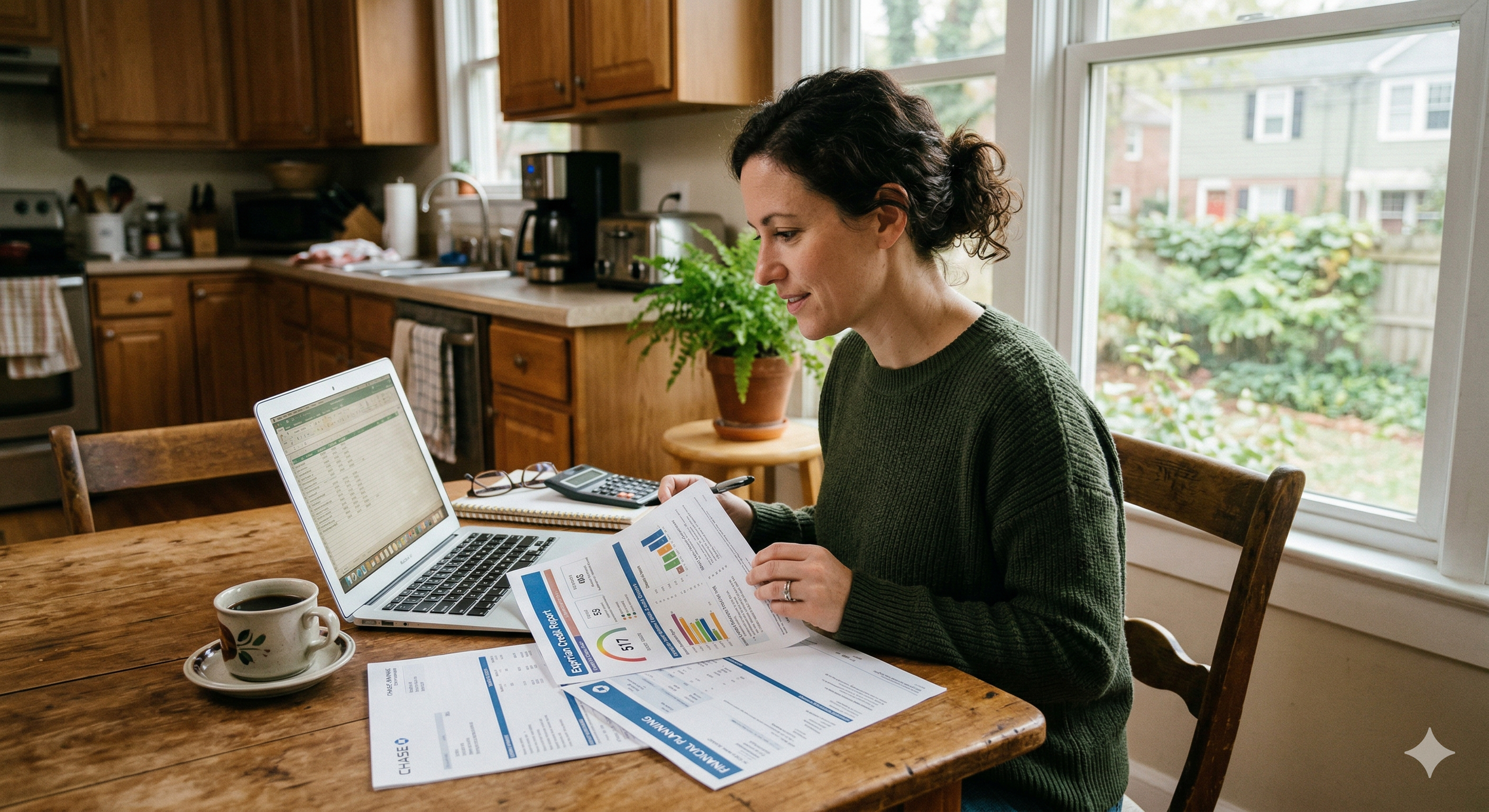
1. Know your credit score and get it to at least 640. If it's below that, stop here and work on it. No DPA program moves without adequate credit. Pull your free report from annualcreditreport.com and dispute any errors.
2. Get pre-qualified with a lender who participates in the programs you're targeting. Ask specifically: Are you a Georgia Dream participating lender? Are you on Invest Atlanta's participating lender list? Do you know the ANDP FHLBank program? If the answers are yes, you're in the right place.
3. Complete homebuyer education. Georgia Dream requires it; most other programs strongly encourage it. Do it early. It typically takes a few hours online and costs $50–$100.
4. Determine your geography. Are you committed to City of Atlanta limits (where Invest Atlanta programs apply)? Open to suburbs (where state and county programs apply)? Your geography determines which programs are available to you.
5. Let your lender run the stack. A good lender who knows these programs will tell you which combination you qualify for and which gives you the most coverage. This conversation should happen at pre-qualification, not after you're under contract.
6. Go shopping with a clear budget. Know your DPA-eligible purchase price range. Know which program requirements (inspection standards, property types) apply to your target property.
7. Get under contract, notify your lender immediately. DPA processing happens in parallel with your mortgage approval. Start the DPA application as soon as you have a signed contract. Delays often happen when buyers wait too long to loop in the DPA process.
Down Payment Assistance and the Current Atlanta Market
A few things worth knowing about how DPA interacts with the 2026 Atlanta market.
Sellers see DPA transactions regularly. This is not unusual. Experienced listing agents and sellers in Metro Atlanta are accustomed to buyers using down payment assistance programs. It's not a red flag. In some price ranges and some neighborhoods, it's the norm.
DPA does not make your offer weaker in most cases. What matters to sellers is your ability to close. A buyer with solid pre-approval, DPA funding confirmed, and a realistic closing timeline is a qualified buyer. The presence of DPA itself is not the issue.
Some DPA programs have inspection requirements. AAHOP, for example, requires a Home Quality Standards inspection in addition to a standard buyer inspection. If you're targeting a property that needs significant work, know whether your DPA program has property condition requirements before you write the offer. Don't get under contract on a home that won't pass the required inspection.
Funding pools can close. Georgia Dream and ANDP's FHLBank program operate on annual funding allocations. If you're planning to use one of these programs, earlier in the year is better. If you've been pre-qualified and ready to shop since January, you have priority over buyers who start in October after funds have been depleted.
Neighborhoods Inside City of Atlanta Where DPA Is Most Impactful
Invest Atlanta programs apply within city limits — but the purchase price caps on some programs (particularly AAHOP) make them most relevant in neighborhoods where home prices are below $250,000–$350,000. In 2026, that means buyers are mostly looking at Atlanta's westside and southside neighborhoods for AAHOP-eligible inventory.
Neighborhoods where DPA buyers are actively purchasing today include parts of West End, Vine City, English Avenue, Oakland City, Sylvan Hills, Pittsburgh, Mechanicsville, Adair Park, and Cascade — areas where $200,000–$350,000 homes still exist inside city limits and where multiple DPA programs can be layered.
For buyers stretching into $350,000–$500,000 territory inside the city, IMAP ($10,000) and HOME Atlanta 4.0 (3.5% grant) remain applicable, and Georgia Dream Standard can be layered on top.
I've written detailed neighborhood guides for several of these westside communities — West End, Vine City, Adair Park, Collier Heights, and West View. If you're exploring where DPA dollars can take you inside city limits, those guides will help you understand what each neighborhood actually looks and feels like on the ground.
Frequently Asked Questions About Atlanta First-Time Buyer Programs
How much down payment assistance can I get in Atlanta in 2026?
Inside City of Atlanta limits, qualified buyers can access up to $25,000 from Atlanta Housing, up to $20,000 from Invest Atlanta's AAHOP or Vine City HOAP programs, or a 3.5% non-repayable grant through HOME Atlanta 4.0. Stacked correctly with a Georgia Dream first mortgage, total assistance can reach $30,000–$45,000 for buyers who qualify. Outside city limits, Georgia Dream Standard provides $10,000 in DPA; county programs and ANDP's FHLBank program can add another $10,000–$20,000 on top.
Do I have to pay back down payment assistance in Atlanta?
It depends on the program. HOME Atlanta 4.0 is a true grant — no repayment ever. AAHOP, IMAP, and the Vine City HOAP are forgivable over 5–10 years of owner-occupancy: stay in the home for the required period and the balance is forgiven, no payment due. Georgia Dream's DPA second mortgage is deferred — no monthly payments, but due upon sale or refinance. Know the terms of your specific program before closing.
What credit score do I need for Atlanta down payment assistance?
Most programs require a minimum middle credit score of 640. Georgia Dream Standard requires 640. Some Invest Atlanta programs go as low as 580 (AAHOP), while others require 660–680 (IMAP). If your score is currently below 640, focus on credit repair before starting the application process.
Can I use down payment assistance programs if I've owned a home before?
Yes, in many cases. Most programs define "first-time buyer" as not having owned a home in the past three years — not as never having owned at all. Some programs (Georgia Dream Peach Plus, Peach Advantage) waive the first-time requirement entirely. Veterans may also access certain programs regardless of prior ownership history.
Can I use down payment assistance to buy a home outside Atlanta city limits?
Yes. Georgia Dream (Standard, Peach Plus, Peach Select, Peach Advantage) is available statewide — Cobb, Gwinnett, DeKalb, Fulton outside city limits, everywhere. ANDP's FHLBank program is also available metro-wide, not just inside city limits. County-level programs (like Gwinnett's Homestretch) apply within their respective jurisdictions. Invest Atlanta programs are city-limits-only.
How long does it take to close using down payment assistance?
With an experienced lender who knows the programs, timelines are typically standard — 30 to 45 days. Problems arise when buyers are working with lenders who don't know the DPA process well and treat it as an add-on rather than integrating it from the start. Choose your lender carefully.
What's the income limit for Atlanta down payment assistance programs?
It varies by program and household size. Georgia Dream Standard allows up to $130,290 for 1–2 person households and $149,833 for 3+ person households in the Atlanta MSA. Invest Atlanta's IMAP allows approximately $85,800 for 1 person, scaling to approximately $132,360 for 5+ persons. Atlanta Housing caps at 80% of AMI (approximately $86,400 for a family of four at current AMI levels). Georgia Dream Peach Advantage goes up to 150% of AMI. Always verify current limits with a participating lender — income limits adjust periodically.
What's the maximum purchase price for Atlanta DPA programs?
Georgia Dream Standard: up to $550,000. Georgia Dream Peach Advantage: up to $650,000. Invest Atlanta AAHOP: purchase price caps are lower — in the $215,000–$238,000 range for Fulton and DeKalb counties (existing vs. new construction). IMAP: approximately $385,000. HOME Atlanta 4.0: check with participating lender for current limits. For buyers in the $350,000–$550,000 range, Georgia Dream plus IMAP or HOME Atlanta 4.0 is typically the most viable stack.
Do sellers care if I'm using down payment assistance?
Sellers in Metro Atlanta see DPA transactions regularly, particularly in price ranges where these programs are most active. What matters to most sellers is: Are you pre-approved? Is your financing solid? Can you close on time? A buyer who has done the DPA pre-work, has their approval in order, and can present a realistic closing timeline is a qualified buyer. The DPA itself is not the issue.
What's the difference between Invest Atlanta and Atlanta Housing?
Both are City of Atlanta entities, but they operate separate programs. Invest Atlanta's programs (HOME Atlanta 4.0, AAHOP, IMAP, Vine City HOAP) focus on homebuyer incentives and neighborhood development within the city. Atlanta Housing's DPA program provides up to $25,000 specifically for buyers at or below 80% of AMI. They're not competitors — in some cases, buyers purchase ANDP-developed homes and receive assistance from both Atlanta Housing and Invest Atlanta simultaneously.
I've heard Georgia Dream funds run out. How do I avoid that?
Georgia Dream is funded through annual bond allocations. Some years, particularly active markets exhaust the funding before December. If you're planning to use Georgia Dream and have any flexibility in timing, start earlier in the year rather than later. Get your pre-qualification and homebuyer education done in January or February if possible. Being ready early means you're at the front of the line when funding opens.
What happens to my DPA if I refinance?
Depends on the program. Some DPA second mortgages are due upon refinance — meaning if you refinance your first mortgage, the DPA balance becomes due immediately (unless forgiven). HOME Atlanta 4.0 is a grant and has no refinance trigger. Georgia Dream's DPA is due upon refinance. Know your program terms before you refinance — your lender or a real estate attorney should review the subordination options available on your specific DPA loan.
Atlanta has more money available for first-time buyers than most people know about. The programs exist, the funding cycles, and buyers who do the work to understand the landscape close with tens of thousands of dollars in assistance they would have left on the table otherwise. The key is starting early, finding a lender who actually knows these programs, and understanding which combination fits your situation.
I work with first-time buyers across Metro Atlanta and can help you think through which neighborhoods, which price ranges, and which DPA programs make sense for your specific situation. Visit kristenjohnsonrealestate.com to get started.
Come as you are, come on home.
Looking for more guidance on buying in Metro Atlanta? My neighborhood guide series covers Atlanta intown neighborhoods, westside communities including West End, Vine City, Adair Park, and Collier Heights, plus suburbs across Cobb, Gwinnett, North Fulton, and more. Browse the full series at kristenjohnsonrealestate.com.