

Atlanta Intown Neighborhoods with the Best ROI for First-Time Buyers 2026
The best intown Atlanta neighborhoods for first-time buyer ROI in 2026 are not the ones that have already appreciated the most. They are the ones still positioned in front of the infrastructure investment, the BeltLine expansion, and the development pipeline that will drive the next wave of price growth. I work with buyers across Metro Atlanta, and the question I get most often from first-timers is some version of this: where can I actually afford to buy, and will it be worth it? Buying for ROI usually means buying at the entry point, so if your budget is $400,000 or less, start with my guide to Atlanta neighborhoods under $400K for first-time buyers.
It is a good question, and it deserves a real answer.
Atlanta ranked fourth nationally among the best markets for first-time buyers in 2026, according to a Zillow analysis that factored in rent burden, affordable listing share, and inventory relative to renters. Around 45.2% of Atlanta listings fall within reach for qualified first-time buyers. The city is not cheap by historical standards, but it is significantly more accessible than coastal metros, and the intown neighborhoods covered here still have meaningful upside for buyers who understand what they are buying into.
Let me be direct about what ROI means in this context. For a first-time buyer, ROI is not just appreciation percentage. It is the full picture: entry price, appreciation trajectory, rental potential, transit access, and resale liquidity. A neighborhood that has already appreciated 40% may look impressive in a retrospective data set but tell you almost nothing about what comes next. The neighborhoods I am walking through below earn their spots because of where they are in the development and investment cycle as of 2026, not where they were five years ago.
Nearly a decade helping Atlanta buyers means I have watched the BeltLine trail openings, the MARTA investment commitments, and the city's growth corridors move in real time. I know which neighborhoods get left out of the glossy round-up lists and which ones are actually the right call for a buyer trying to build equity rather than just own something.
Here's what you need to know.
Why First-Time Buyers in Atlanta Need an ROI Framework Before They Pick a Neighborhood
Most first-time buyers approach neighborhood selection emotionally, which is understandable. They find a place they like, fall in love with a particular street, and start calculating affordability backward from there. The problem is that not every neighborhood you can afford in Atlanta is an equally good buy.
The Adams Realtors March 2026 Intown Market Report put a useful frame around this. The average sales price across the overall intown Atlanta market is now $832,241, up 5% year-over-year and 13% over two years. But the six least-expensive intown markets, all with average sales prices at or below $350,000, tell a different story: Capitol View, East Point, Oakland City, Pine Lake, Sylvan Hills, and West End. These are not underperforming neighborhoods. They are the most accessible entry points into a market that has been appreciating steadily for a decade. And Oakland City, which has seen its average sale price rise by nearly $300,000 since 2016, is perhaps the clearest example of what that trajectory looks like when an intown neighborhood has the right combination of factors.
The ROI framework I use with buyers has five components:
Entry price vs. the surrounding market. Can you buy below the median of neighboring, already-appreciated areas? If so, you have room to grow.
Infrastructure and investment pipeline. Is the BeltLine coming? Is MARTA expanding or adding infill stations? Are mixed-use developments under construction? Infrastructure investment drives residential demand.
Transit access. MARTA connectivity, measured by how walkable a home is to a station, is one of the most consistent factors in Atlanta intown price resilience. Homes near MARTA stations hold value in slower markets and appreciate faster in ascending ones.
Rental potential. A first-time buyer who needs to move in three to five years for career reasons benefits enormously from buying in a neighborhood with strong rental demand. It converts a potential forced sale into a hold-and-rent decision.
Resale liquidity. How many buyers will be in the pool when you are ready to sell? Neighborhoods with diverse buyer profiles, not just investors, tend to be more liquid.
Every neighborhood in this post scores well on most of these measures. None of them are perfect buys for every buyer. The right one depends on your budget, your timeline, and what trade-offs you can live with.
If you want to run this framework against a specific budget or timeline before you start touring, that’s exactly what buyer strategy calls are for. No prep needed — just bring your questions.
Schedule a Free Buyer Strategy Call →
What "Intown Atlanta" Means for a First-Time Buyer
When Atlanta real estate professionals say "intown," they generally mean neighborhoods inside the I-285 perimeter, close to the city's urban core. For a first-time buyer, intown Atlanta means shorter commutes, walkability to coffee shops and restaurants, and access to the BeltLine trail system that is reshaping which neighborhoods have the most demand.
It also means higher prices than the suburbs, smaller lots, older housing stock, and real variability block to block.
The City of Atlanta's median home sale price was $425,000 in 2025, at roughly $262 per square foot, according to PropertyShark data published in 2026. At $400,000, which is close to the national median, you are buying about 1,525 square feet. That is less than you would get in Houston, Chicago, or Philadelphia at the same price. Intown Atlanta is still a value compared to coastal markets, but it is no longer the broad-based bargain it was a decade ago.
That context matters for first-time buyers. You are not buying cheap. You are buying into a market where thoughtful neighborhood selection can still deliver meaningful equity in a three-to-seven-year hold.
The Neighborhoods: Best ROI for First-Time Buyers in 2026
1. Adair Park: BeltLine Westside Trail Access at Entry-Level Intown Prices
Adair Park sits southwest of downtown Atlanta, bounded roughly by Lee Street, Lawton Street, White Street, and the Norfolk Southern rail corridor. The BeltLine Westside Trail runs along the neighborhood's southern boundary, providing direct trail access to West End, Oakland City, and ultimately the broader BeltLine loop.
Median sale prices in Adair Park have ranged from approximately $300,000 to $360,000 depending on the period and data source, making it one of the more affordable intown neighborhoods with confirmed BeltLine access. That combination is genuinely unusual. On the Eastside Trail, BeltLine-adjacent neighborhoods like Inman Park and Poncey-Highland have medians well above $600,000. Adair Park is still in the earlier part of that appreciation cycle.
The ROI case rests on two factors. First, the BeltLine effect is real and documented. BeltLine-adjacent neighborhoods have consistently commanded 15% to 25% higher appreciation than the city average, based on housing data through 2024. Adair Park has the trail access but not yet the full price premium.
Second, Murphy Crossing. This 20-acre site at 1050 Murphy Avenue, just south of the Westside Trail, is now under Atlanta BeltLine leadership following the termination of a previous developer relationship in early 2025. The BeltLine has completed rezoning, finalized a Development of Regional Impact review, and hired Perkins+Will to lead master planning. A separate 300-unit mixed-use development at 840 Woodrow Street has Fulton County approval and is scheduled to deliver in early 2027.
The honest version: Murphy Crossing has a complicated history. Three failed or terminated developer relationships over more than a decade is a real track record that buyers should understand. The BeltLine as lead developer is a different footing than prior iterations, but development timelines in Atlanta are not guarantees. Buy Adair Park because you want to live there and the BeltLine access has real daily value. The Murphy Crossing upside is real but should not be the primary reason for the purchase.
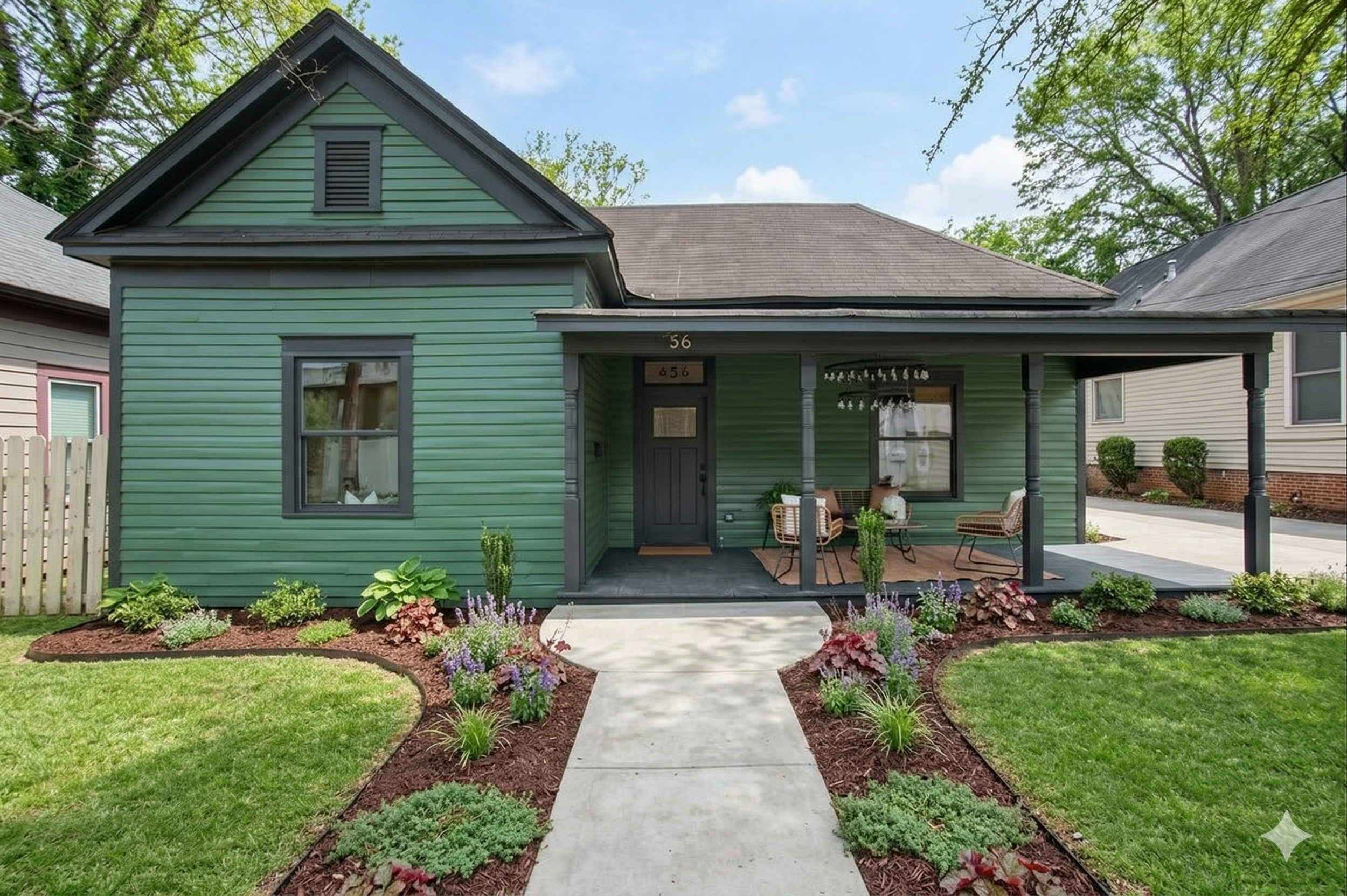
What you are looking at in Adair Park: primarily Craftsman bungalows built between the 1910s and 1940s, a mix of fully renovated homes in the $350,000 to $500,000 range and partially updated homes in the $250,000 to $350,000 range, and some homes still needing significant renovation in the $150,000 to $250,000 range. The neighborhood has a small commercial corridor near Lee Street SW that includes some retail and restaurant activity, and West End MARTA (Red and Gold lines) is accessible without a car.
ROI snapshot:
Entry point: $250,000 to $500,000
BeltLine access: Direct (Westside Trail)
MARTA: West End Station (walkable for some blocks, drivable for most)
Key catalyst: Murphy Crossing development + Murphy Avenue corridor investment
Rental potential: Strong for renovated properties given BeltLine proximity
Best for: Buyers who can tolerate some renovation, want BeltLine access at below-Eastside prices
2. West End: One of Atlanta's Oldest Neighborhoods, Still at Accessible Price Points
West End is Atlanta's oldest neighborhood, with a history that predates the city's incorporation. The commercial corridor along Ralph David Abernathy Boulevard NW and Lee Street connects to a residential fabric of Victorian cottages and Craftsman bungalows, and the BeltLine Westside Trail, which opened in 2017, runs directly through the neighborhood.
The Adams Realtors March 2026 data lists West End among the six least expensive intown markets, with average sales prices at or below $350,000. Redfin's February 2026 data showed a median of $430,000, up significantly year-over-year, though West End transaction volumes are low enough that monthly data can swing considerably from a handful of sales. The range you are likely working with: $250,000 to $500,000 for single-family homes depending on condition and renovation level, with some condos available in the $200,000s.
Lee + White, the redeveloped industrial complex at 1000 White Street SW, has established itself as a genuine destination: Monday Night Garage, Wild Heaven Brewery, Boxcar, and other food and beverage tenants have created consistent foot traffic that directly benefits surrounding residential property values. The West End Mall site is the subject of ongoing redevelopment planning, and the entire stretch from Lee + White toward the Murphy Crossing site represents one of the more compelling near-term investment corridors in southwest Atlanta.
West End also sits on the Red and Gold MARTA lines at West End Station (850 Oak Street SW), making it one of the more transit-connected intown neighborhoods available at this price point.
Parts of West End fall within federal Opportunity Zones, which can provide tax incentives for certain long-term investors and development projects. The city has also offered grants for historic property restoration. These programs change; verify current availability and your eligibility with a tax professional.
The honest version: West End is a neighborhood actively managing the tension between appreciation and displacement, and residents have organized significantly around that issue. Buyers entering this neighborhood should understand the community context, not just the investment thesis.
ROI snapshot:
Entry point: $200,000 to $500,000
BeltLine access: Direct (Westside Trail)
MARTA: West End Station (Red/Gold lines, direct)
Key catalyst: Lee + White established, West End Mall redevelopment potential, Murphy Crossing corridor
Rental potential: Strong, particularly for BeltLine-adjacent properties
Best for: Buyers who want transit, walkability, and BeltLine access at below-Eastside prices
3. Oakland City: MARTA Connectivity, BeltLine Access, and a $1B+ Development Corridor
Oakland City sits directly south of West End, bordered roughly by Sylvan Road to the west, Metropolitan Parkway to the east, and Richland Road to the south. It has its own MARTA station (Oakland City Station on the Red/Gold lines) and direct proximity to the BeltLine Southwest Trail corridor.
KJRE published a full neighborhood guide on Oakland City earlier in 2026, and the median prices reported there tell the story clearly: median prices near $375,000, with the neighborhood among the least expensive intown markets with dedicated MARTA station access. Oakland City's average sales price has risen by nearly $300,000 since 2016, per the Adams Realtors data, which is one of the stronger appreciation records in the intown market over that period.
The development pipeline here is substantial:
Murphy Crossing (1050 Murphy Avenue SW): The 20-acre BeltLine-owned site now in master planning with Perkins+Will. The proposed new MARTA infill station at this site was announced in April 2024 with an estimated completion by 2030. If that station is built, it would add direct MARTA rail access at walking distance for the northern portion of Oakland City.
840 Woodrow Street SW: 300-unit mixed-use apartment and retail development approved by Fulton County, scheduled to deliver in early 2027.
Oakland Exchange: Warehouse conversion project at 1050 Murphy Avenue, directly across Sylvan Road from the Murphy Crossing site.
Oakland City is further along in its appreciation cycle than Adair Park or Westview, and prices reflect that. But the combination of confirmed MARTA access at Oakland City Station, BeltLine Southwest Trail proximity, and one of the most active near-term development pipelines in southwest Atlanta makes this a defensible buy for first-time buyers who want transit as a non-negotiable.
ROI snapshot:
Entry point: $300,000 to $500,000+
BeltLine access: BeltLine Southwest Trail (within the neighborhood's geography)
MARTA: Oakland City Station (Red/Gold lines, dedicated station)
Key catalyst: Murphy Crossing, 840 Woodrow development, proposed MARTA infill station by 2030
Rental potential: Strong, especially near MARTA
Best for: Buyers for whom MARTA access is essential; buyers who want the most confirmed development pipeline on the southwest side
4. Westview: Historic Bungalows, BeltLine Access, Lower Prices Than Oakland City
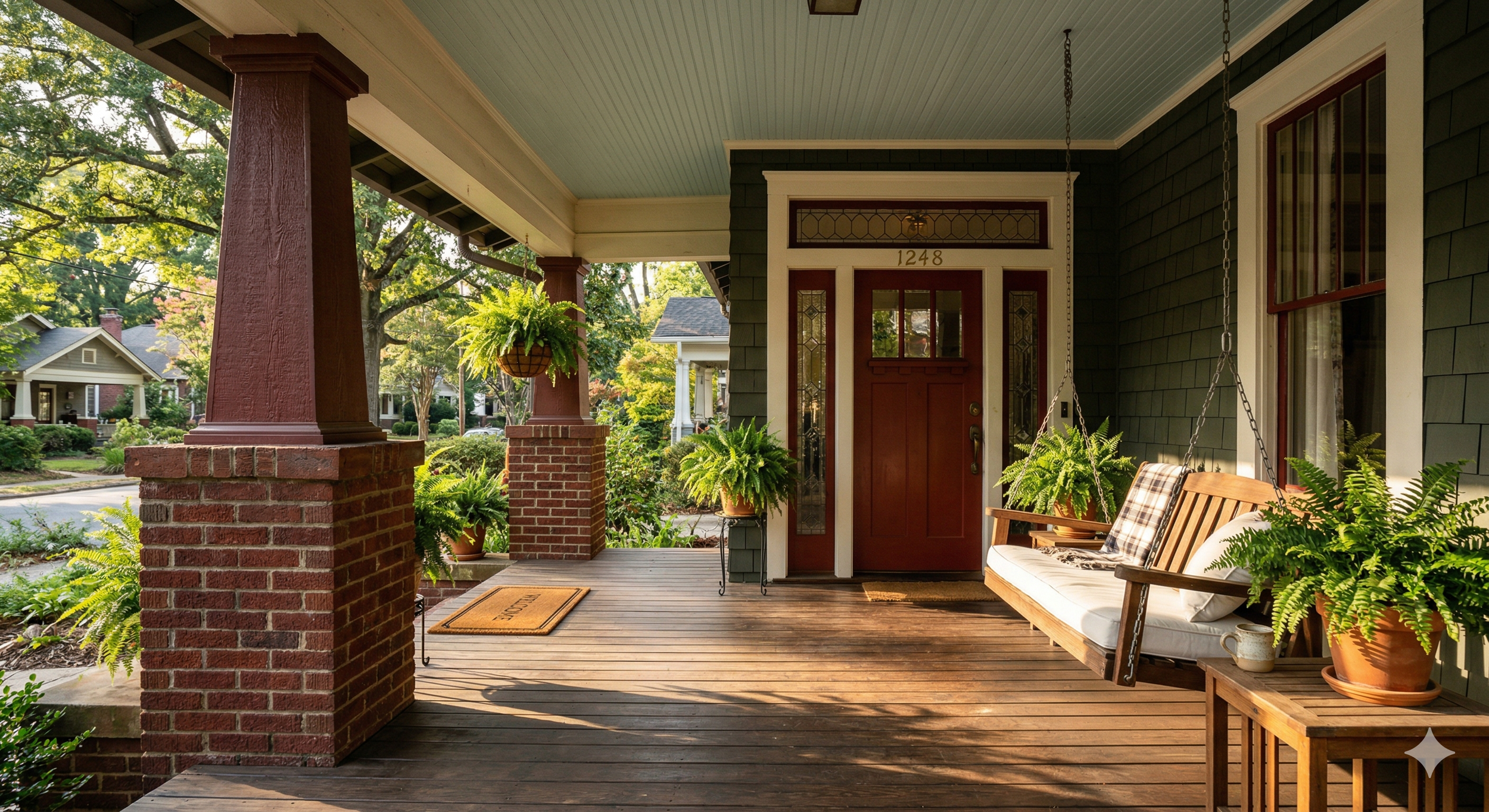
Westview sits immediately west of Oakland City, sharing the BeltLine Southwest Trail corridor and a comparable housing stock of Craftsman and Folk Victorian bungalows built in the early to mid-20th century. The Westview Community Organization is one of the more active neighborhood associations on the southwest side, which matters for long-term quality-of-life and property value stability.
Westview generally runs lower in price than Oakland City, with larger lots in some sections and a slightly more suburban residential feel. The BeltLine access is somewhat less direct from Westview's residential core than from Adair Park's southern boundary or Oakland City's confirmed station, but the Southwest Trail is accessible.
The ROI case here is relative value: Westview offers historic intown bungalows at prices that tend to run a step below Oakland City, with the same general BeltLine corridor exposure. For a first-time buyer whose budget is firm in the $275,000 to $375,000 range, Westview offers more square footage per dollar than Oakland City while remaining in the same development corridor.
The Westview Community Organization has been active in advocacy around BeltLine Southwest development, affordable housing preservation, and neighborhood planning. Buyers should attend a community meeting or two before purchasing; this is a neighborhood with strong opinions about its own future.
ROI snapshot:
Entry point: $250,000 to $400,000
BeltLine access: BeltLine Southwest Trail (accessible from residential areas)
MARTA: Oakland City Station (Red/Gold lines, approximately 0.5-1 mile depending on your block)
Key catalyst: BeltLine Southwest corridor investment, proximity to Oakland City development pipeline
Rental potential: Solid, particularly for renovated bungalows
Best for: Budget-constrained buyers who want intown bungalows at below-Oakland City prices
5. Sylvan Hills: The Most Affordable Entry Price on This List
Sylvan Hills occupies the area roughly between West End, Oakland City, and Westview. At a median listing price of approximately $270,000 as of early 2026 and an average sale price near $258,000, it is the most affordable neighborhood on this list by a clear margin. The Adams Realtors data confirms it among the six least expensive intown markets.
The appreciation history is real: Sylvan Hills average prices have risen significantly since 2016, and the neighborhood is approximately four miles from downtown Atlanta, accessible via the Red/Gold MARTA lines at both Oakland City Station to the west and Lakewood Station to the south. The BeltLine Southwest Trail is in the neighborhood's vicinity.
The honest version: Sylvan Hills requires more patience than most of the other neighborhoods on this list. Days on market run longer, and the market here has softened slightly in 2025-2026 compared to more established intown areas. The upside is that entry prices are the lowest, which means the first-time buyer who cannot stretch to $350,000 has a real intown option that still carries BeltLine and MARTA corridor exposure.
Atlanta Metropolitan State College is located in the neighborhood at 1630 Metropolitan Parkway SW. That creates a consistent base of rental demand that first-time buyers who plan to convert to rental properties should factor in.
For buyers willing to be patient and buy a home that needs some work, Sylvan Hills offers the lowest barrier to intown homeownership on the southwest side.
ROI snapshot:
Entry point: $200,000 to $350,000
BeltLine access: Southwest Trail corridor
MARTA: Oakland City Station (Red/Gold), Lakewood Station (Red/Gold)
Key catalyst: Spillover from West End, Oakland City, and Westview appreciation; southwest corridor BeltLine investment
Rental potential: Solid, supported by Atlanta Metropolitan State College proximity
Best for: Buyers with the tightest budgets who want intown exposure without stretching
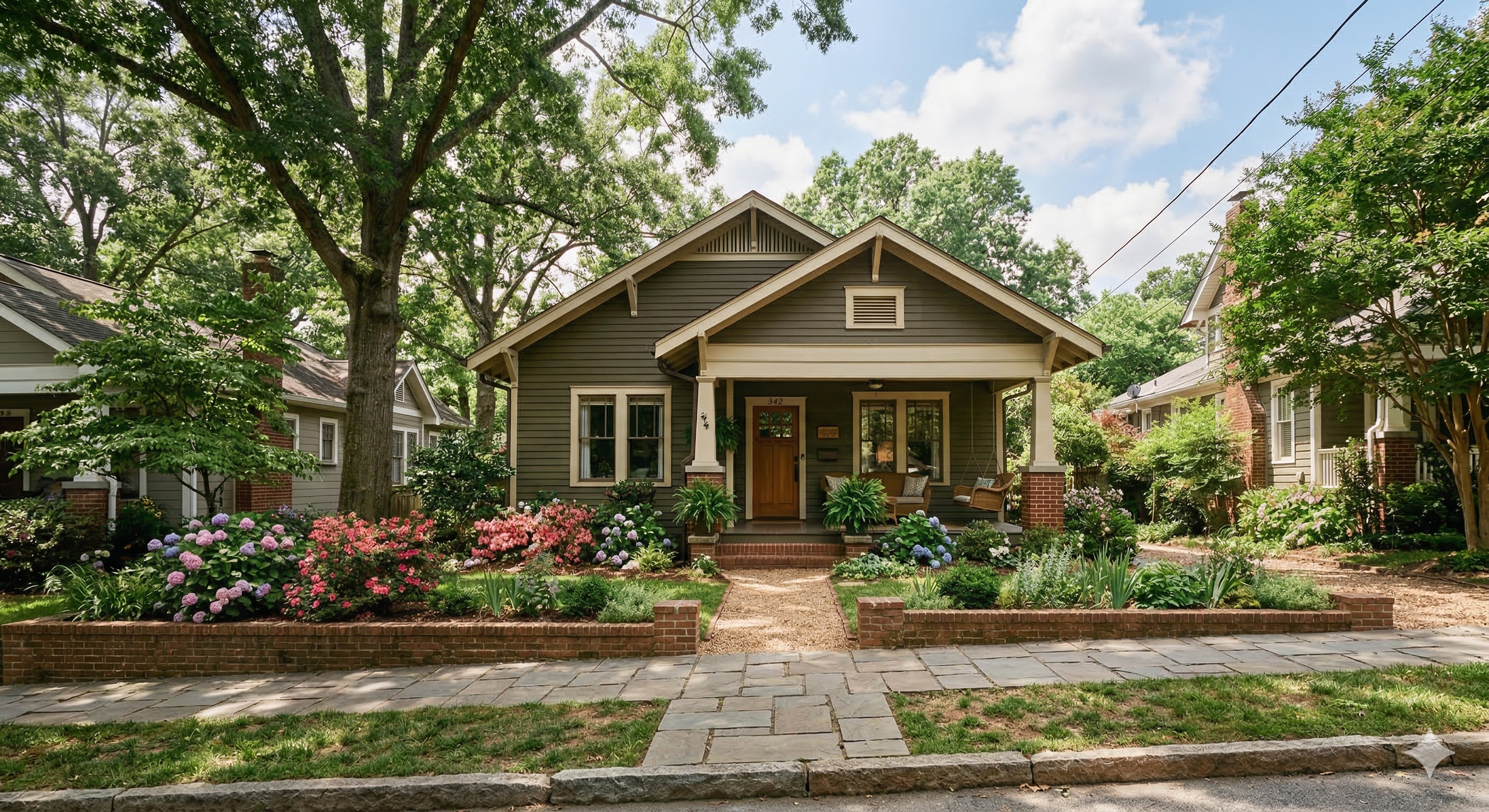
6. East Atlanta Village: Eastside BeltLine Adjacency Under $500,000
East Atlanta Village (EAV) occupies the stretch of the Eastside roughly along Flat Shoals Avenue and Glenwood Avenue, east of the I-20 interchange. It is one of the more established neighborhood commercial corridors on the southeast side: The EARL, the Midway Pub, Argosy, and a dense strip of locally owned bars and restaurants along Flat Shoals Avenue define the neighborhood's walkable core.
Redfin data showed a median sale price around $395,000 to $450,000 range in early 2026, reflecting some softness from prior highs, with an analyst projection of approximately 6-7% growth potential in 2026 as BeltLine extensions continue to improve connectivity. The neighborhood is walkable to portions of the BeltLine Southside Trail corridor and near I-20 for access to downtown and the airport.
EAV occupies a different position on this list than the southwest side neighborhoods above. It is more established, with a longer track record of appreciation and a more built-out commercial district. That means lower upside relative to entry price than Adair Park or Sylvan Hills, but also more neighborhood amenity right now. For a first-time buyer who values walkable food and entertainment options as part of daily life, EAV delivers that without paying Inman Park or Reynoldstown prices.
Average rent for bungalows in EAV runs around $2,200 per month, creating solid rental yield for buyers who eventually move out of the neighborhood rather than sell. The density of young professional and creative renters in the area supports consistent rental demand.
ROI snapshot:
Entry point: $350,000 to $550,000
BeltLine access: Southside Trail corridor
MARTA: No direct station; primarily car or bike dependent
Key catalyst: BeltLine Southside Trail connectivity, established commercial district
Rental potential: Strong, particularly for bungalows and shotgun houses
Best for: Buyers who want an established neighborhood with walkable amenities at a step below Inman Park pricing
7. East Point: The Value Play Just Off the MARTA Spine
East Point is not technically "intown" in the way the southwest Atlanta neighborhoods above are, but it belongs on this list. It sits along the Red and Gold MARTA lines with multiple station access points, approximately 8-9 miles southwest of downtown and about 2 miles from Hartsfield-Jackson Airport. Average prices in East Point run from the high $200,000s to low $300,000s, making it one of the most affordable markets in the immediate Atlanta metro area with this level of transit connectivity.
Atlanta Agent Magazine's 2026 predictions specifically named East Point as gaining traction among buyers priced out of Grant Park and Decatur, and the neighborhood's proximity to Tyler Perry Studios and the broader film industry employment base has contributed to steady demand.
The Adams Realtors March 2026 data confirms East Point among the six least expensive intown markets with average sales prices at or below $350,000. It appreciated at a more moderate pace than Oakland City over the last decade, which means there is arguably more runway left relative to how much it has already moved.
I grew up in East Point. The honest version from someone who knows it personally: East Point is not a monolith. Block-by-block conditions vary considerably. The Craftsman housing stock along East Point's historic residential streets is genuinely good. The commercial corridor along Main Street has had investment interest. But buyers need to get specific about which streets they are buying on, not just which city.
ROI snapshot:
Entry point: $200,000 to $375,000
BeltLine access: Not directly on the BeltLine trail system
MARTA: Multiple Red/Gold line stations (College Park, East Point, Lakewood stations all in the vicinity)
Key catalyst: Film industry employment growth, Tyler Perry Studios proximity, airport adjacency for rental demand
Rental potential: Very strong, one of the best on this list for pure rental yield
Best for: Buyers who prioritize MARTA access and maximum square footage for the dollar; investors looking for cash flow with appreciation upside
The Neighborhoods I Am Not Including, and Why
A few neighborhoods come up constantly in first-time buyer ROI conversations that I want to address directly.
Reynoldstown. Reynoldstown had a median sale price of approximately $675,000 to $709,000 in 2025-2026 data. It has seen 20%+ appreciation year-over-year in recent reporting periods. That track record is real. But with median prices in that range, Reynoldstown is no longer a first-time buyer market for most people reading this. It belongs in a different conversation.
Kirkwood. Median listing prices around $529,000 as of March 2026. Kirkwood is a strong neighborhood with a genuine commercial district on Hosea Williams Drive, Pullman Yards as an entertainment anchor, and BeltLine trail access. For a first-time buyer with a budget in the $450,000 to $550,000 range and the financial profile to support it, Kirkwood is worth serious consideration. But at current pricing, it is at the top of the first-time buyer range, not the middle of it.
West Midtown. The Interlock, Echo Street West, and the Westside Paper development have made West Midtown one of the hottest commercial corridors in Atlanta. Average prices in the neighborhood cluster around $700,000 and higher. This is move-up buyer territory.
Old Fourth Ward. Median prices in O4W hover near $550,000. BeltLine Eastside Trail access, Ponce City Market proximity, and strong demand from young professionals have driven this market well past first-time buyer accessibility for most.
Midtown Atlanta. Midtown Atlanta real estate is predominantly condos, with per-square-foot prices typically ranging from $300 to $600 or more depending on the building and floor. Piedmont Park access, MARTA connectivity, and walkability to Peachtree Street make Midtown a strong long-term urban buy — but the entry point puts it in move-up buyer territory for most first-time buyers.
What Makes a First-Time Buyer Deal in These Neighborhoods
The buyers I work with who have gotten the best outcomes in these markets share a few characteristics.
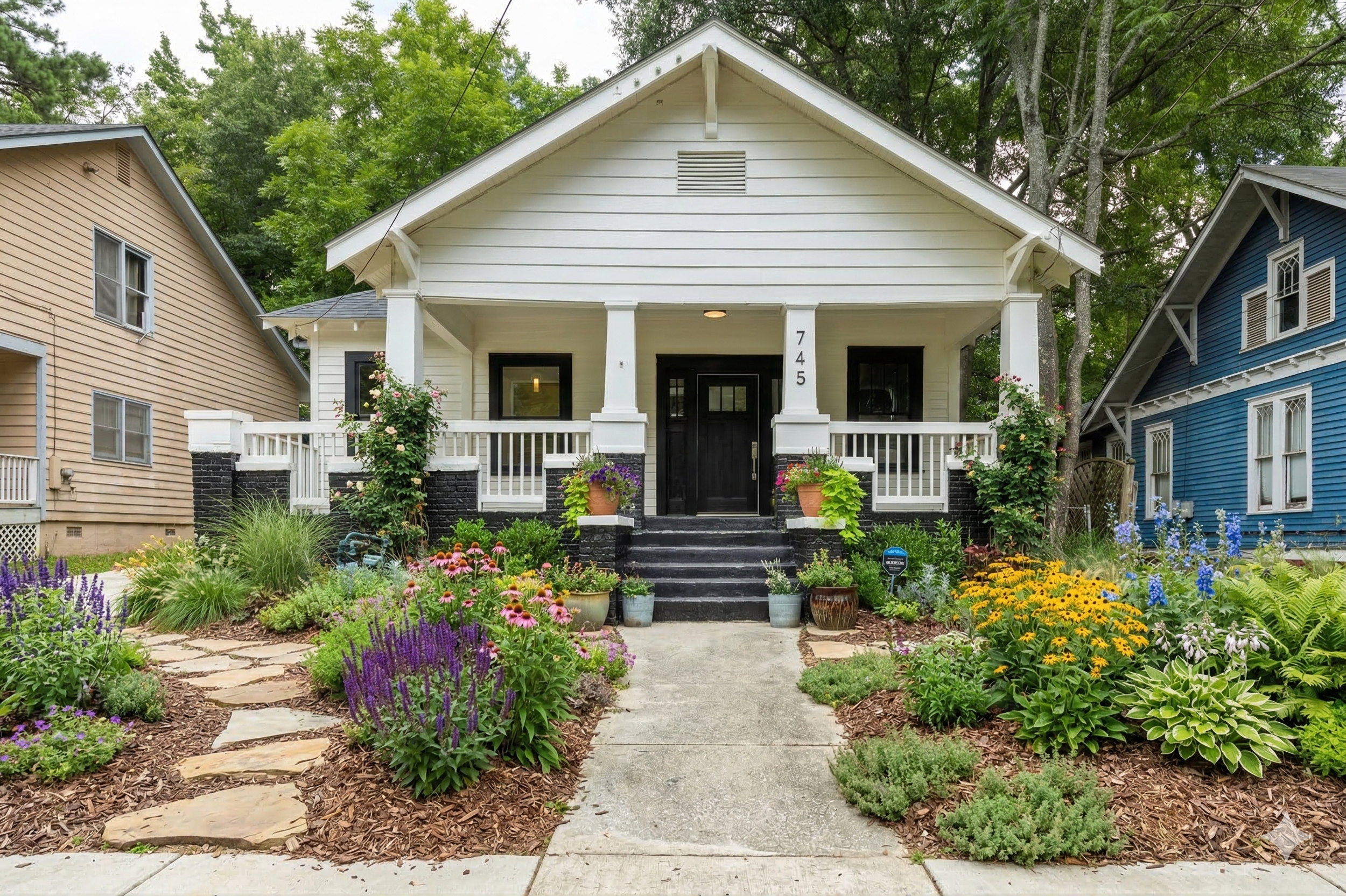
They bought with some renovation tolerance. In Adair Park, Westview, Sylvan Hills, and East Point especially, the best value is still found in homes that need cosmetic work. A buyer who can look past dated tile, original bathrooms, and older kitchens and see the structure and location underneath has access to entry prices that turnkey-only buyers cannot touch.
They understood their hold timeline before they bought. ROI in real estate is time-dependent. If you are buying a home in Adair Park at $310,000 with a plan to hold for five to seven years, the development pipeline at Murphy Crossing has time to materialize and affect your resale value. If you are buying with a two-year horizon, you are taking on more uncertainty.
They used down payment assistance. Georgia has several programs for first-time buyers, including Georgia Dream through the Georgia Department of Community Affairs. The City of Atlanta has administered Invest Atlanta programs for buyer assistance. These programs change, have income limits, and have funding cycles. A lender who knows the local landscape can tell you what is currently available and whether you qualify.
They got specific about streets, not just neighborhoods. Block-by-block conditions in all of these neighborhoods vary meaningfully. A house on a fully invested, renovated block in Sylvan Hills is a different buy than a house on a block that has not turned over. I walk buyers through this before they make an offer, not after.
Down Payment Assistance and First-Time Buyer Programs in Atlanta 2026
First-time buyers in Metro Atlanta have access to programs that can meaningfully reduce the upfront cash requirement. The landscape changes, so verify current availability, but as of early 2026 the programs worth researching include:
Georgia Dream Homeownership Program (Georgia Department of Community Affairs): Offers below-market fixed interest rates and down payment assistance for eligible first-time buyers, typically defined as buyers who have not owned a home in the past three years. Income and purchase price limits apply.
Invest Atlanta: The City of Atlanta's economic development authority has administered programs including the Vine City Advantage Program and Westside Home Repair Program for specific corridors. Programs targeting the southwest side have historically been relevant for buyers in West End, Oakland City, Westview, and Adair Park corridors.
Atlanta Land Trust: Operates community land trust properties in several southwest Atlanta neighborhoods, including units with income-restricted pricing for buyers who qualify at 80% of Area Median Income. The 30310 zip code, which covers many of the southwest side neighborhoods on this list, has had Atlanta Land Trust activity.
Georgia Dream and Invest Atlanta programs have specific requirements, and not every lender knows how to use them. I work with buyers on these programs regularly and can connect you with lenders who have actually closed transactions using them — not just ones who say they can.
Let’s Talk About Your Down Payment Options →
Federal tax credits: The Opportunity Zone designation that applies to parts of West End and other southwest Atlanta neighborhoods primarily benefits investors, not owner-occupants, for the tax incentive structure. Understand what applies to you specifically before treating this as a buyer benefit.
I work with buyers through the full program qualification process. The programs worth pursuing require preparation: clean credit, completed homebuyer education courses, and lender relationships that know the programs. If you are reading this as a first-time buyer and this is new information, start the process six months before you plan to close, not six weeks.
What the 2026 Market Means for First-Time Buyers Specifically
Atlanta entered 2026 as one of the top four first-time buyer markets nationally, per Zillow. The factors driving that ranking: about 45% of Atlanta listings qualified as affordable relative to local incomes, inventory has increased compared to the 2021-2022 peak squeeze, and competition, while still present, is not at the frenzied multiple-offer-no-contingency pace of 2021.
But the market has nuance that the national ranking does not capture.
Mortgage rates settling around 6% in 2026 are historically reasonable but feel expensive to first-time buyers who have only heard stories about 3% rates. The math at 6% on a $350,000 home after 10% down is roughly $1,900 to $2,000 per month principal and interest, before taxes and insurance. At 6% on a $300,000 home after 10% down, you are around $1,600 to $1,700. These numbers are achievable for households in the $75,000 to $95,000 income range, which is not wealthy by current Atlanta standards but is a realistic profile for the first-time buyer market.
The agents who have been loudest in Atlanta's 2026 market commentary are clear on one thing: waiting for rates to drop is a poor strategy. If rates drop from 6% to 5.5%, that will bring more buyers into the market and put upward pressure on prices. The buyers who are ready now and move decisively have less competition than they will when the rate-sensitive buyers who have been sitting out finally enter.
The neighborhoods on this list have the characteristic that first-time buyers need most: room to grow. They are not at the top of their appreciation cycle. They have infrastructure investment coming, development pipelines confirmed, and BeltLine or MARTA access that will continue to drive demand as the city's urban growth continues.
First-Time Buyer Mistakes to Avoid in These Atlanta Neighborhoods
These are the mistakes I see most consistently in southwest Atlanta and EAV transactions — not generic first-time buyer errors, but specific patterns that show up in these markets.
Trusting Zillow’s Zestimate in High-Variance Rehab Markets
In neighborhoods like Adair Park and Sylvan Hills, a fully renovated bungalow and a deferred-maintenance property three doors down can have a $150,000 price difference. Zillow’s algorithm averages them. The result is a Zestimate that overvalues unrenovated properties and undervalues turnkey ones. Always price based on comparable sales of similarly conditioned homes on comparable streets — not neighborhood-level averages.
Buying on Neighborhood Name Without Walking the Block
West End is not uniform. East Point is not uniform. Oakland City is not uniform. A property on one street may be two blocks from active investment and four blocks from a block that has not turned yet. The difference matters for resale value and for daily experience. Request a showing that includes a walk of the surrounding blocks, not just the interior of the house.
Waiving the Inspection to Win a Competitive Offer
In a market where renovation tolerance is one of the key ROI drivers, waiving an inspection on a 1920s or 1930s bungalow means taking on unknown cost exposure. These homes have foundation characteristics, plumbing configurations, and electrical systems that require experienced eyes. The inspection is your cost-discovery mechanism. Even in competitive offer situations, there are ways to make an offer attractive without removing your ability to understand what you are buying.
Not Verifying the School Zone Before Closing
Every neighborhood covered in this article is served by Atlanta Public Schools, and school assignments are made by address — not neighborhood name. Zoning can and does change. Verify the specific property address against current APS zoning before you close, not after.
Misunderstanding Which Down Payment Assistance Programs Apply
Georgia Dream, Invest Atlanta’s corridor-specific programs, and the Atlanta Land Trust all have geographic and income eligibility requirements that are not interchangeable. A buyer who qualifies for Invest Atlanta’s Vine City Advantage Program cannot apply it to a purchase in East Atlanta Village. Work with a lender who has actually closed transactions using the specific program you plan to use — not just one who says they are familiar with it.
Treating Development Timelines as Guarantees
Murphy Crossing has had three terminated developer relationships over more than a decade. The proposed MARTA infill station has an estimated completion of 2030, and that estimate was made in 2024. Infrastructure timelines in Atlanta have historically run longer than projected. If your ROI thesis requires a specific catalyst on a specific schedule, build in margin. A five-to-seven-year hold gives these developments time to materialize. A two-year hold does not.
Should I Buy Now or Wait? An Honest Answer for 2026
The question I hear most often from first-time buyers right now is whether to wait for mortgage rates to come down before making a move.
Here is the honest version.
Rates around 6% are historically reasonable. They are not where they were in 2020 and 2021, but they are not historically painful either. The question is not whether 6% feels comfortable — for most buyers, it does not, especially compared to what people bought at two years ago. The question is what the alternative actually looks like.
If rates drop from 6% to 5.5%, more buyers re-enter the market. More buyers in these specific neighborhoods means more competition for the same limited inventory — particularly in Oakland City, Westview, and Adair Park, where the number of move-in-ready properties at any given time is already small. You may get a lower monthly payment, but you may pay more for the house. You cannot refinance your purchase price.
If you are waiting for rates to return to 4%, it is worth thinking carefully about the economic scenario in which that happens. Rates typically fall that sharply when broader economic conditions are bad. That environment is not one in which most first-time buyers feel confident about job security, down payment savings, or making a 30-year commitment.
What you can control right now: your credit profile, your down payment position, your understanding of the specific blocks where value still exists, and the lender relationships you build before you need them. None of those things get easier by waiting.
The development pipelines in these neighborhoods — Murphy Crossing, the 840 Woodrow Street project, the BeltLine Southside Trail completion — are moving forward on their own timeline regardless of what mortgage rates do. Entry prices that reflect pre-delivery uncertainty exist now. After delivery, they will not.
If you are on the fence about timing, I will tell you exactly what I would do in your position right now — based on your income, your target neighborhoods, and what is actually available.
Schedule a Call — No Commitment Required →
Comparing the Neighborhoods: A Side-by-Side Look
| Neighborhood | Entry Price Range | BeltLine Access | MARTA Access | Development Pipeline | Best ROI Profile |
|---|---|---|---|---|---|
| Adair Park | $250K–$500K | Direct (Westside Trail) | West End Station (walkable-ish) | Murphy Crossing, strong | Renovation-tolerant buyer, medium-term hold |
| West End | $200K–$500K | Direct (Westside Trail) | West End Station (direct) | Lee + White established, West End Mall potential | Transit-first buyer, rental investor |
| Oakland City | $300K–$500K+ | Southwest Trail corridor | Oakland City Station (dedicated) | Murphy Crossing, 840 Woodrow (2027), MARTA infill proposed 2030 | MARTA-dependent buyer, confirmed pipeline buyer |
| Westview | $250K–$400K | Southwest Trail | Oakland City Station (0.5–1 mi) | BeltLine corridor exposure | Budget-constrained buyer, more sq ft per dollar |
| Sylvan Hills | $200K–$350K | Southwest corridor | Oakland City + Lakewood Stations | Spillover from surrounding neighborhoods | Tightest-budget buyer, most patience required |
| East Atlanta Village | $350K–$550K | Southside Trail vicinity | No direct station | Established commercial district | Walkable amenity buyer, solid rental yield |
| East Point | $200K–$375K | Not on BeltLine | Multiple Red/Gold stations | Film industry, airport economy | Maximum sq ft per dollar, rental cash flow |
Still deciding between two or three of these? I can tell you which one actually fits your situation — based on your budget, how long you plan to hold, and what you’re realistically willing to take on. Twenty minutes, straight answers, no pressure.
Book a Free 20-Minute Call With Kristen →
Schools in These Neighborhoods
All of the neighborhoods covered in this post are served by Atlanta Public Schools (APS). Schools serving each of these neighborhoods include a mix of elementary, middle, and high school options across APS. Research and visit schools to determine fit for your family. Always verify zoning by specific property address, as school assignments are address-specific and can change.
FAQ: Atlanta Intown Neighborhoods, First-Time Buyer ROI 2026
Which intown Atlanta neighborhood has the best home price appreciation for first-time buyers in 2026?
Oakland City has one of the strongest documented long-term appreciation records among affordable intown neighborhoods, with average sale prices rising by nearly $300,000 since 2016 according to Adams Realtors March 2026 data. Adair Park and West End have also appreciated significantly over the same period. For buyers entering in 2026, the question is which neighborhoods have the most near-term catalyst still in front of them, which is why the Murphy Crossing development pipeline, the proposed MARTA infill station near Oakland City, and the broader southwest BeltLine corridor are central to the analysis.
Can I actually afford to buy intown Atlanta as a first-time buyer in 2026?
If your household income is in the $70,000 to $100,000 range, you have real options in Sylvan Hills, Westview, portions of West End and East Point, and entry-level properties in Adair Park and Oakland City. Income limits vary for down payment assistance programs. Get pre-approved before you start touring homes so you know exactly what range you are working in.
Is it better to buy near the BeltLine or near a MARTA station for ROI?
Both have documented appreciation premiums, and the best answer is properties that have both. BeltLine-adjacent properties have historically commanded 15-25% higher appreciation than the city average based on 2024 housing data. MARTA-adjacent properties tend to hold value better in slower markets and attract consistent rental demand. Oakland City has both. West End has both. If you can only choose one, MARTA proximity tends to be more durable for pure investment purposes; BeltLine proximity currently commands a stronger lifestyle premium.
What does $300,000 actually buy intown Atlanta in 2026?
At $300,000, you are looking at Sylvan Hills or Westview for entry-level bungalows, often needing some renovation. East Point gives you more house for the money at this price. In Adair Park and Oakland City, $300,000 is at the lower end of the market and typically means a home that needs work. In East Atlanta Village, Kirkwood, or Reynoldstown, $300,000 is below the market median and a tight search.
Should I buy a home that needs renovation for better ROI?
Generally yes, especially in these southwest side neighborhoods, if you are comfortable with the process and have budgeted realistically. Buyers who can tolerate dated cosmetics and look past original bathrooms and kitchens access the best entry prices. Cosmetic renovation budgets of $30,000 to $70,000 on top of a $280,000 purchase in Sylvan Hills or Westview can produce a substantially different resale position in three to five years than buying a fully renovated home at $380,000.
Which neighborhoods on this list have the strongest rental potential?
East Point, West End, and Oakland City have the strongest combination of MARTA access and price-to-rent ratios. East Atlanta Village has strong rental demand from young professional renters. Adair Park is strong for renovated bungalows near the trail. Sylvan Hills benefits from Atlanta Metropolitan State College proximity.
If rental potential is driving your decision, let’s run the actual numbers on properties that are available right now. Yield calculations are more useful than averages when you are looking at a specific address.
Talk to Kristen About Investment Potential →
How does down payment assistance work for first-time buyers in Atlanta?
The Georgia Dream Homeownership Program through the Georgia Department of Community Affairs is the most established program, offering below-market rates and down payment assistance for income-qualifying buyers who have not owned a home in the past three years. Invest Atlanta has administered programs targeting specific corridors. The Atlanta Land Trust has income-restricted homeownership opportunities in southwest Atlanta neighborhoods. All of these have income limits, purchase price limits, required lender participation, and homebuyer education requirements. Start the qualification process at least six months before your target closing date.
Is it smart to buy in a neighborhood that is still changing?
Depends on your timeline and risk tolerance. Neighborhoods in earlier stages of appreciation, like Sylvan Hills and Westview, carry more uncertainty than more established areas. The payoff is lower entry price and more appreciation runway. The risk is that catalysts take longer to materialize than expected. Buyers who need to move in 18 months should buy more established neighborhoods. Buyers with a five-to-seven-year horizon can take on more development risk for more upside.
What is the BeltLine's actual impact on home prices near me?
The Atlanta BeltLine is a $5 billion+ infrastructure project that is converting former rail corridors into 22 miles of multi-use trails connecting 45 intown neighborhoods. BeltLine-adjacent properties have documented appreciation premiums in the 15-25% range above the city average based on housing data through 2024. The trail segments most relevant to this post are the Westside Trail (serving West End, Adair Park, and the southwest side corridor) and the Southside Trail (serving East Atlanta Village and the southeast side corridor). Westside Trail opened in 2017. Southside Trail segments continue to expand.
What if I can only spend $250,000? What are my intown options?
At $250,000, your options narrow but they are not zero. Sylvan Hills has listings in this range, typically homes that need work. East Point has options at this price point with more square footage. Parts of West End have listings in the $200,000 range for condos and some single-family homes needing significant renovation. Atlanta Land Trust community land trust properties in the southwest side serve buyers at 80% of Area Median Income ($60,000 to $86,000 depending on household size) and may provide purchase prices below market.
How does Zillow's national first-time buyer ranking affect Atlanta specifically?
Zillow ranked Atlanta fourth nationally for first-time buyers in 2026 based on rent burden, affordable listing share, inventory relative to renters, and concentration of prime-age buyers. The ranking reflects the overall Atlanta metro, not just the intown market. Intown Atlanta is generally more expensive than the metro average. The ranking is useful context but should not be taken as a statement about any specific neighborhood's accessibility.
How do I evaluate whether a specific street in one of these neighborhoods is a good buy?
Get specific MLS data on comparable sales within 0.25 miles over the past 12 months. Walk the block at different times of day and different days of the week. Talk to the immediate neighbors if you can. Look at the renovation level of surrounding homes, active construction or renovation visible on the block, and any commercial or infrastructure development in the immediate vicinity. A real estate agent who knows these neighborhoods block by block can tell you the difference in a way that aggregate neighborhood data cannot.
Closing
I work with first-time buyers across Metro Atlanta and I know these neighborhoods from years of watching them move, stall, and accelerate.
The right intown neighborhood for your first purchase is not the one with the most name recognition or the most Instagrammable coffee shop. It is the one where the fundamentals — the price point, the infrastructure trajectory, your timeline, and your renovation tolerance — actually line up with each other.
You have done the research. You know the neighborhoods. The next step is a conversation about whether your specific budget and goals align with what is actually on the market right now.
I do not do pressure. I do straight talk and specific answers.
Schedule Your Free Atlanta Buyer Strategy Call →
Come as you are, come on home.
Looking for more on Metro Atlanta neighborhoods and first-time buyer topics? Browse the full guide series at kristenjohnsonrealestate.com. For the complete Adair Park neighborhood guide, including street-level detail, schools, and market data, visit Living in Adair Park GA. For the Oakland City guide, visit Living in Oakland City GA. For the intown Atlanta grant and program post on Grant Park, visit Living in Grant Park GA.