

Infrastructure, Growth & Neighborhoods to Watch: What's Changing in Atlanta in 2026
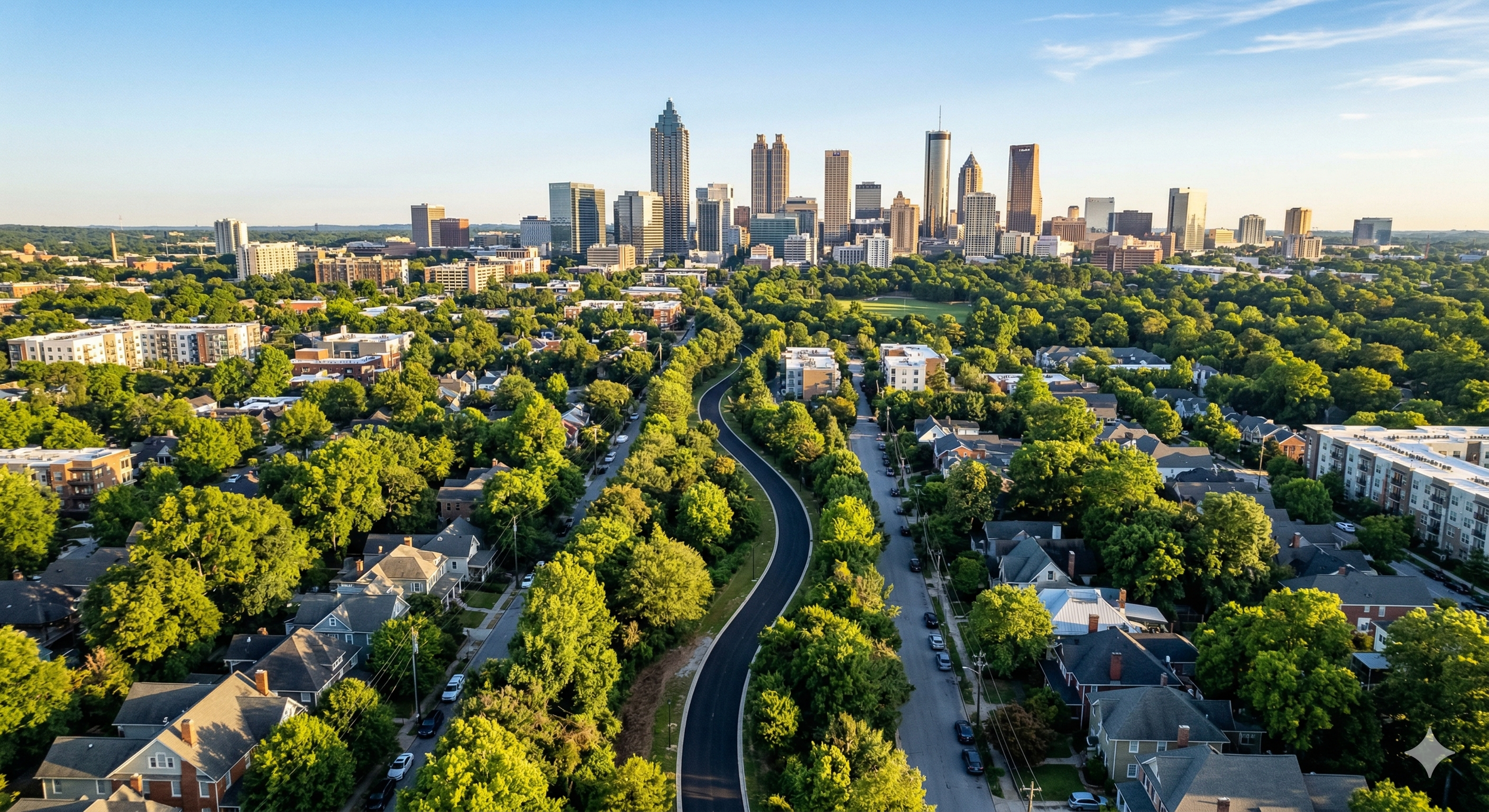
Atlanta is in the middle of something that doesn't happen very often — a genuine convergence of major infrastructure investment, private development at an Olympic-scale, and a global spotlight that's forcing the city to actually finish what it started. The 2026 FIFA World Cup is the accelerant, but the changes coming to this city run deeper than a sporting event. They've been in motion for years.
I work with buyers across Metro Atlanta — people relocating from other cities, first-time buyers trying to get in before prices move, investors looking for the next pocket of growth, and move-up buyers trying to understand what their current neighborhood is worth relative to where they're considering. One conversation I have constantly right now is about timing. Is now the right time to buy? Which neighborhoods are on the way up? What's actually being built, and when?
Here's what I want to give you in this post: a clear-eyed look at what's changing in Atlanta in 2026 — the projects that are real and underway, the neighborhoods that are directly in the path of that investment, and what it all means if you're making a real estate decision right now.
Nearly a decade of working this market has taught me that infrastructure always wins. When a city builds a trail, extends a transit line, or commits $5 billion to filling in a hole that's sat there for decades, neighborhoods respond. The question is whether you're positioned before that response happens — or after.
Here's what you need to know.
Why 2026 Is a Different Kind of Year for Atlanta Real Estate
Let me put the current moment in context before getting into the specifics.
Atlanta last had a transformation moment like this in 1996, when the city hosted the Summer Olympics. That event delivered Centennial Olympic Park, major stadium infrastructure, and a wave of downtown investment that shaped the city for the next 30 years. The World Cup is different in scope but similar in effect: it creates a forcing function. Projects that have been in planning or pre-development for years suddenly have a hard deadline, and that deadline has real money behind it.
What's different about 2026 compared to previous cycles is the breadth of what's happening simultaneously. The BeltLine is nearing loop completion after two decades. MARTA is launching its first new transit line in 25 years. The Gulch — a 40-foot-deep rail chasm that sat vacant in the heart of downtown for a generation — is now an active construction site with buildings open, hotels topped out, and an entertainment district targeting a June 2026 opening. Neighborhoods that have been waiting for infrastructure are getting it all at once.
The market context matters here too. Atlanta's housing market has normalized after the overheated 2021–2023 cycle. Price corrections happened in some submarkets. Inventory increased. Days on market lengthened. What that means in practical terms: buyers have more room to negotiate than they've had in years, and in some of the neighborhoods I'm about to describe, infrastructure investment hasn't yet been priced in the way it will be once these projects are complete and operational. That window won't stay open indefinitely.
The BeltLine at 85%: What Trail Completion Actually Means for Buyers
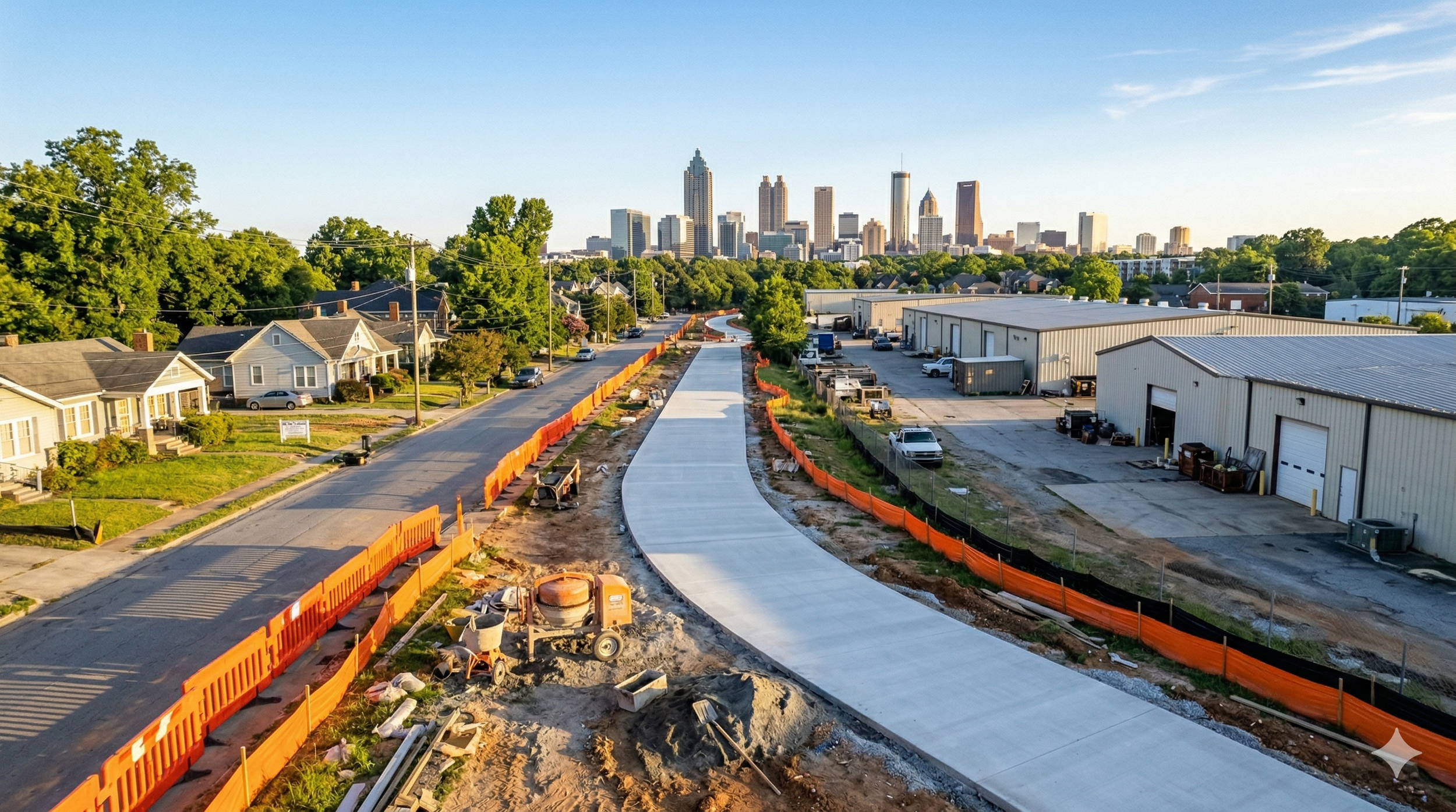
The Atlanta BeltLine is the longest-running story in Atlanta real estate, and it's worth being direct about what it is and what it isn't. It's a 22-mile loop of multi-use trails, parks, and planned transit built on old rail corridors that circle the city. It connects 45 intown neighborhoods. By early 2026, approximately 85% of the trail is complete — a milestone that took the project from 30% completion in 2019 to where it stands now.
For fiscal year 2026, Atlanta BeltLine, Inc. approved a $242 million budget — the largest in the project's history and a 20% increase over the prior year. That number tells you something important: this isn't a project running out of momentum. It's accelerating.
Here's what's actively happening on the trail right now:
The Northeast Trail — Segment 3 is one of the most significant pieces still in progress. This federally funded section connects the BeltLine mainline to the MARTA Lindbergh Center station, PATH 400, and the Armour-Ottley business district. Right-of-way acquisition is complete, construction bids are going out in spring 2026, and the build window runs approximately 42 months from there. When this segment opens, it creates a true transit-connected trail corridor in the northeast part of the city.
The Southside Trail is the section getting the most attention right now, and for good reason. Segments running from west of I-75/85 to Boulevard were targeting construction completion in early 2026. Sections near Oakland City MARTA are advancing through design. When complete, this segment links Pittsburgh Yards directly into the trail network and puts Peoplestown, Summerhill, and Chosewood Park on the BeltLine map.
The Westside Trail — Segment 6 is a 0.6-mile extension connecting to the existing trail at Ralph David Abernathy Boulevard. Design work runs through early 2026 with construction targeting completion by 2027.
The full 22-mile loop is targeted for completion by 2030. The long-term vision includes $3.5 billion in light rail running the entire loop — though the transit picture is more complicated than the trail picture, which I'll address below.
What does BeltLine access actually do to real estate? The research is consistent. Properties within a half-mile of an active BeltLine trail command measurable premiums, and those premiums grow as the trail matures and as adjacent development fills in. The early evidence is in Old Fourth Ward, Inman Park, Kirkwood, and Edgewood — all of which saw significant appreciation after Eastside Trail access arrived. The same cycle is now playing out on the Southside and Westside.
If you're buying in a neighborhood where a BeltLine segment is currently in design or early construction, you're buying before that premium is fully priced in.
MARTA's First New Transit Line in 25 Years: The Rapid A-Line
Here's a number worth sitting with: Atlanta hasn't expanded its permanent transit system since December 2000, when MARTA opened the Sandy Springs and North Springs stations on the Red Line. That's 25 years of a city adding people, jobs, and traffic — with no new transit lines.
That changes in 2026.
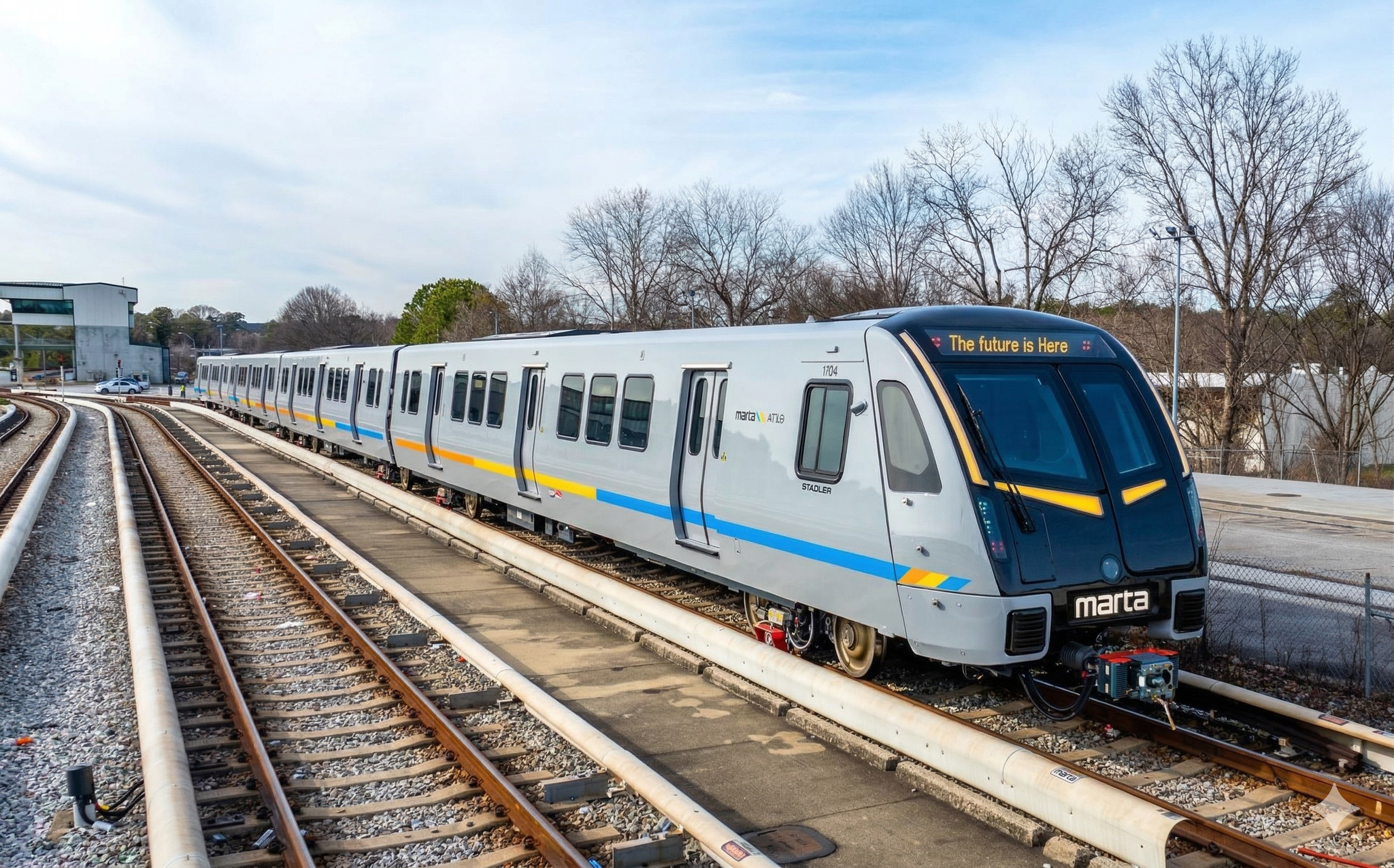
The MARTA Rapid A-Line is Atlanta's first Bus Rapid Transit (BRT) line, and it's targeting a spring or summer 2026 debut. BRT isn't standard bus service — it operates in dedicated lanes, uses off-board payment, offers level boarding at both the front and rear doors, and runs on signal priority that reduces travel time. Think of it as a surface-level rail experience at a fraction of the infrastructure cost.
The route connects downtown Atlanta to Summerhill, Peoplestown, and the BeltLine's Southside Trail via a 14-stop, five-mile loop. If you look at that route and then look at housing prices in those neighborhoods, you start to see the opportunity clearly. Summerhill and Peoplestown are both south Atlanta neighborhoods that have been in active revitalization — but lacked the transit infrastructure that made their northern counterparts so attractive to buyers who don't want car-dependent lives. The A-Line changes that math.
This is exactly the kind of infrastructure moment that creates buying opportunities before the market fully adjusts. Buyers who understand transit-adjacent real estate know that the announcement of a line and the opening of a line are two very different price points. We're approaching that second moment in South Atlanta right now.
The MARTA BRT lanes are already visible along Mitchell Street in South Downtown, running in dedicated red lanes past Hotel Row. The infrastructure is going in the ground.
The ATL Spoke: Autonomous Shuttles and What They Signal
In May 2026, Atlanta gets something essentially no other American city has at scale: free, driverless autonomous shuttles operating in the urban core.
The ATL Spoke is a 12-month autonomous shuttle pilot funded by a $1.75 million Atlanta-region Transit Link Authority grant. The free shuttles run seven days a week, approximately 10 hours a day, connecting MARTA's West End station to the BeltLine's Southwest Trail at the Lee + White development. During Atlanta's World Cup match days, service hours extend to 16 hours a day. In late summer 2026, the route extends north to the Atlanta University Center colleges — Spelman, Morehouse, Clark Atlanta — to align with the fall semester.
On its own, a one-year pilot shuttle service doesn't move the needle on home prices. But it matters as a signal. The BeltLine hired a vice president of transit innovation specifically for this initiative. A three-year BeltLine Transit Study launched in 2023 is on pace to wrap in summer 2026, at which point it will identify preferred transit alignments and station locations for the full 22-mile loop. The autonomous shuttle is, per BeltLine leadership, the beginning of a broader ecosystem of multiple transit modes around the loop.
For neighborhoods like West End, Adair Park, and the Atlanta University Center corridor, this is tangible, operational transit access starting in 2026. The longer-term light rail vision adds to the investment thesis for buyers thinking five to ten years out.
Downtown Atlanta's Transformation: Centennial Yards, South Downtown, and the World Cup Effect
Downtown Atlanta has been the city's longest-running development disappointment. For decades, the area around Peachtree Street and Broad Street was underutilized and a significant drag on the city's image. The Gulch — a sunken rail yard beneath street level covering roughly 40 acres between Mercedes-Benz Stadium and Five Points MARTA — sat effectively vacant while billions in development went elsewhere.
That story is over. What's happening in downtown right now is the largest single concentration of investment Atlanta has seen since the 1996 Olympics.
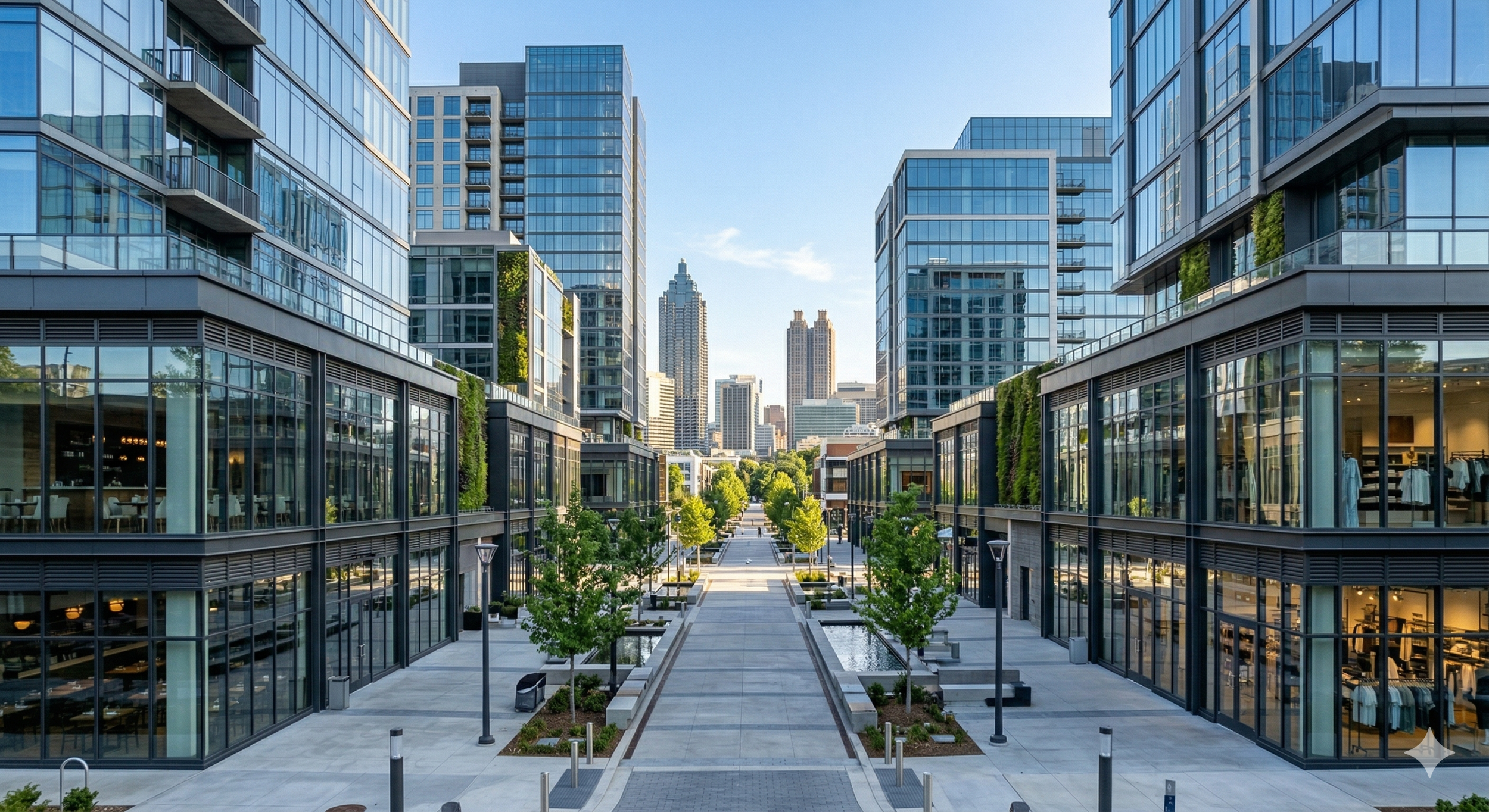
Centennial Yards is the centerpiece. The $5 billion, 50-acre development is rising from the former Gulch on a new platform built to street level. The long-term vision includes more than 4 million square feet of residences, 4 million square feet of commercial space, over 1,000 hotel rooms, and a Live Nation-operated concert venue. Here's what's already open or opening in 2026:
Hotel Phoenix — an 18-story, 292-room boutique hotel — is open. The Mitchell, an 18-story apartment tower, is open. The entertainment district is targeting a June 2026 opening ahead of World Cup matches. It's anchored by Cosm Atlanta, a three-level, 70,000 square foot immersive entertainment venue with an 87-foot LED dome, alongside a 5,300-seat Live Nation concert venue, a central plaza designed for 3,000 people, and a food hall. Signed tenants include Busy Bee Café (the historic West Hunter Street institution, relocating to this new context), Shake Shack, and The Irish Exit.
South Downtown — the Broad Street corridor running from Five Points MARTA south toward Mercedes-Benz Stadium — has seen its own transformation. Historic Hotel Row along Mitchell Street has been restored and activated. New restaurants including Delilah's Everyday Soul and Bottle Rocket Sushi Tavern are taking storefront space. The historic Atlanta Constitution Building at 143 Alabama Street, vacant since the 1970s, is in the midst of an adaptive reuse project that will create a conduit between Centennial Yards, Five Points, and Underground Atlanta.
MARTA completed a makeover of Five Points station — the system's largest and busiest hub, where 10 bus routes converge — targeting completion ahead of the World Cup.
What does this mean for buyers? Downtown Atlanta residential real estate remains underpriced relative to comparable urban cores in other major metros. The Mitchell is leasing. Centennial Yards has 2,000+ residences planned in subsequent phases. For buyers considering intown living, this is the most significant argument for downtown that has existed in 30 years. The infrastructure is going in. The amenities are opening. The global moment is arriving.
The Stitch: Atlanta's Highway Cap and What It Would Unlock
The Downtown Connector — the section of I-75/I-85 running through the heart of Atlanta — was built in the 1960s and cut through and permanently severed neighborhoods that had been connected for generations. The Stitch is the city's plan to undo some of that damage.
The concept: build a cap over a section of the highway and construct public green space on top of it, physically stitching back together the neighborhoods the highway divided. Cities that have done versions of this — Boston's Big Dig, Dallas's Klyde Warren Park — consistently see significant surrounding development and property value increases.
Atlanta's full vision includes 17 acres of park space, a performance pavilion, water features and gardens, 8 miles of street improvements including bike lanes and two-way street conversions, 3,000 units of affordable housing, and an estimated $9 billion in economic impact for downtown.
Federal funding was rescinded in 2025, creating a significant setback. But $50 million is now secured and the project is pressing forward. Phase 1 is targeting a permit-and-shovel-ready status by mid-2026, with construction completion projected around 2030. The Stitch Special Assessment District, approved by the Atlanta City Council, creates a funding mechanism through property-owning taxpayers within the district.
The Stitch is a longer-horizon story than most of what I'm covering in this post. But the neighborhoods most directly in its path — Midtown, Old Fourth Ward, Vine City, English Avenue — are worth watching as this project advances. The announcement-to-opening gap is where buying opportunities live.
West End: The $450 Million Mall Redevelopment
The Mall West End was one of Atlanta's most significant cultural and commercial institutions for decades. It also became one of the more prominent examples of suburban-style retail stranded in an urban context — underutilized and disconnected from the investment flowing into other parts of the city.
That changes with One West End.
In October 2024, the City of Atlanta, Atlanta Urban Development Corporation, and Atlanta Beltline, Inc. acquired the 12-acre Mall West End site. The approximately $450 million redevelopment is being led by BRP Companies and The Prusik Group. The project includes approximately 900 mixed-income rental units — 70% workforce housing, 20% affordable at 50% of Area Median Income, and 10% affordable at 80% AMI. The retail component covers approximately 125,000 square feet, including a grocery store, fitness center, food and beverage, and local boutiques. A minimum of 10,000 square feet of affordable commercial space is reserved for qualifying local small businesses, with a $500,000 developer commitment for tenant improvement allowances and rent credits.
Construction on the grocery store begins spring 2026. First residential components are expected in 2028.
The site sits within a federal Opportunity Zone, adjacent to MARTA's West End station, and directly on the BeltLine's Westside Trail corridor. For buyers looking at West End, Adair Park, and the broader Atlanta University Center corridor, this is one of the most consequential single-site developments in the area in a generation. The grocery store alone addresses the neighborhood's most persistent quality-of-life gap.
If you've looked at West End in the past and found the retail picture lacking — the BeltLine is there, the transit is there, Lee + White is there — what was missing was grocery access and a critical mass of activated retail. One West End directly addresses both.
Grove Park and the Microsoft Land Story
The Grove Park story is a long one, and I want to give you the honest version.
In 2021, Microsoft acquired 90 acres in Grove Park near the former Quarry Yards site for $127 million and announced plans for a corporate campus. The campus project has since been indefinitely paused.
What has happened instead: Microsoft is donating 22.5 acres of the Quarry Yards property to the city of Atlanta. The transfer is expected by summer 2026. The land fronts Donald Lee Hollowell Parkway and sits adjacent to Shirley Clarke Franklin Park — the 280-acre former Bellwood Quarry, now Atlanta's largest greenspace — along with the KIPP Woodson Academy Charter School and the Grove Park Recreation Center.
Atlanta Urban Development Corporation is being direct about the timeline. A Request for Qualification for a development partner is expected in Q4 2026. Partner selection: Q2 2027. Shovels in the ground: 2028 at the earliest. The project could yield 400 to 500 residential units.
Grove Park is a long-horizon play. The infrastructure pieces are assembling — the park is there, MARTA's Bankhead station is nearby, and a significant land parcel is now in the hands of a public entity with a mandate to build affordable housing and community amenities. For buyers with a 7–10 year horizon or investors comfortable with that timeline, the direction is clear. If you need near-term amenities or retail access, the neighborhood isn't there yet. Go in clear-eyed on that.
New Hubs Outside the City: Medley at Johns Creek and Cole Mountain in North Forsyth
Not all of 2026's major development is happening intown. Two projects north of the city are worth understanding.
Medley at Johns Creek addresses one of the most consistent buyer objections to that area: the absence of a real downtown or walkable commercial core. Built on the former 43-acre State Farm campus, Medley is Johns Creek's first genuine mixed-use town center. Opening October 2026, it includes approximately 900 luxury residences, a 25,000 square foot central plaza, and high-end dining and retail. For buyers who want the Johns Creek school zones but have pushed back on its car-dependent character, Medley changes the conversation.
Cole Mountain Town Center is creating something new in North Forsyth: a walkable downtown where there wasn't one. The 140-acre mixed-use development is opening its first phase in summer 2026. Toll Brothers is anchoring the residential side with luxury homes starting in the $700s–$800s — a price point that effectively sets a new floor for the area. If you have buyers who've been watching North Forsyth for affordability, understand that the floor is rising.
Both projects reflect a broader pattern across Metro Atlanta: the suburbs are urbanizing. Buyers who want walkable amenities and a town center feeling no longer have to choose exclusively between intown Atlanta and car-dependent suburban life. That's a meaningful shift.
The Amtrak Question: Atlanta as a Regional Rail Hub
Plans are advancing to expand Atlanta's Amtrak presence into a genuine regional rail connector — one that would link Atlanta to other Southeast cities in the way Charlotte, D.C., and other East Coast metros offer regional rail access. Currently, Atlanta connects to Amtrak only through the Crescent line (New York to New Orleans), stopping at Peachtree Station. A true intercity rail hub would position Atlanta alongside cities that are already drawing corporate headquarters and high-earning residents partly because of regional rail access.
This is a longer-horizon story. Regional rail investment at scale takes years and requires federal funding that is never guaranteed. But for buyers thinking about Atlanta's 10–20 year trajectory, the direction matters.
Complete Streets: The Pedestrian and Bike Infrastructure Story
Atlanta has long had the reputation of a car city. The city's investment in pedestrian and bike infrastructure — accelerating significantly in 2025 and 2026 — is beginning to change that experience.
Several Complete Streets projects are delivering in 2026:
The Juniper Complete Street Project in Midtown is nearing full opening. Juniper Street runs from Ponce de Leon Avenue through the heart of Midtown, and the improvements include protected bike infrastructure, improved pedestrian crossings, and streetscape upgrades that change the character of the corridor.
In Avondale Estates, a full overhaul of North Avondale Road and East College Avenue is reshaping the town's main commercial and pedestrian spine. Avondale has been one of the more underrated intown-adjacent communities for buyers who want MARTA access and walkability — this project makes the case stronger.
In Decatur, the West Howard Avenue Cycle Track and Traffic Calming Improvements project adds protected bike infrastructure along a well-traveled corridor connecting Decatur to the BeltLine.
The Boulevard corridor, running from Grant Park south through South Atlanta, is receiving pedestrian infrastructure improvements as part of a broader corridor connectivity investment.
For buyers who price walkability and non-car mobility into their location decisions, the gap between Atlanta and peer cities is closing faster than most people recognize.
Neighborhoods to Watch in Metro Atlanta in 2026
Here's my honest assessment of where the infrastructure investment is landing and what it means in practical terms.
Summerhill and Peoplestown
These adjacent south Atlanta neighborhoods sit at the intersection of multiple simultaneous infrastructure investments: the MARTA Rapid A-Line BRT route, the BeltLine Southside Trail's advancing segments, and proximity to Georgia State Stadium and the Georgia Avenue retail corridor. Summerhill has already seen significant revitalization — Georgia Avenue has become one of the more interesting retail and restaurant corridors on the Southside. Peoplestown sits just south of that activity and is still priced below it.
Both neighborhoods are priced below intown comparables with similar infrastructure access. That gap typically closes as transit opens and trail segments complete. If you're buying in this part of Atlanta right now, you're buying before the A-Line's first run. That matters.
West End
The BeltLine Westside Trail runs through the neighborhood. MARTA's West End station provides direct rail access downtown. The ATL Spoke autonomous shuttle launches from that station in May 2026. And the Mall West End redevelopment fills the single biggest retail gap in the neighborhood — grocery store construction begins spring 2026, with nearly 900 housing units by 2028.
What West End has had for several years: trail access, transit access, Lee + White as a destination, and a rich cultural history anchored by the Atlanta University Center. What it's been missing: grocery access and a critical mass of activated retail. One West End directly addresses both. I've covered Adair Park and the broader Westside corridor in depth in the KJRE neighborhood guide series.
Chosewood Park
Chosewood Park is the Southside neighborhood that buyers discovering Summerhill and Peoplestown eventually find. It sits just south of both and has BeltLine adjacency with a price point that still reflects its lower profile rather than its infrastructure access. As the Southside Trail completes and the A-Line operates, Chosewood Park has meaningful appreciation runway among buyers who are ahead of the broader market on information.
South Downtown
South Downtown isn't a traditional residential neighborhood — but it's becoming one faster than most people realize. Hotel Row, new restaurant openings, the MARTA BRT lanes on Mitchell Street, and the direct connection to Centennial Yards are activating a corridor that has been dormant for decades. For buyers who want to be adjacent to Atlanta's largest development project as it comes online, this corridor is worth understanding.
Avondale Estates
Avondale Estates is less a high-growth story and more an undervalued-stability story. The city is completing a significant streetscape overhaul of its main commercial corridor. It has MARTA rail access at the Avondale station. It has a genuine historic town center on US-278. And it consistently comes in below comparable walkable intown-adjacent markets because it's less famous than Decatur next door. For buyers who want the Decatur experience at a more accessible price point, Avondale Estates is worth a serious look.
College Park and Hapeville
Both communities adjacent to Hartsfield-Jackson are benefiting from airport-economy employment, Tyler Perry Studios film industry spillover, MARTA rail access, and price points that remain genuinely accessible for first-time buyers. Hapeville in particular has a walkable Main Street corridor that's evolved significantly over the past several years. For buyers priced out of intown neighborhoods who want similar infrastructure access, both are worth serious consideration.
Sugar Hill and Buford (Northeast Gwinnett)
For buyers looking northeast, Sugar Hill and Buford are showing the combination of walkable downtown revitalization, strong school systems, Lake Lanier access, and price points that remain below North Fulton alternatives. Buford City Schools specifically have driven significant residential demand without the price premium that has accumulated in East Cobb and North Fulton over the past decade. I've covered Buford in detail in the KJRE neighborhood guide series.
What This Means If You're Making a Real Estate Decision in Metro Atlanta Right Now
Let me give you the practical frame for all of this.
Infrastructure creates value. That's not a theory — it's what the data in Atlanta has shown consistently for two decades, most visibly along the BeltLine. The neighborhoods positioned well for the next cycle of appreciation are the ones where infrastructure investment is real and advancing, but not yet reflected in prices. That description fits Peoplestown, Chosewood Park, and West End right now better than it fits Old Fourth Ward or Inman Park, where the BeltLine premium has been fully priced in for years.
The World Cup creates a forcing function. Projects that have been in planning or pre-development are being completed. That means the amenity story in neighborhoods like South Downtown and West End is becoming real rather than theoretical.
The market is more balanced than it's been since 2020. Buyers have negotiating room. Seller expectations have adjusted. The combination of a more negotiable market and significant incoming infrastructure is not a moment to sit out if you understand what's being built.
I work with buyers throughout Metro Atlanta — from first-time buyers in College Park and Buford to move-up buyers in East Cobb and investors watching the Southside. If any of what I've covered here connects to a decision you're working through, the conversation is worth having.
Visit kristenjohnsonrealestate.com to see current listings and reach out directly. Come as you are, come on home.
Looking for neighborhood-specific guides to the areas mentioned in this post? I've covered the full Metro Atlanta map, including Summerhill, Adair Park, Old Fourth Ward, Grant Park, East Atlanta, East Cobb, Smyrna, Marietta, Vinings, and Buford. Browse the full series at kristenjohnsonrealestate.com.
FAQ: Atlanta Infrastructure, Growth & Real Estate in 2026
How close is the Atlanta BeltLine to completion?
As of early 2026, approximately 85% of the 22-mile BeltLine loop is complete. The project accelerated from 30% completion in 2019 to the current milestone, and full loop completion is targeted for 2030. The segments currently under construction or in active design include Northeast Trail Segment 3 (connecting to MARTA Lindbergh Center), Southside Trail segments near Oakland City MARTA, and the final portions of the Westside Trail. Each new segment that opens meaningfully changes the real estate picture for neighborhoods within a half-mile radius.
What is the MARTA Rapid A-Line and when does it open?
The MARTA Rapid A-Line is Atlanta's first Bus Rapid Transit line — dedicated lanes, modern stations, off-board payment, and level boarding that functions more like light rail than standard bus service. It connects downtown Atlanta to Summerhill, Peoplestown, and the BeltLine's Southside Trail via a 14-stop, five-mile loop. The target opening is spring or summer 2026. It's the first expansion of Atlanta's permanent transit system in 25 years, and it directly serves south Atlanta neighborhoods that have lacked rapid transit access to the urban core.
Which Atlanta neighborhoods are most directly affected by the 2026 infrastructure investments?
Summerhill and Peoplestown are at the intersection of both the MARTA A-Line and the BeltLine Southside Trail. West End is getting the Mall West End redevelopment, the ATL Spoke autonomous shuttle, and continued BeltLine trail investment. Chosewood Park sits adjacent to the Southside Trail with price points that haven't yet reflected incoming connectivity. South Downtown is being activated by Centennial Yards, the BRT lanes, and the Five Points station renovation. Grove Park has a longer timeline but significant land investment from the Microsoft donation.
What is Centennial Yards and why does it matter for downtown Atlanta real estate?
Centennial Yards is a $5 billion, 50-acre development rising from the former Gulch — a sunken rail yard that sat vacant in the heart of downtown Atlanta for decades. Backed by nearly $2 billion in city tax incentives, the project will ultimately include over 4 million square feet of residences, 4 million square feet of commercial space, a Live Nation concert venue, hotels, restaurants, and a central entertainment district anchored by the Cosm immersive dome. Multiple components are open and additional phases are coming online ahead of the June 2026 World Cup kickoff. This is the most consequential single development in downtown Atlanta in 30 years.
What is The Stitch project in Atlanta?
The Stitch is a proposal to cap a section of I-75/I-85 through downtown Atlanta and build public green space and civic amenities on top, physically reconnecting neighborhoods that the Downtown Connector divided in the 1960s. The full vision includes 17 acres of park space, 3,000 affordable housing units, and an estimated $9 billion in economic impact for downtown. Federal funding was rescinded in 2025, but $50 million is secured and Phase 1 is targeting permit-and-shovel-ready status by mid-2026 with completion projected around 2030. The neighborhoods most directly affected include Midtown, Vine City, English Avenue, and Old Fourth Ward.
What is happening with the Mall West End?
The Mall West End has been acquired by the City of Atlanta through a partnership with Atlanta Urban Development Corporation and Atlanta Beltline, Inc. The approximately $450 million redevelopment — led by BRP Companies and The Prusik Group — will transform the 12-acre site into One West End: roughly 900 rental units, approximately 125,000 square feet of retail including a grocery store, and dedicated space for local small businesses. Grocery store construction begins spring 2026; first residential components are expected in 2028. The site sits within a federal Opportunity Zone adjacent to MARTA's West End station and the BeltLine Westside Trail.
Is the Microsoft campus in Grove Park still happening?
The Microsoft corporate campus at the Quarry Yards site has been indefinitely paused. However, Microsoft is donating 22.5 acres of the 90-acre property to the City of Atlanta, with transfer expected by summer 2026. Atlanta Urban Development Corporation will oversee the land's redevelopment into community uses, potentially including 400–500 residential units. Development partner selection is expected in 2027, with construction starting around 2028. Grove Park is a long-horizon story — go in with that timeline clearly understood.
What is Medley at Johns Creek?
Medley at Johns Creek is a mixed-use town center built on the former 43-acre State Farm campus, targeting an October 2026 opening. It's Johns Creek's first genuine walkable downtown — approximately 900 luxury residences, a 25,000 square foot central plaza, and high-end dining and retail. For buyers who want to be in Johns Creek for the school zones and community but have pushed back on its car-dependent character, Medley directly addresses that objection.
How does the 2026 World Cup affect Atlanta real estate beyond downtown?
The World Cup's most direct real estate impact is concentrated in the downtown and Centennial Yards corridor. But the broader effect is the forcing function it creates for infrastructure projects across the city. BeltLine trail segments, the MARTA Five Points renovation, Complete Streets improvements in Midtown and Decatur, and the activation of South Downtown's commercial corridors are all being accelerated toward a June 2026 deadline. That acceleration is permanently improving neighborhoods well beyond the stadium footprint.
Is 2026 a good time to buy real estate in Atlanta?
The Atlanta housing market has normalized significantly from the overheated conditions of 2021–2023. Inventory has increased, days on market have lengthened, and buyers have more negotiating room than they've had in years. Simultaneously, the infrastructure investment described in this post is real and advancing — which means buyers who understand where the city is building have a window to get positioned before those investments are fully priced in. Whether it's the right time specifically for you depends on your financial position, timeline, and neighborhood targets. That's the conversation worth having directly.
How can I find out more about specific Atlanta neighborhoods?
I've built out a full Metro Atlanta neighborhood guide series at kristenjohnsonrealestate.com/kjre-blog covering intown neighborhoods and suburbs across Cobb, Gwinnett, Fulton, DeKalb, and Henry counties. Each guide covers current market data, what you get for the money, commute times, schools, things to do, and who each area is right for. If you're comparing multiple neighborhoods or trying to understand what a specific price point gets you in different parts of the metro, the guides are a solid starting point — and I'm available for the conversation after that.