

Is Atlanta Luxury Cooling or Still Strong? What the 2026 Numbers Actually Show
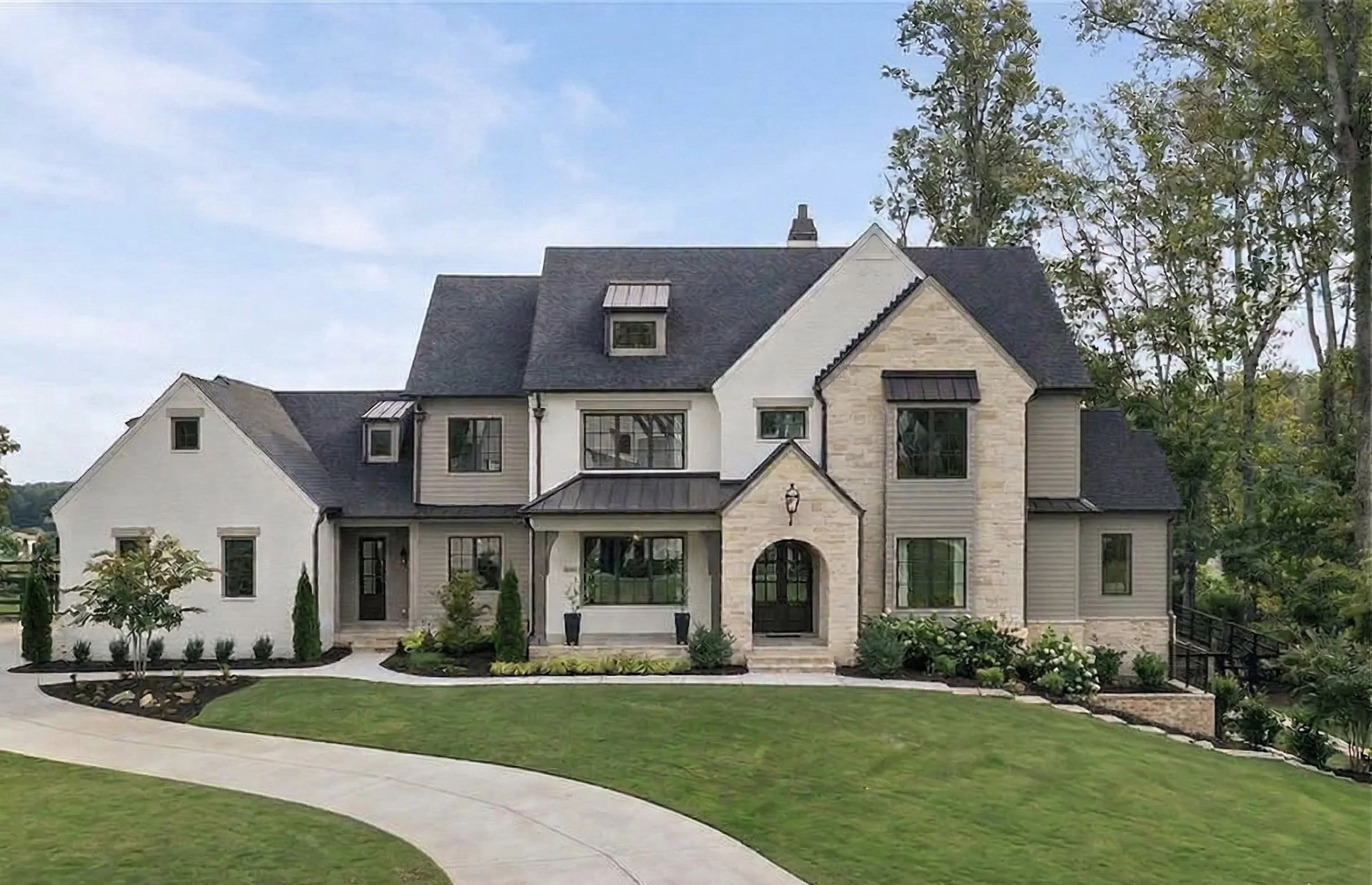
Atlanta's luxury market is not cooling so much as rebalancing, and the difference matters enormously if you are buying or selling above $1 million right now.
I get this question almost every week, usually from one of two people: a seller who read a headline about luxury sales slowing and is worried their high-end home will sit, or a buyer who has been waiting on the sidelines and wants to know if the top of the market is finally cracking. Both are reacting to the same shift, and both are usually misreading it. The high end of Metro Atlanta has changed direction, but "cooling" and "crashing" are not the same thing, and "still strong" does not mean it works the way it did in 2021.
I work with buyers and sellers across Metro Atlanta, from first-time purchases in the city to move-up and luxury transactions in Buckhead, Sandy Springs, Brookhaven, and the North Fulton suburbs. Nearly a decade of doing this means I have watched the luxury tier go through the frenzy, the rate shock, and now this current stretch, where the numbers tell a more interesting story than any single headline.
The short version: the entry and mid-range of Atlanta still leans toward sellers, while the luxury segment has tipped toward buyers for the first time since before the pandemic. Economists call this a K-shaped market, where two halves of the same metro move in opposite directions at the same time.
Here's what you need to know.
So Is It Cooling or Not? The Honest Answer
Both things are true at once, which is exactly why the headlines feel contradictory.
Luxury is cooling in the sense that competition has dropped, homes take longer to sell, and price growth at the very top has flattened. It is still strong in the sense that prices are not falling in most of the market, qualified buyers are still active, and well-priced homes in the best locations still sell quickly. What ended was the frenzy, not the market.
Here is the distinction I draw for clients. A cooling market is one returning to normal speed after running too hot. A declining market is one where values are actually dropping. Atlanta luxury, as of spring 2026, is mostly the first kind, with one narrow exception at the very top (more on the $3 million-plus segment below). Sellers who price for 2022 will struggle. Sellers who price for today will sell. Buyers who expect a fire sale will be disappointed. Buyers who expect real negotiating room will get it.
That nuance is the whole point of this post.
The K-Shaped Market: Why the Bottom and Top Are Moving in Opposite Directions
If you only read metro-wide averages, you will misjudge the luxury market completely, because the average blends two segments that are behaving nothing alike.
Below roughly $600,000, Metro Atlanta still leans toward sellers. Inventory in that range is tighter, entry-level and move-up buyers are competing for a limited pool of homes, and well-presented listings still draw multiple offers. This is where most of the metro's transaction volume lives, and it is the part of the market most people experience directly.
Above $1 million, the dynamics flip. Inventory has grown, the buyer pool is smaller and more deliberate, homes take longer to move, and sellers have lost the pricing power they had two years ago. The higher you go in price, the more pronounced this becomes.
The reason these two halves diverge comes down to who the buyers are and how they finance. Entry-level demand is structural: people need a place to live, household formation continues, and Atlanta keeps adding population and jobs. Luxury demand is more discretionary and more sensitive to two things headlines underplay: jumbo mortgage rates, which remain elevated compared to the pre-2022 norm, and the wealth effect from equity markets and tech compensation, which cooled from its 2021 to 2023 peak. Luxury buyers are still wealthy. They are simply less willing to overpay than they were when money was nearly free and everyone felt richer on paper.
If you want the full picture of how this split is playing out across the metro, I broke it down in Are Atlanta Prices Dropping or Just Normalizing? and in Why Does My Area Feel Flat If Atlanta Is Still Expensive?.
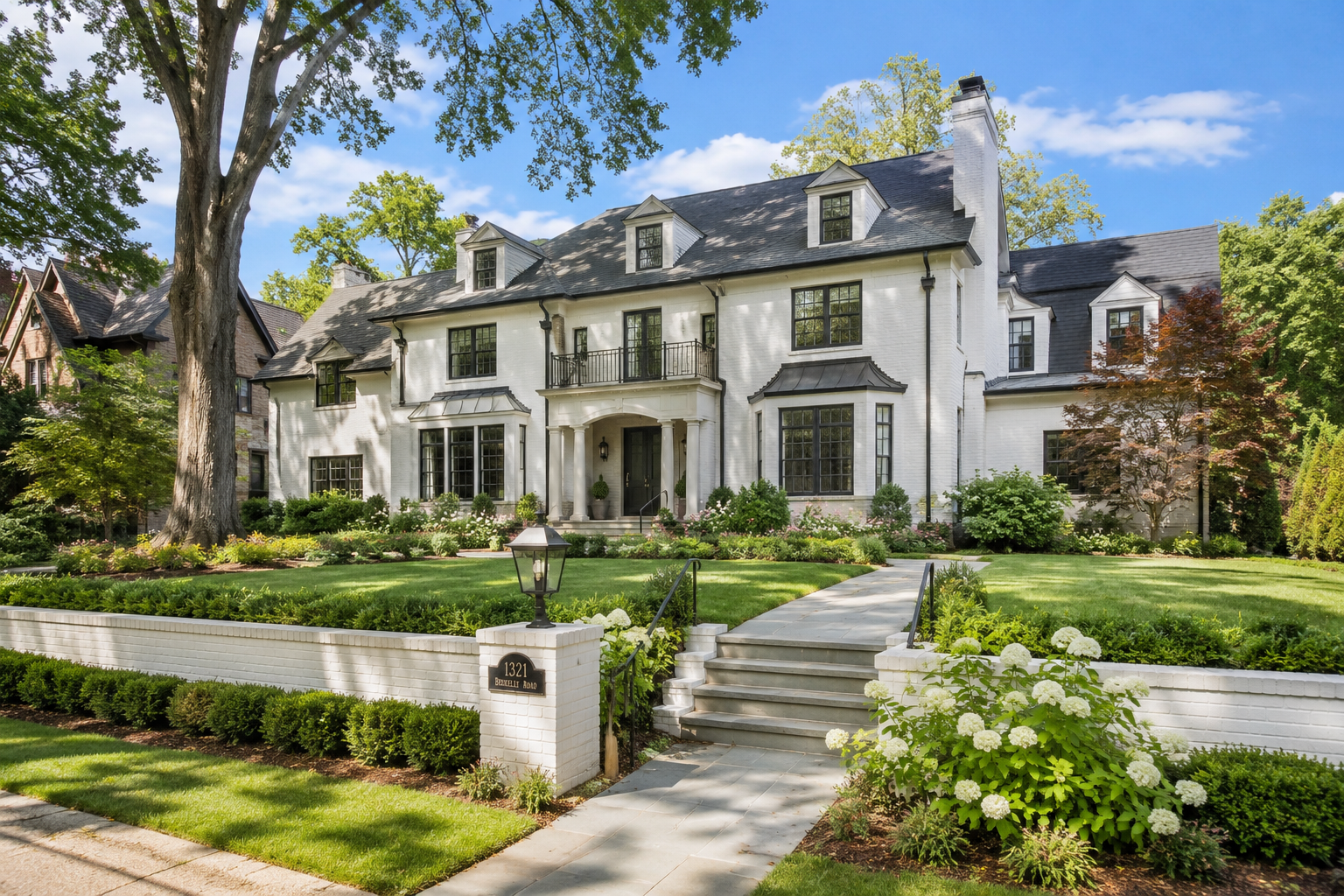
What the Numbers Say: Atlanta Luxury at a Glance
Let me give you the figures, then explain what each one actually tells you.
According to data compiled by First Multiple Listing Service (FMLS) and reported through the Atlanta REALTORS Association, the broader Metro Atlanta market in early 2026 had moved into balanced territory, with active listings up year over year and supply running around four months. The luxury segment specifically has moved even further toward balance, which is the headline that matters here.
| Metric (Atlanta Luxury, $1M+) | Spring 2026 | What It Tells You |
|---|---|---|
| Months of supply | ~4 months | Balanced for the first time since before the pandemic (up from 2 to 3 months during the frenzy) |
| Median luxury sale price | ~$1.38M | Still rising year over year, but growth is decelerating |
| Median days on market | ~38 days | Longer than the overall metro; buyers have time to evaluate |
| Sale-to-list ratio | ~97% | Selling ~3% below asking (was ~98% a year ago, above 100% two years ago) |
| Share of sales with multiple offers | ~22% | Down from 40%+ during the frenzy; bidding wars are now the exception |
A few of these deserve a closer look.
Months of supply is the single most useful number for judging cooling versus strength. A balanced market is generally 4 to 6 months of inventory. For most of 2021 through 2023, Atlanta luxury was running at 2 to 3 months, which is a deep seller's market that pushes prices up fast. Crossing into the 4-month range for the first time since before the pandemic is the clearest evidence that the segment has rebalanced.
The sale-to-list ratio is the quiet tell. Luxury homes have been selling at roughly 97 percent of asking, which means about 3 percent below list on average. A year earlier that figure was closer to 98 percent, and two years before that it was above 100 percent, meaning homes were routinely selling for more than asking. That steady slide is pricing power moving from sellers to buyers, captured in a single statistic.
Days on market tells the same story from a different angle. Luxury homes are taking longer to sell than the overall market, not because buyers vanished, but because the smaller luxury buyer pool now has the luxury of time. That patience is itself a form of negotiating leverage.
Is Atlanta Luxury Different From the Rest of the Country?
No, and that is reassuring rather than alarming. What is happening here is part of a national pattern, not an Atlanta-specific problem.
Nationally, the most expensive tier of homes has actually held up well. Redfin's analysis for the three months ending in late April 2026 found that median luxury sale prices rose year over year, outpacing the price growth in the non-luxury segment, while luxury pending sales also increased. In other words, high-end demand nationally is not collapsing.
What is rising fast is luxury inventory, and Atlanta is near the front of that trend. The same Redfin analysis put Atlanta among the metros with the largest year-over-year increases in active luxury listings, alongside Detroit and Seattle. More inventory with steady demand is the textbook recipe for a market shifting from frenzied to balanced. It is also exactly why buyers finally have options and sellers finally have competition.
So when someone tells you Atlanta luxury is cooling, the accurate response is: it is normalizing in step with the national high-end market, and the local twist is that our luxury supply is growing faster than most.
The One Place It Actually Is Softening: $3 Million and Up
Price growth in luxury is not uniform, and this is where "cooling" becomes literally accurate.
The deceleration gets steeper the higher you climb. In the $1 million to $2 million range, where most of Atlanta's luxury volume sits, prices have continued to appreciate, just at a slower and healthier pace. In the $2 million to $3 million range, appreciation has slowed further. Above $3 million, prices have essentially gone flat year over year, and some individual ultra-high-end properties have traded below what comparable homes commanded at the 2024 peak.
| Price Tier | Year-over-Year Price Change | Direction |
|---|---|---|
| $1M to $2M | Moderate gains | Healthy, sustainable appreciation; most active luxury tier |
| $2M to $3M | Slower gains | Appreciation cooling noticeably |
| $3M+ | Essentially flat | Softest segment; some homes trading below 2024 peak |
This is the segment where a seller genuinely needs to recalibrate expectations, and where a prepared buyer has the most leverage in the entire metro. The pool of buyers who can transact at $3 million-plus is small, those buyers are disproportionately rate-sensitive and equity-market-sensitive, and the properties are often distinctive enough that comparable sales are thin. All of that adds up to longer marketing times and real negotiating room.
If you are shopping at the very top, I covered which addresses actually hold their value through cycles in Which Atlanta Neighborhoods Are Truly Blue-Chip Luxury?, and I wrote a dedicated guide to the ultra-luxury end in Living in Tuxedo Park Atlanta.
The Condo Story Is Its Own Thing
The luxury condo market deserves a separate mention, because it can look alarming if you read it wrong.
Early 2026 was unusually quiet for Atlanta condo sales above $1 million, with only a handful of closings in January and February even though more than a hundred such units were actively listed. Months of supply in the $1 million-plus condo tier spiked, then improved sharply heading into spring as absorption picked back up.
The likely explanation is not that luxury condo buyers disappeared. It is what local condo analysts call the new construction effect: when several new high-end buildings deliver units at once, buyers who want a luxury condo gravitate toward the brand-new product, and resale inventory in older buildings sits longer while the new supply gets absorbed first. It is a redirection of demand, not an evaporation of it. The resale numbers normalized as spring arrived, which is consistent with that read rather than with a genuine demand collapse.
The practical takeaway: if you are selling a luxury resale condo right now, you are competing with new construction, and your pricing and presentation have to account for that. If you are buying one, the same dynamic is where your negotiating leverage comes from.
Submarket by Submarket: Where Luxury Is Tight and Where It Is Loose
"Atlanta luxury" is not one market. It is a dozen micro-markets that rebalanced at different speeds, and treating them as interchangeable is how buyers overpay and sellers mis-price.
Here is how the major luxury submarkets looked as of spring 2026 reporting. These figures move month to month, so treat them as a snapshot of relative conditions rather than precise current numbers, and verify anything specific before you act on it.
| Submarket | Median Luxury Price | Supply / Pace | Competition |
|---|---|---|---|
| Buckhead | Highest in metro (~$1.7M) | Inventory up YoY; best pockets still fast | Still competitive on well-priced homes |
| Sandy Springs | ~$1.3M | Tighter supply than Buckhead | Firm; relocation-driven demand |
| Brookhaven | ~$1.2M | Moderate days on market | Moderate; move-up buyers |
| Alpharetta / North Fulton | ~$1.2M | Healthier supply; longer to sell | Most room for buyers to be selective |
A few notes on what those differences mean in practice.
Buckhead is still the center of gravity for Atlanta luxury and carries the highest median sale prices in the metro. Even with inventory up year over year, well-located homes in its strongest pockets along West Paces Ferry and around Chastain Park still move quickly when they are priced right. This is a submarket where a prepared buyer still has to act decisively on the good listings.
Sandy Springs has been one of the firmer performers, with tighter supply than Buckhead and steady demand tied to corporate relocations and ongoing development around the City Springs district.
Brookhaven draws move-up buyers who want proximity to in-town amenities, and competition there is moderate rather than fierce. I cover the area in detail in Living in Brookhaven Georgia.
Alpharetta and the North Fulton suburbs are where buyers in the $1 million to $2 million range get the most room to be selective, with healthier supply and longer marketing times. That is the part of the metro where patience pays off most. The North Metro inventory build is significant enough that I wrote separately about what it means for sellers in Why Is North Metro Atlanta Inventory Rising, and How Should Sellers React in 2026?.
And outside the core, lake-oriented luxury continues to operate on its own logic. I covered the high end of Lake Lanier in Luxury Homes in Buford GA, where waterfront scarcity changes the supply-and-demand math entirely.

The Rate Picture, Because It Drives Everything Above $1M
You cannot understand the luxury slowdown without understanding jumbo financing, even though many people assume luxury buyers all pay cash.
Plenty of luxury buyers do pay cash, but a meaningful share still finance, and the relevant number for them is the jumbo loan rate, not the headline 30-year rate. After peaking in late 2023, mortgage rates settled into the low-to-mid 6 percent range through spring 2026, with jumbo products running slightly higher than conforming loans. That is a real improvement from the 7 percent-plus environment of 2024, and it restored meaningful purchasing power.
But it is nowhere near the sub-4 percent rates that fueled the 2020 and 2021 frenzy, and that gap is exactly why the luxury buyer pool became more deliberate. A higher jumbo rate adds hundreds of dollars a month to the carrying cost of a multimillion-dollar home, and at the very top those carrying costs add up to real money even for wealthy buyers. When financing is more expensive, discretionary buyers slow down, shop longer, and negotiate harder. That is the entire mechanism behind the cooling you are reading about.
The forward-looking risk for buyers waiting on the sidelines: if rates drift lower later in the cycle, more buyers re-enter, competition rises, and the current window of elevated inventory and reduced competition narrows. The combination available right now, moderate rates plus moderate competition, is arguably more favorable than a future of lower rates with bidding wars back in force.
What This Means If You Are Selling Luxury Right Now
The frenzy spoiled a lot of sellers, and the single biggest mistake I see is pricing to a market that no longer exists.
In a 2-to-3-month supply market, you could overprice, wait, and the market would catch up to you. In a balanced-to-buyer's market, an overpriced luxury listing does not wait for the market. It sits, accumulates days on market, and then sells for less than it would have if it had been priced correctly from day one, because buyers read stale listings as troubled listings.
What works now is disciplined pricing, genuine preparation, and presentation that accounts for your actual competition, including new construction if you are selling a condo. Staging matters more in a balanced market than in a frenzy, because buyers have alternatives and time to be choosy. Well-priced, well-presented luxury homes in strong locations are still selling, and many of them still sell within a few weeks. The homes that struggle are almost always the ones priced on hope rather than comparable sales.
If your home has been sitting, that is information, not bad luck, and it is usually fixable with a pricing and presentation reset.
What This Means If You Are Buying Luxury Right Now
This is the most negotiable luxury market Atlanta has seen in years, and the leverage shows up in more than just price.
You have more inventory to choose from, more time to evaluate without panic, and far less risk of being dragged into a bidding war. Fewer than a quarter of luxury sales now involve multiple offers, down sharply from the frenzy years. That means you can usually inspect, you should not waive contingencies, and you can negotiate on terms as well as price: closing-cost credits, repair allowances, rate buydowns, extended timelines, and sometimes furnishings.
A specific tactic I use with buyer clients: target well-located homes that have been listed 30 to 60 days. In this market, that is frequently a seller who overpriced initially and is now motivated, not a problem property. Those listings are where the real value is, and a strong, clean offer often gets meaningful movement.
The one caution: the biggest risk in this market is not losing a bidding war. It is overpaying for something that was mis-priced to begin with, in a segment where comparable sales can vary widely within a single zip code. That is the entire reason to work with someone who can pull true comps at the neighborhood and street level rather than relying on a list price or an automated estimate. I wrote about how negotiation actually works in this more even market in Negotiating in the 2026 Atlanta Market.
A Word on the Data and Timing
Market data ages quickly, especially in the luxury tier where a handful of high-value sales can swing a monthly figure. The numbers in this post reflect FMLS and Atlanta REALTORS Association reporting and national Redfin analysis from early to mid 2026, and they are accurate as a picture of conditions and direction. They are not a substitute for current, address-specific numbers the week you decide to buy or sell. Before you make a move, get a fresh read on your specific neighborhood and price point. That is the part I handle for clients, and it is where general market commentary stops being useful and real strategy begins.
It is also worth naming the tailwinds underneath all of this. Atlanta continues to add population, jobs, and corporate relocations, and the metro is hosting matches for the 2026 FIFA World Cup, which puts the city in front of a global audience. None of that changes the month-to-month numbers, but it is why the long-term case for well-located Atlanta luxury real estate remains intact even in a year when the frenzy has faded.
Frequently Asked Questions
Is the Atlanta luxury real estate market crashing in 2026?
No. The Atlanta luxury market is rebalancing, not crashing. Inventory has grown and competition has dropped, but prices in most of the luxury segment are still appreciating, just more slowly than during the 2021 to 2023 frenzy. The one exception is the $3 million-plus tier, where prices have flattened year over year. A balanced market with steady prices and longer marketing times is normalization, not a crash.
Are luxury home prices in Atlanta going up or down?
It depends on the price tier. In the $1 million to $2 million range, prices are still rising at a moderate, healthy pace. In the $2 million to $3 million range, appreciation has slowed further. Above $3 million, prices are essentially flat year over year, with some individual ultra-high-end homes trading below their 2024 peak. The broad answer is that most luxury prices are stable to modestly rising, with the very top being the softest segment.
Is now a good time to buy a luxury home in Atlanta?
For a prepared buyer, yes. This is the most negotiable luxury market Atlanta has seen in years, with more inventory, longer days on market, and fewer bidding wars than during the frenzy. Buyers have leverage on price and on terms like closing credits and repair allowances. The caution is to avoid overpaying for a mis-priced listing, which means working with someone who can pull accurate neighborhood-level comparable sales.
Why are luxury homes in Atlanta taking longer to sell?
Because the luxury buyer pool is smaller and more deliberate than the entry-level pool, and because jumbo mortgage rates remain elevated compared to the pre-2022 norm. With more inventory available, buyers have the time to evaluate carefully and negotiate, so well-located homes that are priced correctly still sell quickly, while overpriced listings sit and accumulate days on market.
What is a K-shaped housing market in Atlanta?
A K-shaped market is one where different price segments move in opposite directions at the same time. In Atlanta, the entry and mid-range below roughly $600,000 still leans toward sellers with tight inventory and competition, while the luxury segment above $1 million has shifted toward buyers with more inventory and less competition. The metro-wide average hides this split, which is why it is so commonly misread.
How much can I negotiate on a luxury home in Atlanta right now?
More than you could a year or two ago. Luxury homes have been selling at roughly 97 percent of asking on average, and overpriced listings that have sat for 50 or more days often have meaningful room to negotiate, sometimes tens of thousands of dollars. Beyond price, sellers in a balanced market are frequently open to closing-cost credits, repair allowances, rate buydowns, and flexible timelines.
Is Buckhead still the top luxury market in Atlanta?
Yes. Buckhead remains the center of Atlanta's luxury market and carries the highest median sale prices in the metro. Even with inventory up year over year, the strongest pockets, including the areas around West Paces Ferry and Chastain Park, still see well-priced homes move quickly. Other strong luxury submarkets include Sandy Springs, Brookhaven, and the North Fulton suburbs.
Why is luxury inventory rising in Atlanta?
More sellers are listing as price expectations moderate, and the urgency that drove the frenzy has faded. Atlanta has been among the national leaders in year-over-year growth in active luxury listings. Rising inventory paired with steady demand is the textbook recipe for a market moving from frenzied to balanced, which is what gives buyers options and forces sellers to compete on price and presentation.
Should I wait for prices to drop before buying luxury in Atlanta?
Waiting carries its own risk. Most luxury prices are stable rather than falling, so a significant drop is not the likely scenario outside the very top of the market. Meanwhile, if mortgage rates decline later in the cycle, more buyers re-enter, competition rises, and the current window of elevated inventory and reduced competition narrows. The combination of moderate rates and moderate competition available now is often more favorable than a future of lower rates and renewed bidding wars.
What price counts as luxury in Atlanta?
The commonly used benchmark is $1 million and above, which the National Association of Realtors treats as a luxury threshold. Within that, the dynamics vary significantly by tier, with the $1 million to $2 million range being the most active and the $3 million-plus range being the smallest and slowest-moving. Luxury is also location-specific, since a price that buys an entry-level luxury home in Buckhead buys something very different in the suburbs.
Are luxury condos in Atlanta a good buy right now?
They can be, with eyes open. Early 2026 was unusually slow for resale condo sales above $1 million, largely because new construction drew buyers toward brand-new units while older resale inventory sat. That dynamic gives resale buyers negotiating leverage, but it also means sellers are competing directly with new product. Whether a luxury condo is a good buy depends heavily on the specific building, its age relative to nearby new construction, and the HOA picture.
How is the Atlanta luxury market different from the national luxury market?
It is following the same national pattern with a local twist. Nationally, luxury prices have held up and even risen modestly while inventory grows. Atlanta is part of that trend, with the distinction that our luxury inventory has been growing faster than most major metros. So the national high-end market is normalizing, and Atlanta is normalizing a little faster on the supply side, which is good news for buyers.

Let's Talk
I work with buyers and sellers across Metro Atlanta's luxury submarkets and I read these numbers at the neighborhood and street level, not the headline level. Whether you are deciding how to price a high-end home in a balanced market or trying to figure out where your leverage is as a buyer, the strategy comes from current, specific data, not from a national news cycle.
Visit kristenjohnsonrealestate.com or reach out directly. Come as you are, come on home.
Looking for more on the Atlanta market and luxury segment? I've written about which Atlanta neighborhoods are truly blue-chip luxury, whether Atlanta prices are dropping or just normalizing, and how to negotiate in the 2026 Atlanta market. Browse the full guide series at kristenjohnsonrealestate.com.