

Which Atlanta Neighborhoods Are Truly "Blue-Chip" Luxury? A 2026 Guide for High-End Buyers
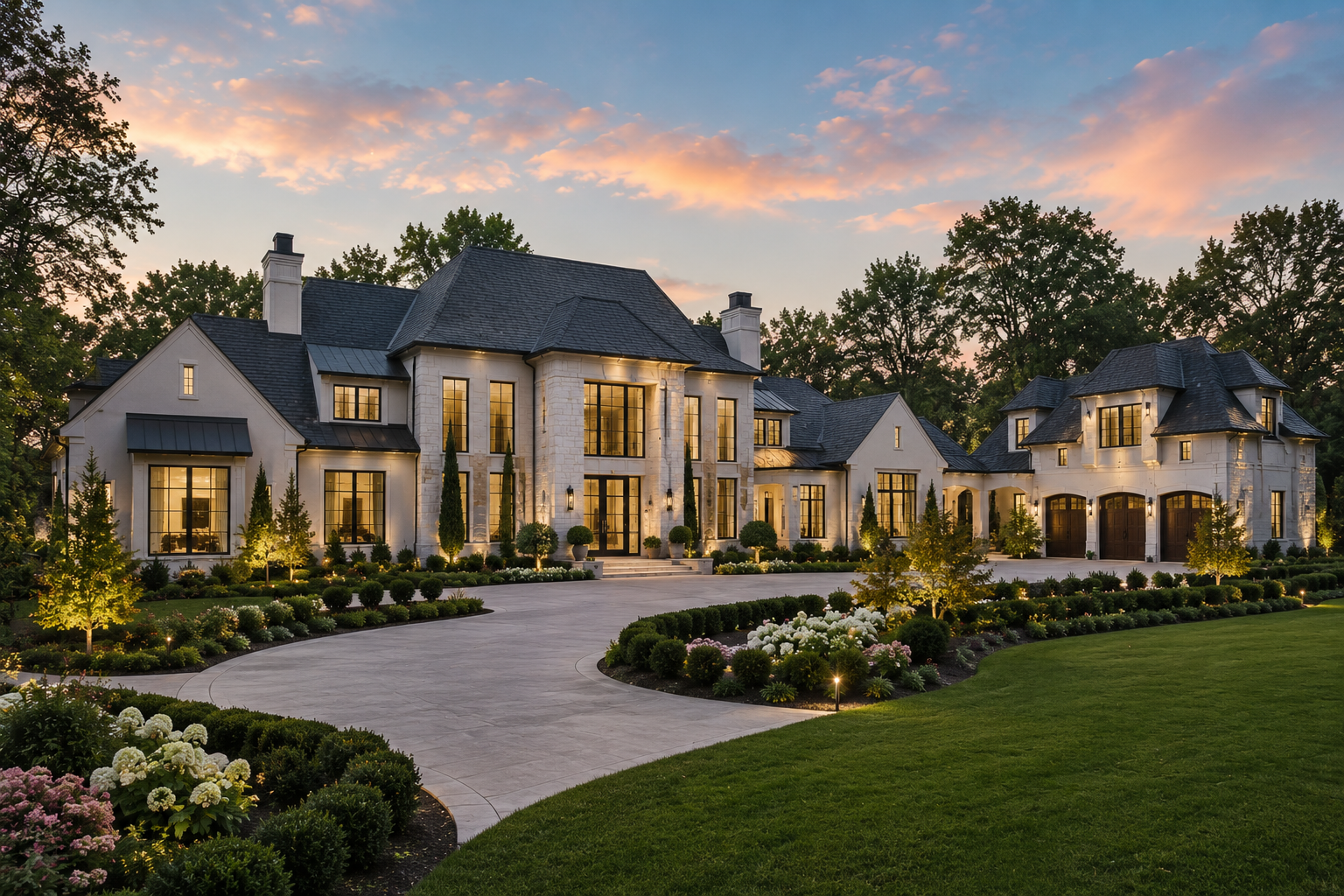
Atlanta's truly blue-chip luxury neighborhoods are the ones where home values have held up across multiple market cycles, where the architecture and lot sizes cannot be replicated by new construction, and where resale is built into the address itself. By that standard, the short list in Metro Atlanta is: Tuxedo Park, Chastain Park, Haynes Manor, Argonne Forest, the West Paces Ferry corridor, Historic Brookhaven, and Ansley Park, with Morningside, Garden Hills, and Druid Hills sitting just below that top tier. Everything else is luxury-priced. These are luxury-positioned, which is a different thing.
If you are a buyer entering Atlanta's high-end market for the first time, this distinction matters more than almost any other factor in your search. The luxury label gets applied to a lot of new construction in Atlanta. A $2 million price tag does not make a neighborhood blue-chip. What makes it blue-chip is whether the next buyer, ten or twenty years from now, will pay you what your home is worth, and whether the surrounding addresses will still command the same level of demand.
I work with buyers across Metro Atlanta, including buyers entering the luxury tier for the first time and existing high-net-worth clients moving up to estate homes. The blue-chip question comes up in almost every one of those conversations. What I tell them is the same thing I am going to tell you here: Atlanta has roughly seven to ten neighborhoods that meet the blue-chip standard, and the rest of the city's luxury market is something else entirely.
Nearly a decade helping Atlanta buyers means I have watched how these neighborhoods perform through rate cycles, inventory shifts, and corporate relocation waves. The pattern is consistent. The blue-chip neighborhoods absorb shocks. The newer luxury developments do not always recover as cleanly.
Here is what you need to know.
What "Blue-Chip" Actually Means in Real Estate
Before we get to the neighborhoods, we need to define the term. Blue-chip is borrowed from equity investing, where it refers to large, established companies with proven track records, strong fundamentals, and lower volatility than the broader market. Applied to residential real estate, the parallel is direct.
A blue-chip neighborhood has four core attributes.
The first is price stability across cycles. Blue-chip neighborhoods do not necessarily appreciate faster than the market in a hot year. What they do is hold value better in a slow year, recover faster in a recovery year, and avoid the bottom-tier drops that hit speculative new construction zones.
The second is scarcity and barrier to entry. The supply of homes is essentially fixed. There is no large undeveloped land for new infill, the lot sizes cannot be reproduced, the architecture is original to a specific era, and the residential character is protected by deed restrictions, historic designation, civic association covenants, or topography.
The third is buyer depth. There is a real, repeatable pool of buyers who specifically want this neighborhood, not just any house in this price range. That depth shows up in days on market for correctly priced homes, in the percentage of off-market transactions, and in the consistency of resale at or near comparable trades.
The fourth is infrastructure and institutional anchoring. Top-tier schools (public or private), private clubs, mature tree canopy, established civic associations, and proximity to the city's primary employment and cultural centers. These are the things that take generations to build and cannot be added to a new development on any timeline.
Atlanta has neighborhoods that check all four boxes. We will start there.
One more framing point before we get into the list. Blue-chip status is something a neighborhood earns over decades, not something a developer can manufacture in a marketing campaign. The neighborhoods on the list below have all been established as luxury addresses for at least fifty years, most of them for closer to a hundred. Their reputations are not a function of recent press, recent celebrity moves, or recent infrastructure investment. They are a function of the same factors that made them luxury addresses in 1925 or 1955: location, lot size, architecture, and the institutional anchors that grew up alongside them. New luxury inventory can be excellent. It is just not the same kind of asset.
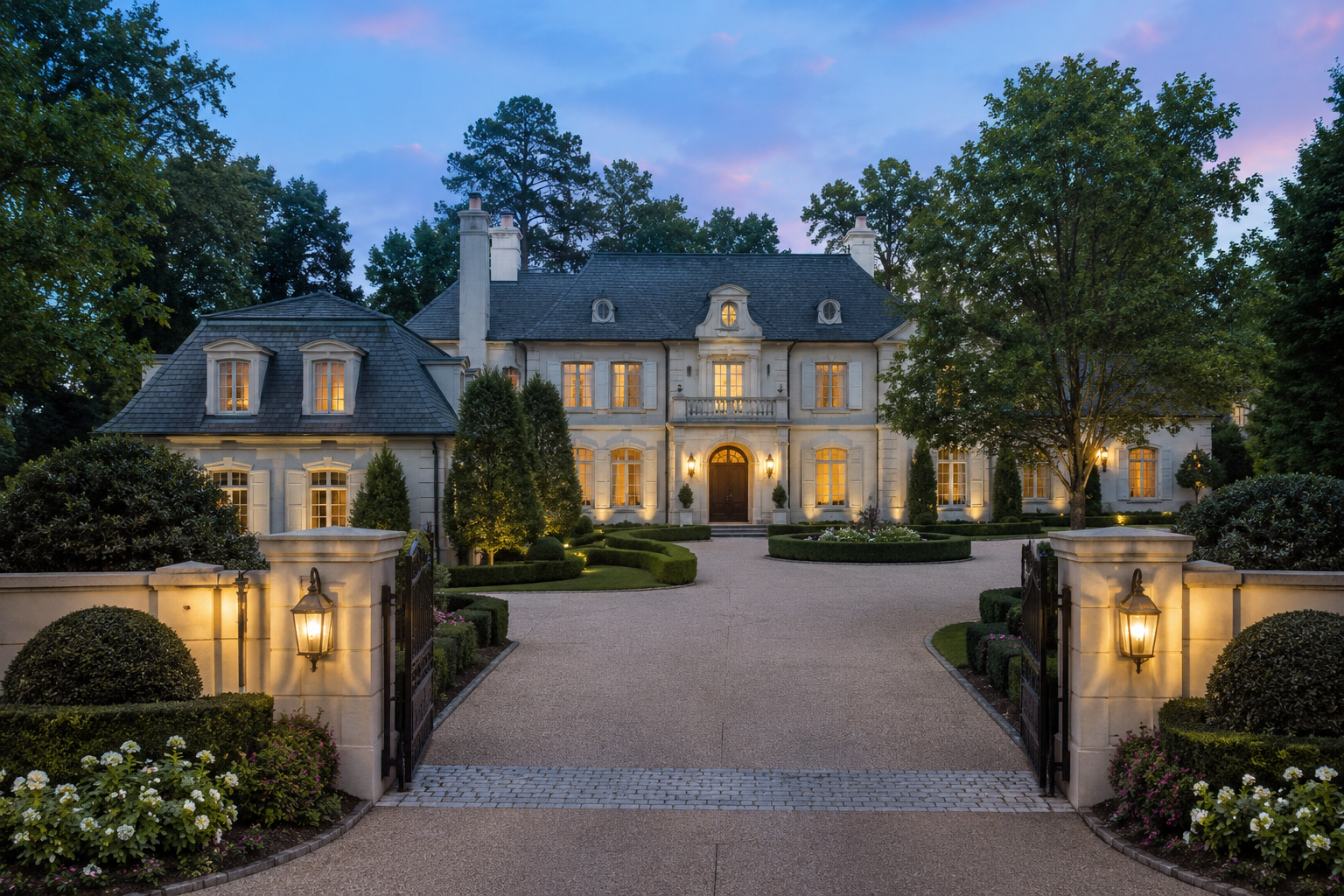
The Top Tier: Atlanta's Genuinely Blue-Chip Neighborhoods
Tuxedo Park
Tuxedo Park is the only neighborhood in Atlanta that sits unambiguously in a category of its own. The 2026 median sale price is in the $1.4M to $4.4M range depending on which data source you reference and which trailing window you use, and the average sale price runs $2.4M to $2.5M. The neighborhood's all-time residential sale benchmark anchors the top of the entire Metro Atlanta market.
What makes Tuxedo Park blue-chip is not the median price. It is the structural scarcity. The neighborhood is bounded by Blackland Road, Northside Drive, Moore's Mill Road, and West Paces Ferry. It includes the Georgia Governor's Mansion at 391 West Paces Ferry Road. The lots are one to two-plus acres, many of them flat, most of them densely wooded. The streets are private in feel, with mature tree canopy, gated entrances on individual properties, and a level of security infrastructure that is rare in the city.
You cannot build a Tuxedo Park lot. There are no large parcels left to subdivide, no land assembly opportunities, and the existing inventory is approximately 170 jobs and 1,095 residents in total per Redfin's neighborhood data. When a Tuxedo Park home sells, it tends to sell to a buyer who already knew exactly which neighborhood they wanted. That is the buyer-depth signal that makes a blue-chip address blue-chip.
If you have written about Atlanta luxury and you are not familiar with Tuxedo Park, you are not familiar with Atlanta luxury. Full neighborhood guide: Living in Tuxedo Park Atlanta.
Chastain Park
Chastain Park is Tuxedo Park's neighbor and the second clearly blue-chip address in Buckhead. The 2026 median luxury list price sits at $2.77M, with the broader neighborhood median around $1.79M. Days on market for correctly priced homes runs in the 24 to 32-day range, which is fast for the luxury tier.
What anchors Chastain Park as blue-chip is the park itself. 268 acres of public green space, with the Chastain Park Amphitheater, the North Fulton Golf Course, an equestrian center, tennis courts, a public pool, and walking trails. Park-adjacent residential streets command meaningful premiums over comparable Buckhead addresses without park access. Many Chastain Park homes back directly onto the park, which is the kind of lot configuration that does not exist in newer developments.
The architecture is layered. Original homes from the 1930s through 1960s coexist with extensively renovated rebuilds and new custom builds on existing footprints. Lot sizes typically run half an acre to two-plus acres. The 2026 Southeastern Design Showhouse is in Chastain Park, which is the kind of cultural marker that reinforces the neighborhood's positioning at the top of the Atlanta luxury map.
Haynes Manor
Haynes Manor is the most under-recognized of Atlanta's blue-chip neighborhoods, which is exactly why it qualifies. Buyers who end up here have usually compared it against Tuxedo Park, Chastain Park, and Garden Hills and concluded that those neighborhoods are solving a different problem. Haynes Manor solves a specific one: architectural significance plus direct park access at a more accessible entry point than Tuxedo Park.
The architecture is primarily English and French manor-style from the 1920s through mid-20th century. Slate roofs, stone facades, finely detailed interiors. Lots average half an acre. Many homes back up to or border Atlanta Memorial Park, which is 200 acres along Peachtree Creek with the Bobby Jones Golf Course, the Bitsy Grant Tennis Center, a 1.6-mile walking loop, and a connection to the BeltLine's Northside Trail.
The blue-chip case for Haynes Manor rests on two things. First, the housing stock is genuinely irreplaceable: you cannot build new manor homes of this scale and architectural detail in this location at any price. Second, the buyer pool is deep and specific. People who want Haynes Manor want Haynes Manor, not a similar-sized house elsewhere. That is exactly the buyer-depth pattern that defines blue-chip. Full guide: Living in Haynes Manor Atlanta.
Argonne Forest
Argonne Forest is small. Fewer than 600 residents. Developed in the 1950s, located off West Paces Ferry Road. Median home values run around $1.71M, with the limited 2026 luxury inventory listing closer to $3.25M.
The blue-chip qualification here comes from extreme scarcity. The neighborhood is one of the smallest in Buckhead by population, the lots are large, the streets are quiet, and turnover is low. When you do see homes on the market, days on market can stretch (Redfin shows 164 days on the limited current luxury inventory), which is actually a signal of buyer selectivity at this tier rather than weak demand. Buyers at the Argonne Forest price point are not in a hurry. The right buyer for a specific Argonne Forest home may be a six to twelve-month search.
The walk score is 9. This is not a walking neighborhood. What it is, is one of the most genuinely private addresses in Atlanta with proximity to West Paces Ferry retail, Phipps Plaza, and Buckhead Village.
The West Paces Ferry Corridor
West Paces Ferry Road itself, and the residential streets that branch off it, function as a blue-chip corridor rather than a single neighborhood. The corridor runs through northern Buckhead, anchored by the Georgia Governor's Mansion at 391 West Paces Ferry on 18 acres of state-owned grounds.
Residential properties along and off West Paces Ferry include large traditional estates, brick Colonials, and custom builds on lots typically half an acre or larger. The corridor includes pockets like Kingswood, Paces, and Mt. Paran-Northside, each of which has its own blue-chip qualifications. Paces and Mt. Paran-Northside in particular have produced some of Atlanta's highest residential sales, including the well-documented Tyler Perry estate in Paces.
What ties the corridor together is access to Atlanta's most concentrated cluster of top private schools (Westminster, Lovett, Pace Academy, Holy Spirit), proximity to the Chattahoochee River corridor, and a residential character that the rest of Buckhead simply cannot replicate at scale.
Historic Brookhaven
Historic Brookhaven sits at the intersection of three things that almost never appear together: pre-war estate architecture, an active country club at the geographic center of the neighborhood, and a Fulton County address with Sarah Smith Elementary attendance.
The neighborhood was added to the National Register of Historic Places in 1985. The boundaries are Peachtree Road, Windsor Parkway, Mabry Drive, and Peachtree Dunwoody Road, with Capital City Country Club (founded 1912 in this location, club organization dating to 1883) anchoring the center. Homes are primarily Colonial and Georgian Revival styles built in the 1920s and 1930s, with a layer of new construction luxury homes on existing lots.
Home prices in Historic Brookhaven typically run mid-$800K to over $5M, with the price per square foot averaging well above the broader Brookhaven city median. Historic Brookhaven sits within Atlanta's portion of the city of Brookhaven, but the residential character is fundamentally different from Brookhaven Village or other parts of the city. Full guide: Living in Brookhaven Georgia.
Ansley Park
Ansley Park is the intown answer to the Buckhead-anchored list above. Developed in 1904, this is one of Atlanta's first planned residential neighborhoods, with tree-lined streets, mature canopy, and a layout that wraps around Ansley Golf Club's course. The architecture spans Tudor Revival, Colonial Revival, Craftsman, and Italian Renaissance, much of it original to the early 20th century and protected by historic designation.
The 2026 median sale price in Ansley Park runs around $1.7M to $2.4M depending on the data source, with prices climbing meaningfully above $2.5M for renovated estates. The neighborhood sits directly adjacent to Piedmont Park, the Atlanta Botanical Garden, the High Museum of Art, and the BeltLine. Walkability is high (uncommon for Atlanta luxury) and the school assignment is Morningside Elementary, Howard Middle, and Midtown High.
Ansley Park is blue-chip because it cannot be replicated. The lot configurations, the historic homes, the proximity to Midtown cultural institutions, and the golf-course-anchored layout are products of a specific moment in Atlanta's development history that will not repeat. Full guide: Living in Ansley Park Atlanta.
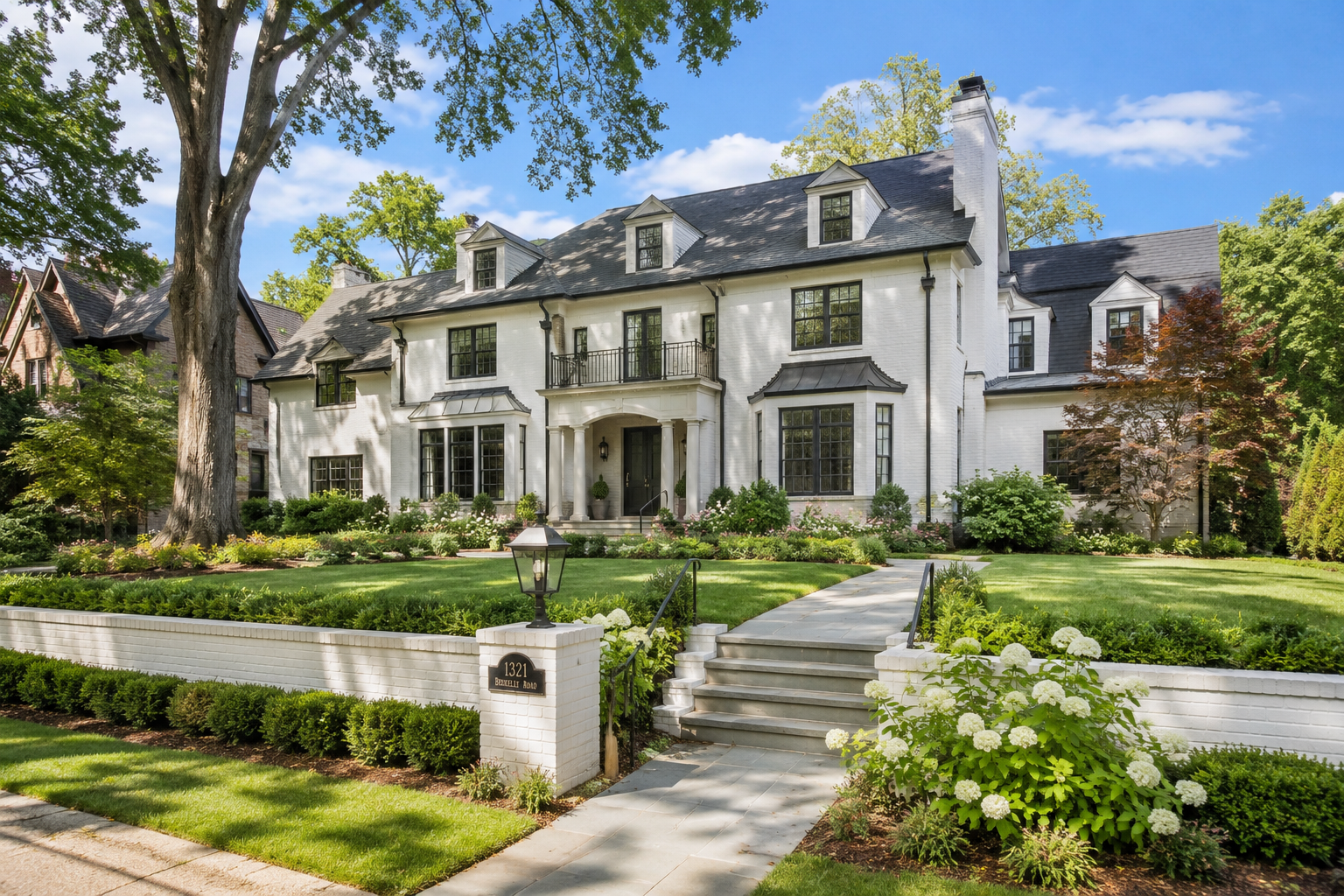
The Second Tier: Strong Luxury, Approaching Blue-Chip
These neighborhoods meet some but not all of the blue-chip criteria. They are excellent investments for the right buyer, but they sit one notch below the top tier.
Morningside-Lenox Park
Morningside delivers historic character and intown access at a median around $1.2M to $1.3M. The neighborhood has tree-lined streets, walkability to Virginia-Highland and Piedmont Park, and Morningside Elementary school assignment. It is one of the more competitive intown markets below $2M, with multiple-offer situations common on accurately priced homes.
What keeps Morningside just below the top tier is price ceiling and lot size. Homes at the upper end of Morningside trade in the $1.5M to $3M range, not the $5M to $20M range. Lots are typically smaller than the Buckhead estate neighborhoods. The buyer pool is wide and deep, which is a blue-chip-quality signal, but the absolute price ceiling caps the neighborhood's positioning. Full guide: Living in Morningside-Lenox Park Atlanta.
Garden Hills
Garden Hills is firmly in Buckhead luxury territory but at the entry end. The price floor has moved up meaningfully over the past several years. Entry-level single-family sits at $500K to $650K (smaller cottages, original-condition homes, or properties on less desirable streets). Mid-range trades in the $900K to $1.5M range. The top of the market reaches $2M-plus for renovated and expanded historic homes.
The neighborhood is walkable to Buckhead Village, with the IB-program Garden Hills Elementary as the school assignment. What separates Garden Hills from Tuxedo Park or Chastain Park is the lot size and the level of community infrastructure: smaller lots, denser streets, more active and used than the estate neighborhoods. That density is what makes Garden Hills feel like a real neighborhood rather than a collection of estates, but it also caps the ceiling. Full guide: Living in Garden Hills Atlanta.
Druid Hills
Druid Hills is Olmsted's last masterpiece and one of the most architecturally significant neighborhoods in the Southeast. The Frederick Law Olmsted firm designed the original plan in 1893, and the resulting linear park system along Ponce de Leon Avenue is unlike anything else in Atlanta.
What makes Druid Hills a second-tier rather than top-tier blue-chip is the buyer pool. The neighborhood crosses the Fulton/DeKalb county line, which affects property tax bills meaningfully. The school assignment varies by which side of the line you are on. The architecture is genuinely irreplaceable (Asa Candler's home, Callanwolde, the historic estates along Lullwater Road and Springdale Road), but the buyer depth is narrower than what you see in Buckhead or Ansley Park. Druid Hills is a connoisseur's neighborhood. Full guide: Living in Druid Hills Atlanta.
North Buckhead and Buckhead Forest (Micro-Neighborhoods)
The Buckhead micro-neighborhoods, particularly Buckhead Forest and parts of North Buckhead, sit one tier below the estate neighborhoods but qualify as strong luxury. Buckhead Forest is a 36-acre historic neighborhood added to the National Register in 2015, with Bungalows, English Cottages, and Craftsman homes from the 1920s through 1940s. It has walkability to Buckhead Village, MARTA access, and a price point meaningfully below the Chastain Park and Garden Hills estate tier.
North Buckhead is larger and more varied, with everything from bungalows to large single-family homes to Lenox-adjacent luxury condos. The Sarah Smith Elementary school district drives family demand. Path400, Blue Heron Nature Preserve, and proximity to Lenox and Phipps anchor daily-life value. Full guide: Living in Buckhead Forest and North Buckhead Atlanta.
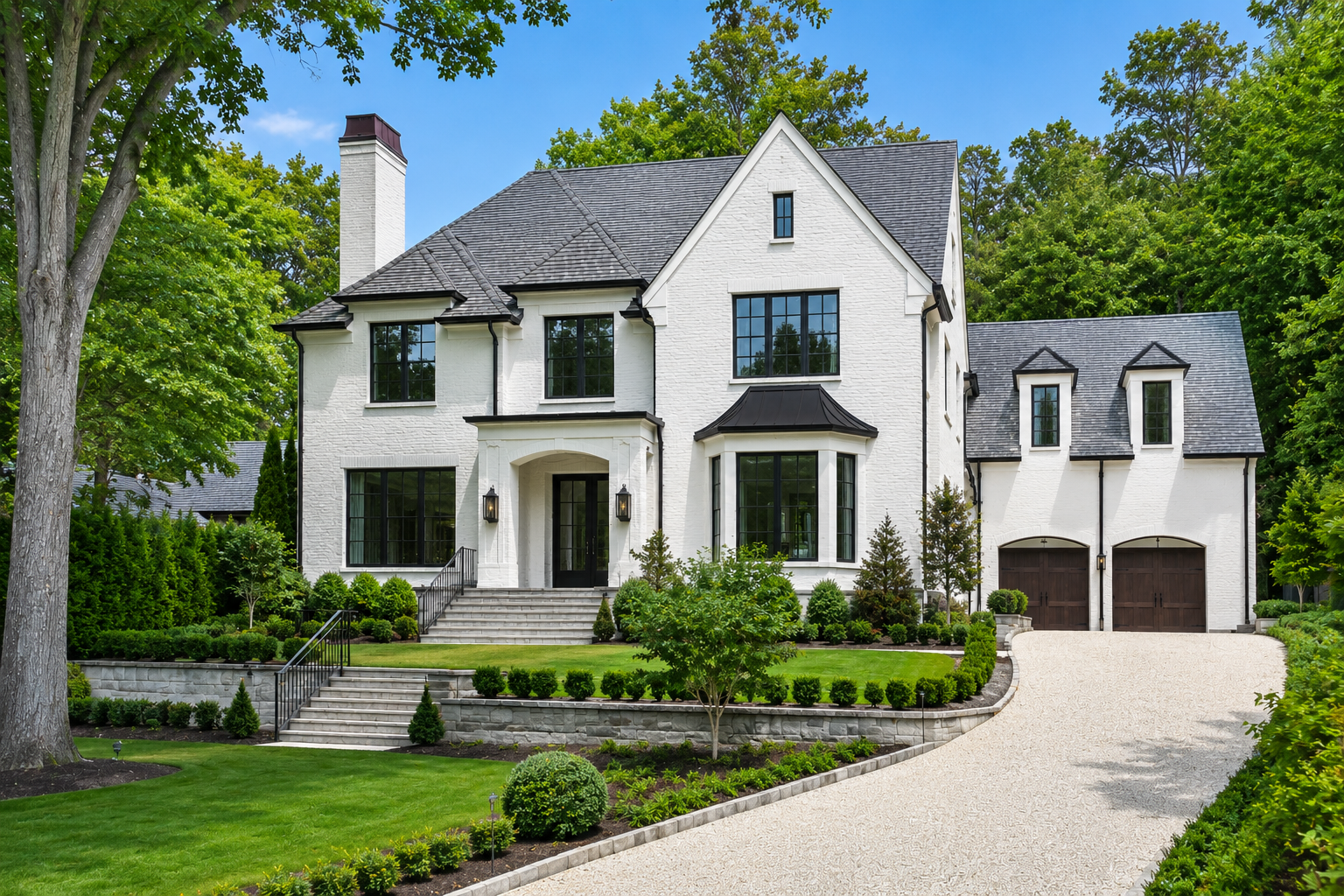
What Is Not Blue-Chip (Even If the Price Is High)
This is the part of the conversation that gets the most pushback from buyers, so I will be direct.
A $2M to $5M new-construction home in a neighborhood that did not exist as a luxury market five or ten years ago is not blue-chip. It may be a beautiful home. It may be in a desirable location. It may even appreciate. But it does not have the price-stability history, the architectural irreplaceability, or the proven buyer-depth that defines a blue-chip address.
This applies to large categories of Metro Atlanta inventory that get marketed as luxury.
New-construction estate developments in north Fulton suburbs at $2M-plus price points can be excellent homes, but the supply of comparable inventory is large and growing. Twenty similar new-construction estate homes within a five-mile radius is the opposite of scarcity. When buyer demand softens, prices in these developments move first and recover last.
Luxury high-rise condos along Peachtree Road at $1M to $8M are a real market with real buyer depth, but they are not blue-chip in the same sense that single-family estate neighborhoods are. The buildings themselves can shift in desirability based on management, amenities, and condition of common areas. The buyer pool is concentrated in downsizers, relocation executives, and second-home buyers, all of which can pull back in different market conditions. Buildings like The Graydon, The Ritz-Carlton Residences, and 2520 Peachtree are excellent properties; they are just a different asset class than a Tuxedo Park estate.
Most large-lot suburban neighborhoods with new construction in the $1.5M-plus range sit in a similar category. Strong homes, often excellent value per square foot, frequently in highly-rated school districts. But the supply is replicable. A developer can build another fifty homes of similar specification within ten miles. That replicability is precisely what blue-chip addresses do not have.
I am not telling you not to buy these homes. I work with buyers in all of these categories. What I am telling you is that the word "luxury" gets applied to a lot of different things in Atlanta, and the resale dynamics of these categories are not the same. If long-term value preservation is your priority, the blue-chip list above is where it concentrates.
How to Evaluate a Luxury Neighborhood Yourself
If you are looking at a neighborhood I have not covered above and you want to assess whether it qualifies as blue-chip, the questions to ask are concrete.
How old is the housing stock? Genuine blue-chip neighborhoods have housing stock that is 50-plus years old at minimum, often 80-plus years. The original architectural integrity, the lot configurations, and the street patterns are all original.
Can a developer reproduce this neighborhood elsewhere in Atlanta? If yes, it is not blue-chip. Scarcity comes from things that cannot be rebuilt: protected historic designation, geography (creeks, mature trees, topography), or lot sizes that no longer exist in remaining undeveloped Atlanta land.
How did prices perform from 2007 to 2012? This is the test. Blue-chip neighborhoods dropped less than the broader market in the 2008–2010 housing crash and recovered faster. Neighborhoods that were hit hardest and recovered slowest are not blue-chip, regardless of what they look like today.
What is the days-on-market for correctly priced homes? In blue-chip neighborhoods, well-priced homes move in 30 to 60 days even at the high end. Significantly longer DOM at every price point is a signal that buyer depth is thinner than it appears.
What percentage of transactions are off-market? In Tuxedo Park, Chastain Park, and parts of West Paces Ferry, a meaningful percentage of high-end transactions never hit the MLS. They move agent-to-agent or through private channels. That pattern is itself a blue-chip signal. It means the buyer pool for these addresses is so specific that sellers do not need broad market exposure.
Are there active deed restrictions or civic association covenants? Blue-chip neighborhoods are protected by either historic designation, deed restrictions, or active civic associations that limit teardowns, regulate exterior modifications, and enforce setback requirements. These restrictions are what keep the neighborhood's character intact across generations.
How Atlanta's Blue-Chip Neighborhoods Performed in the Last Down Cycle
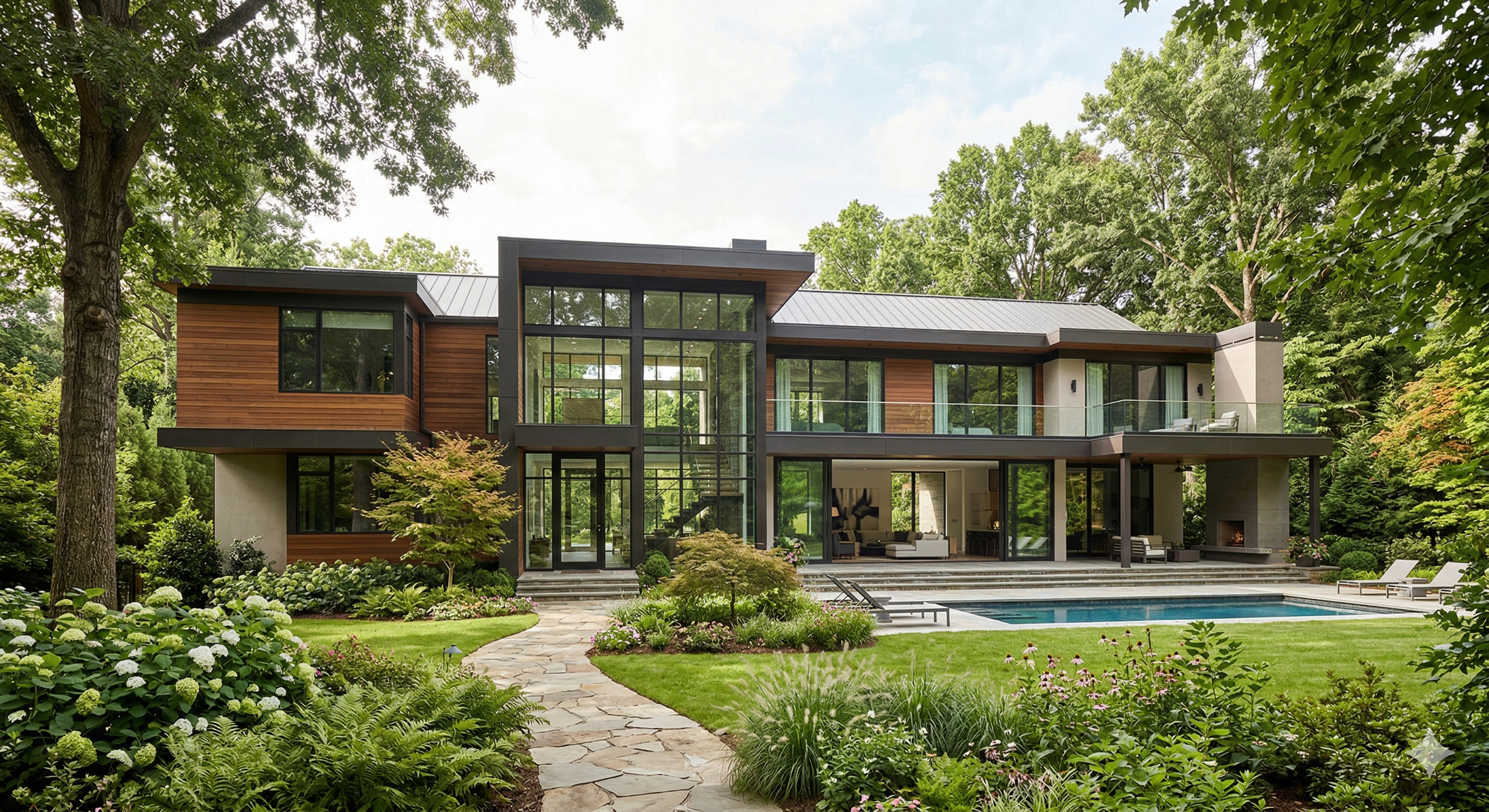
For buyers new to Atlanta's luxury market, the 2008–2012 housing correction is the most useful data point we have for understanding which neighborhoods qualify as blue-chip and which ones are just expensive. The Atlanta metro saw broad price declines of 25 to 40 percent at the bottom of that cycle, with some submarkets dropping further. The recovery, when it came, was uneven.
The pattern that emerged is the pattern that defines blue-chip behavior.
Tuxedo Park, Chastain Park, Haynes Manor, the West Paces Ferry corridor, and Argonne Forest absorbed the correction. Prices dropped, but not as far as the broader metro. Days on market lengthened, but transactions kept happening. Several of the highest-end estate sales of the entire decade happened during this window, because the buyers at the $5M-plus level were less rate-sensitive than the broader market, and the available inventory was unusually attractive. By 2014 to 2015, these neighborhoods were back at pre-correction prices, with most properties exceeding their pre-2008 highs by 2017.
Ansley Park, Morningside, Garden Hills, and Druid Hills followed a similar pattern at a slightly more compressed price range. Historic homes in these neighborhoods held value better than newer comparable inventory elsewhere in the metro. The buyer pool for these specific addresses did not disappear during the downturn; it just slowed down.
The neighborhoods that did not perform as well were the ones that had been newly designated as luxury markets in the years immediately preceding the correction. Master-planned communities at the $1M-plus price point in suburban submarkets, condos in buildings that had been completed in 2006 to 2008, and infill developments in transitional neighborhoods all saw deeper price declines and slower recoveries. Some of these submarkets did not return to their 2007 price levels until 2017 to 2019. A few never fully recovered.
This is what scarcity and buyer depth actually buy you. Not faster appreciation in a hot year, but a softer landing in a soft year and a more reliable resale at any point in the cycle. The 2008 cycle is the most recent severe test of these dynamics, and it confirmed the blue-chip pattern that decades of prior history had already established.
What Buyers Get Wrong About Blue-Chip Buying
The most common mistake I see luxury buyers make in Atlanta, particularly relocation buyers, is treating square footage as the primary metric. Square footage is the easiest thing to measure. It is also the easiest thing to replicate. A 10,000-square-foot new build in a new development is not the same asset as a 7,500-square-foot historic home in Tuxedo Park, even at the same price.
The second mistake is overweighting the school district as a proxy for neighborhood quality. School performance can shift over time, and it has shifted in several Atlanta neighborhoods in both directions over the past two decades. Research and visit schools to determine fit for your family, but do not confuse the current school rating with the long-term value of the address. The blue-chip neighborhoods on this list have multiple value drivers, of which school assignment is only one.
The third mistake is buying based on what the neighborhood looks like today rather than what it will look like in ten years. Atlanta is a city of meaningful neighborhood change. Some areas that looked like emerging luxury in 2010 (parts of West Midtown, parts of Old Fourth Ward) did not maintain a pure luxury trajectory. Others (Inman Park, parts of Edgewood and Reynoldstown) climbed faster than anyone predicted. The blue-chip neighborhoods above are blue-chip precisely because they are not subject to that kind of neighborhood-character risk. Their character was settled fifty to a hundred years ago.
The fourth mistake is treating $2M as the entry price for "luxury" everywhere in Atlanta. It is not. In Buckhead estate neighborhoods, $2M can buy you a smaller home on a less prestigious street within a blue-chip address. In Ansley Park, $2M is solidly in-range. In Morningside, $2M is at the top of the market. The same dollar amount means very different things depending on where you are looking, and your strategy should adjust accordingly.
Who Should Be Looking at Blue-Chip Neighborhoods
Blue-chip neighborhoods are not the right answer for every luxury buyer. They are the right answer when:
Long-term value preservation matters more than maximum square footage or newest construction
You are buying a home you expect to hold for ten-plus years, or as a generational asset
You want resale flexibility (the ability to sell relatively quickly to a deep buyer pool at any point in the market cycle)
You value architectural character and irreplaceability over modern amenities
You are willing to accept some compromises (smaller closets, older systems, more maintenance) in exchange for the lot, the streetscape, and the long-term value floor
Blue-chip is the wrong answer when:
You want a turnkey, modern, high-amenity home with everything new and you are buying for a defined holding period
Square footage and lot size are your primary metrics
You are not interested in older homes or the maintenance and renovation cycles they involve
You want suburban amenities (newer schools, large-format retail, lower density) more than intown access and historic character
Both are legitimate luxury strategies. They are just different ones, and the rest of your search should reflect which one you are running.
Compare and Contrast: Two Neighborhoods at the Same Price
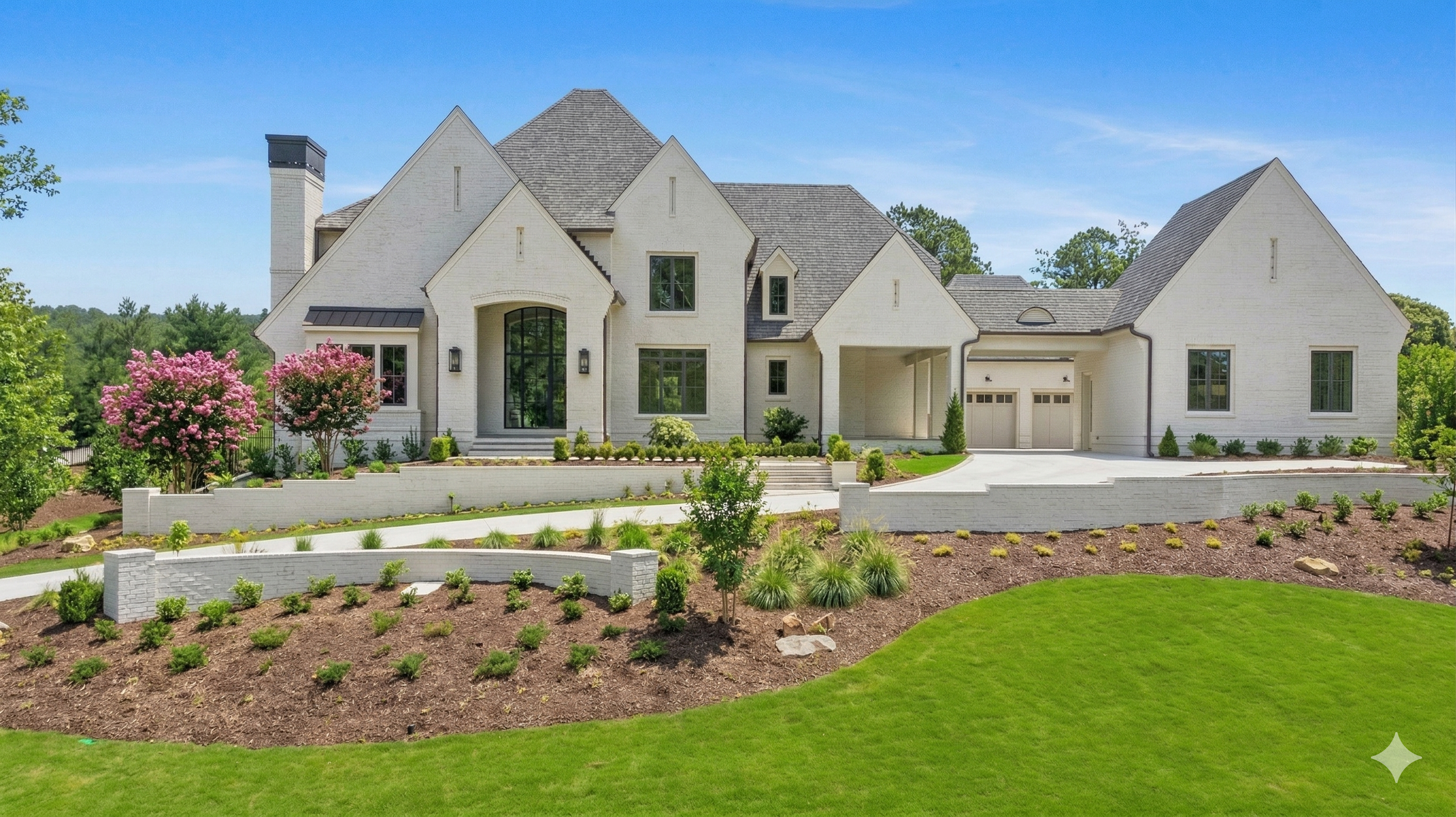
To make this concrete, consider two hypothetical $2.5M purchases.
Option A: A renovated 5-bedroom, 5,200-square-foot brick traditional in Haynes Manor on a half-acre lot, built in 1934, with original architectural details, mature trees, and direct walking access to Atlanta Memorial Park.
Option B: A new-construction 6-bedroom, 7,800-square-foot transitional in a north Fulton master-planned community on a third-acre lot, built in 2024, with the latest finishes, an open-concept main level, and HOA-managed amenities.
These are both luxury purchases at the same price. Option B gives you more square footage, newer everything, and a turnkey ownership experience for the first ten years. Option A gives you a fundamentally different asset: an irreplaceable lot in a neighborhood with a hundred-year track record, with resale to a deep buyer pool that does not exist for Option B.
If you sell Option A in fifteen years, you will be selling to a buyer who specifically wants Haynes Manor and is comparing your home against three or four others in the same neighborhood. If you sell Option B in fifteen years, you will be selling against forty similar homes that have been built in the meantime within five miles, plus another wave of newer construction with even newer finishes.
That is the blue-chip dynamic in one direct comparison.
What to Do If You Are Thinking About a Blue-Chip Purchase
A few practical points for buyers entering this segment.
Get the right financing strategy in place early. Jumbo loan products at the $2M-plus level have specific underwriting requirements that differ meaningfully from conventional loans. Some of the best blue-chip homes are sold privately or with short market exposure, which means you need to be able to move from offer to clear-to-close in under 30 days. That requires advance work with the right lender.
Build relationships with agents who actually work the neighborhood. A meaningful share of the inventory in Tuxedo Park, Chastain Park, and the West Paces Ferry corridor moves off-market or with very brief market exposure. If you are not connected to agents who know the homeowners and the listing pipeline, you will see a smaller and slower inventory than what is actually available.
Be willing to renovate. Many of the best blue-chip homes are 50 to 100 years old and require significant systems work, kitchen and bath updates, or architectural refreshes. Plan for renovation costs in the budget. The right team of architects, contractors, and historic-renovation specialists matters as much as the right buyer's agent.
Verify deed restrictions and historic-designation requirements before making an offer. Several blue-chip neighborhoods have restrictions on teardowns, additions, exterior modifications, tree removal, and even paint colors. Some restrictions are enforced by civic associations, others by historic-district boards. Know what you can and cannot do with the property before you commit.
Understand the property tax implications. Atlanta property tax bills at the blue-chip price tier are not trivial. Fulton County's effective property tax rate is approximately 1.05%, which on a $4M purchase is roughly $42,000 per year before any homestead exemption. DeKalb County (which includes parts of Druid Hills and Historic Brookhaven) carries a different millage structure. Build the carrying cost into your purchase analysis.
The Private School Layer
Atlanta's blue-chip neighborhoods have a relationship with the city's top private schools that is worth understanding, particularly for relocation buyers coming from markets where private school choice is more decoupled from neighborhood selection.
The major Buckhead-anchored private schools (Westminster, Lovett, Pace Academy, Holy Spirit, Trinity, Atlanta International School) are concentrated along the West Paces Ferry corridor and within a short drive of Tuxedo Park, Chastain Park, Haynes Manor, Argonne Forest, and Historic Brookhaven. The proximity is not accidental. Many of these schools were founded or located by families who lived in these neighborhoods, and the carpool patterns, after-school programming, and weekend community events are built around these residential addresses.
This matters for the blue-chip dynamic in two ways. First, families with children in these private schools tend to stay in the neighborhood and move within the neighborhood as their families grow, rather than relocating to suburban submarkets. That stability of demand is part of what supports value over time. Second, even families who do not currently have school-age children often factor school proximity into their purchase decisions because they expect to either have children, host children visiting from extended family, or eventually sell to a family with children.
On the intown side, Ansley Park, Morningside, and Druid Hills have a different but parallel relationship with intown private schools (The Galloway School, The Paideia School, Trinity, Holy Innocents' Episcopal, and others), and with the strong public elementary schools serving those neighborhoods. Research and visit schools to determine fit for your family. The institutional density of educational options is one of the factors that distinguishes blue-chip neighborhoods from luxury-priced areas that lack the same school landscape.
Buckhead vs. Brookhaven vs. City of Atlanta: Tax and Governance Considerations
One of the more practical questions luxury buyers ask is which municipal jurisdiction makes sense for their specific situation. The answer depends on the property itself, but the broad framework is worth understanding.
Tuxedo Park, Chastain Park, Haynes Manor, Garden Hills, Argonne Forest, West Paces Ferry, Ansley Park, Morningside, and most of Buckhead Forest and North Buckhead sit within the City of Atlanta and Fulton County. Atlanta property tax rates combine the City of Atlanta millage with the Fulton County millage and the Atlanta Public Schools millage. The effective rate is approximately 1.05%, varying slightly based on assessment timing and specific exemptions.
Historic Brookhaven is split. Part of it sits within the City of Atlanta and Fulton County (which means it falls within the Sarah Smith Elementary attendance zone). Part of it sits within the City of Brookhaven and DeKalb County. The tax implications can differ meaningfully on otherwise comparable parcels, and buyers should verify the specific jurisdictional status of any property under consideration.
Druid Hills spans the Fulton/DeKalb county line. Properties on the Fulton side carry one tax structure; properties on the DeKalb side carry another. The schools, services, and zoning regulations also differ.
For Vinings and other Cobb County addresses sometimes included in luxury-corridor discussions, Cobb's property tax rate is meaningfully lower than the City of Atlanta combined rate, and Cobb County Schools is a separately governed system. On a multi-million dollar purchase, the annual tax savings can be substantial. Whether that is the right tradeoff depends on your priorities for schools, commute, and intown access.
None of this changes which neighborhoods are blue-chip and which are not. It does affect carrying costs, and at the multi-million-dollar level those costs are meaningful. Build them into your purchase analysis from the beginning rather than discovering them at closing.
Frequently Asked Questions
What is the most expensive neighborhood in Atlanta?
Tuxedo Park is consistently the most expensive neighborhood in Atlanta by median and average sale price. Median sale prices in Tuxedo Park range from approximately $1.4M to $4.4M depending on the data source and trailing window, with average sale prices in the $2.4M to $2.5M range. The neighborhood holds Atlanta's all-time residential sale record. Other top-tier neighborhoods by price include Chastain Park, the West Paces Ferry corridor, Argonne Forest, Historic Brookhaven, and Ansley Park.
What makes a neighborhood "blue-chip" versus just expensive?
Blue-chip neighborhoods meet four criteria: price stability across multiple market cycles, structural scarcity (the inventory cannot be replicated), deep and specific buyer demand, and institutional anchoring through schools, clubs, or historic designation. A neighborhood can be expensive without meeting these criteria. New-construction luxury developments often command high prices but lack the irreplaceability and proven cycle performance that define blue-chip addresses.
Is Tuxedo Park a good investment in 2026?
Tuxedo Park has been one of the most consistent performers in Atlanta's residential market for decades, with year-over-year appreciation of approximately 9.9% reported in Redfin's March 2026 data. The neighborhood's blue-chip characteristics (extreme scarcity, deep buyer demand, no replicable inventory) typically support long-term value preservation. As with any luxury purchase, individual property selection matters as much as the neighborhood. Specific lots, street locations, and condition vary significantly within Tuxedo Park.
How does Buckhead luxury compare to intown Atlanta luxury like Ansley Park?
Buckhead luxury (Tuxedo Park, Chastain Park, Haynes Manor, West Paces Ferry) is primarily estate-focused with larger lots, more privacy, and a residential-suburban character despite being inside the city. Intown luxury (Ansley Park, Morningside, parts of Druid Hills) emphasizes walkability, proximity to cultural institutions, and historic character on smaller lots. Buckhead estate neighborhoods have a higher absolute price ceiling. Intown neighborhoods offer lifestyle access (BeltLine, Piedmont Park, Midtown cultural district) that the Buckhead estates do not.
What is the difference between Historic Brookhaven and the city of Brookhaven?
Historic Brookhaven is a specific neighborhood within Atlanta's Buckhead area that sits within Fulton County and falls within the Sarah Smith Elementary attendance zone. It was added to the National Register of Historic Places in 1985 and is anchored by Capital City Country Club. The city of Brookhaven is a separate municipality in DeKalb County, incorporated in 2012, with a much broader range of neighborhoods and price points. Historic Brookhaven median home values are significantly higher than the broader city of Brookhaven median.
Which Atlanta luxury neighborhoods have the best schools?
This question requires a careful answer because school performance can shift and because school fit is family-specific. Sarah Smith Elementary (which serves parts of North Buckhead, Buckhead Forest, and Historic Brookhaven) is consistently among the top-rated public elementary schools in the City of Atlanta system. Garden Hills Elementary offers an International Baccalaureate program. Morningside Elementary serves Ansley Park and Morningside. The estate neighborhoods (Tuxedo Park, Chastain Park, Haynes Manor) draw heavily from Atlanta's private school cluster, including Westminster, Lovett, Pace Academy, and Holy Spirit. Research and visit schools to determine fit for your family.
Do blue-chip neighborhoods always appreciate faster than the rest of the market?
No, and this is a common misconception. Blue-chip neighborhoods do not necessarily appreciate faster than the broader market in a strong year. What they do is hold value better in soft markets, recover more quickly when conditions improve, and avoid the bottom-tier price drops that hit speculative new construction zones. The pattern is one of lower volatility and stronger price floors, not maximum appreciation.
What price point should I expect for an entry-level home in a blue-chip Atlanta neighborhood?
Entry pricing varies meaningfully by neighborhood. Garden Hills entry-level single-family starts at $500K to $650K (smaller cottages or homes needing renovation). Morningside entry runs roughly $900K to $1.2M. Haynes Manor and Ansley Park entry generally starts at $1.5M to $2M. Tuxedo Park, Chastain Park, and Argonne Forest do not really have entry-level single-family inventory; the floor is closer to $2M to $3M for the smallest or most dated homes. Condo inventory at the top end of Buckhead provides a different entry path, with luxury condos along Peachtree Road starting around $800K and reaching $8M-plus.
How long does it take to buy in a blue-chip Atlanta neighborhood?
Plan for a longer search than you would expect at lower price points. Inventory is limited, the right home for a specific buyer may take six to twelve months to surface, and many transactions happen off-market or with brief market exposure. Buyers who are willing to be patient, who have their financing pre-positioned, and who work with agents who know the neighborhood-specific networks tend to find better homes than buyers who try to time the broader market.
Is new construction ever blue-chip?
New construction on an existing blue-chip lot can take on some of the neighborhood's blue-chip characteristics over time, but the house itself is not blue-chip until it has a track record. A new build in Tuxedo Park benefits from the neighborhood's scarcity and buyer depth. A new build in a new development does not. The neighborhood-level qualifications matter more than the home-level qualifications when assessing long-term value.
Should I work with a luxury specialist agent or a generalist?
For purchases in the $2M-plus range, work with an agent who actively transacts at this tier and knows the neighborhood-specific networks. Off-market inventory, private listings, and pre-MLS opportunities are how a meaningful share of blue-chip homes move. Generalist agents who do not have those relationships can show you only the public inventory, which is a fraction of what is actually available.
What about ultra-luxury condos? Are any of them blue-chip?
Atlanta's ultra-luxury condo market (The Graydon, The Ritz-Carlton Residences, 2520 Peachtree, and similar buildings along Peachtree Road) is a real and substantial market, but it operates differently from single-family blue-chip. Specific buildings have stronger track records than others, and within buildings, specific units (corner penthouses, full-floor residences) trade more reliably than mid-tier units. Treat condo selection as building-by-building rather than neighborhood-wide. The most consistent ultra-luxury condo buildings have institutional management, full-service concierge, established board governance, and limited unit counts.
Final Thought
Atlanta is one of the deeper luxury real estate markets in the South, and the depth is concentrated in a relatively small number of neighborhoods. The blue-chip list above (Tuxedo Park, Chastain Park, Haynes Manor, Argonne Forest, the West Paces Ferry corridor, Historic Brookhaven, and Ansley Park, with the second tier just below) represents the addresses where high-end buyers have consistently found value preservation across market cycles. Everything else in Atlanta's luxury market is real and viable, but the dynamics are different. Knowing which dynamics apply to which neighborhood is the first decision in a luxury search. Everything else follows from it.
I work with buyers across Metro Atlanta's luxury tiers, from first-time high-end buyers to existing estate owners moving up. If you are evaluating Atlanta's blue-chip neighborhoods or trying to decide which luxury strategy is right for you, let's talk.
Visit kristenjohnsonrealestate.com or reach out directly. Come as you are, come on home.
Looking for more Metro Atlanta luxury and neighborhood guides? I've covered the Buckhead micro-neighborhoods in detail, including Tuxedo Park, Garden Hills, Haynes Manor, and Buckhead Forest and North Buckhead, along with intown luxury neighborhoods like Ansley Park, Morningside-Lenox Park, and Druid Hills. Browse the full guide series at kristenjohnsonrealestate.com.