

Living in Hapeville Georgia: Airport Access, Historic Charm, and What Homes Cost in 2026

There's a running joke in South Fulton that Hapeville is the city Atlanta keeps forgetting about. The people who live there aren't complaining. They know what they have.
Hapeville is a city of about 6,500 people sitting directly adjacent to Hartsfield-Jackson Atlanta International Airport — the world's busiest. It's seven miles from Downtown Atlanta. It's inside the perimeter. Delta Air Lines is headquartered here. Porsche Cars North America is headquartered here. The original Chick-fil-A Dwarf House is here, at the same address on Central Avenue where Truett Cathy first opened his diner in 1946. There's a walkable historic district, an active arts scene, and a downtown with genuinely good restaurants. And the homes are priced like none of that is true yet.
That window doesn't stay open forever. Here's what you need to know.
What Is Hapeville Georgia?
Hapeville is a small, incorporated city in Fulton County, Georgia, established in 1891 and named for Dr. Samuel Hape, one of the area's original landowners and its first mayor. The population was 6,553 at the 2020 census. It sits south of East Point, east of College Park, and directly north and west of Hartsfield-Jackson Airport, so close that some of the city's southern streets have been affected by airport land acquisition over the years.
For most of the 20th century, Hapeville ran on two major employers: Delta Air Lines and the Ford Motor Company Atlanta Assembly Plant. The Ford plant opened in 1947 and operated for nearly 60 years, building Tauruses and feeding generations of Hapeville families, before closing in 2006. The Porsche Experience Center and North American headquarters opened on the former Ford site in 2015, replacing Detroit-era industry with something entirely unexpected. That transition tells you something about Hapeville's arc.
Since 2005, the city has seen significant gentrification, beginning in the Virginia Park neighborhood and spreading through the historic core. Young professionals discovered the housing stock, the walkability, the food scene, and the commute story. The Hapeville Arts Alliance formed. Murals went up. Restaurants opened. The Hapeville Historic District was listed on the National Register of Historic Places.
The city that was once regarded as a somewhat depressed industrial area is now a city people seek out intentionally. If you haven't looked at Hapeville lately, your mental image is outdated.
Where Is Hapeville and How Are the Commutes?
Hapeville sits seven miles southwest of Downtown Atlanta, at the center of the triangle formed by I-75 and I-85. The airport is immediately adjacent. Not five minutes away, not a short drive. Immediately adjacent. That commute story is genuinely unlike anything else in Atlanta real estate.
Drive times from Hapeville:
Hartsfield-Jackson Airport: 3–7 minutes (the airport is essentially your neighbor)
Downtown Atlanta: 15–20 minutes off-peak, 25–35 minutes peak
Midtown Atlanta: 20–25 minutes off-peak, 30–40 minutes peak
Buckhead: 25–35 minutes off-peak, 35–45 minutes peak
East Point: 5 minutes
College Park: 5 minutes
Porsche Experience Center: 3–5 minutes
MARTA: Hapeville is served by the Gold Line (formerly the Airport Line). The airport itself is accessible by rail directly. Downtown Atlanta is roughly 20–25 minutes by rail. For buyers who want MARTA access and proximity to the airport, Hapeville is the most direct option in the metro.
Bus routes also serve the city, including connections to the broader South Fulton transit network.
For Delta Air Lines employees, Porsche employees, and anyone whose work takes them through the airport regularly, Hapeville's location is legitimately transformative. Flight attendants, pilots, airline operations staff, and Delta corporate employees live here specifically because they can be at the gate in minutes. That's a real competitive advantage that no other neighborhood in Atlanta can match.
Is Hapeville Georgia a Good Place to Live?
Yes, for the right buyer — and the right buyer profile is more specific than some other Atlanta neighborhoods.
Hapeville is a genuine small city with a cohesive identity. The historic district is intact and charming. Downtown has walkable restaurants, bars, and coffee shops within a short walk of residential streets. The civic life is active. The Hapeville Arts Alliance has built a real arts community here, with murals, sculptures, and gallery events woven into the neighborhood fabric. The Hapeville Depot Museum preserves the city's railroad history. The Southern Circuit Film Series brings independent cinema to Hapeville regularly.
Residents describe the community as friendly, tight-knit, walkable, and diverse. It doesn't have the density of Inman Park or the polish of Decatur, but it has something those neighborhoods can't sell: genuine character that hasn't been fully commoditized yet.
Who Hapeville is right for:
Delta Air Lines employees and aviation industry workers
Porsche employees and contractors
Frequent flyers who want to reclaim airport commute time
Buyers seeking the most affordable ITP entry point in Metro Atlanta
Investors and value buyers in a transitional market with improving fundamentals
Artists and creative professionals attracted to the arts scene and community energy
Buyers who want walkable historic housing stock at pre-arrived prices
Who should think carefully:
Buyers sensitive to aircraft noise. Hapeville sits directly adjacent to the airport; noise varies by street and time of day, and it is a real factor
Buyers where public school assignment is the primary driver. Research your specific address carefully (details below)
Buyers expecting a fully arrived, polished neighborhood with no rough edges
How Much Do Homes Cost in Hapeville Georgia?
Hapeville has some of the most compelling price-to-location value in the entire Atlanta metro. For a city this close to Downtown, inside the perimeter, with MARTA rail and airport access, the prices remain genuinely accessible.
Market snapshot (early 2026):
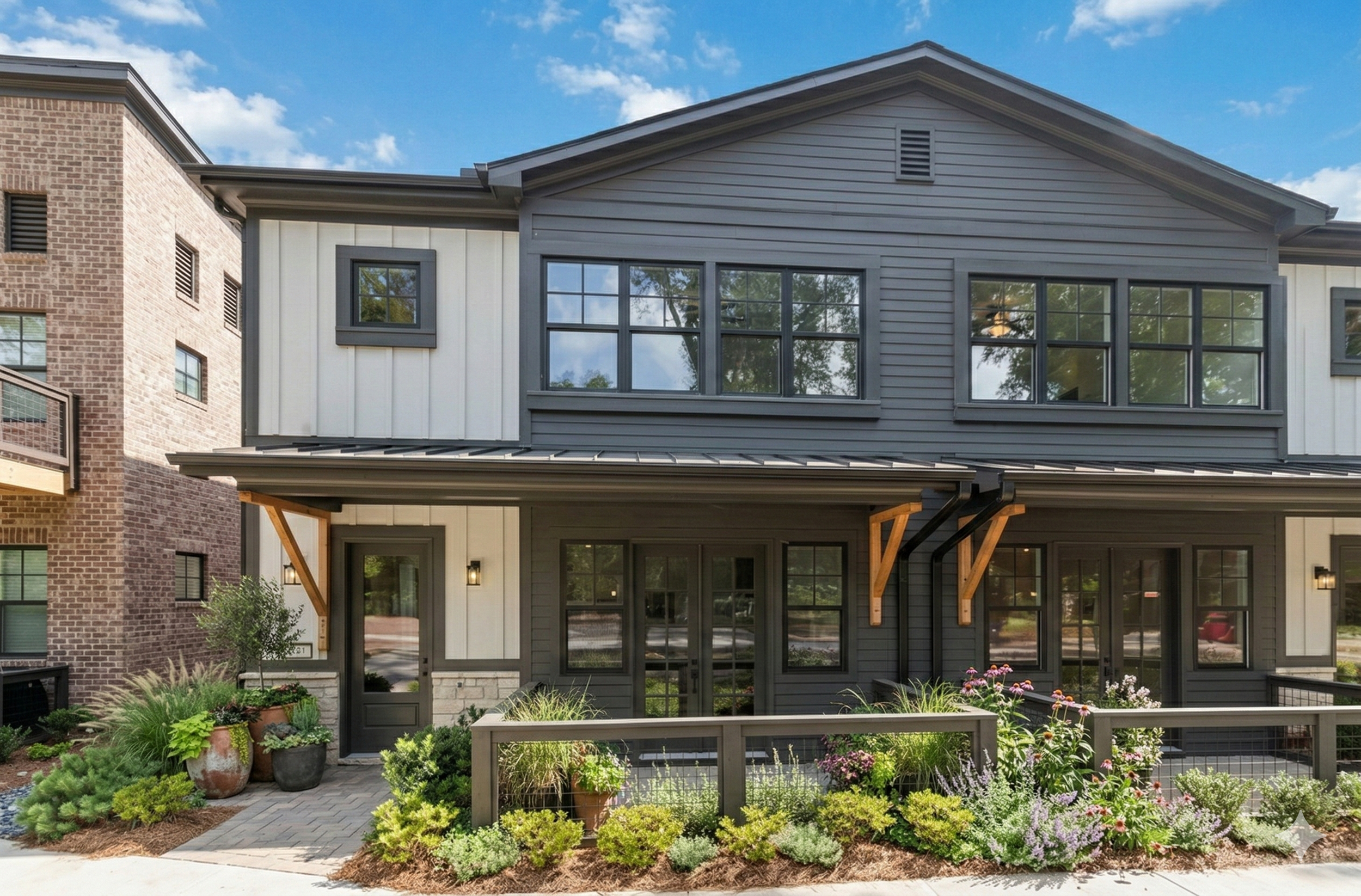
Segment Price Range Profile Entry-level / fixer $220K–$300K Older bungalows needing updates; strong investor and flip activity Move-in ready historic $300K–$400K Renovated craftsman and ranch homes in the historic district Updated / turnkey $375K–$450K Fully renovated historic homes with modern finishes New construction townhomes $400K–$550K 3-story townhomes, 3–4 beds, modern finishes, 2-car garage
Price per square foot runs approximately $200–$225 in the historic district. Days on market have ranged from 60–90 days for most of the market, though well-priced, move-in-ready homes on desirable streets have moved faster. Sale-to-list ratios have been running approximately 94–97%.
Hapeville has an active townhome and new construction market alongside its historic bungalow stock. Buyers have real options across property types. The rental market is also strong. Delta employees, Porsche staff, and airport workers generate steady tenant demand, making Hapeville an active market for investors.
Property taxes: Hapeville is in Fulton County. Effective tax rates run approximately 1.0–1.2% of assessed value. A $350,000 home runs roughly $3,500–$4,200 annually.
One pricing note: aggregators like Zillow can show wide variation because they sometimes blend active listings (including new construction townhomes at $450K+) with recent sales of older fixer inventory. The market has genuine range. Work with an agent who can show you sold comps by property type and specific street, not city-wide averages.
What Neighborhoods Are in Hapeville?
Virginia Park
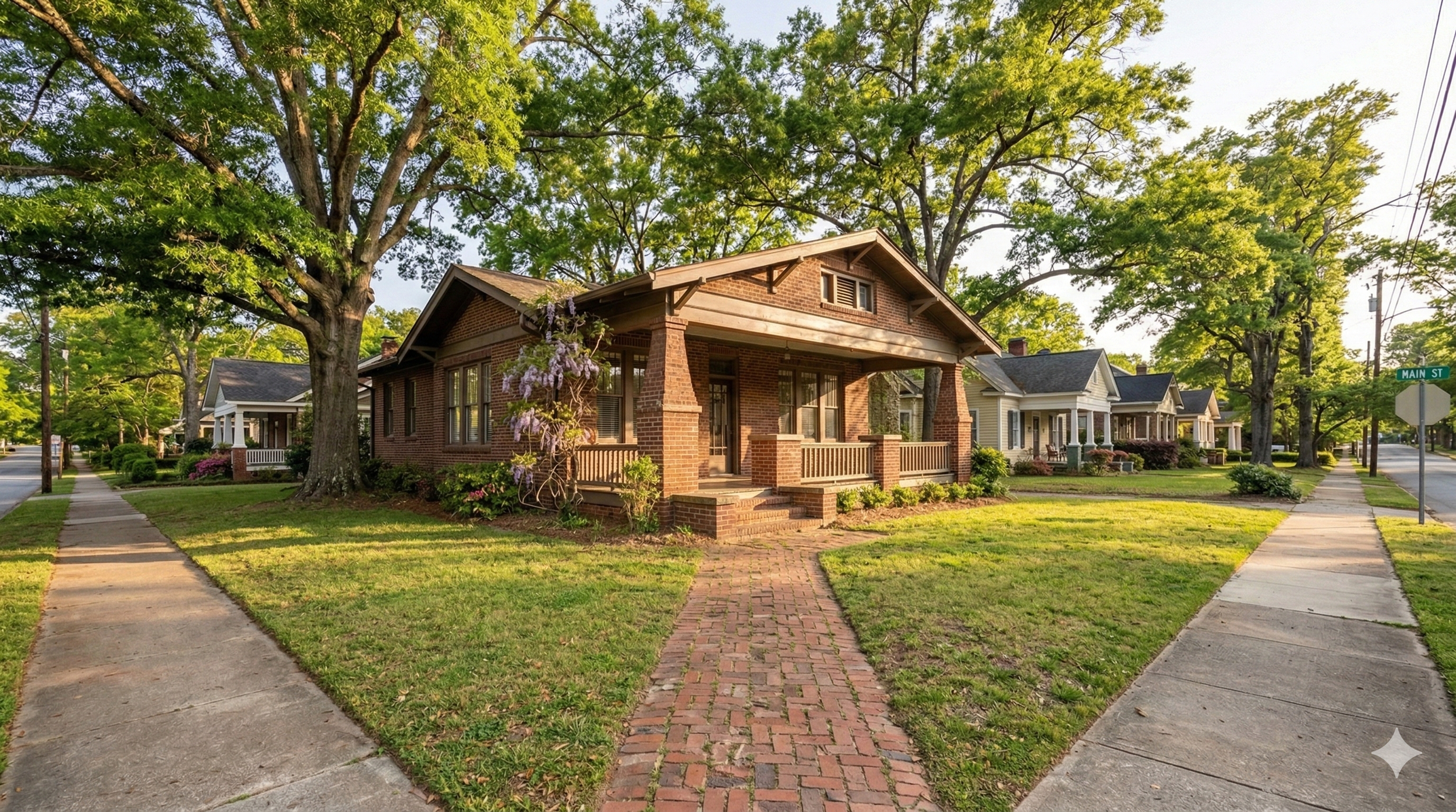
Virginia Park was the first Hapeville neighborhood to experience significant revitalization, beginning around 2005. Tree-lined streets, 1920s and 1930s craftsman bungalows and cottages, and a genuine neighborhood feel. It's the area that established Hapeville's residential identity for the current generation of buyers. Virginia Avenue runs through it, giving access to the growing restaurant and retail corridor that serves as Hapeville's commercial spine.
Historic Downtown Core
The original downtown grid around North Central Avenue and the surrounding blocks. The Hapeville Corner Tavern, Paper Plane, Folk Art, Cafe Belli, and other local favorites anchor the walkable commercial district here. The Dwarf House is on Central Avenue, where it has been since 1946. The historic district encompasses a mix of commercial, civic, and residential structures. Active, walkable, genuinely urban in character despite the small city scale.
Hammond Park and Glenrose Heights
Residential neighborhoods south and east of the downtown core. Solid housing stock, a mix of original bungalows and more modest ranch homes. These neighborhoods offer some of the more affordable entry points into Hapeville. Both are within easy walking or biking distance of the downtown amenities and have benefited from the broader revitalization.
Aerotropolis / Porsche Corridor
The western and southern edge of Hapeville borders the Porsche Experience Center campus and the developing Aerotropolis Atlanta project — the long-planned mixed-use redevelopment of the former Ford plant site and adjacent land. Porsche was the first company to break ground at Aerotropolis, and the development framework envisions continued mixed-use growth anchored by the airport economy. For investors and buyers who think in terms of long-range value trajectory, this corridor is worth watching closely.

What Are the Schools in Hapeville Georgia?
Hapeville is entirely within Fulton County, which means it is served by Fulton County Schools. There is no county line complexity here, unlike College Park next door.
Public school pathway:
Elementary: Hapeville Elementary School (PK–5), 3440 N Fulton Ave
Middle: Paul D. West Middle School, in East Point
High School: Tri-Cities High School, in East Point
Also in Hapeville: Hapeville Charter Middle School
Also nearby: Hapeville Charter Career Academy (grades 9–12, ranked #216 in Georgia by U.S. News)
Private school option: St. John the Evangelist Catholic School is located in Hapeville and serves as a private K–8 option within the city.
As with all Fulton County schools, families should verify zoning by specific property address at the Fulton County Schools website. Research and visit schools to determine fit for your family.
Who Are the Major Employers Near Hapeville?
This is where Hapeville's story becomes genuinely singular.
Delta Air Lines has been headquartered in Hapeville for decades. As one of the world's largest airlines, Delta is an enormous direct and indirect employment anchor. Tens of thousands of employees work on the Delta campus and throughout Hartsfield-Jackson in Delta-related operations. For Delta employees, living in Hapeville eliminates a commute that other Atlanta residents spend significant time and money navigating every day.
Porsche Cars North America moved its U.S. headquarters to One Porsche Drive in Hapeville in 2015, on the site of the former Ford Atlanta Assembly Plant. The 27.7-acre campus spans Fulton and Clayton Counties across the cities of Atlanta and Hapeville. Beyond the corporate offices, the Porsche Experience Center includes two driver development tracks (a 1.6-mile South Track and a 1.3-mile West Track), a Heritage Gallery and Classic Center, a Driving Simulator Lab, the Porsche Retail Store, Restaurant 356, and the Carrera Café. The center celebrated its 10th anniversary in June 2025. Porsche has drawn executives and automotive industry professionals from across the country, and several have chosen to live in Hapeville, College Park, and surrounding South Fulton cities.
Hartsfield-Jackson Atlanta International Airport directly and indirectly employs tens of thousands of workers across airlines, ground operations, federal agencies, logistics, hospitality, and airport services. For that workforce, Hapeville's proximity is unmatched by any other residential community in the metro.
The Delta Flight Museum, located on the Delta campus, is a nonprofit museum housed in 1940s-era aircraft maintenance hangars, preserving the history of Delta and its predecessor airlines. It draws aviation enthusiasts from across the region.
What Is the Dwarf House in Hapeville?
No Hapeville post would be complete without telling this story properly.
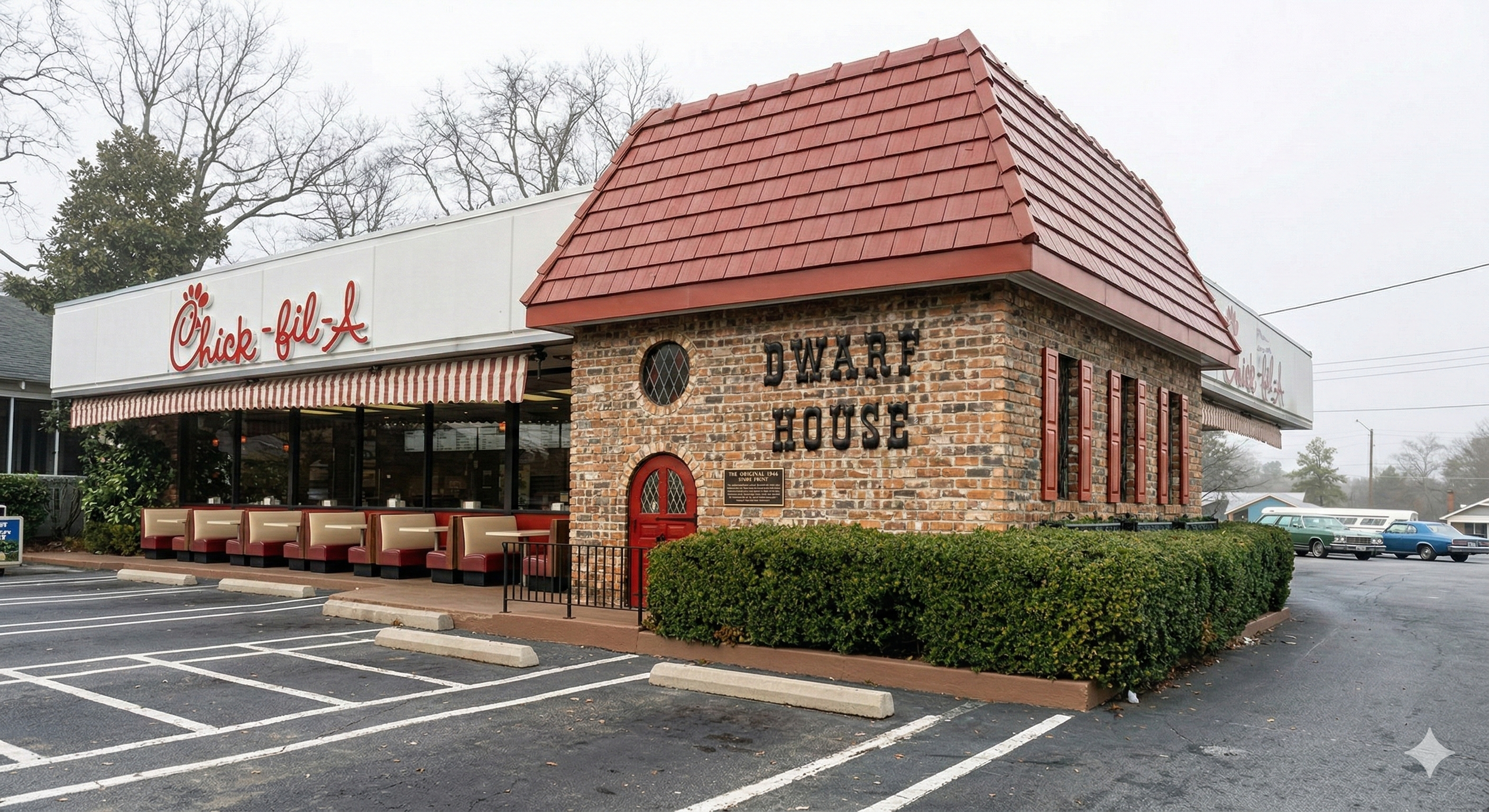
In 1946, Truett Cathy and his brother Ben opened a 512-square-foot diner at 461 Central Avenue in Hapeville, just down the street from the Ford Motor plant and the railroad tracks. They called it the Dwarf Grill, named for its tiny size, with small doors that required patrons to stoop to enter and seating for only 10 stools and 4 booths. They kept it open 24 hours a day, six days a week, to serve the different shifts coming off the Ford plant floor.
It was in that kitchen that Cathy experimented until he developed the boneless chicken sandwich. In 1961, he found a pressure fryer that could cook it in the same time it took to cook a hamburger. That discovery launched Chick-fil-A. The first Chick-fil-A opened in 1967 at Greenbriar Mall. The chain now operates thousands of restaurants across the country.
The original Hapeville diner was rebuilt in 1967 as a larger structure. That building stood until 2021, when it was closed for a major renovation and reopened in February 2022 as a newly designed, mid-century modern space that incorporates reclaimed bricks, original lanterns, the iconic Little Red Door, and counter stools from the 1967 building. The sign above the door still reads "Original Home of Chick-fil-A."
The Dwarf House today operates at the same address where it began, with an expanded menu beyond the standard Chick-fil-A offerings: Dwarf Burgers, Giant Burgers, the famous Hot Brown (chicken with cream sauce, cheese, and bacon), macaroni and cheese, fried okra, and homemade pie by the slice. It is open six days a week.
For buyers considering Hapeville, the Dwarf House is not just a restaurant. It's a national historical landmark sitting on a residential street. Visitors come from across the country. That kind of anchor gives a neighborhood a permanent identity that no amount of development can manufacture.
What Is There to Eat and Do in Hapeville Georgia?
Hapeville punches significantly above its weight for a city of 6,500. The dining scene is real, diverse, and locally owned.
Dining
Folk Art: Elevated Southern comfort food that has become one of Atlanta's most talked-about brunch destinations. The Hapeville location draws people from across the metro. Fowl Play (sweet potato buttermilk waffle with fried chicken and whiskey-peach compote) is the signature. Patio seating, live music events, and a warm, inclusive atmosphere.
Pit Boss BBQ: Delta employees and Hapeville residents have made this a fixture since it opened in 2008. Smoked wings, ribs, brisket, and rib tips: the kind of barbecue that earns a reputation without needing to advertise.
Paper Plane: Neighborhood restaurant with a creative, seasonal menu in a whimsical space on Virginia Avenue. Frequently cited as a local gem. Signature sandwiches, house-made desserts, a relaxed atmosphere.
Volare Wine and Bistro: Italian-focused with a strong wine program. Small, intimate dining room, consistently excellent service. A go-to for a quiet dinner that feels elevated without being pretentious.
Hapeville Corner Tavern: The neighborhood bar done right. Upscale pub fare, four pool tables, darts, outdoor bar, pet-friendly patio. Community staple.
Cafe Belli: Coffee and cocktail bar. A neighborhood gathering place with a dual identity: morning espresso crowd and evening cocktail crowd, same great space.
Tia Rosie's Kitchen: Authentic Latin comfort food. Mole enchiladas, tamales, tacos. The kind of place that becomes a regular stop.
Mami's La Cubana: Authentic Cuban fare popular with Delta employees. Sandwiches and tostones that draw a loyal following.
Restaurant 356 (at the Porsche Experience Center): Contemporary American fine dining overlooking the Porsche test track. Not an everyday spot, but a genuinely special experience for a client dinner or celebration.
Arts and Culture
The Hapeville Arts Alliance has made real investments in the city's creative identity. Murals and sculptures are scattered throughout the historic district. The Southern Circuit Film Series brings independent cinema to Hapeville regularly. Gallery events and community arts programming happen year-round.
The Hapeville Depot Museum, housed in the city's historic train depot, preserves the railroad and industrial heritage that defined the city for its first century.
The Delta Flight Museum, on the Delta campus, offers interactive exhibits, rare aviation artifacts, and the opportunity to walk through a retired Boeing 747. Admission is $12.50 for adults, free for Delta and military ID holders.
Parks and Recreation
Orchard Street Park is a popular neighborhood green space. The broader South Fulton trail network connects Hapeville to East Point, College Park, and surrounding cities. Atlanta Beltline access is available via MARTA or short drive to nearby stations.
How Does Hapeville Compare to Nearby Cities?
Hapeville vs. East Point
Adjacent cities, both ITP, both in active revitalization. East Point has a larger residential footprint, a more developed arts and restaurant scene on Main Street, and MARTA access on the Blue/Green Lines. Hapeville is smaller, more intimate, and has the unique airport-adjacent employment story. Price points overlap significantly. Buyers considering one should look at both.
Hapeville vs. College Park
College Park is directly west — larger, with the fourth largest urban historic district in Georgia, Woodward Academy on Main Street, and MARTA Gold/Red Line access. College Park offers more established infrastructure and a broader historic housing inventory. Hapeville tends to offer slightly lower prices for comparable homes and a tighter community feel. Both serve similar buyer profiles.
Hapeville vs. Decatur
Decatur is the more fully arrived ITP destination at a significantly higher price point — $550K–$850K+ for comparable historic homes versus $300K–$450K in Hapeville. City of Decatur Schools is a separate, small district. Hapeville offers the historic character and ITP location at a price that makes financial sense for buyers who can't or don't want to stretch to Decatur prices.
Hapeville vs. Smyrna
Smyrna offers more square footage for comparable money and a fully developed suburban downtown at Smyrna Market Village, but it's OTP. Hapeville wins on airport proximity, MARTA access, and ITP character. Smyrna wins on Cobb County Schools and settled suburban feel.
Hapeville East Point College Park Decatur Location ITP ITP ITP ITP Price range $280K–$450K $280K–$400K $280K–$550K $550K–$850K+ MARTA rail Gold Line Blue/Green Line Gold/Red Line Blue/Green Line Airport commute 3–7 min 10–15 min 5–10 min 30–40 min Historic district Yes (National Register) Limited 4th largest in GA Yes Major employer anchor Delta HQ, Porsche HQ — Chick-fil-A HQ, GICC — School district Fulton County Schools Atlanta City Schools Fulton/Clayton Co. City of Decatur
What Should I Know Before Buying in Hapeville?
Aircraft noise is real. Hapeville is directly adjacent to the world's busiest airport. Some streets and parts of the city have meaningful noise exposure. Other streets, sheltered by distance or angle, are notably quieter. Do not assume the noise is uniform across the city. Walk specific streets at different times of day before deciding. A knowledgeable local agent can steer you to the quieter blocks and be straight with you about the louder ones.
The market has range. Entry-level fixer bungalows in the $220K–$280K range exist alongside fully renovated historic homes at $400K+ and new construction townhomes at $450K–$550K. Know which sub-market you're shopping in, and don't let city-wide averages mislead you.
The investment case is real. Hapeville has the employment anchors, the MARTA access, the airport proximity, and the historic framework that create durable long-term value. The buyers getting in now at $300K–$400K are buying infrastructure that is genuinely difficult to find anywhere else at these prices.
The arts and restaurant scene is the real deal. Folk Art, Pit Boss, Paper Plane, Volare — this isn't a city trying to build a food scene. It already has one.
Rental demand is strong. Delta employees, Porsche employees, and airport workers generate steady tenant demand. If you're considering Hapeville as an investment, the tenant pool is consistent and economically stable.
New construction is active. If a historic bungalow isn't your preference, Hapeville has new townhome communities coming online in 2025 and 2026 with 3–4 bedrooms and modern finishes in the $400K–$550K range.

Frequently Asked Questions About Hapeville Georgia
Is Hapeville Georgia a good place to live? Yes, for the right buyer. Hapeville is a genuine small city with an active arts scene, strong dining, walkable historic streets, and one of the best airport-adjacent commute stories in the entire Atlanta metro. Delta and Porsche are headquartered here. The housing is priced significantly below comparable ITP neighborhoods. It's in transition, not fully arrived, and that's exactly why the value window is open right now.
How far is Hapeville from Atlanta? Hapeville is seven miles from Downtown Atlanta. Off-peak, that's a 15–20 minute drive via I-75 or I-85. By MARTA Gold Line, approximately 20–25 minutes to Five Points. To Hartsfield-Jackson Airport, 3–7 minutes. Hapeville is essentially adjacent to the airport.
What county is Hapeville Georgia in? Hapeville is entirely within Fulton County, Georgia. It is served by Fulton County Schools. There is no county line complexity — all properties in Hapeville are in Fulton County.
What is the Chick-fil-A Dwarf House in Hapeville? The Dwarf House at 461 Central Avenue is the birthplace of Chick-fil-A. Truett Cathy opened the original Dwarf Grill here in 1946, a 512-square-foot diner with 10 stools and 4 booths, serving workers from the nearby Ford plant. He developed the original chicken sandwich recipe in that kitchen. The restaurant was renovated and reopened in 2022 with a mid-century modern design incorporating artifacts from the original building. It serves an expanded menu beyond standard Chick-fil-A, including Dwarf Burgers, Hot Browns, and homemade pie by the slice. Open six days a week.
Does Hapeville have MARTA? Yes. Hapeville is served by the MARTA Gold Line with direct access to the airport, Downtown Atlanta, Midtown, and connecting lines to the broader system. For buyers who want rail transit without paying intown Midtown or Buckhead prices, Hapeville is one of the best options in Metro Atlanta.
How much do homes cost in Hapeville Georgia? Entry-level fixer bungalows start in the $220K–$280K range. Move-in ready historic homes in the district run $300K–$400K. Fully renovated or premium homes reach $400K–$450K. New construction townhomes are priced at $400K–$550K. Price per square foot in the historic district runs approximately $200–$225. Days on market have been 60–90+ days, giving buyers room to negotiate.
What school district is Hapeville Georgia in? Hapeville is entirely within Fulton County Schools. The public school pathway is Hapeville Elementary School (PK–5), Paul D. West Middle School (in East Point), and Tri-Cities High School (in East Point). Hapeville Charter Middle School and Hapeville Charter Career Academy are also available. St. John the Evangelist Catholic School provides a private K–8 option in the city. Always verify zoning by specific property address. Research and visit schools to determine fit for your family.
Is Hapeville Georgia inside the perimeter? Yes. Hapeville is ITP, inside I-285, seven miles from Downtown Atlanta. It is one of the most affordable ITP cities in Metro Atlanta, offering historic housing stock, MARTA rail access, and direct airport adjacency at prices significantly below comparable intown neighborhoods.
Who are the major employers in Hapeville Georgia? Delta Air Lines is headquartered in Hapeville. Porsche Cars North America's U.S. headquarters and the Porsche Experience Center Atlanta are located on the former Ford Motor Company plant site. Hartsfield-Jackson Atlanta International Airport, the world's busiest airport, is immediately adjacent, employing tens of thousands across aviation, logistics, hospitality, and support services.
Ready to Look at Hapeville?
Most buyers don't find Hapeville until a good agent points them there. That's by design, or at least by default. The people who already figured it out aren't necessarily trying to talk prices up.
But if you're a Delta employee who's been commuting from somewhere else in Atlanta, or a frequent flyer who keeps doing the math on what you spend in parking and cab fares, or a first-time buyer who wants ITP and has been told you can't afford it — Hapeville is the conversation you need to have.
I grew up in East Point, right next door. I know this corridor. I know which streets are ready, which blocks are still transitional, and where the value is relative to where things are heading.
Let's figure out whether Hapeville fits what you're looking for. Reach out at kristenjohnsonrealestate.com or contact me directly. If it's the right fit, you'll know quickly. If it's not, I'll tell you that too and we'll find what is.
Come as you are, come on home.
Kristen Johnson is a Real Estate Agent with Compass Metro Atlanta. She serves buyers and sellers across Metro Atlanta.
Related Posts: