

Edgewood vs. Kirkwood: Which Neighborhood Is Right for First-Time Buyers in 2026?
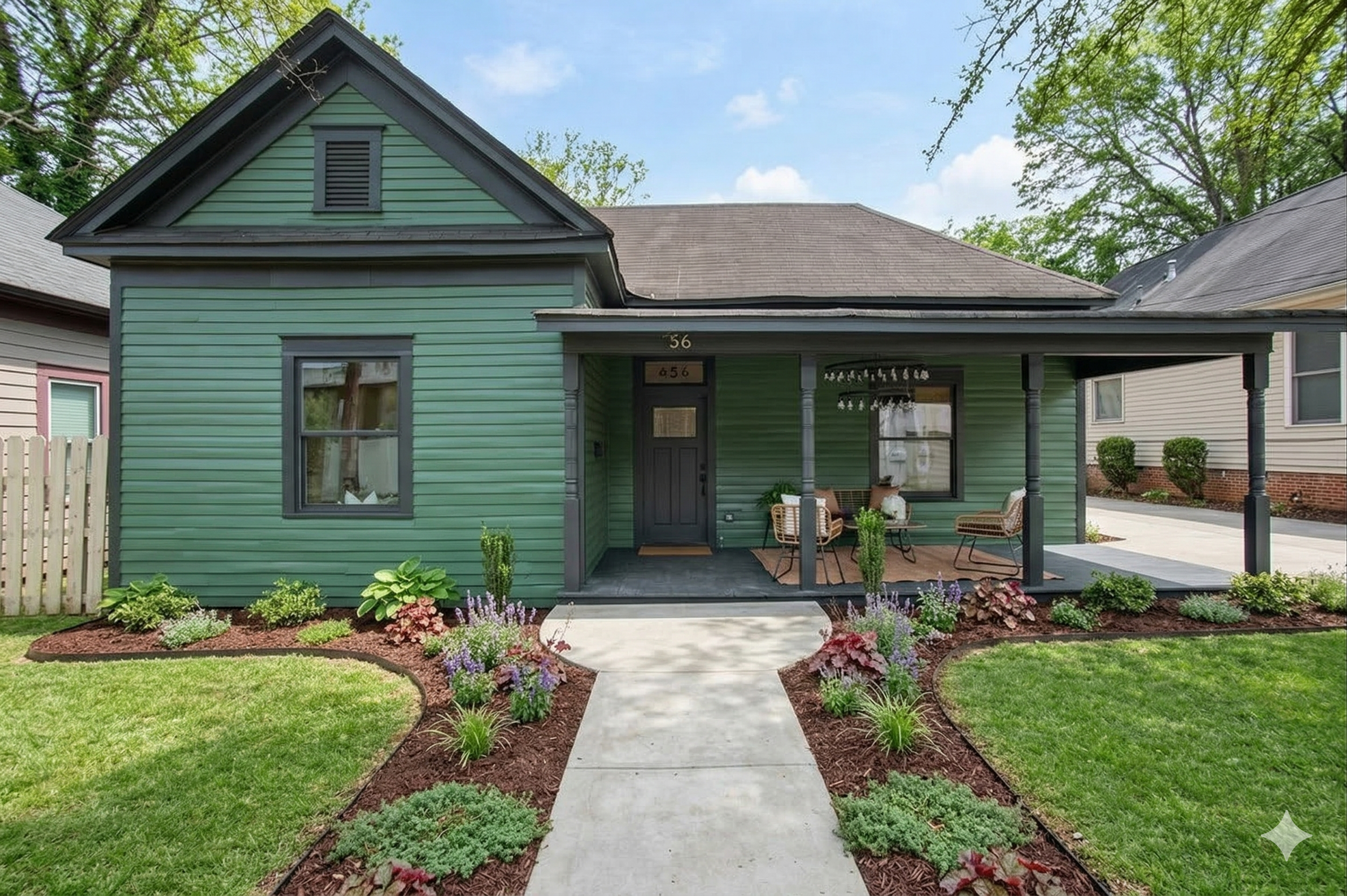
If you're a first-time buyer shopping intown Atlanta on a real budget, Edgewood and Kirkwood end up on almost every short list. They sit next to each other on the east side, share a MARTA station, share a school cluster, share the Trolley Line Trail, and both get pitched by agents as "the affordable intown option." That framing is close to true, but it hides the actual differences — and the differences matter when you're writing the biggest check of your life.
I live in Edgewood. I've walked clients through homes on both sides of the line more times than I can count, and the decision between these two neighborhoods is one of the most common conversations I have with first-time buyers in the $400,000 to $700,000 range.
Nearly a decade of helping Atlanta buyers has taught me that the "which is better" question is almost never the right one. The real question is: which one is better for you — your budget, your commute, your tolerance for renovation, your resale timeline.
Here's what you need to know.
The Short Answer
Edgewood is the more affordable entry point, has a shorter commute to downtown and Midtown, and still has renovation upside most first-time buyers can actually stomach. Kirkwood has more restaurants, more retail, more cachet, a tighter historic character, and a higher price floor — which means you're buying into something more finished, but you're also paying for that.
If your budget is under $550,000 and you want a single-family home with real bones, Edgewood is usually the answer.
If your budget is $600,000 to $750,000 and you want walkable Saturday mornings without driving anywhere, Kirkwood makes sense.
Below that is the long answer — the one that actually helps you decide.
Where These Neighborhoods Sit
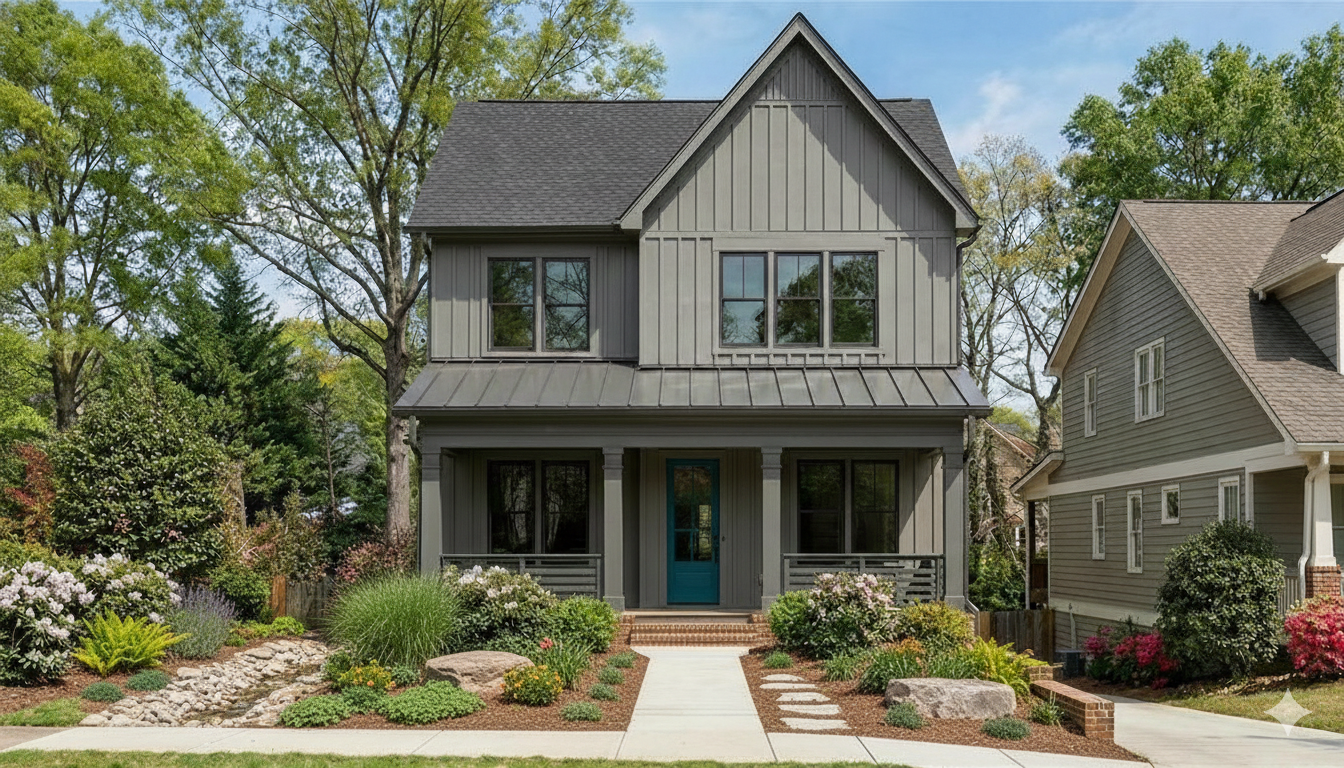
Edgewood is bounded roughly by Moreland Avenue on the west, DeKalb Avenue on the north, Hosea Williams Drive on the south, and the Kirkwood line on the east. It's about three miles from downtown Atlanta. The Edgewood/Candler Park MARTA station sits right on the northern edge.
Kirkwood is directly east of Edgewood, bounded by the Edgewood line on the west, Rocky Ford Road area on the east, DeKalb Avenue on the north, and Interstate 20 on the south. It's about five miles from downtown. It has two MARTA stations in play — East Lake on the Blue Line to the south and Edgewood/Candler Park shared with Edgewood on the north.
On a map, they look like the same place. They aren't.
Home Prices: The Real Numbers
This is the single biggest deciding factor for first-time buyers, so let's get specific.
| Metric (Early 2026) | Edgewood | Kirkwood |
|---|---|---|
| Median Sale Price | $549,000 – $565,000 | $616,000 – $625,000 |
| Year-Over-Year Appreciation | +10.9% | -4% to +0.8% |
| Average Days on Market | 45 – 51 days | 30 – 32 days |
| Entry-Level Single-Family Price | $400,000 – $450,000 | $500,000 – $550,000 |
| Top of Market | ~$900,000 – $1M | ~$1.3M+ |
| Distance to Downtown | ~3 miles | ~5 miles |
Edgewood in early 2026 is running a median sale price in the $549,000 to $565,000 range, with year-over-year appreciation of about 10.9% as of the most recent Redfin data pull. Days on market have stretched out slightly — homes are sitting 45 to 51 days on average, compared to 39 days a year ago. That means buyers have more negotiating room than they did twelve months ago.
Kirkwood is running a median sale price in the $616,000 to $625,000 range, with year-over-year appreciation much flatter, sitting somewhere between down 4% and up 0.8% depending on which data source you pull. Days on market are tighter — 30 to 32 days. Kirkwood is moving a little faster than Edgewood right now, even though both are somewhat competitive.
The practical translation: if you see the same style of renovated craftsman bungalow on a comparable lot in both neighborhoods, the Kirkwood version will typically cost you $60,000 to $100,000 more.
Data sources: Redfin, Homes.com, and local MLS data as of early 2026. Numbers move month to month. For current comps on a specific block, I'm happy to pull them for you directly.
What Your Budget Actually Buys You
Under $450,000
In Edgewood, this tier gets you an unrenovated or partially updated bungalow on a smaller lot, or a newer townhome. You'll see some fixer opportunities here, especially away from the main corridors. Expect to inherit older systems, older roofs, and either the need to renovate on a runway or live with the home as-is while you build equity.
In Kirkwood, this tier is mostly condos and the occasional smaller, unrenovated cottage. The Pullman Flats and similar condo buildings near Pratt Pullman District bring in single-family feel at multifamily prices. Townhomes in this range are rare but do come up.
First-time buyer takeaway: if you want a single-family home under $450,000, Edgewood has more to choose from than Kirkwood.
$450,000 to $600,000
Edgewood's sweet spot. This is where you find renovated 1920s and 1930s bungalows, two to three bedrooms, updated kitchens and baths, on lots that are genuinely usable. You'll see modern new construction mixed in at the top of this range. This is the most competitive tier in the neighborhood because it's where the median lands.
In Kirkwood, this range gets you an unrenovated or lightly updated historic home, or a newer townhome. The fully renovated Kirkwood bungalows on prime streets have generally priced out of this tier.
First-time buyer takeaway: this is where the two neighborhoods feel most different. $550,000 in Edgewood buys you finished. $550,000 in Kirkwood buys you a project.
$600,000 to $800,000
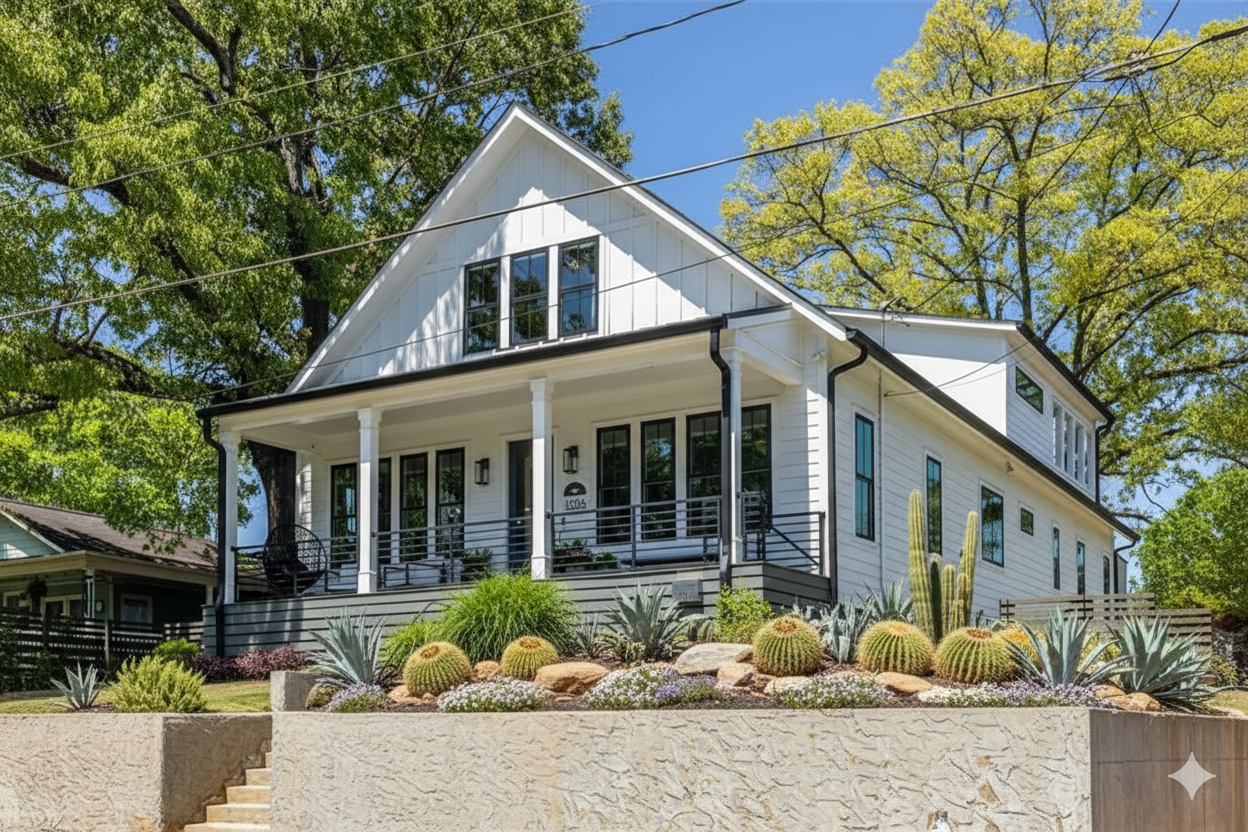
Edgewood at this price gets you a fully renovated, move-in-ready craftsman with primary suites, updated systems, real square footage, and often a detached garage or carriage house. You're approaching the top of the market here.
Kirkwood's sweet spot. Renovated historic homes, new construction infill, three to four bedrooms, updated kitchens and baths, often with finished attic space or basements.
First-time buyer takeaway: if you're stretching to this tier, you'll get more house in Edgewood and more neighborhood in Kirkwood. Both are real arguments.
$800,000 and Up
Edgewood at this price is the top of the market — larger renovated homes on prime blocks or new construction. You're in the thinnest part of the inventory.
Kirkwood has meaningful inventory in the $800,000 to $1.3 million range, including the larger family homes near Kirkwood Village and on the historic streets. This is where Kirkwood's "intown cachet at single-family prices" reputation actually lives.
First-time buyer takeaway: if you're spending this much, you're probably not a first-time buyer anymore. But if you are, the question becomes whether you want to be at the top of Edgewood or the middle of Kirkwood. Middle of Kirkwood has more comps for resale.
Schools: The Honest Version
Both neighborhoods are in the Atlanta Public Schools district. Both are zoned to the same cluster — Toomer Elementary, Martin Luther King Jr. Middle School, and Maynard Holbrook Jackson High School.
Toomer Elementary at 65 Rogers Street NE just completed a $13 million renovation and reopened for the 2024-2025 school year.
King Middle School is at 545 Hill Street SE.
Maynard Jackson High School is at 801 Glenwood Avenue SE.
Both Edgewood and Kirkwood also have proximity to Drew Charter School, a K-12 charter school in the East Lake area. Drew operates on a lottery system with attendance zone priority, and its defined attendance zone pulls from parts of East Lake, Edgewood, and Kirkwood. Families who want Drew should verify their specific address against the current attendance zone map and understand that a zoned address gets priority but does not guarantee a seat.
Research and visit schools to determine fit for your family. Always verify zoning by specific property address — school zones can and do change.
What this means for the Edgewood vs. Kirkwood decision: you're not picking between two different school situations. You're picking between two neighborhoods in the same school cluster. Schools are not the deciding factor between these two — they're the same variable. Where they differ is every other factor.
Commute: Honest Rush-Hour Numbers
From Edgewood:
Downtown Atlanta: 8 to 15 minutes driving off-peak. During morning rush (7 to 9 AM), expect 15 to 25 minutes on DeKalb Avenue or Memorial Drive.
Midtown: 15 to 20 minutes off-peak. Add five to ten minutes at rush hour.
Buckhead: 20 to 30 minutes, more if you're hitting GA-400 during peak.
Hartsfield-Jackson Airport: 15 to 20 minutes via I-20.
MARTA from Edgewood/Candler Park station: 12 to 15 minutes to downtown, 18 to 22 minutes to Midtown.
From Kirkwood:
Downtown Atlanta: 12 to 18 minutes driving off-peak. During morning rush, expect 20 to 30 minutes.
Midtown: 18 to 25 minutes off-peak. Add ten minutes at rush hour.
Buckhead: 25 to 35 minutes at peak.
Hartsfield-Jackson Airport: 18 to 22 minutes via I-20.
MARTA from East Lake station: 14 to 17 minutes to downtown, 20 to 24 minutes to Midtown.
The commute advantage goes to Edgewood by roughly four to seven minutes each way during rush hour. Over a year of weekday commuting, that's real time.
First-time buyer takeaway: if you work downtown or Midtown and commute by car or MARTA, Edgewood is objectively faster. If you work remotely or split time, the difference becomes less meaningful.
Walkability and Daily Life
This is where Kirkwood pulls ahead, and it's not subtle.
Kirkwood's main commercial corridor runs along Hosea Williams Drive and into Kirkwood Village at College Avenue. You get a concentrated walkable district with restaurants, coffee, a grocery option, and neighborhood shops. The Kirkwood Wine Stroll is one of Atlanta's most established neighborhood events. Pratt Pullman District at the eastern edge has become a destination food, retail, and event complex with Bona Fide Deluxe, Vin ATL, and regular programming.
Edgewood's retail footprint is more spread out. You have the Edgewood Retail District with Kroger, Target, and a handful of national chains — walkable from much of the neighborhood but closer in feel to a shopping plaza than a main street. El Tesoro on Hosea Williams is a true neighborhood restaurant. The Edgewood Community Learning Garden is a genuine community anchor. But the concentrated "walk to dinner on a Friday" experience is thinner here than in Kirkwood.
Both neighborhoods share the Trolley Line Trail, which connects the two and gives residents of both a walking, running, and biking spine. Both have BeltLine access via the Eastside Trail. Both are a short drive or ride from Little Five Points, East Atlanta Village, and Inman Park.
First-time buyer takeaway: if your idea of intown living is walking to dinner, drinks, and a coffee shop on Saturday mornings, Kirkwood delivers that more directly. If you're fine with driving or riding five minutes to reach those things, Edgewood saves you meaningful money for the same general experience.
Housing Stock and Renovation Reality
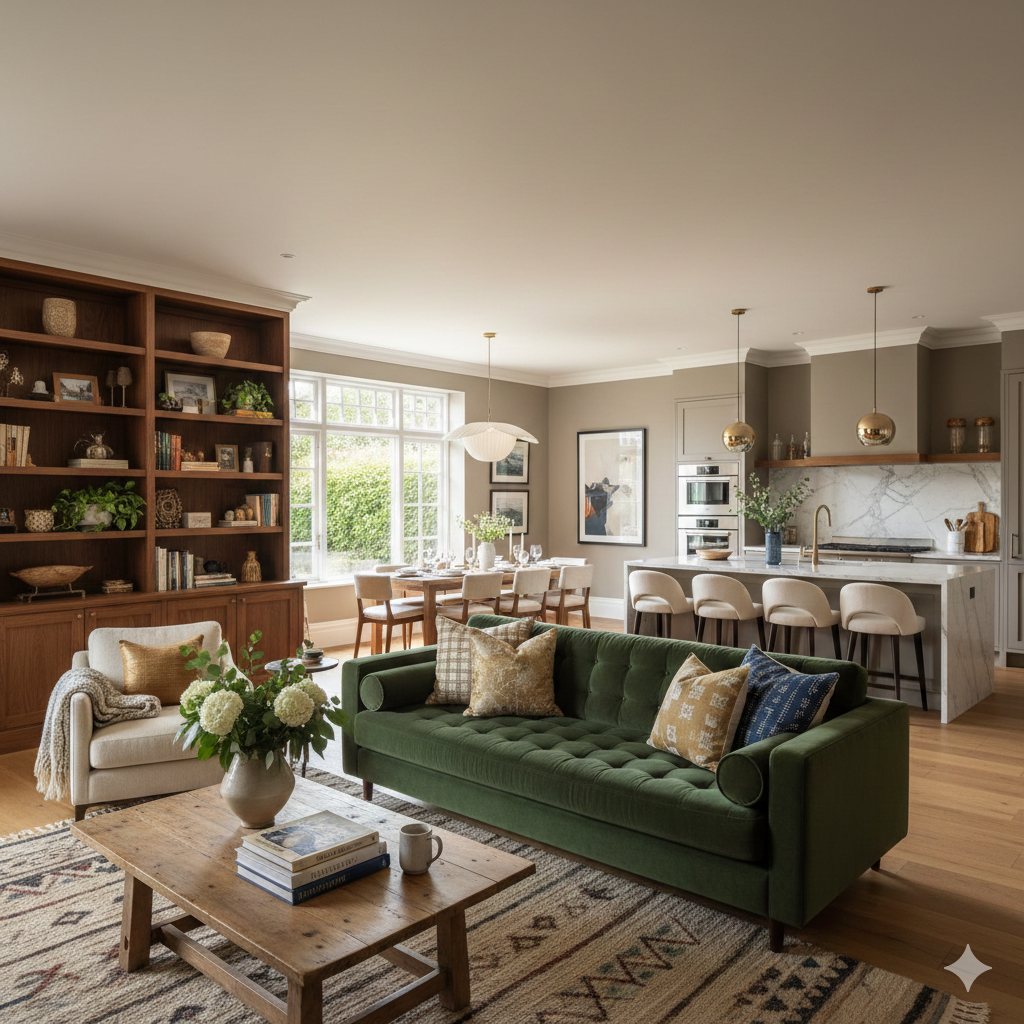
Both neighborhoods sit on primarily pre-war housing stock — 1920s and 1930s craftsman bungalows are the dominant architectural type in both. You'll also find post-war cottages, mid-century ranches, and modern new construction infill in both.
In Edgewood, you see a wider spread of condition. Some blocks are fully renovated, some blocks are mid-renovation, and some blocks still have unrenovated originals that come on the market at lower price points. This is part of what makes Edgewood workable for first-time buyers on a real budget — the renovation spectrum is still open.
In Kirkwood, the historic district has stricter preservation norms, and more of the neighborhood has been through its first or second renovation cycle. You're more likely to buy a finished home. You're also more likely to be told "no" on major exterior changes if you want to renovate, because parts of Kirkwood fall within designated historic districts.
First-time buyer takeaway: if you're handy, have a renovation budget, or want to build equity through sweat equity, Edgewood offers more runway. If you want to close and move in without picking paint colors for two years, Kirkwood is the more predictable bet.
One note that trips up first-time buyers on both sides: older homes mean older systems. In both Edgewood and Kirkwood, plan for inspections to surface issues around foundations, knob-and-tube electrical remnants, older HVAC systems, and termite history. These are fixable and common — not deal-breakers — but they mean your inspection period matters and your loan product matters. FHA financing on a 1925 bungalow is not always the cleanest path. I've covered that in detail in my FHA vs. Conventional Loan post.
Investment Potential
Both neighborhoods have real investment cases. The question for a first-time buyer is usually about resale in three to seven years, not a 20-year hold.
Edgewood's case: prices have been running up faster than Kirkwood's recently, appreciation of 10.9% year-over-year as of the most recent data. The narrative here is "Edgewood is catching up to Kirkwood." If that narrative holds and the gap between the two narrows, buyers who got in at current Edgewood prices benefit most. The neighborhood also has owner-occupancy around 62%, which suggests stability rather than heavy investor churn.
Kirkwood's case: slower current appreciation but a more established ceiling. Kirkwood has crossed into the price tier where institutional buyers and experienced renovators compete, which creates a floor. Historic designation adds intangible value that zero algorithms capture — buyers and agents who understand which streets are protected and which aren't can make meaningful pricing calls.
First-time buyer takeaway: Edgewood has more upside from where it sits today. Kirkwood has more downside protection. Neither of those is the "right" answer. It depends on your risk tolerance and your time horizon.
Who Edgewood Is Right For
You're a first-time buyer on a real budget who wants a single-family home, not a condo or townhome.
You're willing to trade a slightly less concentrated walkable retail district for meaningfully lower purchase prices.
You're open to a home that isn't 100% finished — either an in-progress renovation or a home where you can improve a room a year.
You commute to downtown, Midtown, or the airport and value being closer.
You're betting on appreciation and development catching up with Kirkwood over a three to seven year horizon.
Think carefully about Edgewood if you need a walkable dinner-and-drinks district as a primary amenity, if you're buying at the top of the market and want the most comp protection you can get, or if you're uncomfortable with the variability in housing condition block to block.
Who Kirkwood Is Right For
You're a first-time buyer at the upper end of the first-time-buyer budget — typically $600,000 and up.
You want a move-in-ready home in an established neighborhood with clear historic character.
Walkability is your number-one priority and you want to reach restaurants, coffee, and community events on foot.
You value historic district preservation and the intangible premium that comes with it.
You're okay with a slightly longer commute in exchange for the neighborhood feel.
Think carefully about Kirkwood if you're stretching at the bottom of the price range and would get more house for the money next door, if you want major renovation flexibility (parts of Kirkwood have historic preservation constraints), or if your commute is the number-one factor in your decision.
Edgewood vs. Kirkwood at a Glance
| Factor | Edgewood | Kirkwood |
|---|---|---|
| Best For | Budget-conscious intown buyers | Walkability-first buyers $600K+ |
| Commute to Downtown (rush hour) | 15 – 25 minutes | 20 – 30 minutes |
| MARTA Access | Edgewood/Candler Park station | East Lake & Edgewood/Candler Park |
| Walkable Retail District | Edgewood Retail District (plaza-style) | Kirkwood Village (main street-style) |
| Housing Stock | Mix of renovated, in-progress, unrenovated | More fully renovated, more historic |
| Renovation Flexibility | Higher — fewer historic district rules | Lower — historic preservation zones |
| Public School Cluster | Toomer / King / Jackson | Toomer / King / Jackson |
| Drew Charter Proximity | Yes — lottery with zone priority | Yes — lottery with zone priority |
| Investment Angle | Upside / momentum play | Stability / floor protection |
| BeltLine Eastside Trail Access | Yes, via Trolley Line Trail | Yes, via Trolley Line Trail |
How I'd Walk You Through the Decision
When a first-time buyer comes to me weighing Edgewood against Kirkwood, the conversation usually runs in this order:
Budget first. If your max is $500,000 to $550,000, we're probably talking about Edgewood unless you're open to a condo. That's not a judgment on either neighborhood — it's a function of what the median price in each actually is right now.
Commute second. Drive both routes at 8 AM on a Tuesday. Do it before you fall in love with a house. The difference between "15 minutes to work" and "25 minutes to work" adds up over years.
Walkability third. Park at Kirkwood Village on a Saturday morning and walk around. Do the same in Edgewood — park near the Edgewood Retail District, walk the Trolley Line Trail, stop at El Tesoro. You'll feel the difference immediately. The question is whether that difference is worth $60,000 to $100,000 to you.
Housing condition fourth. Look at five homes in each neighborhood in your price range. You'll see the spread clearly. If the Edgewood homes at your price make you nervous about the work involved and the Kirkwood homes at a higher price make you feel calm, that's real information.
Resale fifth. Think about the person who will buy this house from you in five to seven years. What will they care about? If your answer is "schools and walkability," both work equally. If your answer is "appreciation story" or "room to grow into," Edgewood has the edge. If your answer is "finished, established, low-drama," Kirkwood has the edge.
Frequently Asked Questions
Which neighborhood is cheaper, Edgewood or Kirkwood?
Edgewood is cheaper. As of early 2026, the median sale price in Edgewood is running $549,000 to $565,000 compared to Kirkwood's $616,000 to $625,000 — a gap of about $60,000 to $100,000 for comparable homes. That gap has been narrowing as Edgewood appreciates faster.
Can first-time buyers actually afford Edgewood or Kirkwood?
Yes, but it depends on your loan product and your down payment. At a $550,000 purchase with 10% down and current mortgage rates, you're looking at a monthly principal and interest payment in the low-to-mid $3,000s before taxes and insurance. Both neighborhoods have homes in the $400,000 to $500,000 tier, especially Edgewood. Down payment assistance programs can open the door further — it's worth a conversation before you start shopping.
Do Edgewood and Kirkwood have the same schools?
They share a zoned cluster — Toomer Elementary, King Middle, and Jackson High. Both also have proximity to Drew Charter School, which operates a lottery with attendance zone priority. School zoning can change, so always verify by specific property address.
Is Kirkwood safer than Edgewood, or vice versa?
Both neighborhoods have active community associations, engaged residents, and the usual urban-intown considerations. Crime data is publicly available through the Atlanta Police Department. I encourage every buyer to pull their own data for any neighborhood they're considering and drive the area at different times of day before committing.
What's the commute like from Edgewood or Kirkwood to downtown Atlanta?
Edgewood is 8 to 15 minutes to downtown off-peak, 15 to 25 minutes at rush hour. Kirkwood is 12 to 18 minutes off-peak, 20 to 30 minutes at rush hour. Both have MARTA access — the Edgewood/Candler Park station serves both neighborhoods, and Kirkwood also has the East Lake station on the south side.
Which neighborhood has better appreciation, Edgewood or Kirkwood?
Over the most recent year, Edgewood has appreciated faster — up about 10.9% year-over-year compared to Kirkwood's roughly flat movement. That doesn't predict the future, but it tells you where momentum sits right now. Kirkwood has a longer track record of stable appreciation at a higher price floor.
Are there townhomes or condos for first-time buyers in Edgewood and Kirkwood?
Yes in both. Edgewood has a mix of newer townhome developments alongside its bungalow stock. Kirkwood has condos — including Pullman Flats near Pratt Pullman District — and townhomes scattered throughout. Condos and townhomes are often the entry point for first-time buyers under $400,000 in either neighborhood.
Can I bike or walk between Edgewood and Kirkwood?
Yes. The Trolley Line Trail is a paved pedestrian and bike path that runs between the two neighborhoods and connects to the Atlanta BeltLine's Eastside Trail via Reynoldstown. It's one of the practical everyday reasons people who live in either neighborhood end up spending time in both.
What's the biggest mistake first-time buyers make when choosing between Edgewood and Kirkwood?
Choosing based on a single weekend visit. Edgewood and Kirkwood feel different at 9 AM on a Tuesday than they do on a Saturday afternoon. Commute times, morning energy, and evening quiet all matter when you're living somewhere. I always push clients to spend time in both neighborhoods at multiple times of day before making an offer.
Are there historic district restrictions I should know about?
Parts of Kirkwood fall within designated historic districts that come with exterior renovation review requirements. Edgewood has historic character but fewer formal district designations. If you're buying with plans to renovate, this matters — confirm what district a specific property sits in before you make an offer, and factor review timelines into your renovation plans.
How do I know which neighborhood is actually right for me?
Tour both. Walk both at different times. Drive both commutes at rush hour. Look at five to ten homes in each within your price range. Talk through the trade-offs with an agent who knows both. The "right" neighborhood is the one whose specific trade-offs match your specific situation — and that's a conversation, not a formula.
Which neighborhood is better for resale?
Both have strong resale stories. Kirkwood has a longer, more established track record of steady appreciation. Edgewood has more recent upward momentum. If you're planning a three-to-five year hold, either can work. If you're planning to stay ten-plus years, the difference matters less — both have proven themselves over time.
Closing
I live in Edgewood. I sell in both. The real answer to "which neighborhood is right for first-time buyers" is: it depends on your budget, your commute, and what kind of home you want to walk into at the end of the day. What I can do is walk you through actual listings in both neighborhoods, pull real comps for your specific price range, and give you the honest read on what each one gets you right now.
Visit kristenjohnsonrealestate.com or reach out directly. Come as you are, come on home.
Looking for more intown Atlanta neighborhood guides? I've covered Kirkwood, East Atlanta, Grant Park, Reynoldstown, Candler Park, Old Fourth Ward, and Decatur. Browse the full guide series at kristenjohnsonrealestate.com.