

Living in Mozley Park Atlanta GA: Westside History, Mozley Park Greenway & Home Prices 2026
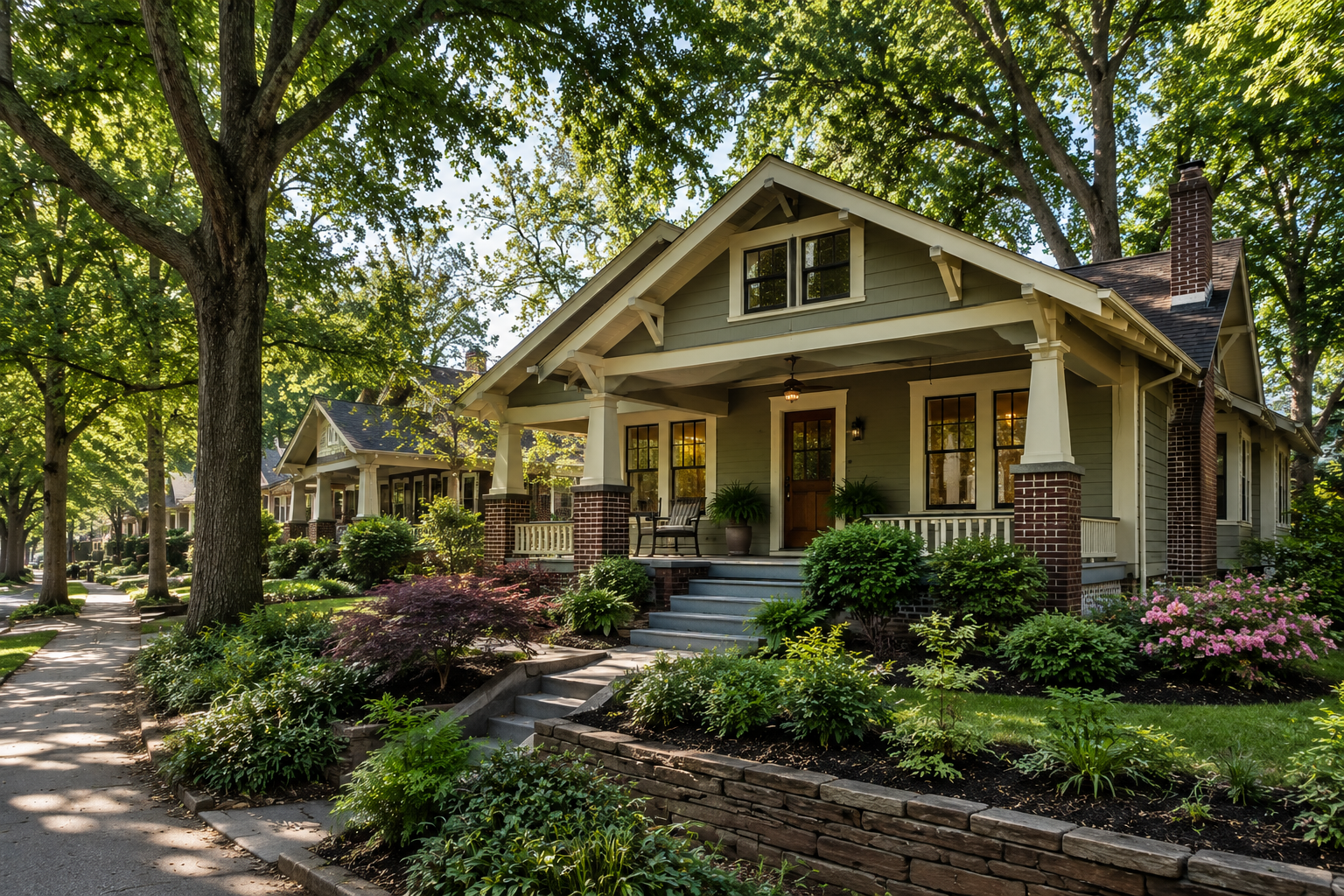
If you are looking at Atlanta's Westside and trying to find a neighborhood with real history, an actual park at its center, and home prices that still leave room to build equity, Mozley Park belongs on your list. It sits roughly three miles west of downtown, bordered by Martin Luther King Jr. Drive to the north, Interstate 20 to the south, and the path of the Atlanta BeltLine's Westside Trail to the east. It is a small, gridded residential neighborhood of Folk Victorian cottages and Craftsman bungalows, most of them built between 1920 and 1940, and in 1995 the core of it was placed on the National Register of Historic Places as the Mozley Park Historic District.
I work with buyers across Metro Atlanta, from first-time buyers trying to get into the city before prices move further to relocation buyers who have never set foot in Georgia. Mozley Park comes up most often with two groups: buyers who want a renovated or renovatable historic home within minutes of downtown, and investors who have been watching the Westside BeltLine corridor and understand what trail completion tends to do to property values.
Nearly a decade of helping Atlanta buyers means I know what a Zillow search will not tell you about this neighborhood: the block-by-block difference between a fully renovated bungalow and one that still needs everything, how I-20 shaped the southern edge of the district, what the BeltLine timeline actually means for a buyer deciding now, and the weight of the history that runs underneath these streets.
Here's what you need to know.
Where Is Mozley Park, and What Defines It
Mozley Park is a neighborhood on Atlanta's Westside, in ZIP code 30314, in Fulton County and inside the city limits. The historic district is roughly bounded by Westview Drive, West Lake Avenue, the old Seaboard Coast Line railroad tracks, and Martin Luther King Jr. Drive. Interstate 20 runs along the southern edge. The neighborhood takes its name from its central green space, Mozley Park, the 38-acre recreation area the City of Atlanta purchased in the 1920s.
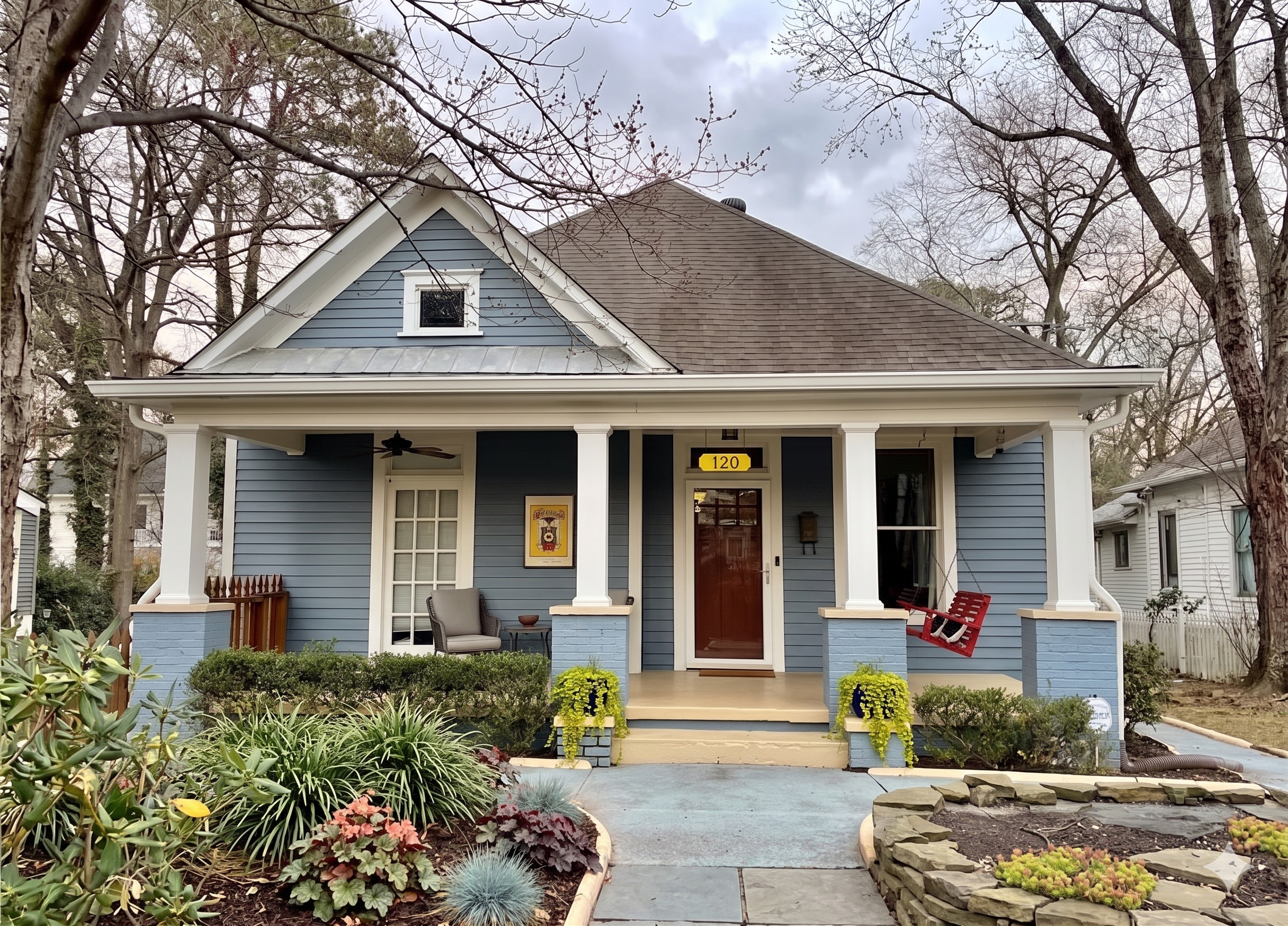
The street layout is a grid, typical of Atlanta neighborhoods platted in the early twentieth century. Lots are mostly narrow, around 50 feet wide, and many of the original streets still have their granite curbing and narrow sidewalks with hexagonal pavers. The oldest houses are Folk Victorian cottages and Craftsman bungalows on small lots, often with shallow or varied setbacks and, in the oldest sections, no driveways. The housing stock was built over roughly a 20-year span starting around 1920.
What defines Mozley Park as a place to live in 2026 is the combination of three things. First, it is genuinely historic, with a designated district and a housing stock that has held its early-twentieth-century character. Second, it is close in, three miles from downtown, with MARTA rail access nearby. Third, it sits directly on the path of the BeltLine's Westside Trail, which is the single biggest factor in how this market has moved and is likely to move.
It is a quiet, largely residential neighborhood. There are no restaurants or retail strips inside the district itself. Daily life here means the park, the porches, the BeltLine, and a short drive or ride to the dining and shopping that have built up in West End and along the Westside Trail.
The Legacy of Black Atlanta in Mozley Park
You cannot understand Mozley Park as a place to buy a home without understanding its history, because that history is still visible in the streets, the park, and the institutions around it.
The land was originally owned by Dr. Hiram Mozley, a nineteenth-century landowner and patent-medicine manufacturer. After his death in 1902, his heirs subdivided the estate, and the residential neighborhood was developed through the 1920s and 1930s. In 1922, residents of the area asked the Atlanta City Council to buy the Mozley estate and turn it into a park for the southwest side of the city. The council did, and Mozley Park the green space was created.
The harder and more important part of the story is what happened in the 1940s and 1950s. Mozley Park was the neighborhood where Atlanta's pattern of "white flight" first played out. The neighborhood sat just west of areas that were transitioning from white to Black, and as Black families sought to expand into Mozley Park, white homeowners organized to stop them. There were threats against work crews building homes for Black buyers, proposals to use roadways as racial barriers, and a near-riot in 1949 when a Black minister bought a home on Mozley Place. City officials at one point tried to designate Westview Drive as a "color line." That effort failed in part because Black real estate agents refused to cooperate with it and began openly advertising Mozley Park homes in the Atlanta Daily World, the Black newspaper. By 1954, the racial transition of the neighborhood was complete, and the city finally opened Mozley Park itself to Black residents.
That history is not a footnote. The Atlanta Daily World, the newspaper that helped break the segregation effort, was founded by W. A. Scott II, and his son, William A. Scott III, built a home on Mozley Place. The C.A. Scott Recreation Center inside the park carries the family name. The streets around the neighborhood connect directly to the larger story of Black Atlanta: Martin Luther King Jr. Drive runs along the northern border, and the broader Westside is dense with civil rights history, Black-founded institutions, and the homes and workplaces of the people who built them.
After the racial transition was complete, Mozley Park went through a difficult period. By the 1960s, the neighborhood and the park itself had suffered from disinvestment, with maintenance problems documented at the park, including a deteriorated pool deck and untended grounds. The park's name has also been the subject of community discussion in recent years, given that its namesake, Dr. Hiram Mozley, was a Confederate veteran. Residents have debated whether a neighborhood with this particular history should carry that name. That conversation is itself part of the ongoing story of how Mozley Park understands and tells its own past.
What has changed more recently is the level of public and private reinvestment across the Westside. The Westside Trail brought BeltLine infrastructure directly to the neighborhood's edge. The Friends of Mozley Park, working with Park Pride, brought the dog park. The 2022 city infrastructure bond designated money for park improvements. Renovation activity has picked up across the historic stock, and the corridor along Martin Luther King Jr. Drive has seen public art and streetscape investment.
For a buyer, this history matters in a practical way. It means Mozley Park is a National Register historic district with a documented, nationally significant story, and the neighborhood has organized residents, including the Friends of Mozley Park, who have invested in the park and its amenities. It also means the neighborhood is part of a Westside that the city and private developers are actively investing in, which brings both opportunity and the real pressure of rising prices that long-term residents feel. Buying here means buying into a place with a deep and specific identity, and for many of the buyers I work with, that is part of what makes it worth the search.
What Does Mozley Park Cost? Home Prices in 2026
Mozley Park is a small, low-volume market, and that is the first thing to understand about its numbers. In a typical month only a handful of homes sell. When a market is that small, a single high-end renovation or a single distressed sale can swing the median dramatically, which is why you will see wildly different figures depending on which site you check and which month it pulled.
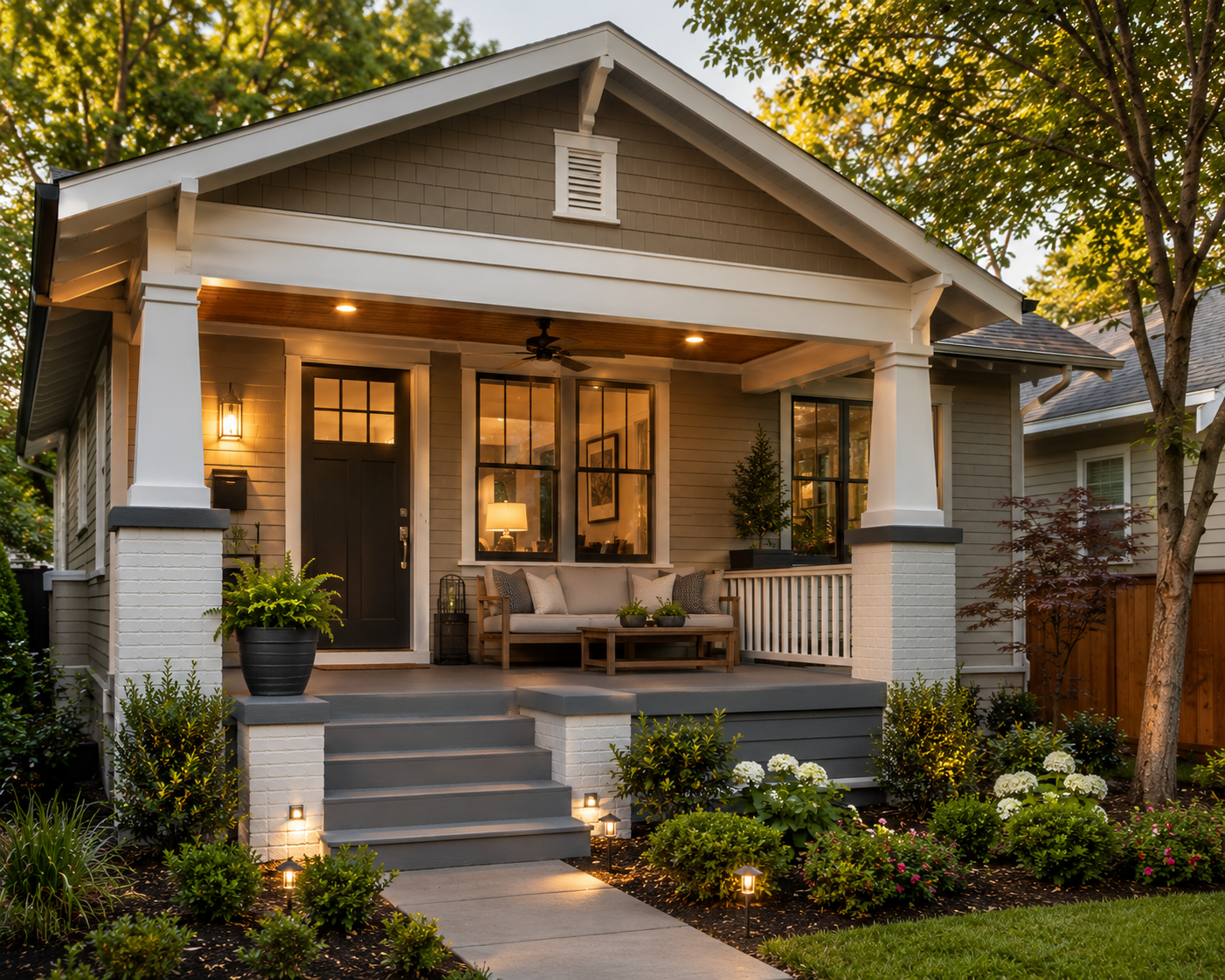
Here is the honest picture from late 2025 and early 2026 data. Aggregator estimates of the typical Mozley Park home value have ranged from roughly the high $200,000s to the high $300,000s. Redfin reported a median sale price around $379,000 in late 2025, up double digits year over year, while other trackers showed lower typical values. Active listings have commonly carried median list prices in the high $300,000s to low $400,000s, and renovated homes and new construction have closed well above that, into the $400,000s and $500,000s. Price per square foot has run roughly $200 to $280 depending on condition and on whether the source counts renovated or unrenovated stock.
| Price Range | What It Typically Buys in Mozley Park |
| Under $300,000 | Original or partially updated bungalows and cottages that need significant work, smaller homes, or properties in less-improved condition. This is the renovation-project tier. |
| $300,000 to $425,000 | The heart of the market: moderately updated historic homes, partially renovated bungalows, and smaller move-in-ready properties. |
| $425,000 to $550,000 | Fully renovated historic bungalows with modern systems and finishes, larger homes, and select new construction. |
| $550,000 and up | The top of this market: the largest renovated homes and premium new construction, generally on the most desirable streets or closest to the BeltLine. |
Days on market in Mozley Park have been uneven. In some recent months homes have sold in roughly a month; in others, individual listings have sat well past 90 days. That spread is normal for a small market with a mix of renovated and unrenovated stock. Renovated, well-priced homes move faster. Projects and overpriced listings sit.
A few things to keep in mind as a buyer. Condition variance here is enormous. Two houses on the same block can be a fully gutted-and-rebuilt bungalow and an untouched original, and the price gap will be six figures. This is also still a market where investors and flippers are active, so you will see homes bought, renovated, and resold within a year. And because the sample size is small, the "median" is a weak guide. The right move is to look at recent comparable sales by condition and street, not a neighborhood-wide average. These figures move, so treat them as a snapshot and reach out for current numbers on the specific homes you are considering.
It is also worth understanding what is driving demand here, because it tells you something about where prices go from here. Mozley Park's price story is not about a single new amenity. It is about a stack of factors arriving at once: a National Register historic district designation that protects the neighborhood's character, BeltLine frontage on the Westside Trail, a close-in location three miles from downtown, MARTA rail access, and a citywide affordability squeeze that has pushed buyers steadily outward and westward from the most expensive intown neighborhoods. Each of those factors on its own supports demand. Together, they are why a small, quiet Westside neighborhood has seen the renovation activity and price movement it has. For a buyer, the takeaway is that you are not betting on one thing. You are buying into a neighborhood whose value case rests on several independent supports.
The BeltLine, the Westside Trail, and Why It Matters Here
The Atlanta BeltLine's Westside Trail runs along the eastern edge of Mozley Park, and for buyers it is the most important single factor in this market.
The Westside Trail is a multi-use paved path, 14 feet wide, designed for walking, running, and biking, lined with mature tree canopy through Trees Atlanta's arboretum plantings. It stitches together a string of historic Westside neighborhoods, including West End, Westview, Adair Park, Ashview Heights, Washington Park, and Mozley Park. The trail has multiple access points, most of them ADA-accessible, and the BeltLine's long-term plan calls for the network to connect into the Southwest Trail and eventually the full 22-mile loop.
What this means in practice: from Mozley Park you can get onto a continuous paved trail and reach the breweries and food at Lee + White, the businesses of West End, and other Westside parks without getting in a car. That kind of connectivity is exactly what has driven appreciation along every completed segment of the BeltLine.
Across Atlanta, the pattern has been consistent: when a BeltLine segment opens and matures, the neighborhoods it touches see rising demand and rising prices. The Eastside Trail neighborhoods saw it first and most dramatically. The Westside Trail neighborhoods, including Mozley Park, are at an earlier point on that curve. For a buyer, that earlier position is the opportunity. You are buying into a neighborhood with confirmed trail frontage at prices that have not yet fully reflected what the corridor tends to become.
Here is the honest version for a buyer. BeltLine proximity is a genuine value driver, and Mozley Park has it. But the BeltLine is also a moving target. Some segments are fully built, polished, and open; others are still under construction or in planning, and timelines shift. So you want to know specifically what is finished and what is not near the home you are considering, rather than buying purely on the promise of what the network will eventually be. The upside is real. The completion date is not something you can put on a calendar with certainty. When I work with buyers on the Westside, I walk the relevant trail segment with them so they are buying based on what exists, with the future as upside rather than as the whole thesis.
Mozley Park Greenway: The Park and C.A. Scott Recreation Center
The neighborhood's namesake park is its anchor. Mozley Park is a city park and recreation area that includes a swimming pool, a playground, a softball or sports field, a basketball court, tennis courts, an outdoor fitness zone, BBQ pavilions, and the C.A. Scott Recreation Center, all set within landscaped grounds.
It is also home to the first off-leash dog park on Atlanta's Westside, opened in December 2021 through a partnership between the Friends of Mozley Park and Park Pride. The dog park has separate small-dog and large-dog areas, agility equipment, and custom seating. The outdoor fitness area features 11 stations, including an elliptical, a hand cycler, a squat press, and parallel bars.
The park has been targeted for further investment. Atlanta's 2022 Infrastructure Bond, approved by voters that year, included funding for artificial turf fields at Mozley Park and the C.A. Scott Recreation Center. As with many bond projects, the construction timeline has not been firmly set, so if turf fields matter to you, treat it as planned rather than delivered, and verify the current status.
For residents, the park is the center of daily life in a neighborhood that does not have a commercial main street. It is where people walk dogs, where families gather, and where the neighborhood's history is most directly present, given the recreation center's name and the park's origin as land the community itself asked the city to buy a century ago.
Getting Around: Commutes and Transit
Mozley Park's location is one of its strongest selling points. It is close in, and it has both highway and rail access.
Downtown Atlanta: Roughly 10 to 15 minutes off-peak. During the morning rush, expect 15 to 25 minutes. Downtown is only about three miles east, and I-20 runs along the southern edge of the neighborhood, so the drive is short.
Midtown: Generally 15 to 25 minutes off-peak, longer in heavy traffic. The route runs through or around downtown.
Hartsfield-Jackson Atlanta International Airport: Typically 20 to 30 minutes via I-20 to I-85 South or surface routes, more during peak travel times. Westside proximity to the airport is genuinely convenient and is a point in this neighborhood's favor for frequent travelers.
MARTA rail: Mozley Park is served by nearby MARTA rail on the Blue and Green lines. The West Lake station sits just west of the neighborhood, and the Ashby station is to the east. From the park area, West Lake station is a short bus ride or roughly a 15-to-20-minute walk depending on your route, and several bus routes run along Martin Luther King Jr. Drive. Rail access to downtown and the airport without a car is a real practical advantage, and it is one reason the Westside has drawn buyers who want to limit car dependence.
Major corridors: Interstate 20 along the south is the main highway artery. Martin Luther King Jr. Drive along the north is the main surface corridor and connects east toward downtown and west into the rest of southwest Atlanta.
Honest summary: this is a good commute for anyone working downtown, in or near Midtown, or traveling frequently through the airport. It is a weaker fit if your work is in the far northern suburbs, where you would be fighting cross-city traffic every day. For a close-in Westside location, the access here is hard to beat.
Things to Do In and Around Mozley Park
Mozley Park itself is residential, so the honest answer is that most of what you will do for dining, shopping, and entertainment happens just outside the neighborhood. The good news is that several of Atlanta's most active Westside destinations are minutes away, and the BeltLine connects you to many of them directly.
Mozley Park and the dog park are the everyday hubs: pool, courts, fitness stations, pavilions, playground, and the Westside's first off-leash dog park.
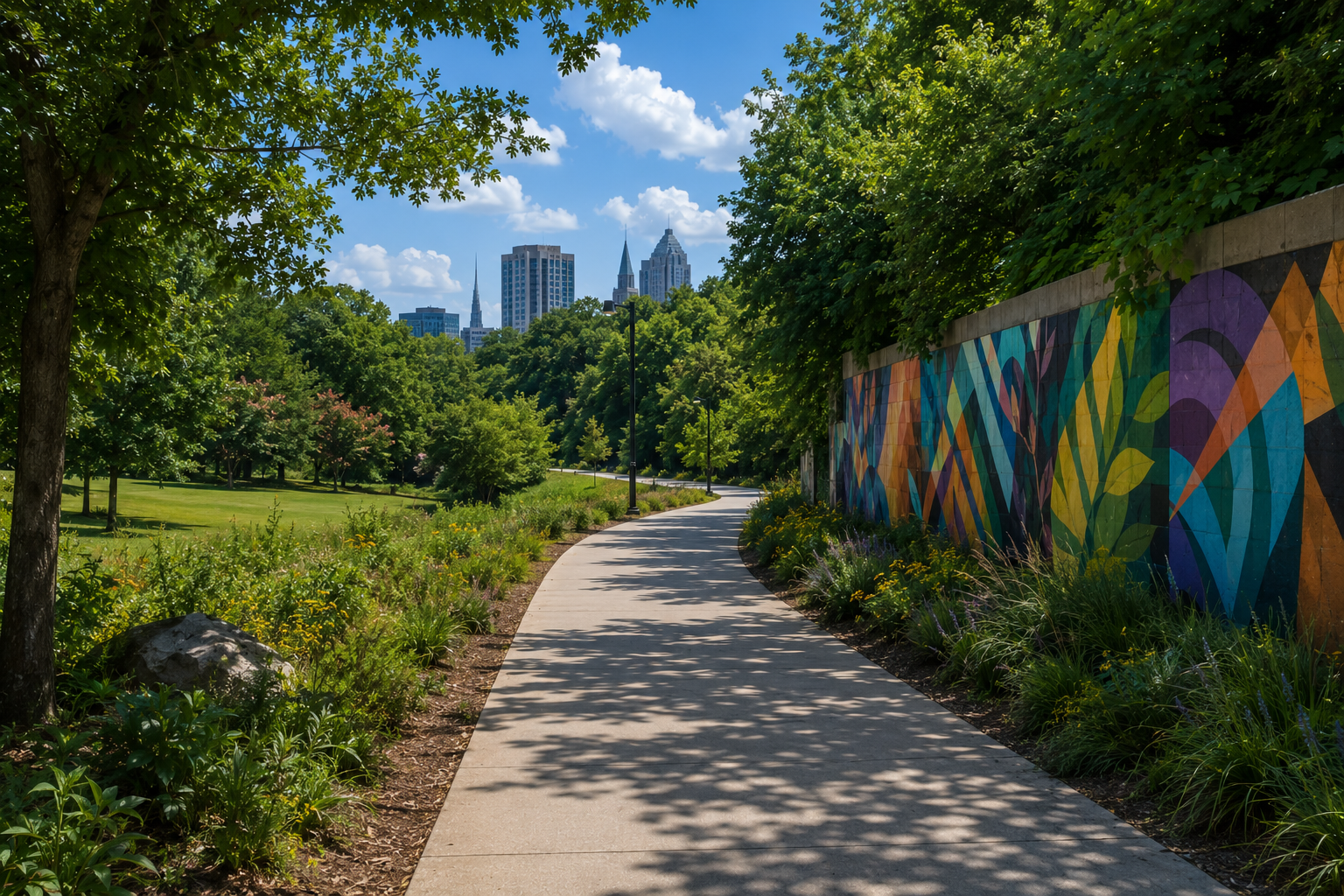
The Westside Trail is itself a destination. The paved path with its tree canopy, tunnels, bridges, and public art is a place people walk and bike for its own sake, not just to get somewhere.
Lee + White in West End is the big one. This adaptive-reuse development in the former "Warehouse Row" sits directly on the Westside Trail and has become one of Atlanta's most active food-and-drink destinations. It is home to breweries including Monday Night Garage, Wild Heaven, and Best End, the ASW distillery, Hop City beer store, Honeysuckle Gelato, restaurants, a food hall, and The Overlook climbing gym. It is a short drive or a BeltLine ride from Mozley Park.
West End more broadly offers dining along Ralph David Abernathy Boulevard and a growing set of small businesses and restaurants, plus its own stretch of BeltLine trail and street art.
Washington Park, just to the northeast, is one of Atlanta's historic parks, with a natatorium, playground, ball fields, and tennis. It opened in 1919 as the first public park created for Black residents of Atlanta, and it is part of the same Westside green-space network.
Westside Provisions District and the Marietta Street corridor, a bit farther northeast, add a denser cluster of well-known restaurants and shopping for nights when you want a wider range.
Downtown Atlanta, with Mercedes-Benz Stadium, State Farm Arena, Centennial Olympic Park, and the major museums, is only about three miles away.
The honest version: if you need restaurants and a grocery store within walking distance of your front door, Mozley Park is not that. If you are fine with a short drive or BeltLine ride to reach a real concentration of food, drink, and recreation, you are very well positioned here.
Schools Serving Mozley Park
Mozley Park is served by Atlanta Public Schools. As with any Atlanta neighborhood, attendance zones are set by the Atlanta Board of Education and are determined by the specific property address, and two homes on the same street can occasionally be zoned differently. Always verify the zoned schools for any specific home directly with APS before you make a decision.
Elementary: Homes in Mozley Park are generally zoned for F.L. Stanton Elementary School (1625 Martin Luther King Jr. Drive SW), a PK-5 school. Stanton has a direct historic tie to the neighborhood: it is the only non-residential building inside the Mozley Park Historic District, a two-story red-brick building named for Frank Lebby Stanton, Georgia's first poet laureate. M.A. Jones Elementary School (1040 Fair Street SW), also PK-5, serves nearby parts of the Westside, and some Westside addresses fall into other elementary zones, which is exactly why address-specific verification matters.
Middle school: Westside middle school attendance has shifted over time as APS has reorganized schools and feeder patterns in this part of the city. Because of that, the zoned middle school is one of the most important things to confirm directly with APS for any specific Mozley Park address rather than relying on a third-party real estate site, which may show outdated information.
High school: The area is served by Booker T. Washington High School. Washington is one of the most historically significant schools in Georgia. It opened in 1924 as the first public high school for Black students in the state, created through years of organized advocacy by Atlanta's Black community, the NAACP, and the Atlanta Neighborhood Union, who registered and voted to pressure the city into funding it. It was the only public secondary school for Black students in Atlanta until 1947, and its alumni include Dr. Martin Luther King Jr., Lena Horne, opera singer Mattiwilda Dobbs, and businessman Herman J. Russell. The school's centennial was celebrated in 2024, and a Georgia Civil Rights Trail historical marker now stands at the campus. An exact replica of the Booker T. Washington monument at Tuskegee University was erected at the school's entrance in 1927.
Atlanta Public Schools also operates a number of choice options across the city, including charter and theme schools, and APS attendance patterns and feeder structures change over time. The most reliable approach is to use the APS School Zone Locator and to contact the district directly to confirm the elementary, middle, and high school zoned for a specific address.
Research and visit schools to determine fit for your family. Always verify zoning by specific property address.
Mozley Park Compared to Nearby Westside Neighborhoods
Mozley Park does not exist in isolation. It is one of a connected string of historic Westside neighborhoods, several of which I have covered in detail. Here is how it compares to its neighbors.
Mozley Park vs. West End: West End is the larger, more developed, and more expensive of the two. It has a denser commercial core along Ralph David Abernathy Boulevard, the Lee + White development, the AUC universities nearby, and a deeper supply of grand Victorian-era homes. Mozley Park is smaller, quieter, more strictly residential, and generally more affordable. West End wins on walkable amenities and name recognition; Mozley Park wins on price and on being a calmer, more contained historic pocket. Many buyers priced out of West End look directly at Mozley Park next. You can read the full picture in my guide to living in West End Atlanta GA.
Mozley Park vs. Adair Park: Adair Park, southeast of here, is another small historic Westside neighborhood on the BeltLine with a strong stock of Craftsman bungalows. The two are similar in scale and feel, both grid-platted historic districts with the Westside Trail running through. Adair Park has had a longer, more visible wave of renovation activity. Mozley Park is at a comparatively earlier point in that cycle, which can mean more entry-point opportunity for buyers willing to take on condition. See my guide to living in Adair Park Atlanta GA.
Mozley Park vs. Oakland City: Oakland City sits south of I-20, with its own MARTA rail access and BeltLine proximity. Both are affordable, close-in, historically significant Westside and southwest neighborhoods in an active phase of change. Oakland City is generally a bit larger; Mozley Park has the advantage of its central park and its location just three miles from downtown. See living in Oakland City Atlanta GA.
Mozley Park vs. Westview: Westview, directly connected to Mozley Park along the trail and named for the historic Westview Cemetery, is another quiet historic neighborhood with bungalows and a strong sense of community identity. The two are close cousins in price, scale, and feel, and buyers looking at one should look at the other.
The overall point: this is a cluster. Each of these neighborhoods shares the same essential ingredients of historic housing, BeltLine access, close-in location, and an active market. Mozley Park's particular combination is its central park, its three-mile distance from downtown, and pricing that, for now, tends to sit at the more accessible end of the range.
Streets and Housing in Mozley Park
Mozley Park is a compact, walkable grid, and the housing is reasonably consistent in type while varying enormously in condition.
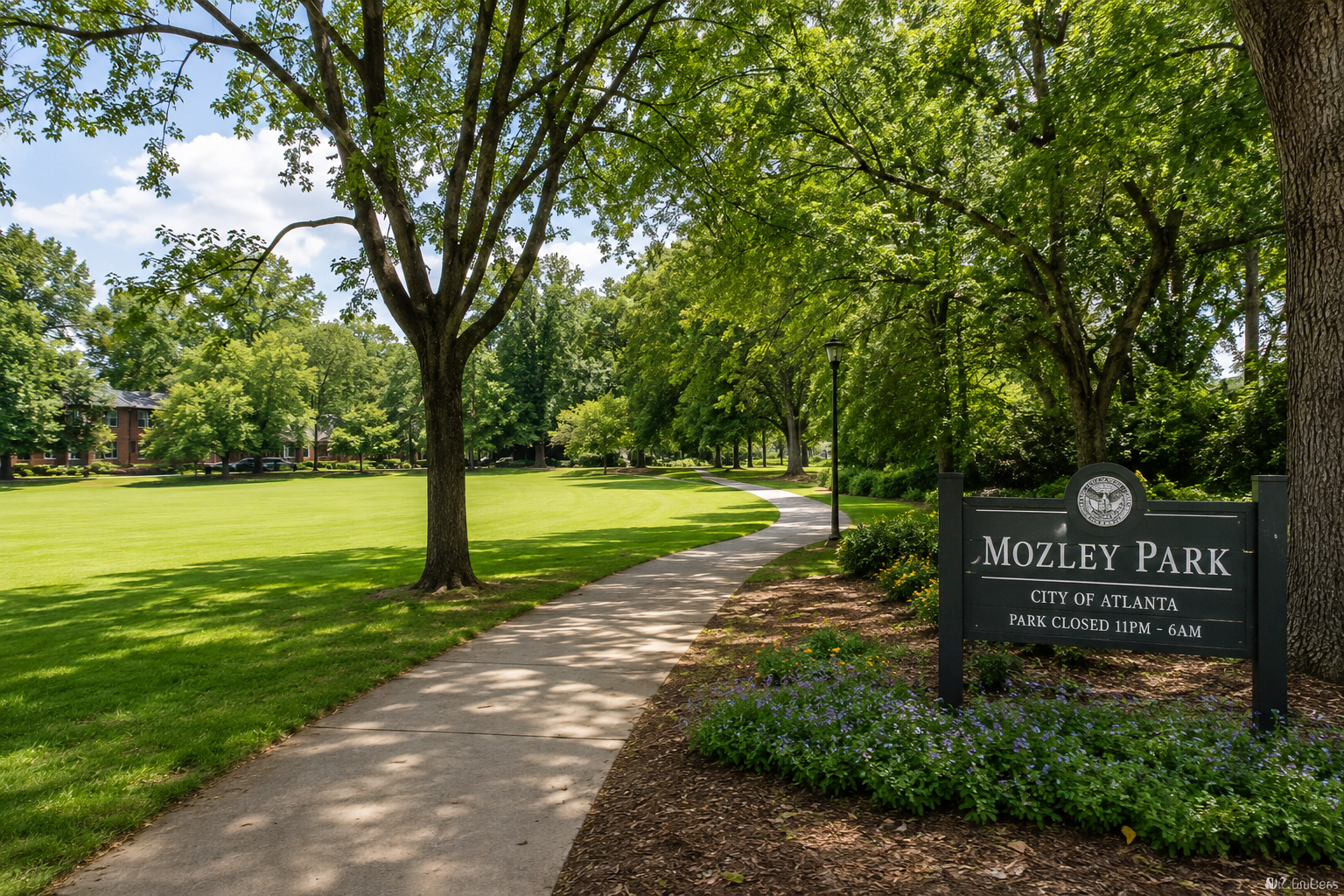
Streets such as Mozley Place, Sells Avenue, Westmont Road, Mims Street, Sharon Street, Burbank Drive, and the residential blocks off Martin Luther King Jr. Drive carry the neighborhood's classic stock: Folk Victorian cottages and Craftsman bungalows on narrow lots, many with the original granite curbing and hexagonal-paver sidewalks still in place. Mozley Place itself carries particular historical weight as the street where the neighborhood's racial transition began.
The dominant home is a one- or one-and-a-half-story bungalow, typically two to four bedrooms, on a roughly 50-foot-wide lot. You will also find some duplex and small multi-family properties scattered through the neighborhood, which is part of why it has long drawn investor interest.
The single most important variable here is condition. The market is a true mix of three types of homes: untouched originals that need full renovation, partially updated homes, and fully renovated or rebuilt bungalows with modern systems and finishes. There is also a steady stream of new construction and gut-renovation projects from investors. For a buyer, this means the street name matters less than the specific house. A renovated bungalow and an original on the same block are entirely different purchases. The lot sizes and the proximity to the park or the BeltLine do influence value, but condition is the first thing to assess on any home here.
Because so many of these homes are nearly a century old, the inspection matters more in Mozley Park than it does in a newer subdivision. With an original or partially updated bungalow, you want a clear picture of the foundation, the roof, the electrical and plumbing systems, and the presence of any older materials common in homes of this era. With a flipped or recently renovated home, the question is different: you want to know who did the work, whether permits were pulled, and whether the renovation went beyond cosmetics into the systems that actually cost money to fix later. A beautiful kitchen on top of a neglected foundation is a common trap in historic neighborhoods, and it is one I help buyers avoid by reading the renovation honestly rather than getting carried away by the finishes. None of this is a reason to avoid Mozley Park. It is a reason to buy here with a good agent and a thorough inspection.
Who Is Mozley Park Right For?
Mozley Park tends to be the right fit when:
You want a historic home, a Craftsman bungalow or Folk Victorian cottage with genuine character, in a designated National Register district.
You want to be close in. Three miles from downtown, with I-20 access and MARTA rail nearby, is a location most close-in Atlanta neighborhoods cannot match at this price point.
You value the BeltLine and want to buy in a neighborhood the Westside Trail already runs through.
You are a first-time buyer trying to get into the city before prices move further, and you are comfortable with a smaller, quieter, primarily residential neighborhood.
You are an investor or a buyer willing to take on a renovation project, and you understand the equity case for a historic, BeltLine-adjacent Westside neighborhood in an active phase of change.
You want a real neighborhood park at the center of daily life, with a pool, courts, fitness stations, and the Westside's first dog park.
Think carefully about Mozley Park if:
You need restaurants, retail, and a grocery store within walking distance of your front door. Daily amenities are a short drive or BeltLine ride away, not on the block.
You want a fully turnkey, low-variance market. This is a small market with a wide spread between renovated and unrenovated homes, and pricing is harder to read than in larger neighborhoods.
Your work is in the far northern suburbs. The commute math does not favor a Westside address for a North Fulton or North Gwinnett job.
You are uncomfortable buying in a neighborhood that is actively changing. Mozley Park is in a phase of renovation and reinvestment, with the price pressure and turnover that come with it.
For the right buyer, Mozley Park offers something genuinely hard to find in Atlanta in 2026: a historic, walkable, close-in neighborhood with a park at its center and prices that still leave room. For a buyer who needs everything finished and a market that behaves predictably, it asks for more patience.
Frequently Asked Questions About Mozley Park
Where is Mozley Park in Atlanta?
Mozley Park is on Atlanta's Westside, roughly three miles west of downtown, in ZIP code 30314 in Fulton County. It is bordered by Martin Luther King Jr. Drive to the north, Interstate 20 to the south, and the path of the BeltLine's Westside Trail to the east.
How much do homes cost in Mozley Park in 2026?
It depends heavily on condition. In late 2025 and early 2026, typical home values and recent sales clustered roughly in the $300,000s, with renovation projects available below $300,000 and fully renovated bungalows and new construction commonly selling in the $400,000s and into the $500,000s and above. Because Mozley Park is a small, low-volume market, published medians swing a lot month to month. The reliable approach is to look at recent comparable sales by condition and street. Reach out for current numbers on a specific home.
Is Mozley Park a historic district?
Yes. The core of the neighborhood was listed on the National Register of Historic Places in 1995 as the Mozley Park Historic District. The district preserves an early-twentieth-century residential neighborhood of Folk Victorian cottages and Craftsman bungalows, with original granite curbing and hexagonal-paver sidewalks on many streets.
Is Mozley Park on the BeltLine?
Yes. The Atlanta BeltLine's Westside Trail runs along the eastern edge of the neighborhood. The trail is a paved multi-use path connecting a string of historic Westside neighborhoods. Some segments are complete and others are still in progress, so verify exactly what is finished near a specific home.
What is there to do in Mozley Park?
Within the neighborhood, the main destination is Mozley Park itself, with a pool, basketball and tennis courts, an outdoor fitness area, pavilions, a playground, and the Westside's first off-leash dog park. Just outside the neighborhood, the Westside Trail connects to Lee + White in West End, with its breweries, restaurants, and food hall, plus Washington Park and the broader West End dining scene. Downtown Atlanta is about three miles away.
What schools serve Mozley Park?
Mozley Park is served by Atlanta Public Schools. Homes are generally zoned for F.L. Stanton Elementary School, which sits inside the historic district, and the area is served by Booker T. Washington High School, the first public high school for Black students in Georgia. Attendance zones are set by address and can change, so verify the zoned elementary, middle, and high school for any specific home using the APS School Zone Locator. Research and visit schools to determine fit for your family.
Is Mozley Park a good place for first-time buyers?
It can be. Mozley Park offers historic homes at price points that are accessible relative to many close-in Atlanta neighborhoods, with BeltLine access and a short commute to downtown. The tradeoffs to weigh are condition variance, the small size of the market, and the fact that it is a quiet, primarily residential neighborhood without a walkable commercial core. First-time buyers comfortable with those tradeoffs often find good value here.
How long is the commute from Mozley Park to downtown Atlanta?
Roughly 10 to 15 minutes off-peak and about 15 to 25 minutes during the morning rush. Downtown is only about three miles east, and I-20 runs along the southern edge of the neighborhood. MARTA rail on the Blue and Green lines is also nearby for a car-free option.
Is Mozley Park a good investment?
Mozley Park has the ingredients investors look for on the Westside: a historic district, BeltLine frontage, a close-in location, an active renovation market, and pricing at the more accessible end of the Westside range. That said, the BeltLine timeline is not fixed, the market is small enough that pricing is harder to read, and condition variance is wide. It can be a strong investment for buyers who do their homework on comparable sales and the condition of the specific property. As with any investment, the returns are not guaranteed, and I would always look at the specific deal rather than the neighborhood average.
What is the history of Mozley Park?
The neighborhood was developed on the former estate of Dr. Hiram Mozley in the 1920s and 1930s. It is best known historically as the neighborhood where Atlanta's pattern of white flight first played out in the 1940s and 1950s, as Black families moved in despite organized resistance. By 1954 the racial transition was complete, and the neighborhood became part of the larger story of Black Atlanta. The C.A. Scott Recreation Center in the park is named for a family tied to the Atlanta Daily World, the Black newspaper that helped break the segregation effort.
What types of homes are in Mozley Park?
The dominant housing is early-twentieth-century: Folk Victorian cottages and Craftsman bungalows, typically one to one-and-a-half stories, two to four bedrooms, on narrow lots around 50 feet wide. There are also some duplex and small multi-family properties, plus newer construction and gut-renovation projects. Condition ranges widely, from untouched originals to fully rebuilt homes.
How does Mozley Park compare to West End?
West End is larger, more developed, has a denser commercial core and the Lee + White development, and is generally more expensive. Mozley Park is smaller, quieter, more strictly residential, and typically more affordable. Buyers priced out of West End frequently look at Mozley Park next, since the two share BeltLine access and historic housing.
Is Mozley Park a quiet neighborhood?
Yes. Mozley Park is a small, primarily residential neighborhood with no commercial strip inside the historic district. Daily life centers on the park, the porches, the BeltLine, and a short trip to West End and other Westside destinations for dining and shopping.
Working With Me in Mozley Park
I work with buyers across Metro Atlanta and know the Westside in detail: the block-by-block condition differences, what BeltLine completion does and does not guarantee, and how to read a small market where the median tells you very little. If you are considering Mozley Park, weighing it against West End, Adair Park, or Westview, or ready to start your search, let's talk.
Visit kristenjohnsonrealestate.com or reach out directly. Come as you are, come on home.
Looking for more Metro Atlanta neighborhood guides? I've covered the Westside in depth, including West End, Adair Park, and Oakland City. Browse the full guide series at kristenjohnsonrealestate.com.