

Living in Douglasville GA: West Metro Affordability, Sweetwater Creek & What Homes Cost in 2026
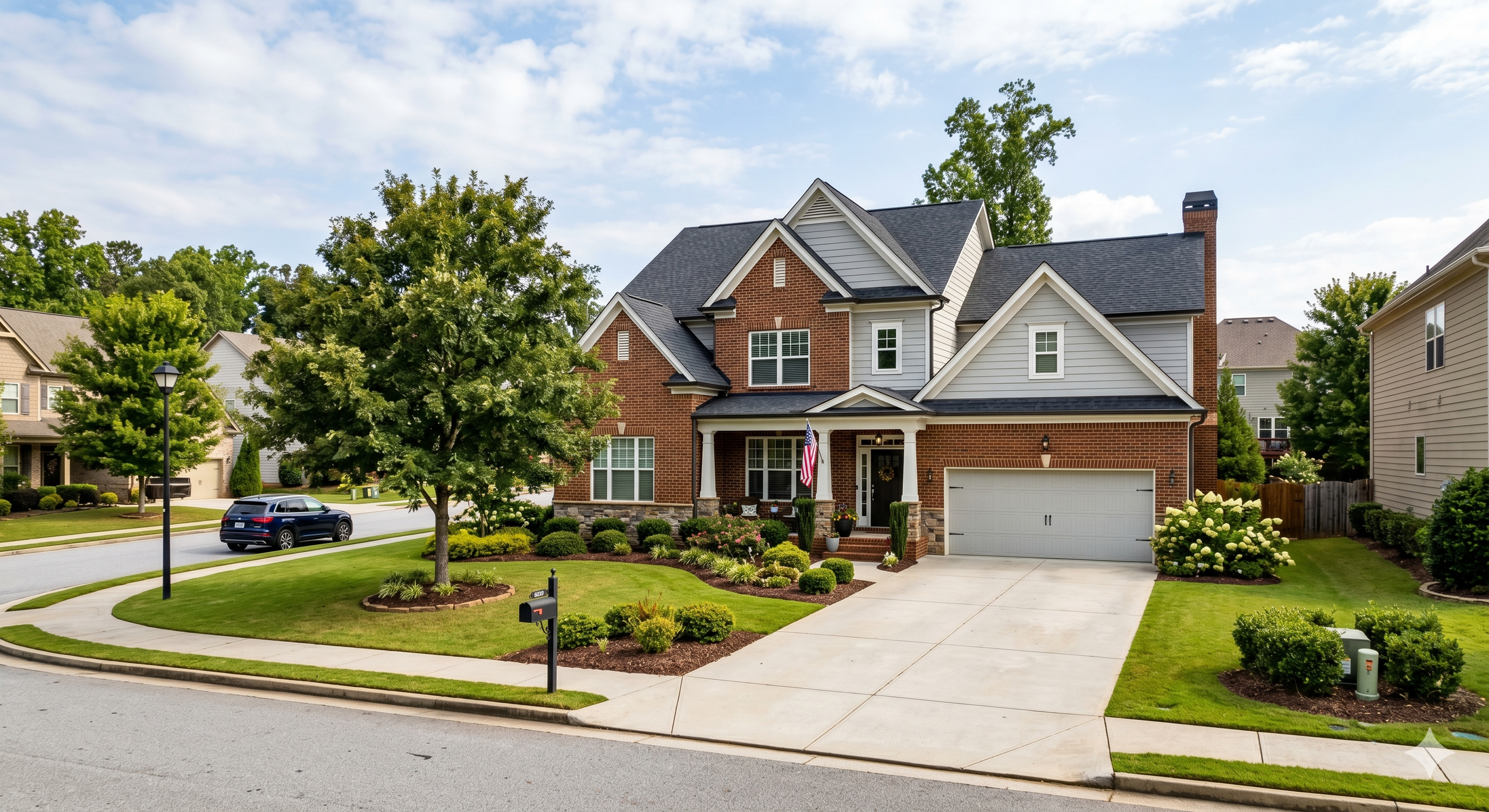
If you're searching Metro Atlanta on a budget that doesn't stretch past $400K, Douglasville is probably already on your radar. It's the West Metro suburb 23 miles from downtown Atlanta where the median sale price is still in the $300Ks, where a $350K budget can buy a four-bedroom with a real yard, and where Sweetwater Creek State Park's 2,549 acres of wooded trails, mill ruins, and a 215-acre reservoir sit at your back door. It's also the Douglas County seat that doubled as Hawkins, Indiana in Stranger Things, where downtown's historic square holds the building that served as Hopper's police station, and where the New Manchester Mill ruins played District 8 in The Hunger Games: Mockingjay Part 1.
I work with buyers across Metro Atlanta, and Douglasville comes up constantly with first-time buyers, relocators on a budget, and investors. It's one of the few places inside a reasonable commute of Atlanta where you can still buy a single-family home in the high $200Ks. That affordability is the headline. But the honest version is more complicated than that.
Nearly a decade helping Atlanta buyers means I know what people miss when they search Douglasville from a Zillow map. The commute to downtown Atlanta is a real I-20 commute, not a Google Maps off-peak fantasy. The school zones vary considerably depending on which part of Douglas County you land in. The housing stock ranges from 1980s ranches to brand-new master-planned communities, and the difference between a $275K and a $450K home in this market is significant.
Douglasville is one of Metro Atlanta's most legitimate affordability stories in 2026, and one of the most misunderstood by buyers who only know the median price.
Here's what you need to know.
What Is Douglasville, and Where Is It?
Douglasville is the county seat of Douglas County, located 23 miles west of downtown Atlanta along the I-20 corridor. The city itself has a population of around 39,000, but the larger Douglas County footprint, including unincorporated areas, Lithia Springs to the northeast, and Winston to the south, pushes the metro service area well past 145,000 residents.
The city has two ZIP codes that drive most of the housing search: 30134 covers downtown Douglasville and the older established neighborhoods north of I-20, and 30135 covers the newer, larger subdivisions south of I-20 along the Chapel Hill Road and Highway 92 corridors. 30134 trends a bit smaller, older, and more affordable. 30135 is where the master-planned communities, the golf course neighborhoods, and most of the new construction sit.
Downtown Douglasville's historic square is on the National Register of Historic Places and centers on Pray Street and Church Street, right off the Broad Street corridor. This is the area you've seen on screen if you've watched Stranger Things. The old Douglasville City Hall annex on Courthouse Square West played Hawkins Police Department, and the brick storefronts at 6501 and 6503 Church Street served as Palace Arcade and Family Video.
The geography matters here. Douglasville sits on the western edge of Metro Atlanta where the suburban density of Cobb County to the north and South Fulton to the east starts to thin out. Go west on I-20 from Douglasville for another 10 minutes and you're in Villa Rica, which is a different market entirely. Go east 5 minutes and you're in Lithia Springs, still Douglas County but with its own character. Go north and you hit the Cobb County line through Mableton and Austell.
Most buyers searching Douglasville are doing so for one of three reasons: they need to be under $400K and they're priced out of Cobb and Fulton; they work a commute that makes I-20 west work for them; or they want to live near Sweetwater Creek State Park and the West Metro outdoor scene. Sometimes all three.
What Does Douglasville Cost? Home Prices in 2026
Let me give you the honest market data. Douglasville is one of the few Metro Atlanta submarkets where prices actually softened year-over-year coming into 2026, which is unusual for this region.
Per Redfin data through late 2025 and early 2026, the median sale price in Douglasville was around $303,000 in November 2025, down approximately 13.8% from the prior year, with homes selling in about 49 days on market. Movoto's January 2026 data put the city median closer to $340,000, with 74 days on market. Zillow's Home Value Index for Douglasville sits at $310,482 as of early 2026, down 1.4% year-over-year, with homes going to pending in around 20 days. Orchard's 30-day rolling data showed a median of $270,000 with 44 days on market.
The range across these data sources reflects the difference between median sale price (what closed) and average home value (full market estimate), and the gap between the 30134 and 30135 ZIPs. In 30135, the larger and more expensive ZIP, the median sale price was around $300,000 in early 2026, down approximately 12.5% year-over-year, with median days on market at 92.
What's driving the year-over-year softening? A few things. Inventory has loosened across Metro Atlanta as the post-pandemic frenzy normalized. Interest rates have priced some Douglasville buyers out, particularly in the $400K+ range. And Douglasville historically runs more volatile than the higher-priced submarkets because the buyer pool is more rate-sensitive. A 0.5% rate increase changes what a Douglasville buyer can afford more than it changes what an East Cobb buyer can afford, because the Douglasville buyer is closer to the edge of their qualifying limit.
The sale-to-list-price ratio in Douglasville sits around 97.7%, meaning the average sale closes about 2.3% under list. That's a real number for buyer negotiation. It's not a strong seller's market and it's not a bidding-war market. Roughly 16% of homes sell above list, and approximately 40% of listings see a price drop before closing. For buyers, that means you have room to negotiate, and for sellers, that means pricing aggressively at the start is a more effective strategy than testing the market high.
Inventory in Douglasville at the start of 2026 was up modestly year-over-year, with the total active listing count running around 580 homes. That's the highest inventory the market has seen since 2019. It gives buyers genuine choice, particularly in the $300K–$400K band.
These are not the numbers you see in Cobb, North Fulton, or DeKalb. Douglasville's median sale price runs about 25% below the national median and well below the Metro Atlanta median.
Always verify current pricing with me before you make decisions. These numbers shift month to month, and the price you'll actually pay depends on the specific subdivision, the condition of the home, and the time of year.
What You Get for the Money in Douglasville
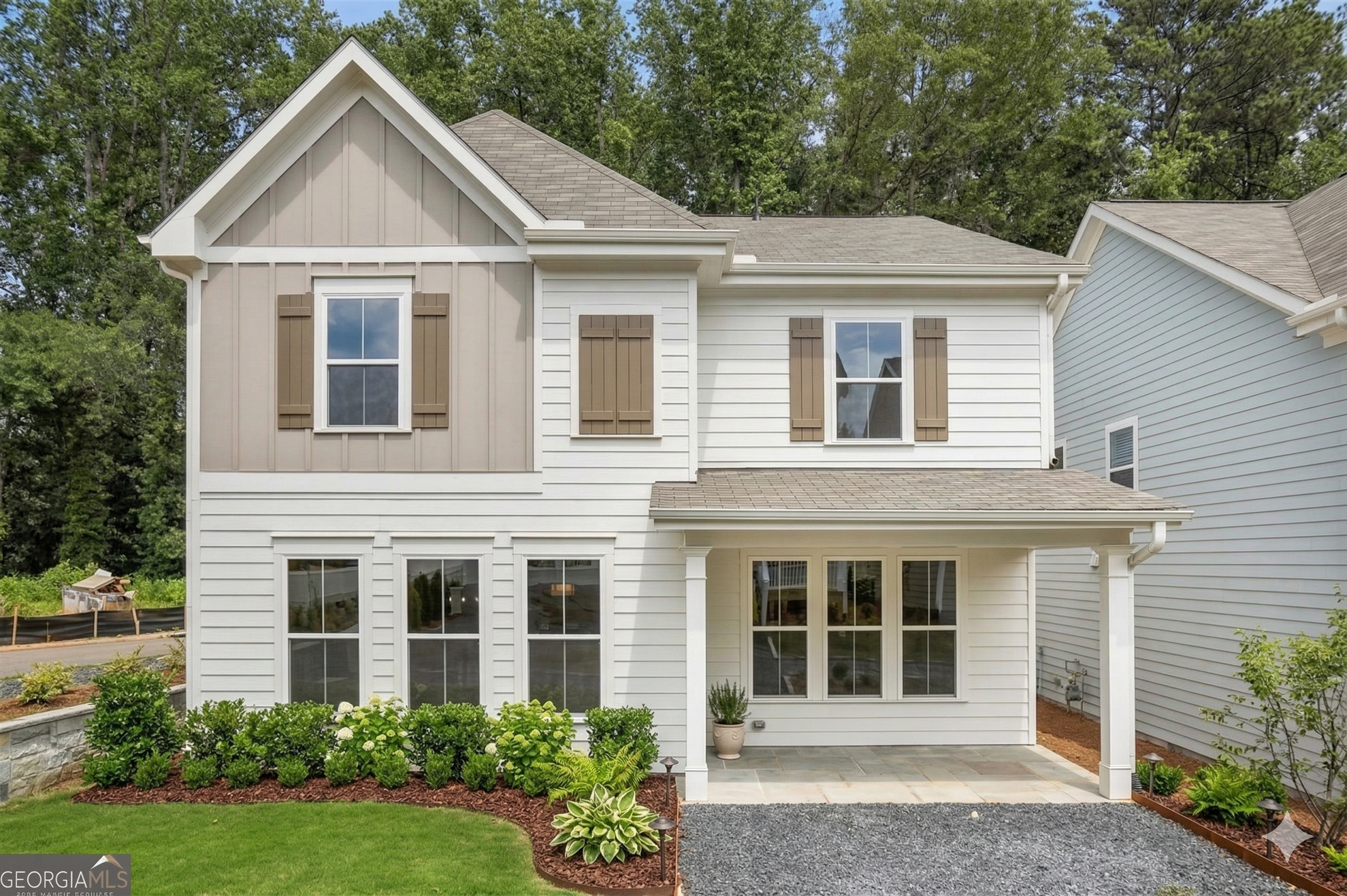
Here's where Douglasville becomes genuinely interesting. Price tier by price tier:
$250K–$325K gets you a starter single-family home in 30134 or the older parts of 30135. Three bedrooms, two baths, typically 1,200 to 1,700 square feet, often built between the late 1980s and early 2000s. Think split-level ranches, simple two-stories, sometimes a 1990s traditional with a front-loading garage. Lots range from a quarter acre up to half an acre. This is the entry point for first-time buyers and the price band where down payment assistance programs work best.
$325K–$425K is the sweet spot for Douglasville. This price gets you a four-bedroom, two-and-a-half-bath home in a swim-tennis subdivision, often 2,000 to 2,700 square feet, built anywhere from the mid-1990s through brand-new construction. Anneewakee Trails, Stewart's Mill, Slater Mill, parts of Tributary at New Manchester, and many of the Chapel Hills satellite communities sit in this band. Two-car garage, finished basements on some, well-established HOA amenities like a pool and clubhouse.
$425K–$550K moves you into the larger homes in Tributary at New Manchester, the Reserve at Chapel Hill, and the upper end of the Mirror Lake-adjacent communities. Three-thousand-plus square feet, four to five bedrooms, three baths, sometimes a finished basement, lot sizes that start to push toward three-quarters of an acre. These are the relocation-buyer homes, the second-move homes, the families coming from a smaller starter.
$550K and up in Douglasville means Chapel Hills Golf & Country Club estates, custom builds on larger Bill Arp Road or Winston-area acreage, or the highest-end homes in Tributary. Five-plus bedrooms, 3,500-plus square feet, golf course or wooded lot premiums, four-sided brick. This is where Douglasville competes with mid-tier Cobb and the more affordable parts of South Forsyth on square footage and finish, but for a substantially lower price.
The thing buyers in other Metro Atlanta submarkets don't always grasp: at $400K in Douglasville, you're buying a home that would cost $600K+ in East Cobb or Brookhaven. That's the trade you're making. The trade is real, but so is the commute math, which is the next section.
Commuting from Douglasville: Honest I-20 Numbers
I'm going to give you the honest version of this, not the Google Maps off-peak version.
Downtown Atlanta (Mercedes-Benz Stadium / GWCC area): 25–30 minutes off-peak. Morning rush from 7–9 AM eastbound on I-20: expect 45–60 minutes and sometimes longer. The Six Flags Parkway interchange and the Fulton Industrial Boulevard exits are the regular pinch points where I-20 traffic stacks up before it ever reaches the Downtown Connector.
Midtown Atlanta: 30–35 minutes off-peak via I-20 East to the Downtown Connector north. Morning rush: 50–70 minutes. The Connector north of I-20 is its own bottleneck.
Buckhead: 35–40 minutes off-peak. Morning rush: 60–80 minutes. Most Douglasville-to-Buckhead commuters use I-20 East to I-285 North on the west side of the Perimeter. The I-20/I-285 west interchange is one of the most congested in Metro Atlanta during rush hour.
Cumberland / The Battery: 25–30 minutes off-peak via Thornton Road north. Morning rush: 40–55 minutes. This is one of Douglasville's better commute options because you avoid the Downtown Connector entirely.
Perimeter Center / Dunwoody: 40–45 minutes off-peak. Morning rush: 60–90 minutes. The I-20 to I-285 North commute through the west side of the Perimeter is brutal on bad days.
Hartsfield-Jackson Airport: 30–35 minutes off-peak via I-20 East to I-285 South. This is one of Douglasville's commute strengths, airport access is faster than you'd expect because you're avoiding most of the city. For corporate-travel buyers, this matters.
Lionsgate Studios / Great Point Studios at Eagle Rock: 10 minutes north via Fairburn Road. If you work in film or tied-in industries, Douglasville's proximity to the studio is a real selling point.
The honest summary: Douglasville works for buyers whose employer is on the west side of Atlanta (Cumberland, the Battery, Hartsfield airport, Six Flags, Lionsgate, or anywhere along the I-285 west arc). It works for hybrid workers commuting 2–3 days a week to Atlanta proper. It does not work well for daily 5-day-a-week commuters to Buckhead, Midtown, or the Perimeter unless they're prepared to leave the house before 6:30 AM and not come home before 7 PM.
This is what people miss when they search Douglasville and see the price. The price is a function of the commute. Verify the route from your specific work address to your target neighborhood before you fall in love with a home.
Things to Do in Douglasville
This is the section where Douglasville surprises buyers who've only ever driven past on I-20.
Sweetwater Creek State Park is the headline. The 2,549-acre park sits just east of downtown Douglasville in Lithia Springs, off Mount Vernon Road. It's home to 15 miles of trails across seven trail systems, the 215-acre George H. Sparks Reservoir, and the Civil War-era ruins of the New Manchester Manufacturing Company. The New Manchester Mill was a five-story textile mill burned by Union soldiers in 1864 during Sherman's Atlanta campaign. Union forces freed the area from Confederate control, dismantled the mill that had been producing cloth for Confederate uniforms, and the ruins have stood as a place to reckon with that history ever since. The mill is also the location where Katniss and Gale shared a key scene in The Hunger Games: Mockingjay Part 1, and battle scenes from Avengers: Infinity War were filmed in the park. The visitor center is LEED Platinum certified and runs ranger-led history hikes into the mill complex. Yurt rentals, fishing dock, kayak rentals, picnic pavilions.
The trail system is worth knowing in detail because it's a daily-use amenity for most West Metro residents. The 1-mile Red Trail (the History Trail) runs from the visitor center along the rapids of Sweetwater Creek to the mill ruins. It's the most popular trail in the park and the one most visitors do first. The 5.2-mile White Trail loop is the longer wilderness route, climbing bluffs above the creek and passing through hardwood forest and meadows. The 3-mile Yellow Trail crosses the creek and explores the east bank, including a cave once used by Cherokee and Creek tribes. The 2.3-mile Orange Trail branches off the Yellow and climbs to a ridge with through-the-trees views of the downtown Atlanta skyline, which surprises most visitors. The 1.44-mile Blue Trail covers the northeastern part of the park. The Brown and Green Connector Trails create shortcuts for shorter loops. Sparks Reservoir on the north side offers fishing docks, a bait shop, and seasonal boat rentals.
For most Douglasville buyers, particularly those in Tributary at New Manchester or the Highway 92/166 corridor, Sweetwater Creek functions as the neighborhood park. You drive 5 to 10 minutes, pay the $5 parking fee, and you're on the trail. That kind of state-park proximity to a daily-use suburb is genuinely rare in Metro Atlanta. It's one of the legitimate selling points of West Metro living that doesn't show up in a Zillow search.
Downtown Douglasville's historic square centers on Pray Street, Church Street, and Broad Street. The Douglas County Museum of History and Art occupies the Old Courthouse, on the National Register of Historic Places. The square holds the buildings that served as Hawkins Police Department, Palace Arcade, and Family Video in Stranger Things. The first weekend of November every year, downtown Douglasville hosts the Stranger Things Block Party with a pop-up skating rink, themed food trucks, an Upside Down walkthrough, and live music. It pulls thousands of fans from across the country.
The film tourism is more than a novelty. Douglas County operates the Douglas County Film Trail, a self-guided walking and driving tour that takes visitors through filming locations for Stranger Things, The Hunger Games, Avengers: Infinity War, The Founder, Just Mercy, Boy Erased, and dozens of other productions filmed across the county. Lionsgate / Great Point Studios at Eagle Rock, on the north side of the city off Fairburn Road, is a major production facility that continues to drive film-industry economic activity in the area. For homeowners, the film traffic is mostly an upside, a small but steady tourism economy that supports downtown restaurants and retail.
Restaurants downtown: Gumbeaux's Cajun Cafe on Bank Street is the destination, the Cajun-Creole spot that locals use for date night and out-of-town visitors. Mr. P's BBQ for traditional Georgia barbecue, Pancho's Mexican Restaurant for Tex-Mex, Java Lounge for coffee and weekend brunch, Roman's New York Style Pizza, and Greek Tavern Restaurant for Mediterranean. In Lithia Springs, Tiffany's Kitchen at 7413 Lee Road served as Benny's Burgers in Stranger Things, where you can sit at the same booth Eleven sat at and order off a regular Southern menu, daily blue-plate specials, country breakfast, and a sign reading "Children left unattended will be given an energy drink and a free puppy." Beaver Creek Biscuit Company & BBQ in Lithia Springs is a breakfast and lunch institution. Toole's Restaurant and Lounge on Bankhead Highway for old-school Southern.
Arbor Place Mall at 6700 Douglas Boulevard is the regional retail anchor, Belk, JCPenney, AMC theaters, the standard mall mix. North on Highway 5 you'll find the strip retail at Stewart's Mill Crossing and around the Lithia Springs corner.
Cinemark Tinseltown at Eagle Rock Studios sits next to Lionsgate / Great Point Studios. The Eagle Rock studio complex is one of the largest film production facilities in Georgia.
Hunter Memorial Park in downtown Douglasville has tennis courts, ball fields, walking paths, and a community pool. Boundary Waters Park on Highway 5 is the larger county recreation complex with multiple ball fields and an aquatic center.
Foxhall Resort about 15 minutes south on Capps Ferry Road is the high-end resort destination, equestrian, sporting clays, golf, and a hotel that hosts weddings and corporate retreats.
For a town the rest of Atlanta tends to drive past, Douglasville has more to do than most buyers realize.
Schools in Douglasville
Douglasville schools are part of the Douglas County School System. The district serves the entire county and includes five high schools, eight middle schools, 21 elementary schools, and one alternative school.
The five Douglas County high schools and their addresses:
Chapel Hill High School, 4899 Chapel Hill Road, Douglasville, GA 30135, ranked #194 in Georgia per U.S. News, recognized as the top-ranking high school in Douglas County for six consecutive years
Douglas County High School, 8705 Campbellton Street, Douglasville, GA 30134, ranked #202 in Georgia per U.S. News
Alexander High School, 6500 Alexander Parkway, Douglasville, GA 30135, ranked #220 in Georgia per U.S. News
Lithia Springs Comprehensive High School, 2520 East County Line Road, Lithia Springs, GA 30122, ranked #275 in Georgia per U.S. News
New Manchester High School, 4925 Highway 92/166, Douglasville, GA 30135, ranked #278 in Georgia per U.S. News
Middle schools include Chapel Hill Middle, Mason Creek Middle, Fairplay Middle, Chestnut Log Middle, Stewart Middle, and Yeager Middle. Notable elementary schools include Holly Springs Elementary and Winston Elementary, both of which rank among the top performers in the district per SchoolDigger.
The district as a whole operates 35 schools across the county, serving a substantial student body. AP participation rates vary across the high schools, with Chapel Hill's AP participation among the higher in the district. Athletic programs are strong across the system, and the high schools compete in GHSA Class 6A and 7A football, basketball, and other sports. The Douglas County School System has invested in career and technical education pathways, including pathways in healthcare, engineering, business, and the audio-video-tech production track that connects students to the film industry expanding at Lionsgate / Great Point Studios.
For relocation buyers, the district publishes school zone maps online, but zones do shift periodically based on enrollment, and the only reliable way to confirm which schools serve a specific address is to look it up on the district's address lookup tool or have me verify it during the search process.
District-wide graduation rates run around 85% across the five high schools, with Chapel Hill and Alexander posting graduation rates of 93%.
Research and visit schools to determine fit for your family. Always verify zoning by specific property address, Douglas County school zones cut across subdivisions in ways that can surprise you, and the school zone of a home is not always what the listing says it is.
Streets and Subdivisions in Douglasville
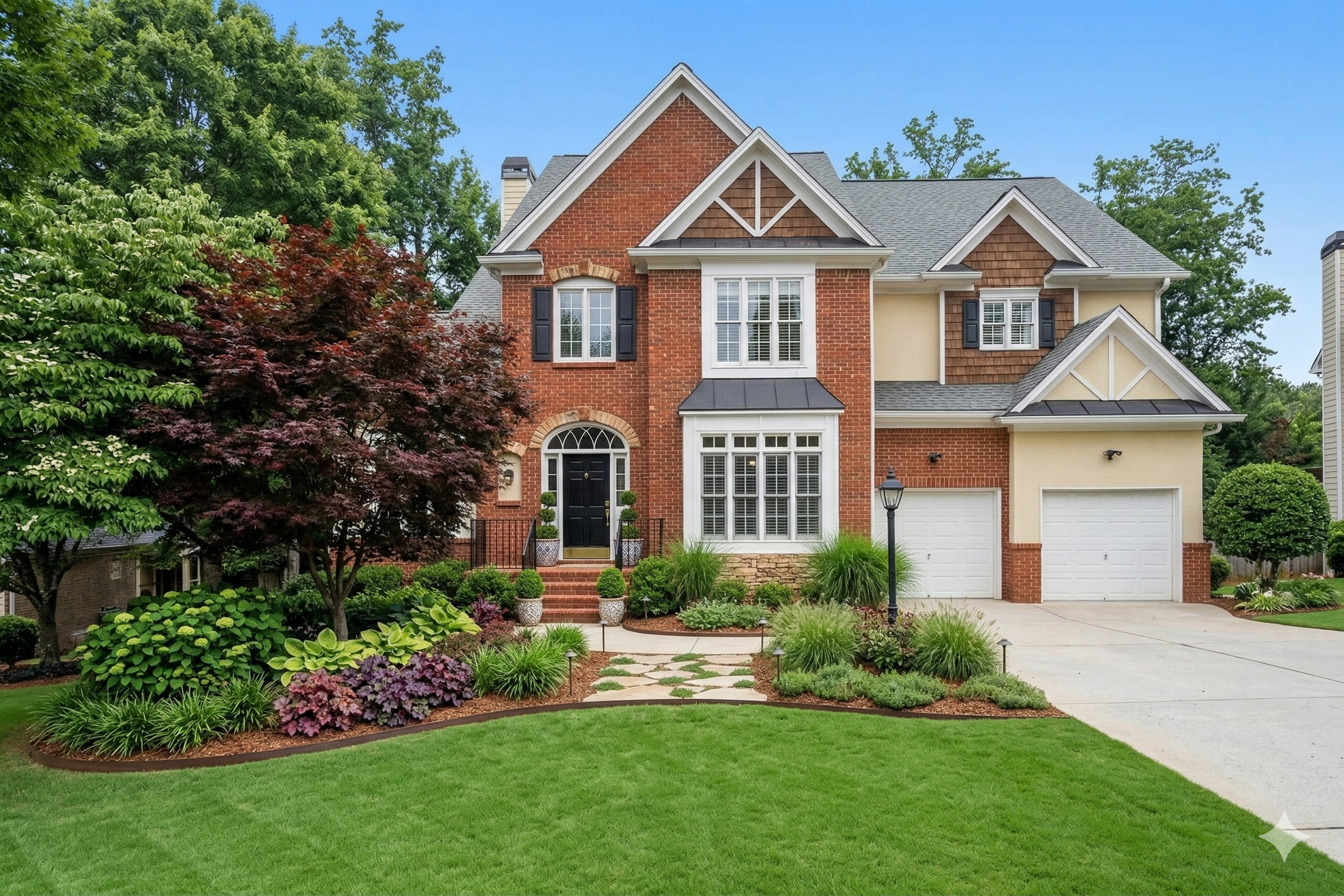
Here's the on-the-ground breakdown of the subdivisions that come up most often in my buyer searches.
Tributary at New Manchester is the master-planned community off Highway 92/166 in 30135. Built by John Wieland and others, the community wraps the New Manchester High School zone, features extensive walking trails connecting to Sweetwater Creek State Park, multiple resort-style pools, a clubhouse, and a streetscape with craftsman-style homes designed to feel more traditional-neighborhood than typical suburban. Homes range from townhomes in the low $300Ks to single-family detached in the $400Ks and up. Sweetwater Vista is a townhome and rental section within the broader Tributary footprint.
Chapel Hills and the connected golf course communities, Chapel Hills proper, The Reserve at Chapel Hill, Stewarts Creek at Chapel Hills, Rosemont at Chapel Hills, Waterford Park at Chapel Hills, High View at Chapel Hills, cluster around Chapel Hills Golf & Country Club in 30135. The original Chapel Hills section has homes from the 1980s and 1990s. Newer phases push into 2000s and 2010s construction. Golf course frontage commands a premium. This is one of Douglasville's most established higher-end zones.
Anneewakee Trails sits on the west side of Douglas County off Anneewakee Road. It's a swim-tennis community with a clubhouse, pool, tennis courts, and an aquatic-recreation setup that draws first-time buyers and second-move families. Anneewakee Lake is the community amenity. Homes typically run $325K–$450K, mostly 2000s and 2010s construction.
Stewart's Mill / Stewart Mill is the older established corridor along Stewart Mill Road. Mix of 1980s and 1990s housing stock, mature trees, larger lots. More affordable than the master-planned communities but with less HOA infrastructure.
The Villages at Brookmont is a tight-knit community within the broader Brookmont area, blending townhomes and single-family homes with sidewalks, playgrounds, and walkable streetscape.
Slater Mill and Slater Mill Estates are established neighborhoods in 30134 with a mix of 1990s and early 2000s housing stock.
Holly Springs is the upscale Bill Arp Road corridor, larger custom-built homes, wooded lots, more privacy. Holly Springs Elementary is highly ranked.
Mirror Lake technically straddles the Douglas County / Carroll County line in Villa Rica but functions as a Douglasville-adjacent option for buyers willing to commute the extra five minutes west.
Bill Arp is the unincorporated rural community south of I-20, larger acreage, ranch homes, country-road feel. Buyers who want more land and don't mind a slightly longer drive look here.
Whitestone, Sweetwater Bridge, Sweetwater Downs, Sutton Place, Windsor Creek, The Heritage, The Plantation at Dorsett Shoals, and Wildwood Acres round out the most active subdivisions in current buyer searches.
Downtown Douglasville itself (the homes within walking distance of the historic square along Pray Street, Church Street, and the adjacent residential blocks) has the city's oldest housing stock and the most character-driven inventory. Prices vary widely depending on condition.
Property Taxes in Douglasville
Property taxes in Douglas County are calculated on 40% of fair market value (the standard Georgia assessment ratio), with millage rates set independently by Douglas County, the Douglas County Board of Education, the City of Douglasville (if your home is inside city limits), and any applicable special taxing districts.
The Douglas County Board of Commissioners tentatively adopted a 2025 millage rate that represented a significant increase over the prior year. The Douglas County School System millage rate has historically run around 19.7 mills. The City of Douglasville approved an 8.749-mill rate in 2024 after a 17% increase.
For a home with a $350,000 fair market value inside the City of Douglasville, total annual property taxes typically run in the $3,500–$4,200 range depending on the year's adopted rates and applicable homestead exemptions. Homes in unincorporated Douglas County have a different millage stack than homes inside the city. Always verify the current millage rate with the Douglas County Tax Assessor's office or with me before you make your offer, the tax bill is a real number that affects your monthly payment.
The Georgia homestead exemption removes $2,000 from your home's assessed value and caps annual assessment increases. Senior exemptions are available for owners 62 and older. Apply through the Douglas County Tax Commissioner's office in the year you become eligible.
Investment Potential in Douglasville
For buyers thinking rental income, Douglasville is one of the more interesting cash-flow plays in Metro Atlanta. The math works because acquisition prices are still low enough to make rent-to-purchase-price ratios meaningful.
A $325,000 three-bedroom in a stable Douglasville subdivision typically rents in the $1,950–$2,250 range. A $400,000 four-bedroom in Tributary or Anneewakee Trails can rent in the $2,300–$2,600 range. After accounting for taxes, insurance, vacancy, and maintenance, single-family rental cash flow is achievable here in a way it generally isn't in Cobb or North Fulton.
The renter demographic skews toward Atlanta-adjacent workers priced out of intown, families wanting more space than apartment rentals offer, and corporate-relocation tenants on shorter assignments. Demand is steady.
The flip side: appreciation in Douglasville has historically been more modest than in higher-priced submarkets. Investors get the cash flow but typically don't see the same equity appreciation runway. That's the trade.
Multi-family is limited in Douglasville proper (the inventory is heavily single-family), but Lithia Springs and the older corridors have some duplex and small-multi inventory that occasionally hits the market.
For house-hacking buyers, Douglasville works particularly well for the duplex strategy and for owner-occupied single-family rentals where you rent rooms or a finished basement. FHA loan limits in Douglas County accommodate most of the Douglasville inventory, which makes the 3.5%-down owner-occupied investment play accessible to first-time investors.
The Lionsgate / Great Point Studios expansion has driven incremental demand from film-industry workers needing furnished and short-term rentals during productions. That's a niche, but for investors targeting it, the proximity matters.
A note for STR (short-term rental) investors: Douglasville's local ordinances on short-term rentals have tightened in recent years. Verify current short-term rental rules with the City of Douglasville or unincorporated Douglas County before acquiring property with that strategy in mind. The rules differ depending on whether the property is inside city limits or in unincorporated county.
Nearby Neighborhoods: How Douglasville Compares
Douglasville vs. Lithia Springs: Lithia Springs is technically the smaller unincorporated community immediately east of Douglasville, also in Douglas County. Same school district. Lithia Springs is slightly closer to Atlanta on I-20, slightly older housing stock, smaller footprint. Most buyers who consider one consider both, the dividing line is mostly which side of the Sweetwater Creek corridor you want to be on. Lithia Springs gives you proximity to Sweetwater Creek State Park and Six Flags. Douglasville gives you more inventory, more new construction, and the historic downtown.
Douglasville vs. Mableton: Mableton is north of Douglasville in southwestern Cobb County, recently incorporated as Georgia's newest city in 2022. Cobb County school district. Mableton runs slightly higher on price for comparable square footage and access to the Silver Comet Trail and the Battery/Cumberland corridor. If your commute is to the Battery or Cumberland, Mableton may make more sense. If it's downtown or the airport, Douglasville works better.
Douglasville vs. Smyrna: Different markets at different price points. Smyrna's median sits substantially higher than Douglasville, and Smyrna is closer to Cumberland and intown. Smyrna competes with Vinings on lifestyle; Douglasville competes with Villa Rica and Hiram on affordability. If you can afford Smyrna, you're not really shopping Douglasville. If Douglasville is your budget, Smyrna will feel out of reach.
Douglasville vs. Villa Rica: Villa Rica is 10 minutes west of Douglasville along I-20, straddling Carroll and Douglas Counties. Slightly more affordable than Douglasville, more rural feel, longer commute. Mirror Lake is the headline community. If you want more land and don't mind the extra distance, Villa Rica gets considered. For most buyers, Douglasville's added proximity to Atlanta wins.
Douglasville vs. Powder Springs / Hiram: Both Paulding County options to the north of Douglasville. Paulding has its own market dynamics, generally similar price points to Douglasville but a different commute pattern via Highway 92 and US-278 rather than I-20. Paulding tends to skew newer construction.
Who Is Douglasville Right For?
Douglasville tends to be the right fit when:
You need to buy a single-family home under $400K in Metro Atlanta and you're not willing to give up yard space, garage space, or square footage
Your work commute lands on the west side of Atlanta, Cumberland, Battery, Hartsfield-Jackson airport, Six Flags, Lionsgate, or anywhere along I-285 west
You're a first-time buyer using down payment assistance and you need price points that work with those programs
You value outdoor recreation and want Sweetwater Creek State Park's trails, mill ruins, and reservoir 10 minutes from your front door
You're an investor looking for genuine cash flow rather than maximum appreciation
You're a Stranger Things or Hunger Games fan who finds Douglasville's film tourism genuinely fun
You're relocating from a higher-cost-of-living market and the square-footage-per-dollar math is more important than the prestige zip code
Think carefully about Douglasville if:
Your work commute is daily 5-day-a-week to Buckhead, Midtown, or the Perimeter, the I-20 commute is real
You want walkable urbanism, Douglasville is suburban, and outside the historic downtown, you'll drive everywhere
You're prioritizing maximum appreciation potential over current livability
You want the dense restaurant, retail, and nightlife scene of intown, Douglasville has its own scene, but it's smaller and quieter
You're moving from out of state and you've only seen Douglasville on a map, the I-20 commute math matters in person in a way it doesn't on paper
Frequently Asked Questions
What is it like to live in Douglasville, GA?
Douglasville is a West Metro Atlanta suburb 23 miles from downtown that combines affordability, median home prices in the $300Ks, with significant outdoor access through Sweetwater Creek State Park and a historic downtown square that's been featured in Stranger Things and other film productions. It's a single-family-home, two-car-driveway, drive-everywhere suburb with strong appeal for first-time buyers, relocators on a budget, and investors prioritizing cash flow. The commute to downtown Atlanta runs 25–30 minutes off-peak and 45–60+ minutes during rush hour. Day-to-day life centers on the historic downtown, Arbor Place Mall, Sweetwater Creek State Park, and the neighborhood swim-tennis subdivisions where most residents live.
How much do homes cost in Douglasville GA in 2026?
Per Redfin, the median sale price in Douglasville was approximately $303,000 in late 2025, down about 13.8% year-over-year, with homes selling in around 49 days. Zillow's Home Value Index showed Douglasville home values at $310,482, down 1.4% year-over-year. Movoto's January 2026 data put the median closer to $340,000. The range reflects different methodologies and the gap between the 30134 and 30135 ZIPs. Realistically, a buyer with a $325K–$425K budget has strong inventory in Douglasville. Always verify current market data before making decisions.
What is the commute from Douglasville to downtown Atlanta?
Roughly 25–30 minutes off-peak via I-20 East. During morning rush hour (7–9 AM), expect 45–60 minutes and sometimes longer if there's an incident on I-20 or the Downtown Connector. The Six Flags Parkway and Fulton Industrial Boulevard interchanges are the regular congestion points. Buyers who commute daily to downtown should drive the route at actual rush hour before they buy.
What schools serve Douglasville?
Douglasville is served by the Douglas County School System, which includes five high schools: Chapel Hill High School (#194 in Georgia per U.S. News), Douglas County High School (#202), Alexander High School (#220), Lithia Springs Comprehensive High School (#275), and New Manchester High School (#278). Chapel Hill High School has been the highest-ranked Douglas County high school for six consecutive years. School attendance zones are tied to specific property addresses, always verify zoning before you make an offer.
What can $300K–$450K buy in Douglasville?
In the $300K–$350K range, you can typically buy a three-to-four-bedroom single-family home, 1,500–2,000 square feet, often in an older established subdivision or one of the smaller mid-2000s communities. The $350K–$425K range opens up the swim-tennis subdivisions, Anneewakee Trails, parts of Tributary at New Manchester, sections of Chapel Hills, with four bedrooms, 2,200–2,800 square feet, full HOA amenities. The $425K–$500K range gets you the larger, newer homes in Tributary, the Reserve at Chapel Hill, and the upper end of Chapel Hills.
Is Douglasville a good place for first-time buyers?
It's one of the strongest first-time-buyer markets in Metro Atlanta because the price points work with down payment assistance programs and FHA loan limits, the inventory of starter single-family homes is real, and the commute works for many west-side employers. First-time buyers using Georgia Dream, ACDA, or municipal down payment assistance programs often find that Douglasville is one of the few places in Metro Atlanta where their assistance amount actually covers a competitive offer.
Is Douglasville a good place for investors?
It's one of the better cash-flow markets in Metro Atlanta. Acquisition prices in the high $200Ks to mid $300Ks combined with rents in the $1,950–$2,400 range produce rent-to-price ratios that work for buy-and-hold investors. Appreciation has historically been more modest than higher-priced submarkets, so the investment thesis is cash flow over equity growth. Single-family rental demand is steady. Multi-family inventory is limited.
What is Sweetwater Creek State Park?
A 2,549-acre Georgia state park in Lithia Springs, just east of downtown Douglasville. The park features 15 miles of hiking trails across seven trail systems, the 215-acre George H. Sparks Reservoir, the Civil War-era ruins of the New Manchester Manufacturing Company textile mill (burned by Union soldiers in 1864), a LEED Platinum certified visitor center, yurt rentals, and a fishing/paddling program. The mill ruins are recognizable from The Hunger Games: Mockingjay Part 1 and Avengers: Infinity War. Ranger-led history hikes run year-round. The park is one of the most-visited state parks in Georgia.
Was Stranger Things filmed in Douglasville?
Yes. Multiple Hawkins, Indiana scenes in Stranger Things were filmed in downtown Douglasville. The Hawkins Police Department exterior was the old Douglasville City Hall annex on Courthouse Square West. The Palace Arcade was 6501 Church Street. The Family Video store was 6503 Church Street. Benny's Burgers, where Eleven first finds refuge in Season 1, was filmed at Tiffany's Kitchen at 7413 Lee Road in nearby Lithia Springs. Downtown Douglasville hosts an annual Stranger Things Block Party each November.
What are the property taxes in Douglasville?
Property taxes are calculated on 40% of fair market value (Georgia standard), with millage rates set by Douglas County, the Douglas County Board of Education, the City of Douglasville if your home is inside city limits, and any applicable special districts. For a $350,000 home inside the City of Douglasville, total annual taxes typically run in the $3,500–$4,200 range. The Douglas County School System millage runs around 19.7 mills. The City of Douglasville millage rate was set at 8.749 mills in 2024 after a 17% increase. Always verify the current rate with the Douglas County Tax Assessor or with me before you finalize a purchase.
Which Douglasville subdivisions are most popular?
The most-searched and most-active subdivisions in Douglasville are: Tributary at New Manchester (the master-planned community in 30135), Chapel Hills and the connected golf course communities (Reserve at Chapel Hill, Stewarts Creek at Chapel Hills, Rosemont at Chapel Hills), Anneewakee Trails (swim-tennis community off Anneewakee Road), Stewart's Mill (older established corridor), The Villages at Brookmont (townhomes and single-family blend), Holly Springs (upscale Bill Arp Road corridor), and Slater Mill / Slater Mill Estates.
How does Douglasville compare to Lithia Springs?
Both are in Douglas County and share the Douglas County School System. Lithia Springs is the unincorporated community immediately east of Douglasville and runs slightly closer to Atlanta on I-20. Lithia Springs has slightly older housing stock and a smaller footprint. Douglasville has more inventory, more new construction, and the historic downtown. Most buyers consider both, the deciding factor is usually which subdivision and which specific home, not which city.
Is Douglasville growing?
Yes, steadily. The expansion of Lionsgate / Great Point Studios at Eagle Rock has brought film-industry jobs to the area. Master-planned communities like Tributary at New Manchester continue to add inventory. The City of Douglasville has invested in downtown revitalization. Population growth has been modest but consistent, and the Atlanta metro's continued western expansion along the I-20 corridor supports long-term Douglasville demand.
What's the best part of Douglasville to live in?
It depends on your priorities. For commute to airport or west-side employers, 30135 along Highway 92 and the Tributary corridor. For walkability to downtown, the homes within a half-mile of the historic square. For schools, the Chapel Hill High School and Alexander High School attendance zones. For investment, the established 30134 subdivisions with strong rent-to-price ratios. For lifestyle and outdoor access, the Tributary and Sweetwater Creek-adjacent communities. There's no single "best part" (the right answer depends on what you're trying to accomplish).
What's the difference between Douglasville and unincorporated Douglas County?
The City of Douglasville is the incorporated municipality, and properties inside city limits pay both city and county property taxes, follow city ordinances, and receive city services (police, fire, sanitation) under different arrangements than unincorporated properties. Properties in unincorporated Douglas County pay only county taxes (no separate city millage) and receive services through county providers. Many subdivisions that buyers think are "Douglasville" are actually in unincorporated Douglas County. The school district is the same either way (Douglas County School System), but the tax bill and the responsiveness on local issues can differ. Always confirm with me which jurisdiction a property is in before you make assumptions.
Is Douglasville close to Six Flags Over Georgia?
Yes. Six Flags Over Georgia sits just east of Douglasville off I-20 in Austell, about 10 to 15 minutes from downtown Douglasville depending on which subdivision you're in. For buyers with kids who use Six Flags as a regular activity, the proximity is a genuine quality-of-life perk. The Six Flags Parkway interchange is also one of the rush-hour pinch points on I-20, so the same proximity that makes weekend trips easy can affect your weekday commute.
Working with Me on Your Douglasville Home Search
I work with buyers across Metro Atlanta and know Douglasville's neighborhoods, school zones, commute patterns, and price-point realities in detail. If you're a first-time buyer figuring out where your budget actually works, an investor running the cash flow math, a relocator weighing Douglasville against three other West Metro options, or ready to start your search, let's talk.
Visit kristenjohnsonrealestate.com or reach out directly. Come as you are, come on home.
Looking for more Metro Atlanta neighborhood guides? I've covered the West Metro and intown corridors extensively, including Smyrna, Vinings, Marietta, East Cobb, and the Westside Atlanta cluster including West End, Adair Park, and Oakland City. Browse the full guide series at kristenjohnsonrealestate.com.