

Old Fourth Ward vs. Inman Park: BeltLine, Nightlife & Home Prices 2026
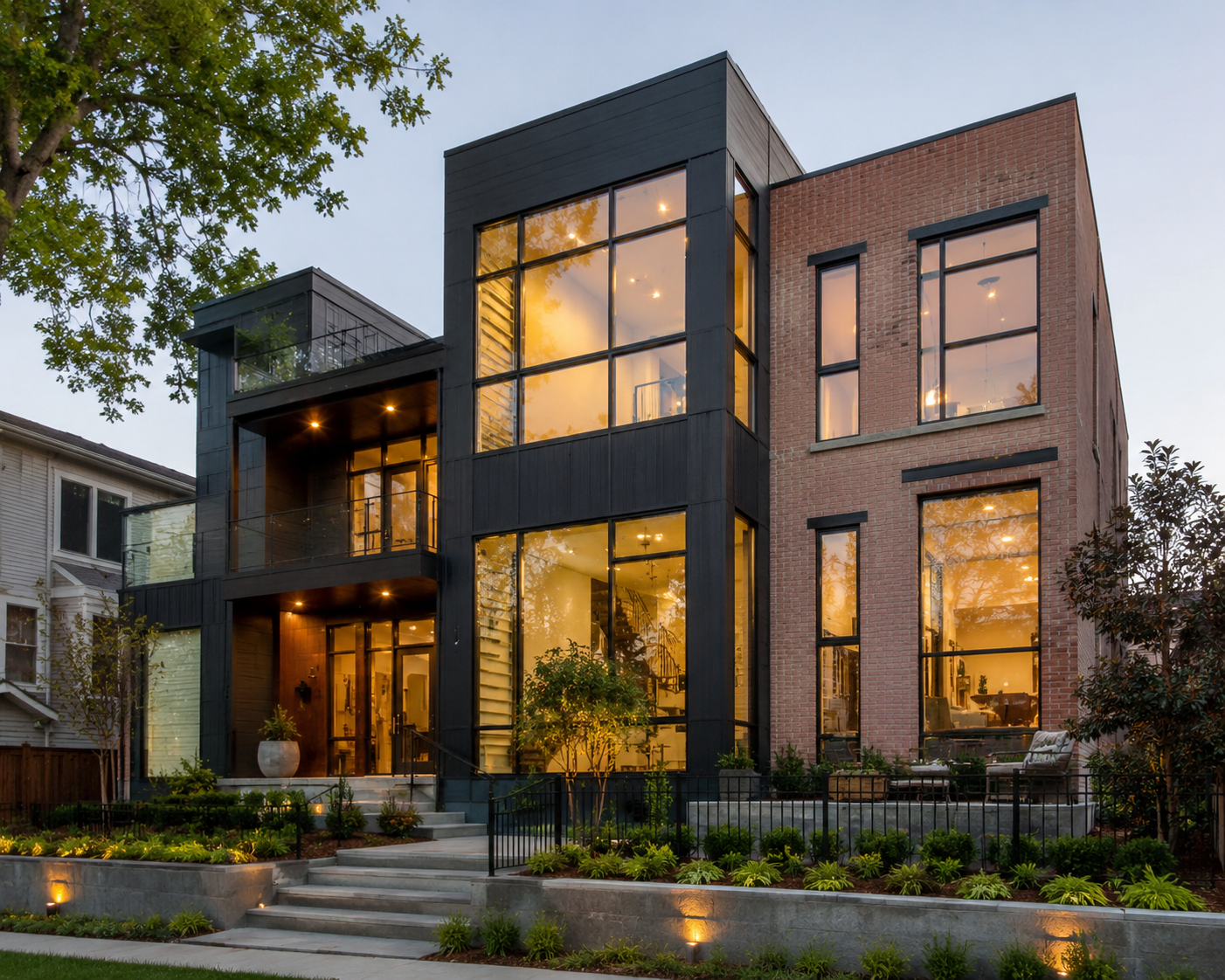
If you are choosing between Old Fourth Ward and Inman Park, the short version is this: Old Fourth Ward is where you go for the bigger nightlife scene, the busiest stretch of the BeltLine, and a lower price of entry built mostly on condos and townhomes. Inman Park is where you go for historic single-family homes, a quieter residential feel two blocks off the same trail, and a faster, more competitive market that costs more to get into. They share a border. They share the Eastside Trail. They do not play the same role in your search.
I work with buyers across Metro Atlanta, and these two come up together constantly, usually from the same person. Someone tells me they want to be on the BeltLine, walk to dinner, skip the car most days, and stay intown. Old Fourth Ward and Inman Park both deliver that. Where they split is on price, on what kind of building you end up owning, and on how loud you want your weeknights to be. People who tour both without understanding that difference waste weeks looking at the wrong inventory.
So let me give you the honest comparison: what each one costs in 2026, how the BeltLine actually works in each, where the nightlife really is, and who each neighborhood is right for. Here's what you need to know.
What's the Real Difference Between Old Fourth Ward and Inman Park?
They sit right next to each other on Atlanta's eastside, separated by the BeltLine itself. Stand on the Eastside Trail behind Ponce City Market and you are in Old Fourth Ward. Walk ten to fifteen minutes south on that same trail to Krog Street Market and you are at the Inman Park line. On a map they look almost interchangeable. On the ground they are not.
Old Fourth Ward, or O4W, runs from Piedmont Avenue on the west to the BeltLine on the east, with Ponce de Leon Avenue to the north and the MARTA line and Oakland Cemetery to the south. It is denser, newer in a lot of places, and built around a mix of high-rise and mid-rise condos, modern townhome rows, adaptive-reuse loft conversions, and a thinner layer of older detached houses. The center of gravity is Ponce City Market and the entertainment corridor along Edgewood Avenue. This is the neighborhood that changed the fastest over the last decade, and the housing stock reflects that: a lot of it was either built or gut-renovated recently.
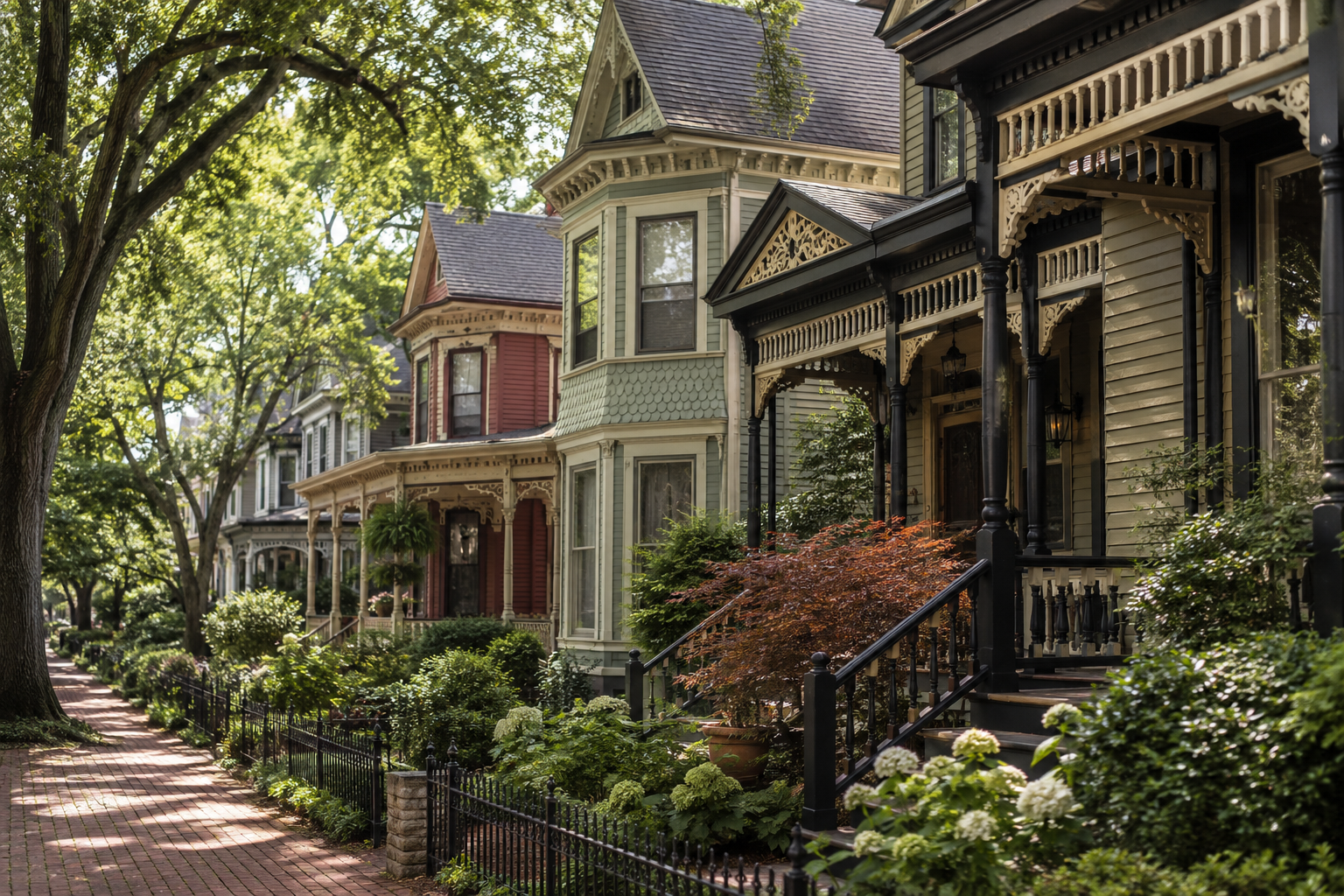
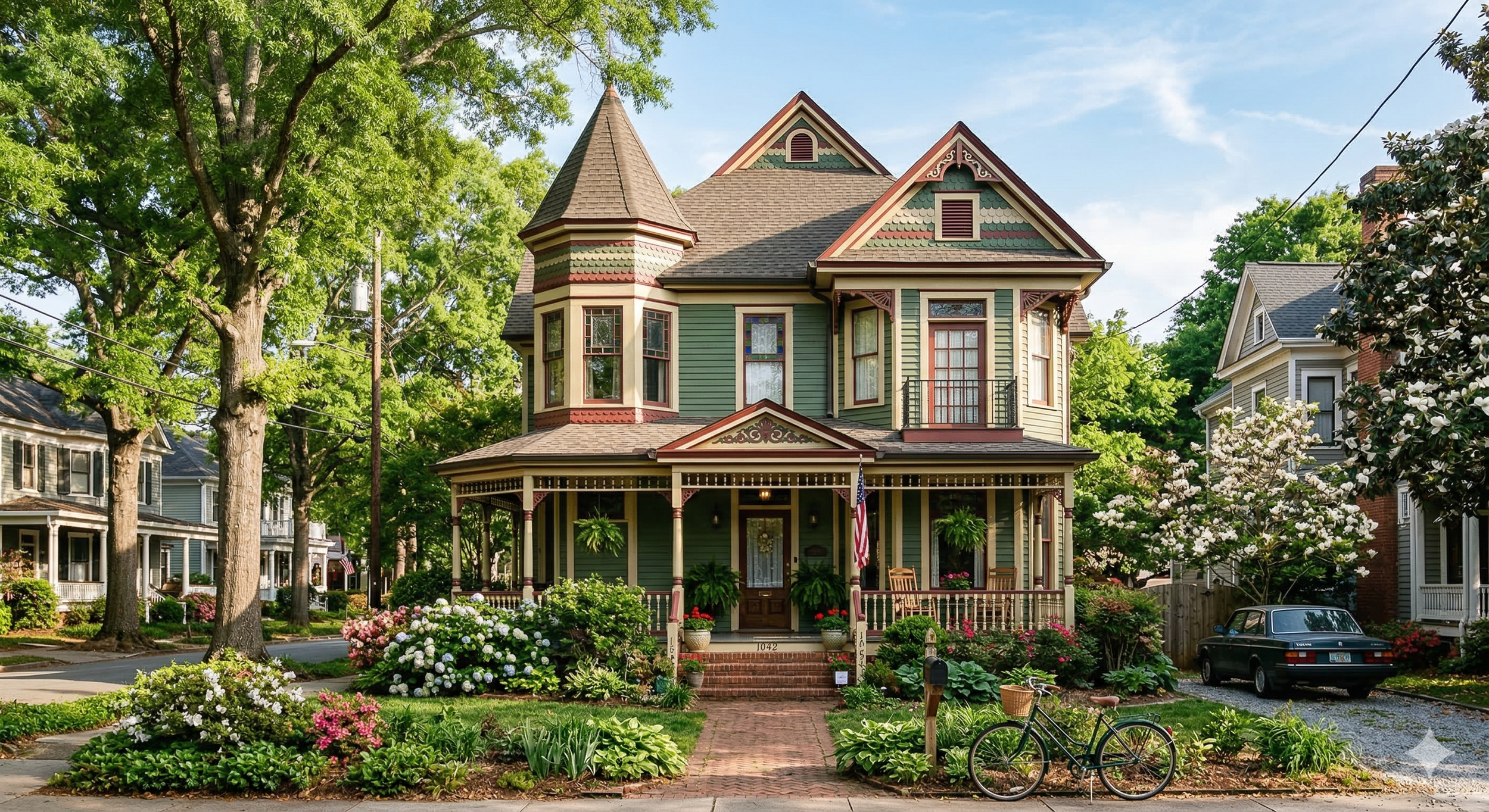
Inman Park is older, quieter on the residential streets, and defined by its history. It was Atlanta's first planned suburb, laid out in the 1880s by developer Joel Hurt and connected to downtown by the city's first electric streetcar line. What survives is one of the largest concentrations of restored Victorian and Queen Anne homes intown, on streets like Elizabeth, Edgewood, Euclid, and Waverly Way. The commercial energy clusters at a few nodes, mainly Krog Street Market and the edge that bleeds into Little Five Points, but the interior streets stay residential and calm in a way O4W's rarely do.
Here is the cleanest way to hold the difference in your head. Old Fourth Ward is a place you buy to be in the middle of things, often in a condo or townhome, at a lower entry price, with the trade-off that your block may be busy and your building newer. Inman Park is a place you buy to own a piece of historic Atlanta, usually a detached house, at a higher price, with the trade-off that you will compete hard for it and pay for the square footage.
What Do Homes Cost in Old Fourth Ward vs. Inman Park in 2026?
This is where the two neighborhoods separate most clearly, so I want to give you real numbers and be honest about what they mean.
In Old Fourth Ward in 2026, the median sale price across all home types sits in roughly the $425,000 to $475,000 range depending on which source and which month you look at, with price per square foot generally in the high $300s to low $400s. The inventory skews heavily toward condos and townhomes. You can find smaller condos starting under $200,000 and a deep middle band of one and two bedroom units and townhomes from the high $300s into the $600s. Detached single-family houses exist but are the minority, and when they trade they often run from the $700,000 range past $1.5 million for larger renovated homes. Homes here have been taking longer to sell lately, with days on market commonly in the 55 to 72 day range, which tells you the O4W market is more balanced and, in the condo segment specifically, leaning a little toward buyers.
In Inman Park in 2026, the picture is more expensive and faster. Zillow's average home value for the neighborhood sits around $753,000, and recent median sale prices in various reports have ranged from roughly $700,000 up past $900,000, with price per square foot frequently in the $445 to $483 band. That higher number reflects the dominant property type: restored historic single-family homes on real lots. Condos and lofts exist, mostly in converted warehouse buildings, and those can start in the $400,000s, but the neighborhood's identity and most of its sales are houses. Inman Park also moves fast. Days on market has run in the 10 to 16 day range, and it carries a "very competitive" rating, with a meaningful share of homes going under contract at or near asking and some above. There is simply less of it to buy, so when something good lists, it goes.
Here is a side-by-side on the 2026 numbers.
| Metric (2026) | Old Fourth Ward | Inman Park |
|---|---|---|
| Median sale price (all types) | ~$425K–$475K | ~$700K–$900K+ |
| Typical price per sq ft | ~$360–$400 | ~$445–$483 |
| Dominant property type | Condos & townhomes | Historic single-family |
| Typical days on market | ~55–72 days | ~10–16 days |
| Market pressure | More balanced, condos lean buyer | Very competitive, low inventory |
| Entry point | Condos under $200K possible | Lofts/condos from low $400s |
One caution on all of these numbers. Both neighborhoods are small, and small neighborhoods produce volatile statistics. A handful of high-end sales in one month can swing Inman Park's median by six figures, and the mix of condos versus houses that happened to close in O4W will move that median around too. Treat these as the shape of the two markets, not as a quote on a specific home. Before you make an offer, have me pull the actual comparable sales for the exact property type and block you are looking at. That is the number that matters, and it is the one Zillow and the national portals get wrong most often.
Which Neighborhood Has Better BeltLine Access?
Both neighborhoods front the Atlanta BeltLine's Eastside Trail, which is the most developed and most heavily used segment of the entire BeltLine system. This is the single biggest thing the two have in common, and it is usually the reason a buyer is looking at both in the first place. But "on the BeltLine" means something a little different in each.
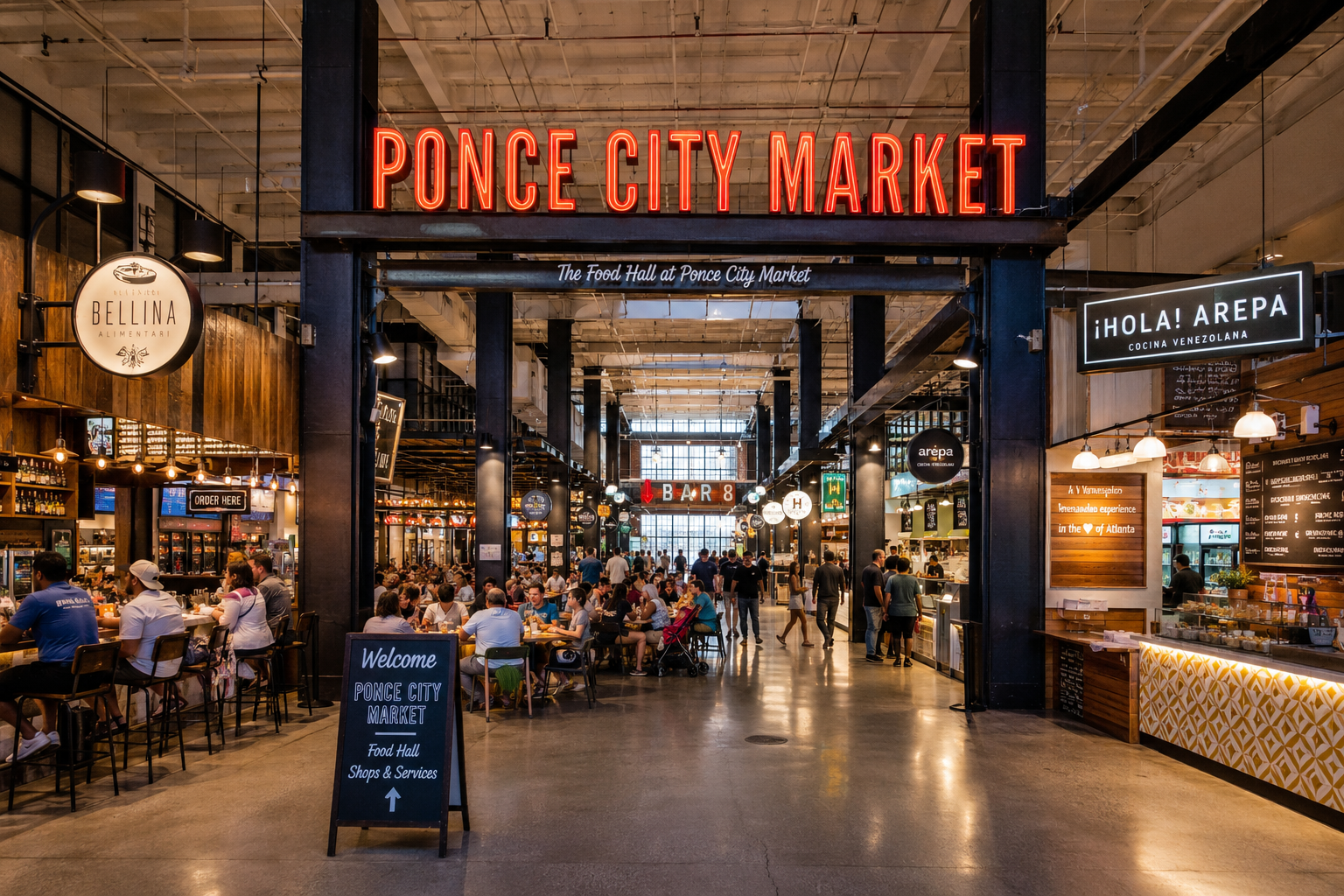
Old Fourth Ward owns the busiest, most commercial stretch of the Eastside Trail. Ponce City Market connects directly to the trail, and the section running past it is where you find the constant flow of walkers, runners, cyclists, dogs, and weekend crowds. Historic Fourth Ward Park, a 17-acre park with a stormwater retention lake, walkways, and a popular skatepark, sits right off the trail in O4W as well. If your image of BeltLine living is stepping out your door into that energy, with a food hall and a park and a rooftop bar within a few minutes, Old Fourth Ward is the literal center of it.
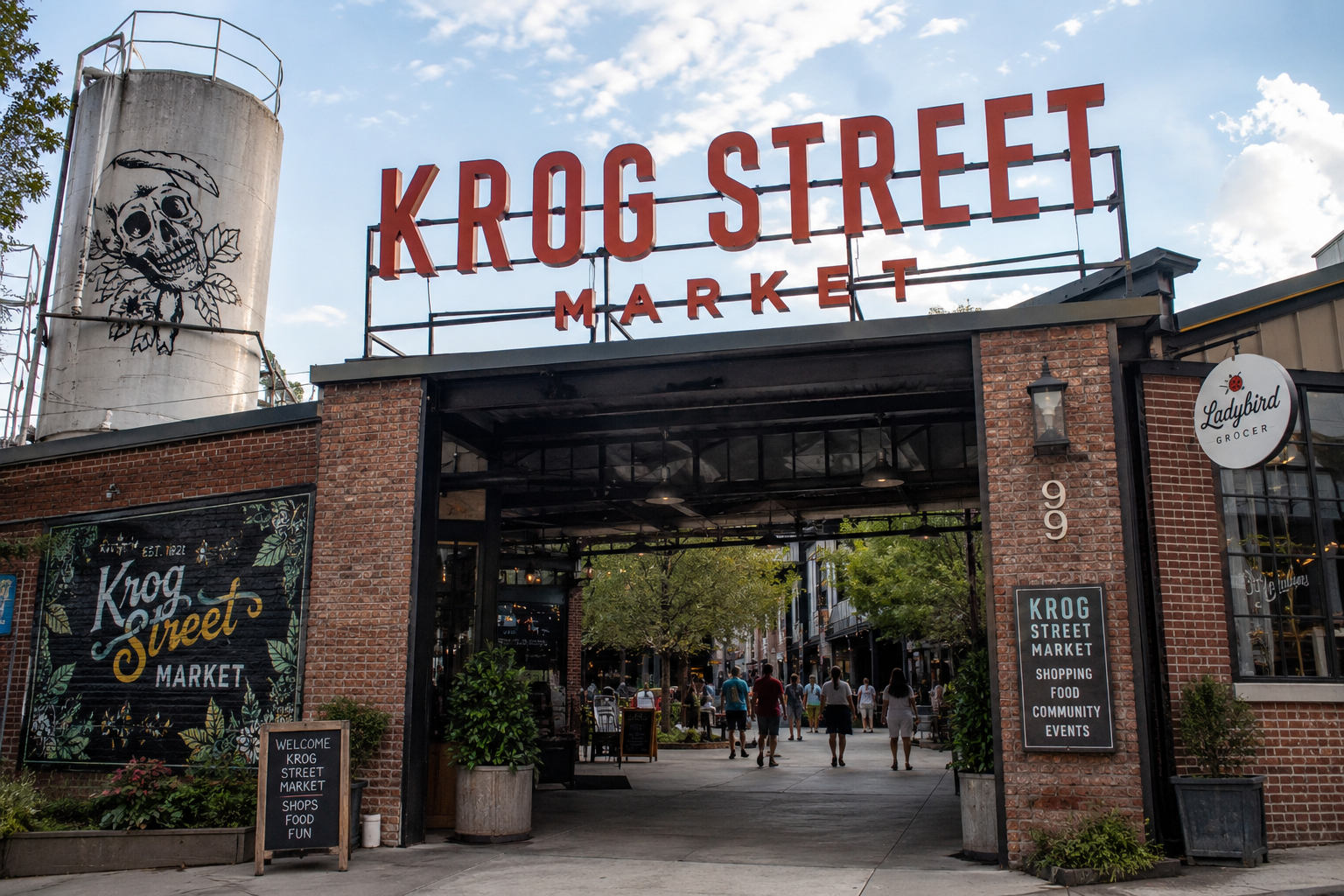
Inman Park sits on the same trail a short walk south, anchored by Krog Street Market in a converted 1920s warehouse. The Inman Park stretch is still active, but it is calmer and more neighborhood-scaled than the Ponce City Market frontage. The Krog District, a growing mixed-use cluster straddling the line between Inman Park and O4W, keeps adding food, retail, and live music, with recent and incoming additions around Krog Street Market. So Inman Park gives you genuine BeltLine access with a slightly quieter front porch on it.
Here is the nuance that trips buyers up, and I have written about it separately because it matters so much: there is a real difference between a home that is BeltLine-adjacent and one with true BeltLine access. A listing can claim "BeltLine" and be a ten minute walk away across a busy road, or it can open practically onto the trail. In both O4W and Inman Park, proximity to the trail is priced in, and the closer you are, the more you pay and the more foot traffic and noise you live with. That is a feature for some buyers and a dealbreaker for others. When we tour, I will tell you exactly how a given home relates to the trail, not how the listing describes it.
Old Fourth Ward vs. Inman Park for Nightlife: Where's the Scene?
If nightlife is driving your decision, this is the section that should weigh most, because the two neighborhoods are genuinely different here.
Old Fourth Ward has the larger, later, louder scene. The Edgewood Avenue corridor along the south edge of O4W and Sweet Auburn is one of intown Atlanta's core nightlife strips, a dense run of bars, music spots, and late-night spaces. Sister Louisa's Church of the Living Room and Ping Pong Emporium, usually just called Church, is the anchor everyone knows, with its irreverent decor and ping pong tables. Add the rooftop scene at Ponce City Market, where The Roof brings a rooftop bar, a vintage arcade, and skyline views, plus Dad's Garage Theatre for comedy and improv, and O4W gives you a full range from a quiet cocktail to a 2 a.m. night out without leaving the neighborhood. This is the place to buy if you want the scene downstairs.
Inman Park's energy is more dining-and-drinks than late-night club. Krog Street Market is the social hub, with bars inside the hall serving beer, wine, and cocktails, and a cluster of strong restaurants in and around it, including Ford Fry's Superica. The bigger nightlife adjacency is Little Five Points, the famously offbeat district that borders Inman Park to the east, where you get live music venues, dive bars, and late spots within walking distance. So Inman Park is not quiet, but its center of gravity is a great dinner and a couple of drinks, with the rowdier options a short walk away in Little Five Points rather than on its own residential streets.
The practical read: if you want to live on top of the nightlife, Old Fourth Ward puts it under your windows, which is exactly what some buyers want and exactly what others will regret on a Saturday at midnight. If you want excellent food and drinks nearby but a calm street to come home to, Inman Park gives you that buffer. I have had buyers fall in love with an O4W condo over the Edgewood corridor and then ask me, three weeks after closing, how to soundproof a bedroom. Know which one you are before you sign.
For a wider look at where the scene actually lives across the city, I keep a full guide to the best Atlanta neighborhoods for nightlife and live music that puts both of these in context with the rest of intown.
How Walkable Is Each Neighborhood, and Can You Live Car-Free?
Both neighborhoods are among the most walkable in Atlanta, which is a low bar in a car-dependent metro but a real strength here. The difference is in transit.
Old Fourth Ward carries a Walk Score around 82. Daily needs, groceries, coffee, restaurants, gym, are reachable on foot from much of the neighborhood, especially near Ponce City Market. For rail, the nearest MARTA station is North Avenue on the Red and Gold lines, roughly a fifteen minute walk from Ponce City Market, which is workable but not doorstep-close for the whole neighborhood.
Inman Park carries a slightly higher Walk Score around 86 and a Bike Score near 90, and it has something O4W does not: its own MARTA rail station. The Inman Park/Reynoldstown station on the Blue and Green lines puts direct train service to Downtown, Midtown, and the airport within about a ten minute walk of much of the neighborhood. Combine that with the BeltLine for biking and the walkable interior streets, and Inman Park is one of the few intown neighborhoods where living without a car, or with one car for a couple, is genuinely realistic.
| Getting Around | Old Fourth Ward | Inman Park |
|---|---|---|
| Walk Score | ~82 | ~86 |
| Bike access | Direct Eastside Trail frontage | Eastside Trail + Bike Score ~90 |
| Nearest MARTA rail | North Avenue (Red/Gold), ~15 min walk | Inman Park/Reynoldstown (Blue/Green), ~10 min walk |
| Realistic car-free living | Possible near PCM, easier with a car | Genuinely realistic with rail + BeltLine |
What Kind of Home Will You Actually Get in Each?
This is the part buyers underestimate, and it shapes everything else.
In Old Fourth Ward, you are most likely buying a condo, a loft, or a newer townhome. The high-rise and mid-rise condo buildings near Ponce City Market and along the trail give you lock-and-leave convenience, building amenities, and views, with HOA fees and shared walls as the trade. The townhome rows, many of them built in the last fifteen years, give you a bit more space and a garage without a yard to maintain. Adaptive-reuse lofts in old industrial buildings offer real character and open layouts. Detached single-family homes do exist, scattered through the residential pockets, but they are scarcer and command a premium when they sell. If you want a yard and a freestanding house, O4W can give it to you, but you will be hunting and paying for it.
In Inman Park, you are most likely buying a house, and often a historic one. The neighborhood's defining stock is restored Victorian and Queen Anne homes on tree-lined streets, many over a century old, with the porches, period detail, and quirks that come with that age. These are beautiful and they are not maintenance-free; older homes carry older systems, and inspection matters more here, not less. There are also newer infill homes and a set of loft and condo conversions for buyers who want Inman Park's location without a hundred-year-old house. But the reason most people pay Inman Park prices is to own one of those historic homes, and that is what the inventory is built around.
So the property-type question often answers the neighborhood question. If your heart is set on a detached historic house with a porch, Inman Park is the more natural fit and you should budget accordingly. If you want a low-maintenance condo or townhome in the thick of the action at a lower entry price, Old Fourth Ward is built for that.
The History Behind Each Neighborhood
These two places carry very different histories, and both are worth understanding before you buy, because the history is part of what you are buying into.
Old Fourth Ward holds some of the most important civic ground in the country. Its southern edge runs into Sweet Auburn, the corridor along Auburn Avenue that became one of the most significant centers of Black business, faith, and political life in America in the early and mid 20th century. The Martin Luther King Jr. National Historical Park is here, including Dr. King's birth home and Ebenezer Baptist Church, where he preached. The APEX Museum documents African American history along the same corridor, and venues like the Royal Peacock were part of a deep entertainment and music legacy. This is the documented heart of Black Atlanta's civic and cultural history, and it sits directly inside the neighborhood you would be moving into. When people talk about Old Fourth Ward's transformation over the last decade, that legacy is the ground it is built on, and it is a meaningful part of the neighborhood's identity.
Inman Park's history is about urban design and preservation. As Atlanta's first planned residential suburb, developed by Joel Hurt starting in the 1880s and reached by the city's first electric streetcar, it represents a specific moment in how Atlanta grew. By the mid 20th century many of its grand Victorian homes had fallen into disrepair, and the neighborhood's revival came from a wave of preservationists who bought and restored those houses through the 1970s and beyond. That restoration movement is why the historic housing stock survives today, and it is why the annual Inman Park Festival, with its tour of homes and street parade, remains such a point of neighborhood pride. When you buy a historic home here, you are stepping into that preservation story.
Commuting from Old Fourth Ward vs. Inman Park: Honest Numbers
Both neighborhoods are intown and east-side close, so commutes are short by Atlanta standards. I will give you honest, real-traffic ranges, not off-peak Google Maps fantasy.
To Downtown Atlanta, both neighborhoods are roughly 5 to 15 minutes by car off-peak, stretching toward 20 to 25 in heavy morning rush depending on your exact starting point and route. From Inman Park, the MARTA Blue or Green line gets you Downtown in well under 15 minutes of actual ride time, which often beats driving and parking. To Midtown, expect roughly 10 to 20 minutes driving from either, with O4W generally a touch closer to the Midtown core. To Buckhead or the Perimeter office market further north, plan on 20 to 35 minutes off-peak and meaningfully more in rush hour, since you are fighting the full north-south traffic load. To Hartsfield-Jackson airport, both run roughly 20 to 30 minutes by car off-peak, and Inman Park's rail access makes a train trip to the airport a real option without leaving a car in long-term parking.
The honest summary: for anyone working or playing intown, on the east side, or able to use MARTA rail, both of these neighborhoods commute beautifully, and Inman Park's own rail station gives it a small edge for car-light living. For anyone commuting daily to the northern suburbs by car, neither location does you any favors during rush hour, and that is true of nearly every intown neighborhood.
A Quick Note on Schools
Both Old Fourth Ward and Inman Park are served by Atlanta Public Schools, and attendance zones are assigned by your specific home address, not by the neighborhood name. Zones and school assignments change, and a home one block from another can feed into a different school. Atlanta also has a number of charter and magnet options that operate outside standard zoning. I am not going to rank schools for you, because that is not my role and the right fit depends entirely on your family. Research and visit schools to determine fit for your family, and always verify the zoning for the exact property address before you make an offer. I am happy to point you to the official APS zoning lookup so you are working from the current source.
Who Should Buy in Old Fourth Ward?
Old Fourth Ward tends to be the right fit when:
You want the lowest realistic entry point into a true BeltLine, walk-everywhere intown neighborhood, and a condo or townhome works for your life.
Nightlife and dining out your front door is a feature, not a nuisance, and you want the Edgewood corridor and Ponce City Market within walking distance.
You want lock-and-leave convenience, building amenities, or newer construction, and you do not want a yard to maintain.
You value being on the busiest, most active stretch of the Eastside Trail.
You are an investor or first-time buyer looking at intown condos and townhomes where the entry price and the current more-balanced market give you room to negotiate.
Think carefully about Old Fourth Ward if:
You specifically want a detached single-family home with a yard, since those are the minority of the stock and priced at a premium.
Noise and weekend crowds near the nightlife corridors or the busiest trail sections would wear on you.
You want HOA-free ownership, which is harder to find in the condo-heavy core.
Who Should Buy in Inman Park?
Inman Park tends to be the right fit when:
You want to own a historic single-family home intown, with the architecture, lots, and character that come with it, and your budget supports the higher price point.
You want excellent dining and BeltLine access but a calmer residential street to come home to.
Car-light or car-free living matters to you, and a dedicated MARTA rail station plus a top-tier Bike Score is a real draw.
You are buying for the long term and value the stability of a small, tightly held, high-demand neighborhood.
Think carefully about Inman Park if:
Your budget is closer to the intown condo range, since the houses that define the neighborhood sit well above O4W's median.
You need to move quickly or hate competition, because low inventory and fast days on market mean you may lose homes before you are ready to act.
You are not prepared for the realities of owning an older historic home, where maintenance, systems, and inspections demand more attention and budget.
Old Fourth Ward vs. Inman Park: How They Compare Head to Head
| Factor | Winner | Why |
|---|---|---|
| Lower entry price | Old Fourth Ward | Condo and townhome stock keeps the median well below Inman Park |
| Historic single-family homes | Inman Park | Restored Victorians are the defining stock |
| Bigger, later nightlife | Old Fourth Ward | Edgewood corridor and Ponce City Market rooftop scene |
| Quiet residential streets | Inman Park | Energy clusters at nodes; interior stays calm |
| Busiest BeltLine frontage | Old Fourth Ward | Ponce City Market anchors the most active trail stretch |
| Transit / car-free living | Inman Park | Own MARTA rail station plus top Bike Score |
| Room to negotiate | Old Fourth Ward | More balanced market, longer days on market |
| Civic and cultural history | Old Fourth Ward | Sweet Auburn and the MLK National Historical Park |
No neighborhood "wins" overall. They win on different things, and the right answer is the one that matches what you actually want and what you can spend.
Frequently Asked Questions
Is Old Fourth Ward or Inman Park more expensive?
Inman Park is the more expensive of the two in 2026. Its median sale price runs in roughly the $700,000 to $900,000-plus range because the neighborhood is dominated by historic single-family homes, while Old Fourth Ward's median sits closer to $425,000 to $475,000, built largely on condos and townhomes. For the same budget, you generally get more square footage or a freestanding house in O4W's outer ranges, and a piece of historic Atlanta in Inman Park.
Which neighborhood has better BeltLine access?
Both front the Eastside Trail, which is the most active part of the entire BeltLine. Old Fourth Ward has the busiest, most commercial stretch, anchored by Ponce City Market and Historic Fourth Ward Park. Inman Park sits a short walk south, anchored by Krog Street Market, with a slightly calmer feel. If you want to be in the center of the BeltLine energy, O4W wins; if you want trail access with a quieter street, Inman Park does.
Where is the nightlife better, Old Fourth Ward or Inman Park?
Old Fourth Ward has the larger and later nightlife scene, centered on the Edgewood Avenue corridor and the rooftop options at Ponce City Market. Inman Park leans more toward dining and drinks around Krog Street Market, with rowdier late-night spots a short walk away in neighboring Little Five Points. Buy in O4W to live on top of the scene, and in Inman Park for great food with a calmer block to come home to.
Can you live without a car in Old Fourth Ward or Inman Park?
Both are highly walkable, but Inman Park makes car-free living easier because it has its own MARTA rail station, the Inman Park/Reynoldstown stop on the Blue and Green lines, plus one of the highest Bike Scores intown and direct BeltLine access. Old Fourth Ward is very walkable too, but its nearest rail station, North Avenue, is about a fifteen minute walk from the Ponce City Market area, so many residents still keep a car.
What kind of homes are in each neighborhood?
Old Fourth Ward is mostly condos, lofts, and newer townhomes, with a smaller number of detached single-family houses that sell at a premium. Inman Park is mostly restored historic Victorian and Queen Anne single-family homes, with some warehouse loft and condo conversions and newer infill houses. The property type you want often decides which neighborhood fits.
Is Old Fourth Ward a good investment in 2026?
Old Fourth Ward has been one of intown Atlanta's fastest-changing neighborhoods, and its lower entry price plus a currently more balanced, condo-leaning market can give buyers room to negotiate. As with any investment, the specific building, HOA health, rental rules, and exact location relative to the trail matter more than the neighborhood label. I can run the numbers on a specific property before you commit.
Why do homes sell so much faster in Inman Park?
Inman Park carries low inventory and high demand, which produces fast days on market, often in the 10 to 16 day range, and a very competitive rating. There simply are not many historic homes in a small, tightly held neighborhood, so when a desirable one lists, qualified buyers move quickly. If you are shopping Inman Park, you need financing lined up and a clear plan to act fast.
Are Old Fourth Ward and Inman Park next to each other?
Yes. They share a border along the BeltLine on Atlanta's eastside. Krog Street Market straddles the line between them, and you can walk the Eastside Trail from Ponce City Market in O4W to Krog Street Market at the Inman Park edge in roughly ten to fifteen minutes. They are neighbors, which is exactly why so many buyers compare them.
Which schools serve Old Fourth Ward and Inman Park?
Both neighborhoods are served by Atlanta Public Schools, and your assigned schools depend on your specific home address rather than the neighborhood name. Charter and magnet options exist outside standard zoning as well. Research and visit schools to determine fit for your family, and always verify the zoning for the exact property address before you buy.
Should I buy in Old Fourth Ward or Inman Park?
Choose Old Fourth Ward if you want the lower entry price, a condo or townhome, and the biggest BeltLine and nightlife scene out your door. Choose Inman Park if you want a historic single-family home, a quieter residential street, and the easiest car-free living of the two, and your budget supports the higher price. The honest answer depends on your budget and what kind of home and street you want, which is exactly the conversation I have with buyers before we ever tour.
The Bottom Line
Old Fourth Ward and Inman Park are neighbors that solve different problems. O4W is the entry point, the nightlife, and the busiest BeltLine frontage, built on condos and townhomes you can get into for less. Inman Park is the historic house, the quieter street, and the easiest car-free life intown, at a higher price and in a faster market. I work with buyers across Metro Atlanta and know both of these neighborhoods block by block, including how each home relates to the trail, the nightlife, and the real numbers behind the listings. If you are weighing the two, let's talk through your budget and your must-haves and figure out which one is actually yours.
Visit kristenjohnsonrealestate.com or reach out directly. Come as you are, come on home.
Looking for more intown Atlanta guides? I've covered the Old Fourth Ward real estate market in depth, along with nearby Reynoldstown, Grant Park, Candler Park, Kirkwood, and East Atlanta. For the wider scene, see my guide to the best Atlanta neighborhoods for nightlife and live music and the best Atlanta neighborhoods for foodies. Browse the full guide series at kristenjohnsonrealestate.com.