

Townhome vs. Single-Family Home in Atlanta: What's the Real Cost Difference?
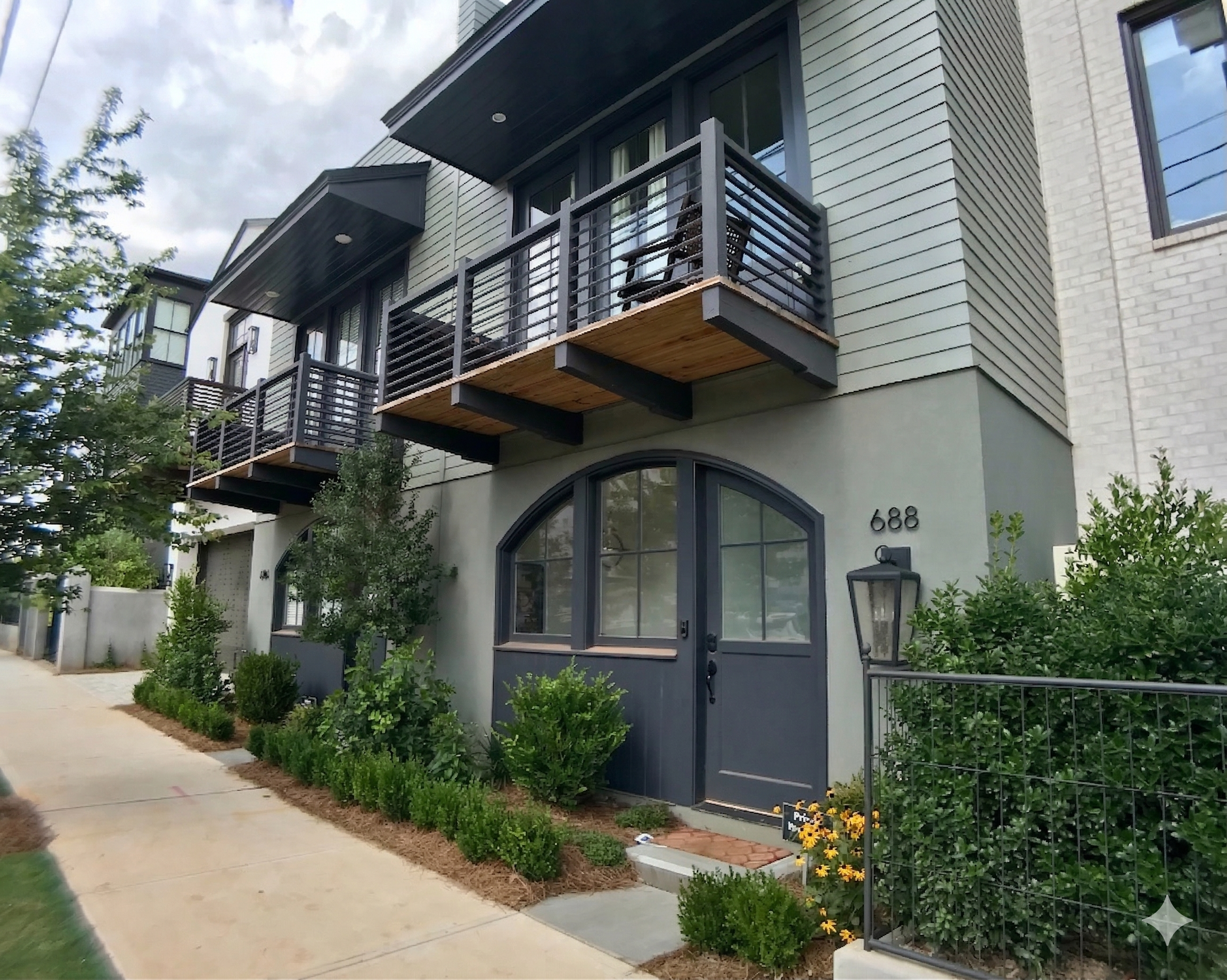
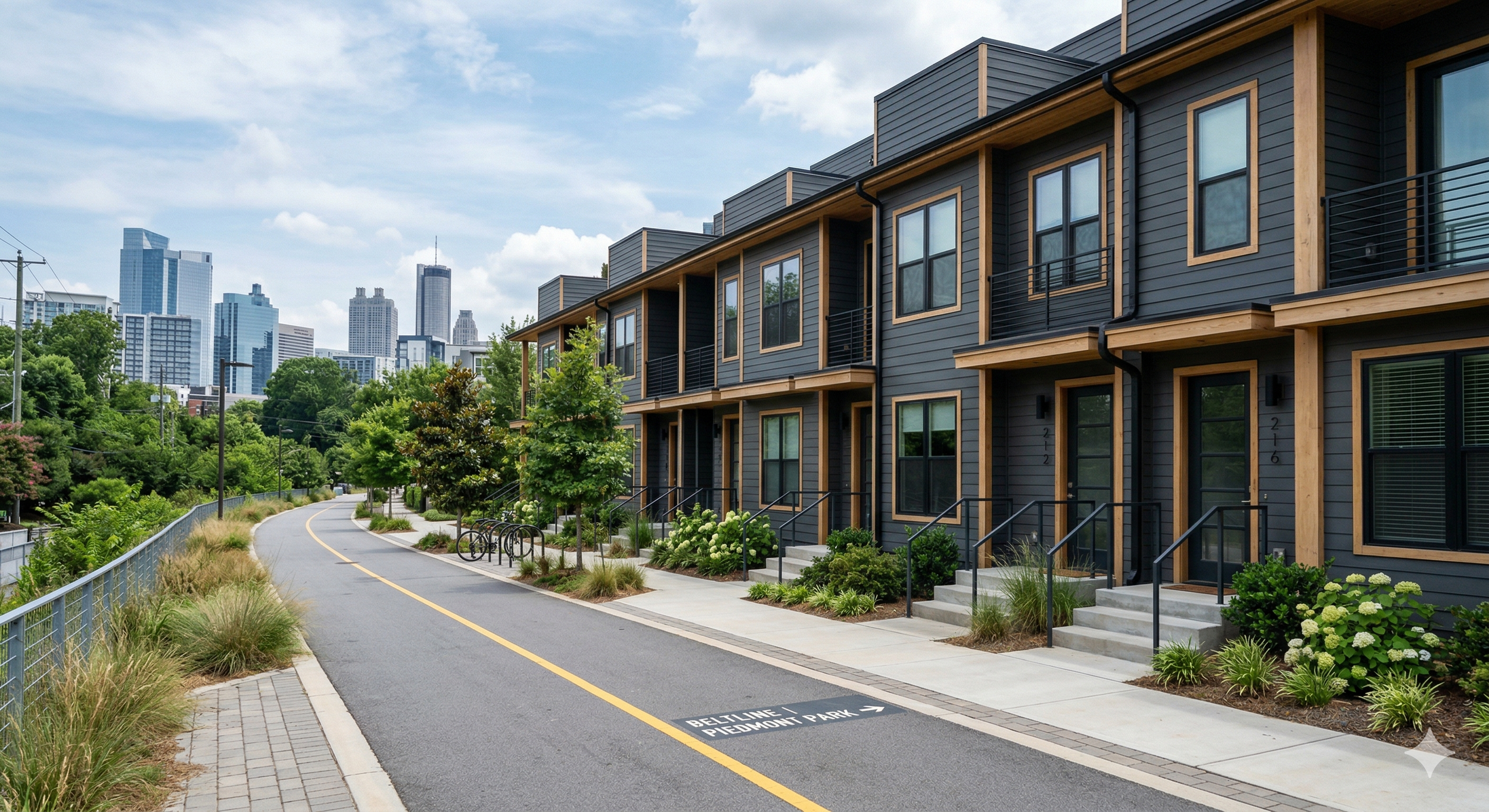
If you're shopping in Metro Atlanta around the $300,000 to $500,000 range, the townhome versus single-family question shows up fast. You start the search wanting a yard, a driveway, no shared walls. Then you see what those homes cost in the neighborhoods you actually want to live in, and the townhome listings start looking a lot more interesting. New construction. Three bedrooms. Two-car garage. Walking distance to the BeltLine, or to Marietta Square, or to the Town Green in Duluth. Price tag thirty to seventy thousand below the detached homes around the corner.
That's the headline number. But it isn't the real cost difference, and buyers who only look at the purchase price end up surprised by what shows up later in HOA dues, insurance premiums, property taxes, and resale.
I work with buyers across Metro Atlanta, and this is one of the most common comparisons I run for first-time buyers, move-up buyers, and relocation clients trying to decide what to put their dollars into. The math is genuinely close in some neighborhoods and not close at all in others. The lifestyle tradeoffs are real either way.
Nearly a decade helping Atlanta buyers means I've watched both property types through three different rate environments and a full pricing cycle.
Here's what you need to know.
How Much Cheaper Is a Townhome in Atlanta, Really?
Let's start with the actual number, because the gap is smaller than national averages suggest.
The most recent CoStar and Homes.com data on the Atlanta metro shows the median single-family price in March 2026 at $395,000, while townhome sales fell 3.9 percent year over year. The Georgia REALTORS annual report for 2025 shows a one-year price change of 0.0 percent for single-family and negative 1.5 percent for townhome and condo statewide, so the two property types are tracking close together right now.
Nationally, the spread is wider. Recent Redfin data shows the median U.S. townhouse price at $380,668 versus $453,734 for detached single-family, a gap of roughly $73,000, or about 16 percent. In Atlanta, the price spread is similar in dollar terms but plays out differently depending on where you're looking.
Inside the perimeter, in places like Old Fourth Ward, Edgewood, Reynoldstown, Inman Park, Grant Park, West Midtown, and Summerhill, the townhome versus single-family gap is often $100,000 to $300,000 or more. A new construction three-bedroom townhome in Old Fourth Ward might list in the high $700,000s to low $800,000s, while a renovated single-family home in the same neighborhood pushes well past $1 million. That's the gap doing real work in your buying decision.
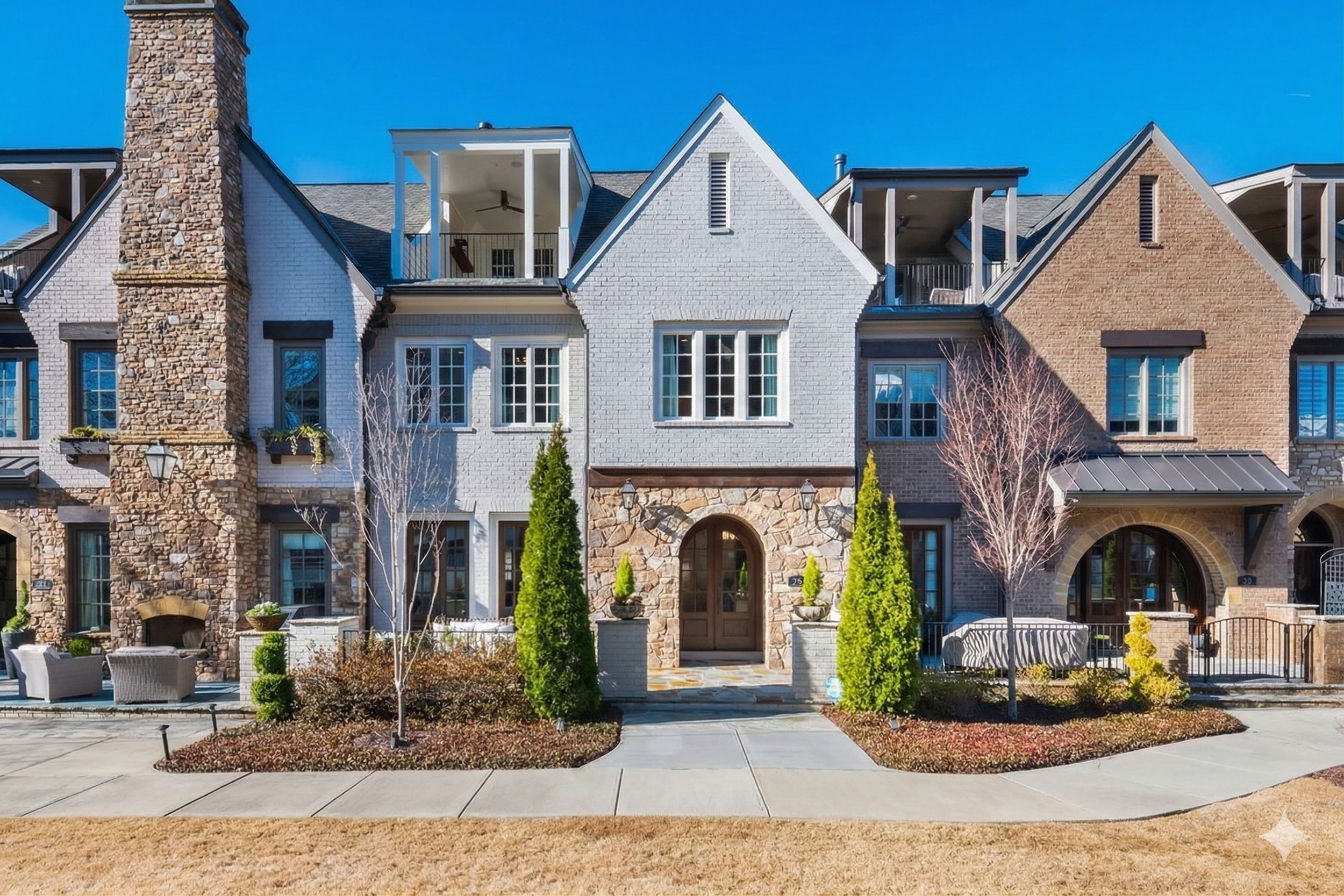
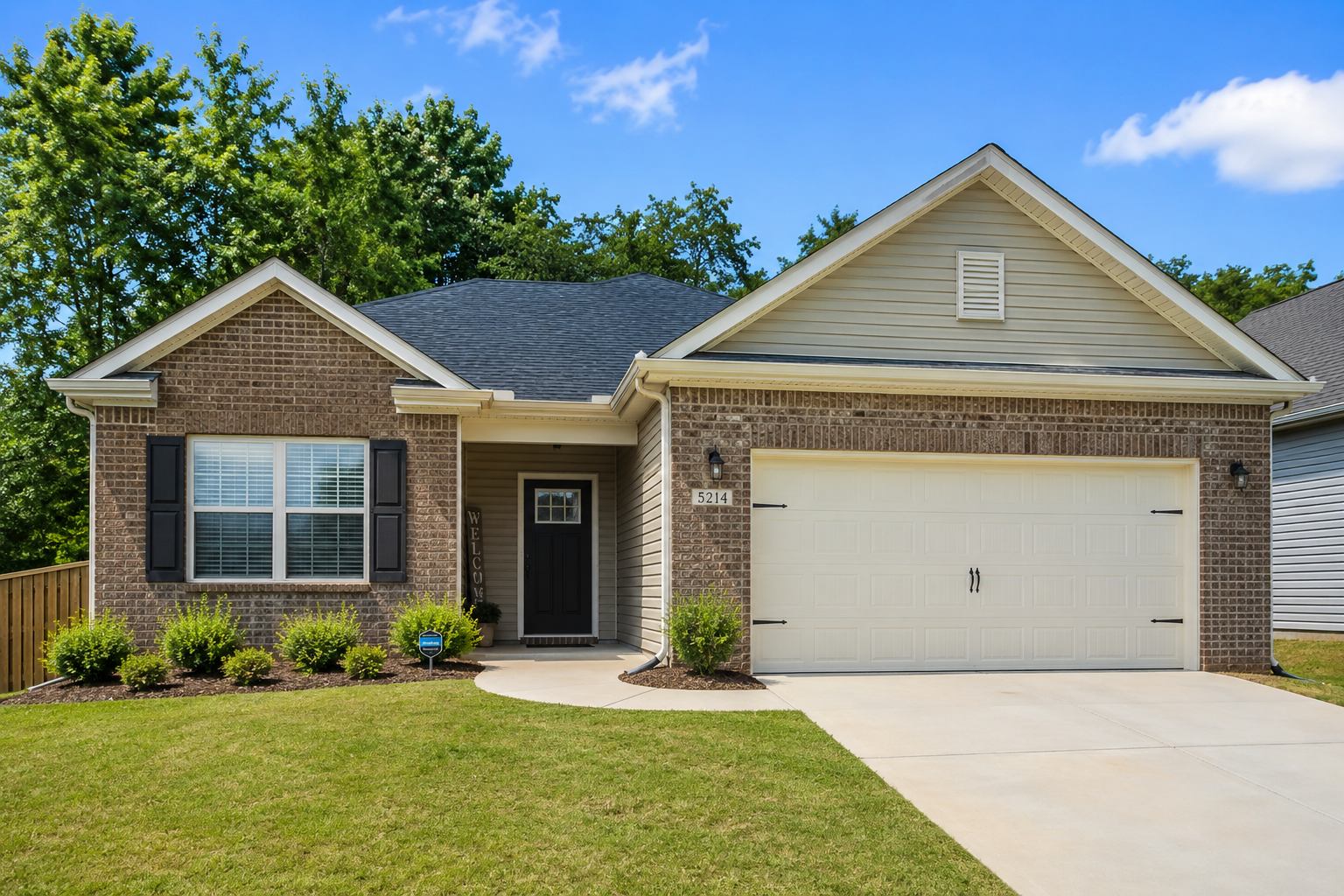
In the suburbs, the gap narrows. In Alpharetta, Roswell, Smyrna, and Marietta, a newer townhome might be $400,000 to $550,000, while comparable single-family inventory in the same school zones runs $550,000 to $800,000. Still meaningful, but you're trading less square footage and lot size for the savings.
In South Metro and parts of West Metro, the gap can almost disappear. In Stockbridge, Lithia Springs, and parts of Douglasville, you can sometimes find an older detached home with a yard for the same price as a newer townhome in a comparable area. That's where the property type decision shifts away from cost and toward what kind of home you actually want.
What's Actually Driving the Price Difference?
The purchase price gap isn't arbitrary. It reflects three real differences.
Land. A single-family home sits on a lot you own. A townhome sits on a smaller footprint, often with shared property lines and HOA-owned common space. In Atlanta specifically, land values inside the perimeter have appreciated faster than structures for the last decade. When you buy a detached home in Edgewood or Grant Park, a meaningful portion of what you're paying for is the dirt. That's why the gap between townhomes and single-family widens the closer you get to the BeltLine.
Square footage and lot size. Atlanta townhomes typically run 1,600 to 2,200 square feet across two to three stories. Comparable single-family homes are usually 1,800 to 3,000 square feet on lots of a quarter acre or more. You're paying less per square foot in a townhome on average, but you're also getting less of it, and you're getting it vertically.
Buyer demand. Single-family detached homes pull from a wider buyer pool. Move-up buyers, relocation buyers, anyone who has lived in a townhome and is ready for separation from neighbors. That deeper demand pool is what drives the appreciation difference over time, which I'll get into below.
Monthly Cost: The Comparison Buyers Actually Need
The purchase price is what gets you in the door. The monthly carry is what tells you whether you can actually afford to live there. Here's how the numbers work out in Atlanta in 2026.
Let's compare two real-world scenarios at similar all-in monthly costs, using current Atlanta data.
Scenario A: A $400,000 townhome in Smyrna
10 percent down ($40,000), 30-year fixed at 6.5 percent
Principal and interest: approximately $2,275
Property tax (Cobb County, roughly 0.95 percent effective): approximately $317/month
Homeowners insurance (Atlanta average around $193/month, lower for townhomes due to shared structure): approximately $130/month
HOA dues (Atlanta townhome median: $135, typical range $200 to $350): approximately $250/month
Estimated all-in monthly: $2,972
Scenario B: A $475,000 single-family home in Smyrna
10 percent down ($47,500), 30-year fixed at 6.5 percent
Principal and interest: approximately $2,701
Property tax: approximately $376/month
Homeowners insurance: approximately $200/month
HOA dues (if any, often $0 to $75/month for older neighborhoods): approximately $40/month
Estimated all-in monthly: $3,317
That's a $345 monthly difference, or about $4,140 a year. Over five years, that's roughly $20,700 in cash flow advantage to the townhome, before you account for differences in maintenance.
Now layer in the part the calculator doesn't show: the single-family home requires you to handle your own lawn, your own roof, your own HVAC servicing, your own exterior paint, your own driveway repairs. Industry estimates put annual single-family maintenance and exterior upkeep at $2,500 to $4,000. The townhome HOA covers a meaningful portion of that.
When you net it out, the real monthly cost gap on this comparison is closer to $150 to $200, not the $345 the headline numbers suggest. And in many neighborhoods, especially inside the perimeter, the townhome still comes out cheaper, but not by as much as the listing price implies.
HOA Dues in Atlanta: What Buyers Actually Pay
This is the line item that surprises buyers the most, so I want to give you concrete numbers.
According to recent Realtor.com data reported by Axios Atlanta, 53 percent of homes on the market in Metro Atlanta include HOA fees, with a median monthly fee of $135, up from $125 in 2024 and $108 in 2019. Across Georgia, the state median is $75 per month.
But the median masks a wide range. Here's what I see in practice across Metro Atlanta:
Townhome and condo HOAs (Atlanta metro typical range):
Suburban townhome communities (Smyrna, Marietta, Duluth, Lawrenceville): $150 to $300/month
Intown townhome communities (Old Fourth Ward, Reynoldstown, Inman Park, West Midtown): $250 to $500/month
Luxury intown townhome developments (Midtown high-rise-adjacent, Buckhead): $400 to $800+/month
New construction with significant amenities (pool, gym, gated): $300 to $600/month
Single-family HOAs (where they exist):
Older intown neighborhoods (Kirkwood, Candler Park, East Atlanta): often $0 to voluntary $100/year
Newer suburban subdivisions with amenities: $75 to $250/month
North Fulton master-planned communities (Alpharetta, Milton, Johns Creek): $100 to $400/month
Gated luxury communities: $200 to $800+/month
A few things worth knowing about Atlanta HOA dues specifically. Georgia ranks among the higher-fee states because of the share of new construction in HOA-governed communities. Industry data shows that 84.8 percent of condo and townhome listings nationally carry HOA fees, compared to 33.4 percent of single-family listings. Atlanta tracks above the national average on both counts.
HOA dues also typically increase 3 to 5 percent per year. A $300 fee today becomes about $725 in 30 years at 3 percent annual increases. A $400 monthly HOA reduces your buying power by about $60,000 to $65,000, depending on rate. That's a real consideration if you're trying to maximize the home you can afford.
Two things I always check before recommending an HOA-governed property to a client:
The reserve study. Every legitimate HOA should have one. It tells you how well-funded the association is for major upcoming expenses (roofs, paving, exterior siding, common amenity replacement). A poorly-funded reserve is a red flag because it usually means a special assessment is coming.
The recent assessment history. Special assessments are one-time charges levied on every owner for major repairs the regular dues didn't cover. A community that has hit owners with two special assessments in the last five years is telling you something about how the budget is being managed.
I review HOA documents with every buyer before they go under contract. The townhome that looks like a deal can stop looking like one fast when you see a fully depleted reserve and a roof replacement coming due.
Property Taxes: Smaller Difference Than You'd Think
Property tax in Atlanta is a function of assessed value and millage rate, not property type. A $400,000 townhome and a $400,000 single-family home in the same county pay roughly the same property tax.
Effective property tax rates in Metro Atlanta in 2026 typically run:
Fulton County (City of Atlanta): approximately 1.0 to 1.2 percent
DeKalb County: approximately 1.0 to 1.3 percent
Cobb County: approximately 0.85 to 0.95 percent
Gwinnett County: approximately 1.0 to 1.1 percent
Henry County: approximately 0.95 to 1.1 percent
Douglas County: approximately 0.95 to 1.05 percent
Cobb and Gwinnett unincorporated tend to be cheaper than the City of Atlanta because you're paying county tax only, not county plus city. That's a real consideration for buyers comparing a Smyrna townhome to an Atlanta townhome at similar prices.
Homestead exemptions matter on both property types. If this is your primary residence, you qualify for a homestead exemption that reduces your taxable value. Georgia's base homestead exemption is modest, but counties layer additional exemptions on top, and senior exemptions can be substantial. File for homestead by April 1 of the year after you move in, or you wait another year.
Homeowners Insurance: The Townhome Advantage
This is where townhomes win clearly.
Homeowners insurance in Atlanta in 2026 averages about $193 per month, or $2,320 per year for a typical $300,000 dwelling policy, according to recent Insure.com data. ValuePenguin puts the Atlanta average closer to $2,772 per year, depending on coverage level.
But that's for an HO-3 policy on a single-family home, which covers the full structure, exterior, and land.
For a townhome that's part of an HOA, the master policy carried by the association covers the exterior structure, the roof, and the shared elements. You're only insuring the interior, your personal property, and your liability. That's an HO-6 policy, which is generally substantially less than an HO-3.
A reasonable estimate for an Atlanta townhome HO-6 policy is $700 to $1,200 per year, versus $2,300 to $3,000 per year for a comparable single-family HO-3. That's a savings of roughly $100 to $150 per month.
Two caveats. First, your HO-6 has to be coordinated with what the HOA's master policy covers. If the master policy is "bare walls" (covers only structural framing), you need more interior coverage. If it's "all-in" (covers interior fixtures up to original installation), you can carry less. Read the master policy. Don't guess.
Second, insurance costs in Georgia have been climbing fast. Recent ValuePenguin data shows Georgia rates went up around 8.6 percent in 2025 compared to 5.6 percent nationally. Both property types are getting more expensive to insure. The townhome advantage is real, but the baseline is moving.
Maintenance: The Cost You Don't See on the Listing
A single-family home in Atlanta gives you full control of your property and full responsibility for it. A 20-year-old single-family home has an HVAC system that's likely due for replacement ($8,000 to $14,000 for a full system swap), a roof getting close to needing replacement ($12,000 to $25,000 for a standard architectural shingle roof), and exterior paint that needs refreshing every seven to ten years ($4,000 to $9,000).
Industry estimates suggest single-family homeowners should budget 1 to 3 percent of home value annually for maintenance. On a $475,000 home, that's $4,750 to $14,250 per year. Most years you spend less. Some years (the year the HVAC dies and the roof leaks at the same time) you spend much more.
In a townhome with a well-funded HOA, the roof, exterior siding, exterior paint, landscaping, common area maintenance, and often the windows are handled by the association. Your maintenance burden is the interior of your unit, your HVAC, your appliances, and your interior plumbing and electrical. Your annual maintenance budget might realistically be 0.5 to 1 percent of home value, or $2,000 to $4,000 on a $400,000 townhome.
That's the math the HOA fee is supposed to reflect. You're paying $250 to $400 a month for someone else to handle the things that would cost you variable, sometimes large, amounts in a single-family home. In a community with adequate reserves and reasonable dues, that trade often works out close to even, with the townhome owner getting predictability instead of one-time hits.
In a community with underfunded reserves or aging infrastructure that hasn't been addressed, the trade can go badly. That's why the HOA documents matter so much.
Appreciation: What the Data Actually Shows
Here's the part where most general comparison articles oversimplify.
Single-family homes generally appreciate moderately faster than townhomes over long holding periods. The reasons are well documented: detached homes pull from a wider buyer pool, they include more land (which is the appreciating asset), and they don't carry HOA risk that can sometimes drag on resale.
But "generally" and "moderately" are doing a lot of work in that sentence. In Atlanta specifically, the data tells a more nuanced story.
Recent Georgia REALTORS data for 2025 shows essentially flat one-year price change for single-family (0.0 percent) versus a small decline for townhome and condo (negative 1.5 percent) statewide. Over the last five years, Metro Atlanta single-family homes have appreciated somewhat faster than townhomes on a percentage basis, but well-located intown townhomes near the BeltLine, in Old Fourth Ward, Reynoldstown, Inman Park, and West Midtown, have appreciated competitively with single-family homes in the same neighborhoods.
The specific factors that drive Atlanta townhome appreciation:
Proximity to the BeltLine. Townhomes within a quarter-mile of an active or planned BeltLine segment have outperformed townhomes a mile away by significant margins.
Walkability to nodes. Townhomes near Ponce City Market, Krog Street Market, the Westside Provisions District, Avalon, the Battery, and similar walkable nodes hold value better.
End units. End units in any townhome community appreciate faster than interior units because they offer more natural light and only one shared wall.
Community quality. A well-managed HOA with adequate reserves and no recent special assessments supports values. A poorly-managed HOA drags them down.
The honest version: if you plan to hold for 10-plus years, a single-family home in a stable Metro Atlanta neighborhood probably appreciates a little faster than a comparable townhome. If you plan to hold for 3 to 7 years, the property-specific factors (location, condition, end unit, HOA health) matter much more than the property type itself.
Privacy, Noise, and Lifestyle
The financial comparison is one half of the decision. The lifestyle comparison is the other.
A townhome shares at least one wall, sometimes two, with neighbors. Modern townhomes built in the last decade typically have decent sound insulation between units, but "decent" is doing work in that sentence. You will hear bass from a sound system played at high volume. You will hear footfalls on a hardwood floor above you in stacked townhomes. You will not generally hear normal conversation.
A single-family home gives you separation. Sometimes substantial separation, sometimes a six-foot side yard, depending on the lot. The privacy difference is real.
Outdoor space follows the same pattern. Most Atlanta townhomes give you a small patio, a small fenced yard, or a rooftop terrace. Single-family homes give you a yard, sometimes a substantial one, often with mature trees that take decades to grow.
If you want a garden, room for a dog to run, space to host outdoor gatherings, or simply space to be outside without seeing your neighbors, single-family is generally the better fit. If you don't want to manage a yard and would rather spend your weekends doing anything other than yardwork, townhome living removes a category of maintenance from your life.
This is where I tell clients to be honest about who they actually are, not who they think they should be. A buyer who tells me they want a yard but has never owned one and has no specific plan for using one is usually a townhome buyer in practice. A buyer who has had a yard and misses it is usually a single-family buyer no matter what the math says.
New Construction vs. Resale
Atlanta has seen substantial townhome construction over the last decade, especially inside the perimeter. Recent reporting from Urbanize Atlanta tracks active townhome projects in Old Fourth Ward (The Towns at O4W on Linden Avenue, with units in the high $700,000s to low $800,000s), Summerhill (Ten5 Summerhill on Georgia Avenue), West Midtown (The Berkeleys in Berkeley Park), Kirkwood, Morningside, Edgewood, and Pittsburgh.
New construction townhomes give you:
Modern layouts, often with a garage
Energy efficiency
Builder warranty (typically 1-2-10: one year workmanship, two years systems, ten years structural)
Often the option to select finishes
But new construction townhomes also tend to:
Carry higher HOA dues because the community is newer and amenities are still being capitalized
Have less appreciation history (you're guessing at the future, not analyzing the past)
Sometimes include developer-favorable HOA documents that get amended after turnover
I review the HOA documents on new construction more carefully than on resale, not less. The developer often controls the HOA board until a certain percentage of units sell, and the documents may include provisions that favor the developer at the expense of future owners.
Resale townhomes give you:
Established HOA financials and assessment history you can actually evaluate
A more stable community, with neighbors who chose the place
Often more square footage for the price
Mature landscaping and finished common areas
The tradeoff is dated finishes, older systems, and potentially deferred maintenance that the next assessment will pay for.
Investment and Rental: How the Property Types Compare
If you're buying with rental potential in mind, the property type matters.
Single-family rentals in Atlanta have the broadest tenant pool. Families, professionals, anyone who wants a yard or full separation from neighbors. Single-family rentals in stable Metro Atlanta neighborhoods consistently rent quickly and at strong rates. Suburban single-family rentals in good school zones are some of the most stable cash-flow investments in the region.
Townhome rentals rent well to young professionals, couples without children, and downsizers. The tenant pool is narrower, but in intown neighborhoods near job centers and the BeltLine, demand is strong. The challenge with townhome investment is HOA rental restrictions. Many Atlanta townhome HOAs cap the percentage of units that can be rented at any given time (often 15 to 25 percent), and some require owners to live in the unit for one to two years before renting. Read the rental cap and rental restrictions before you buy if rental is part of your plan.
The other rental consideration is short-term rental. Many Atlanta townhome HOAs prohibit short-term rentals (Airbnb, VRBO) entirely. Some single-family neighborhoods have HOAs that prohibit them as well, and some Atlanta city ordinances restrict them. If short-term rental is your investment thesis, verify the specific rules for both the HOA and the local jurisdiction before you write an offer.
Resale: How Quickly Each Property Type Sells in Atlanta
Recent CoStar data on the Atlanta metro shows single-family active listings at 24,980, up 15.5 percent year over year, while townhome active listings reached 4,909, up 13.5 percent. Single-family sales grew 4.1 percent year over year while townhome sales declined 3.9 percent and condo sales declined 5.3 percent.
What that tells you: in the current market, single-family inventory is moving better than townhome inventory. Both are sitting longer than they did during the 2021 to 2022 frenzy, but the single-family side is closer to balanced and the townhome side is closer to a buyer's market.
This is one of the realities that doesn't show up in a basic comparison. When you sell, the buyer pool for your townhome is narrower than the buyer pool for a comparable single-family home. In a strong market, both sell. In a soft market, the single-family generally sells first.
That's not a reason to avoid townhomes. But if you're buying with a three-year horizon and you want to maximize resale flexibility, the single-family side carries less liquidity risk.
Who Each Property Type Tends to Suit
I've worked with hundreds of Metro Atlanta buyers across both property types. A few patterns repeat.
A townhome tends to be the right fit when:
You want to be inside the perimeter and the single-family price gap puts your target neighborhoods out of reach
You don't want to manage exterior maintenance, lawn care, or a roof replacement
You travel often and want a property that can be left alone
You're a first-time buyer who wants to enter homeownership without taking on the full maintenance load
You want to live walking distance to a specific node (the BeltLine, a town square, a transit station) and the townhome option is the only entry point in that micro-market
You're downsizing from a larger home and want to free up time and capital
A single-family home tends to be the right fit when:
You want outdoor space, a yard, room for a dog, garden space, or room to entertain outside
You have a strong preference for privacy and separation from neighbors
You don't want to live by HOA rules about exterior modifications, paint colors, parking, or pets
You're planning to hold long-term and want to maximize land-based appreciation
You want the flexibility to add an ADU, finish a basement, or expand the home over time
You're comfortable handling, or paying for, full property maintenance
The buyer who tells me they want both, a townhome's convenience and a single-family's space, is usually telling me they need to spend more on a single-family in a turnkey condition or take a smaller single-family in a less expensive neighborhood. There isn't a property type that solves the tradeoff for you. There's only the version where you pick what matters most.
How I Help Buyers Decide
When a buyer is genuinely on the fence, the process I run looks like this:
Set a true monthly budget, including HOA, taxes, insurance, and maintenance reserve, not just principal and interest. This is the number you actually have to live with.
Map the neighborhoods that work in both property types at that monthly budget. Sometimes the budget that gets you a single-family home in Mableton gets you a townhome in Edgewood. Those are different lives.
Look at five years of comparable sales for both property types in the target neighborhoods. Not list prices. Sold prices. This is what the property has actually done and is likely to do.
Pull HOA documents for any townhome under consideration before writing an offer. Reserve study, assessment history, current budget, master insurance policy, rental restrictions, pet policies. The fee is one number. The actual financial picture is six numbers.
Project resale. What does this look like in three years if life changes? In seven if it doesn't? Which property type gives you more flexibility?
The buyers who do this work upfront end up with homes they don't second-guess. The buyers who skip it sometimes end up calling me a year later asking about selling.
Frequently Asked Questions
Is a townhome a good first home in Atlanta?
For many first-time buyers in Metro Atlanta, yes. A townhome lets you enter homeownership at a lower price point in neighborhoods where comparable single-family homes are out of reach. You get the financial benefits of ownership (equity, tax deduction on mortgage interest, appreciation) without the full maintenance load. The risks are HOA-related: rental restrictions if you need to leave, special assessments if the community is underfunded, and somewhat slower appreciation than single-family on average. Run the HOA documents carefully and you remove most of the risk. I cover the broader buyer pitfalls in my post on first-time home buyer mistakes to avoid in Atlanta.
How much should I budget for HOA fees on an Atlanta townhome?
Plan for $200 to $400 per month for most Metro Atlanta townhome communities, with intown communities running higher ($250 to $500) and luxury or new construction communities sometimes running $500 plus. The median Metro Atlanta HOA fee across all property types is $135, but the townhome-specific number is meaningfully higher. Budget for 3 to 5 percent annual increases over the life of your ownership.
Do townhomes appreciate less than single-family homes in Atlanta?
On average across long holding periods, yes, somewhat. Single-family homes in Metro Atlanta have historically appreciated moderately faster than townhomes, driven primarily by land value and a broader buyer pool. But "on average" hides significant variation. Well-located intown townhomes near the BeltLine or in walkable neighborhoods have appreciated competitively with single-family in those same areas. Location and community quality matter more than property type alone for shorter holding periods.
Which property type has lower property taxes in Atlanta?
Neither, structurally. Property taxes in Georgia are based on assessed value and county millage rate, not property type. A $400,000 townhome and a $400,000 single-family home in the same county pay roughly the same property tax. What varies is county. Cobb County and unincorporated Gwinnett tend to have lower effective rates than the City of Atlanta, where you pay both Fulton County and city tax.
How much can I save on homeowners insurance with a townhome versus a single-family home in Atlanta?
Substantially. A townhome HO-6 policy in Atlanta typically runs $700 to $1,200 per year, while a single-family HO-3 policy runs $2,300 to $3,000 per year on average. The difference is because the HOA master policy covers the exterior structure and roof on the townhome. The interior coverage you carry as the unit owner is less expensive. Expect to save $100 to $150 per month on insurance alone.
What should I look for in HOA documents before buying a townhome?
Six things. The reserve study (is the community funded for upcoming major expenses?). The recent assessment history (any special assessments in the last five years? Why?). The current operating budget (what are the fees actually paying for?). The master insurance policy (what does it cover, and what do you need to insure?). Rental restrictions (cap on percentage of rentals? Owner-occupancy waiting period?). And current litigation (any active lawsuits the HOA is party to?). I review all six with every client before they go under contract.
Are there single-family homes in Atlanta without an HOA?
Yes, plenty, especially in older intown neighborhoods. Edgewood, Kirkwood, Candler Park, East Atlanta, Grant Park, Inman Park, Reynoldstown, and similar neighborhoods often have no HOA or only a small voluntary civic association with optional dues. Older suburban subdivisions in Cobb, DeKalb, and Gwinnett often have no HOA as well. Most newer construction (since roughly 2010) does have an HOA, even for single-family.
Are townhomes harder to sell than single-family homes in Atlanta right now?
In the current 2026 market, yes, modestly. Recent CoStar data shows single-family sales up 4.1 percent year over year in March 2026 while townhome sales declined 3.9 percent. Inventory is up significantly on both sides (active townhome listings up 13.5 percent, single-family up 15.5 percent), but absorption is stronger on the single-family side. This will likely shift back toward balance as the market stabilizes, but in 2026, plan for a townhome to take a bit longer to sell on average.
Can I rent out an Atlanta townhome if I move?
Sometimes, sometimes not. Many Atlanta townhome HOAs cap the percentage of units that can be rented at any given time, typically 15 to 25 percent of the community. Some require new owners to live in the unit for one to two years before renting. Some prohibit short-term rentals (Airbnb, VRBO) entirely. Always read the rental restrictions before buying if there's any chance you'll need to rent. This single document determines whether your property is flexible or locked.
Do new construction townhomes in Atlanta come with builder warranties?
Most do. The standard structure is 1-2-10: one year coverage on workmanship and materials, two years coverage on systems (plumbing, electrical, HVAC), ten years coverage on major structural components. Read the warranty document carefully. Some builders use third-party warranty companies that have specific claim procedures. The warranty is an asset, but it's only as good as the builder's responsiveness, so research the builder's track record on warranty claims, not just on initial construction quality.
What are the best Atlanta neighborhoods for new construction townhomes?
Intown, the active corridors are Old Fourth Ward, Reynoldstown, Edgewood, Summerhill, Grant Park, West Midtown (including Berkeley Park, Blandtown, and Howell Station), Pittsburgh, and Kirkwood. In the suburbs, active townhome construction is happening in Smyrna, Marietta, Alpharetta, Roswell, Duluth, Brookhaven, and Chamblee. Pricing, finish level, and HOA structure vary significantly between these markets, so a side-by-side review with a local agent makes the choice much sharper than a general search.
Is it true that townhome HOA fees always go up?
In practice, yes. HOA dues typically increase 3 to 5 percent per year over time as costs of labor, insurance, materials, and reserve funding climb. A community that hasn't raised dues in five years is sometimes underfunded, not well-managed. What matters more than the rate of increase is whether the community is keeping pace with actual costs and maintaining adequate reserves. A community that quietly underfunds reserves and avoids increases is setting future owners up for a special assessment.
Should I look at a townhome differently if I plan to stay less than five years?
Yes. For shorter holding periods, the appreciation differential between townhomes and single-family matters less, because you don't hold long enough for the gap to compound meaningfully. What matters more is transaction costs (the 6 to 8 percent of value you spend on selling), the rental market if you can't sell, and the resale liquidity (how quickly the property moves at fair price). For very short holds, both property types are riskier than buying for the long term, and renting often comes out close on the math. I run that calculation for any buyer with a defined short timeline.
What's the most common mistake buyers make when comparing townhomes and single-family homes?
Comparing the listing prices and stopping there. The headline gap of $50,000 to $100,000 between a townhome and a single-family home gets eaten back by HOA dues, partially offset by lower insurance and lower exterior maintenance, and shaped further by property tax, appreciation rate, and resale liquidity. The real cost gap is often smaller than buyers assume, but the lifestyle gap is often larger. Run the actual numbers on both sides. Visit both property types in the neighborhoods you're considering. Pick the one that matches your life, not the one that wins on a spreadsheet.
A Closing Note
The townhome versus single-family decision in Atlanta is rarely about which property type is objectively better. It's about which one matches your budget, your neighborhood priorities, your tolerance for maintenance, and your real lifestyle. The buyers who get this right tend to be the ones who do the math honestly, walk both property types in the neighborhoods they're actually considering, and decide based on how they want to live, not on what looks like a deal on paper.
I work with buyers across Metro Atlanta and help them weigh both sides of this comparison every week, with real numbers from real neighborhoods. If you're trying to decide, let's talk through your specific budget and priorities.
Visit kristenjohnsonrealestate.com or reach out directly. Come as you are, come on home.